05.13.24

Islamic Relief responds to deadly floods in Afghanistan

  News     Press Releases

Islamic Relief is launching an emergency response as flash floods in northern Afghanistan have killed hundreds of people and left thousands homeless.

One of the worst-hit is the Baghlan province, where more than 1,000 homes have been destroyed. More than 300 people have been reported as killed so far, but many more are still missing.

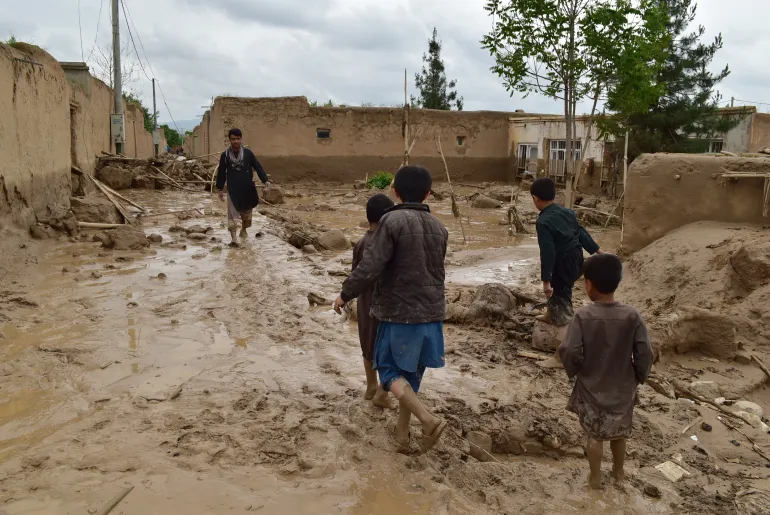
Children in Afghanistan, trekking through mud during the floods, Photo credit: Al Jazeera

Many residents were unprepared for the sudden rush of water caused by the heavy rainfall. Roads and agricultural land have also been destroyed by the floods. With these areas struck after days of torrential rain, we fear that families who have lost land, assets and homes will be pushed further towards starvation.

The humanitarian crisis in Afghanistan worsens

Afghanistan is currently in the midst of one of the world’s biggest food crises. Thousands of people in the affected areas are already suffering from severe hunger.

Umair Hasan, Islamic Relief’s Country Director in Afghanistan, says:

“Huge rivers of water and mud suddenly swept through villages, destroying vital farmland and washing away people’s fragile homes. Many people are reportedly still missing so the number of people affected could still rise. There are many urgent needs but people have been left homeless and hungry, so shelter and food are particularly critical.

“We plan to provide families with food, other aid, or cash so that they can find shelter and buy essential supplies on the local markets where they’re functioning. Hygiene materials are also needed as water-borne diseases often spread fast after floods.

“People in Afghanistan have suffered a string of drought, earthquakes and floods over the last couple of years, on top of extreme hunger and economic crisis. The cumulative impact is devastating, but the international community has largely neglected the country. This is another reminder that people in Afghanistan continue to need support.

“Most of the deaths so far have been reported in Baghlan province in the north – where Islamic Relief has existing projects – but the floods have also affected parts of neighbouring provinces such as Takhar and Badakhshan. Local authorities have declared a state of emergency.

Flash flooding destroys more lives in Afghanistan

Almost 1,590 families have been affected by ongoing heavy rains and flash flooding across almost all regions in Afghanistan.

Since early April, flash floods, caused by heavy rainfall, have taken the lives of 35 people and left another 47 people injured. Further heavy rains in May have led to extensive flooding in several areas of the country.

Overall the most severely-affected provinces are Badghis, Farah, Hilmand, Kabul, Kandahar, Laghman, Nangahar, Parwan and Uruzgan.

There has been extensive damage to road infrastructure and agricultural lands.

Our teams are responding on the ground

Islamic Relief’s response will target families who have lost their homes and assets. We also support other vulnerable affected people, such as those with disabilities and orphaned children.

Our teams in Afghanistan have identified that priority needs are food, hygiene kits and shelter. We are already operating in some of the most severely affected areas and responding with immediate aid.

Currently, our teams are planning to provide humanitarian assistance to affected families in the Baghlan area. Previously, we were also on the ground in Balkh and Kunar. Where we provided cash grants to help families purchase food and emergency shelter items.

We are also coordinating our response with other humanitarian actors and authorities. By combining our efforts, we ensure affected communities are supported in the most effective way possible.

Afghanistan is in crisis

Back-to-back disasters have left thousands in Afghanistan struggling to survive. Help support families in need during this critical time.

05.11.24

Chaos and panic in Rafah as Israel orders thousands to evacuate

  News     Press Releases

There are no safe zones in Gaza as Israeli attacks on Rafah force hundreds of thousands of people to flee and threaten the delivery of new aid supplies. 

More than 150,000 people have fled Rafah in recent days. A further 300,000 people are affected by the evacuation orders as Israel’s attack on Rafah spreads and intensifies. 

Rafah and its border crossing are a lifeline to the people in the enclave where thousands have been killed. They are a hub of aid agency operations for people weeks away from widespread famine. Now this area too is facing destruction as the invasion escalates. 

Civilians sitting on top rubble. Hundreds of thousands of people are affected by the evacuation orders as Israel’s attack on Rafah, Gaza intensifies.

The Israeli forces have been attacking Rafah with artillery, ground troops, demolition operations, and aerial bombardments. Violence is rapidly expanding. People in the city live in fear amid the attacks and threatened further invasion. 

Civilians who flee face even greater challenges

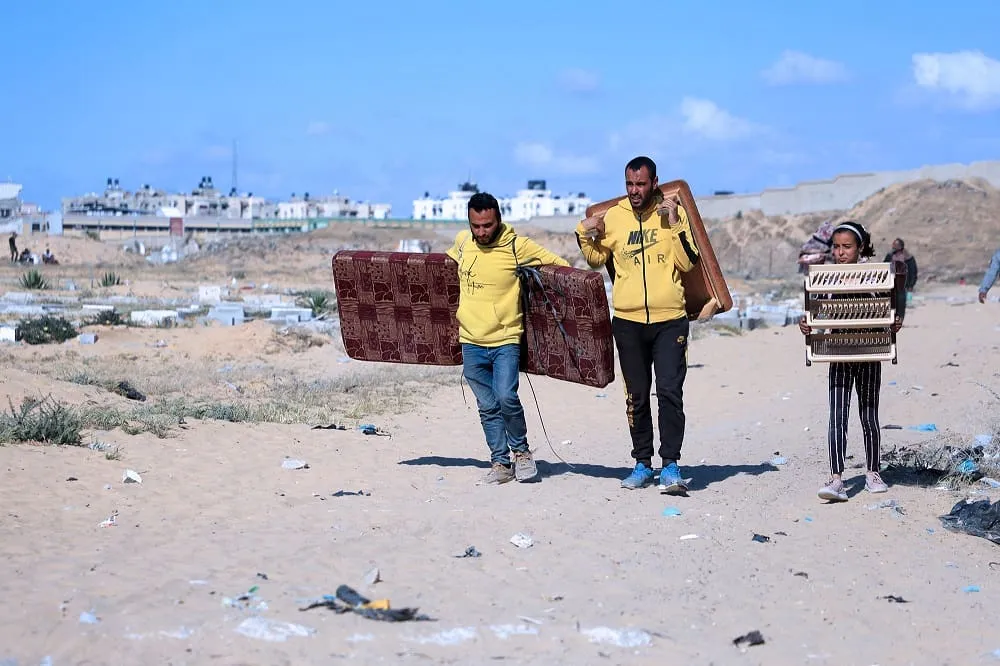
Many people are walking miles to search for shelter, carrying whatever possessions they can. Extremely vulnerable people including malnourished infants, elderly people, injured and sick patients, and people with severe disabilities are among those ordered to move.  

Most are now sheltering in horrific conditions, without adequate access to food, water or other essentials.  This includes the designated evacuation site of Al Mawasi. Israel claimed this site as a“safe” area. However, many evacuees are still subject to impending famine, lack of shelter, spread of disease, and scarce healthcare availability. 

Al Mawasi is a sandy area which is unsuitable for hosting large numbers of displaced people. It is not an ideal solution for housing the over 1.2 million people crammed into Rafah, many of them starving, injured or sick including women and children. 

The healthcare system in Gaza is also shutting down with only a third of Gaza’s hospitals partially functioning. The aid system has now moved into a new stage of fading, almost at the point of debilitation. Since last Sunday no aid has come into Gaza by land.  

Israel has sealed the Rafah border crossing which is a key entry point for delivery of humanitarian supplies and aid agencies are almost out of food and fuel in Gaza.

The Rafah invasion is amplifying the ongoing Israeli siege and the suffering 

An Islamic Relief staff member in Gaza says:  

“I feel like this is the end. It feels like we will all be either trapped and killed in Gaza, or we will all be forced out. People have stayed in Rafah thinking it’s safe and hoping that global pressure would stop an invasion. But now we are abandoned by the world and everyone feels betrayed and let down.  

“It’s an unimaginable scene, with tens of thousands of people looking for shelter. People are pale and thin, tired and afraid. There are children, women, elderly people and people with disabilities trying to flee in wheelchairs. Injured people have to leave the hospital with recent bandages and bloodstains. 

“In other parts of Gaza, the few bits of remaining land are now filling up with tents and shacks built of bits of wood and nylon.   

“No humanitarian assistance has entered since Israel took over the Rafah crossing and the Kerem Abu Salem crossing closed. Bakeries have stopped working because they don’t have fuel, so we don’t have bread. We don’t have any water supply as that also depends on fuel deliveries, so yesterday we had to pay $50 just to refill our tank. Cars have stopped, so people coming from Rafah to the Middle Area are either walking or packed into vans carrying hundreds of people.    

“Many people in Gaza are already suffering from famine, but now we are entering a new period of unprecedented hardship.”   

Islamic Relief strongly condemns Israel’s order for civilians to evacuate yet again and calls on world leaders who have repeatedly warned against an invasion of Rafah to urgently pressure Israel to stop its attack and ensure humanitarian aid can enter Gaza. 

We demand the Israeli government reopens the Rafah border crossing reestablishing this vital lifeline to people in Gaza. We call for an end to the invasion of Rafah. An immediate ceasefire to prevent more deaths across the enclave. 

In the ongoing crisis, Gaza needs your help

Help us provide urgent medical supplies, food and other crucial, life-saving aid now to families in need by giving with Islamic Relief.

05.06.24

Rafah evacuation order will cost lives, Islamic Relief warns

  News     Press Releases

Islamic Relief is appalled at the news that Israel has told over 100,000 Palestinians to evacuate Rafah. This will put many lives at even greater risk. People must not be forced to move yet again. 

People sheltering in eastern parts of Rafah on May 6, 2024, received messages saying the Israel military “is about to operate with great force” in the area. The order told civilians to evacuate to the so-called humanitarian zone of Al Mawasi “for your own safety”. Heavy bombing in Rafah overnight has reportedly killed many civilians, including several children.  

As we have seen over the past seven months, forcing so many people to move is impossible without serious humanitarian cost. People will inevitably die as a result of the evacuation. The sick and wounded, elderly people, newborn infants and people with disabilities are particularly vulnerable. They often cannot evacuate without support. 

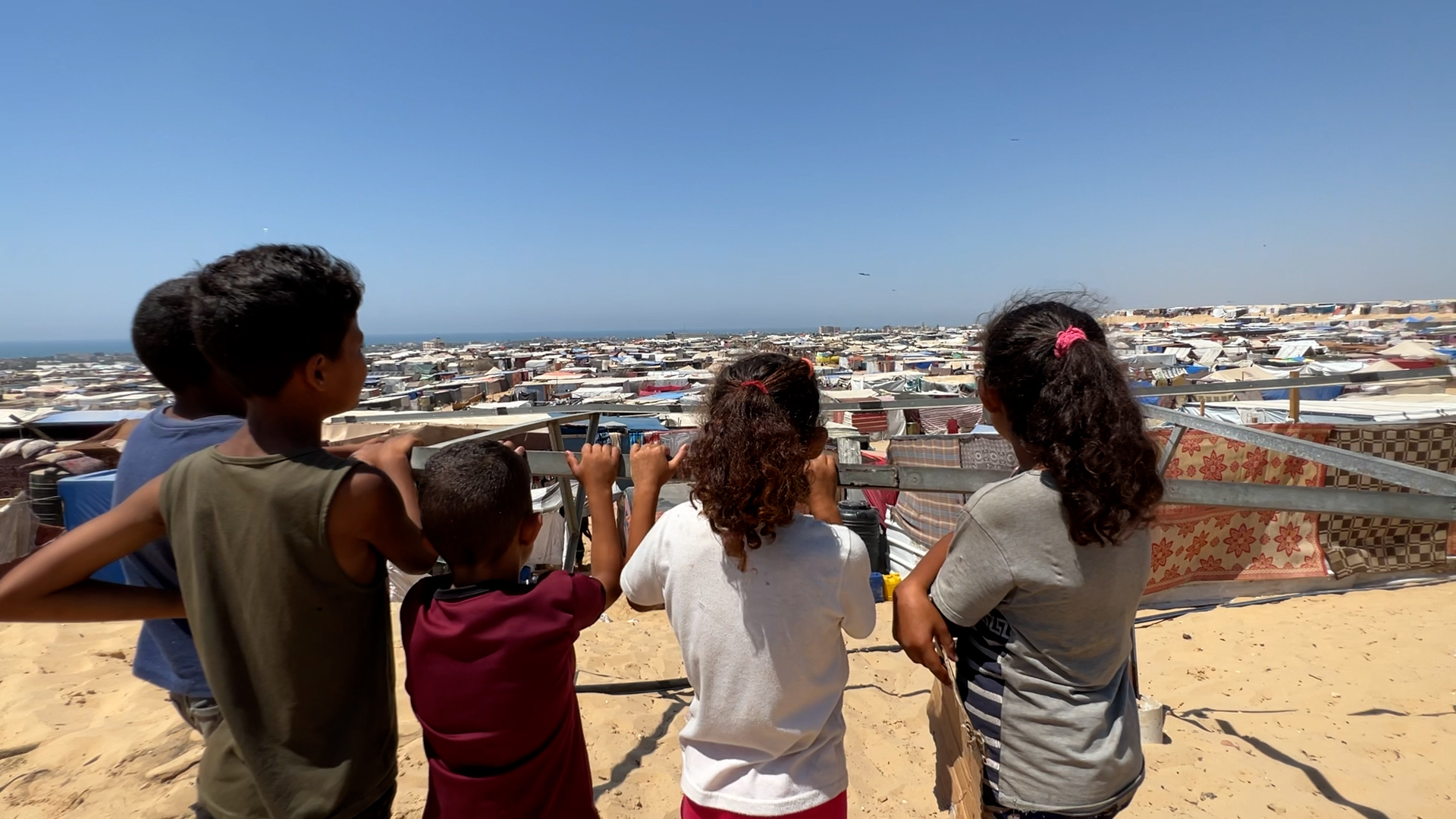
displacement camps in Rafah, where a majority of Palestinians in Gaza reside

The area where people have been ordered to move – al Mawasi – has been designated a so-called ‘safe humanitarian zone’. But it is not safe. Civilians sheltering there say they continue to face attacks and severe shortages of food, water and other vital aid. Forcing more people there will make the humanitarian crisis even worse.  

Islamic Relief reiterates that civilians must be protected regardless of whether they stay or leave Rafah. Ordering people to leave does not absolve Israel of its obligations under international humanitarian law to refrain from harming civilians who cannot, or choose not to, leave.      

For many weeks, Islamic Relief and other humanitarian agencies have been warning that an invasion of Rafah must not be allowed to go ahead. It will have catastrophic humanitarian consequences. More than 1.2 million people are now sheltering in dire conditions in Rafah. Many of them have been forced to move several times over the past seven months.  

In the ongoing crisis, Gaza needs your help

Help us provide urgent medical supplies, food and other crucial, life-saving aid now to families in need by giving with Islamic Relief.

05.03.24

Gaza: Rafah invasion must not be allowed to happen

  News     Press Releases

The Israeli invasion of Rafah must not be allowed to happen, Islamic Relief warns again as fears mount over an imminent ground invasion.

More than 1.2 million Palestinians are sheltering in Rafah in apocalyptic conditions. Civilians there are terrified about the coming days as more deadly bombings hit Rafah overnight and Israeli forces are reportedly amassing nearby.  

An invasion of Rafah would have catastrophic humanitarian consequences.

The invasion would inevitably kill thousands more civilians and uproot hundreds of thousands of people yet again. It would make widespread famine inevitable. It would massively disrupt the humanitarian response across Gaza, which is primarily based in Rafah, at a time when lifesaving aid is needed more than ever. 

World leaders must do everything they can to halt the escalation in Rafah. They must increase efforts to ensure an immediate ceasefire and humanitarian access.   

Since October, Rafah has become one of the most overcrowded places in the world.

About half of Gaza’s entire population is now crammed into the tiny area along the border with Egypt. Islamic Relief staff and partners in Rafah are distributing aid such as cooked meals and water. However, many people are still starving and desperately need food, healthcare and other aid.   

Children in Rafah, Gaza, living in damaged shelters, under siege from Israeli forces

Many people fled to Rafah on Israeli orders to leave other parts of Gaza. Yet, now, they are being ordered to move again. Civilians must be protected regardless of whether they stay or move. Ordering people to leave does not absolve Israel of its obligations under international humanitarian law to refrain from harming civilians who cannot, or choose not to, leave.    

The humanitarian crisis in Rafah is worsening by the day.

Multiple families share a single tent, while others sleep under scraps of cloth or plastic, surrounded by sewage water. Last week extreme heat killed at least two young children in the tents as temperatures rose above 100 degrees Fahrenheit (38 degrees Celsius).  

Islamic Relief staff in Gaza described conditions in the tents during such heat as “like living in an inferno”. Similar temperatures are likely in the coming weeks. With the heat and lack of clean water and sanitation, the spread of diseases is expected to increase even further.

Gaza is now just weeks away from widespread famine, yet Israel’s blockade continues.

Within the Gaza Strip, the ongoing blockage restricts aid despite repeated commitments to allow for more aid. Last week, an average of just over 200 trucks a day were able to enter Gaza. This is far less than the 500 a day that entered Gaza before October and it barely scratches the surface of what is needed now. Israel continues to obstruct humanitarian access to northern Gaza, with the UN reporting that more than one-third of aid missions to the north were blocked during April.

The US military has announced that construction of a temporary pier to deliver aid by sea should be finished soon. But even if it gets fully operational, its capacity will be just a fraction of what is needed. Only an immediate ceasefire and full unimpeded humanitarian access by land can ensure that aid reaches people in sufficient quantity.  

In the ongoing crisis, Gaza needs your help

Help us provide urgent medical supplies, food and other crucial, life-saving aid now to families in need by giving with Islamic Relief.

05.02.24

When is Hajj 2024?

  Dhul Hijjah     News

Hajj is the sacred pilgrimage Muslims perform at the holy mosque of Masjid al-Haram in Makkah, Saudi Arabia. It takes place during Dhul Hijjah, which is the twelfth and final month in the Islamic (Hijri) Calendar.

The beginning of Hajj starts on the starts the 8th of Dhul Hijjah. It then ends on the 12th or 13th of Dhul Hijjah, depending on the sighting of the moon. In 2024, this period is expected to fall between Friday, June 14, 2024, to Wednesday, June 19, 2024.

What is Hajj?

Hajj is one of the five pillars of Islam, alongside Shahada (profession of faith), Salah (prayer), Zakat (almsgiving) and Sawm (fasting).

As such, undertaking Hajj holds great importance in Islam. It is a spiritual duty. Every Muslim is required to perform it at least once in their lifetime, so long as they have the means. This includes being not only financially able, but also physically and emotionally.

The Significance of Hajj 

In the Holy Qur’an, Allah (SWT) commands Muslims to take this sacred journey: 

You will enter the Sacred Masjid, God willing, perfectly secure, and you will cut your hair or shorten it (as you fulfil the pilgrimage rituals) there. You will not have any fear. Since He knew what you did not know, He has coupled this with an immediate victory.

Qur’an 48:27 

Hajj also occurs in Dhul Hijjah during its first ten days, one of the most sacred periods of the entire Islamic calendar.  

As such, performing the pilgrimage offers Muslims the opportunity to refresh their spiritual selves. To cleanse themselves of their sins and draw closer to Allah (SWT). 

How Long Does Hajj Last? 

The pilgrimage is performed over five to six days, from the 8th to the 12th or 13th of Dhul Hijjah. The Day of Arafah (9th Dhul Hijjah) and Eid Al-Adha (10th Dhul Hijjah) also fall between these days.  

The pilgrimage includes a series of rites and rituals, some of which must be performed in order. It can be physically demanding, as pilgrims are required to travel between locations throughout. On average, one can expect to walk between 5km to 15km per day.  

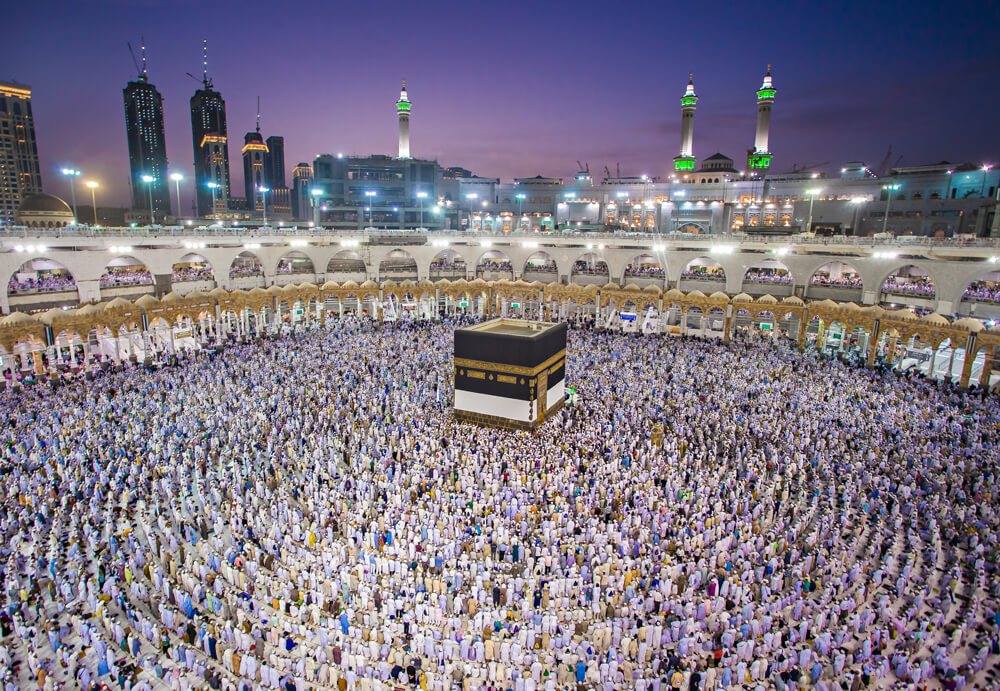
During Hajj, which takes place in Dhul Hijjah, Muslims travel to Masjid al-Haram in Makkah

Performing Hajj is a test of patience and temperament. It is a spiritual, emotional, and physical challenge and can take some preparation. That is why, for many, it is often a once-in-a-lifetime event. 

When Does Hajj Occur?

Hajj takes place between the 8th and the 12th or 13th of Dhul Hijjah each Islamic year, depending on the sighting of the moon.

Dates in the Islamic calendar appear to shift forward approximately 11-12 days as it corresponds to the Gregorian calendar, as the Islamic Calendar operates on the lunar cycle.

This year, the Hajj period is expected to fall between Friday, June 14, 2024, to Wednesday, June 19, 2024.

While Muslims are only required to perform Hajj at least once in their lifetimes, it can be performed multiple times, so long as they fall within the set dates. You can also perform Umrah, a voluntary pilgrimage to Makkah taken at any time of the year.

Where Does Hajj Take Place?

Hajj is performed in Makkah (also referred to as Mecca) in Saudi Arabia. The pilgrimage consists of a series of rites and rituals across five to six days and is performed across several locations within the vicinity of Makkah.

These locations include:

  • The city of Makkah
  • The tent settlement of Mina
  • Mount ‘Arafah
  • Muzdalifah

Who Is Excluded from Hajj? 

It is required of every Muslim to perform Hajj at least once in their lifetime. However, the Hajj is not intended as a burden upon Muslims. Muslims are only required to perform Hajj so long as it is within their capacity. 

Those who are exempt from Hajj are the following: 

  • Children. While they may go to Hajj, only Muslim adults (male or female) are required to perform Hajj. 
  • Very weak, sick, elderly, or otherwise physically incapable Muslims. 
  • Muslims who are financially unable to perform Hajj. However, if one is in debt, they may still perform Hajj if the person they owe money to permits it, they have time to pay off the debt and Hajj does not affect their ability to pay it.  

Brief History of Hajj 

In 628 CE, the Prophet Muhammad (ﷺ) and the early Muslims embarked on the first Islamic Pilgrimage (Hajj), re-establishing the traditions started by the Prophet Ibrahim (AS), who first began the tradition of Hajj millennia before. 

The Story of Hajar (AS) and Ismail (AS)  

The story of Hajj begins with Prophet Ibrahim (AS) receiving a commandment from Allah (SWT). Allah (SWT) orders Prophet Ibrahim (AS) to travel to the barren desert of Makkah and leave his wife Hajar and infant son Ismail (AS). Despite the trials ahead, the family trusted in the Divine Wisdom of Allah (SWT) and set out to follow His commandment.

While in the desert, Hajar (AS) and Ismail (AS) quickly ran out of resources. In a desperate effort to find water, Hajar (AS) ran between the two neighbouring hills of Safa and Marwa in search of someone who could help or nearby water. She did this seven times, only to return to a crying Ismail (AS) empty-handed. 

As the infant Ismail (AS) cried, he struck the ground with his leg and a stream of water burst forth at the commandment of Allah (SWT). This stream of water relieved the mother and son of their thirst and became a resource with which they traded for provisions of all kinds with travelling merchants. This stream of water is known today as the Well of Zam Zam. 

Years later, Allah (SWT) commanded Ibrahim (AS) to return to his family, where he found the miracle of his family alive and indeed thriving. A barren desert that had started with only Hajar and Ismail (AS) was now transforming into a thriving settlement that would become known as Makkah. 

Allah (SWT) then instructed Ibrahim (AS) to mark the space for a stone structure. This would be known as the Kaaba, which Ibrahim (AS) built with his son Ismail (AS).  

The Significance of the Kaaba and Masjid al-Haram

The space surrounding the Kaaba was created for worshippers of the one God to gather. In fact, the Kaaba simply marks the spot where Muslims unite. It is not something that is worshipped, as idolatry is prohibited in Islam. 

Over time, the Kaaba would be taken over by pagan Arabs, who filled it with idols. However, thousands of years later, when the Prophet Muhammad (ﷺ) was given revelation and the final message of Tawheed (monotheism), he was instructed to reinstate Ibrahim’s (AS) sacred tradition – the sacred pilgrimage we know as Hajj today. 

This Dhul Hijjah, Share Your Blessings

Help the world’s most vulnerable families enjoy their Eid when you give Qurban with Islamic Relief.

Frequently Asked Questions 

  • What does Hajj mean?

    The word Hajj, in Arabic, means ‘to intend a journey’. 

  • How many days is Hajj?

    The pilgrimage is performed over five to six days, from the 8th to the 12th or 13th of Dhul Hijjah. The Day of Arafah (9th Dhul Hijjah) and Eid Al-Adha (10th Dhul Hijjah) also fall between these days. 

  • Who is excused from Hajj?

    Those excused from Hajj are children (however, they can accompany their parents) the very weak, sick, elderly, or otherwise physically incapable and those who would be financially burdened if they make the pilgrimage.

05.01.24

When is Eid Al-Adha 2024 in Australia?

  Dhul Hijjah     News

Eid al-Adha is one of the two blessed celebrations Muslims obverse, the other being Eid al-Fitr. There are many observances unique to Eid Al-Adha (and Dhul Hijjah in general), including Qurban.

This year, Eid Al Adha 2024 is expected to fall on Sunday, June 16, 2024, depending on the sighting of the moon.

What is Eid Al-Adha?

Eid al-Adha (meaning “festival of sacrifice”) is an Islamic celebration occurring in Dhul Hijjah, the twelfth and final month of the Islamic (Hijri) Calendar. Depending on the country and lunar cycle for the year, the celebration can last two to four days.

Child with Qurban sheep

Photo: Child with Qurban sheep

The Eid of Sacrifice commemorates the ultimate act of sacrifice performed by our beloved Prophet Ibrahim (AS). The submission he made in his willingness to give up what he loved most, his son, Ismail (AS), for the sake of Allah (SWT). 

As such, Muslims, in turn, also offer a sacrifice, known as Qurban, on this day of celebration.

What is Qurban?

Qurban (also known as Qurbani or Udhiyah) means sacrifice. It is an act of worship unique to Eid al-Adha, commemorating the sacrifice Prophet Ibrahim (AS) made to Allah (SWT).

Following the Eid prayer on the first day of celebration, Muslims around the world slaughter an animal – typically a sheep, goat, camel or cow. The sacrificed animal is then divided into three equal portions. One-third shared goes to the needy, one-third goes to relatives and neighbours, and the remainder Muslims keep for their own families. 

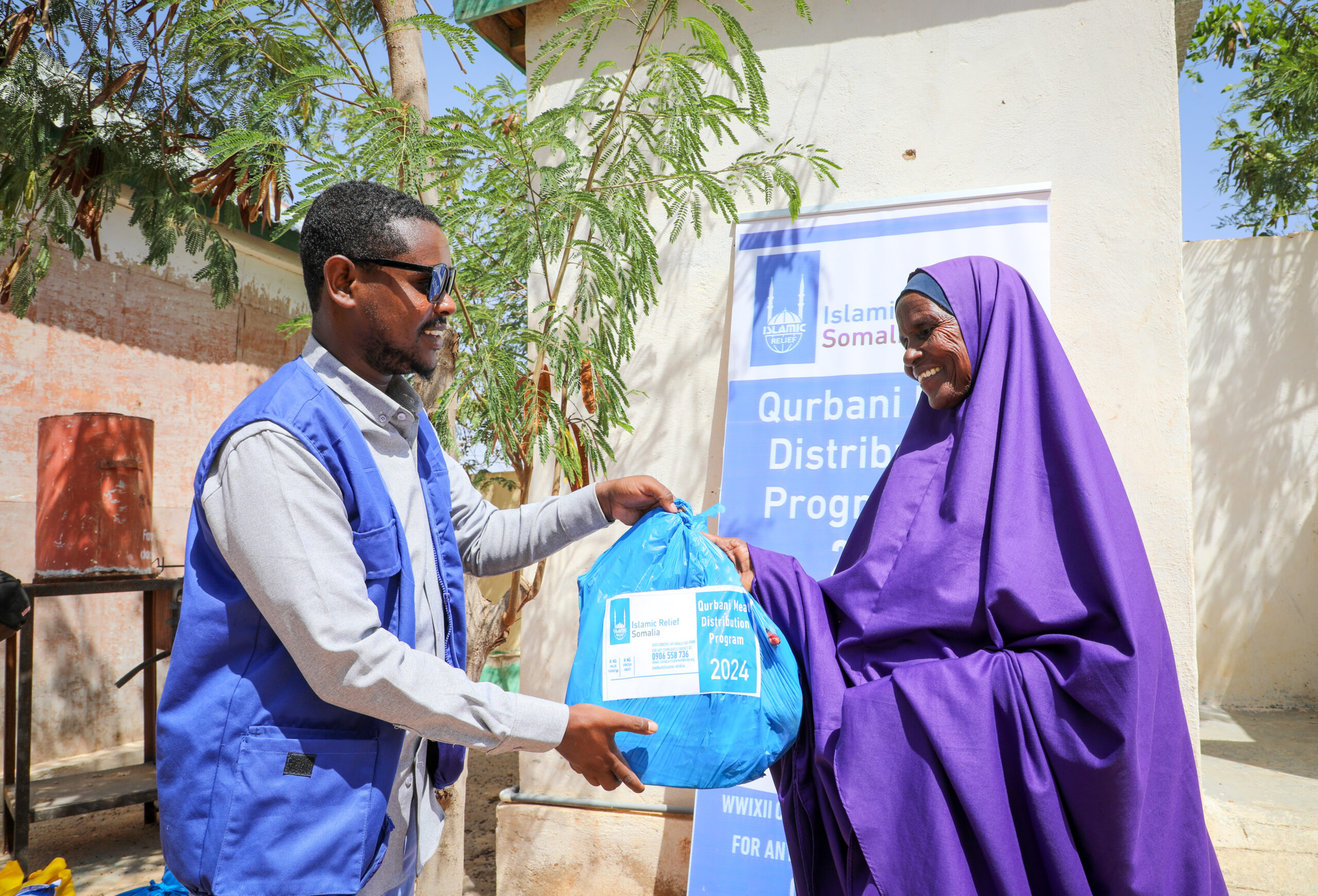
Qurban reaching those most in need in countries like this young child in Somalia during Eid Al-Adha.
Photo: Qurban reaching those most in need in countries like Somalia during Eid Al-Adha.  

Who should give Qurban?

Qurban is an important act of worship that every Muslim who has reached the age of puberty should do if they can afford it. Typically, Muslims who are eligible for Zakat should also give Qurban.

When should I give my Qurban?

It is best practice to purchase your Qurban as early as possible so that it can be performed on time. While one can carry out the sacrifice on any day of Eid al-Adha (from the 10th to the 13th of Dhul Hijjah), performing it on the first day is Sunnah.

The Prophet Muhammad (ﷺ) used to carry out the sacrifice immediately after the Eid prayer. In turn, his first meal on the day of Eid was meat from the sacrifice. 

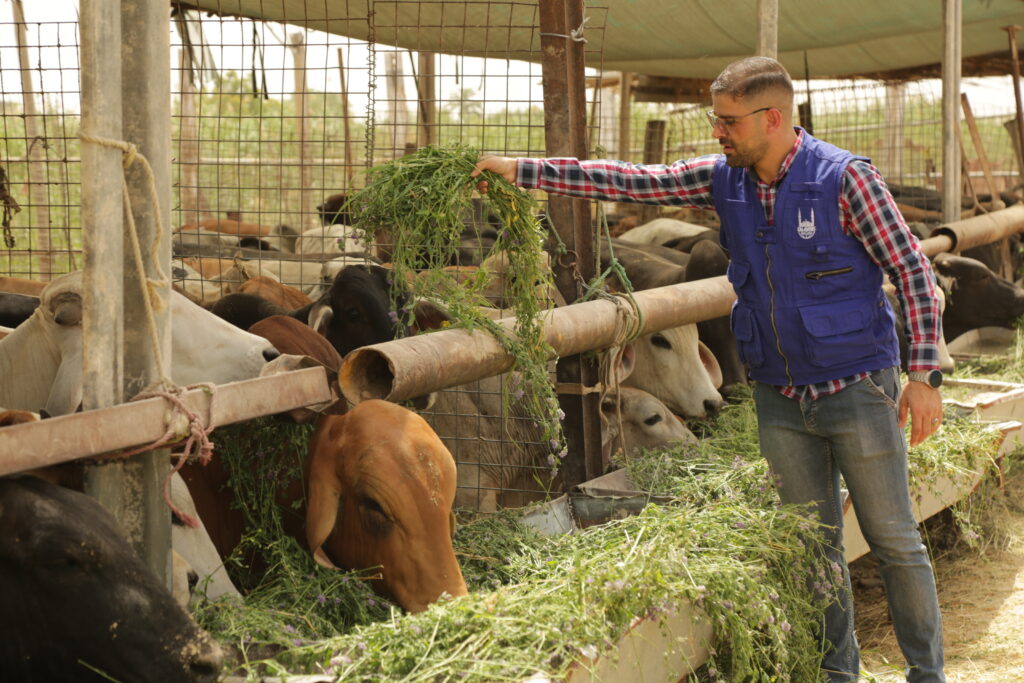
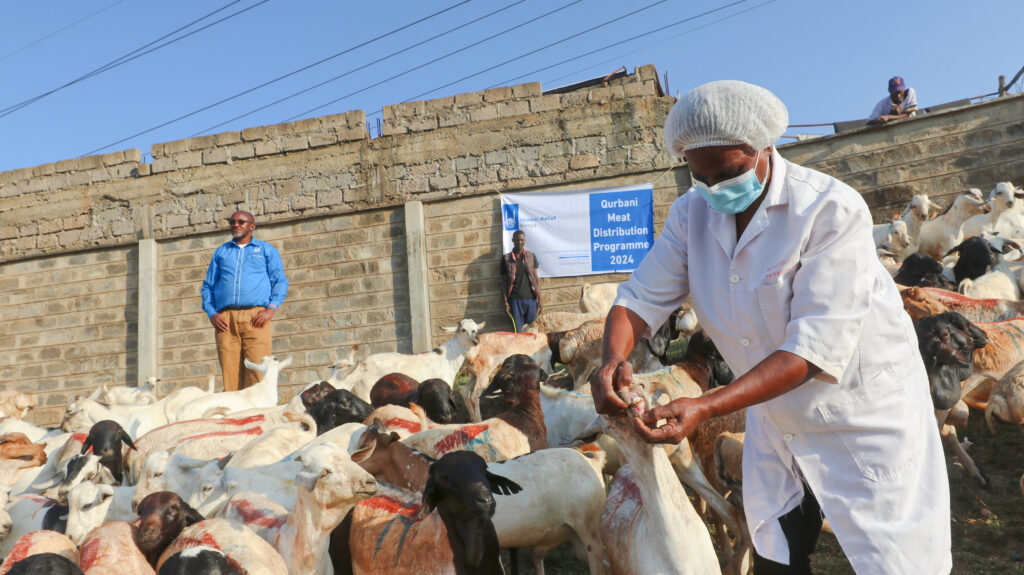
Islamic Relief staff inspecting animals for Qurban, to be sacrificed during Eid Al-Adha
Photo: Islamic Relief staff inspecting animals for Qurban

Other Observances of Eid Al-Adha

As with any festival and important occasion, we follow the example of Prophet Muhammad (ﷺ). There are various Sunnah acts of worship you can do on the day of Eid. These include performing ghusl, wearing one’s best clothes, reciting takbeer and offering Eid greetings.

Similar to Eid al-Fitr, Eid prayer is also an important part of Eid al-Adha. Attending the Eid prayer and walking to the Eid prayer are also Sunan of the Prophet (ﷺ).

Why donate your Qurban to Islamic Relief?

When you donate your Qurban to Islamic Relief, we prioritise providing meat to the most vulnerable families across the world during the Holy season. 

Our international teams work hard to get your donation to the hardest-to-reach regions and conflict-affected areas, including Myanmar, Palestine, and Yemen. 

Meat is sourced locally to support the local economy and distributed fresh. All logistics—from sacrifice to transportation—are handled in accordance with Islamic principles, and with the best hygienic practices possible. Each pack contains 2-5 kilograms of meat and feeds a family of approximately 4-8 people.

Donate Qurban now and make your sacrifice. 

04.29.24

When is Dhul Hijjah 2024 in Australia?

  Dhul Hijjah     News

Dhul Hijjah marks the twelfth and final month of the Islamic calendar. It holds immense significance for Muslims worldwide, especially in the first ten days, when Hajj and Eid Al-Adha (as well as the sacred act of Qurban) take place.

This year, the first day of Dhul Hijjah is expected to begin on Friday, June 7, 2024, depending on the sighting of the moon. But why exactly are the first 10 days of Dhul Hijjah and its events so special?

In this article, we learn about the month’s transformative and spiritual experiences. This includes the profound meaning behind the rituals of Hajj and Eid al-Adha (festival of sacrifice).

The Significance of the First 10 Days of Dhul Hijjah

Similar to the Holy month of Ramadan, the first 10 days of Dhul Hijjah are an extremely blessed time. After Ramadan, we often miss the spiritual high we felt and wish we could’ve done more. But these blessed ten days offer us another chance for us to gain immense rewards. To have our sins forgiven and reach great levels of piety, Insha’Allah.

Benefits of the first 10 days of Dhul Hijjah

In one particular hadith, the Prophet Muhammad (ﷺ) specifically highlights the first 10 days of Dhul Hijjah as better than all the other days of the year. Even better than the days of Ramadan, SubhanAllah!

He (peace and blessings be upon him) said:

“There are no days on which righteous deeds are more beloved to Allah than these ten days”

Sahih Bukhari

In the Qur’an, Allah (SWT) also swears by these first ten days. In Surah Al-Fajr, He states:

“By the dawn; And [by] the ten nights.”

Quran 89:1-2

According to many scholars, these days are the first 10 days of Dhul-Hijjah.

What Happens on the First 10 Days of Dhul Hijjah?

In addition to being the best days to do good deeds, we witness two very special events in Dhul Hijjah: Hajj and Eid al-Adha.

Hajj

Hajj is the fifth and final pillar of Islam. It is a staple of Islamic belief, alongside the Shahada (the belief that there is no god but Allah (SWT) and Muhammad (ﷺ) is His Messenger), Salah (prayer), Zakat (almsgiving) and Sawm (fasting).

Hajj is the pilgrimage Muslims make to Makkah in Saudi Arabia. It takes place from the 8th to the 12th or 13th of Dhul Hijjah each Islamic year. The pilgrimage is obligatory for all able-bodied and financially capable Muslims to perform at least once in their lifetime.

Muslim pilgrims performing Hajj in Makkah, in the days of Dhul Hijjah
Photo: Muslims performing Tawaf during Hajj in Makkah, in the days of Dhul Hijjah

This year, Hajj is expected to take place between Friday, June 14, 2024, and Wednesday, June 19, 2024.

On the 9th of Dhul Hijjah, the blessed Day of Arafah (also Arafat) occurs. The Day of Arafah 2024 is expected to fall on the evening of Saturday, June 15, 2024.

Considered the most blessed day of the year, Arafah was the day when Allah (SWT) perfected Islam. The day He completed His favours upon His beloved Prophet Muhammad (ﷺ) and approved Islam as a way of life.

This day I have perfected for you your religion and completed My favour upon you and have approved for you Islam as religion.

Quran 5:3

On this day, pilgrims performing Hajj gather on the plain of Arafat, seeking forgiveness, supplicating to Allah and engaging in profound acts of worship.

Eid al-Adha

Eid al Adha (or Eid ul Adha), similar to Eid al Fitr (or Eid ul Fitr), is a joyous day Muslims celebrate with family and community. However, in addition to the rituals of Eid, Muslims, who are able to, also give Qurban on Eid Al-Adha.

Qurban (also known as Qurbani or Udhiyah) is an act of worship that involves the sacrifice of an animal, usually a sheep, goat, cow or camel, for the sake of Allah (SWT). The origins of this act of worship come from the story of Prophet Ibrahim (AS) and his willingness to sacrifice his son, Ismail (AS), as a demonstration of his faith, obedience and trust in Allah (SWT).

What Else Can We Do on the First 10 Days of Dhul Hijjah?

Even for those of us not performing the Hajj pilgrimage this year, Dhul Hijjah is still a great time of blessing and immense reward.

Wherever we can, we should engage in good deeds such as giving charity, performing acts of kindness to family and community, fasting and remembrance of Allah (SWT)

Fasting

Fasting is especially encouraged during these first 10 days. The Prophet (ﷺ) used to fast on the first nine days of Dhul-Hijjah as one of his regular fasts.

He especially emphasised the importance of fasting on the 9th day, the Day of Arafah.

Fasting the day of `Arafah expiates the sins of two years: the past one and the coming one.

Sahih Muslim

Making Dhikr

Our Prophet (ﷺ) also said:

“There are no days that are greater before Allah or in which good deeds are more beloved to Him, than these ten days, so recite a great deal of tahleel, takbeer and tahmeed during them.”

Ahmad

When are the 10 days of Dhul Hijjah?

This year, the first day of Dhu al-Hijjah 1445 AH will fall on Friday, June 7, 2024, depending on the sighting of the moon. In turn, Eid al-Adha is expected to fall on Sunday, June 16, 2024.

Your Qurban meat bringing smiles to families on Eid Al Adha this Dhul Hijjah
Photo: Your Qurban, helping the world’s most vulnerable families thrive and build sustainable livelihoods.

Give Your Qurban On Time

At Islamic Relief, we work all year round to bring families relief and home. To combat food poverty and help communities build healthy and stable livelihoods.

Every Eid al-Adha, Islamic Relief is at the forefront of distributing Qurban. This year, we strive to deliver nutritious, high-quality meat to the world’s most vulnerable and disadvantaged communities. For many, this is the only time they will be able to eat meat in the entire year.

In over 30 countries worldwide, your Qurban donation will not only bring happiness to the less fortunate, but also empower vulnerable communities. To ensure they can enjoy Eid without worrying about how and what they will feed their families.

Donate during this blessed time and increase your rewards. Help enable families and entire communities to have a happy Eid al-Adha and beyond.

This Dhul Hijjah, Share Your Blessings

Help the world’s most vulnerable families enjoy their Eid when you give Qurban with Islamic Relief.

04.18.24

Italy: Supporting Struggling Immigrants

  Impact     Publications

In Ramadan 2023, Islamic Relief supported families with vulnerable economic situations around the world. In Italy, Islamic Relief distributed 463 food vouchers across the country aiming to reach around 2,000 vulnerable people in the provinces of Milan, Brescia, Trieste and Rome.

Two of the recipients were the families of Habiba and Rabiaa. Both Habiba and Rabiaa struggle to support their children and dependants with their meagre incomes. They also care for family members with permanent health conditions.

Habiba’s Story

Habiba (45) lives in Monza, Italy. She struggles to provide for her three children as a single parent.  

“I do the chores in some houses and structures such as gyms. This is my source of income and this is how I provide for my family needs. 

 “Food is not a problem. My friends and neighbours know about my situation, and they always help me with what they can. The main challenge I’ve been facing for years is about health.  

“Two of my three children were born with a malformation that forced them to undergo many surgeries during their childhood.  

“Because of the health problems of my children, in certain periods I had to choose between working and looking after them. That meant relying only on charities for the food and the clothes and sometimes it was very hard and frustrating.  

“During these tough times I tried to take advantage of some migration laws to let my husband reach us in Italy and help me with the children, but due to my financial situation, it was not possible. 

“During Ramadan people are more generous so it is easier for me to find some help”  

“Living in a non-Muslim country, we don’t really feel the difference. I work as always, but I try to go home earlier to prepare iftar. The mosque here organises some events, but with my disabled son it is not always easy to join the community.  

 “Our diet is mainly based on pasta, rice, some vegetables and we can afford it, some meat. I don’t have much time to cook, my eldest daughter often helps me and prepares dinner for her siblings. 

“You guys lighten a burden for people like me. This month I have one less worry and I can focus on my youngest child’s surgery.” 

Islamic Relief distributed 463 food vouchers across Italy, aiming to reach around 2,000 vulnerable people in the provinces of Milan, Brescia, Trieste and Rome.

Rabiaa’s Story  

Rabiaa (49) lives in Milano, Italy with her husband, brother and 4 children. She works precarious jobs, cleaning and cooking. 

“We don’t have a fixed monthly income. I’m the only one who can work and provide something when I have the chance to do some cleaning or cooking. My brother just arrived from Morocco and my husband is disabled”  
“(My brother) came to Italy through a clandestine route and he had to walk for a while in the cold with inappropriate clothes. Because of the cold, they had to cut his hand and some toes. He can’t work so we have to cover his needs too.  

“It’s very difficult to cover all the costs and often we can’t provide the children with all the stuff they need. Alhamdulilah for food we can rely on charities supporting us and the local mosque.”  

“We had a very tough time during COVID. My husband used to work and provide for our needs, but after he got the vaccine, he got very very sick” Pulls out again the mobile phone, “Sorry to show you this, but just to let you understand”, shows us photos of a man in intensive care “this is him, doctors could not understand what happened to him, we thought he would die.   

“Alhamdulilah Ramadan is a blessing because there are more good people like you helping us, at least for food.”   

 “We are very grateful for you guys who support us. With the voucher I can buy all the items my family need and at least for one month we can relax or focus on other priorities, not only on food.”  

In Italy, Islamic Relief distributed 463 food vouchers across the country aiming to reach around 2,000 vulnerable people in the provinces of Milan, Brescia, Trieste and Rome.
 

Give Families Hope and Relief

Keep the blessings of Ramadan going. Give families in need the opportunity to enjoy nutritious food, rebuild their livelihoods and more.

04.17.24

Fatuma’s Story: A Burden Lifted

  Impact     Publications

Every year, Islamic Relief delivers Ramadan food packs to families in need worldwide. One of the recipients includes Fatuma Bashir (38), a widow and mother of 7, in Garissa, Kenya.

Fatuma was previously a trader of bananas and lemons. However, she became a stay-at-home mother following the death of her husband. As she had no one else to look after her children if she worked.

Struggling to Feed Her Family

 “My husband was the sole breadwinner of the family but unfortunately, he recently passed on. I used to supplement the family’s income by selling lemons and bananas at the Garissa town market. (But) I was not earning enough income to support all the basic needs of the family. 

“Currently, I am not able to trade at the market because I have a nine-month-old child who needs my care. I have no one to leave with the young ones. We are now dependent on well-wishers and relatives for food and water.  

In Kenya, four of Fatuma's children, the youngest being nine months.
Image: In Kenya, four of Fatuma’s children, the youngest being nine months.

“In Garissa, we are forced to buy water from water vendors which is quite a struggle for me because I do not have enough money. Neighbours have been kind enough to share their water with us.” 

“My neighbours contributed a few supplies such as beans, rice and sugar so that I could open a small kiosk when my husband died but the sales are very low. 

“We eat whatever I manage to get each day. I am grateful to God because we can have one meal a day, and sometimes we are lucky to have two meals.  

 “Alhamdulillah, the children are healthy, but they come to me crying out of hunger when we lack meals. It saddens me that I cannot provide for them always, but we leave it to Allah.”  

Daily Life in Kenya During Ramadan

“Ramadan is a Holy month of prayer. We continue to observe our religious obligations to Allah through fasting and prayer. I ask for forgiveness and seek Allah’s mercies on my family.”  

 “Our Ramadan diet is the same as throughout the year. We do not have special meals because we are grateful to have a meal any day of the year. We prepare whatever I get. I try to diversify our meal to include beans, rice, flat bread, and a corn meal made from maize.

 “I wake up at 3am to prepare Suhoor for the family. We eat together, pray, and start our fast. We do not go back to sleep. The children go to school, and we are left looking for water for the family. I close kiosk at 3pm to prepare the iftar meal when we are blessed with food.

“During Ramadan, a lot of people pray together in the morning and evening at the Mosque. The children visit the Mosque in the evenings to listen to evening sermons by the Imam while we I listen through the Mosque’s megaphone while cooking at home. Ramadan is a special time when people are kind to those in need. Neighbours invite others to share in meals as we chat under the sun setting.”
How Islamic Relief Helps

Fatuma came to learn of Islamic Relief after a friend referred her to the organisation, following her husband’s death. She requested support and was registered on the OrphanCare programme for quarterly monetary support for one of her children, as well as the Ramadan Food programme.  
A total of 31,710 people benefited from last year’s Ramadan project in Kenya. 5,285 food packs were distributed in Garissa, Mandera, Wajir, Moyale, Kilifi, Nairobi, and Tana River Counties.  

Each food pack included 10KG long grain rice, 10KG maize meal flour, 10KG wheat flour, 5KG sugar, 5KG dates, 5KG beans and 3L cooking oil.  

Fatuma and her family are one of the beneficiaries of the Ramadan programme in Kenya. Here is them receiving their food pack.
Image: Fatuma and her family are one of the beneficiaries of the Ramadan programme in Kenya.

Groups who received food packs included divorcees, single mothers, orphan families, persons living with disability, vulnerable families taking care of persons living with disabilities, poor families and families affected by the drought. 

“The food pack given by Islamic Relief was a welcome relief to many who were affected by the drought,” says Fatuma.  

“I received a pack with assorted food items that I needed. I did not need to buy more food for at least two weeks (as) I received all the ingredients needed to make a meal.” 

 “The pack was wholesome because it had the food items that are normally consumed in our locality. I would only ask that you increase the quantities next time because we are struggling to make ends meet.” 

Give Families Hope and Relief

Keep the blessings of Ramadan going. Give families in need the opportunity to enjoy nutritious food, rebuild their livelihoods and more.

04.16.24

Um Muhammed’s Story: Supported Through Times of Hardship 

  Impact     Publications

Um Muhammed is a 35-year-old Iraqi woman. She currently lives in Al-Anbar-Faluja-Alshuhadaa and has benefited from IRW-Iraq food basket distribution for Ramadan. 

As a widow, she is the sole head of her family. Um Muhammed has four children of different ages, who all live with her. They are Muhammed (10 years old), Rasool (9 years old), Ali (8 years old) and Reem (6 years old).

Um Muhammed and her children from Iraq, one of the recipients of the Ramadan food program.
Image: Um Muhammed and her children from Iraq, one of the recipients of the Ramadan food program.

She said, “I was widowed overnight and had to support my four children alone, which shocked me deeply. After the death of my husband, some benefactors gave me a cow, which I raised and whose milk I sell to the teachers of the village and to some neighbours. It is my only source of income to feed my children.”

Struggling to Provide for Her Family

Regarding the difficulties she faces in providing for her family in terms of food, water, health and other basic needs, Um Muhammed said, “Everything has become very expensive, which is stressful and uncomfortable for me.

“My children’s needs increase with the start of the school season, such as school fees, clothing, and an increase in seasonal diseases. One of my biggest challenges is keeping my children in school and not missing out on the opportunity to learn because I have lost it. The vacations greatly affect my income, forcing me to sell the milk for half its value to ensure my daily subsistence.”

Regarding hard times and the effect of food shortages on her family’s life, she said, “Sometimes my children sleep without dinner after a long night of crying, so my psychological state breaks down and I don’t sleep at night.” 

Daily Life in Iraq During Ramadan

Regarding the impact of the month of Ramadan on her life and what it means to her, she said, “I look forward to Ramadan because there is a spiritual atmosphere and people donate money and food, which allows me to save money to meet other basic needs.” 

She also discussed her daily routine during Ramadan. She said, “During Ramadan, we gather with our family members and neighbours to read the Quran and listen to religious lectures, which has given us a better understanding of the teachings of the religion and how to relate to others, especially during fasting.” 

As for their normal diet during Ramadan and throughout the year, she said, “We depend for our food on cereals and bread provided by the state rations, which are not enough for us. Sometimes I also depend on milk from my cow, so I heat the milk and give it to my children to make up for the lack of food. During Ramadan, our diet varies a bit. My children love the Makhlama dish, which consists of potatoes, onions, peppers, eggs and sometimes meat, if available. I also make pudding from my cow’s milk.”  

How Islamic Relief Helps

Regarding What is the impact of IR food distribution in her community during Ramadan, she stated that many people in my village suffer from poverty, so the Ramadan food basket is a great joy because it contains a variety of foods that we often cannot provide, as well as a sufficient amount for the month of Ramadan. 

Um Muhammed receiving a food pack from Islamic Relief teams in Iraq during Ramadan
Image: Um Muhammed receiving a food pack from Islamic Relief teams in Iraq during Ramadan

As for how the Ramadan food package helped her and her family, she said that the Ramadan food basket allows her not to have to buy food, and also contains a wide variety of products, allowing her to cook more food, which the children look forward to and love to eat for Fotoor. 

When asked how she knows about IRW-Iraq and whether she has benefited from any other IRW-Iraq projects, she replied, “An IR Iraq employee visited us at home after a member of the village explained my living situation”. The employee asked me several questions and asked for information about my children, their ages and my livelihood. After a few days, one of the employees informed me of the distribution date. 

She was asked how we could improve our food packages for Ramadan. At that, she replied, “The food basket contains the necessary and basic products, especially during the month of Ramadan, and I think it meets all our needs.” 

Finally, she said, “You have brought joy to my home, which encourages me to take time to focus on worship during the month of Ramadan”. My children and I wish you much success. May Allah reward you in the best way possible. 

Give Families Hope and Relief

Keep the blessings of Ramadan going. Give families in need the opportunity to enjoy nutritious food, rebuild their livelihoods and more.


STAY INFORMED

  • This field is for validation purposes and should be left unchanged.

Quick Donate