04.17.26
Sudan Cannot Wait: Why Australia Must Act Now to End the crisis
Sudan is at a critical moment. Three years since violence escalated, the country is experiencing a deepening split between the east and west coast. In parts of the east and centre, there are fragile signs of stability.
But in the west, the situation is rapidly deteriorating – with horrific violence, deepening hunger, and entire communities cut off from help.
For millions of people, it is a daily fight to survive.
A shifting war
In late 2025, global attention briefly turned to El Fasher in Darfur after 18 months of siege and horrific violence – but attention has faded again, even as the suffering continues.
Today, the epicentre of the war has now shifted into the Kordofan region, where heavy fighting and drone strikes are ongoing as aid is being blocked. Entire communities are being pushed into isolation.
More than 1 million people are now displaced within Kordofan alone, and over 88,000 people have fled the region since October 2025.
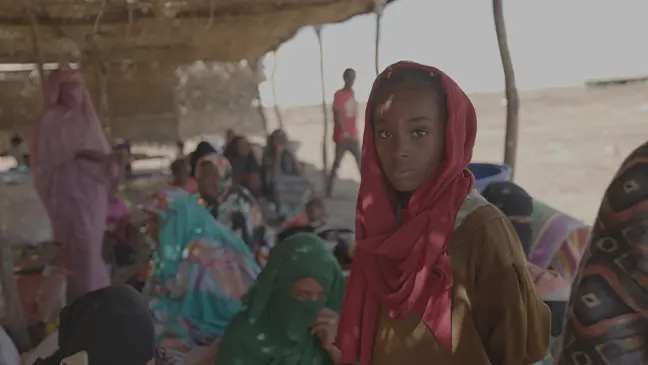
Without urgent action, the situation will continue to deteriorate.
Hunger and the risk of famine
Severe hunger has spread across Sudan. The war and actions of armed groups have obstructed humanitarian aid, looted markets and supply routes, shattered the economy and essential services, and forced farmers and communities from their land.
Today, more than 61% of people across Sudan – over 29 million people – are suffering acute food shortages.
The worst levels of hunger are now in Darfur and Kordofan, where violence is raging, and towns are under siege.
In late 2025, the IPC confirmed famine in and around El Fasher in Darfur and Kadugli in South Kordofan, warning that it would spread without urgent action.
In February this year, famine was confirmed to have spread to another two areas in North Darfur, and at least 20 more areas are at high risk of famine.
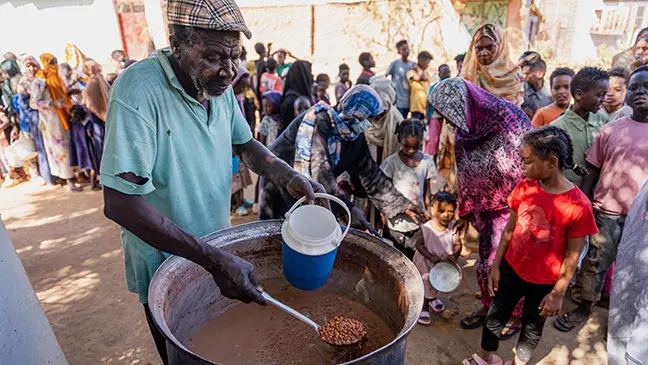
Since the start of the crisis, local communities and mutual aid groups have been at the heart of the response. These efforts have stopped famine from spreading even further.
A health system under attack
Sudan’s health sector has been decimated.
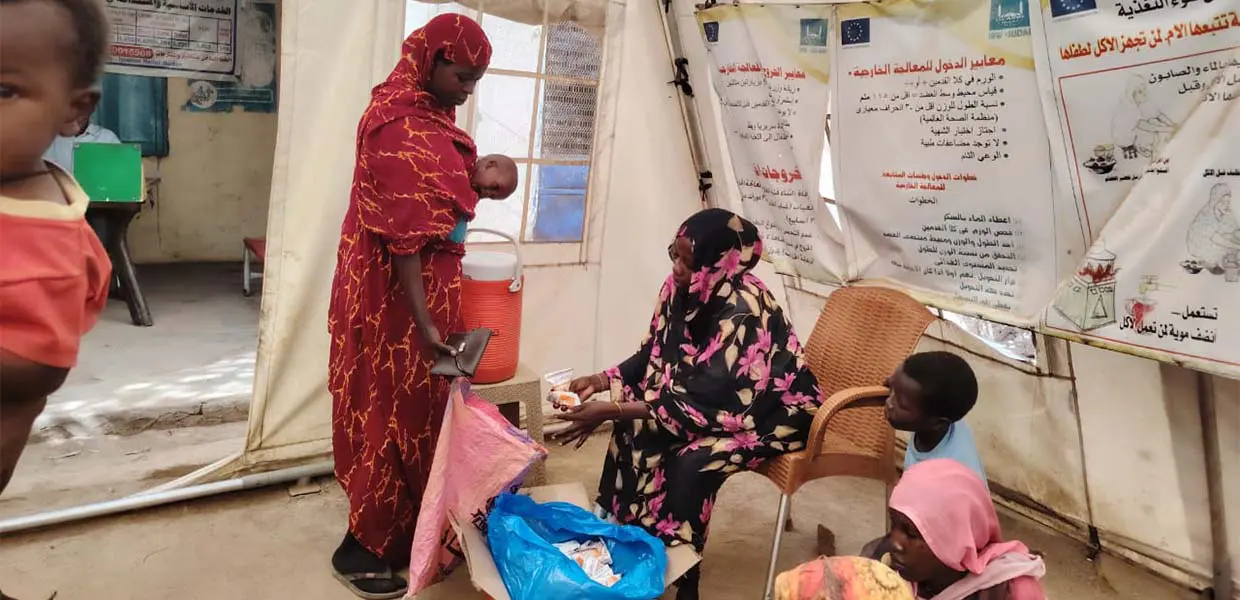
Many health facilities are out of service due to attacks, lack of funds, and shortages of staff, medical supplies, water and electricity.
Health workers are facing unprecedented violence. Hundreds of attacks on healthcare facilities have been documented since the start of the war.
Under international humanitarian law, health facilities and workers must be protected and must never be targeted, but despite this, at least 122 health workers have been killed.
Displacement, return and uncertainty
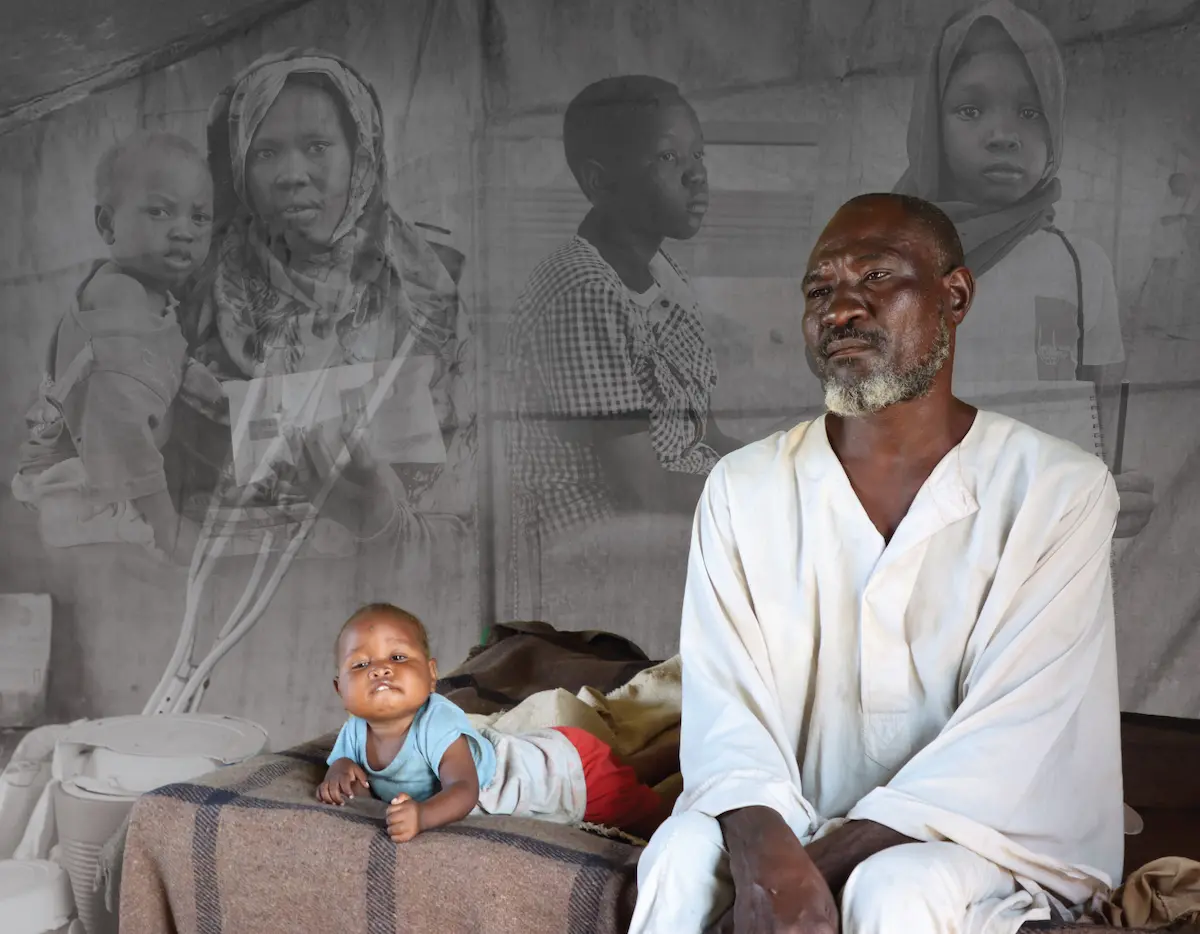
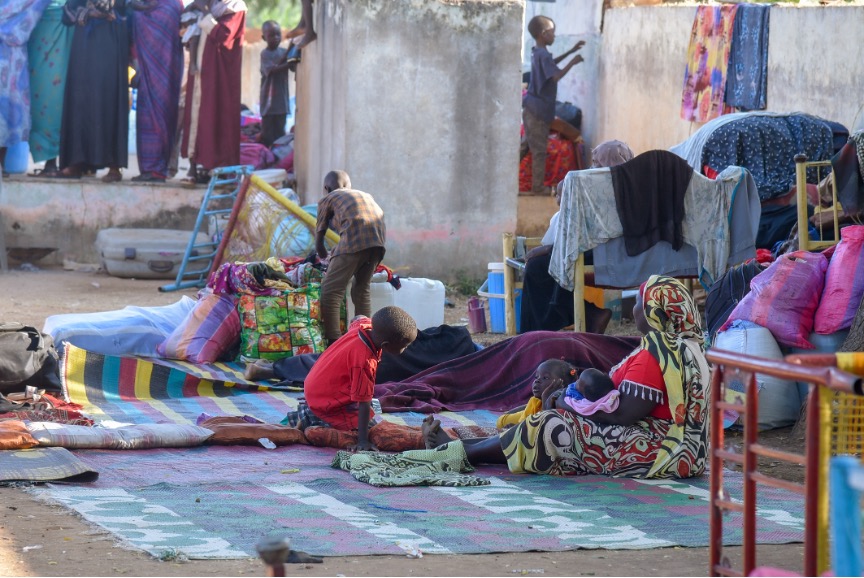
More than 9 million people are displaced across Sudan, with the majority in Darfur and Kordofan, where ongoing violence continues to prevent people from returning home. Many families in eastern and central Sudan remain displaced as they can’t afford to return or have nothing to go back to.
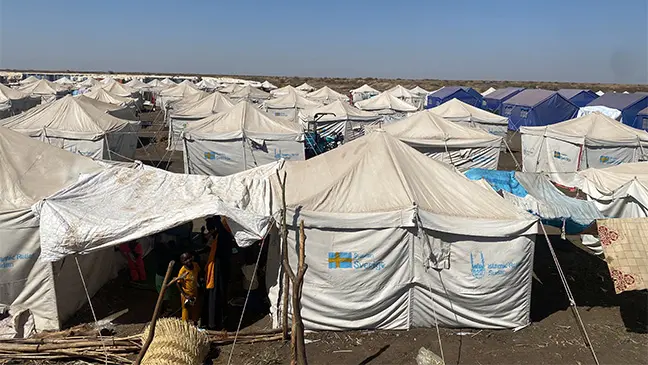
In places like Gedaref in eastern Sudan, we are seeing newly displaced families arrive, fleeing the violence in Kordofan and the border regions with South Sudan.
At the same time, more than 3.5 million previously displaced people have now been able to return home to places like Khartoum and Wad Medani, but there is little for people to return to. Many are returning to communities where infrastructure is damaged or destroyed, and basic services remain limited.
In late January, the government returned to Khartoum, and the central bank finally reopened there. Aid agencies are also beginning to move back, with Islamic Relief restarting our projects in Khartoum and Omdurman last year. However, major challenges remain.
Returnees need greater support from Australia and the international community so they can begin to rebuild their lives.
Aid is vital, but it cannot end the crisis alone
Humanitarian aid is saving many lives across Sudan.
Where access is possible, aid is helping to prevent starvation and provide essential support.
Since the outbreak of the war in April 2023, Islamic Relief has delivered aid to over 1.2 million people across Sudan. Our local teams are working tirelessly across the country, including in central Darfur, north and west Kordofan, Khartoum, Gedaref, Red Sea State, Al Jazirah, Sennar and Blue Nile.
We are providing food and clean water to families, delivering vital medicines and supplies to health clinics, and supplying seeds and livestock to farmers so they can earn a living.
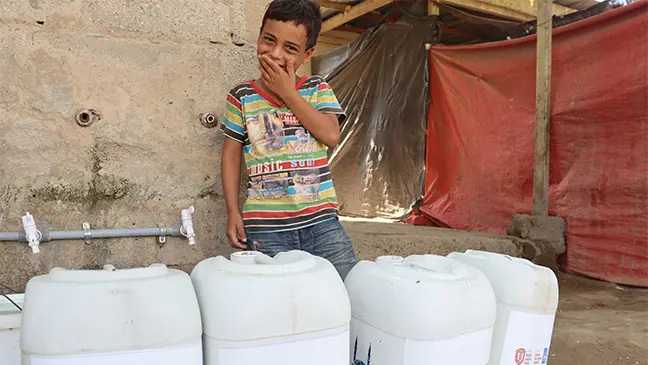
Many Islamic Relief staff and volunteers in Sudan have been displaced themselves, yet they continue to do everything they can to support the most at-risk communities.
Although more aid is needed, aid alone cannot solve this crisis – we need sustained diplomatic engagement to kickstart the peace process, agree a ceasefire, protect civilians, and ensure humanitarian access.
Sudan cannot be overlooked
The crisis in Sudan is critical. Australia must act urgently.
This includes:
- Scaling up diplomatic efforts, including through the UN Security Council, to push for an immediate, nationwide ceasefire as the first step towards lasting peace.
- Protecting civilians, aid workers and local emergency responders by backing efforts to prevent further attacks, atrocities and International Humanitarian Law violations.
- Securing rapid, safe, sustained humanitarian access across Sudan, especially to conflict-affected and besieged areas, so aid can reach every community in need.
- Increasing funding now, especially to local aid groups and women-led organisations, to help stop famine spreading further and provide life-saving assistance and services, especially to women and children forced to flee their homes.
- Supporting a regional response to this crisis, working with neighbouring countries to increase humanitarian assistance to refugees, enable safe cross-border access for humanitarian aid, and prevent the conflict from spreading further.
As violence shifts and intensifies and hunger deepens, millions of people remain in urgent need of protection and support. Without immediate action, the risk of further famine, displacement and loss of life will only grow.
Sudan cannot be overlooked. Call on the Australian government to act urgently to help end the crisis or find out other ways to help the people of Sudan here.