04.15.26
My Sons Never Came Home: Sudan’s Displaced Families
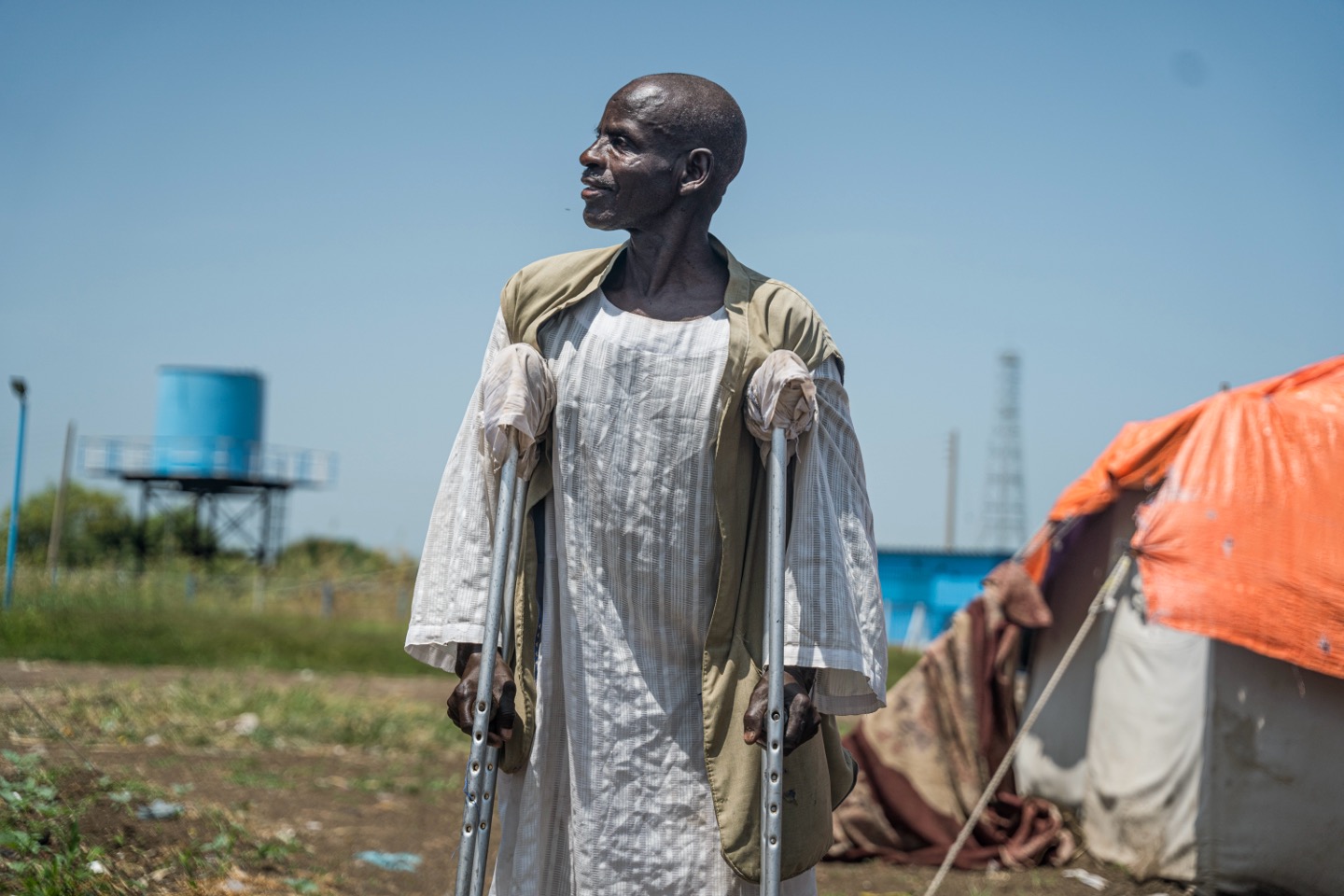
When Sudan’s war reached the major city of Omdurman, Adam fled with his wife and 4 daughters. Three years on, Adam’s family is scattered across different cities, but they are surviving and slowly rebuilding their lives.
Adam does not linger on the moment he made the decision to leave. He describes it the way people often describe the unbearable; plainly, with very few words. He waited as long as he could for his 2 sons, who had gone to the market that morning as the fighting in Omdurman intensified, to return, but they never came back, so he gathered his wife and daughters and left.
That is what displacement so often looks like in Sudan. Not a single dramatic moment, but a series of impossible calculations made in real time, with little information and no certainty.
Holding his family together
Like the hundreds of thousands of other families who fled Omdurman and the nearby capital, Khartoum, in the early weeks of the war, Adam’s family made their way to Wad Madani, Sudan’s second-largest city.
It sits 140 kilometres south of the capital, and was the country’s most significant hub for displaced families at that time.
The people of Wad Madani received them with generosity. They were housed in a school, and for a time, life was manageable.
In December 2023, armed groups swept into Wad Madani. Up to 300,000 people fled the city within days, including Adam’s family.
At Madani bridge, as the family tried to leave the city, they were stopped at a checkpoint. Armed men attempted to separate Adam from his daughters, aged 17 and 21, but Adam refused. Another armed man intervened, telling Adam to take his daughters and go.
Finding ground to stand on
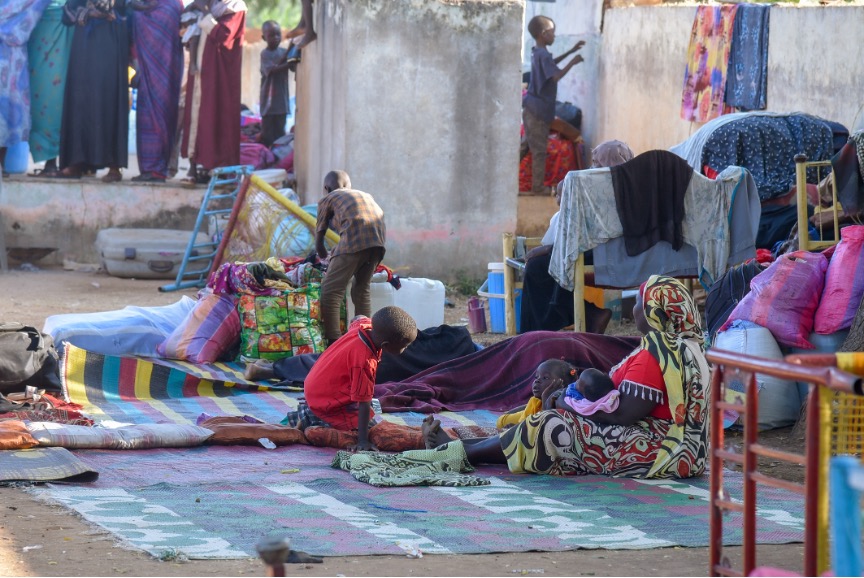
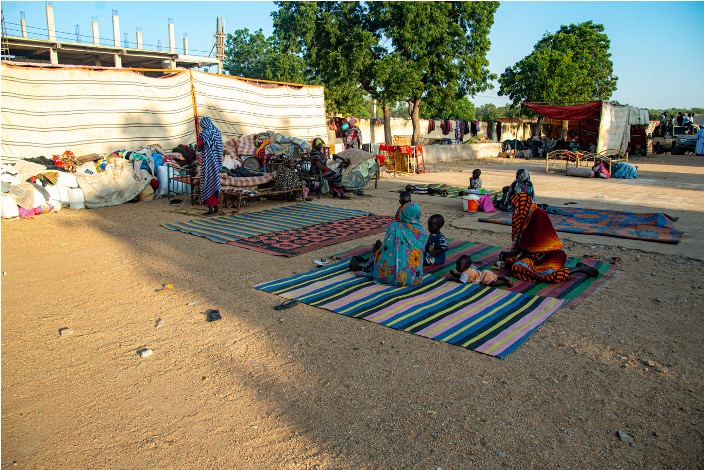
The family made their way to Altadamun School in Gedaref, where they spent the next 2 years in a school that had been converted into an emergency shelter for displaced families.
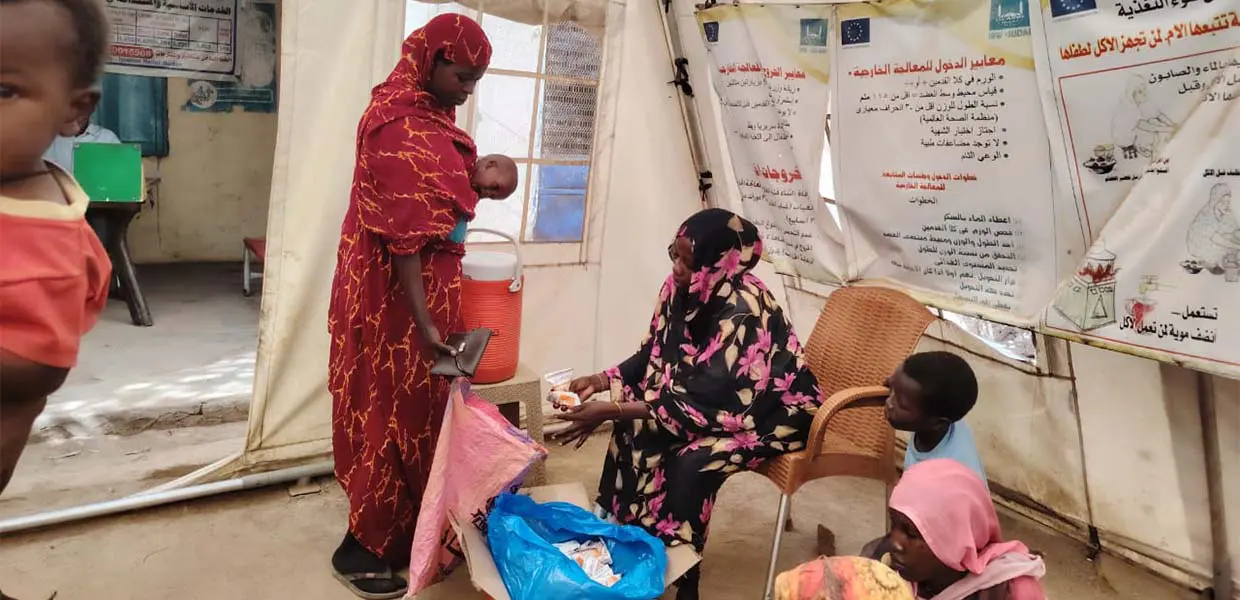
Islamic Relief provided Adam’s family with food baskets, flour, oil and essential household supplies. This made the difference between coping and not coping. “Without the support from the organisations, we would have nothing,” Adam says.
Eventually, Adam’s wife decided to take the daughters to Al-Duka, a town in eastern Gedaref near the Eritrean border, where her family is originally from.
They were given a plot of land to farm and are now in their second year of growing crops. This has given the family some stability, grounded in something more durable than emergency relief.
Adam lives separately, having to be close to his work. Due to high transport costs, he visits his family roughly every 2 weeks, and works hard to try to send them money on a monthly basis.
Forming community in displacement
What Adam has built in the camp where he now lives says something about who he is. He is deputy head of the camp committee — a body formed across 13 former school sites, representing 305 families.
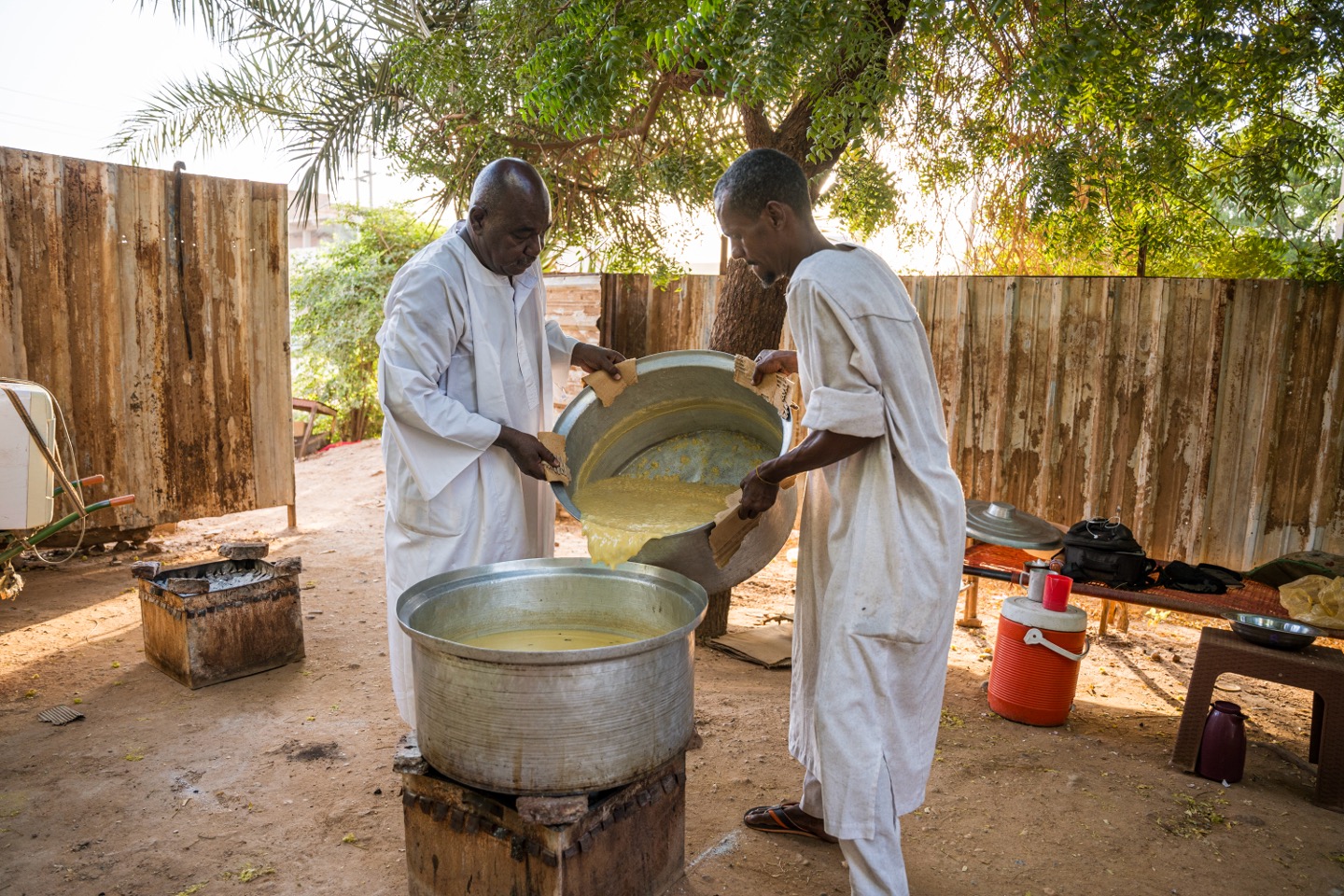
He checks tents, coordinates food distribution, ensures the sick and elderly receive their share, and manages the relationship between displaced residents and the local community with deliberate care.
Adam remembers how man from a different tribe who Adam didn’t know before arriving gave him a large bag of sorghum (grains) for his family in their first few days in the camp. Later, after hearing that man had died, Adam went to offer his condolences.
“The people here honoured us from the start,” Adam says. “And we appreciate them.”
How Islamic Relief is responding in Sudan
Islamic Relief has been working in Sudan since 1984 and we are currently operational across 9 states, including Gedaref.
Since April 2023, Islamic Relief has reached more than 2 million people across Sudan with life-saving aid, including food, medical supplies, agricultural support and emergency cash transfers.
At the time of Adam’s interview in October 2025, food distributions in his camp had stopped for approximately 4 months due to protracted fighting which has caused food systems to break down.
Markets are no longer functioning, aid can’t get through and food prices are soaring. A quarter kilogram of any basic staple in the market costs around 6,000 Sudanese pounds.
Three years since the war in Sudan began, millions of Sudanese families remain displaced, separated and waiting. Adam’s is only one of them.
More than 30 million people in Sudan are in need of humanitarian assistance. They cannot wait. Please support our Sudan Emergency Appeal and help us continue reaching families like Adam’s with the life-saving aid they urgently need.
Give relief to the people of Sudan
Help us continue reaching families like Adam’s with the life-saving aid they desperately need.