


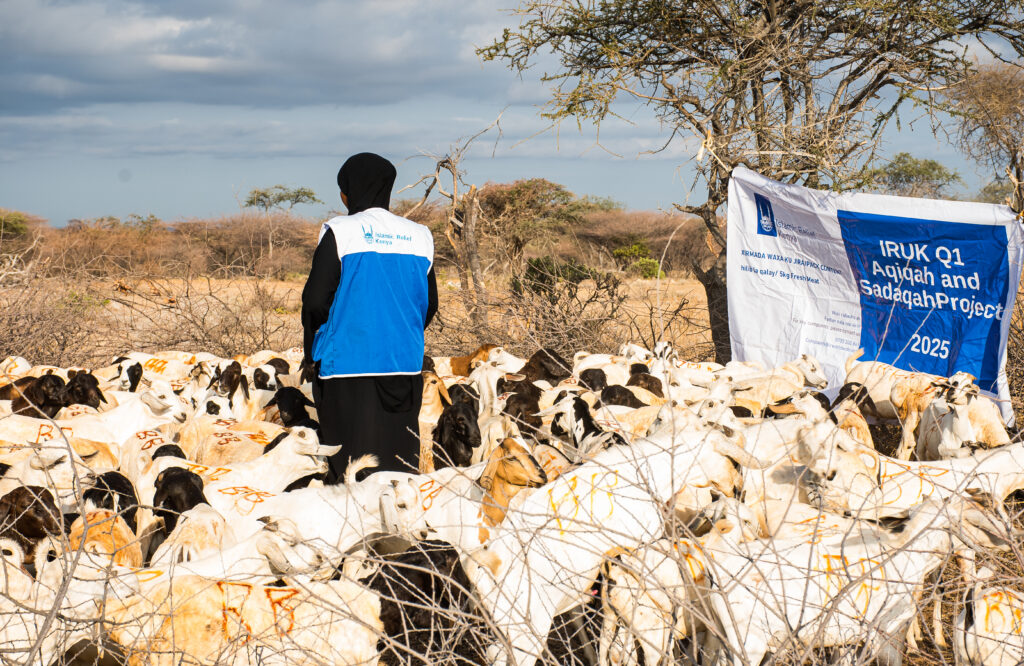
In Islam, Aqiqah is the sacrifice of livestock, traditionally a goat/sheep, at the birth of a child. It is performed as part of the Sunnah of the Prophet Muhammad ﷺ. It often takes place on the seventh day after a baby’s birth. However, doing it at a later time is also permissible.
The sacrifice is then divided between the family members who are carrying out the sacrifice, and also handed out to the poor and needy.
Overall, Aqiqah is a form of celebration. It is a means of showing gratitude to Allah for the blessing of a new baby.
“Every baby is held in pledge up to his aqiqah. So, on his seventh day, sacrifice should be made on his behalf, his head should be shaved, and he should be given a name.”
Abu Dawud
Aqiqah is sunnah. The Prophet Muhammad ﷺ provided a sacrifice to each of his two grandsons, Imam al-Hasan and Imam al-Husain, upon their births.
Likewise, Aqiqah is a way to feed those in need, and giving charity is a righteous deed in Islam. Hence, at Islamic Relief, we have a duty to be there for those who are most in need of our support.
Millions of people struggle every day with poverty, with many people going days and months without proper food. Your donation could provide a family with a meal and give them the vital nutrients they need. They would also have the chance to share in the celebration of new life. The reward of this beloved Sunnah benefits so many of us.
The Sunnah is for the Aqiqah to take place on the seventh day after a baby’s birth. However, there is nothing wrong with doing it at a later time.
The sacrifice is usually carried out by an adult male according to normal Sharia (halal) guidelines regarding meat. The animal(s) must be healthy and meet the requirements for the minimum age for slaughter. It must also not be slaughtered in the sight of other animals.
For a baby boy, two animals are sacrificed. For a baby girl, one animal is sacrificed. Narrated by Aisha (RA), the Prophet ﷺ said:
“Slaughter two comparable sheep for a male newborn and one sheep for a female.”
Tirmidhi
The sacrifice is then divided between the family members who are carrying out the sacrifice. It’s then handed out to the poor and needy. For family and friends, a party is often arranged to celebrate and share the meat.
Aqiqah is a highly recommended Sunnah, but if you would like to take part in this voluntary act of sacrifice, there are a few rules and guidelines you should follow:
The Aqiqah is often carried out first and then accompanied by a social gathering with family and friends, where a section of the meat is shared as a meal.
Islamic Relief has designed its Aqiqah project to allow people to donate the sacrifice meal directly to those most in need.
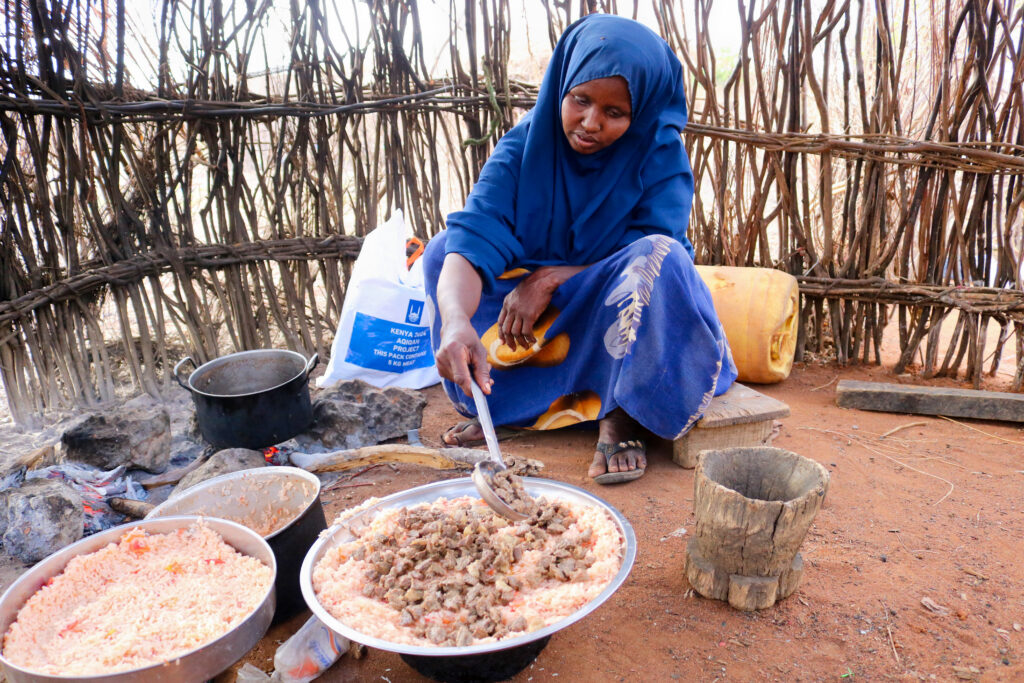
The project provides an opportunity for those who cannot afford to purchase meat to have the nutritional benefit of an Islamic Relief Meat Packet. The project involves the distribution of these fresh meat packets to the most vulnerable people, including women, children, the elderly and refugees. Each meat packet distributed contains a sufficient amount of meat (5 kg on average) for a family.
The newborn baby’s father usually pays for it. However, another relative can pay for the Aqiqah if the father is not able to, or if he gives permission to do so.
The Prophet Muhammad ﷺ offered Aqiqah on behalf of his beloved grandsons Imam Hassan and Hussain (AS).
Every sane adult who is eligible to pay Zakat, should offer Aqiqah at the birth of a new baby.
The Aqiqah meat from a sacrificed goat is divided into three parts according to the sunnah of the Prophet Muhammad (PBUH): the family, neighbours and friends, and the poor and needy.
Many Muslims cook the meat shares for family and friends and hold a celebration to eat together, shave the baby’s head and announce the name of the child. It’s a wonderful occasion to welcome the baby into the world, according to the Sunnah of the Prophet Muhammad (PBUH).
Muslims perform Aqiqah because it is a Sunnah of the Prophet Muhammad ﷺ, making it a beloved act of worship. Every sane adult Muslim who is eligible to pay Zakat should also offer Aqiqah.
Aqiqah is also important because it helps to bring blessings and protection to the newborn baby and their family, and to ward off harm.
“Aqiqah is prescribed for every child. Thus give thanks on its behalf, and remove the harm off it.”
Tirmidhi
In Islam, we are encouraged to remember Allah in all situations, in both happy and difficult times. To remember that everything in our lives is given to us by Him.
Aqiqah is also one of the rights that a newborn baby has upon his parents, alongside listening to the Adhaan as the first sound he/she hears and being given a good name.
Overall, Aqiqah is a means of expressing happiness and gratitude to Allah for the blessing of a new baby. It’s also an important reminder to remember those in need when celebrating our blessings, and to unite friends and family members.
At an Aqiqah party, family and friends gather to celebrate the birth of the newborn baby, usually in the new baby’s home or a community centre. A portion of the Aqiqah meat is cooked and served to the guests.
Guests also make dua for the new baby as it is welcomed into the community. Usually the Aqiqah party is combined with shaving the baby (on the seventh day after its birth), whereby the value of the weight of the hair shaved in gold or silver is given to those in need. The baby’s name is also usually announced at the Aqiqah party.
It’s a wonderful occasion to welcome the baby into the world, according to the Sunnah of the Prophet Muhammad ﷺ.
No, Aqiqah is not compulsory in Islam. However, it is a highly emphasised Sunnah of the Prophet Muhammad ﷺ.
The unanimous view is that even if one does not perform Aqiqah at the birth of a newborn baby, they will not be held to account.
There’s a difference of opinion on whether it’s a mandatory act or Sunnah Mu’akkadah (an act of worship performed by the Prophet (peace be upon him) continuously). The more dominant opinion is that it’s a Sunnah Mu’akkadah.
At the moment, we can’t guarantee performing the Aqiqah on the seventh day, as we perform them throughout the year.
According to Islamic Sharia Law and the Sunnah of the Prophet Muhammad ﷺ, it is not mandatory to say the name of a child. In fact, it is recommended to say “Bismillah” and “Allahu Akbar” during the slaughter.
The cost of the Aqiqah donation depends on the country of sacrifice. Group A costs $110 for a girl and $220 for a boy. For Group B, it is $175 for girl, $350 for girl. Group C is $250 girl, $500 boy. And Group D is $350 girl, $700 boy.
We do not need the child’s date of birth in order to perform the sacrifice.
Goats and sheep are sacrificed.
The Aqiqah can take place in any one of the countries in which Islamic Relief operates. For this year, when you donate with Islamic Relief Australia, your Aqiqah countries include: Mali, Niger (Group A), Kenya, Somalia, Bangladesh, Ethiopia (Group B), Pakistan, South Sudan, Afghanistan, Indonesia, Sri Lanka (Group C), Sudan, Yemen (Group D)
We provide raw meat to our beneficiaries so that they may cook it to their preference.
Islamic Relief provides you with the opportunity to do something amazing by donating to the Aqiqah project. Your donation will provide a family in need with a meal to quell their hunger. They’ll have the vital nutrients they need to survive, and the chance to share in the celebration of new life.
Shaving your baby’s head
Simply shave the head of your newborn, weigh the amount of shaved hair, equate that same weight in gold or silver value and finally provide it as a form of Sadaqah (voluntary charity).
It is a Sunnah to name the baby on the seventh day after the birth of your child.
The Prophet Muhammad ﷺ recommended it. Thus, it is a Mustahab Sunnah.
Shaving your newborn’s hair on the seventh day is the Sunnah of the Prophet Muhammad ﷺ.
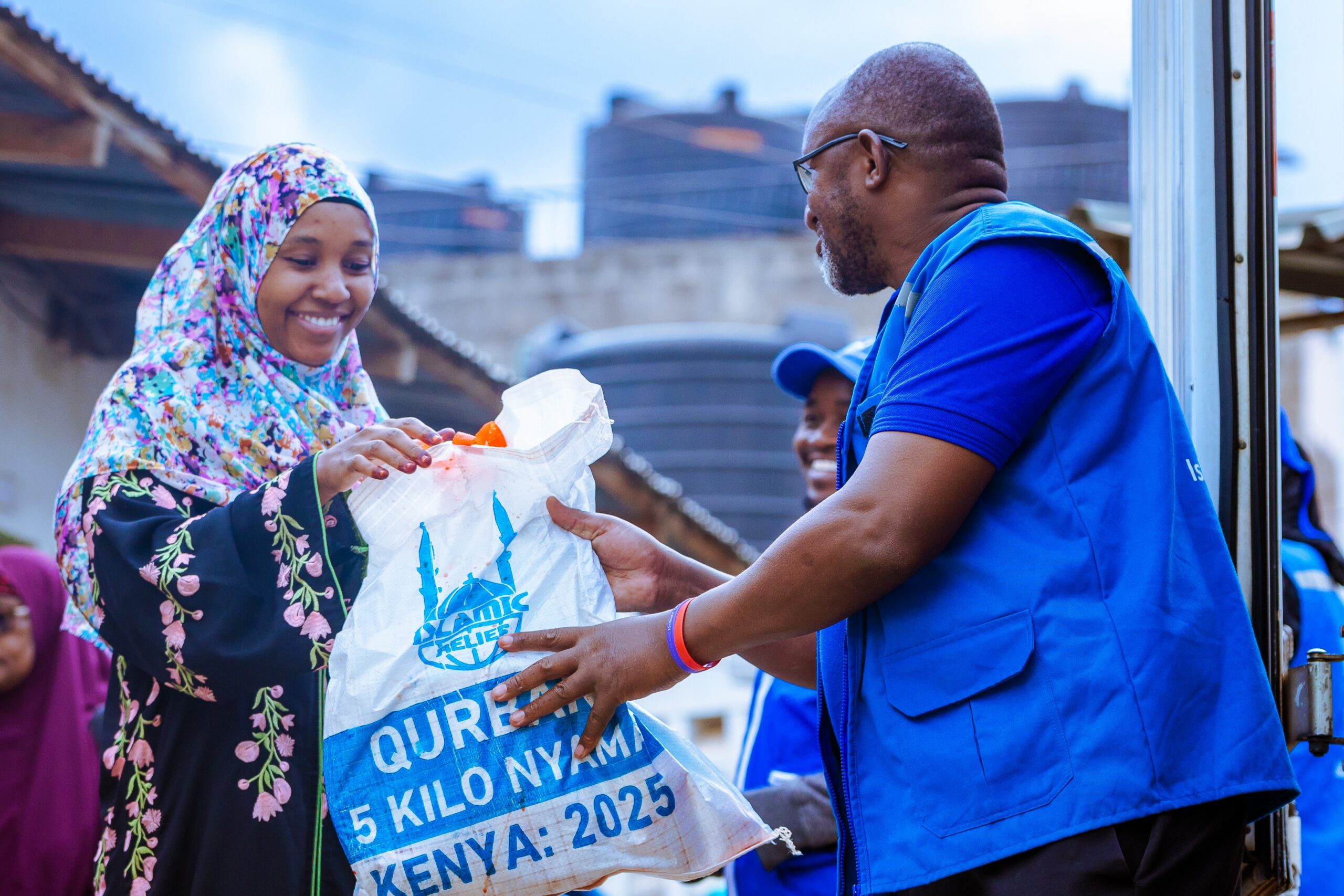
Islamic Relief’s Qurban distributions have been running since 1986. Last year, we delivered meat to over 3 million people.
As the first 10 days of Dhul Hijjah draw near, many of us prepare for the blessed time ahead. So…
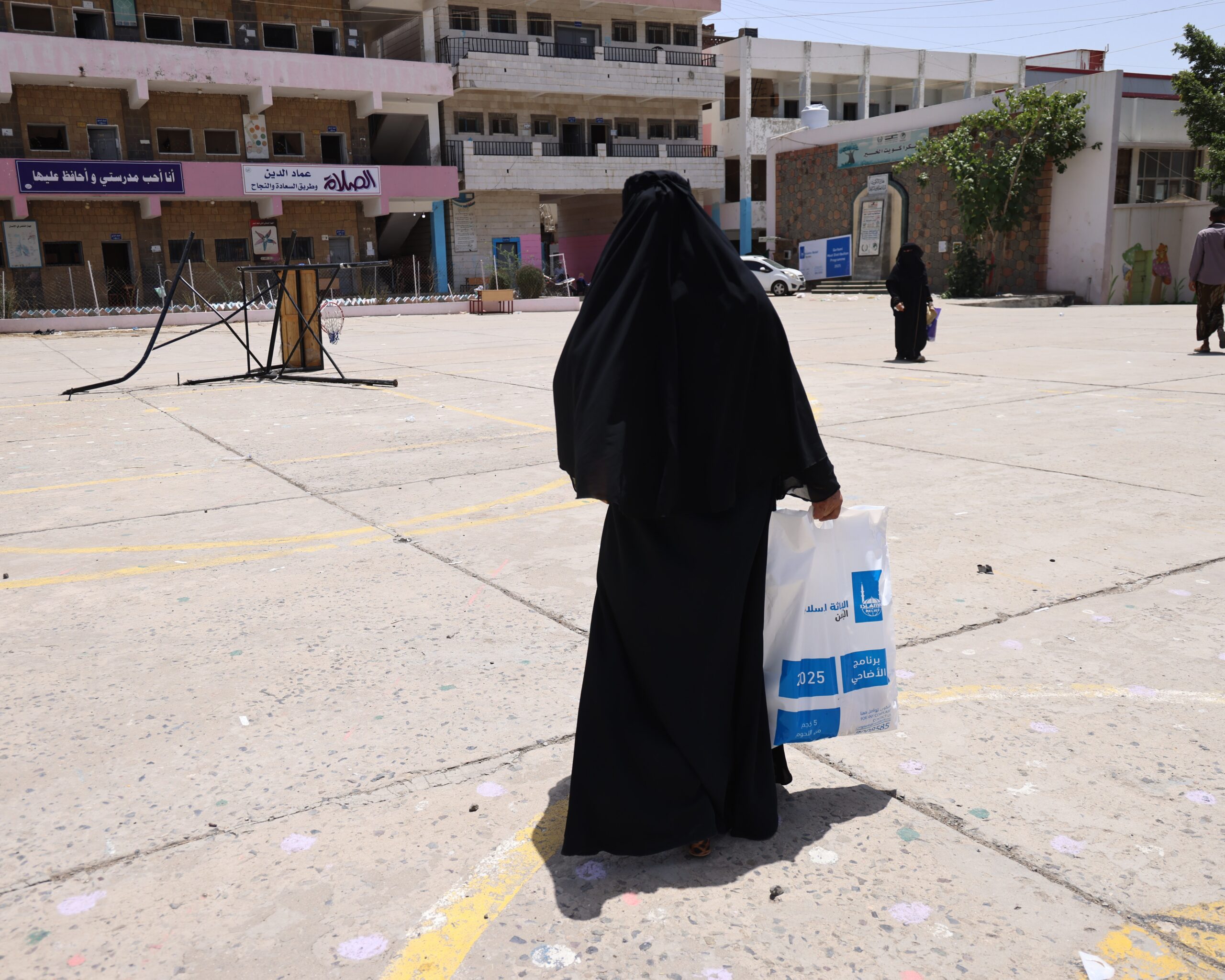
Saltanah, 50, lives in the southwestern city of Taiz, Yemen, with her 6 children. Eid al Adha is the only…