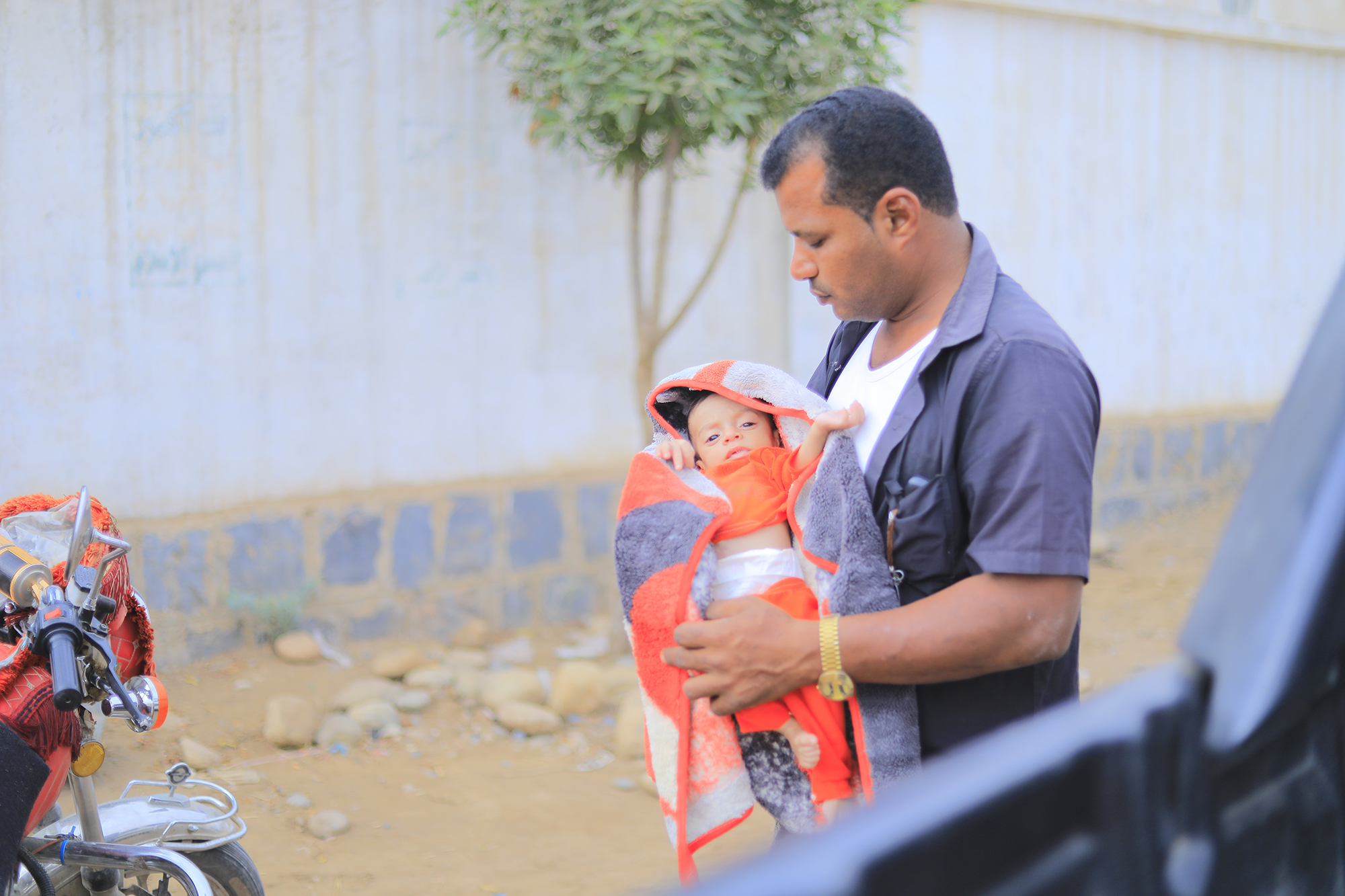
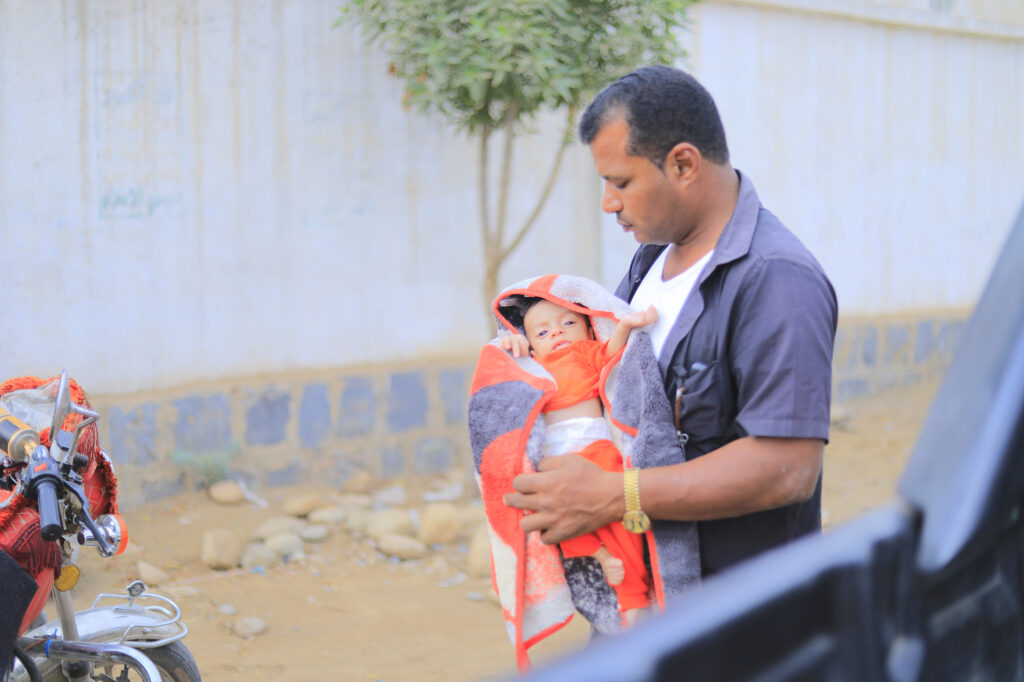
Saddam, a father from the remote Al Zuhrah district in Al Hudaydah, Yemen, faced an unimaginable challenge when his son was born with severe health complications.
“His body was so weak,” Saddam recalls. “He was always sick, crying, his skin stuck to his bones.”
Despite his wife’s efforts to breastfeed their child, the boy’s condition continued to deteriorate. Living in a village where employment is unstable and access to healthcare is limited, Saddam struggled to find answers—or help.
“I don’t have a stable job. I work wherever I can, whenever the opportunity arises,” he explains.
The nearest health centre is 10 kilometres away, serving over 20 villages. The burden on this facility is immense. In turn, for many families like Saddam’s, reaching it is a challenge in itself.
A ray of hope for families like Saddam’s
Yet when Islamic Relief began supporting malnutrition interventions in the area, a ray of hope appeared.
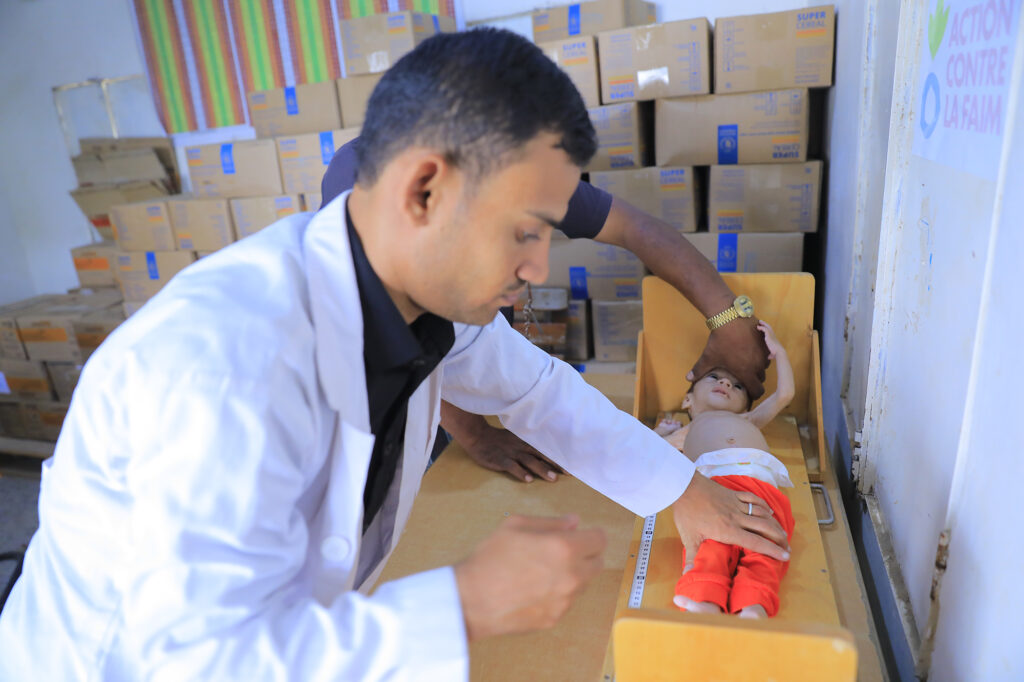
Saddam’s son was referred by Islamic Relief to a hospital in Abs. There, he was admitted into intensive care for close observation. Thanks to continuous follow-up, regular checkups, and the provision of proper medication and nutrition, his son’s condition began to improve.
“We now have weekly appointments. They give him the right vitamins and nutrition every time we go,” Saddam says. “He’s doing much better than before. Alhamdulillah.”
Though he admits he doesn’t fully understand the leading reasons behind malnutrition, Saddam speaks with clarity about its root causes: poverty, lack of employment, and the inability of parents to provide basic needs. “When fathers can’t find jobs, they can’t take care of their families. That’s what leads to illnesses like this.”
Despite these hardships, Saddam’s gratitude is powerful and deeply felt. “I just want to say thank you to Islamic Relief for taking care of our children and listening to their suffering.”
His story is a testament to the importance of accessible healthcare and nutrition support in crisis-affected communities. To the resilience of parents fighting to save their children, one small victory at a time.
Give Families in Yemen Hope
Help Islamic Relief continue to deliver life-saving nutrition and vital support to families during times of crisis.
In just the first half of 2025, your generosity changed millions of lives. Because you’ve helped Islamic Relief respond effectively to eight major emergencies across the globe.
From deadly floods and earthquakes to conflict and forced displacement, your kindness ensured that vulnerable communities received urgent assistance when they needed it most.
Thanks to our Emergency Fund and the commitment of donors like you, we were able to act without delay, delivering life-saving aid to families facing some of the harshest conditions on earth.
8 Emergencies. 8 Countries. One Global Response.
Between January and June 2025, Islamic Relief responded to critical humanitarian crises in:
Mali – Floods
Nigeria – Conflict
Democratic Republic of Congo – Floods
Ethiopia – Earthquake
Afghanistan – Forced Repatriations
Pakistan – Conflict
Myanmar – Earthquake
Indonesia – Floods
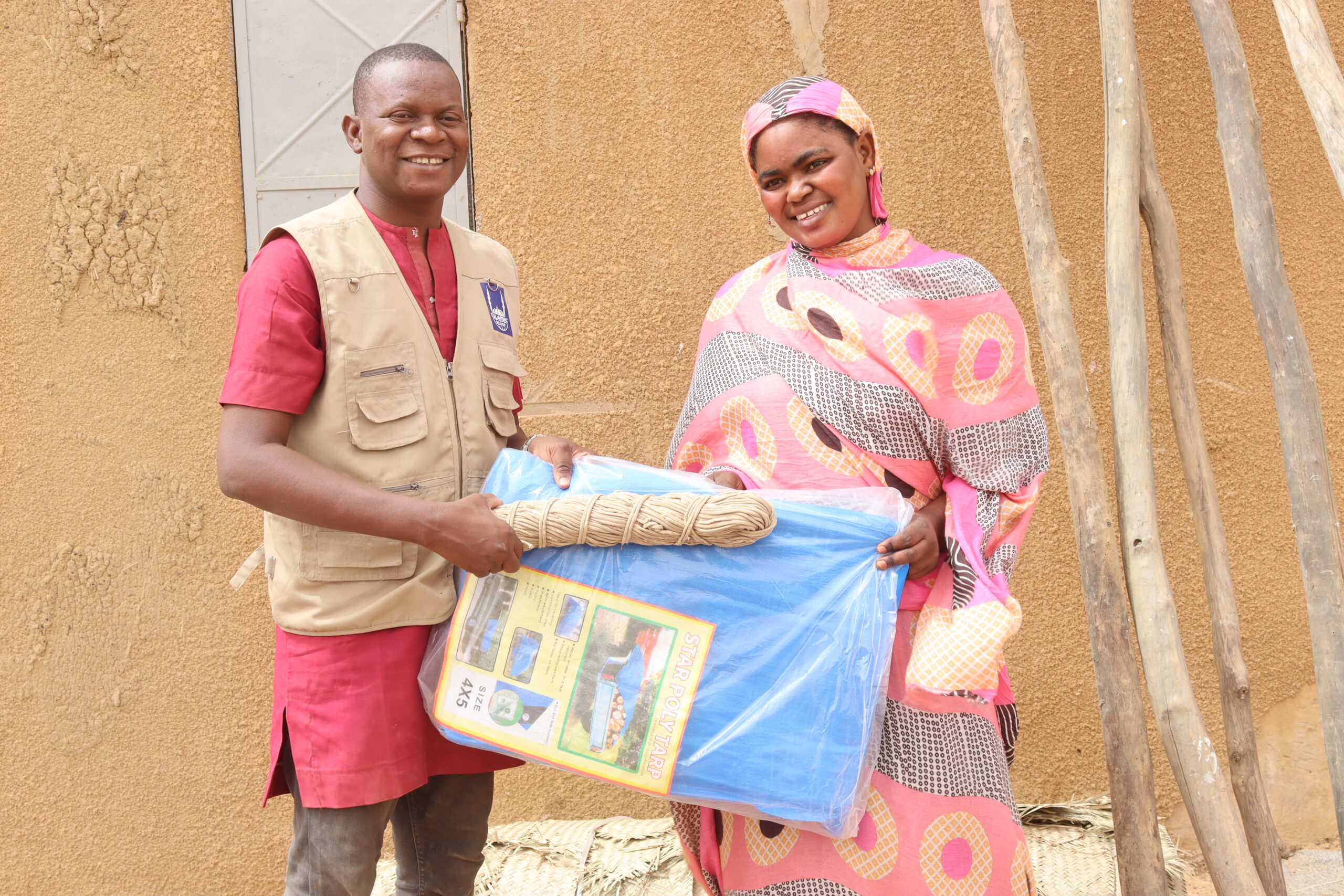
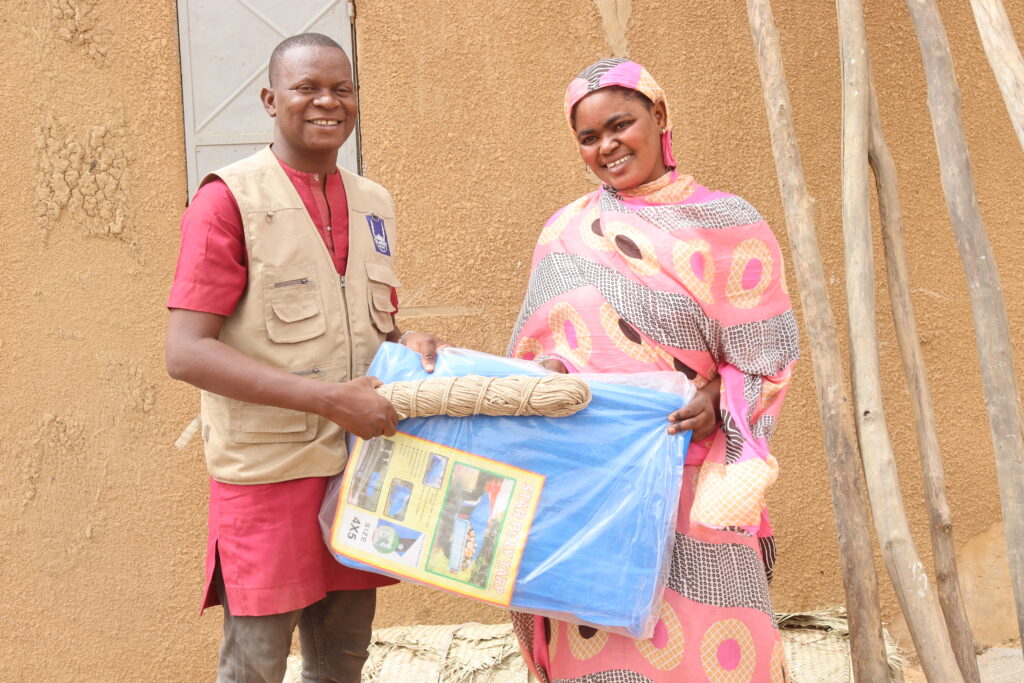
Photo: Emergency support (tents) in Mali after the floods.
These emergencies spanned multiple regions, but they all shared one thing in common: communities in urgent need of help. With your support, we were able to reach them swiftly and with care.
What Your Donations Helped Deliver
Your contributions made it possible for Islamic Relief teams and partners to provide:
Life-saving medical supplies
Emergency food assistance
Shelter and protection for displaced families
Support to maintain dignity and safety for the most vulnerable
Photo: Islamic Relief provides shelters for displaced returnees in Afghanistan
Whether we were distributing hygiene kits in Myanmar, food packs in Afghanistan, or emergency tents in Ethiopia, your donations were at the heart of every action we took.
A Coordinated, Timely Emergency Response
Islamic Relief’s global emergency system ensures that when disaster strikes, we’re ready. In the first six months of 2025:
75% of emergency panel meetings were held within one day of receiving the alert.
37.5% of emergency alerts were raised within just 72 hours of the crisis occurring.
£575,000 (approx. $1.1 million AUD) was allocated to these eight emergency responses.
78.3% of these funds were used in countries where Islamic Relief already operates, enabling rapid mobilisation.
21.7% supported efforts in countries without an existing IR presence through trusted, local partners.
Photo: Islamic Relief working with local partners in Indonesia to distribute emergency aid.
This coordination is only possible because of the Emergency Fund. It allows us to act immediately, without waiting for donations to be raised after the disaster has already happened.
A Closer Look: Impact in the Field
In Afghanistan, thousands of families faced forced repatriation. There, we provided essential aid, including food parcels, hygiene kits, and warm clothing for children.
In Myanmar and Ethiopia, earthquakes destroyed homes and infrastructure. Our teams moved quickly to deliver temporary shelters, clean water, and medical supplies to those affected.
In Mali, DRC, and Indonesia, destructive floods displaced entire communities. Your support enabled us to distribute vital food, clean water, and emergency kits to help families survive and recover.
And in Pakistan and Nigeria, where conflict continues to uproot lives, your donations helped provide safety, protection, and dignity to those caught in crisis.
Why the Emergency Fund Matters
Emergencies strike without warning. When they do, every hour matters.
Our Emergency Fund is what makes rapid response possible. Rather than waiting to raise funds after a disaster hits, we’re able to respond immediately, getting aid to where it’s needed within days, not weeks.
Your support of this fund means that families impacted by floods, earthquakes, or conflict don’t have to wait for food, shelter, or medical care. It means relief can reach them immediately when they need it most.
Looking Ahead: A Call for Continued Support
The first six months of 2025 were a stark reminder of how quickly lives can be turned upside down. But it was also a testament to what we can achieve together.
Thanks to you, we were able to help thousands of people in their darkest moments. But the need hasn’t ended. New emergencies continue to emerge, and Islamic Relief must be ready.
By donating to our Emergency Fund today, you ensure we can respond rapidly to the next crisis, whenever and wherever it occurs.
Give Families Hope and Relief
Help Islamic Relief continue to deliver life-saving emergency responses and hope to families during times of crisis.
What would you do if your child needed urgent medical care, but the nearest clinic was an exhausting hour-and-a-half’s walk away? Would you risk the journey in the rain, through snow, harsh mountain winds or scorching sun? Would you carry a sick child in your arms in the hopes of getting there safely?
In Lailour Pain village, a remote part of Yakawlang district in Afghanistan’s Bamyan province, these questions were once part of everyday life. For Khadija and many other mothers, accessing healthcare was an uphill battle. But all that is changing now.
Living with uncertainty
Khadija, 45, has spent her entire life in Lailour Pain, a village her family has called home for generations. Together with her husband, Abdullah, she cares for a large family of 14: 3 sons, 4 daughters, 2 daughters-in-law, and 3 grandchildren.
“My husband is 58 and works as a farmer. Our income comes from the crops we grow on our farm. If the crops grow well and there is enough water, we manage. But if there’s a drought, we have nothing. It becomes very difficult to survive.”
The family’s modest 4-room mud house provides shelter but lacks the comfort and warmth of a proper home. They struggle with poor harvests year after year, leaving them with no choice but to purchase food from Yakawlang city, around 20 kilometers away — a journey that is both expensive and physically demanding. Access to clean drinking water remains limited, with the family relying on a shared community well from which they must draw water each day by hand. While Khadija’s daughters are continuing their education at a nearby primary school, access to even the most basic health services has always been out of reach for the family.
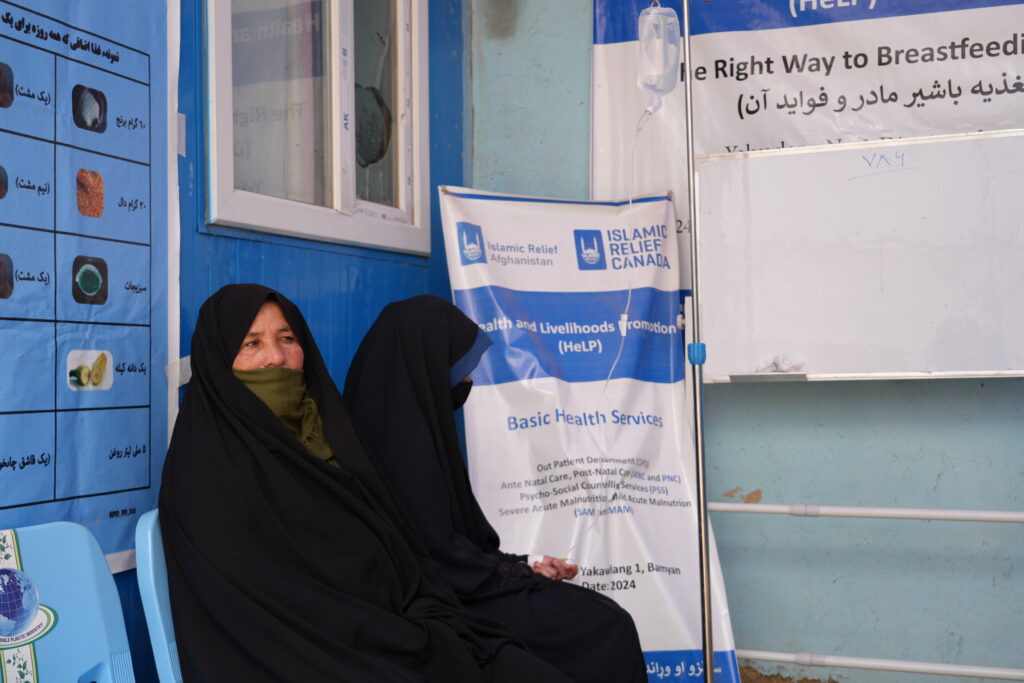
Photo: With improved access to medical services, Khadija’s family is now receiving treatment and care under Islamic Relief’s HeLP project
A new beginning for the community
In September 2024, with support from the Health and Livelihoods Promotion (HeLP) project, Islamic Relief built a clinic in Khadija’s village. Every day, the facility serves around 100 patients, not only from Lailour Pain but also from several neighbouring villages who previously had no access to nearby healthcare.
For family’s like Khadija’s, the new clinic has been life-changing.
“My eldest daughter, who is 25, has kidney problems and needs regular medical attention. Before, it was a long journey to get her help,” Khadjia says.
“We had to walk for an hour and a half to reach the nearest health centre. It was very tiring. I have back pain myself, and making that journey was hard.”
Many villagers, especially mothers and elderly people, were unable to make the long trip. Even when they did, there was no guarantee that the clinic would have the medicine they needed. Illnesses, particularly among children, went untreated. Health education was non-existent.
“There were times we had to cut back on food just to afford a trip to the city for medical treatment. It was painful, especially in winter,” Khadija recalls.
The new clinic offers a wide range of services. It includes outpatient consultations, antenatal and postnatal care, psychosocial support, and nutrition programs. Children who need specialised care are referred for treatment, and families receive counselling on hygiene and wellbeing.
For months, Khadija lived with chronic back pain. Even simple chores such as cleaning and cooking became a struggle for her. After visiting the clinic, she received pain relief medication and advice on how to manage her condition at home.
“It changed our lives,” Khadija says quietly. “Now, when we’re sick, we go to the clinic nearby. We receive medicine, guidance, and care. I feel better, and I can do my daily chores without pain.”
Women in the village, who once hesitated to seek care, now feel safe and confident visiting the clinic. Health awareness has also improved, and with it, the overall quality of life has improved.
Khadija emphasises the importance of expanding the services. “We need delivery care. Complications during childbirth are common, and these services would save lives.”
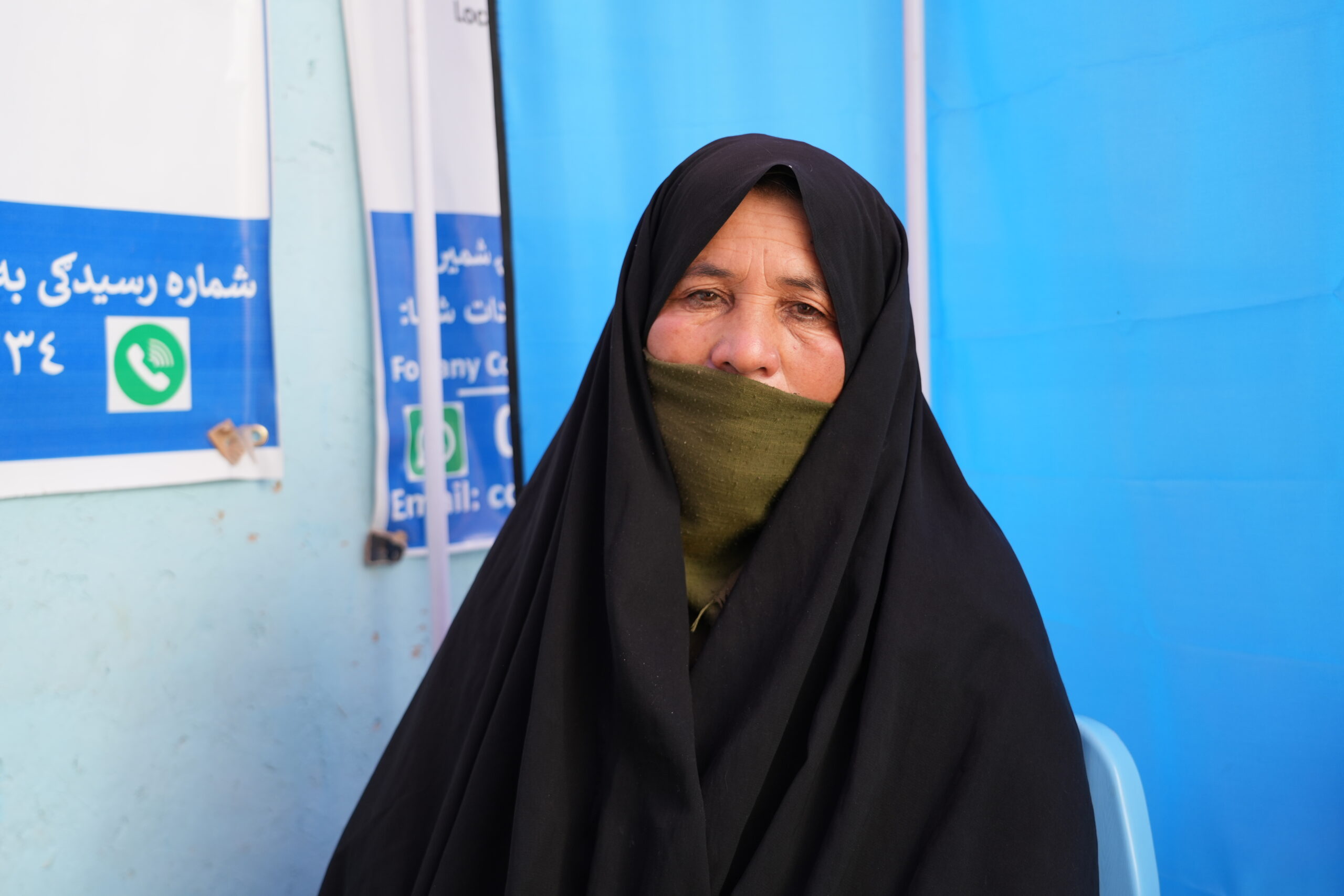
Photo: Khadija sitting at the clinic established by the Islamic Relief in her village. Like many women in the area, she now has access to healthcare thanks to Islamic Relief’s clinic
A mother’s wish
For Khadija, the clinic is more than a health centre—it’s a promise of a brighter future.
“I want my children to be healthy. I want them to study, grow, and have better lives than we had. This clinic gives me hope that it’s possible.”
She sits quietly, her dark green and black shawl wrapped tightly around her shoulders, her voice soft but steady. “We are thankful to Islamic Relief. What you’ve done here has changed our lives.”
Across Afghanistan, countless families like Khadija’s continue to face major challenges in accessing basic healthcare. Long distances, poverty, and a lack of local services put lives at risk, especially for women and children. With your support, Islamic Relief is working to change that by building clinics, training staff, and delivering life-saving care to some of the most remote communities.
Give Families Hope and Relief
Help Islamic Relief continue to deliver life-saving health services and hope to families like Khadija’s in Afghanistan.
Gadarif state in Sudan was once a quiet agricultural region. Now, it is a reluctant refuge for thousands of families fleeing Sudan’s spiralling conflict.
Among them is mother-of-5 Rayan, whose life has been reduced to a daily struggle for the most basic necessities: food, shelter and safety.
Her story is a snapshot of the global refugee crisis, one that forces us to confront the human cost of displacement, not as a distant tragedy, but as a relentless reality for millions.
The night everything changed in Sudan
Rayan’s family once had a home in Khartoum, a modest but stable life. Her husband ran a small business and her children went to school. “It was not luxury,” she recalls, “but it was ours.”
That changed overnight when fighting reached their neighbourhood last year. With bullets flying and shops ablaze, the family abandoned everything they had known. Joining the endless stream of displaced individuals searching for safety, they drove first to Singa in the Blue Nile region and then on to Gadarif after renewed clashes.
“We left with nothing,” she says. “No money, no belongings, no papers, just the clothes we were wearing.”
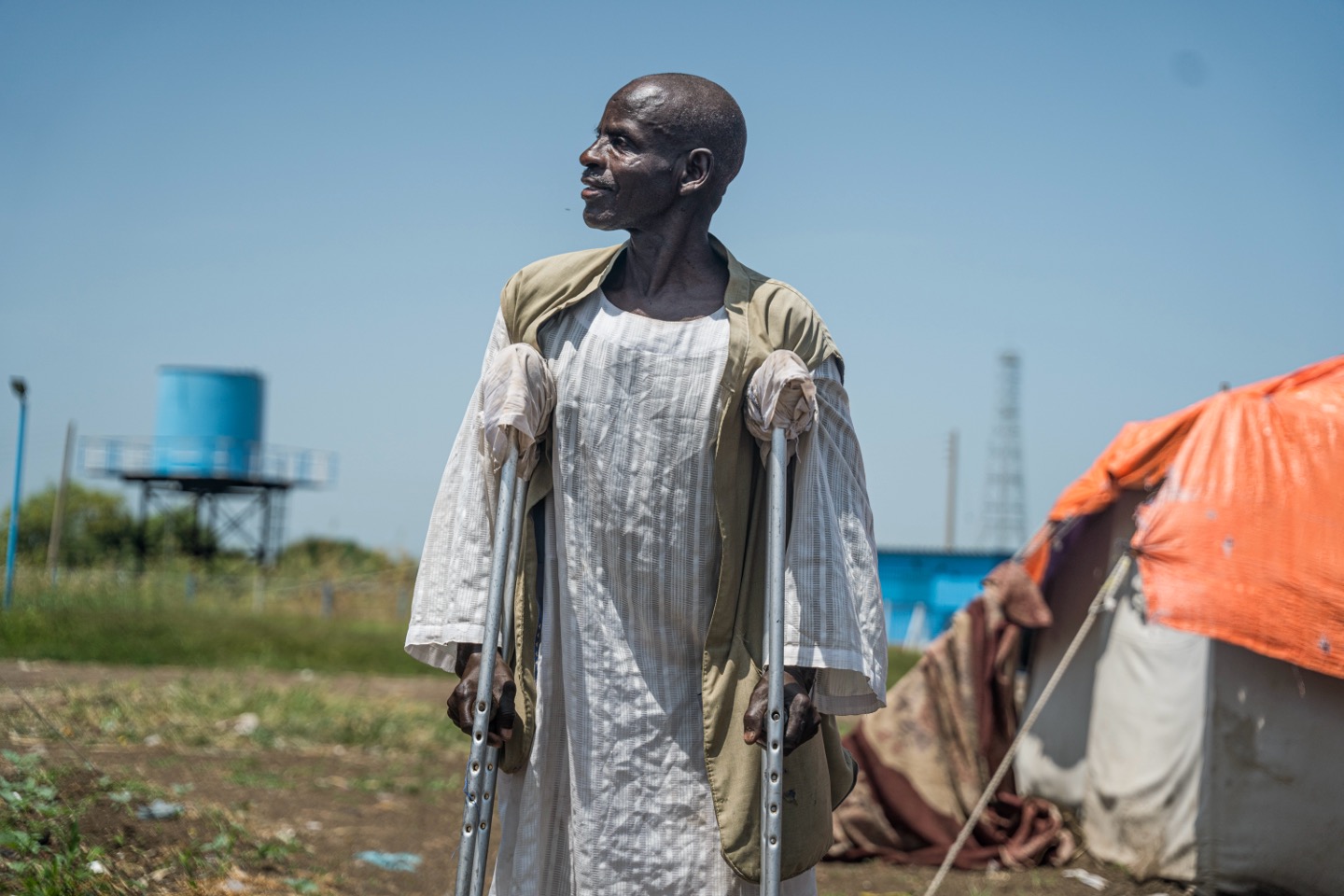
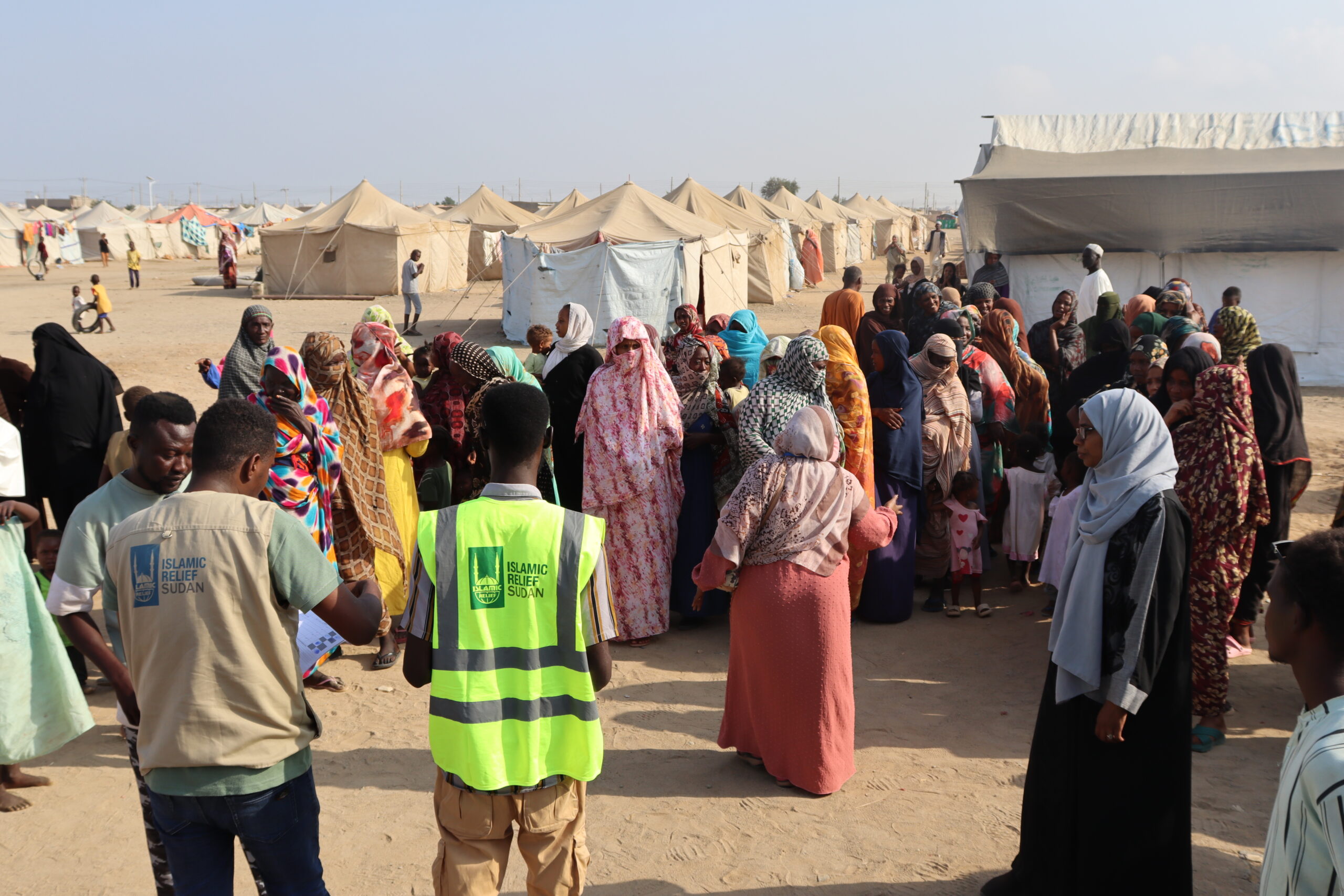
Photo: In Gadarif, thousands of displaced families live in cramped, improvised shelters, relying on humanitarian support to meet daily needs
Today, the family of 7 live crammed into a host family’s compound. Plastic sheeting covers gaps in the walls; a single jerry can stands in place of household furniture.
Rayan’s husband searches the market each dawn for day labour. On good days, he earns approximately $5.20 AUD loading grain sacks and stacking produce carts. On the many bad days, he returns empty-handed.
The world’s largest displacement crisis
The speed of displacement in Sudan has been staggering: the United Nations estimates that over 11 million Sudanese are now uprooted, the largest internal displacement crisis on record.
Yet Sudan is only one fault line in a global pattern. Worldwide, 122.6 million people – three-quarters of them women and children – live in limbo after fleeing conflict, persecution, and disaster.
Displacement triggers a chain reaction of suffering. Children drop out of school, families sell all they have, and illness spreads where healthcare is scarce.
Photo: Sudan’s ongoing conflict has created a staggering displacement crisis.
In Gadarif, the hot nights lead to increased health risks for displaced families, including young children who are particularly vulnerable to malaria. Rayan’s 2 -year-old daughter has already fallen ill.
For adolescent girls, the crisis brings an additional layer of anxiety. Sanitary pads are expensive luxuries, and makeshift alternatives raise health risks and keep girls indoors.
Islamic Relief delivers lifesaving aid in Sudan
Islamic Relief distributed aid to Rayan’s neighbourhood supported by the Humanitarian Emergency Fund (HEF). Each household received a dignity kit, which included 2 mosquito nets, sanitary pads, toothbrushes, soap, blankets and headscarves, plus a cash grant.
“The mosquito net was a small thing that gave us much peace,” Rayan says. Her youngest now sleeps through the night. The cash covered a month’s rent and also stretched to cooking oil and lentils. “For the first time in many weeks,” she adds, “I bought meat.”
Islamic Relief colleagues in Sudan emphasise that cash restores choice and dignity. “It allows families to decide what they need most,” explains Adam Yagoub, Islamic Relief Sudan’s communication officer. “Some buy food, some pay medical bills, some save a little for the journey home, when return is possible.”
A fair chance at survival
Sudan’s conflict shows no sign of abating; humanitarian corridors remain volatile, and funding gaps widen as new crises compete for attention. Islamic Relief’s latest Sudan appeal is only 42% funded.
Rayan understands these numbers translate into rationed assistance. “We do not expect comfort,” she says, “just a fair chance.”
Her wish list is simple: regular food parcels, safe shelter, mosquito spraying across the settlement, and, above all, peace so her children can return to school.
Donate to our Sudan emergency appeal now to help families like Rayan’s survive with dignity.
More than 2 years ago war erupted in Sudan, tearing apart lives, homes and futures. Since then, millions have been displaced, thousands killed, and countless families left with nothing.
Among them is Abu Bakr, a 43-year-old farmer from Sharq Al-Bahar.
His story is one of unimaginable loss, but also of strength, faith and the urgent need for peace.
“They left us with nothing”
Abu Bakr, a father of 2, once tended to 15 acres of land, growing chilli, mint, and onions. He was his family’s only source of income. But in an instant, everything was stolen from him.
They kicked us out of our village, beat us, and told us the land belonged to them now. [Then] They whipped us, stole our cars, took our crops, even the money we had saved. They left us with nothing.
With no time to gather belongings, Abu Bakr, his wife, and their children joined the exodus of displaced families. The journey to Gedaref in eastern Sudan, a region now overwhelmed with displaced families, was a nightmare.
“For 2 days, we had no food, no water, not even tea,” he says. “The elders suffered the most. Some were too weak to move. We had to leave behind the sick because we had no way to carry them.”
The roads were controlled by armed men, forcing them to take dangerous detours. At one point, they passed a village where even the solar-powered water pumps, once a lifeline for thirsty travellers, had been seized by fighters.
“They took everything,” Abu Bakr repeats, as if still trying to make sense of it. “Even the medicine from the hospital. They left nothing.”
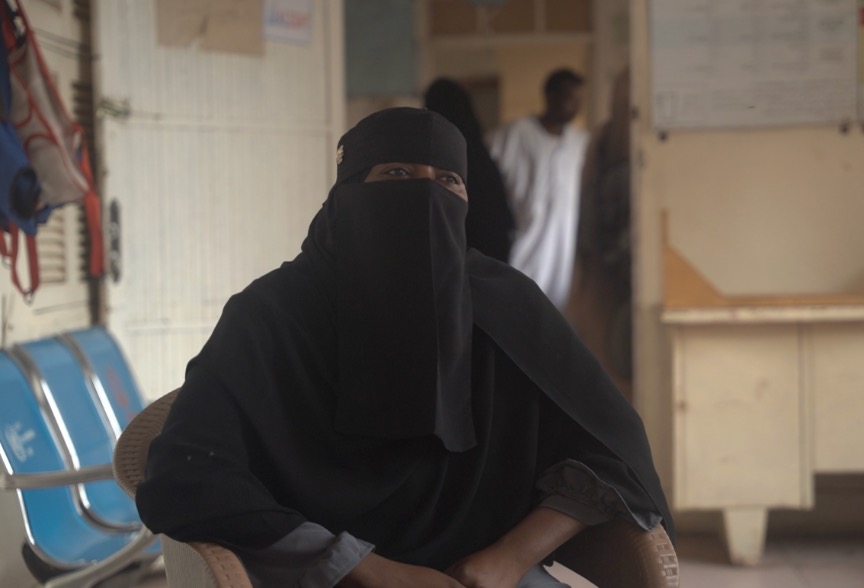
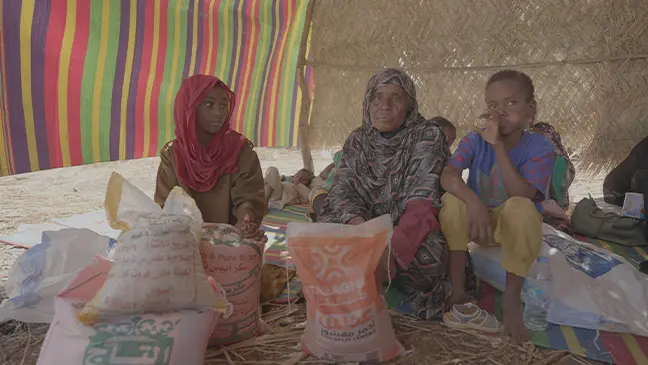
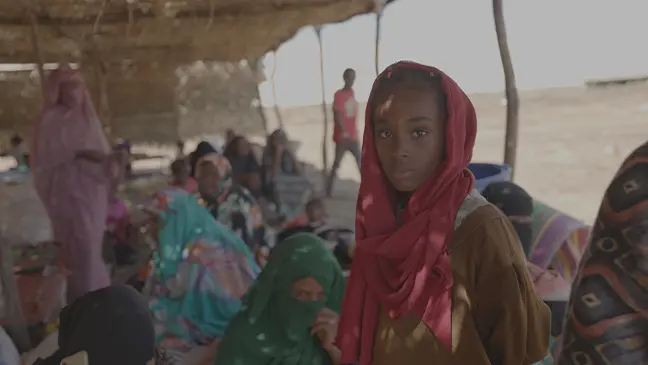
Photo: Displaced families gather in a makeshift shelter in Gedaref. With no formal camps available, many rely on community support and humanitarian aid to survive.
Sudan: A Shattered Nation
When they finally reached Gedaref, there was no shelter waiting for them. No aid. Just thousands of other displaced families, all equally desperate.
“We slept under trees at first,” Abu Bakr says. “Then, with the help of some community members, we set up a makeshift tent.”
The lack of sanitation is dire; there are not enough latrines, and diseases spread quickly. Food is painfully scarce.
Yet even in these conditions, acts of kindness have kept them going. Many local people opened their homes and shared what little they had, providing newly arrived families with shelter and food. Islamic Relief was among the first organisations to deliver food: lentils, rice, sugar and cooking oil.
“They even brought us bread from the bakery,” Abu Bakr says. “May Allah bless them.”
But these provisions are a temporary reprieve, not a solution.
“What we need most is safety,” he stresses. “And a way to earn a living again. Right now, we have nothing.”
Photo: Overcrowded living conditions in a displacement camp. Limited sanitation and scarce resources have led to disease outbreaks among vulnerable families.
Sudan’s Wounds of War
The physical deprivation is only part of the suffering. The psychological toll is crushing.
“Honestly, it’s indescribable,” Abu Bakr says when asked about his mental state. “I am so upset, not just for myself, but for all of Sudan. I don’t think we will ever recover from this.”
His children, once carefree, are now withdrawn. His wife struggles with fear and grief. The betrayal cuts deepest, many of the attackers were once neighbours, even friends.
They ate with us, worked beside us, then turned on us. When they came for our village, they were wearing uniforms. They pointed guns at us and said, ‘This land is ours now.’
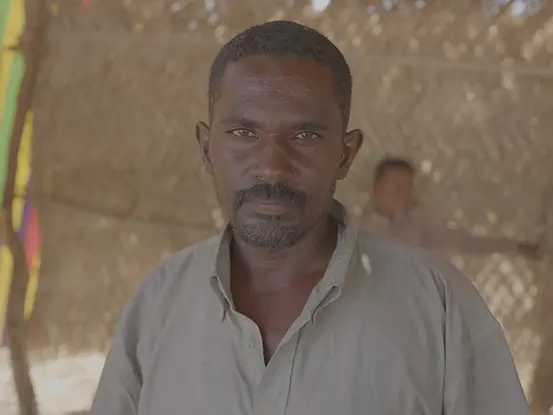
Abu Bakr, a 43-year-old farmer and father in Sudan.
A Plea for Peace
When asked what he would say to the international community, Abu Bakr’s answer is immediate:
“Stand with the people of Sudan. We are innocent. We need peace.”
Years of war have brought unimaginable suffering, yet the world’s attention has faded. Humanitarian aid is insufficient. Diplomatic efforts have stalled. Meanwhile, millions of Sudanese civilians – farmers like Abu Bakr, mothers, children, the elderly – are trapped in a crisis not of their making.
His dream for the future is simple:
“For the war to end, and for everyone to return home safely.”
Islamic Relief has worked in Sudan for 40 years, providing vital humanitarian assistance including hygiene, food and mental health support.
Give relief to the people of Sudan
Help us provide urgent relief to our brothers and sisters suffering in Sudan due to the ongoing and devastating conflict. Be their lifeline today.
Two years since the war broke out across Sudan, the country is facing a humanitarian catastrophe.
Over 30 million people now need humanitarian aid and more than 15 million have been displaced – many multiple times. Markets are destroyed, many schools are now closed and hospitals are barely functioning.
Communities that once bustled with life are now silenced by fear and hunger.
But through your generosity, there is still hope. In one of the hardest places on earth to deliver aid, your support is helping Islamic Relief reach families who have lost everything, supporting 1.2 million people so far.
Helping to keep healthcare going
Two out of three people in Sudan can no longer access basic healthcare. In the areas most affected by conflict, 75% of health facilities are out of service. At least 122 health workers have been killed, and attacks on clinics and hospitals continue.
But thanks to you, Islamic Relief is helping to keep healthcare going.
Your donations have helped us supply medicine, supplies, and support to 52 hospitals, health centres and mobile clinics in Al Jazirah, Darfur, Gedaref, and Sennar.
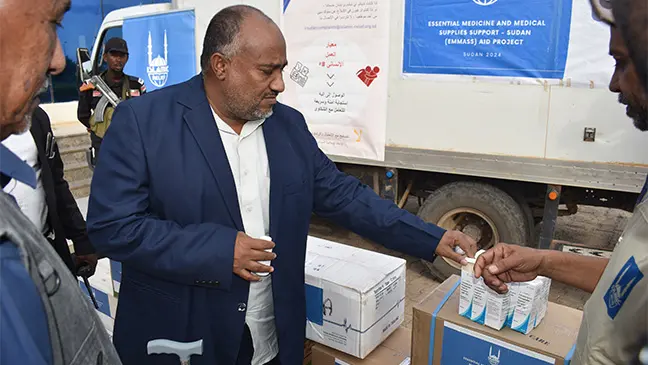
Photo: During recent distributions, our teams provided medical supplies to three areas in Sudan including Gedaref, Atbara and Port Sudan.
Water, Sanitation, and Hygiene (WASH) support
In overcrowded camps and shelters, families are living without adequate sanitation or access to clean water.
Water sources are scarce – and often contaminated. As water-borne diseases such as cholera and dengue fever spread, clean water has become a matter of life and death.
But with your help, we’re delivering water and restoring dignity.
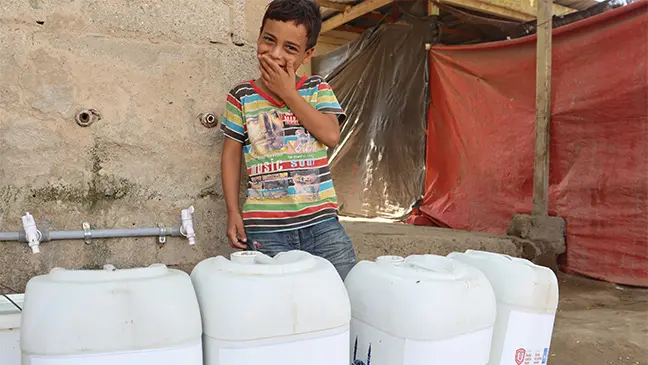
Your support has allowed us to truck clean water to over 20,395 people, distribute more than 11,457 water storage kits, and chlorinate and rehabilitate hand pumps in Darfur, bringing safe water back to 3,500 people in the region.
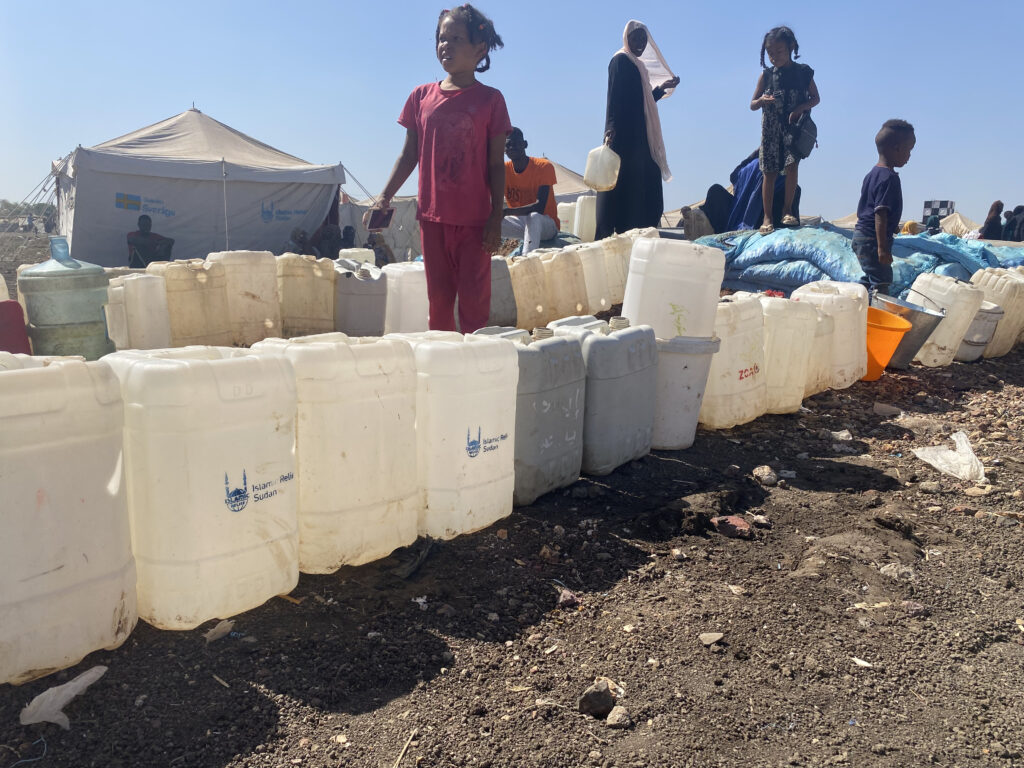
Photo: A young boy is thrilled as he receives water storage kits at one of our distributions.
You’ve also helped us distribute over 6,137 hygiene and dignity kits to displaced families – including essentials like soap, toothpaste, and sanitary pads, so women and girls can manage their health with dignity.
In a crisis where even the most basic necessities have become luxuries, your donations are providing the essentials people can no longer access on their own.
Providing shelter when all is lost
Sudan is now the largest displacement crisis in the world.
Since the war began, an average of 18,000 people have been forced from their homes every single day. Families are sleeping in makeshift shelters, classrooms or in tents.
But your support is helping to provide shelter and safety.
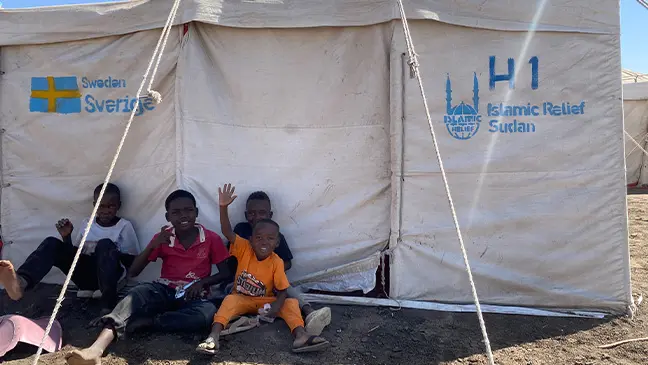
Together, we’ve provided over 3,064 temporary shelters made from plastic sheets, and erected 1,922 tents for displaced families in Gedaref and Port Sudan.
Photo: Our distributions include tents and plastic sheets, providing temporary relief for families in crisis.
Each shelter offers more than just physical protection – it brings privacy, dignity, and a small sense of stability to families who have lost everything.
Helping vulnerable people heal from trauma
For many families, the pain of this war is not only physical – it is deeply emotional.
Vulnerable groups including women and children are traumatised. More than 17 million children are now out of school, their futures on hold.
But through your compassion, we are helping people begin to heal.
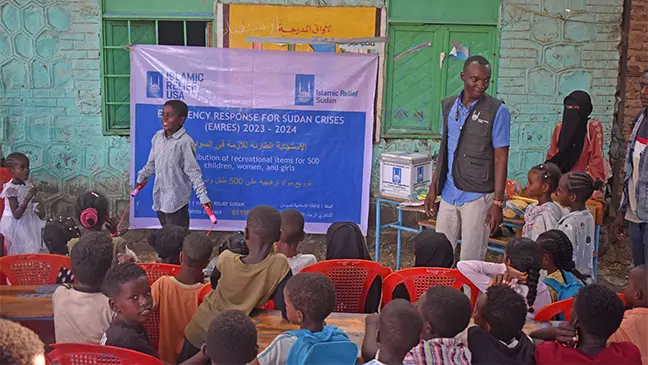
Your donations have allowed us to run psychosocial support activities across the country. From puppet shows that bring joy to children, to women’s “coffee corners” where survivors of gender-based violence and displacement can speak, share, and support one another in a safe space.
Photo: Around 500 women and children attended a psychosocial support and recreational item distribution session, providing vital aid.
We’ve also run community-based awareness sessions on protection in Central Darfur, equipping people with knowledge and support to help keep themselves and others safe.
Even in the darkest moments, your generosity is helping restore hope, dignity, and resilience.
Standing with Sudan
In a crisis that has killed tens of thousands and displaced millions more, every meal, every tent, every water tank, and every medical delivery matters.
In nine states across Sudan, our teams – many of whom are displaced themselves – continue to serve with strength and courage.
But the need is growing by the day.
As we mark two years of war in Sudan, we remember every life lost, every child still hungry, every family still searching for safety. And we ask you to continue standing with them.
Your donations are not just helping communities survive – they are helping them hold on to hope.
Give relief to the people of Sudan
Help us provide urgent relief to our brothers and sisters suffering in Sudan due to the ongoing and devastating conflict. Be their lifeline today.
Eid al-Fitr is a time of joy, feasting and celebration, but for many orphaned children in Afghanistan, it can be a painful reminder of what they’ve lost.
Amid the vibrant decorations and celebratory gatherings, 2 orphaned children, Maryam and Ali*, share a glimpse into their lives, highlighting both the struggles they face, and the happiness brought by Islamic Relief’s Eid Gift distribution.
‘I was the happiest person in the world’
Maryam, a 9-year-old girl from Kabul, knows these conflicting feelings all too well. After losing her father to illness 4 years ago, Maryam and her family have faced numerous challenges. With her mother struggling to provide for 7 family members, the simple joys of Eid seemed out of reach.
However, this year, a glimmer of hope arrived, thanks to Islamic Relief’s Eid Gifts project.
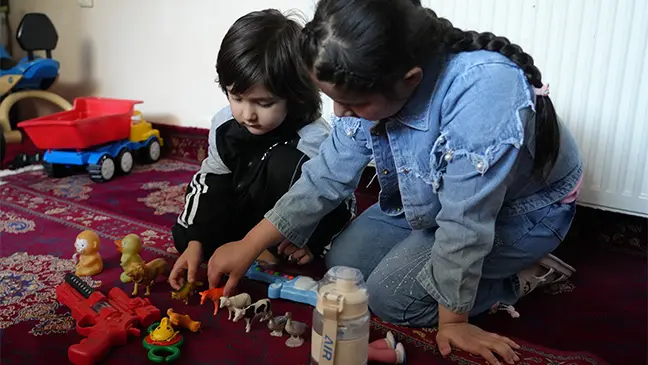
Photo: Maryam and her younger brother play with toys bought with Eid Gift cash assistance, in their home in Kabul.
Before receiving the Eid Gift in the form of cash assistance, Maryam’s mother was anxious about being able to afford new clothes for the occasion. But just days before Eid, the family was selected to receive cash assistance.
When my mother told us the news, my siblings and I were overjoyed!
Maryam, a 9-year-old orphan in Afghanistan.
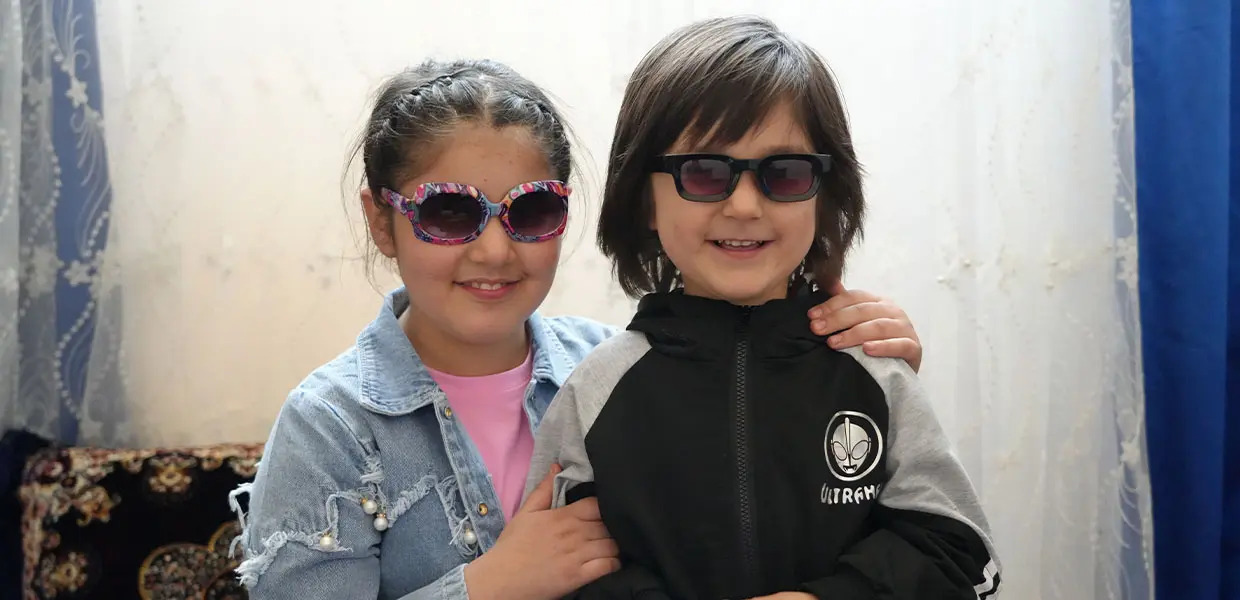
With the cash assistance of 2,975 AFN (approx. $64 AUD), Maryam’s mother was able to buy her daughter not just a beautiful dress but also a blue jacket, trousers, shoes, a school bag, and fun items like a unicorn pencil case and fashionable sunglasses.
The day of Eid dawned bright and cheerful, and for Maryam, it felt like a fairy tale come true. “I was the happiest person in the world!” she says, laughing, as she remembers how her siblings looked in their new clothes.
‘This Eid has been truly special and unlike any I’ve experienced before’
Ali, a 12-year-old boy from a neighbouring community, also experienced the transformative power of these Eid gifts. An orphan like Maryam, Ali shared his excitement about the kindness of our supporters.
It’s more than just gifts; it’s the love shared by those who care about us. We feel seen and valued.
Ali, a 12-year-old orphan in Afghanistan.
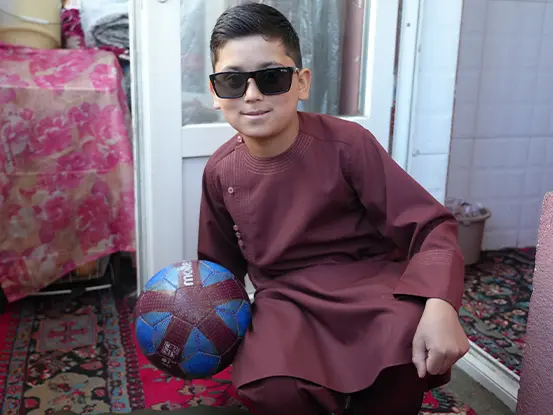
Ali headed to the Eid ground (an open-air space reserved for Eid prayers) in his neighbourhood early in the morning, bubbling with excitement and joy. He was dressed in a traditional outfit — a matching maroon shirt and trousers — complemented by his favourite sports shoes and stylish sunglasses.
“This Eid has been truly special and unlike any I’ve experienced before.” The joy of wearing new clothes filled his heart with happiness, making the celebrations unforgettable. “May Allah bless all those who have contributed to our happiness,” he says.
Both Maryam and Ali embody the resilience and hope that shine through even the most challenging circumstances. Islamic Relief’s support not only brought smiles to their faces but also eased their families’ worries during a time of celebration.
*Names changed to protect confidentiality
Give Families Hope and Relief
Keep the blessings of Ramadan going. Give families in need the opportunity to enjoy nutritious food, rebuild their livelihoods and more.
At Islamic Relief, we use your donations in the way that benefits rightsholders the most. To raise the most money for the world’s most vulnerable people and distribute those funds responsibly, effectively and fairly.
Because for every $1 we spend:
86c directly into helping people in need
11c to raise more funds
3c on administering the funds and making sure we are accountable
This all ensures we can continue the lifesaving work we do and reach even more people in need, sustainably and with quality care.
So, for every 1c we spend on fundraising, we raise an additional 10c. That’s an extra $1.10 on top of your $1. Your donation is DOUBLED, Alhamdulillah!
Are My Donations Being Used Effectively?
The most important question should be ‘Are your donations being used effectively?’
With Islamic Relief, the answer is YES! Each day, Islamic Relief works hard to be a safe pair of hands for your donations. We’re accountable to you, to the people we serve and most importantly to Allah (SWT).
Alhamdulillah, because of your support, our family has transformed and saved over 120 million lives since 1984.
In Gaza, we are on the ground daily, providing millions in aid amidst ongoing conflict. In Sudan, we are fighting hunger and malnutrition and granting shelter to the millions displaced. As conflict and disease continue to grip our planet, we’re there to support vulnerable communities in need.
We don’t claim to have a 100% donation policy
We aim to use your generous donations in the most effective way possible, whilst remaining as transparent as possible! Did you know that we’re able to multiply your donations? So, we could claim to have a 100% PLUS donation policy, but we don’t.
Find out why Islamic Relief does not use a 100% donation policy here.
Together, we’re saving and transforming the lives of some of the world’s most vulnerable people. Without your support, we wouldn’t be able to do any of this. Please continue to give to Islamic Relief and help save even more lives.
See Your Impact
Our annual reports show how your Zakat and Sadaqah transforms the lives of millions with lifesaving aid.
We believe in transparency and accountability. Information on admin costs and annual financial accounts is readily available on the Islamic Relief Australia website.
We also have the information included in our Annual Report. This is independently audited and lodged with ACFID (Australian Council for International Development).
We also distribute our Annual Reporto key stakeholders, feature it on our website and promote it on social media. In turn, our financial statement is also available on the ACNC website.
We are making every effort to make people aware that Islamic Relief has admin costs. As well as why admin costs are a necessary expenditure for a high-performing and transparent charity.
Islamic Relief must submit its independently audited accounts annually to the ACNC. This the main body that registers and regulates charities in Australia to ensure that the public can support charities with confidence.
The ACNC is an independent, non-ministerial government department accountable to Parliament. If the ACNC has any concerns about the way a charity is running itself or presenting its information, it can hold the charity to account.
Islamic Relief is also a member of ACFID. Being a member of ACFID ensures adherence to high ethical and operational standards through the ACFID Code of Conduct. It provides credibility, compliance support, and access to resources. It also helps organisations strengthen policies, meet regulatory requirements, and improve accountability and transparency. All while offering training, networking, and advocacy opportunities to enhance impact and trust with donors and stakeholders.
It costs money to deliver aid and to do it well. Because of admin costs, we can ensure the people who need it most receive the best possible support, and not towards the wrong places.
Admin costs can cover a range of necessary expenses. This includes governance costs (e.g. audits), monitoring and evaluation (to ensure the delivery of this project and its planned impact). As well as rent for buildings, insurance, appropriate staff salaries, volunteer expenses, and equipment (e.g. laptops, phones) etc.
Islamic Relief ensures that it gets the best value for money to help deliver aid on the ground, and raise more funds for the people who need it the most.
The majority of staff at Islamic Relief work on a full-time basis. This ensures our donors’ money is spent in the most effective and impactful way. They are professionals who bring specialist skills and knowledge in order for us to deliver our work to high standards. This is how we can ensure that more people affected by conflict and natural disasters as well as those living in poverty can get the best help they need and deserve.
Islamic Relief is also working to help communities build their future with long-term projects. This can take a huge amount of work, commitment, and time for staff.
Staff would not be able to do this voluntarily on a full-time basis without a salary. They themselves need to support themselves and their families. Without staff, the work could not continue.
Those working for Islamic Relief are also an investment to raise more money, awareness, and funds, which ultimately means we can reach and help more people.
The scope of international development, campaigning, advocacy and working to raise awareness of those suffering across the work is a mammoth task and even full-time staff cannot cover everything. This is why we also ask volunteers to help by giving their time to help with events, fundraising, advocacy and campaigning. We engage with over 200 volunteers in Australia – their contribution is invaluable and highly appreciated.
Nearly all of Islamic Relief’s overseas staff and volunteers are local people who come from the communities they serve.
Yes – Islamic Relief utilises a small percentage of Zakat donations towards admin and fundraising costs. When you make a Zakat donation, we take a fixed amount of 12.5% in admin fees.
In the Qur’an, Allah tells us that zakat is for eight categories of people, including: “…those employed to administer the funds…” (9:60).
We have sought the opinion of well-respected scholars, who have informed us that since there are eight deserving categories, each is entitled to a proportion of 12.5%. This means whatever we spend on administrative costs and raising more funds are Zakat-eligible as per the Shariah.
Admin costs help us to deliver aid and to do it well. Thus, this ensures the people who need it most receive the best possible support and the money goes to where it is needed. It can cover governance costs (e.g. audits to comply with legal obligations and Charity Commission rules), rent for buildings, insurance, admin staff salaries, volunteer expenses, equipment (e.g. IT equipment) etc.
However, fundraising costs are an investment to generate more income which means we are able to help even more people.
Together we refer to these as ‘support costs’ and both are essential expenditure in helping us to achieve our aims.
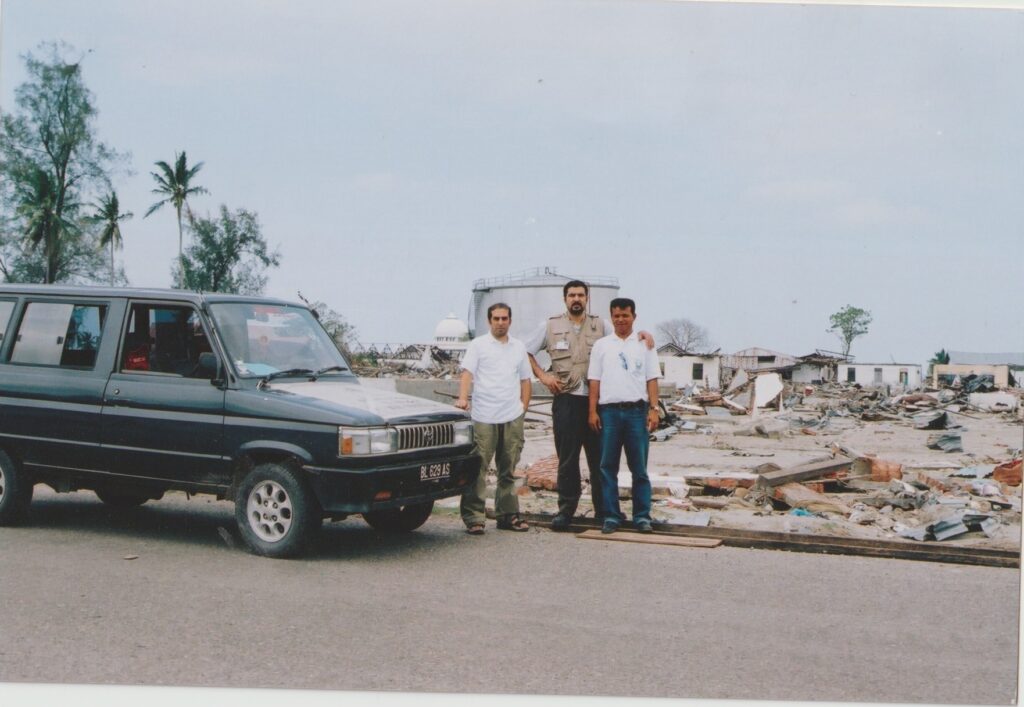
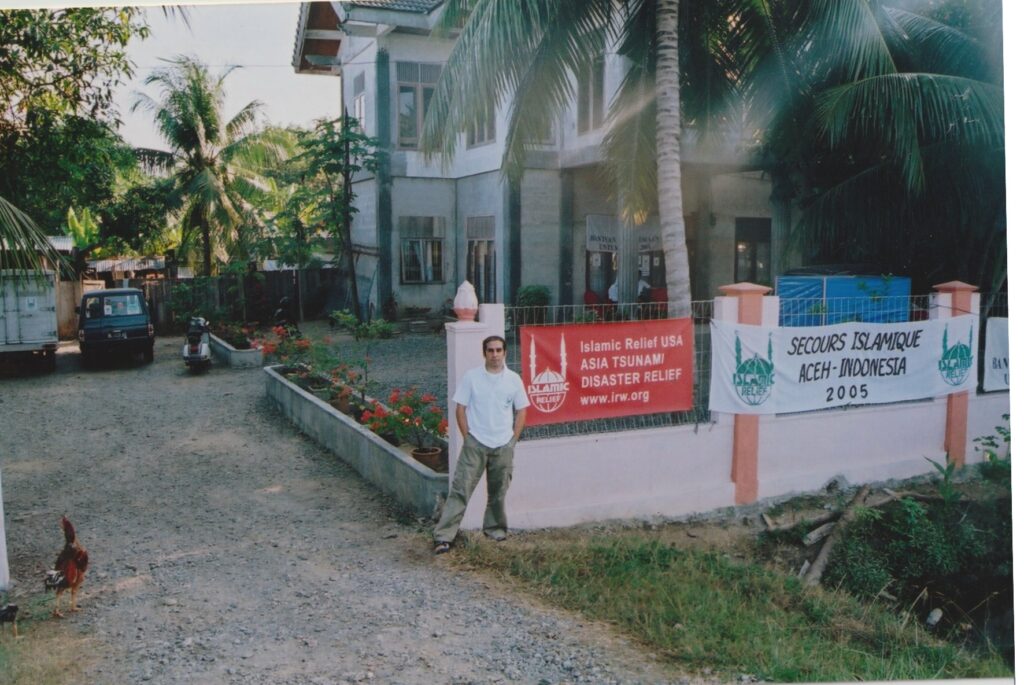
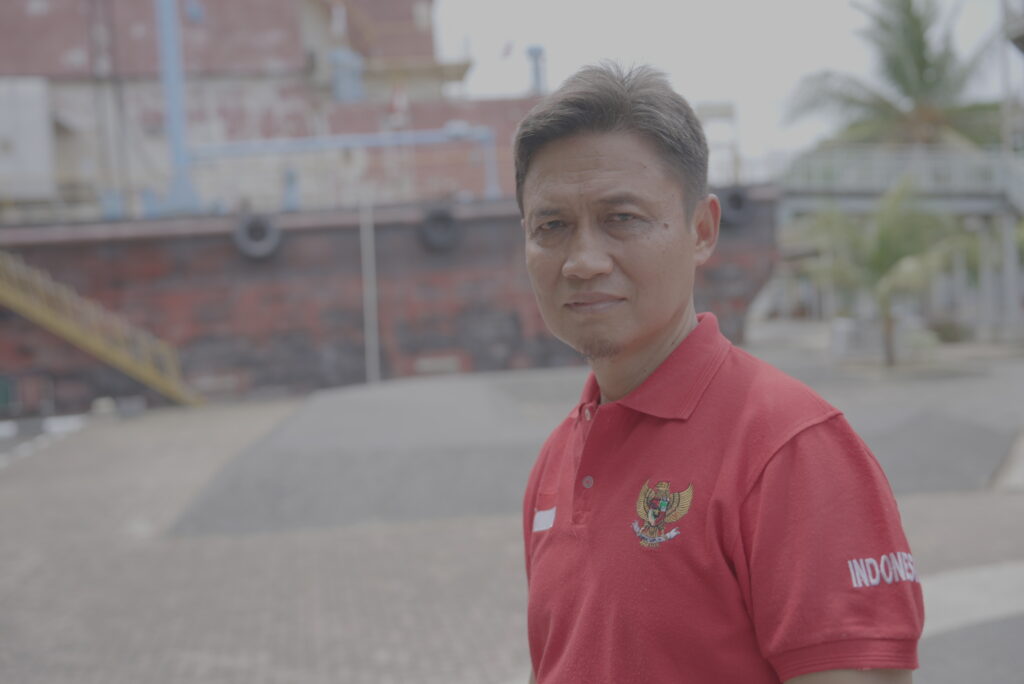
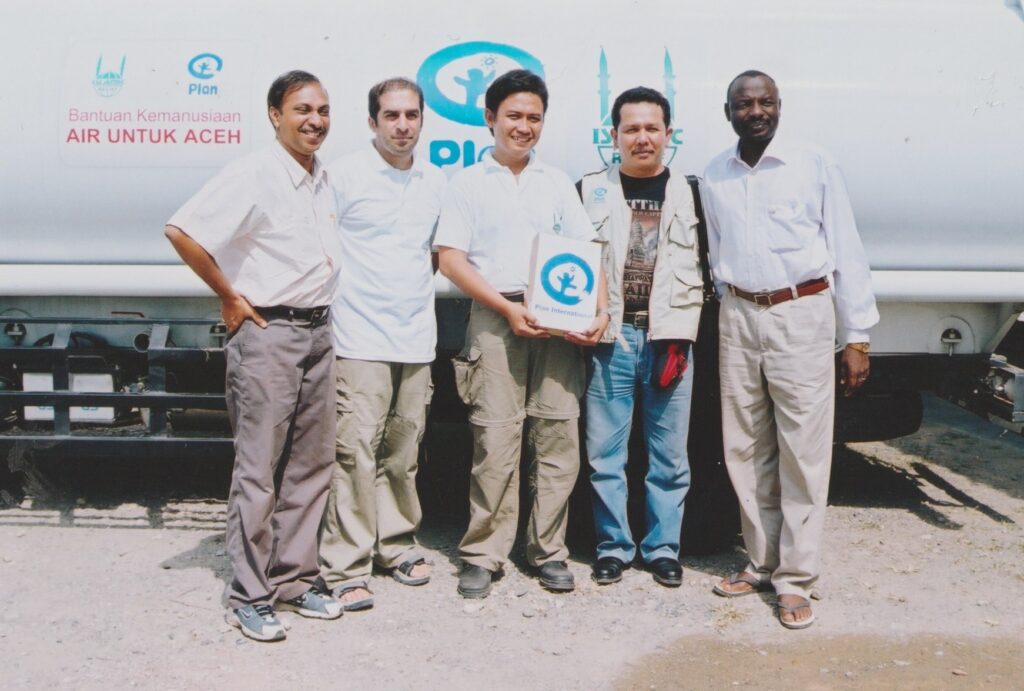
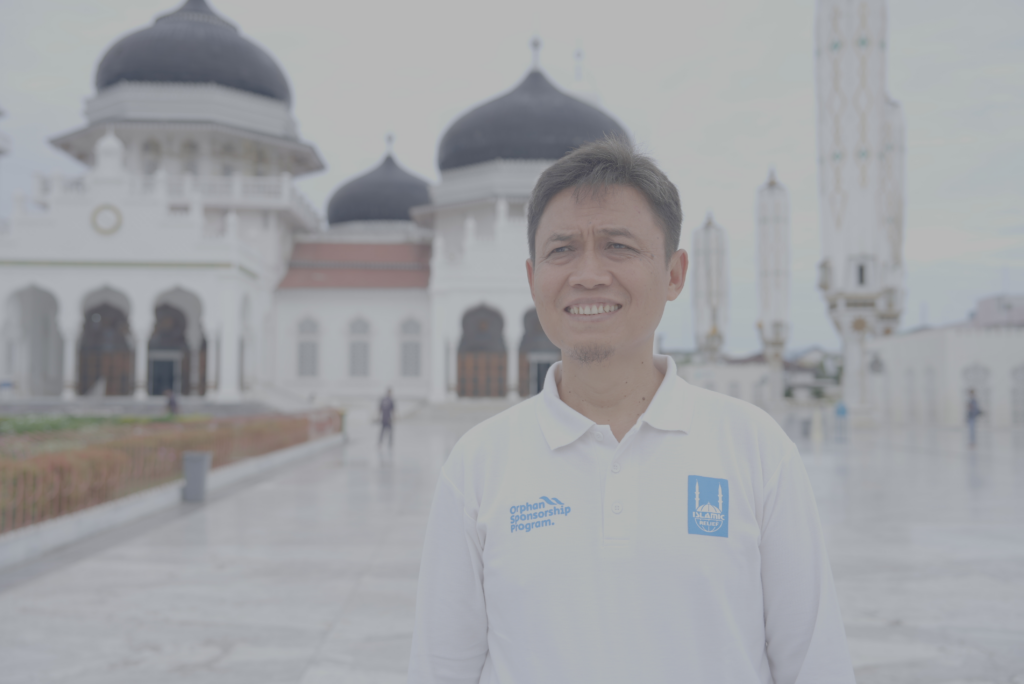
20 years ago, Professor Ede Surya Darmawan was one of the first Islamic Relief staff to respond to disaster. To the enormous earthquake and tsunami that devastated communities around the Indian Ocean. Here, Ede, now Chair of Islamic Relief Indonesia’s Board of Trustees and Professor in Public Health Development at Jakarta’s Universitas Indonesia, looks back on that time, following a recent trip to Banda Aceh, the worst-hit area.
Visiting Banda Aceh 20 Years Later After the Tsunami and Earthquake
It was pitch black when I first set foot in Banda Aceh. This was on 2 January 2005, exactly one week after tsunami hit. The difficulty of the journey – a normally 3-hour trip from Jakarta, which ended up taking almost 24 – hinted at the chaos that had engulfed the city and the wider Aceh province. After it was struck by one of the worst natural disasters in history.
I’d seen the news footage of the aftermath of the massive earthquake and tsunami. But nothing could’ve prepared me for what I saw myself in the following days, weeks, and months.
When the sun rose the next day, I saw dead bodies everywhere. Islamic Relief’s office had been hastily set up in a partially-built house we’d managed to rent a few days earlier. It was just 200 metres from the area where victims’ bodies were being laid out for identification.
We went about our business, trying to support survivors however we could. All while surrounded by the harshest possible reminder of the loss this disaster had left behind.
I’d responded to disasters before. They are an inevitable part of life in Indonesia. We have earthquakes, volcanic eruptions, floods, landslides and, as we now know, tsunamis. As a young boy I grew up in the shadow of Galunggung Volcano, which had deadly eruptions in the 1800s and 1980s.
But I’d never seen anything like what happened in Aceh in 2004. No one had. The affected area looked as though it had been hit by a nuclear weapon.
News of the Disaster Trickles Out of Aceh
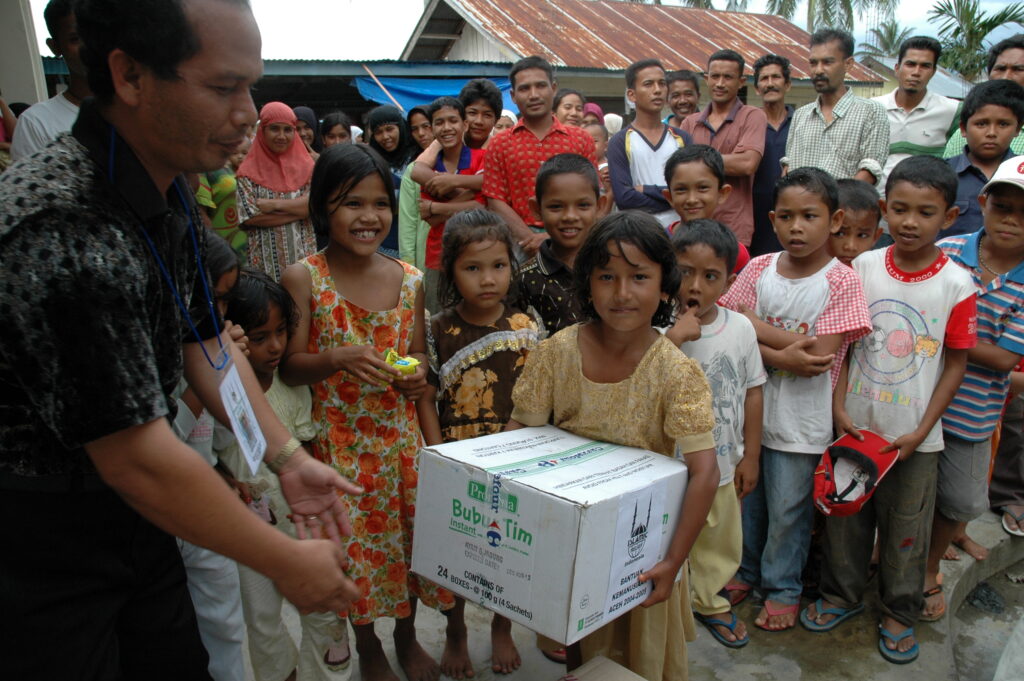
In 2004, Islamic Relief’s work in Indonesia was very small in scale compared to today. We had Ramadan and Qurban food distributions. As well as projects providing bags and books to schoolchildren.
But we didn’t work in Aceh at all. In fact, at that time, Aceh was a conflict zone. Where people from other parts of the country, as well as foreigners, were not allowed to enter.
Partly because of this, it took a while for information about the disaster to reach us in Jakarta. The earthquake happened at around 8am on December 26, but it was the afternoon before we heard about it. Around 2am the next morning, I got a call from Islamic Relief headquarters, which had more complete information. They said the disaster had been very large and that we’d need to quickly prepare to respond.
It was very challenging to get information from the ground in those first few days. Although we had no official links with Aceh, we had some local contacts there. But almost all of them had been affected by the disaster.
To find out what was going on, and how we could help, we sent our Programme Officer to Aceh immediately.
Starting from Scratch
Islamic Relief’s very early response involved providing food, water and first aid treatment – whatever we could – to try and address the massive needs of the affected people.
When I arrived, a week after the disaster, my first job was to set up a bank account. This ensured that the huge number of donations Islamic Relief was receiving could reach Aceh.
Then I began connecting with government and local authorities, other non-governmental organisations (NGOs) and United Nations bodies to see how we could work together to help those in need. There was so much collaboration between international, national and local groups, it seemed like every hour there was another meeting.
With banking resolved, there were still so many obstacles. The city had very nearly been wiped off the map. The electricity and water supplies had been damaged, so many roads and bridges were impassable. We had to buy supplies from the surrounding districts, particularly Medan, the capital of the neighbouring province. But it had been hit by a flood and supplies that should’ve taken 1-2 days to arrive ended up taking a week.
Recruiting people was another massive challenge. Almost everyone in Aceh was affected, so we had to recruit people from all over Indonesia, ensuring they had the skills we needed and were ready to travel to the disaster zone. The last question of every interview was: “If you accept this job today, tomorrow morning you will have to leave for Aceh. Are you ready or not?” If they said yes, we sent them and checked in 2 weeks later. If they were coping, they could stay. If not, they had to go home.
Uniting to Recover from the Tsunami and Earthquake
What people needed most in the early days was housing. Finding enough tents for temporary shelters was a big challenge. But, because there was a large military presence in Aceh from the conflict, we had support from the military and access to their supply of tents.
After those first overwhelming days and weeks, our response moved into addressing other needs in the affected communities.
We began running cash-for-work program, providing payment and meals to affected people who would in turn clear destroyed homes and roads. This was not only to give those who’d lost their livelihoods a way of earning some income, but also a means of beginning to address some of the psychological impacts of the disaster. By keeping people occupied, we hoped to distract them from feelings of hopelessness.
Slowly, things began to improve, and Aceh today is a completely different place. Before the tsunami, the region was completely alienated because of the conflict and after the disaster, it was completely devastated.
But so many people from all over the world – including from Islamic Relief – came to Aceh and we realised that we’re all the same and we must rebuild and overcome the impact of the tsunami together. Less than a year later, a peace treaty was signed and Indonesians tried to move forward together as one nation. This was the positive impact of the tsunami.
Returning to Aceh after the Tsunami and Earthquake
In August this year, I went back to Aceh and took Islamic Relief colleagues to the house that had once been our office.
As we drove around the city, I pointed out where bodies had been. The mass graves that became their final resting place. The spot where the carcass of a dead cow had lain untouched for a month because everyone was so busy tending to survivors.
It’s odd, the things that have stuck with me after all this time.
It wasn’t my first time coming back to Aceh since the disaster. I’ve been before to see the programs Islamic Relief still runs in this province. But this time was particularly moving because the focus was on how Islamic Relief responded to the disaster and the legacy of our impact.
I had the chance to hear stories from survivors. The orphaned children who’d grown up to become teachers. The business owners and sources of inspiration in their communities as well as the government. The health officials who also told us their own personal stories while speaking about their areas of expertise.
I even got to hear the impressions of one colleague who was among the first people I recruited and sent to Aceh back in January 2005. He’s never left and is still there today delivering Islamic Relief’s programs.
A New Horizon
Many organisations grew up because of the tsunami and Islamic Relief is no different. It changed so much about our understanding of relief work and the possibilities that can come from organisations collaborating and helping one other.
At the time, it felt like a new horizon had opened up before us. We’d seen how humanity could work together to overcome many problems, including the disaster.
Now, Indonesia has laws and national bodies governing disaster responses, whether it’s a natural disaster or something like the COVID-19 pandemic. We’ve learned how essential preparation and collaboration at the national, provincial, and district levels are. Disasters can happen at any time, and we need to be prepared for them.
Doing what you can, whether it’s making a donation, or sharing your skills and knowledge to help others, brings us closer together as humans. Not only humanitarians, but everyone, can benefit from working together for the greater good.
20 years on from the earthquake and tsunami, Islamic Relief is sharing the stories of survivors, staff and our steadfast support of affected communities in the decades that followed the disaster. Please support Islamic Relief to continue supporting communities through disasters.
Be a lifeline. Give relief.
Help us to continue our vital work supporting those in desperate need of aid where disasters strike
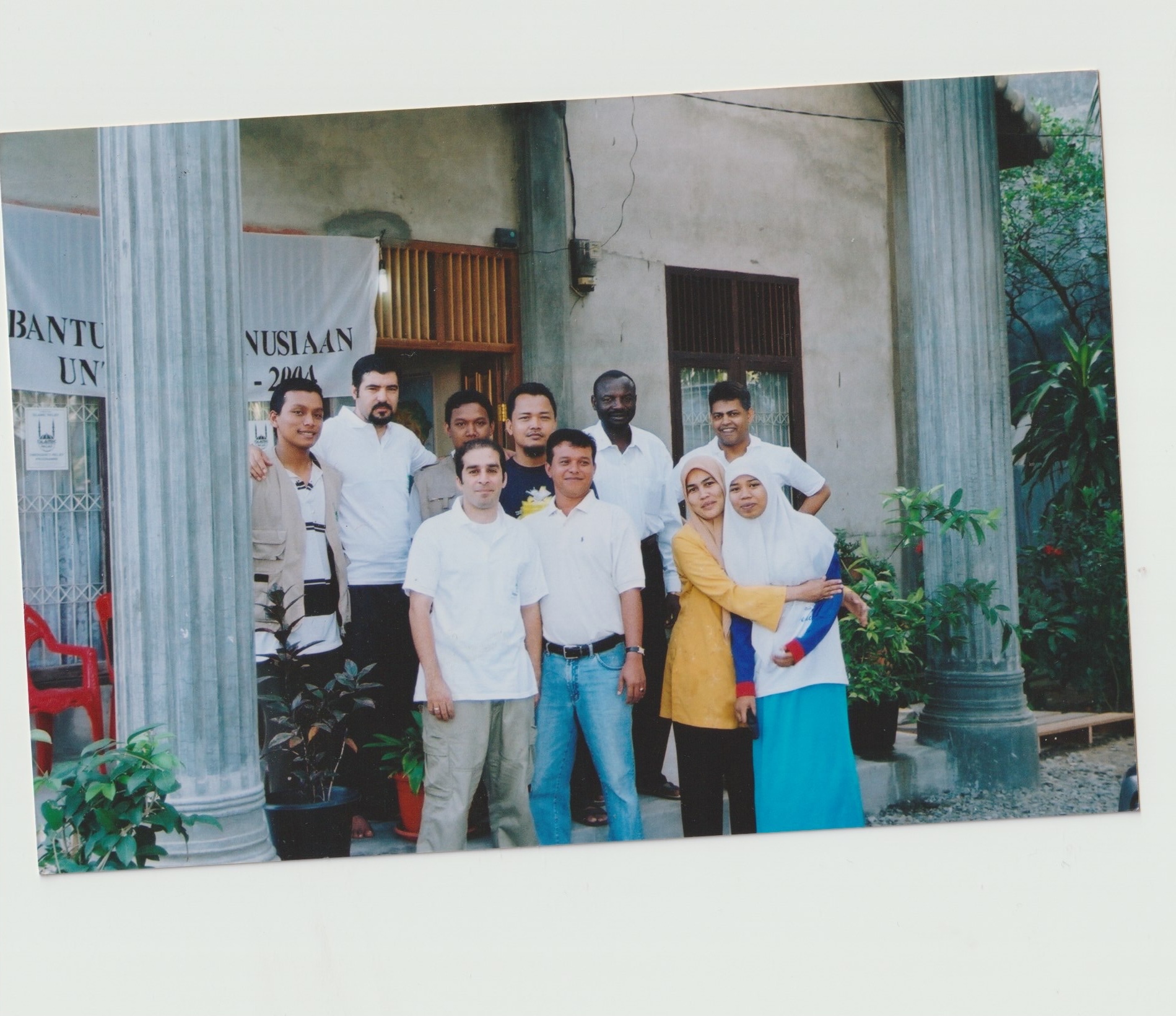
This month marks 20 years since an enormous earthquake and tsunami devastated communities around the Indian Ocean. Here, Haroon Kash, now Head of Program Funding and Partnership Development at Islamic Relief, reflects on arriving in Aceh. When he did so 1 week after the disaster to join the response.
Photo: Haroon (front row, far left) poses with the team outside Islamic Relief’s makeshift office in Aceh. (Back row L-R: Febby, Yusuf, Rahmat, Rindro, Seifeldin, Abdul. Front row L-R: Haroon, Hasballah, Nurlina and Erdiana)
20 years ago, I learned what a tsunami was. And that experience ensured I would never forget the impact a tsunami. How it could have on the lives of so many people, including my own.
The Tsunami Caused Miles and Miles of destruction
Upon arriving at the impacted areas, I had my first realisation. The massive amount of destruction the tsunami had caused. It’s hard to describe the miles and miles of devastation. The debris, mud, sludge, and remnants of buildings that stretched around us.
We were a few miles inland from the coast, which showed just how far the tsunami had travelled. But everywhere we looked there was nothing but destruction, and of course, that smell.
We started our humanitarian response immediately, providing food and other essentials. We’d managed to secure products from local markets that were somehow still functioning. Even though many businesses were closed, either due to destruction or the fact that the owners were missing and/or presumed dead.
Travelling throughout the area, that smell never disappeared, nor could I ever get used to it.
Missing Posters Plaster the City
Every day I would see a group of local volunteers heading out to search for bodies among heaps of rubble. They dug them out and ensured that they were given a proper, and where possible dignified, burial.
Every day I would see people going up and down the streets on their mopeds. They asked around for news of their missing loved ones, while others constantly rummaged through the debris of what were once their homes, trying to salvage anything they could.
Posters of missing family members were plastered throughout the area. On lampposts, on fences, on the windows of buildings — literally thousands and thousands of them everywhere you went.
Seeing one missing poster is upsetting. But imagine seeing thousands of them every day for weeks, with desperate family members huddling around in the hope that someone, somewhere has some news of their loved ones. Hoping that they might recognise each other and that their reunion might offer hope to others.
Living in Fear after the Tsunami and Earthquake
Aftershocks were common after the quake and with each one, you would see mass hysteria break out. Some people ran to open spaces, while many others would speed off on mopeds searching for higher ground. Having only experienced minor earthquakes before myself, the intensity of the aftershocks there were enough to provoke unimaginable fear within me over what the big earthquake must have felt like. Compounding that fear was the fact that any of the aftershocks could trigger another tsunami.
Much of my experience during the 5 weeks I was in Aceh was shaped by being surrounded by so much despair. But I was immensely grateful for what I learned from being exposed to that disaster. The experience helped me to value everything I had. It also gave me a sense of the force that a natural disaster can possess. It presented me with assurances that my work was having a major impact on the lives of many of the communities that had suffered so much as a result of the disaster.
I met families that had lost virtually everything — loved ones, possessions, homes, and livelihoods. Yet still they had hope for the future. A future in which Islamic Relief continued to play an important part for the next 2 decades.
I left Banda Aceh in 2005 with hope and fear. Hope of seeing improvements in the lives of so many rightsholders and a lasting fear of the power of nature.
20 years on from the earthquake and tsunami, Islamic Relief is sharing the stories of survivors, staff and our steadfast support of affected communities in the decades that followed the disaster. Help Islamic Relief to continue supporting communities through disasters.
Be a lifeline. Give relief.
Help us to continue our vital work supporting those in desperate need of aid where disasters strike


![Haroon [front row, far left] poses with the team outside Islamic Relief’s makeshift office in Aceh.
[Back row L-R: Febby, Yusuf, Rahmat, Rindro, Seifeldin, Abdul. Front row L-R: Haroon, Hasballah, Nurlina and Erdiana]](https://islamicrelief.org.au/wp-content/uploads/2024/12/Tsunami_Team-1024x884.jpeg)