09.12.22

How Accelerating Climate Change Influenced Pakistan’s Disastrous Floods

  News

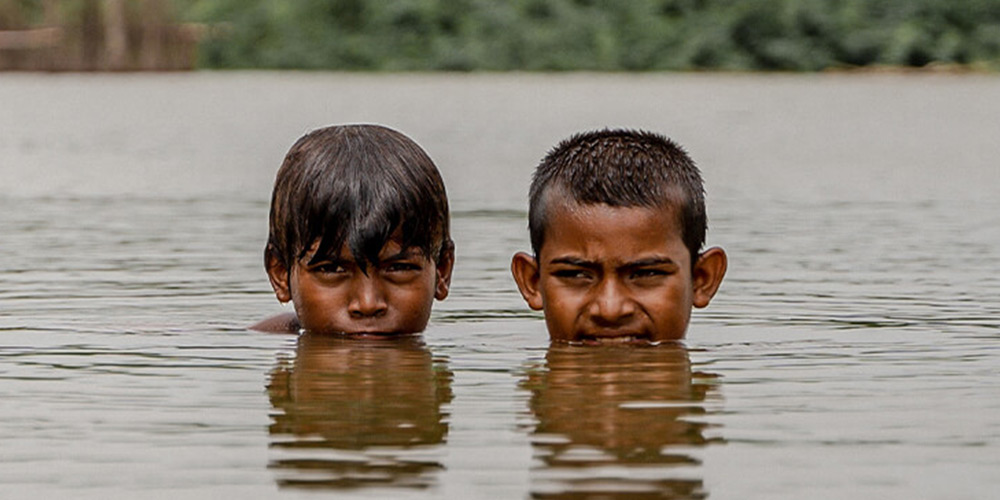
Pakistan is suffering from its worst floods in living memory. The unprecedented deluge has engulfed communities, forcing millions of people from their homes, destroying water sources, and wiping out crops and livestock needed to feed families.

A staggering one-third of the country is said to be currently underwater, and 33 million people are affected, with the Balochistan and Sindh provinces and Khyber Pakhtunkhwa (KPK) being the worst hit. Families face dire conditions fleeing for safer areas on any high ground they can find, as rescue and relief efforts are impeded by a widespread power outage and thousands of flood-swept roads and bridges.

An unprecedented number of people need aid

The government has declared the floods a national emergency and appealed for international assistance. The scale of the disaster has overwhelmed the authorities, who are already struggling to mitigate the damage caused by the previous disasters this year’s summer presented.

June saw the rainy season begin early in Pakistan, becoming what its government later labelled a “monster monsoon of the decade”. In July, a heatwave baked the country, destroying orchards, turning fertile farms into barren lands, and triggering the rapid melting of glaciers – of which Pakistan has more than 7,000. Unusually intense monsoon rains saw glaciers burst, sending water surging into rivers, which burst their banks and deluged the land.

Now, in the aftermath of the floods, Pakistan’s shortages of food, water and energy will become even more acute. The health challenges are escalating, with hospitals and clinics damaged and life-threatening diseases including malaria and waterborne infections already on the rise.

The most vulnerable are worst hit

Heartbreakingly, it is Pakistan’s most vulnerable who will suffer the most. These are the families who have lost everything in these latest disasters. Whose children now face futures plagued by further uncertainty, devastation and inequality.

For the Pakistani people, climate change chaos is not just a threat – it has become a lived reality. Their country remains among the top 10 countries most vulnerable to climate change, according to the Global Climate Risk Index. A status caused by its susceptibility to a vast array of natural and human-induced hazards, which have caused numerous waves of internal displacement and internal migration, especially for the country’s poorest people.

There is a need for a whole-of-government response to prevent further crises

This disastrous season has been another eye-opener for our global community on the consequences of climate inaction. It is an ominous reminder of what humanity faces if immediate and dramatic steps are not taken to cut carbon emissions and restore ecosystems.

Countries that have added the most to climate change need to step up and support efforts to equip communities on the frontline of the climate emergency to adapt to its effects. It is unfair for Pakistan, a country that produces less than 1% of the world’s carbon footprint, to bear the brunt of irresponsible environmental practices elsewhere in the world.

Support for humanitarian efforts urgently needed

Islamic Relief Australia is calling on the community to respond swiftly to help those suffering in Pakistan. 

Countries like Pakistan, which are most prone to the negative impact of a changing climate, urgently need sustainable solutions that improve their resilience to climate change across all communities, regardless of income or status.
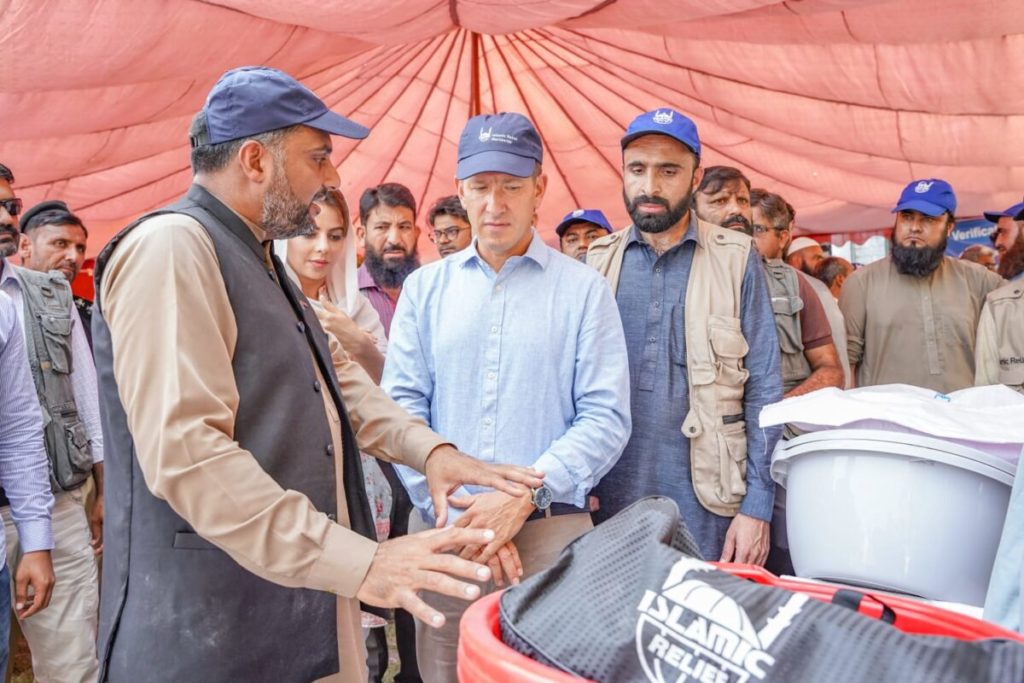
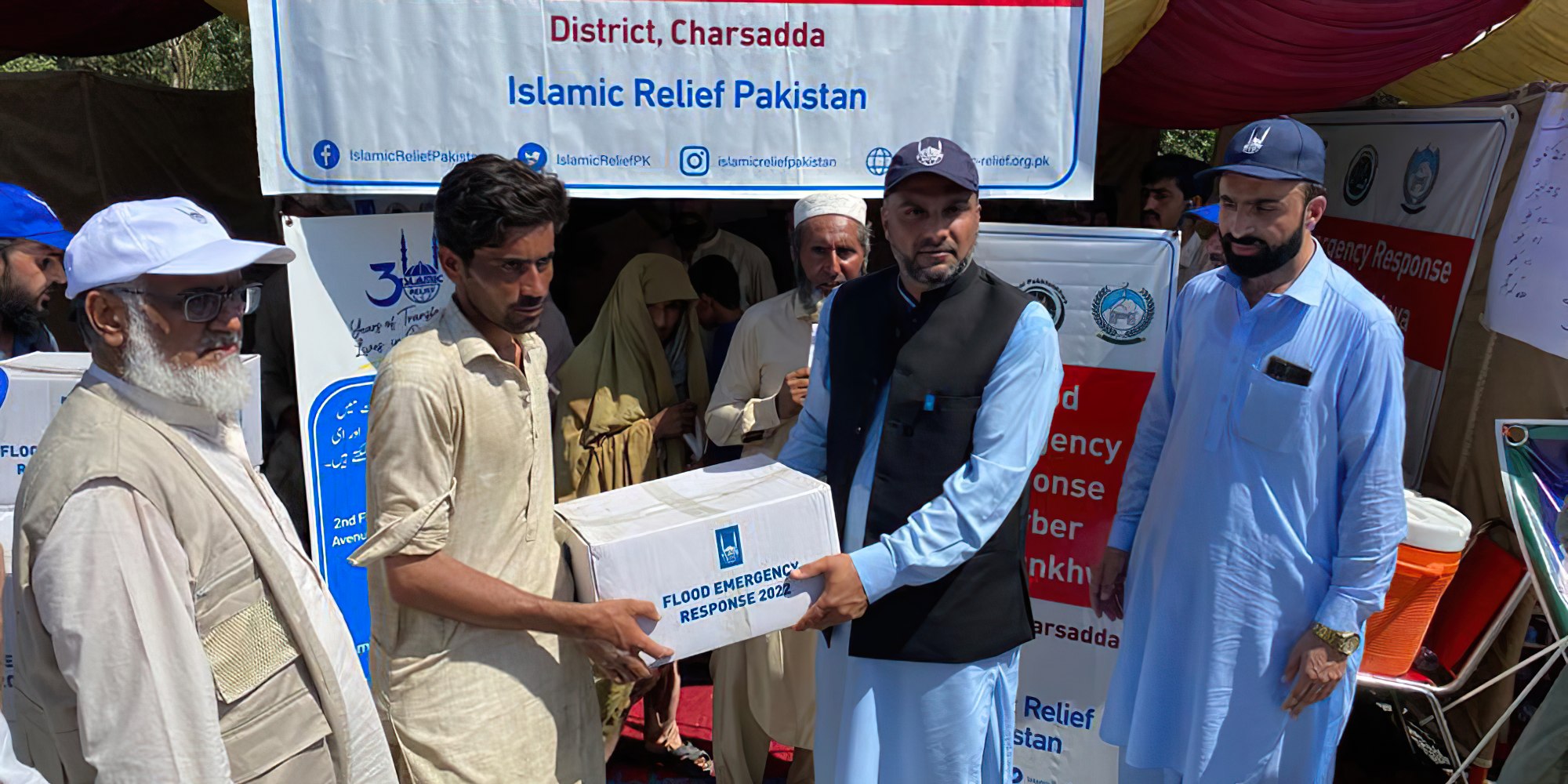
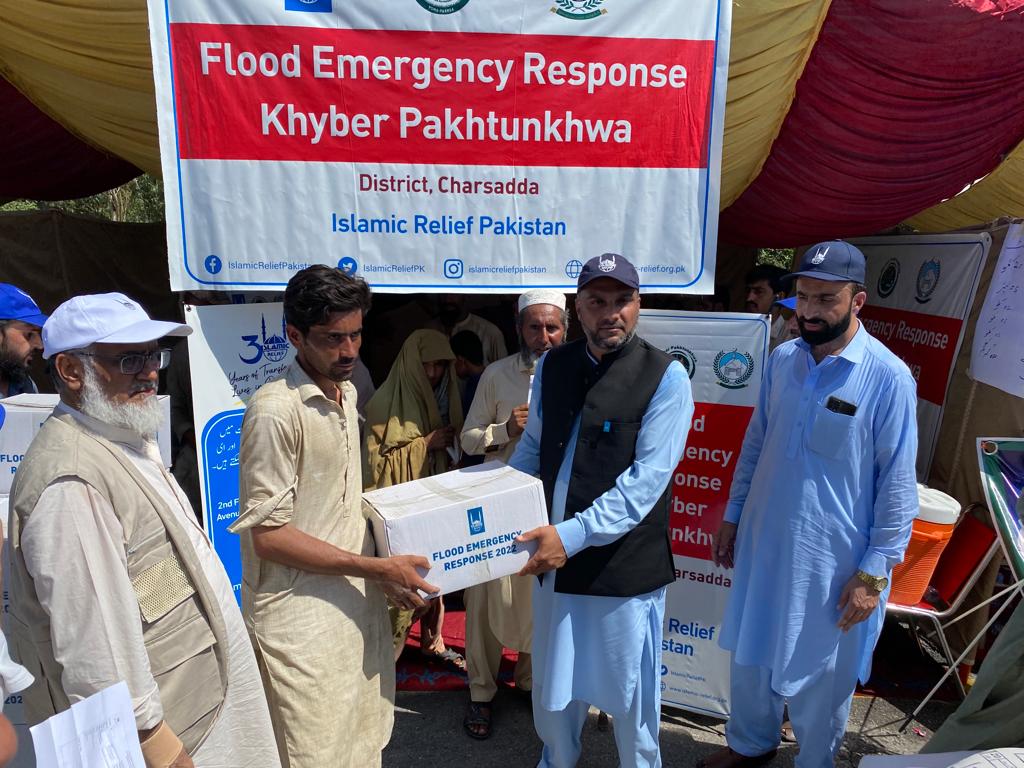
Islamic Relief partner office’s CEO shows the aid items we are distributing in Nowshera, KP.

That’s why our emergency teams are on the ground right now, already working in Pakistan’s local communities to establish how best to support affected families, proving life-saving food, shelter, bedding, and hygiene items, as well as programs that provide long-term protection against climate change-induced disasters.

We need your help to save thousands of lives at risk in Pakistan

Islamic Relief is focused on helping affected communities recover from the disaster as quickly as possible. Our emergency teams are on the ground right now, working in local communities to establish how best to support affected families, who urgently need food, shelter, bedding, and hygiene items.
09.01.22

Islamic Relief Worldwide CEO reports ‘unforgettable scenes of suffering’ in Pakistan floods

  News

Islamic Relief Worldwide’s chief executive is visiting communities in Pakistan devastated by what the country’s government has called “a humanitarian disaster of epic proportions”. Waseem Ahmad, who is supporting with relief efforts, reports on the terrible impact of the flooding in Pakistan.

“During my decades as a humanitarian I’ve responded to many disasters, but each cuts deep, searing images of suffering forever into my mind. My mind’s catalogue of misery gained new entries today, as I witnessed scenes I can never forget.

“Travelling to Chārsadda in the northern province of Khyber Pakhtunkhwa, I saw thousands of people lining the motorway. Their homes flooded by the river Kabul, they have taken refuge on the only higher ground they can find.

“Vehicles swished by at high speed, frighteningly close to the children playing outside their family’s makeshift shelters. Flimsy constructions made with whatever sheets and tarpaulin desperate families have been able to find, the shelters offered scant protection from the elements.

“Many have lost everything in the deluge. They told me they desperately need shelter, food, water, and healthcare. Listening to their stories threw into sharp focus the depth and scale of the catastrophe unfolding across Pakistan.”

CEO of Islamic Relief Worldwide reports on Devestating Pakistan Floods

Millions of people suffering across Pakistan

A man sheltering with his family along the motorway near Chārsadda talks to Islamic Relief CEO Waseem Ahmad.

The enormous numbers involved in this crisis are almost too big to fully comprehend on their own.

Affecting 33 million people so far, the floods have killed at least 1,000 people. Livelihoods lie in ruins, as more than 800,000 livestock have perished, and a staggering 2 million acres of crops and orchards have been affected.

Floodwaters have damaged nearly 1 million homes, 600 schools, 145 bridges, and thousands of kilometres of roads – making relief efforts extremely challenging and cutting off many communities from outside assistance. Alhamdulillah, aid is starting to get through, but it is still painfully slow.

Islamic Relief is working around the clock to provide a lifeline

Islamic Relief is working in affected communities in Khyber Pakhtunkhwa, Balochistan and Sindh, doing all we can to get aid swiftly to families in dire need, taking a leading role in coordinating with the United Nations and national authorities.

Waseem Ahmad supports Islamic Relief aid efforts in Chārsadda.

CEO Waseem Ahmad states, “I am tremendously grateful to our dedicated colleagues who are working tirelessly to make this happen.

“Our immediate focus is on life-saving aid, so the items we have been providing include food, tents, hygiene items and kitchen utensils. Giving households cash grants has enabled them to meet their most pressing needs.

“Assisting with aid distribution in a village in Chārsadda, I met families who, just a few days ago, were living happy lives and getting on with everyday life. Now, the river Swat flows where their homes once stood.

“It is destruction on a huge scale.

“Thanks to the generosity of Islamic Relief’s incredible supporters, we have so far reached over 18,000 people. Yet, with millions of people affected by the deluge, it is just a fraction of those in need, and worse is yet to come.”

Humanitarian catastrophe threatens

“Standing by the swollen banks of the river, I fear the spectre of humanitarian catastrophe looms large. Pakistani climate scientists warn that one-third of the country could be underwater before the floods abate. That’s a disaster on a scale which the country has never seen before, and many more families pushed to the edge of survival.

“How many more people will lose their loved ones, their homes, their livelihoods? How many, in the days ahead, will go hungry and thirsty or succumb to the waterborne diseases spreading in inundated communities?

“Islamic Relief has been a lifeline for vulnerable families in Pakistan for 30 years, and I am determined that we will remain by their sides throughout this deepening crisis as well, God-willing. I call on the international community to step up their efforts too, so more families receive the help they so desperately need.”

We need your help to save thousands of lives at risk in Pakistan

Islamic Relief is focused on helping affected communities recover from the disaster as quickly as possible. Our emergency teams are on the ground right now, working in local communities to establish how best to support affected families, who urgently need food, shelter, bedding, and hygiene items.
We want to ensure that the vulnerable people of Pakistan do not continue to suffer the terrifying impact of the flash floods. Together, with your support, we provide much-needed assistance to those who have lost everything.

08.19.22

Beyond the ceasefire

  News

Islamic Relief calls for an end to the blockade of Gaza

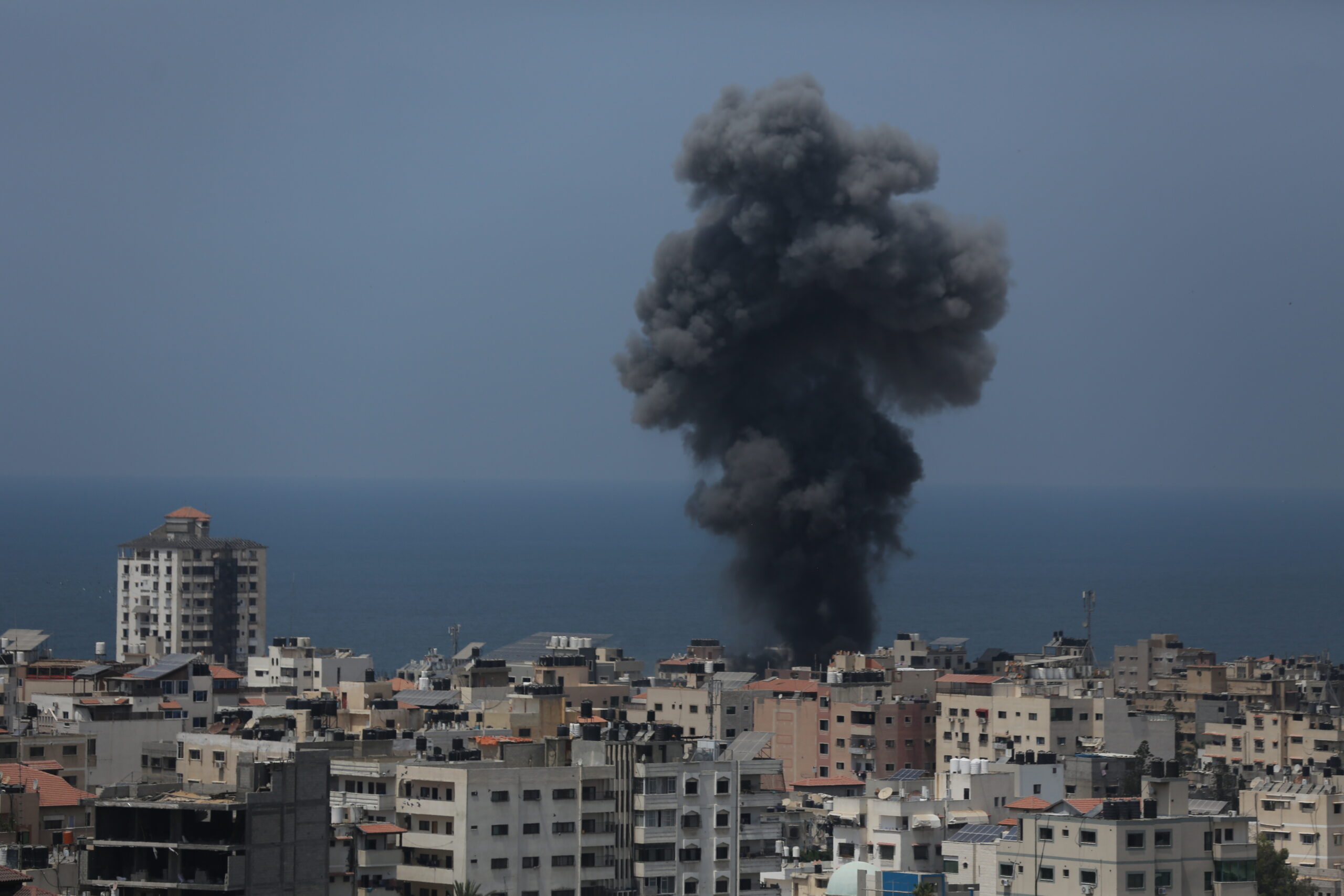
The latest round of attacks on Gaza has further jeopardised and hampered the road to achieving permanent peace. On 5 August, Israeli airstrikes hit multiple locations in the Gaza Strip, including Gaza City, Beit Hanoun and Khan Younis.

By the time the escalation concluded with a truce two days later, at least 47 Palestinians had been killed, including 16 children. Around 360 Palestinians were injured, according to Gaza’s Ministry of Health. The strikes damaged at least 1,761 housing units, according to the UN, leaving hundreds displaced and thousands more affected.

Gaza’s only working power plant was turned off for two days to conserve fuel, while the power lines supplying many homes and health facilities in Gaza sustained significant damage.

The fallout from the escalation has been made worse by Israel’s 15 years-long blockade on Gaza, which restricts the flow of essential goods and people in and out of the territory.

An end to the blockade

Islamic Relief welcomes the UN-Egyptian brokered truce, which has held since coming into effect at midnight on August 7. We hope it will bring an end to the deaths of civilians seen over the weekend. However, a ceasefire is only a temporary solution to the situation in Gaza. It is not enough to prevent future escalations of violence.

We believe that without meaningful action to address the injustice and inequality at the heart of the situation in Gaza, periodic flare ups in violence will continue, and more civilians will lose their lives.

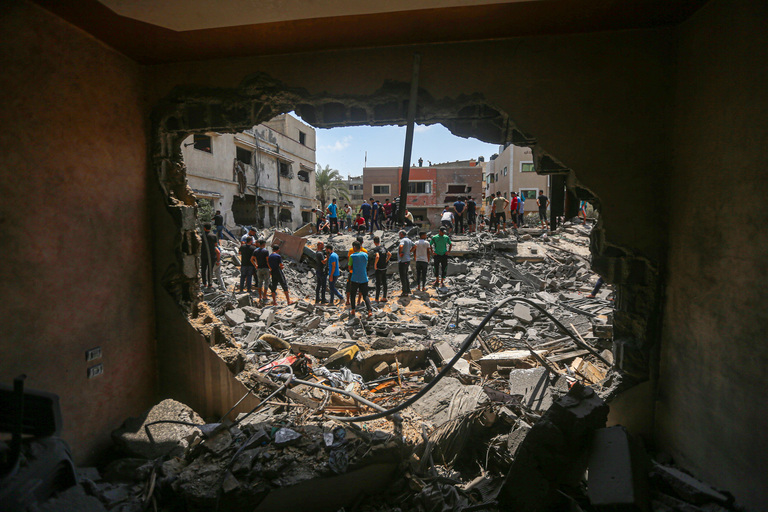
Residents stand amid the wreckage of a building in Gaza

World leaders must seize this moment to truly address the root causes of the crisis in Gaza and seek a viable lasting solution. Messages of condolence shared on social media do nothing while the underlying issues continue to be ignored.

The Palestinian people deserve to live in freedom and security. For this to be possible, the blockade of Gaza, and the wider illegal occupation of Palestinian territory must be brought to an end. Islamic Relief calls for an end to the Israeli occupation, and for a lasting solution to the conflict that is rooted in international law and justice for all.

A dire humanitarian situation

Every escalation in violence exacerbates the already-dire humanitarian situation in Gaza. While tThe blockade places huge strain on everyday life in the area. For more than 15 years, the Israeli government has controlled Gaza’s land borders, territorial waters and air space, creating what has been called ‘the world’s largest open-air prison’.

The blockade has turned Gaza’s once-vibrant economy into an area where 80 per cent of residents now rely on aid, and many children go to bed hungry. The health system is on the verge of collapse and the economy is in freefall.

Under the current situation, the youth of Gaza look to the future and see steep unemployment, poverty and crisis. Every day, lives and dreams are being crushed.

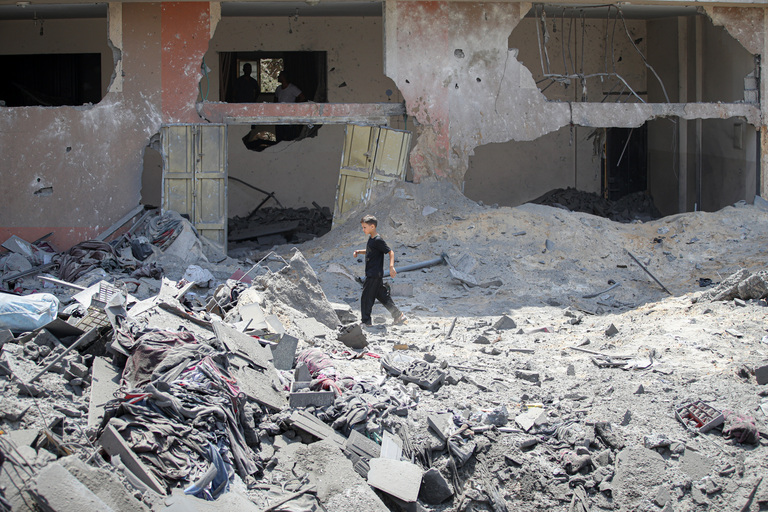
A child walks through rubble in Gaza

Islamic Relief has been working in the occupied Palestinian territory since 1997, responding to emergencies and supporting development. During last weekend’s escalation, we provided food and supported medical facilities treating the injured.

We will continue to stand with the people of Palestine. We will advocate for their right to freedom and safety, and we will urge the international community to uphold its responsibilities to the Palestinian people and seek an end to the illegal blockade and occupation.

Urgent action is needed to protect the rights of the people of Gaza, which remain under threat with each day the blockade continues.

Help us to continue our lifesaving work in Palestine

We need your help to support our brothers and sisters in Gaza. Please donate now to help us provide medical care and shelter to those who have been injured, and food and water to those who are desperately in need.

12.10.21

Islamic Relief supports Afghanistan Families

  News

Thousands of vulnerable people in Afghanistan receive urgently needed food packages, hygiene kits and access to clean water from Islamic Relief.

Afghanistan is suffering from a severe humanitarian crisis amid drought, conflict and political change. The Covid-19 pandemic has also caused devastation in the country and there are now fears of an economic crisis as 23 million people have lost their livelihoods and conditions continue to deteriorate.

There is a major food shortage across the country, and many do not know where their next meal is coming from.

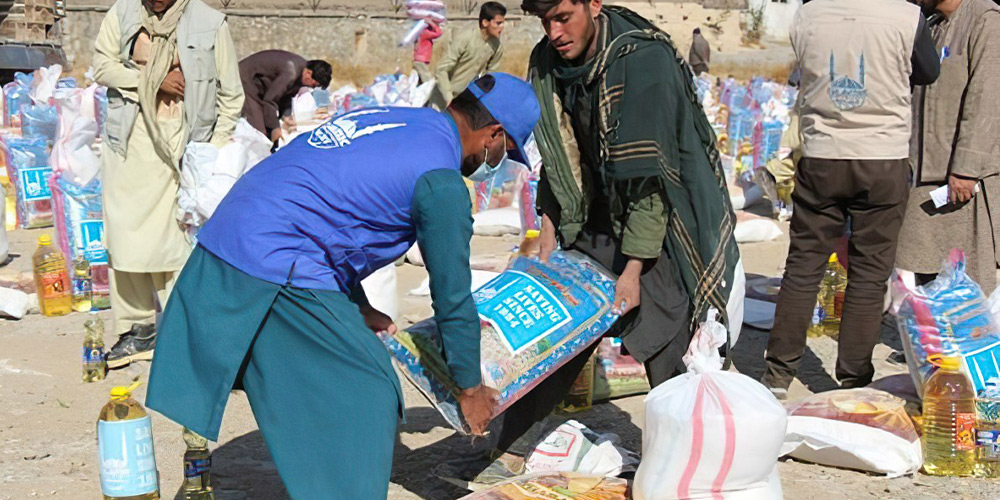
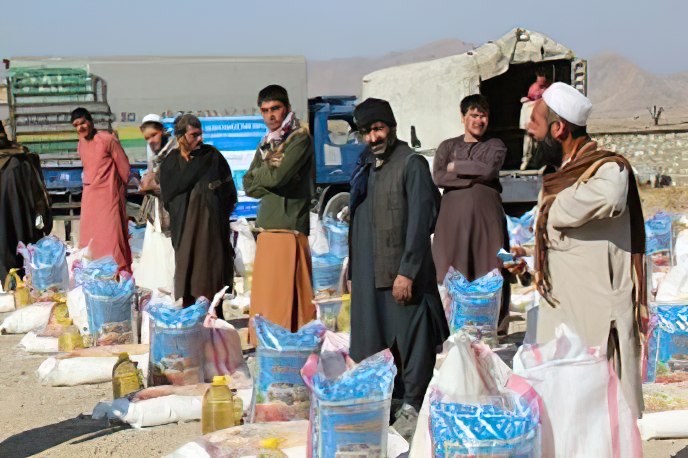
Islamic Relief have been distributing food packages to those affected. We plan to reach 11,000 of the most vulnerable families across 6 provinces, including Kabul and Nangarhar.

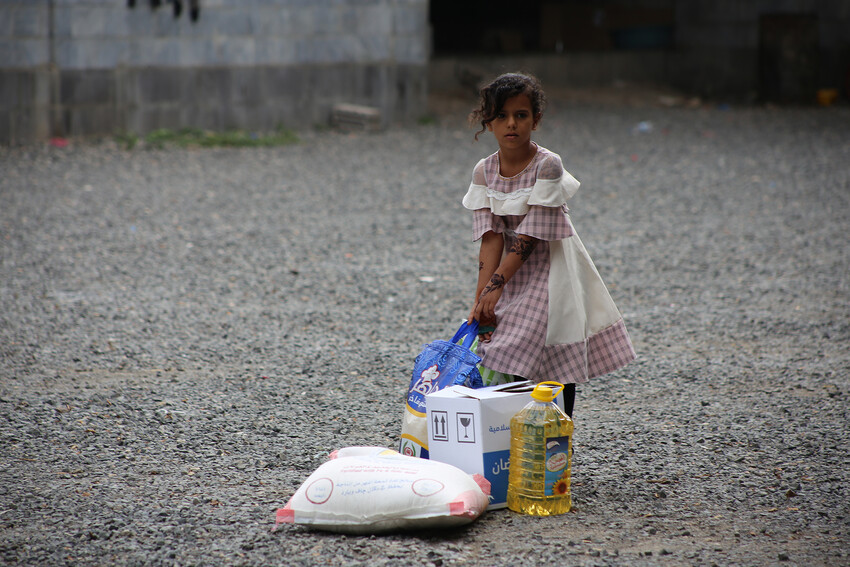
Photo: Afghan families collected their essential supplies.

The distributions began on 15 November and are expected to continue in the coming days. Alongside food packages, Islamic Relief are distributing 800 hygiene kits containing soap, shampoo, toothpaste, washcloths etc., 800 water storage kits. We are also providing essential kits containing blankets, bedding, cooking items and more to 600 families.

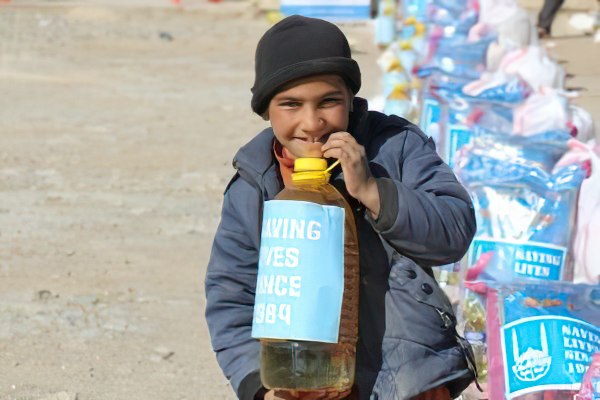
Afghani Boy
Photo: Afghani child collecting essential supplies for his family.

Help save Afghan lives

The crisis in Afghanistan has forced thousands of families to flee their homes. Donate today to help families in Afghanistan.

12.10.21

Rohingya Refugee Crisis: A Time for Action

  News

Islamic Relief has a long and ongoing commitment to the Rohingya and the host communities in Cox’s Bazar.

Through the torment of fleeing their homeland, to fires and floods, we have stood side by side with them. Since Cox’s Bazar is the largest refugee camp in the world and now has a population of more than 1 million, this support is desperately needed.

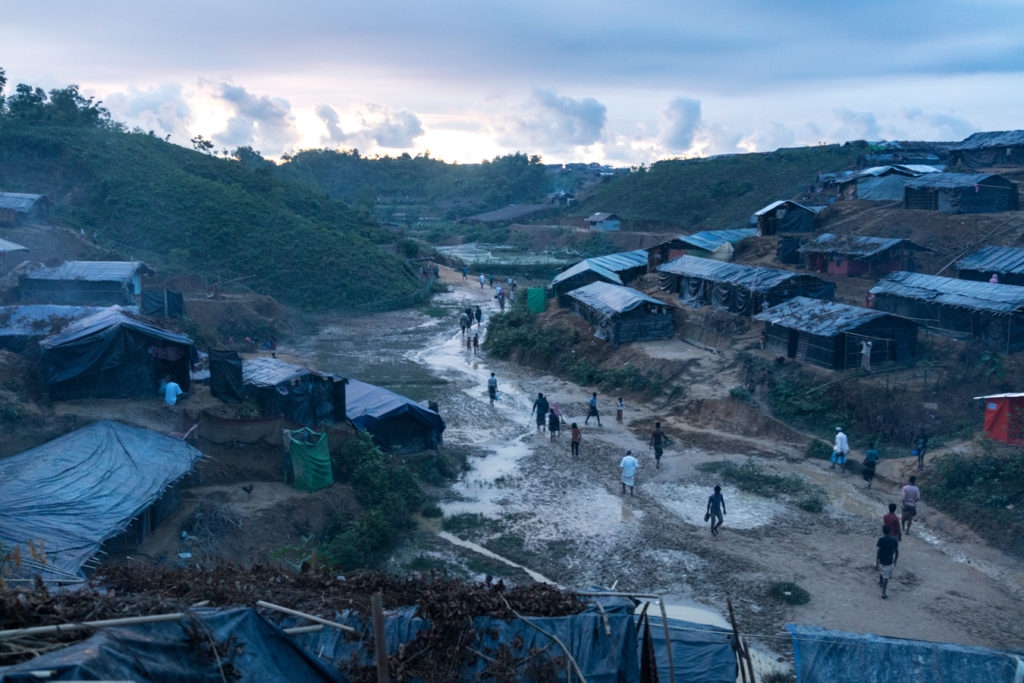
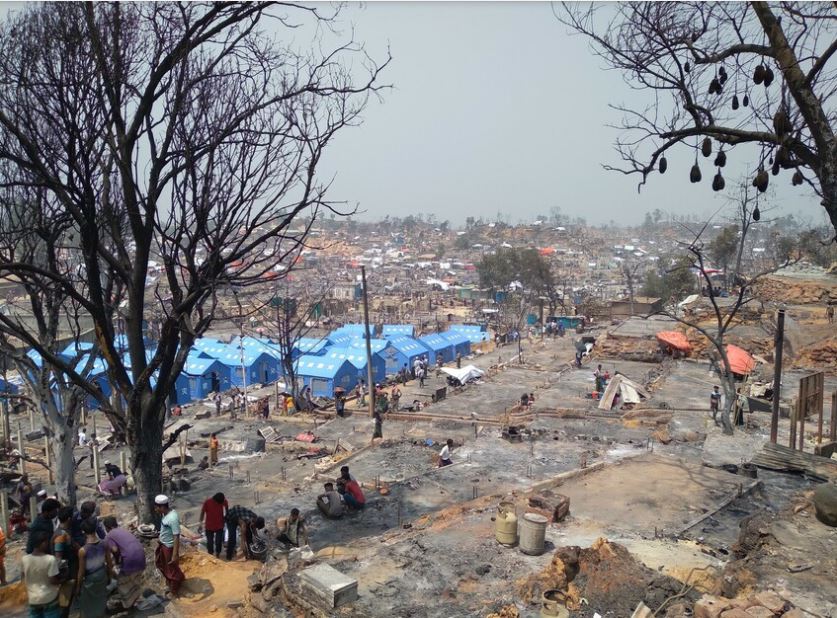
Photo: Cox Bazar is the largest refugee camp in the world.

The Islamic Relief family is uniquely placed to help them over the long term. Islamic Relief Bangladesh has a satellite office in Cox’s Bazar, so we’re on the ground with the people. When disasters occur, Islamic Relief can mobilize quickly and effectively. So, when a massive fire broke out in Ukhiya Camp in Cox’s Bazar, burning more than 50 000 shelters, Islamic Relief was there to help.

Many residents of the camp took temporary shelter in nearby camps and adjacent areas where WASH, shelter and food crisis were already a problem.

The UN World Food Program and other agencies responded with government agencies, but this was not enough to meet all needs.

People had severe needs for non-food items, WASH facilities, emergency shelters and food security. The Islamic Relief Family and Islamic Relief Bangladesh combined to create a comprehensive support package that includes all these elements.

Islamic Relief Australia was asked to help the shelter component rebuild homes safer and sturdier. Through you, our donors, we have responded to the call for shelter and rebuilt lost homes.

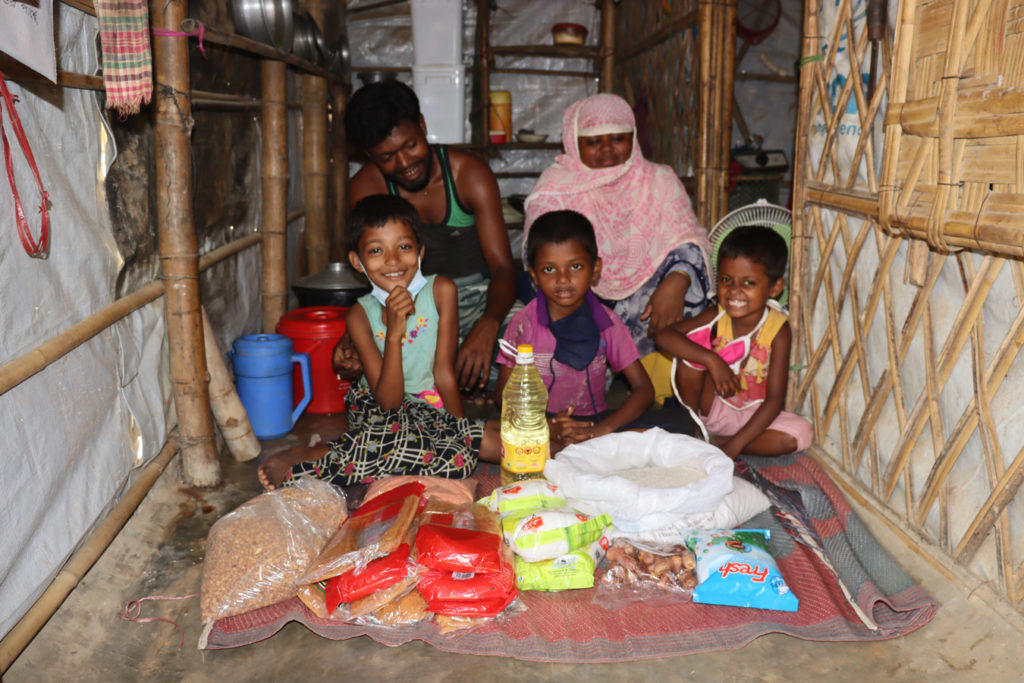
Photo: Family in the Cox Bazar refugee camp, supported by the Islamic Relief family.

Islamic Relief Australia’s shelter intervention led to 2726 individuals having greater access to safe and appropriate shelters in host communities and the Rohingya makeshifts. IRAUS supported the following:

  • Permanent Shelters (Refugee community)
  • Permanent Shelters (Host community)
  • Disaster Risk Reduction (DRR)
  • Small Scale DRR activities to strengthen shelter sites

How to help Rohinya families in Cox’s Bazar refugee camp

Donations will help provide funding for building a more robust, safe, and durable permanent shelters that are long-lasting.

10.29.21

Yemen Cholera Crisis

  News

Yemen suffers from a cholera crisis

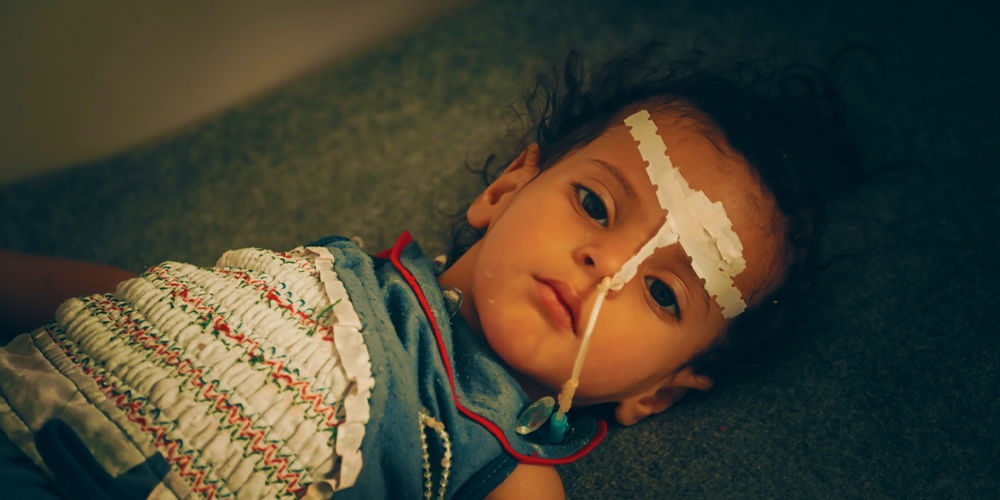
Yemen is suffering on many fronts, including with the spread of disease. Covid 19, cholera and other diseases such as diphtheria, dengue, and malaria are ravaging the country. Cholera is a particular problem, with the current outbreak in Yemen being the biggest in record time. At peak, a person died every hour of cholera. In the absence of adequate medical treatment, the death rate can exceed 50%, but with improved treatment and medication this can drop to below 1%.

The aim of the project is to contribute to the reduction of mortality and morbidity associated with the cholera outbreak and reduce the further spread of the epidemic in the targeted priority districts of Hodedah, Aden, Amran and Hajah Governorates.

Islamic Relief Australia is contributing to a massive initiative to manage cholera. The interventions include:

  • Early detection, case management, prevention measures and improved access to health care services in targeted locations.
  • Improved skills and knowledge among health workers, Community Health Volunteers and community at large on case management and prevention of Acute Water Diarrheal.

These health interventions will not stop the spread of cholera alone. Other members of the IR family and other aid agencies are contributing to WASH projects that support access to clean water and improved sanitation.

Number of direct beneficiaries:

  • 156 health service providers
  • 160 community health volunteer
  • 13,230 cholera cases of all community gender types.

To help alleviate the suffering of our brothers and sisters in Yemen, click here.

08.10.21

The Forgotten People of Afghanistan

  News     Publications

Rakima * is the mother of four and an internally displaced person. She lives in a mud shanty in Kabul’s Gul Batta Province and is the only earner for her family.

“I lost my husband due to the conflict in our village between the Afghan government forces and the Taliban. First, it was the fear of our lives and then the hunger that forced us to leave our home. We fled in whatever clothes we had. I just wanted my children to survive,” says the 45-year-old, looking through the torn sheet that modestly covers the window of her home.

Rakima is from the Laghaman Province but now lives in Kabul. Rakima received essential food and firewood items for three months to give her warmth over the harsh Afghan winters. “We could hardly believe our fate. First, wars, then rising prices, and now COVID-19. We barely make enough to survive, and winters are so difficult.”

Suffering from decades of conflict, drought, and the third wave of COVID-19, millions of Afghans like Rakima are in need of urgent humanitarian assistance. Islamic Relief recently launched its emergency appeal to help people living on the brink of famine and hunger. Support our work in providing food security, accessible and clean water, shelter and protection for families and individuals in the crisis-hit areas of Badakshan, Daykundi, Ghor, and Faryab, Herat, Kabul (rural) and Nangarhar.

We have changed the names of the people in order to protect their privacy.

Today you can help. You can help make a difference, you can end someone’s hunger, you can help a family affected by famine.
Donate now

03.31.21

Cox’s Bazar Refugee Camp Fire

  News

A massive fire has swept through the Balukhali Refugee Camp in Cox’s Bazar. Cox’s Bazar is the biggest refugee camp in the world with more than 600 000 people living there. Most of the population are Rohingya refugees. The fire happened on the 22 March and impacted more than 40 000 individuals. These families have lost their makeshift homes and tents, and all their belongings. Public facilities such as water points, latrines, 6 health facilities and hospitals, learning centres and markets have also been destroyed. It is reported that 2 World Food Program nutrition centres and a food distribution point have been destroyed. Life is extremely hard in the camps and these fires have devastated the lives of more than 8000 households directly and countless others that rely on the public facilities that have been destroyed. 

Islamic Relief Bangladesh has a strong staff component on the ground and have been working in the impacted areas previously and are now providing life-saving support.  

Immediate needs include – 

1. Non Food Items (Lungi, Thami, Kitchen Utensils, Mosquito Net, sandal) 

2. Drinking Water & Sanitation Facilities (Emergency Latrine, safe water) 

3. Emergency shelter support (Tarpaulin, Rope, Bamboo, 2-inch nails, Claw hammer, Knife, Cash for hiring labor) for the most vulnerable families 

4. Providing COVID 19 Sensitive Hygiene Kits (Bathing Soap, Detergent powder, sanitary napkin, Plastic Bucket and Mug, disposable mask, ORS, WPT) to the WASH vulnerable families 

5. Instant Food Support (Flattened Rice, White Sugar, Fortified Biscuit) 

We are on the ground now assessing immediate needs and providing urgent humanitarian aid. Our teams have deployed additional support from the local field office in Dhaka to Cox’s Bazar. 

Help provide urgent relief and donate today. 

YOUR COMPASSION CAN SAVE LIVES  

DONATE TO GLOBAL EMERGENCIES

03.25.21

Yemen: 6 years of suffering

  News

Islamic Relief has supported 13 million people in Yemen amid a dire humanitarian situation 

As Yemen enters its seventh year of conflict, a new Islamic Relief publication highlights how we have remained by the sides of vulnerable people in the country throughout every difficulty.

Read more in our Yemen report here.

Even before the conflict began, Yemen was one of the poorest countries in the Arab region. Now, more people in Yemen need humanitarian aid than in any other country in the world.

Islamic Relief, which began working in Yemen in 1998, has continued providing vital assistance throughout the violence. Thanks to your support, we have been a lifeline for families facing conflict, famine and disease. So far, we have supported 13 million people, but today the humanitarian needs in the country are graver than ever.

A humanitarian crisis
The humanitarian situation in Yemen is dire: 80% of the population do not know where their next meal is coming from, 75% urgently need healthcare, unemployment is rife and 12 million children are considered vulnerable.
Islamic Relief works with communities to provide them with food, clean water, accommodation and essential medical care, as well as supporting vulnerable children.

Yemenis are facing a severe food crisis, with over 40% of the population at risk of starvation.
“My wife and I saw extremely difficult days, to the point that many times we would have nothing in the kitchen to feed our children… we were plunged into a devastating hunger,” says 62-year-old Abdulhakeem, from Taiz.

As one of the UN World Food Programme’s biggest partners, we distribute food vouchers and monthly food packages that are a lifeline for families like Abdulhakeem’s – reaching more than 2.3 million people last year alone.
“Islamic Relief have put happiness on our faces, and renewed our hope. While other organisations gave up on us, they never have,” he says.

Tackling malnutrition in children
We have been working with communities and health facilities to provide preventative care and treatment to help combat malnutrition in over 330,000 children.
Among them is 18-month-old Yasmeen, who was suffering from the effects of severe malnutrition until we assisted her family.
“When Yasmeen cries, I give her milk which is very diluted with water. I have no milk for her. I thought it was enough, however, she wasn’t getting the nourishment she needed and I nearly lost her,” says her mother, Layla.
Yasmeen was admitted to a health clinic supported by Islamic Relief, where she was treated for severe malnutrition. The infant was then regularly monitored and given the healthcare support she needed to make a full recovery.

Life-changing water and hygiene programmes
Over two-thirds of Yemenis require support to meet their basic water, sanitation and hygiene needs – including 12.6 million who are in acute need.
“The health facility where I work lacked access to safe and adequate water. There was no functional water source,” says Abdulmajeed, from Al-Batana, where clean water is scarce.Islamic Relief equipped the main water well of the health facility with a solar-powered system and repaired the broken water sources. It is a sustainable solution that is also helping the environment.
We provide communities with reliable water sources, which has helped change the lives of over 800,000 people. We teach people good hygiene practices, which help prevent the spread of water-borne diseases.

Islamic Relief has worked hard to prevent the spread of Covid-19 and will continue to do so, assisting healthcare facilities so they are better prepared to support patients. We have also been an economic lifeline for vulnerable families who have lost their livelihoods during the pandemic, with financial support to help to ease their burden.

Advocating for change in Yemen
As well as our lifesaving programmes in Yemen, we also work to address the root cause of the suffering, and advocate to restore peace in the country. We advocate to protect civilians and aid workers, to ensure there is enough funding for critical life-saving programmes and for food, fuel and humanitarian aid to be able to move safely across the country.
As one of the major agencies operating in Yemen, we use our position to call on the international community to press for an end to the conflict.

Islamic Relief welcomes the new US administration’s decision in February 2021 to reverse the previous US administration’s decision to designate the Ansarallah group that controls much of Yemen as a foreign terrorist organisation. This designation threatened to cut off foreign aid to millions of Yemenis. It would have restricted the movement of essential aid and could have had devastating consequences for all the communities we serve. We are proud to have been one of the many aid agencies working in Yemen who supported the call for the United States to revoke this decision.

‘Islamic Relief in Yemen’ is dedicated to the memory of our dear colleague Hamdi Abo Abdullah Al-ahmadi, an Islamic Relief aid worker who was killed in 2019 while trying to deliver aid in Hodeida, Yemen.

02.11.21

Indonesia earthquake update – 25 January 2021

  News

Following the earthquake in West Sulawesi, Indonesia earlier this month, the Islamic Relief team is on the ground providing life-saving support and scaling up the response according to increasing needs locally.

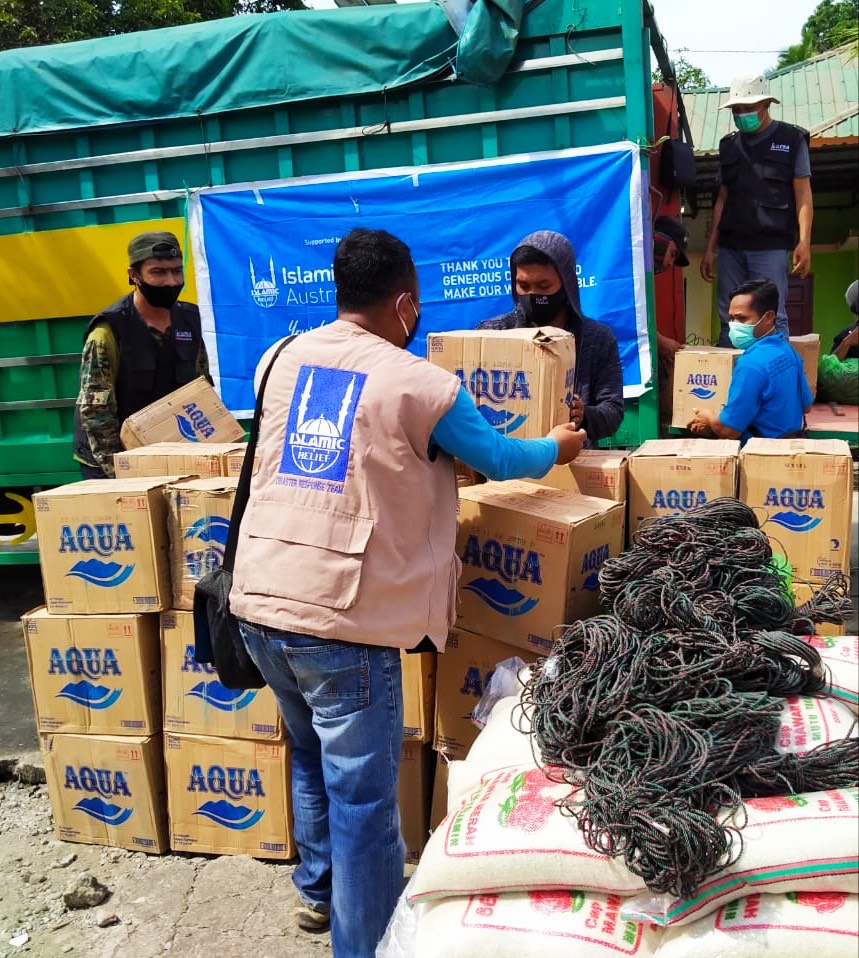
To date, Islamic Relief Indonesia has distributed three tonnes of rice, 300 trays of eggs, 300 tarpaulins, 300 food packs, 600 blankets, 300 hand soaps, 300 boxes of masks, and 300 bottles of hand sanitiser. This was divided between two villages: Ratetonda and Mekkata. The emergency is going into the next phase where water supplies, long- term hygiene interventions and shelter needs will be addressed. The full extent of the earthquake is still being determined with some villages still only accessible by helicopter.

Nanang Dirja, Islamic Relief’s Country Director in Indonesia said:

“Thousands of people have fled their homes, hundreds of buildings have been damaged or destroyed and many hospitals have been evacuated. It’s a challenge to reach the affected areas as landslides have occurred, roads are blocked and electricity and phones lines are down. People are panicking about possible aftershocks that might trigger a tsunami.

“We have deployed a team to the area, which will start by distributing water, food parcels, tarpaulin, blankets and face masks, as the spread of Covid-19 is a huge risk in such a chaotic and crowded disaster zone. We are also providing vehicles to help evacuate the wounded to get medical treatment.”

Islamic Relief Australia is proudly supporting these efforts. Now is a critical time when we need your support.


STAY INFORMED

  • This field is for validation purposes and should be left unchanged.

Quick Donate