11.04.24

Gaza: The Challenges of Providing Aid Amid Ongoing Bombardment

  News

As the recent escalation in Gaza, Palestine reached the one-year mark, approximately 322 aid workers and 986 health workers have been killed among the 43,204 deaths. 

We are relieved that, so far, no Islamic Relief staff have been injured or killed. However, all Islamic Relief staff have become displaced, many repeatedly. They are affected in the same ways as the rest of the people of Gaza.  

Several staff have lost family members in the bombardment since October 2023. 

Amid the dire situation, one of our aid workers in Gaza* began documenting his experiences whilst under siege alongside his wife and two young children. 

Here, we explore the challenges of providing aid in Gaza through his eyes, providing an insight into the firsthand experience of the violence and suffering due to Israel’s blockade in Gaza. 

Providing aid in Gaza among bombing and violence 

For humanitarian workers, one of the main challenges is trying to keep safe when there is nowhere to seek safety.  

Only days into the escalation, our colleague explained: “Moving from place to place is very dangerous – ambulances and police cars are the only vehicles in the streets when I look out my window. I am sometimes afraid to even look outside,” he said.

Humanitarian workers trying to travel to other parts of Gaza to help those in need know it could be a one-way trip. They can only hope they will be able to come back to their families.
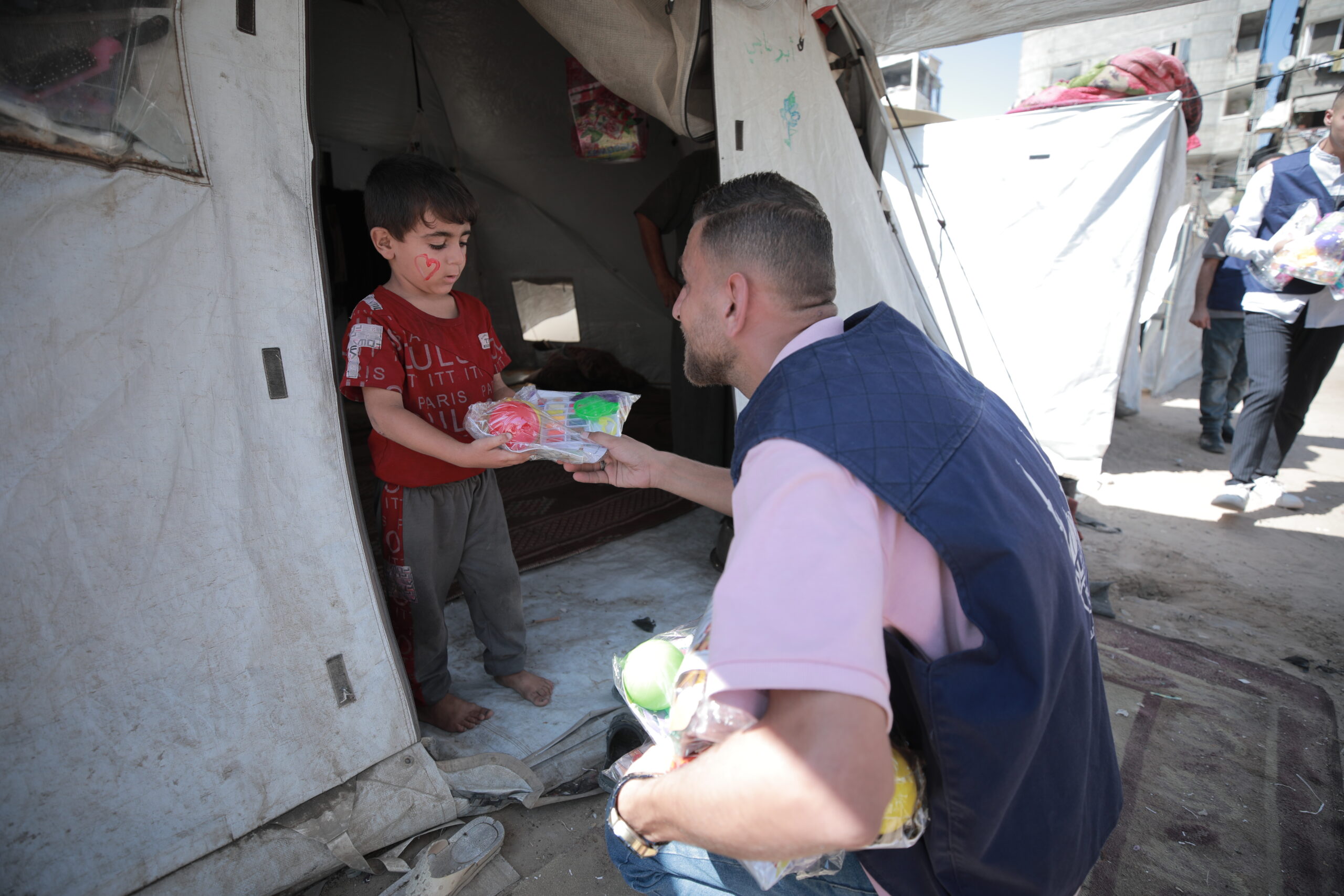
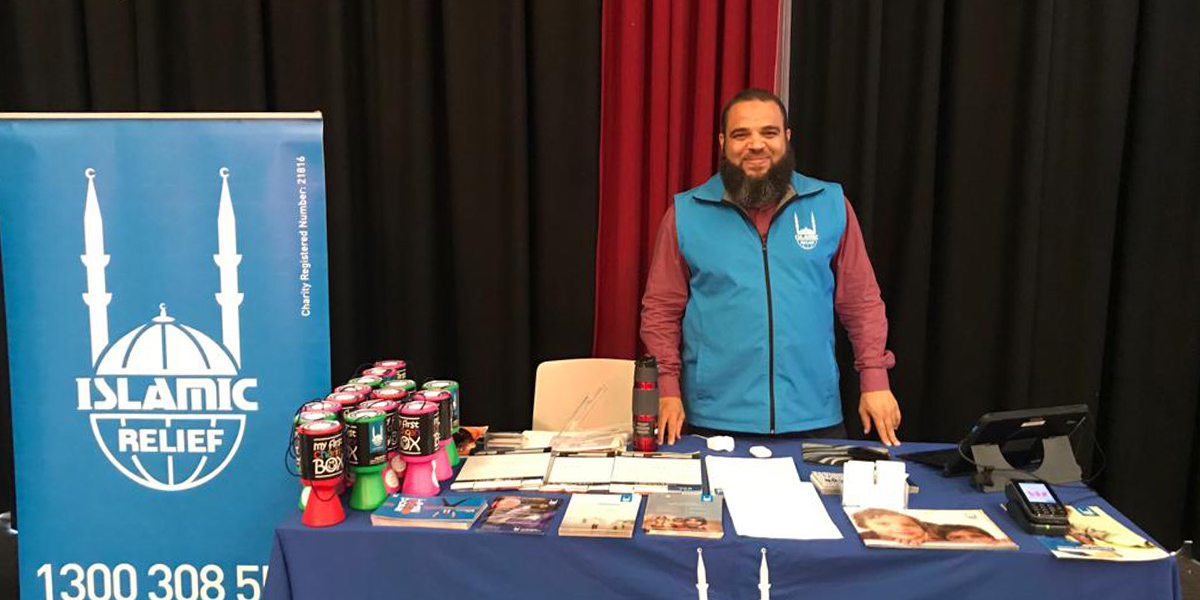
An Islamic Relief aid worker in Gaza.

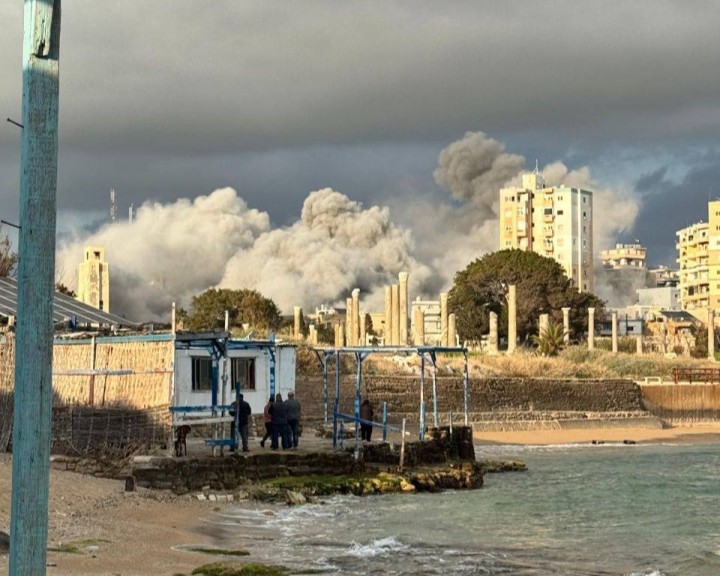
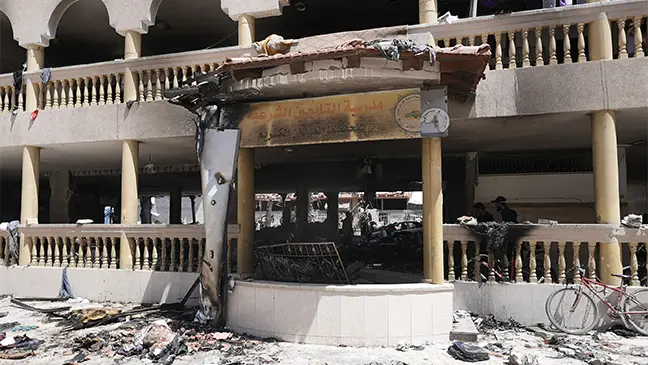
In August 2024, Israel targeted a space for prayer at Al-Tabeen School, where hundreds of displaced families had been sheltering. 

Photo: Al-Tabaeen school, which was used as a shelter during the escalations was attacked in August 2024, killing at least 80 Palestinians.
Photo: Al-Tabaeen school, previously used as a shelter during the escalations, attacked in August 2024, killing at least 80 Palestinians.

This incident shook our colleague’s team. “We used to deliver hot meals to that place every day. It was home to hundreds of displaced families,” his fellow team member told him. “Any one of our teammates could have been among those who passed away.” 

Our colleague explained his fears for his own life as he continues providing aid for the people of Gaza: “Every day I go to work thinking an airstrike could hit nearby. I went to meet with displaced families at one of the schools that have been turned into shelters and I was so afraid that something would happen while I was there, especially as targeting schools is the norm these days.  

“I can’t imagine why on Earth a school, mosque, or hospital could be seen as a target.” 

Palestinians live a lifetime of suffering

The people of Palestine have lived through many massacres and displacement orders, even before the escalation.  

Our colleague recalled how he had witnessed 2 intifada, tens of invasions, and countless escalations at the mere age of 40. 

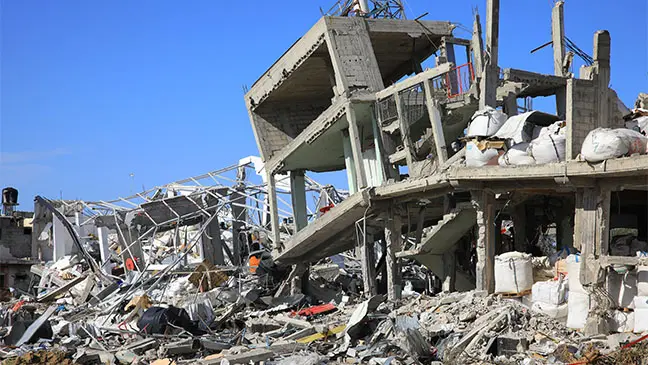
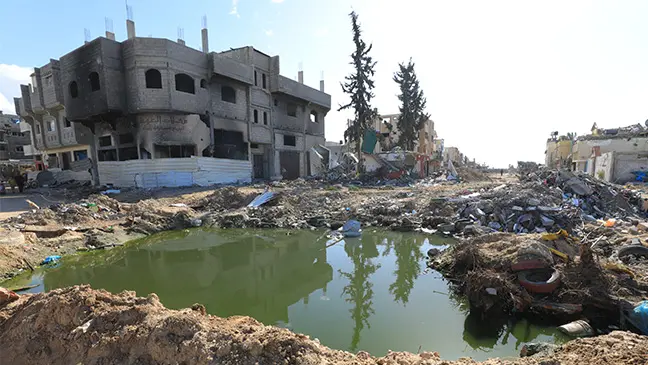
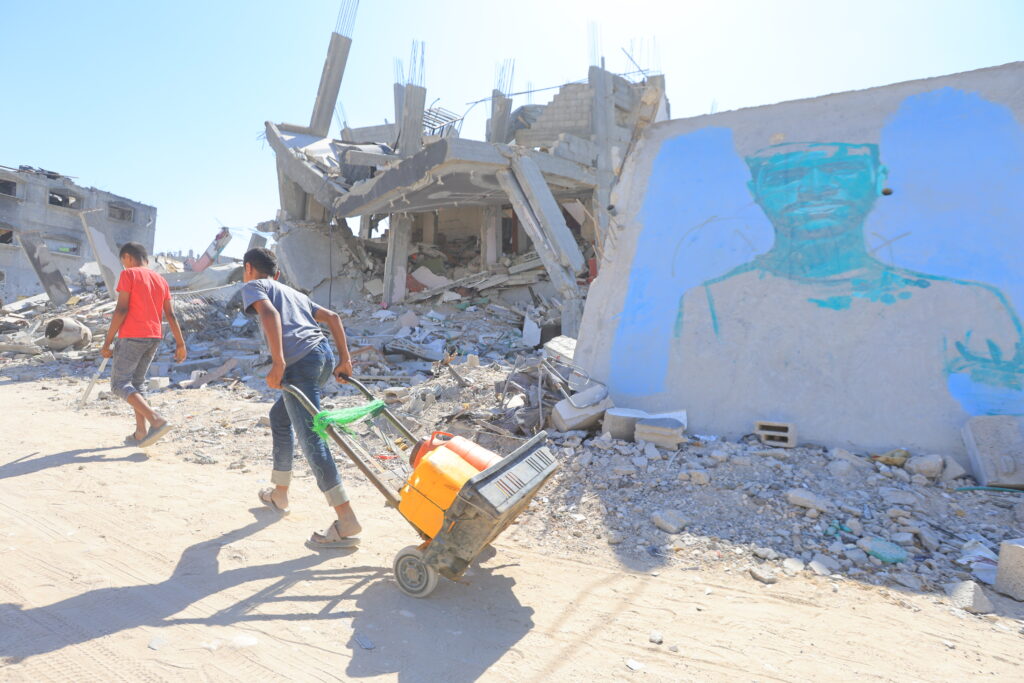
Buildings left partially standing amongst rubble in Gaza, February 2024
Photo: Buildings left partially standing amongst rubble in Gaza, February 2024.

“We have lived the hardest life,” he explained. “I have faced obstacles to travelling, to being accepted by the countries of the world, and to realising even my basic human rights.” 

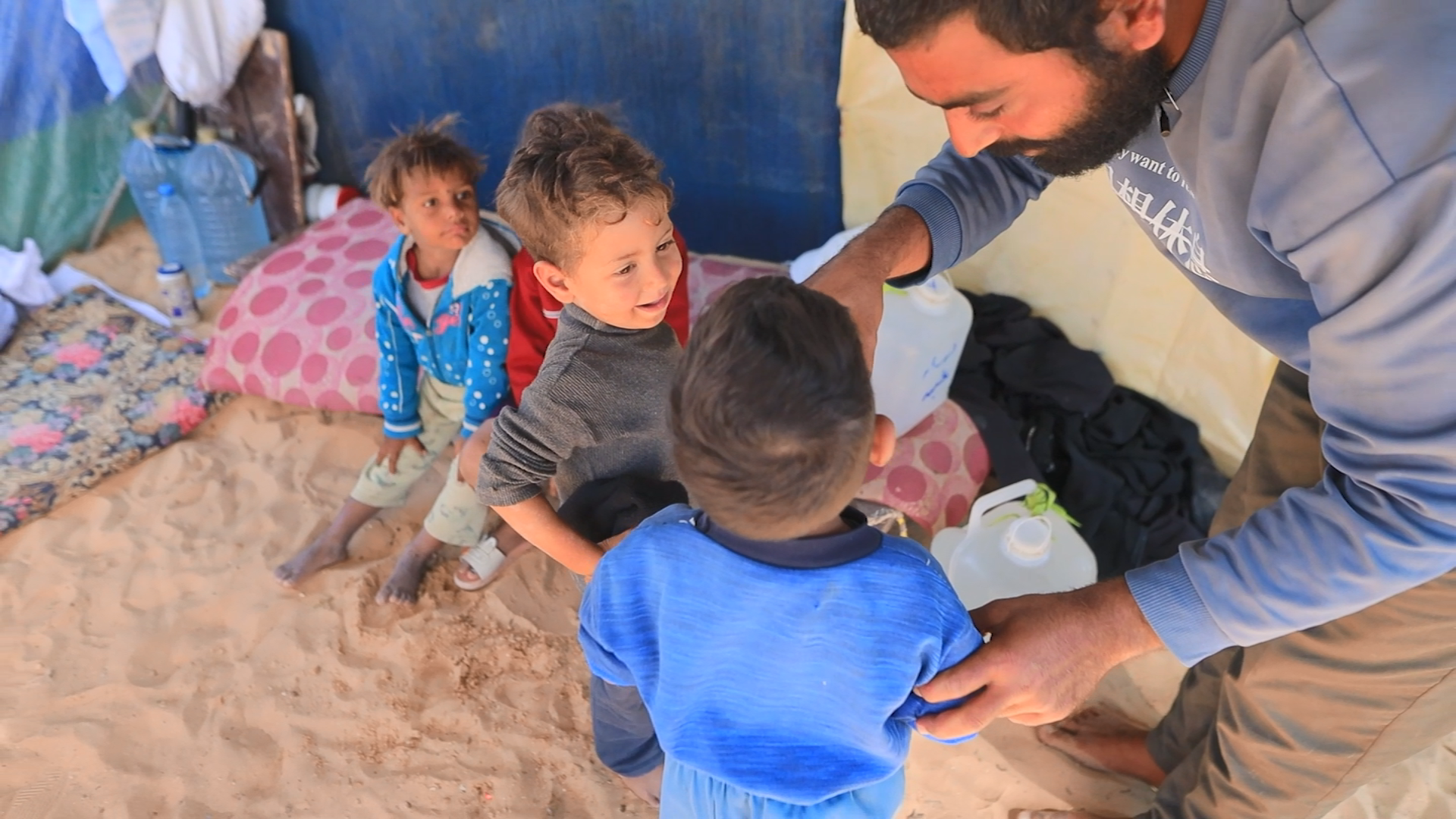
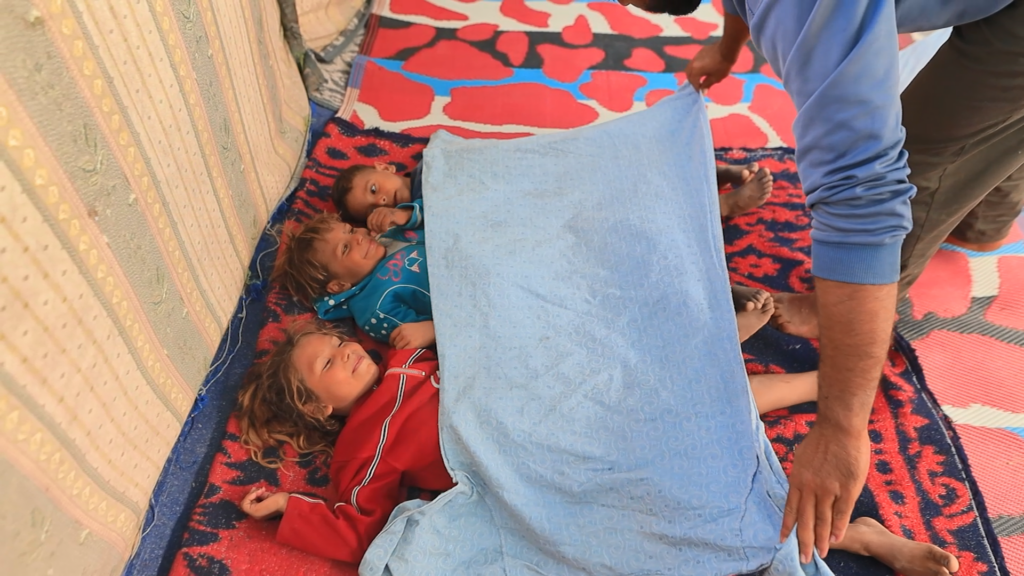
This struggle is even experienced during childhood: “My kids – 8 and 6 years old – started their lives amid explosions and bombardment. Their concept of the world has developed under fire and airstrikes. They always ask why we are living like this. Every time they ask, I feel a tide of emotion rising up inside me.” 

Daily Life in Gaza: Being helpless in the face of death 

Despite the obstacles they face daily, our teams have provided nearly 2.3 million medical items to the people of Gaza since last October, as well as healthcare services for more than 9,900 people.  

But as the escalation has left 19 out of 36 healthcare facilities out of service or destroyed, access to medical care is among the many challenges for the people of Gaza. 

Our teams on the ground are doing everything to provide aid and medical care amid the ongoing bombardment. However, there are times when the situation becomes helpless.  

Our colleague recalled speaking with a fellow Islamic Relief aid worker, who had been working on a project which provided incubators for sick newborn babies. With depleting resources due to the escalation, these are now “the same babies who are now being left to die, without power to run their incubators.” 

“We are being deprived of everything. I think, if they could, they would even keep oxygen from us,” he said. 

Reflecting on the situation, his colleague said: “I can’t understand what is going on. We gave the incubators to Al Shifa Hospital to save the lives of newborn babies. Now, the whole world is watching the babies being slowly killed, live on television. I feel so helpless.” 

Witnessing communities being destroyed 

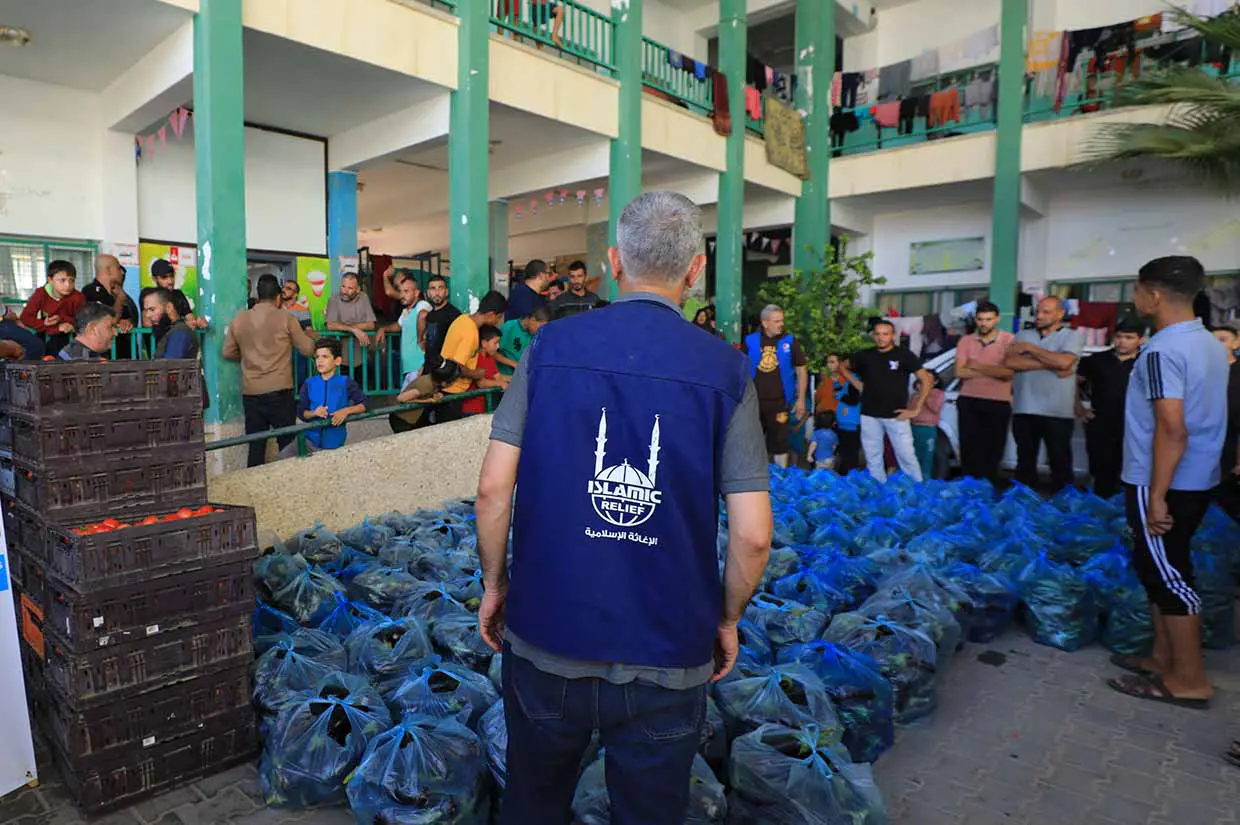
After returning to his old high school, which now serves as a makeshift shelter, our colleague took part in a distribution around July 2024. He reported on the dire living conditions that families faced. 

“I could only watch as we passed scenes of misery and suffering all around,” he said. “The beautiful places where I used to live had turned into a dystopian setting with darkness and rubble everywhere.  

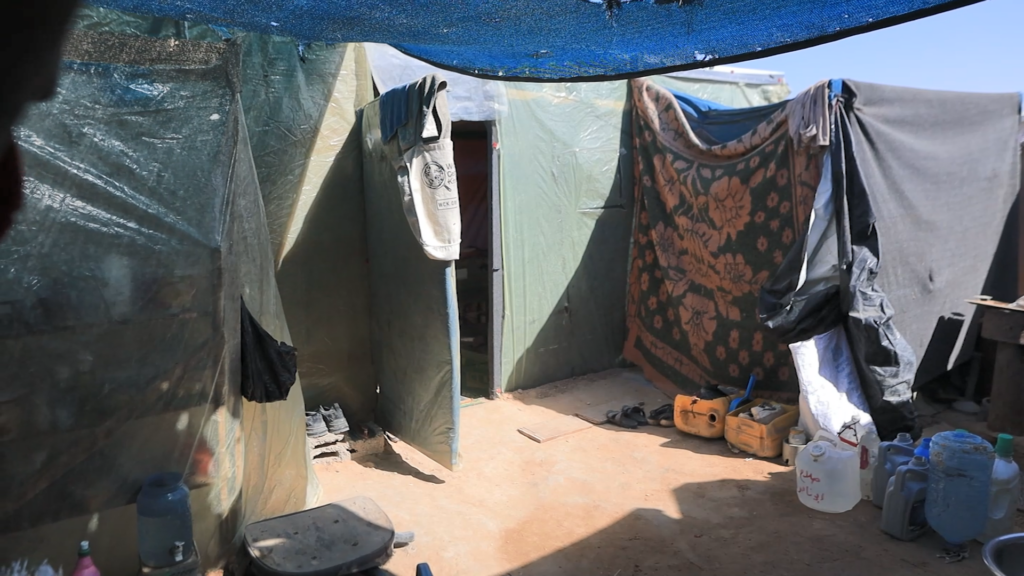
The streets are filled with trash. Trucks are no longer collecting rubbish because there is no fuel. I could see piles of it everywhere, especially near shelters and tents. There were also ponds of sewage and grey water near the camps.
An Islamic Relief aid worker in Gaza.

The 2-hour field visit was a mere snapshot of the extent of the suffering, transforming a place that once held memories of his school days, to a shelter housing the most vulnerable.

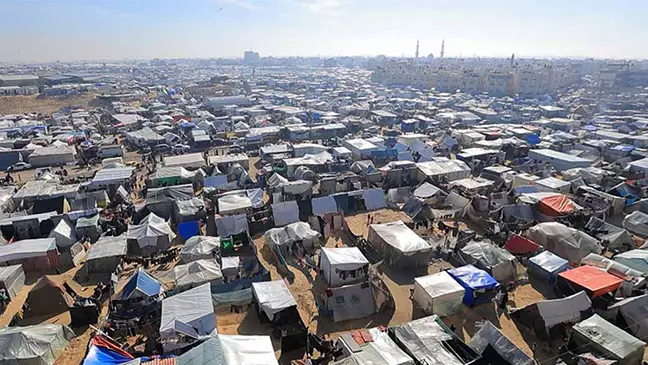
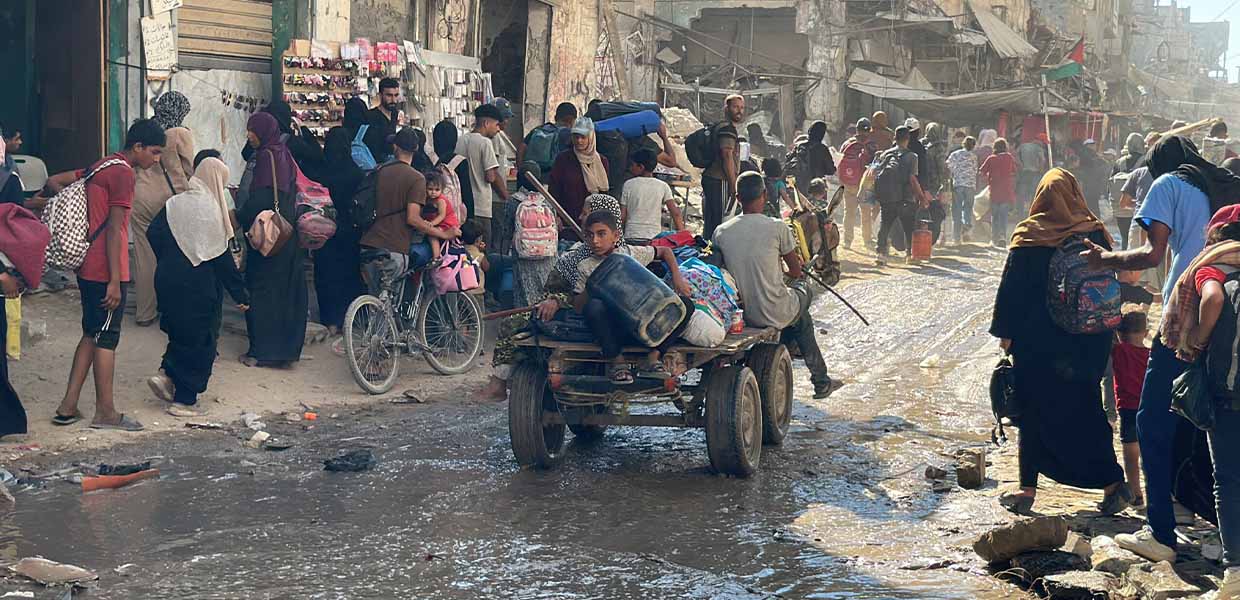
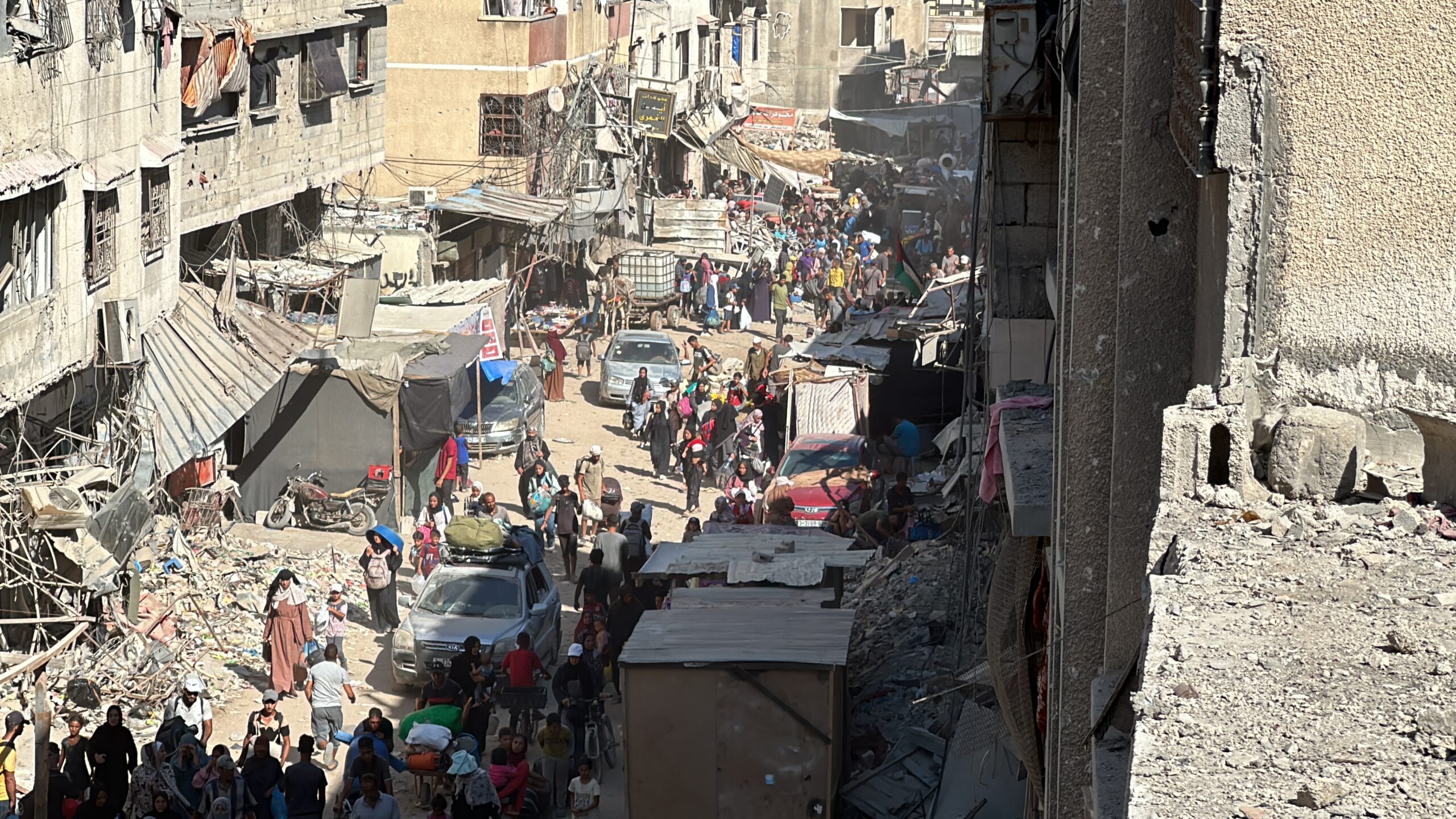
An aerial view of Internally Displaced Person (IDP) camps in Gaza.
Photo: An aerial view of Internally Displaced Person (IDP) camps in Gaza.

“Our team was delivering vegetables at the school-turned-shelter. A man told me that it had been a long time since he’d been able to get any vegetables, and he was overwhelmed knowing he’d be bringing some back to his family.  

“These people used to get good food for their families, but now it’s a struggle to even get some vegetables,” he reflected.  

Living in this hell is indescribable. It is a burden that makes it difficult to even breathe. It is a punishment without reason. It is a violation of all our rights and of our humanity. Humanity, to me, is becoming something questionable.
An Islamic Relief aid worker in Gaza.

The struggle for water 

Despite being a major part of our teams providing clean water to over 250,000 people, our aid workers are struggling for basic provisions, like most of the people in Gaza. 

In October last year, our colleague explained that access to water started becoming scarce. “Most of us are at the point where we don’t care if the water is clean or not, we’re lucky to have any at all,” he said.

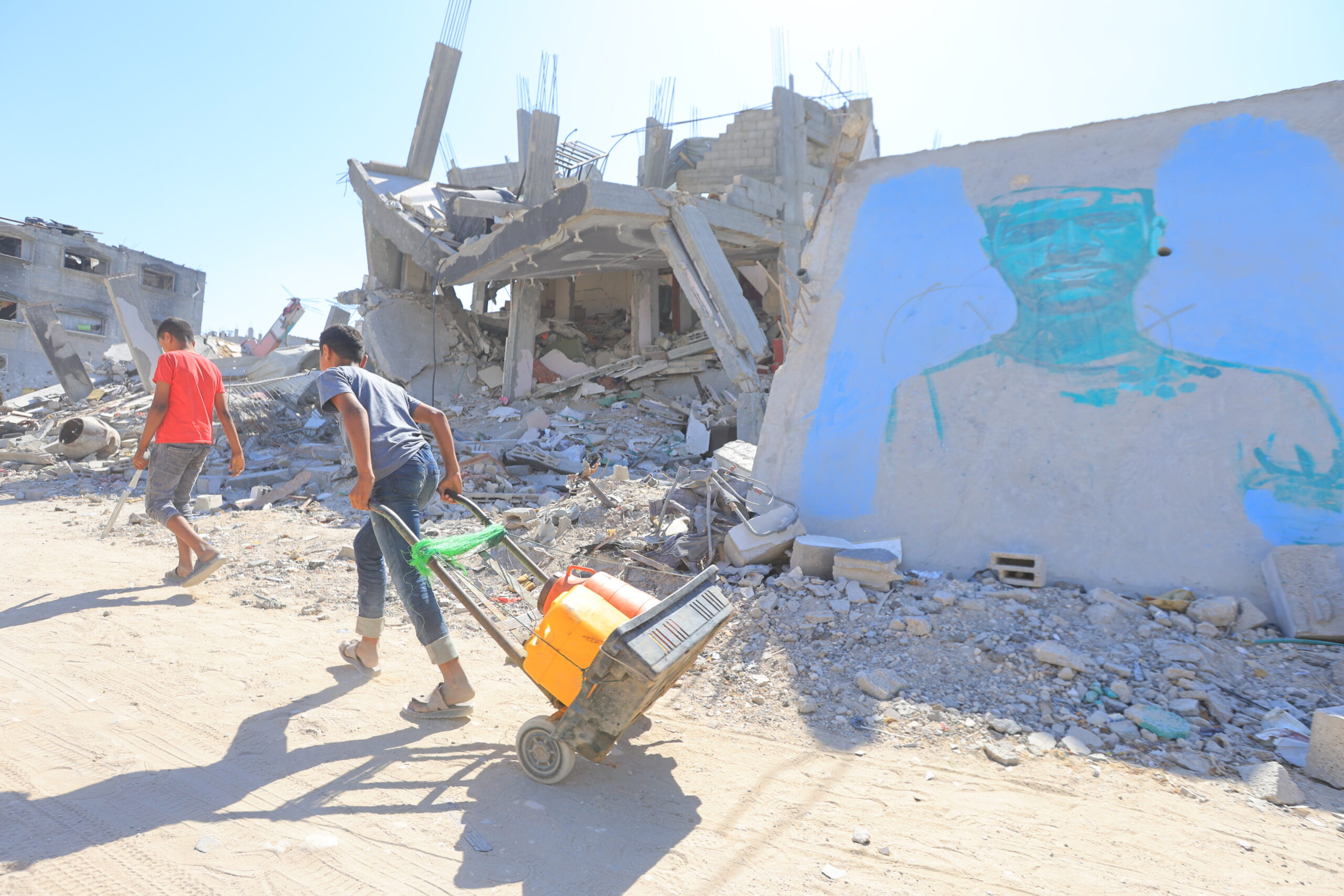
Water in Gaza has become scarce, as the escalation leaves rubble behind and pollutes water sources.
Photo: Water in Gaza has become scarce, as the escalation leaves rubble behind and pollutes water sources.

 “Families are now taking plastic gallon containers out with them in search of water,” he said. “We are flushing the toilet only 2 times a day, in the morning and at night, and we’re eating less food to avoid going to the toilet as regularly. 

“We wash for prayers only once or twice. My mum decided that only the adults can use water for this, the children will pray after performing tayammum [ritual cleansing without water].” 

Lack of food 

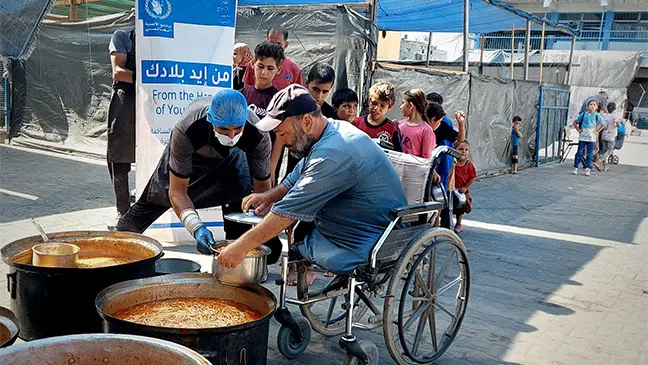
Our teams in Gaza have distributed more than 42 million hot meals to those in need, but they are no strangers to feeling the effects of hunger and increased cost of living

In many of his accounts, our colleague speaks of not being able to provide food for his family – “not because I don’t have money, but because there is no food” he explains. “The markets are empty. I can’t explain that to my children. Not even to my cat.” 

“Most of our diet is canned food. My daughter often has stomachache and pain due to poor food, while my son only has one meal a day, so he is hungry most of the time,” he said in one account.  

“All around me, I notice people becoming much thinner,” another account stated.

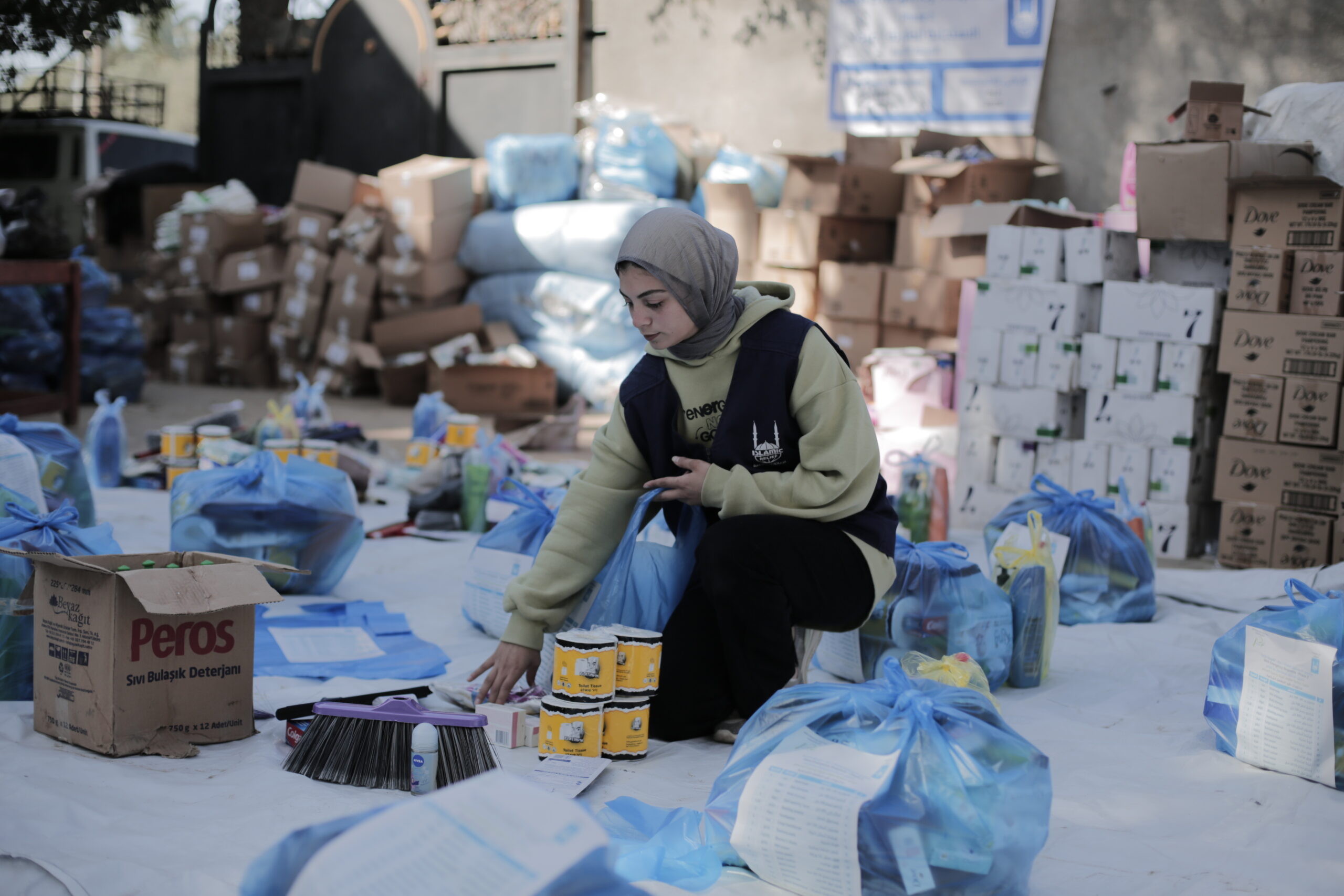
Islamic Relief prepared and distributed hot meals for vulnerable adults and children in August 2024.
Photo: Islamic Relief prepared and distributed hot meals for vulnerable adults and children in August 2024.

“Children are suffering the most, especially those that need special formula or flour. My family managed to ration our consumption of bread, water… everything. But I noticed my kids’ skin getting yellowish and pale from the poor diet.”

Displacement and loss 

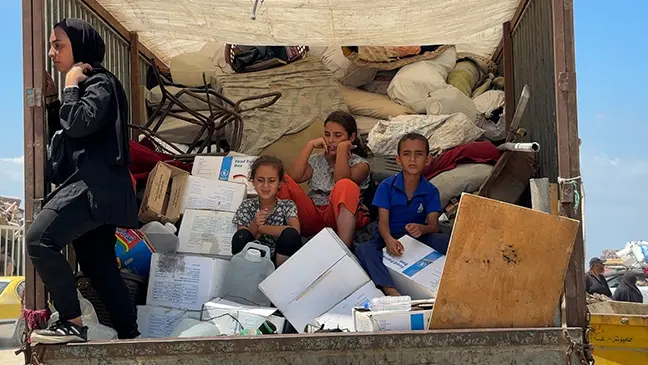
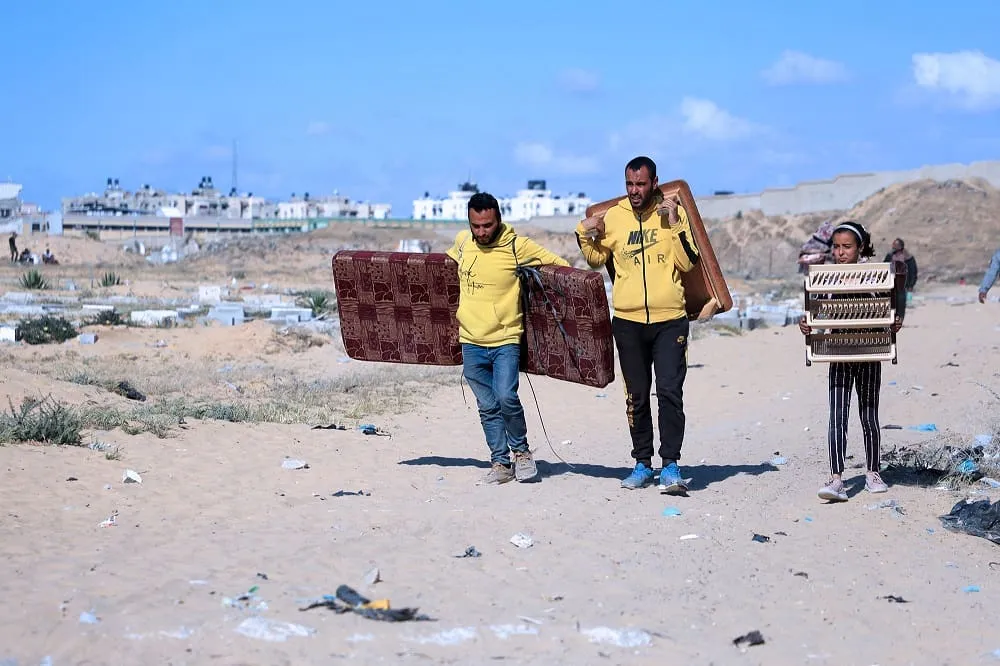
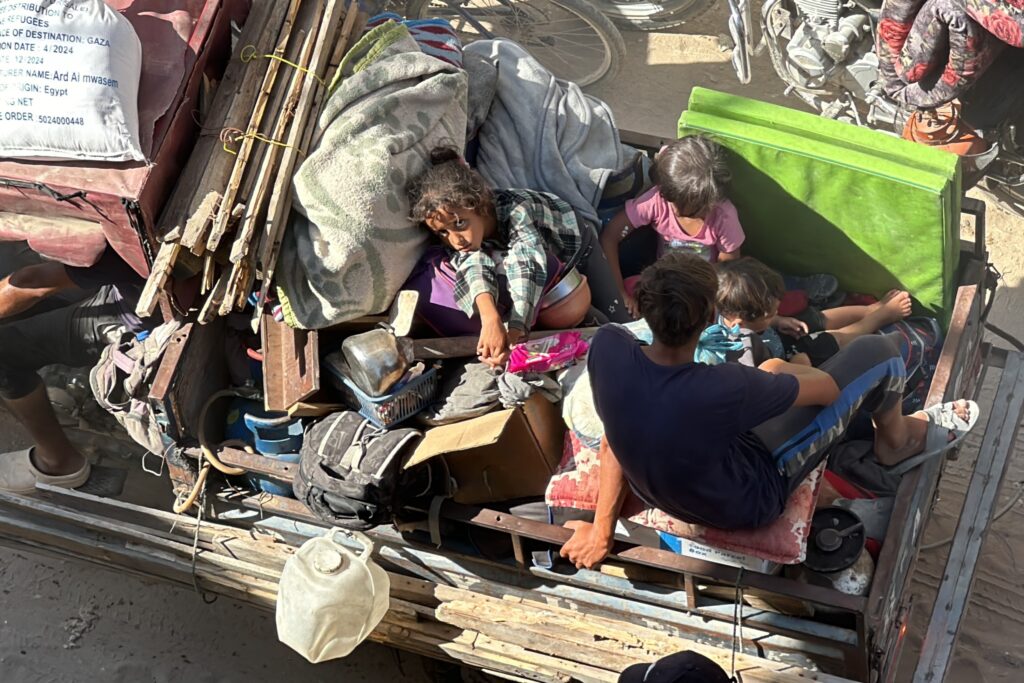
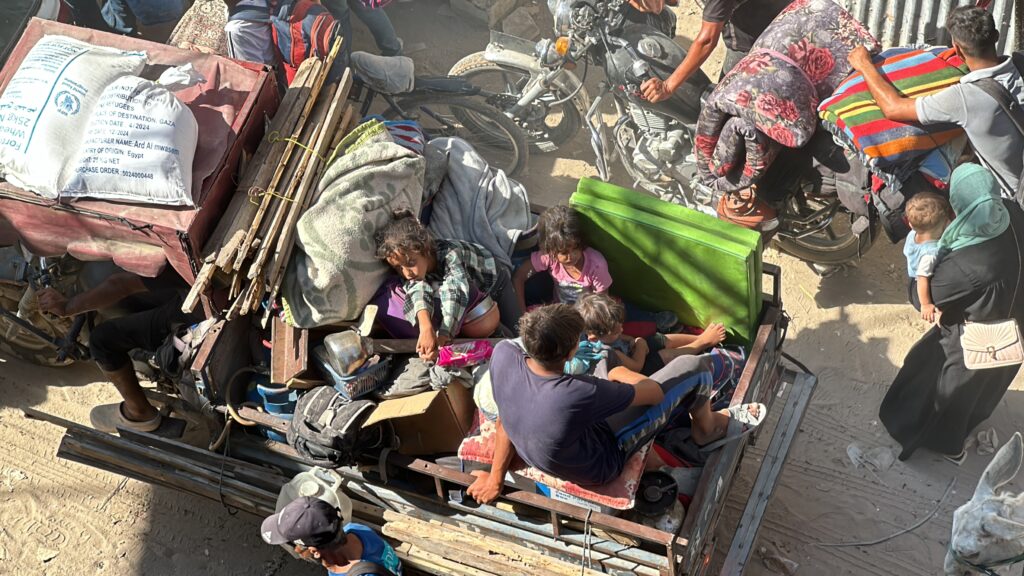
Up to 1.9 million people have been displaced in Gaza in the last year. These figures also include our aid workers. They face evacuation orders from their homes or places of refuge multiple times and with nowhere safe to go. 

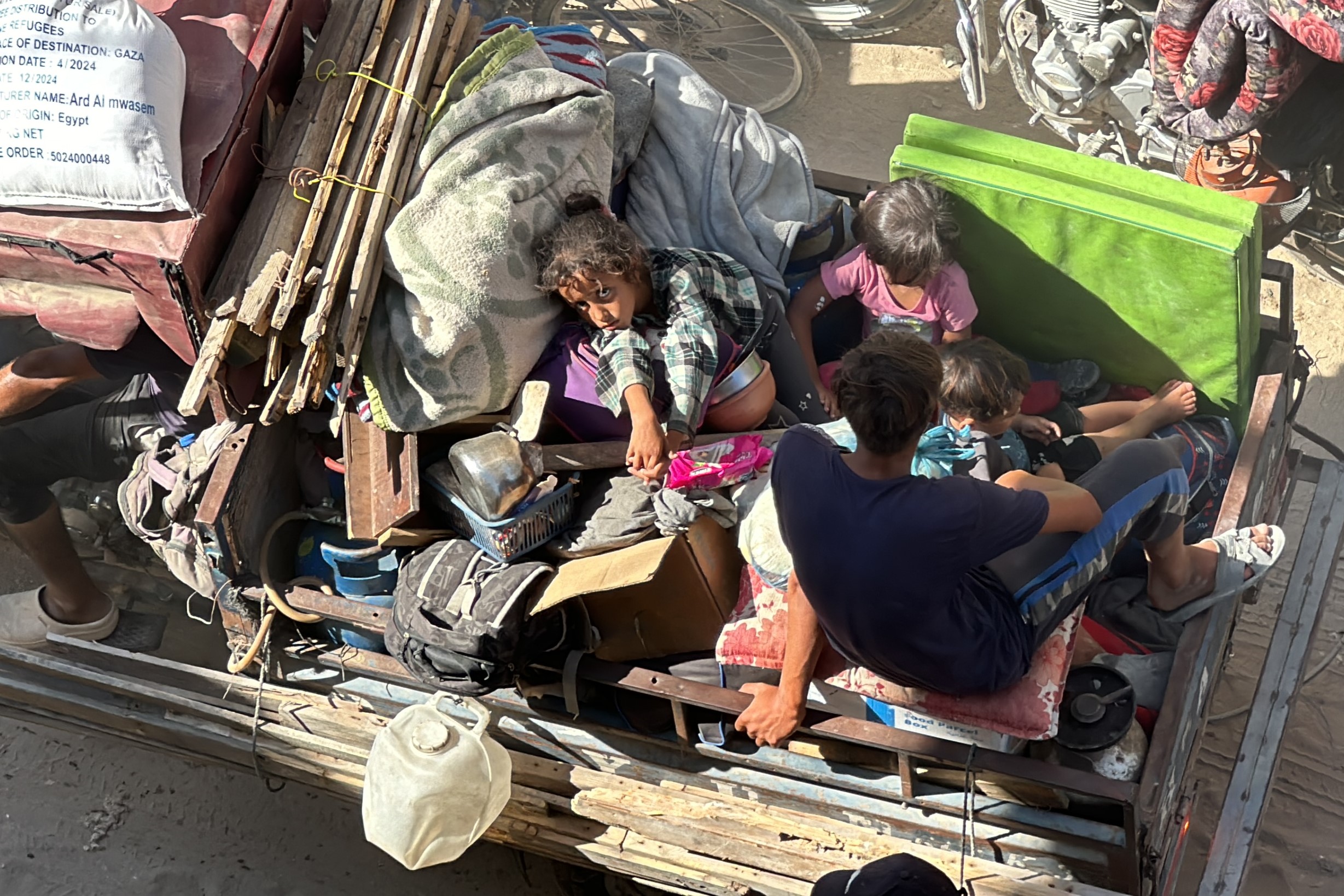
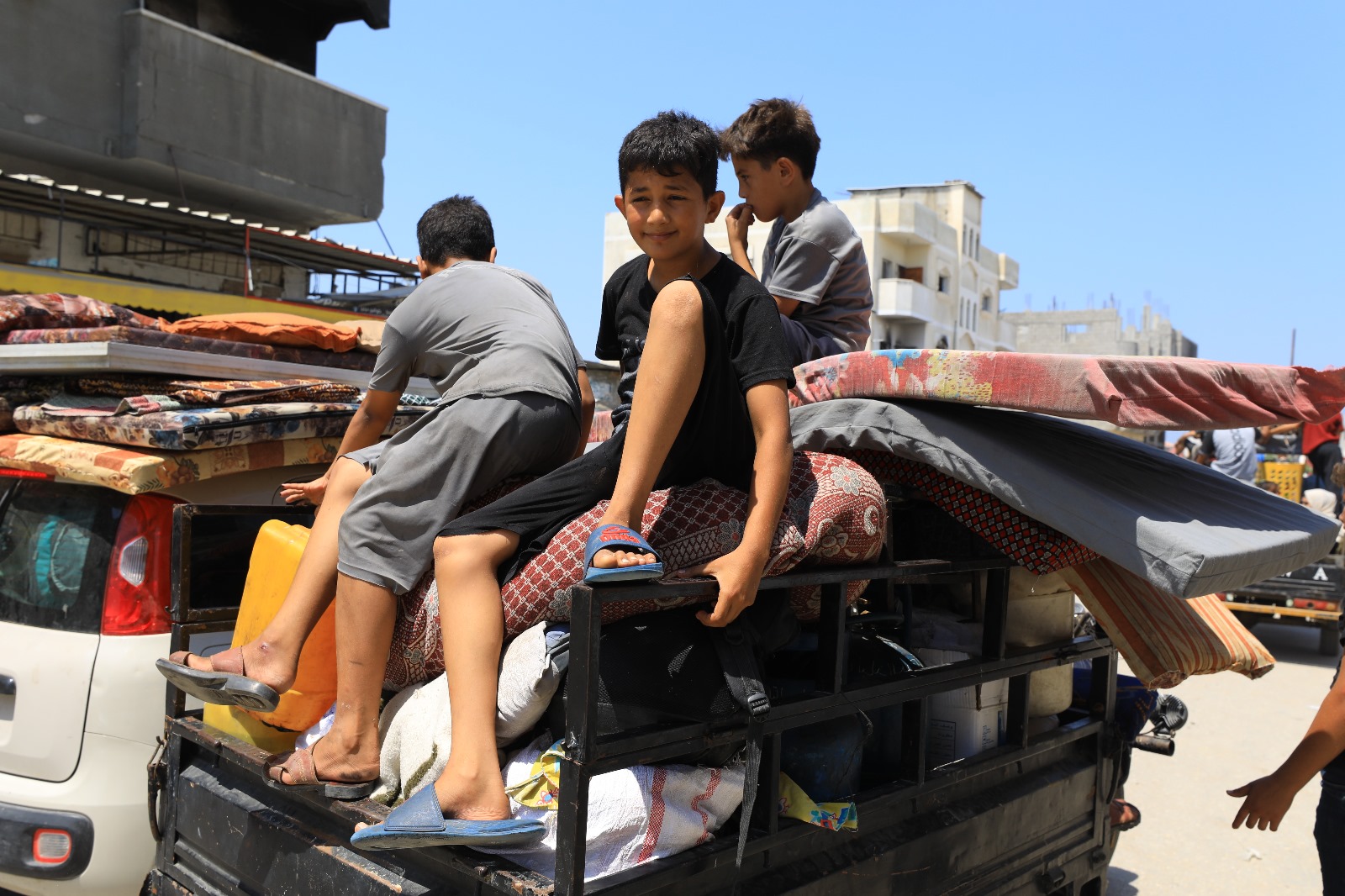
Children and families faced displacement in Hamad, Khan Younis, in August 2024.
Photo: Children and families faced displacement in Hamad, Khan Younis, in August 2024.

After fleeing his family home in October 2023, our colleague took shelter in his mother’s house in the south. His was among countless other families. His childhood home became a shelter for many of them for 10 months during the escalation. 

But Israel announced more evacuation orders in August 2024. Leading his family to uproot their lives and, once again, in search for safety. 

Talking about the sense of panic as they lost their place of shelter once again, he explained:

I do not know what to do or where to go. If we leave this house, my family will have to live on the street. How can I let my wife and children sleep on the street?
An Islamic Relief aid worker in Gaza.

These are not only houses that they leave behind. They are homes where they grew up, created memories, and had lasting legacies. 

“I look at my father’s grapevine, which he planted when I was only 10 years old and lovingly tended until his death 2 years ago. I struggle to grasp leaving behind this 30-year-old vine, a living reminder of my dear father that has special meaning for all my family,” our colleague explained. 

“Today, my little boy asked if the Israeli army will destroy it, so even though the grapes are not fully ripe, I decided we should harvest them. They are ours. We are not leaving them behind.” 

Gaza: More than one year on 

Nobody is truly safe in Gaza right now. This is the deadliest violence against humanitarian workers that the world has seen in many years. 

Our colleague explains:

As an adult who has lived through tens of escalations, I feel terrified. I feel this time we might not be able to survive.
An Islamic Relief aid worker in Gaza.

These accounts are only a mere snapshot of the suffering that aid workers in Gaza are facing. We cannot begin to imagine the extent of the challenges that they face. 

We are doing all we can to support our colleagues in Gaza at this time.  

Following more than a year of massacre and misery, our heroic teams are still on the ground and serving their community. Thanks to the generosity of our donors and supporters, we are continuing to provide relief to the people of Gaza.

View our recent one year on feedback report to discover how your donations are supporting the people of Gaza. 

*These extracts are anonymised to protect the safety and security of our colleague.

Gaza: One Year On Report

Read more in our new report A year of massacre and misery: Israel’s nightmare campaign against Palestinian families in Gaza.

11.01.24

A Journey of Hope: Reflections on “Gaza: One Year of Atrocities”

  News

Gaza: One Years of Atrocities, held in Sydney, Brisbane, and Melbourne, were events like no other. Brother Ayman Abdelhady, Marketing Lead at Islamic Relief Australia, shares the journey of hope seen by our team in organising these events. And how they changed both our lives and the lives of those in need.

When I think back on the last few weeks, what strikes me most is the deep sense of unity and purpose that carried each one of us through “Gaza: One Year of Atrocities.”

These events weren’t just gatherings. They were the result of a community’s shared determination. To stand with our brothers and sisters in Gaza. To relieve them from suffering. And to give them hope.

Organising events across Sydney, Melbourne, and Brisbane taught me something more profound than I could ever imagine. For the incredible impact of this mission didn’t just come with the result. But it was also felt within the tireless work done behind the scenes by the many people who made it possible.

I want to share with you, their stories. For they are the real heroes behind this journey of hope and relief.

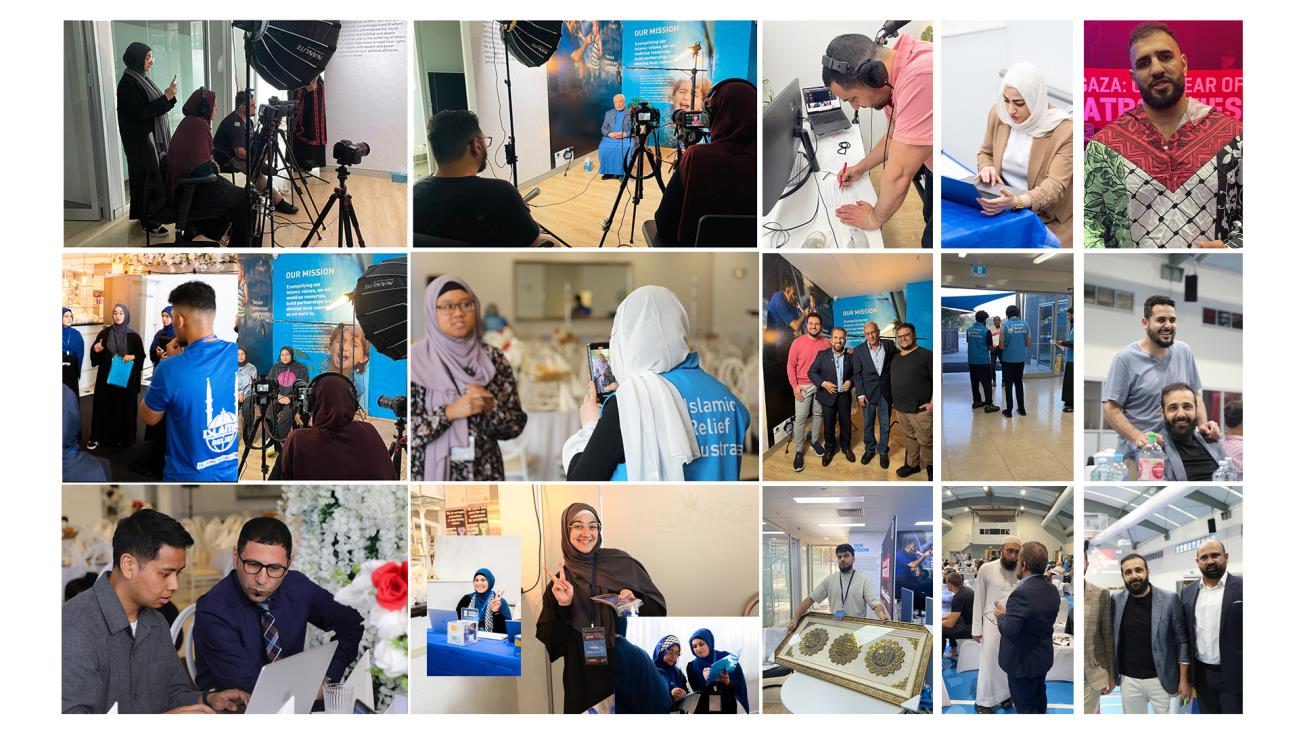
Collage of images from the events, detailing the preparation of the Islamic Relief Australia team in Sydney, Melbourne, and Brisbane for their respective event
Behind the Scenes, our dedicated Islamic Relief Australia staff across three states, working together to make a difference! 

The Long Nights in Sydney: A Lesson in Leadership and Resolve 

In Sydney, our team poured countless hours into making sure every detail was in place.  

I remember late nights with Ammar and Zainab fine-tuning seating arrangements, Yimen overseeing logistics down to the AV system, Nadya and Arif perfecting presentations, and Nour driving social media outreach, while I was stressing out about the documentary (more to come on this later, continue reading).

Even on her holiday, Maie was making donor calls, while Meilina, Fatima, and Fartun worked tirelessly behind the scenes to boost ticket sales.  

Leading us through it all was our CEO, Samir Bennegadi, whose vision never faltered. Samir’s unwavering commitment, boundless energy, and a profound sense of purpose lifted each of us. He constantly reminded us that our efforts were more than tasks—they were a lifeline for Gaza.  

Nour Ahmed shared, “His words, resilience, and attention to detail made a deep impression on me.”  

Samir didn’t just oversee the events. He inspired every one of us to strive for more. To see our work as not only a duty, but a calling. And for that, I am grateful to work alongside a leader who embodies such dedication and purpose. 

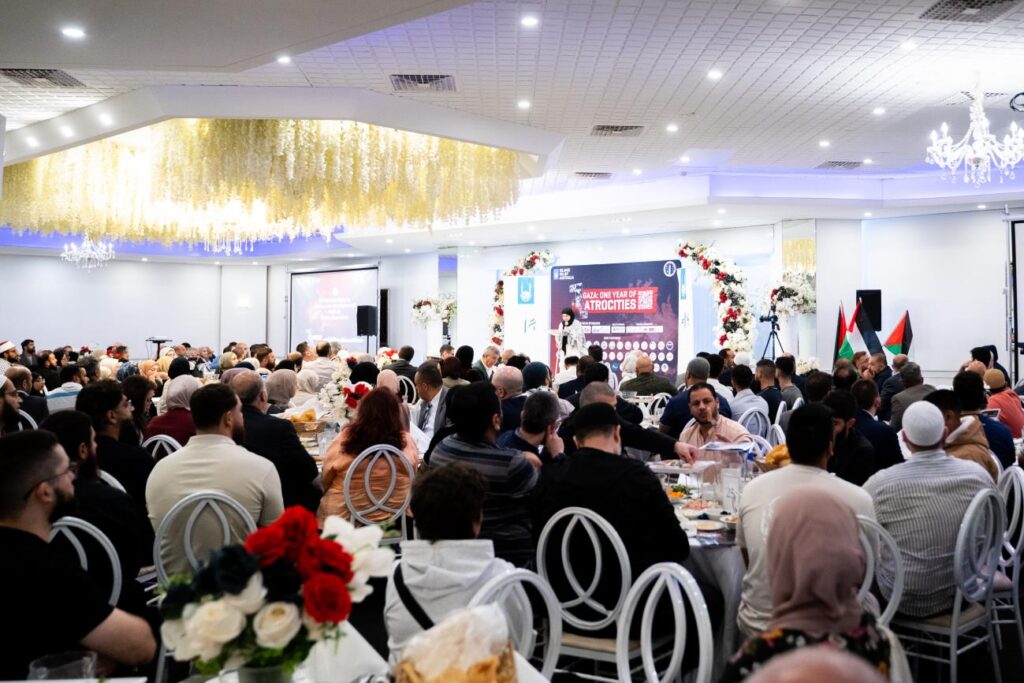
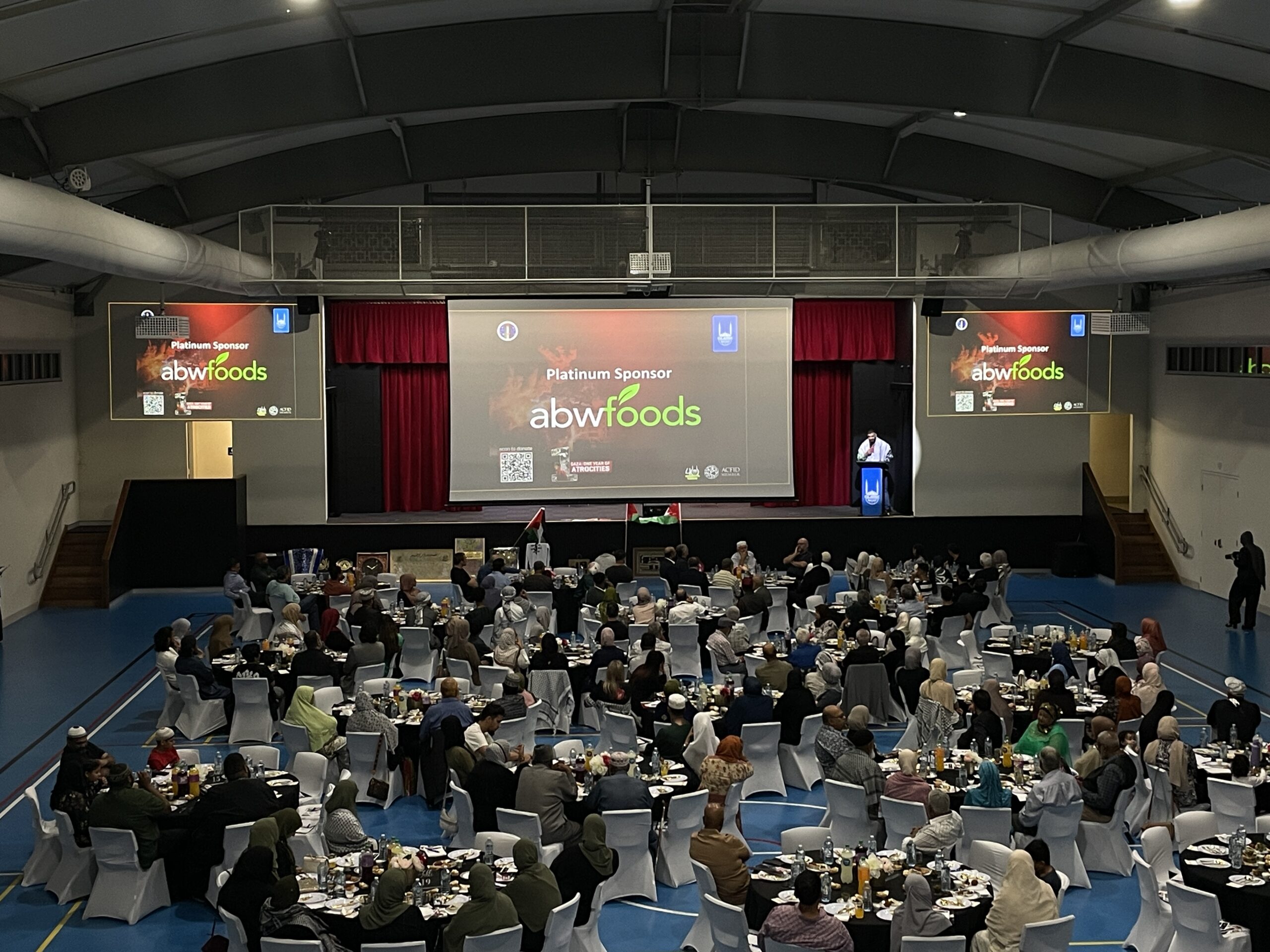
the Sydney event, packed with attendees
A glimpse of the incredible results from our team’s hard work at the event!

Bringing Gaza’s Reality to Life: Bilal’s Masterpiece 

It’s hard to describe the impact of seeing Gaza’s struggles on screen, brought to life by the hearts and minds of Bilal Abdelwahed, and Peter Pham.  

Bilal was the main man in charge of crafting One Year of Atrocities – a documentary meant to capture Gaza’s reality from perspectives rarely seen. Through his brilliant directing and video editing, he shared stories of families from Gaza, the doctors who bravely treat them, and community leaders who continue to offer hope amidst unimaginable hardship.  

Samir, our CEO, summed it up best when he said, “People were glued to the screen.”  

Watching the audience’s eyes fill with emotion, I realised that Bilal’s work was more than a documentary. “It was a bridge connecting people’s hearts with Gaza,” says Ayman Abdelhady 

His creativity and dedication made this story unforgettable. And it left an unerasable mark on every person who watched it. 

Something we also wanted our online audience to experience too, right HERE, on our website.

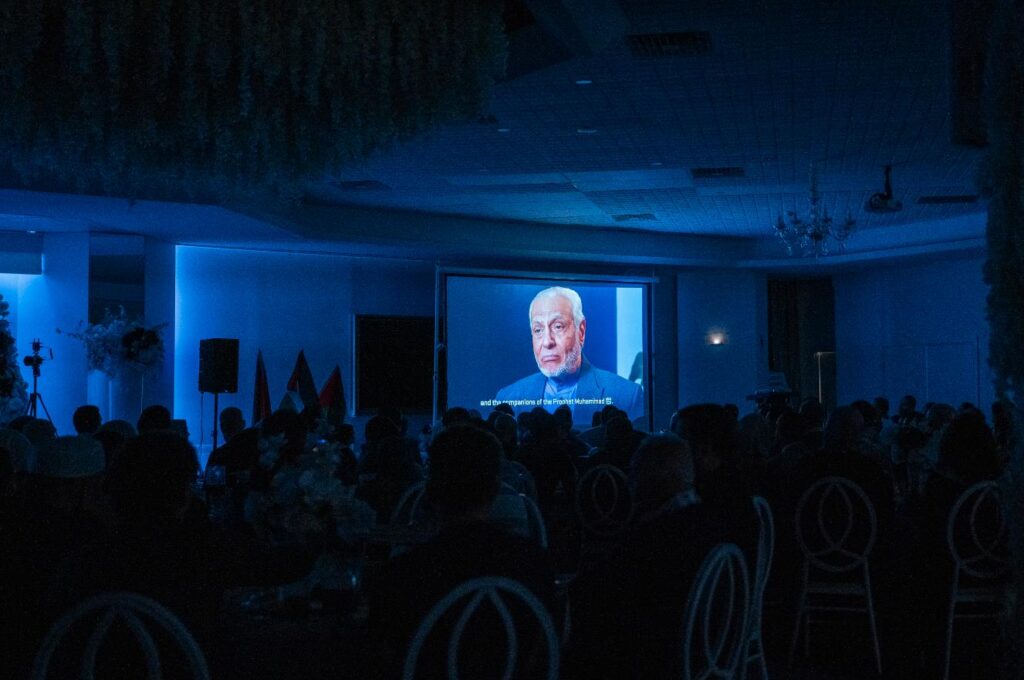
Attendees fully engaged with the powerful documentary created by Bilal 
Attendees fully engaged with the powerful documentary created by Bilal

A Doctor’s Courage: Honouring the Medical Heroes 

Gaza’s need for medical support is urgent. That urgency was echoed in the words and presence of the incredible Dr. Jamal, Dr. Bushra, and Dr. Mostafa.  

These doctors have served on the front lines in Gaza through our partner, PANZMA, and the stories they shared brought home the true cost of conflict. Dr. Jamal recounted a moment when he wished for his patient’s release from suffering — a stark, heartbreaking reality.  

Hearing them speak, I was moved by their resilience and selflessness. It reminded me that these doctors are more than healthcare providers. They are heroes, embodying compassion in the face of unimaginable pain.  

They’ve shown us what it means to serve, and their presence at the events was a powerful testament to the life-changing impact of our mission. 

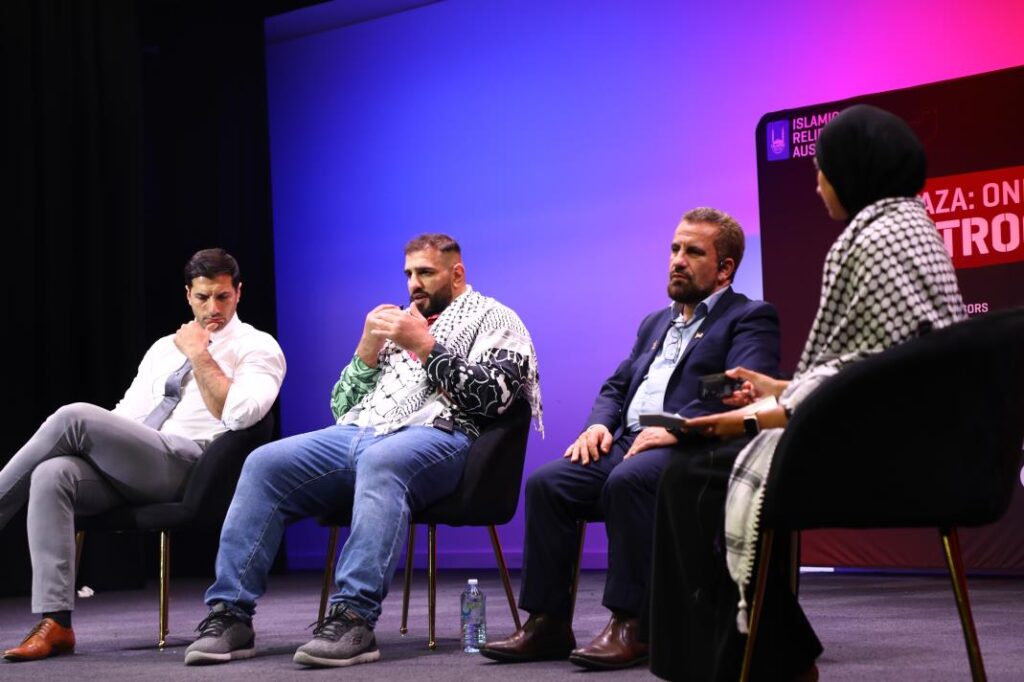
Dr. Mohamed and Dr. Ahmed from PANZMA sharing insights alongside brother Samir at our Brisbane panel discussion
Engaging Minds, Dr. Mohamed and Dr. Ahmed from PANZMA share insights alongside brother Samir at our Brisbane panel discussion

Melbourne’s Celebration of Unity: A Community in Harmony 

When Dr. Mohamed Taha and the Melbourne team, Horia, Rahat, and Rabaa, gathered a diverse crowd from all corners of the city, I saw a community united by compassion.  

Dr. Taha’s dedication was instrumental in creating an event that transcended barriers, bringing together people from all walks of life. The atmosphere in Melbourne was truly something special. It was as if every person felt they were part of something much greater than themselves.  

Seeing so many people come together, bound by a common purpose, made me proud to be part of a community that stands in solidarity with Gaza. Melbourne’s event was more than just a gathering – it was a celebration of unity and humanity. One that strived to give as much support as they could, to relieve our brothers and sisters from their suffering.  

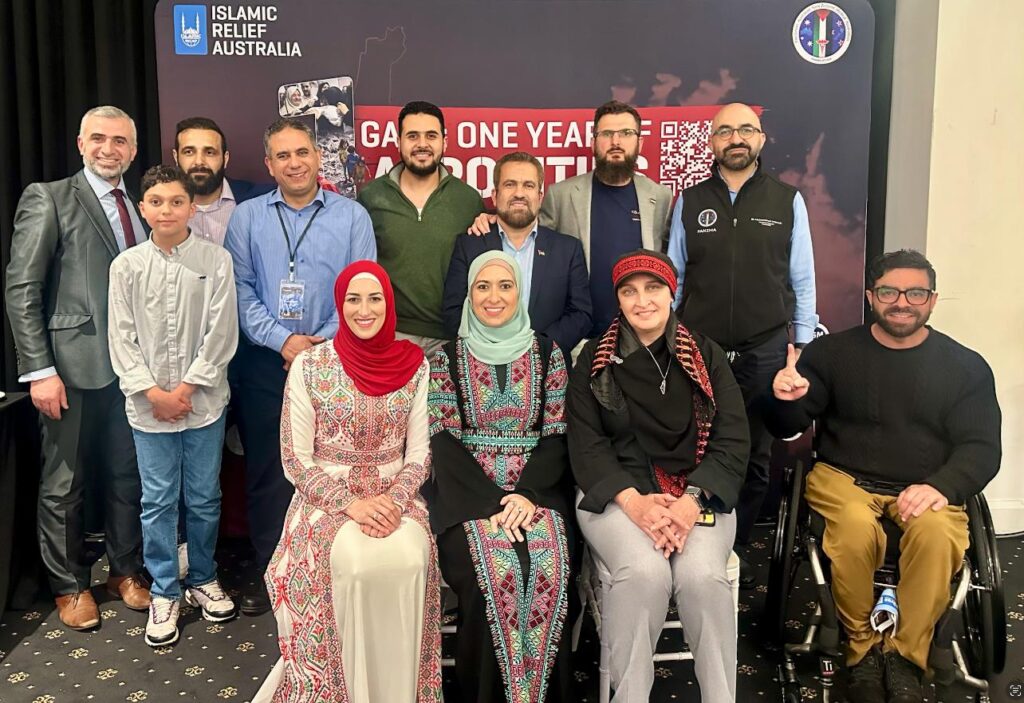
Group photo of members from Unity in Service, IR Australia and Medical Partners 
Unity in Service, IR Australia Team and Medical Partners 

The Brisbane Miracle: A 5-Star Event in Record Time 

In Brisbane, Samim, Asif, and Shayma worked with limited time and boundless commitment, transforming their vision into reality. With every detail handled meticulously — from logistics to catering, from speakers to partnerships — they created a five-star event that honoured Gaza’s story and inspired every attendee.  

The entire event felt seamless, and the community’s warmth and generosity filled the room. What they accomplished in such a short period showed me that true excellence isn’t in the time you have, but the heart you put into it. 

The Unseen Heroes: Volunteers Who Made It Happen

Behind every moment of these events were the selfless efforts of our volunteers. The hidden soldiers – Omar, Firman, and countless others who stepped in to support us.  

They worked tirelessly, setting up venues, coordinating with partners, assisting guests, and handling every little detail that brought the events to life. Without them, none of this would have been possible. Their commitment to the cause – their willingness to work without recognition – is something that continues to inspire me.  

To each volunteer who stood by us, thank you. You are the backbone of our mission, and your dedication has left a lasting impact. 

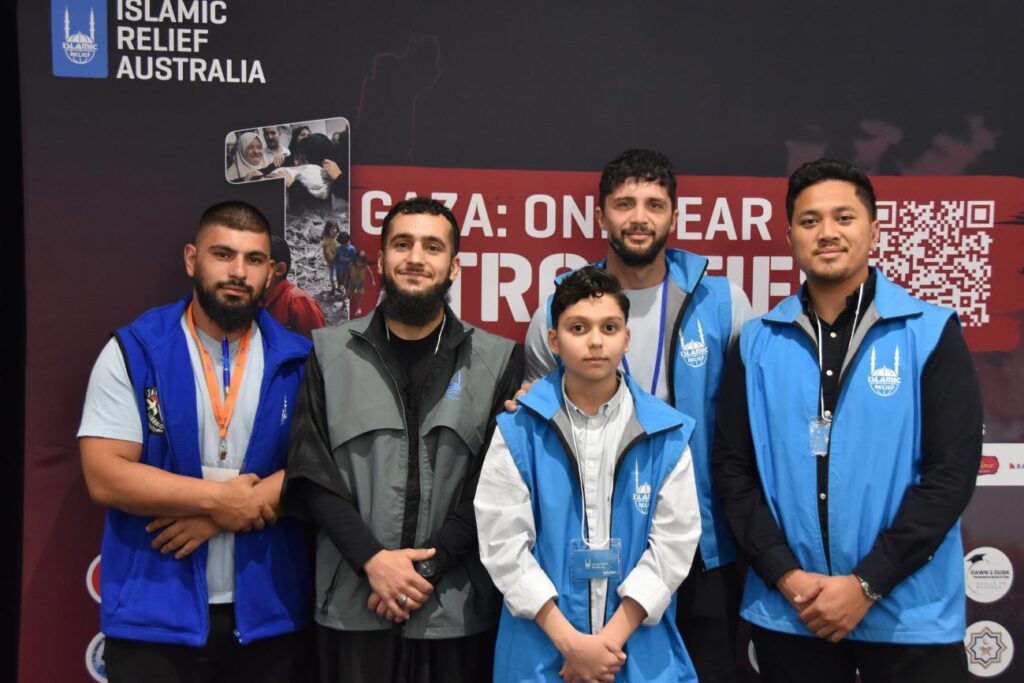
group photo of Islamic Relief volunteers
Dedicated Volunteers, The Backbone of Our Efforts 

A Final Reflection

Reflecting on these moments, I am overwhelmed with gratitude. Each person, from staff to volunteers, from doctors to community members, came together to make these events more than just gatherings. They became symbols of hope and resilience. Testaments to what we can achieve when we unite for a common purpose. 

This journey has shown me that even in times of darkness, there is light. And we find that light in the people who serve, give, and believe in a better future for Gaza.  

Thank you to everyone who stood with us, worked alongside us, and made these events possible. Together, we have sent a powerful message: our brothers and sisters in Gaza are not alone. 

“Organising events across three states is no small feat, and challenges were bound to arise. But watching our leaders in Sydney, Melbourne, and Brisbane tackle each issue seamlessly was truly inspiring. With their solutions-oriented mindset, they turned potential obstacles into smooth transitions, making it all look effortless.  

This wasn’t just about problem-solving. It was a testament to the dedication and adaptability of every team member involved. They showed that, with the right mindset, even the toughest challenges can be overcome in seconds. And they are the ones who allowed our mission to remain strong and unwavering across all three cities.” 

10.25.24

A Heartfelt Thanks to Doctors&Co for Their Support of Gaza One Year of Atrocities Event 

  News

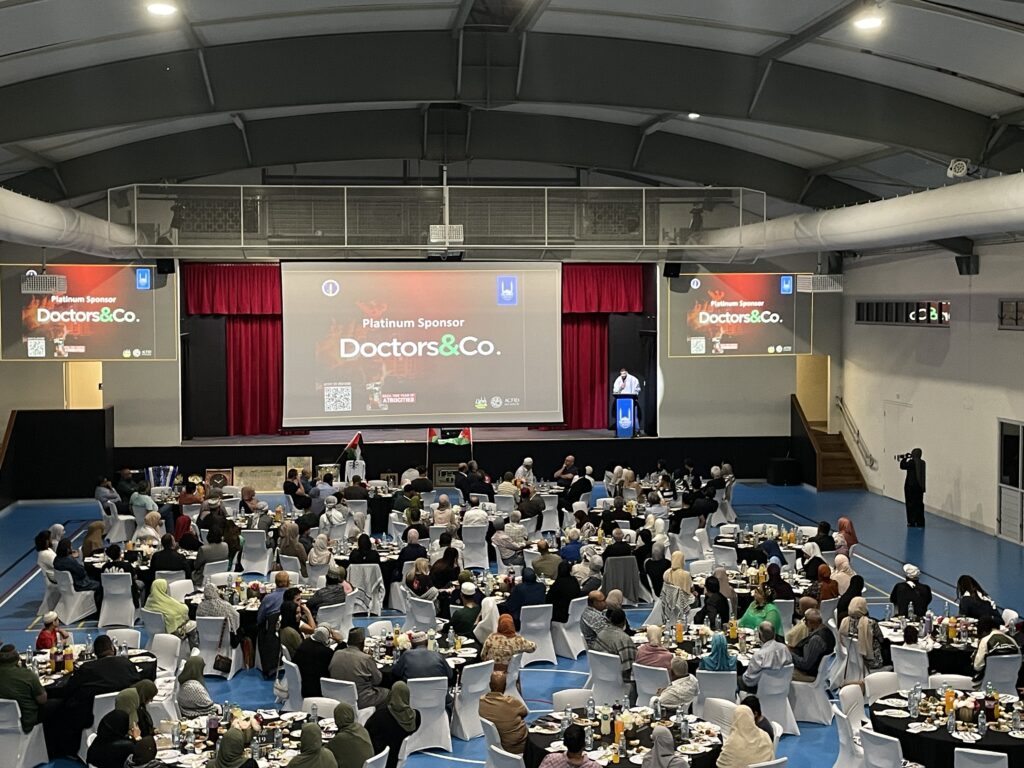
Islamic Relief Australia is extremely grateful to Doctors&Co. A platinum sponsor of our Gaza: One Year of Atrocities event, held across Sydney, Melbourne, and Brisbane. Their invaluable support helped make this event a tremendous success. It also allowed us to raise crucial funds and awareness for those affected by the ongoing crisis in Gaza

Doctors&Co featured on the presentation as a major sponsor for the Gaza One Year of Atrocities Event

Doctors&Co is a dedicated provider of healthcare management solutions. They, likewise, empower doctors and healthcare professionals to enhance their practices and improve patient outcomes. By offering expert advice in medical practice management, financial services, and business growth strategies, Doctors&Co enables healthcare providers to focus on what truly matters. That is, to deliver exceptional care to their patients.  

Their commitment to serving the healthcare community greatly aligns with Islamic Relief’s mission to alleviate suffering. They were a perfect partner for the event. 

Gaza: One Year of Atrocities was a powerful commemoration of the struggles faced by the people of Gaza over the past year. Through engaging presentations, fundraising efforts, and powerful testimonials, the event highlighted the dire need for ongoing support in the region, especially in medical aid.  

Thanks to sponsors like Doctors&Co, we were able to connect with compassionate individuals across Australia. Where, together, we raised much-needed funds for medical and humanitarian relief in Gaza. 

Samir Bennegadi, CEO of Islamic Relief Australia, expressed deep appreciation for Doctors&Co’s sponsorship. He stated, “Their commitment to our cause underscores the importance of businesses working together with charitable organisations to bring meaningful change to the world. We are immensely grateful for their sponsorship and their belief in the work we do.” 

Islamic Relief Australia is proud to collaborate with Doctors&Co in such a vital humanitarian effort. We also look forward to continued partnerships in the future. As this support will help us bring hope and relief to the people of Gaza, who continue to face immense hardship and adversity. 

Once again, we extend our sincere thanks to Doctors&Co for their generous support and commitment to humanitarian causes. 

For more information about Doctors&Co and their services, please visit their website here

10.25.24

A Heartfelt Thanks to ABW Foods for Their Support of Gaza One Year of Atrocities Event 

  News

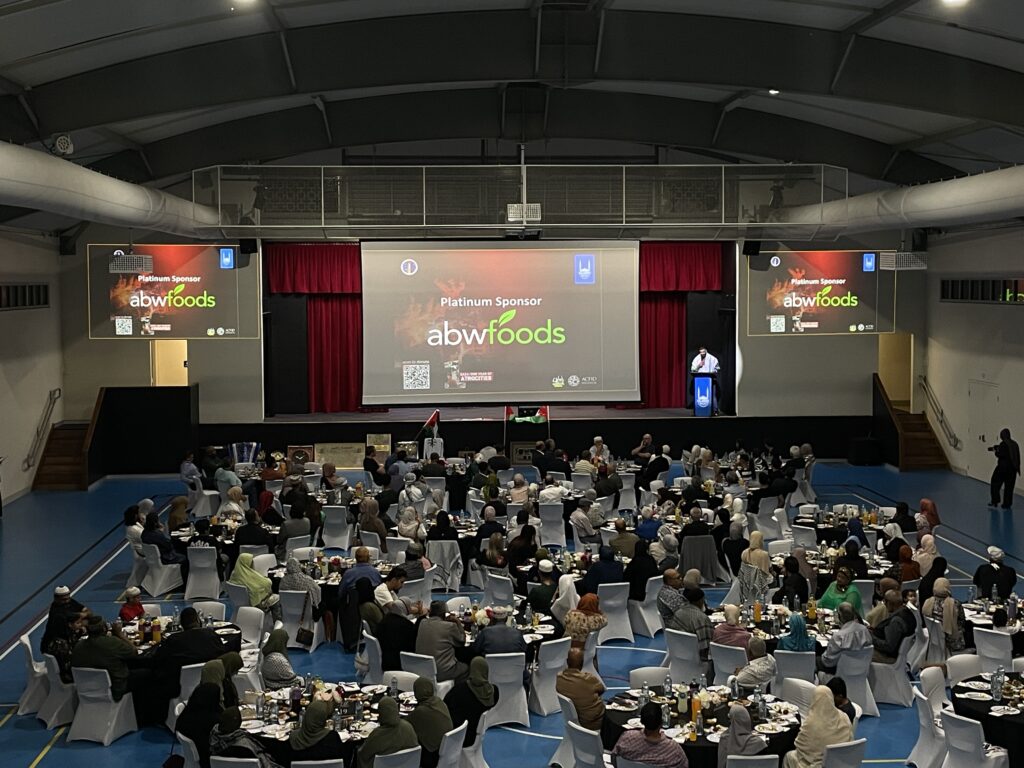
Islamic Relief Australia is deeply thankful to ABW Foods Australia. A platinum sponsor for our Gaza: One Year of Atrocities event, held in Sydney, Melbourne, and Brisbane. Their generous sponsorship played a critical role in the success of this event. It enabled us to raise vital funds for the people of Gaza

ABW Foods featured on the presentation as a major sponsor for the Gaza One Year of Atrocities Event

ABW Foods Australia is a leader in premium food distribution. They specialise in a wide range of high-quality products, including dates, nuts, dairy, and condiments. They have a strong focus on offering both popular and culturally significant food products, ensuring the needs of both in the community are fulfilled.  

With their passion for excellence and commitment to supporting the community, ABW Foods strongly aligns with Islamic Relief’s mission to alleviate suffering and provide aid to those most in need. 

Through their support, they not only contributed financially. They also helped us amplify the message of compassion and solidarity for the people of Gaza during this challenging time. Their partnership and involvement are a testament to the positive impact businesses can have when supporting global humanitarian causes. 

Samir Bennegadi, CEO of Islamic Relief Australia, expressed his gratitude for the organisation’s invaluable support. He said, “ABW Foods’ generous sponsorship allowed us to significantly boost our fundraising efforts for Gaza. Their belief in our cause and dedication to serving others through both their products and partnerships is truly commendable.” 

Thanks to sponsors like ABW Foods, Islamic Relief Australia can continue to expand its life-saving programs in Gaza. Programs that provide essential medical and humanitarian support to those in dire need.

For its through the power of unity, that we, as a community can help bring hope and relief to our Palestinian brothers and sisters. And help them survive through the immense hardships they continue to face. 

We extend our heartfelt appreciation to ABW Foods Australia for their invaluable support. We also look forward to continuing our partnership in future humanitarian efforts. 

For more information about ABW Foods and their product offerings, please visit their website here

10.07.24

Gaza: A Year of Massacre and Misery 

  News

Yomna, an 8-year-old girl in Gaza, describes how her life had become “like a nightmare” since the previous October.  

“I have changed during these months. I used to think the future would be bright but now I do not think so: our future is very dark.” 

Now, life has only gotten more challenging for Yomna and the more than 2 million others living under bombardment in Gaza. A future that seemed bleak 5 months ago, has gotten even darker. Palestinian families reflect on a year of horror, with still no end in sight. 

It’s difficult to describe the loss, destruction, and devastation the Israeli bombardment is having on Gaza. The numbers are overwhelming. 

More than 41,000 people have been killed – including over 11,400 women and 16,800 children. At least 96,000 more people have been injured. 

Only 17 of Gaza’s 36 hospitals are still functional – and all only partially. Shortages of fuel, medicine and essential supplies are hampering efforts to treat the wounded and care for the chronically ill.  

Around 90% of Gaza’s population is now displaced. Many have to flee again and again in search of safety, but there is nowhere safe for them to go. Diseases are spreading in overcrowded shelters and famine conditions are spreading.

Many have no home to return to. The bombing has left more than 60% of Gaza’s residential buildings damaged or destroyed. 

Supporting the People of Gaza 

In a new report, Islamic Relief outlines how our dedicated staff and partners in Gaza have been supporting people in desperate need over the last year, even as they face great hardship themselves.  

With the exception of our Orphan Sponsorship Program, which has expanded considerably, Islamic Relief’s regular programs have been suspended for the safety of our staff, partners and the communities we serve. Instead, we have focused on responding to the emergency. 

Over the last year, we have helped feed people displaced people in shelters with hot meals, food packs, vegetables and vouchers. We have also distributed desperately needed clean water and nutritional supplements to people in shelters. To help combat the spread of disease, we’ve set up portable toilets and provided hygiene kits to displaced people. 

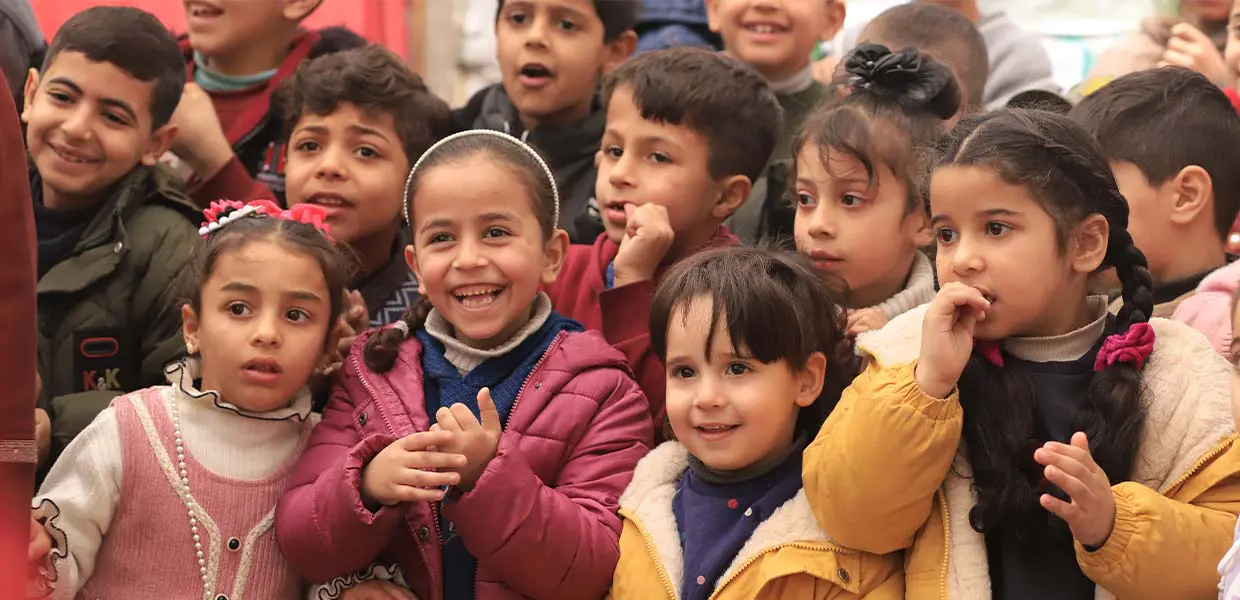
We have organised games and performances for children to help support their mental health and provide a momentary distraction from the hardship they’re enduring. 

Prior to October, Islamic Relief supported 8,750 orphans in Gaza through our Orphan Sponsorship Program. Now, more than 16,400 children are receiving a monthly stipend, as well as food parcels and gifts at Ramadan and Eid. While the program has expanded, we are heartbroken that 118 of the children and young people we have cared for have been killed since the crisis began. 

Ceasefire Now 

The generous support of our donors is putting aid into the hands of families in desperate need in Gaza. But so much more is needed. Humanitarian organisations can ease the suffering of Palestinian families, but we cannot bring it to an end. Devastatingly, world leaders have repeatedly failed to act as international law is violated every single day. 

The dire conditions inside Gaza are a stain on the conscience of the world, which has watched on as children are bombed, families are displaced repeatedly, women give birth without medical care, and hope is stripped from ordinary people. 

One year on, people in Gaza continue to face bombings, displacement and no access to basic needs.

Now, it’s been one year of unfathomable loss. Where Israel’s bombing continues spreading across the region. Islamic Relief is clearer than ever that this nightmare must end. We continue to call for an immediate and permanent ceasefire in the region.

International law must be upheld. Anyone found to have committed violations must be held to account. We are calling for Israel to end its attacks and the forced displacement of civilians. To end the siege so that sufficient humanitarian aid can enter Gaza to alleviate the suffering of its people.  

Gaza: One Year On Report

Read more in our new report A year of massacre and misery: Israel’s nightmare campaign against Palestinian families in Gaza.

10.06.24

Torment, famine, loss, annihilation: A year like no other in Gaza 

  News

A year into the unprecedented escalation, an Islamic Relief aid worker* in Gaza looks back in disbelief and despair at all he and his family have endured and wonders what kind of future is left for the people of Gaza.

The first day we met, my dear readers, was one year ago. Back then, I was trying to open a window for you to see what was happening in Gaza. Over the last year, I got used to speaking to you, there was comfort for me in writing about my ups and downs, my hopes and fears, my dreams and nightmares. I never thought I would still be writing these war diaries one year later. I really hoped this was a milestone we’d never reach. I still can’t grasp the idea that a whole year has passed, and the situation is still the same. I was hoping that my words might drive some change, but, as time went on, I resigned myself to the idea that I was just telling my story.  

At least I am still able to tell my story.  

I am not a hero, I am just like you, my readers. A normal guy – a father who wishes to provide the best for his family, a dreamer who wishes for a better world. A man calling out for peace. I am just me.  

This year has been the worst of my life without doubt. I always thought that a single year in a whole lifetime is not a big deal, but this one has exhausted myself and my family beyond measure. The worst thing is that we went through this year keeping hope alive that the crisis would end. We have been following any news of a ceasefire like crazy, hoping that it will happen. But after one year, I still don’t see any ceasefire on the horizon. I feel that has been part of a psychological war to keep feeding us false hope. 

In July, I promised my wife that next year, we would not celebrate her birthday like this. We wanted to leave Gaza to give our kids a better chance at life. But we couldn’t. I kept telling myself that the next big family occasion will be celebrated back in our own home. But our home is gone, and our memories gone with it.  

This war has deeply affected us. Every breath hurts. Every morning waking up to realise I’m still not sleeping in my own bed hurts. Every moment knowing I can’t fetch my children’s toys for them hurts. It has been a year of torture, of famine, of loss, of annihilation. A year like no other. 

Homes, schools, mosques, hospitals in Gaza – all lost 

Over the last year, my house has been damaged and left uninhabitable. My 2 sisters and my brother have all lost their homes, and almost all of my colleagues at Islamic Relief Palestine have lost theirs. Worse still, some have also lost their family members. Our Islamic Relief office is gone, as are my children’s schools, the mosque I used to pray at, the hospitals where my kids were born, the restaurants that I liked, the road to work, my Christian neighbours’ church. We’ve lost a country. We’ve lost a home. We’ve lost the faith and belief that has kept us sane.  

My son used to have a stuffed monkey toy that he hugged when he went to sleep. Every night, I hear him whispering to his mum that he misses ‘Monkey’, that’s its name. My daughter is growing up without her cousins, without her friends. The place where she used to play basketball is destroyed. Every time she shows me photos with her team she starts crying. She is so sensitive, but I keep pushing her to be stronger. This world is not for sensitive people like my girl. My mum struggles to find the medicine for her diabetes. We check every pharmacy and all the field hospitals but they say they can’t provide it. Israel blocks aid with impunity and the world watches on. 

Everyday atrocities, everyday indignities 

This year tested all our humanity, and I guess most of us failed. In the first few months of the war our voices were loud but then people got used to the scenes. I remember the Baptist hospital massacres, but dozens of massacres took place after that, all soon forgotten by the outside world. I remember the story of Hind Rajab, trapped helpless in a bombed-out car waiting for ambulances that could not reach her. But since then, thousands of children have been killed without even a mention in news reports.  

Now, my readers, we can’t wash because there are no cleaning products. We can’t find clothes for the approaching winter. We can’t find paper to teach our kids to write. We can’t find treatments for our illnesses. My friend is suffering so badly from a kidney stone that they can hardly move, but there is no treatment. I’ve had flu for the past 2 weeks and I can’t find paracetamol. I can’t even find shoes.  

My friends living in tents were drowned after the first heavy rain. Families set up their tents on the shoreline and the tide swept them out to sea. Israel isn’t allowing cash into Gaza. We can’t pay for bread, for a haircut, for a water refill. Our backup batteries have long since gone dead and Israel is not allowing new ones.  

Yes, my readers, in Gaza it is not only airstrikes and bombs that bring death. Death comes for us when Israel cuts off power for sewage treatment plants, severs vaccine supplies, blocks wounded people from leaving Gaza for treatment, closes our borders to aid, supports and arms criminals, and encourages conflict. Israel is systematically destroying our lives. This deliberate intent to annihilate Palestinian lives could be the end of us. 

Suffering families in Gaza desperately need a ceasefire 

I had been thinking that after this war ends, I want to use every platform available to tell our story. I wanted to start rebuilding. I was thinking of solutions for the disrupted services – water, electricity, education, health – if we returned to our homes. But I didn’t really think too deeply about it. I wanted to see an end to this, and I knew Allah would provide for us after that. I am a believer, a devout one, I can handle whatever comes. 

Now, I feel I’ve lost my faith. I’ve lost belief in this world. I am tired, exhausted and done. This last year has depleted all my energy, and I don’t have any backup batteries to recharge myself. I think this war is killing us all. It targets every possible chance for us to restart any kind of life. I think my story could end here. However, if I do survive to see an end to this war, my only wish will be to go to some quiet place. Somewhere without falsehoods, somewhere as isolated as it gets. I am tired of logic and rationality. I am tired of repeating myself while no one listens. I am done. 

Gaza: One Year On Report

Read more in our new report A year of massacre and misery: Israel’s nightmare campaign against Palestinian families in Gaza.

Editor’s note: This blog was submitted amid a fast-changing and deepening crisis. The information was correct as of Friday 20 September 2024. 

Over the last year, our colleague in Gaza has submitted at least 50 blogs detailing his experiences under bombardment.

While the blogs, including this one, have been anonymised for his safety, they have formed a deeply personal window into not only the daily lives of his family, but also his darkest thoughts and most fervently held hopes.

Sometimes putting pen to paper has been a relief for our colleague, but often it has been a challenging and upsetting process.

We’ve been humbled to receive and share these regular updates. On this bleak anniversary, we thank him for his selfless dedication to ensuring the Palestinian experience is not lost among headlines and statistics, no matter how futile these efforts have seemed to him at times. Thank you. 

08.20.24

Gaza: Aid agencies and medical professionals warn of dangers of mass polio outbreak

  Press Releases

Aid agencies and medical professionals have joined forces to call for a ceasefire to allow life-saving polio vaccinations to be administered to about 640,000 children aged under 10. This follows confirmation of the first case of polio in Gaza in 25 years, with reports of other suspected cases emerging.

At least 50,000 children born during the past 10 months of hostilities are highly unlikely to have received any immunisations due to the collapsed health system. While older children among the one million children in Gaza will have had their regular vaccine schedules disrupted or halted by violence and displacement.

Polio had been eliminated in Gaza more than two decades ago, but last month the WHO reported that the virus had been found in sewage samples from sites in Khan Younis and Deir Al-Balah. This month, one case was confirmed by Gaza’s Ministry of Health in an unvaccinated 10-month-old child in Deir Al-Balah in the central Gaza Strip.

The reemergence of the poliovirus in Gaza is a direct result of the destruction of water and sanitation infrastructure, and the Government of Israel’s restrictions on repairs and supplies. Coupled with overcrowding, displacement, and a crippled healthcare system, these actions have created an environment ripe for the spread of the virus in Gaza.

A group of about 20 aid agencies and 20 medical professionals who have worked in Gaza said polio vaccines are in the region and ready to be distributed in August and September. However, this requires full access for humanitarian supplies into Gaza from all border crossings, and safe, unhindered movement within the Strip. This can only be achieved with an immediate end to hostilities.

“Now polio is confirmed, the response needs to be measured in hours, not weeks. Without immediate action, an entire generation is at risk of infection, and hundreds of children face paralysis by a highly communicable disease that can be prevented with a simple vaccine,” said Jeremy Stoner, Save the Children’s Regional Director for the Middle East. “These children do not have the luxury of time.” 

Polio, a virus that can cause irreversible paralysis in a matter of hours, is particularly dangerous in Gaza, where high malnutrition rates and toxic stress levels make children more vulnerable to infection. With Ministry of Health confirmations of polio in a 10-month-old in Deir Al-Balah, and WHO reports confirming the presence of poliovirus in wastewater, the situation is beyond alarming.

Humanitarian operations across Gaza are severely hindered by the ongoing bombardment and the obstruction of critical aid supplies and fuel at Israeli-controlled crossing points, and dangerous transit inside the Gaza Strip. Specialist refrigerated trucks needed to safely transport vaccines have been repeatedly rejected from entry, leaving thousands of children at risk.

“The health system in Gaza was destroyed long ago,” said Nahed Abu Iyada, CARE West Bank and Gaza’s Health Program Field Officer. “Without an immediate ceasefire and access to vaccines and humanitarian aid across the Strip, the people of Gaza are facing a public health disaster that will spread and endanger children across the region and beyond.”

Humanitarian organisations urgently call for an immediate and sustained ceasefire to allow polio vaccinations to take place in Gaza. For a polio vaccination campaign to be effective, it must be able to reach at least 95% of targeted children, and this cannot happen in an active war zone. Any ceasefire or pause requested by the UN must be used to facilitate full humanitarian access, not just for vaccines but for the full range of assistance needed to sustain civilians’ basic needs. All parties to conflict have an obligation to facilitate humanitarian access at all times, regardless of whether conflict is active or not.

Notes to Editors

The World Health Organization has confirmed the presence of poliovirus in Gaza.

Polio can cause total paralysis within hours and is especially dangerous for children under five.

Signed

  • Islamic Relief Worldwide
  • MedGlobal
  • ActionAid
  • Churches for Middle East Peace (CMEP)
  • War Child
  • Norwegian Refugee Council (NRC)
  • WeWorld
  • CARE
  • Medical Aid for Palestinians (MAP)
  • Humanity & Inclusion/ Handicap International (HI)
  • DanChurchAid
  • ChildFund Alliance
  • Plan International
  • Accion Contra el Hambre (ACF)
  • Médicos del Mundo (Médecins du Monde Spain)
  • Oxfam
  • International Rescue Committee
  • Mercy Corps
  • Children Not Numbers NGO
  • Save the Children

Doctors and medical professionals

Feroze Sidhwa, MD, MPH, FACS, FICS

Trauma, critical care, acute care, and General Surgeon

Served at European Hospital, Khan Younis, March 25 – April 8, 2024

French Camp, CA

Thaer Ahmad, MD

Emergency Medicine Physician

Served at Nasser Hospital, January 2024

John Kahler, MD, FAAP

MedGlobal Cofounder

Served in Tel al-Sultan, Rafah, Gaza, January,  March 2024

Abdullah Ghali, MD

Orthopedic Surgery Resident

European Hospital in Khan Younis, April 3 – 8, 2024

Houston, TX

Abeerah Muhammad MSN, RN, CEN

Emergency and Critical Care Nurse

European Hospital, May 2024

Yipeng Ge, MD, MPH, CCFP

Primary Care Physician and Public Health Practitioner

Tal Al Sultan Primary Health Care Center in Rafah, February 12-19, 2024

Ottawa, Canada

Benjamin Thomson, MD, MSc, MPH(c), FRCPC

Internal Medicine, Nephrology, Public Health

Multiple sites in Rafah, Deir-el-balah

March 2024

Toronto, Canada

Noor Amin, MD, CCFP(SEM), FCFP

Primary Care, Emergency and Sports Medicine physician

Al Aqsa Hospital and European Gaza Hospital April 2024

Mississauga, Canada

Ahmad Yousaf, MD

Internal Medicine/Pediatrician

Al-Aqsa Shushes Hospital, June 24- July 16, 2024

Nabeel Rana, MD

Vascular Surgeon

Served at Al-Aqsa Martyrs Hospital, Deir al-Balah, June 20 – July 9, 2024

Hina Cheema, MD

Obstetrician and Gynecologist

Served in Al Emirati hospital, Rafah March 2024

Served in Nassar hospital, Khan Younis, June-July, 2024

Ahmed Ebeid

Anesthesia

Served in European General Hospital, January – February 2024

Served in Kamal Eledwan Hospital, March – April 2024

Bilal Piracha, MD

Clinical Assistant Professor Emergency Medicine

Served at Aqsa Hospital, DeirAl-Balah, March 7 -19 & July 19- 25, 2024

Served at Al Ahli Hospital (Gaza City), July 26 – August 1, 2024

Professor Nick Maynard MS, FRCS, FRCSEd

Consultant Surgeon (General and Thoracic Surgery)

Oxford University Hospitals, Oxford, UK
Served as member of Medical Aid for Palestinians Emergency Medical teams in Gaza:

December 26, 2023 – January 8, 2024, Al Aqsa Hospital, Deir Al Balah, Gaza

April 22– May 6,  2024, Al Aqsa Hospital, Deir Albalah, Gaza

Javid Abdelmoneim FRCP, DTMH

Emergency Medicine Physician

Nasser Medical Complex, Khan Younis June – July 2024

Khaled Dawas MD, FRCS (General Surgeon)

Consultant Surgeon

University College London Hospitals

Member of Medial Aid for Palestinians Emergency Medical Teams in Gaza 2023/4

Dr. Trish Scanlan

Paediatrician  & Co-Medical Director

Children Not Numbers

Dr James Smith MBBS, MA, MSc, MSc

Emergency Physician, UK

Lecturer in Humanitarian Policy and Practice, UCL, UK

Served in Al Aqsa Hospital, December 16, 2023 – January 8, 2024

Served in Al-Mawasi, Rafah, Al-Aqsa Hospital, & supported patient evacuations ins Gaza City, North Gaza)

Alia Kattan MD

Anesthesia and Critical Care Medicine

Served in European General Hospital, Gaza, April 29 – May 17, 2024

Tanya Haj-Hassan, BMBCh, MSc

Served in Gaza, March 11-25, 2024

08.16.24
Humanitarian workers must be protected as deadly attacks rise to record level

  Press Releases

Fatal attacks on aid workers have risen to an all-time high and are being carried out with impunity, Islamic Relief is warning ahead of World Humanitarian Day (19 August).

At least 456 aid workers have been killed in 33 countries since the beginning of 2023, with last year the deadliest on record and this year continuing at the same rate. Another 472 aid workers have been wounded or kidnapped in the same period.

New data published this week shows that fatal attacks on humanitarian workers have increased by 400% over the last 20 years – with 280 killed in 2023 compared to 56 killed in 2004. So far, in 2024, at least 176 have already been killed. The 2023 total is almost double any previous year in the last two decades.

Israeli attacks on Gaza account for more than half of the fatalities, with at least 286 aid workers – almost all Palestinian – killed in Gaza since 7 October 2023. Israel’s relentless bombing has turned Gaza into the world’s deadliest place to deliver aid, with hospitals, ambulances, schools, shelters, aid convoys, offices, and other civilian infrastructure targeted and destroyed. 

carrying water, humanitarian aid, through the ruins streets of Gaza

Humanitarian workers are coming under frequent attack in other countries too, with Sudan and South Sudan the next deadliest places to deliver aid. At least 37 aid workers have been killed in Sudan since war broke out there in April 2023, while dozens of staff have been assaulted and over 120 humanitarian offices and warehouses have been looted by armed groups.

With record numbers of people around the world in need of humanitarian aid, these increasing attacks on aid workers are having a chilling effect on the world’s most vulnerable people.

Attacks against humanitarian workers – and their premises and assets – violate international law. Yet we are seeing increasing disregard for these laws, and a failure to hold attackers accountable.

Islamic Relief is calling for UN member states to step up efforts to protect humanitarian workers, assets, and premises – as called for in UN Security Council Resolution 2730 which was adopted in May this year. They should also hold perpetrators to account for violations.

More must be done to protect local aid workers. Attacks on international aid workers — such as the killing of World Central Kitchen staff in Gaza in April — sometimes attract headlines and global condemnation. However, most of the aid workers killed and attacked are national staff, who get just a fraction of the attention.

An Islamic Relief aid worker in Gaza, whose name is withheld for his safety, says:

At any moment, we could become the next casualties. We go to work every day, leaving our children and our families, risking our lives to help vulnerable people survive. We try our best to help, although the ecosystem around us is barely functioning. But every day could be the last.
An Islamic Relief aid worker in Gaza.

Notes

World Humanitarian Day was set up by the UN General Assembly in 2009 to recognise humanitarian workers killed around the world. It is marked every year on 19 August, the day on which 23 people were killed in the bombing of the UN headquarters in Baghdad in 2003.

Data for attacks on aid workers comes from the Aid Worker Security Database managed by Humanitarian Outcomes: https://www.aidworkersecurity.org/

08.15.24
40,000 killed in Gaza should be a source of eternal global shame

  Press Releases

The killing of 40,000 people in Gaza should be a source of eternal global shame, Islamic Relief Worldwide says.

These 40,000 people are not just numbers. They include babies, children, mothers, fathers, farmers, shopkeepers, students, teachers, journalists, doctors, aid workers, artists, entrepreneurs, grandparents and much more. Gaza’s entire society is being killed as the world watches.

There can be no justification for this massacre, which is taking place in full sight of world leaders who have repeatedly failed or refused to act. These deaths are the inevitable consequence of allowing international law to be violated with impunity. As the death toll rises above 40,000, Palestinians in Gaza do not need more hollow words from international governments – they need meaningful action. Governments must do everything in their power to pressure Israel to stop the killing, including halting arms sales, suspending trade agreements and supporting accountability.

To say there is nowhere safe in Gaza has become a startling understatement.

Civilians have become moving targets. Israel has bombed civilians in homes, schools, mosques, churches, markets, hospitals, and refugee camps. The Israeli military has ordered families to leave their homes and go to shelters, then bombed them in those shelters. Hundreds have been killed in just the past few days.

displaced persons in Gaza being ordered to flee by authorities yet again

These include dozens of people torn to pieces when Israel bombed a school where hundreds of families had sought refuge. At the same time, Israel continues to block sufficient humanitarian aid from reaching people, using starvation as a weapon of war and pushing communities into famine.

40,000 people killed in just over 10 months is almost impossible to comprehend. But in reality, the death toll is likely to be even higher, with thousands of bodies still unaccounted for and many presumed to be still under the rubble. Many academics expect tens of thousands more people will die from hunger, disease, and denial of access to medical care. As needs have increased, the amount of aid allowed in by Israel has gone down.

Another 92,000 people have been wounded, many of them with permanent life-changing injuries such as loss of limbs. An incredible 1 in every 17 Palestinians in Gaza have now been killed or wounded. There is not a single person or family untouched by this horror.

It is too late for tens of thousands of people, but this killing must stop, and it must stop now.

In the ongoing crisis, Gaza needs your help

Help us provide urgent food, medical support and other crucial, life-saving aid now to families in need by giving with Islamic Relief.

08.14.24

‘The consciousness of the world is dead’: Gaza in the aftermath of the al-Tabeen bombing 

  Press Releases

An Islamic Relief aid worker* in Gaza searches for meaning after a deadly airstrike on a school-turned-shelter, but finds only incomprehensible horror. 

It was an extremely terrifying day. I woke up to the news that Israel had targeted a space for prayer at al-Tabeen School. (A shelter) where hundreds of displaced families have been sheltering. I instantly thought about my friends and colleagues in Islamic Relief. I started calling them. Alhamdulillah, they were all safe and sound. But they had lived through one of the worst experiences of their lives.  

the inside of al-Tabeen school in Gaza in the aftermath of the israeli assault

“We heard a huge explosion not far from where I was staying,” one of my friends told me. “I could hear ambulances and firefighters rushing to the area. The noise continued until the sun had risen.” 

I remembered there was a hospital in the area where, before this crisis began, Islamic Relief supported services for newborn children. I asked my friend if this hospital was treating the injured from this new attack, but he said no. The only partially functioning hospital nearby is the Baptist Hospital (Al-Ahli Arab Hospital) where a huge attack in the first month of the war caused hundreds of deaths. That’s now the only place where the injured can receive any care. In fact, the people of Gaza are starting to see our healthcare centres as places that just handle dead bodies and prepare them for burials. North Gaza’s health sector is turning into a funeral home due to the lack of medicine, disposables and equipment.  

My friend told me that he had to have surgery to remove a bladder stone but couldn’t find anywhere in North Gaza still equipped to do the surgery. He had to undergo temporary bypass surgery just to help his bladder function properly, but he told me he’s in pain whenever he moves, walks or climbs the stairs. He has to endure because he has no other option.  

A sad morning, the smell of death everywhere 

After a while, I ended the call with my friend and went back to the news. Videos started appearing showing terrible scenes – tens of dead bodies; men, women and children. They had all been preparing to perform Al Fajr prayer. Some had finished their ablutions, some had just said Allahu Akbar, some might have just finished reading Al Fateha. It is beyond comprehension that their lives would end this way.  

“It is a sad morning in the city. The smell of death is everywhere,” another colleague from my team told me. “We used to deliver hot meals to that place every day. It was home to hundreds of displaced families. Any one of our teammates could have been among those who passed away.” 

An even more terrorising situation

Yes, at this stage of the war, the situation is even more terrorising than in the first few days. An airstrike can hit anywhere. Just a couple of days ago, my wife and kids went to visit my in-laws who have moved for the fourth time and are now closer to us. Just after they arrived, an airstrike hit nearby. Rubble was falling everywhere. One of the doors in the house where they’re staying blew open due to the blast. My wife and kids could have so easily been in the street. I might have lost them.  

Every day I go to work thinking an airstrike could hit nearby. I went to meet with displaced families at one of the schools that have been turned into shelters and I was so afraid that something would happen while I was there, especially as targeting schools is the norm these days. I can’t imagine why on Earth a school, mosque or hospital could be seen as a target. In the last week, at least 5 schools were destroyed in Gaza. I can’t bear to think about the future of the children who study in those schools. Where will they get their education after the war? 

Tired of being slaughtered 

After the attack on Saturday, healthcare workers couldn’t distinguish between the remains of the dead. The bombing produces tremendous heat that melts bodies. All hospital staff could do was put the remains in plastic bags. Families looking for their loved ones were given a 70kg bag of flesh if the missing person was an adult and an 18kg bag if they were a child. Families took these remains to the cemetery and buried it with a name on the gravestone.  

When I think about what is happening to us, the Palestinian people, I can’t comprehend it properly. We are now subjected to all kinds of torture, agony, deprivation and targeting. I can’t think of any nation in the world that has suffered like us. 

This is beyond humanity. This is something not even the darkest horror movie director could have thought of. The world that is watching is not human anymore. I’ve lost the belief that I can be normal after this. I’ve lost faith in the world. I write my words and erase them. (Nor can’t I) come up with a sentence to properly describe how I feel. I just want this madness to stop because we are tired of being slaughtered. We are being annihilated and the world is watching without doing anything. This is crazy. The consciousness of the world is dead. 

*This blog is anonymised to protect the safety and security of our colleague and others mentioned. Read the other blogs in this series here.  

Editor’s note: This blog was submitted amid a fast-changing and deepening crisis. The information was correct as of Monday 12 August.  

In the ongoing crisis, Gaza needs your help

Help us provide urgent food, medical support and other crucial, life-saving aid now to families in need by giving with Islamic Relief.


STAY INFORMED

  • This field is for validation purposes and should be left unchanged.

Quick Donate