07.29.20

Your Qurban: Bringing joy to Ajmal from Pakistan

  Dhul Hijjah     Publications

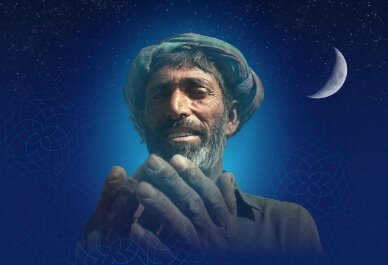
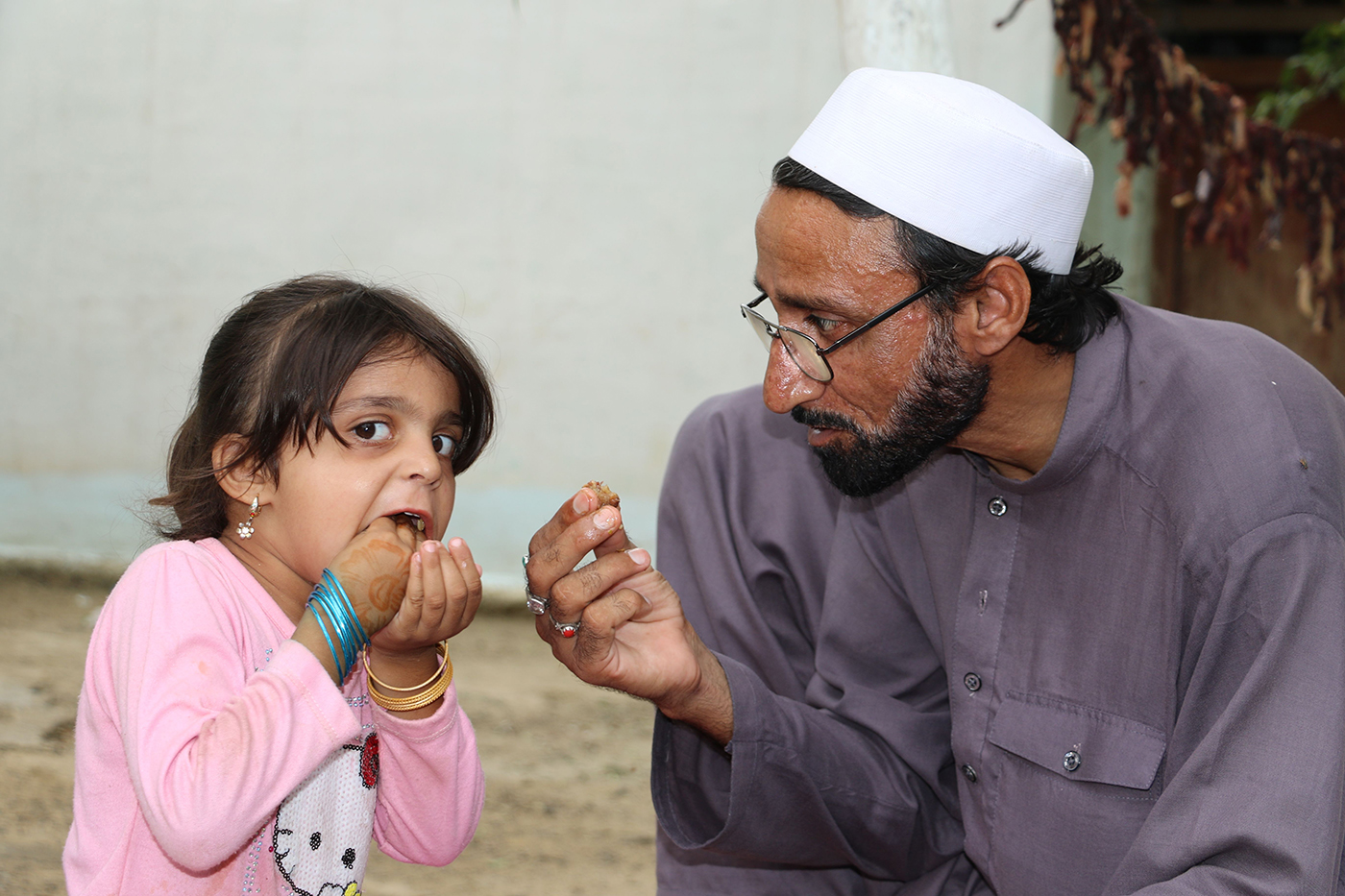
Qurban 2020: Father of five Ajmal Khan from Pakistan has a visual impairment which has meant that he is unable to find a job and struggles to support his family.

“I cannot get a proper job due to my visual disability, and my children are too young to work or help… my visual impairment is the biggest challenge for me as I can’t take care of my children like other parents. If they get sick I am unable to take them to hospital, if they need help with chores, I would just end up creating more difficulties”, says Ajmal.

“Sometimes my children have to sleep with empty bellies and more often than not my wife and I have to fast to survive the day.

“We don’t have the money to do qurbani ourselves, but we agree with its essence. Eid al-Adha is of great importance to us because it provides us with the opportunity to eat meat and also to connect with Allah and thank Him for all the blessings He has provided to us”, says Ajmal.

Receiving the gift of qurban offers relief to Ajmal and his family.

“Our routine on Eid is similar to all other days, the only difference is we have meat to eat. We cannot afford meat throughout the rest of the year.

“We try to make the food as nice as possible to make our children happy. We try to cook the meat in small quantities in combination with other vegetables. This way our children can have nutritious food for an entire month.

Islamic Relief’s meat distribution is a source of happiness for people in our community because this allows them to join in the Eid festivities like everyone else. The meat packs put smiles on our children’s faces”, says Ajmal.

To visit our Qurban page to donate, please visit: https://www.qurban.islamic-relief.com.au/donate-now/
07.07.20

Qurban – Know the rules

  Dhul Hijjah     Publications

Giving your Qurban (a sacrifice) is a sacred duty ordered by Allah (SWT). Every year during the holy month of Dhul Hijjah, Muslims all over the world slaughter an animal – a goat, sheep, cow, or camel – to reflect the Prophet Ibrahim’s willingness to sacrifice his son Ismail, for the sake of God.

What are the Qurbani rules?

Who needs to give Qurbani? When do we offer our sacrifice? Are there any other things we need to take into consideration?

Worry not! We’ve put together everything you need to know about this sacred sacrifice.

Qurban Rule #1: Sacrifice is a sacred obligation

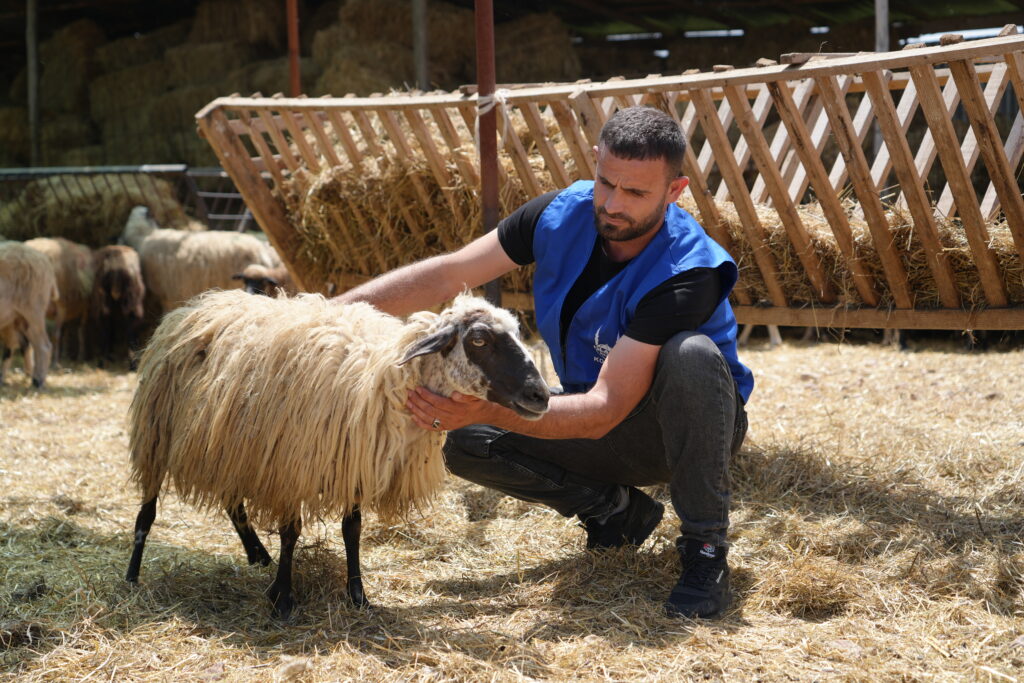
sheep with Islamic Relief staff, inspecting it for qurban

According to most Muslims, giving Qurban or Udhiya is obligatory for every sane adult Muslim who has wealth in excess to their needs (i.e. who meets the nisab threshold).

Normally those who are eligible to pay Zakat are obliged to give Qurban.

The Hanafi school of thought states that it is obligatory for:

  • Every sane Muslim of mature age (who has reached puberty)
  • Non-travelling persons
  • Those who additionally own wealth which is beyond their needs, equal to (or more than) the current level of nisab (87.48 grams of gold or 612.35 grams of silver)

Qurban Rule #2: Your sacrifice must be given on time

Islamic Relief aims to implement all Qurbans over three days (10th to 12th Dhul Hijjah).

The time for sacrifice ends when the sun sets on the fourth day. Therefore, you can make payments right up until the end of the third day after Eid (13th of Dhul Hijjah) before Maghrib salah. However, we advise giving your Qurbani as early as possible.

Note: There is a difference of opinion amongst the scholars as to whether Qurbans can be done over three or four days. To respect this difference of opinion, Islamic Relief strives to perform Qurbans in three days. We only extend into the fourth day in localities where this is religiously accepted by the local Muslim population. – and if there is an operational need for this extra day.

We purchase the animals to be slaughtered in advance based on forecasted quotas. Hence, if you give a Qurban on any of these days, the Qurban will be carried out in time.

Qurban Rule #3: Offering a sacrifice comes with restrictions

For those who want to offer a sacrifice, it’s recommended that once the new moon of Dhul Hijjah appears (i.e. on the 1st of Dhul Hijjah), he does not remove anything from his hair, nails, or skin until he has offered the sacrifice.

Reap the rewards of the blessed days of Dhul Hijjah, give your Qurban now: HERE

07.02.20

Your Qurban in action: helping families in war-torn Afghanistan

  Dhul Hijjah     Publications

Offering your Qurban or Udhiya is an obligation from Allah (SWT). For families living in poverty, your Qurban donations offer a vital helping hand. Alhamdulillah, year after year, your generous Qurbani donations enable us to provide much-needed relief to struggling communities – all over the world.

Last year alone, our global family supported over 3.1 million people in 34 countries across the globe, including across Asia, Africa and Eastern Europe – all because of the generosity of people like YOU.

When you donate with us, rest assured that your Qurbani reaches some of the most hungry and vulnerable communities so they can enjoy safe, fresh halal meat on the occasion of Eid al-Adha.

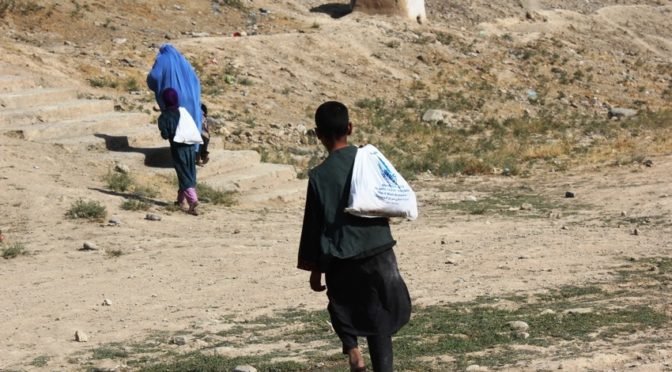
In 2019, just one of the many places where your Qurbani served families in need was Afghanistan.

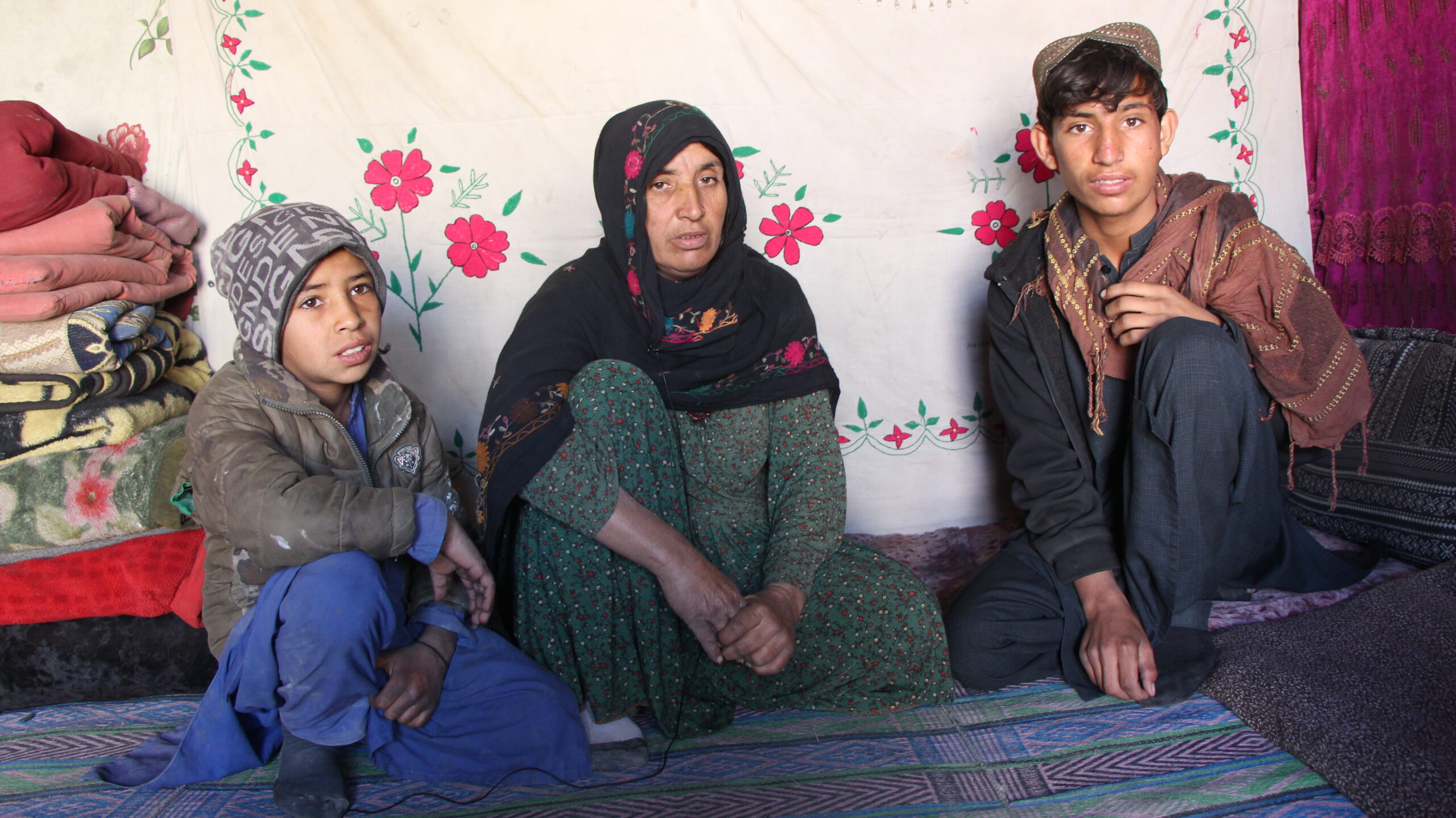
Years of war, ongoing instability and natural disasters have left many people in Afghanistan struggling to survive. Ingrained poverty is leading many parents to struggle to feed and look after their children.

With over a third of Afghans living on less than $1.90 a day – not even the price of a takeaway coffee – poverty kills more people than conflict.

As a result, children are left malnourished, with 41% suffering from stunted growth as they aren’t getting the nutrients they need.

05.29.20

Founder of Islamic Relief marks the end of Ramadan with a 6km walk while fasting

  News

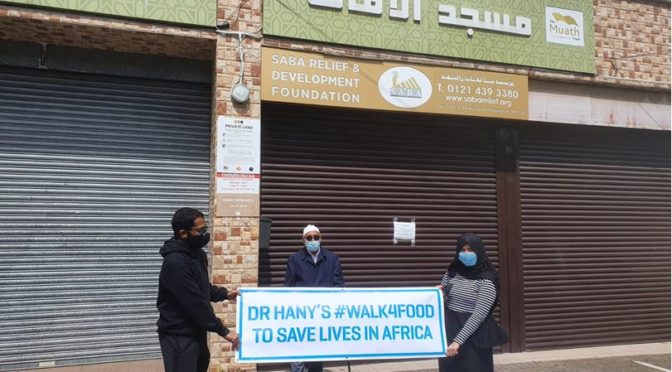
As Muslims around the world celebrated Eid-al-Fitr under lockdown last weekend, the founder of Islamic Relief, Dr Hany El Banna proudly showed the world his humanitarian nature with a six kilometre fundraising walk.

He embarked on this challenge, while fasting from dawn until dusk and on one of the hottest days of the year so far, to raise funds for Islamic Relief’s global food program.

Money raised from the Walk4Food challenge will help provide food for people in some of the world’s poorest countries in which Islamic Relief works, including Somalia, Ethiopia and South Sudan.

Dr El Banna began his walk from 477 Moseley Road, where Islamic Relief started in 1984 and walked to Birmingham Central Mosque in the UK.

Food supply chains across the world have been disrupted by Covid-19. The economic downturns are affecting the ability of millions to afford food. Children and vulnerable families will suffer the most from extreme hunger as they cannot access food.

The United Nations’ World Food Programme (WFP) last month cautioned that the coronavirus crisis could double the number of people in acute food insecurity this year, to around 265 million globally.

Dr Hany El Banna said:

“We have all felt the effects of the coronavirus pandemic. Many of us have struggled with sickness or day-to-day life in isolation, and sadly many have lost loved ones. Around the world, the effects of this pandemic are being felt.

“In sub-Saharan Africa 319 million people do not have access to clean drinking water. Millions of people are being pushed into poverty. Food shortages, lack of medical equipment and those infected face an impossible struggle with the virus due to a lack of proper medical support. This is why I’ve decided to do a Walk4Food – to help feed vulnerable people in Africa and ensure they don’t go hungry.

“Muslims believe that in the month of Ramadan rewards for good deeds such as giving charity are multiplied many times. Muslims around the world will be engaged in increased worship as they look to make the most of the holy month before it ends. Many will be paying their mandatory zakat dues and optional charity, called Sadaqah, during this time.”

05.13.20

Catch Laylatul Qadr and make the last 10 the best 10!

  Publications     Ramadan

Alhamdulillah we have reached the last ten nights of Ramadan – the most sacred period of the whole year! It is during these days that many of us will dedicate more time to Dhikr, Salah and offering Sadaqah so we can increase our rewards and become closer to Allah (swt), especially if we catch the blessed Laylatul Qadr (The Night of Power). To ensure you have a blessed and productive end to Ramadan, we bring you our top tips to make the most of this time!

Dedicate your time to dhikr

Offer lots of dhikr in remembrance of Allah (SWT) and reap the rewards! Here’s some of the ways you can reach out to Allah (SWT):

  • Allāhu Akbar (God is the Greatest)
  • SubḥānAllāh (Glory be to God)
  • Alḥamdulillāh (All praise is due to God)
  • Astaghfirullāh (I seek forgiveness from Allah)
  • Lā ilaha illAllāhu waḥdahoo lā sharikalahoo, lahul mulku wa lahul ḥamdu wa Huwa ‘alaa hulli shai’in qadeer (There is no god but Allah, alone, without partners. He is the Sovereign and His the praise, and He has power over everything)
  • SubhānAllāhi wa biḥamdihi, SubhānAllāhi al-‘Aẓeem (Glory be to Allah, and Praise Him, Glory be to Allah, the Supreme)
  • Lā ilaha illā Anta, subḥānaka inni kuntu min al-ẓālimeen (There is no God but Allah, Glory be to You, verily I was one of the wrongdoers)
    With these sacred words, you can become closer to Allah (SWT) and feel the benefits, insha’Allah.

Limit digital distractions

Ramadan is a special time, so limit your use of social media, TV and phones. Once the last ten nights are gone, they’re gone for a whole year! So make the most of these blessed nights and put your TV remote and phone down (unless you’re reading the Qur’an of course!).

Give extra charity

Sadaqah – no matter how small – is such a blessing, so why not strive to offer extra charity during the last ten nights? You could donate money, feed those in need, commit to giving throughout the year or sponsor an orphan. No matter what it is, with a pure intention and kind heart, you’ll be able to support vulnerable people and worship Allah (SWT) at the same time, subhanAllah!

Spend nights in worship

If you really want to take time out, then why not spend your days dedicated in worship at home? Follow the principle of i’tikaaf and spend as many hours as possible in isolation offering extra prayers and devoting yourself to worshipping Allah (SWT).

Seek forgiveness from Allah (SWT)

Allah (SWT) loves those who ask for forgiveness. If guilt and past sins are holding you back, then make a fresh start. Perhaps you’d like to give up a bad habit and would like to “wipe the slate clean”? Well this is the perfect time to seek forgiveness and make ‘istighfar for the love of Allah (SWT). Try this du’a – especially in the early hours of the morning: Allāhumma innaka ‘Afuwwun tuḥibbul ‘afwa fa’fu ‘annii (‘O Allah, You are The Forgiver, You love to forgive, so forgive me’).

Share the gift of knowledge

Ramadan was the period in which the Holy Qur’an was first revealed and many of us dedicate this month to reading the Holy Book. However, as well as ensuring that you’re reading as much as possible, why not share the blessings? Gift a Qur’an to a friend, family member or a neighbour and help them on their spiritual journey.

Develop a yearly game-plan

Let Ramadan inspire you to make positive changes for the year ahead. Set yourself a challenge, create a Qur’an schedule, start a new charity project – whatever it is, let the positive energy of Ramadan push you to create even more blessed change, all for the love of Allah (SWT).

With these tips, you can make not only the most of the last holy nights of Ramadan must the most of the year ahead insha’Allah.

05.04.20

Your Ramadan food packs in action

  News

Families need your help, now more than ever

As coronavirus reaches communities worldwide, our Ramadan food parcels are needed more desperately than ever. Many people will have fallen sick or lost loved ones to COVID-19. Countless families have seen their incomes plummet or disappear altogether, as work dries up and lockdowns prevent them from earning a living.

The holy month is still a time of joy, as we spend the blessed month drawing closer to God. But it is also a time of great anxiety and suffering – especially in the poorest households. Already on the edge of survival, they are least able to cope with this public health emergency and desperately need help.

Islamic Relief will not fail them, insha’Allah.

Lebanon packs
Our team in Lebanon packs food parcels for distribution.

We have been hard at work to adapt our Ramadan distributions to ensure we can still get food parcels to the families that need them – and that we do so safely without endangering our staff or the people and communities we serve.

It is a massive undertaking because the situation is different in each of the 25 countries covered by our Ramadan program this year.

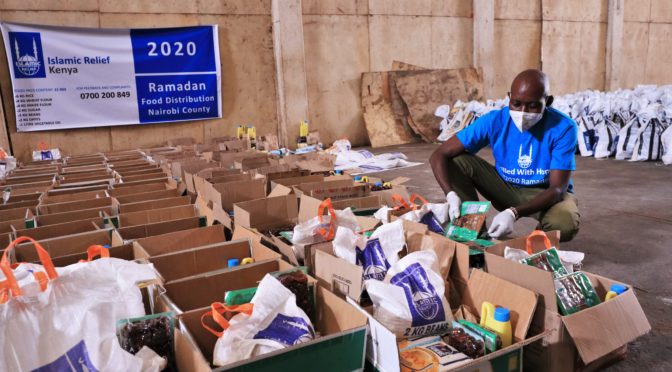
In some countries there are no restrictions on movement; others are starting to tentatively ease restrictions while others still – such as Indonesia, Kenya, and Lebanon – remain in full or partial lockdown.

We’re delivering food safely in 25 countries

Our global family is working closely with the authorities in each country to make sure our teams on the ground adhere to their COVID-19 guidelines. Fortunately, in most countries we are able to distribute food packs while observing social distancing.

Usually, our teams distribute food packs in the first 10 days of Ramadan but this year they’re doing things differently to avoid generating large gatherings of people. This year, the distribution period is being extended so it is spread across 4-6 weeks – the extended dates means fewer people attend collection points at one time. Our teams on the ground  are also offering people time slots to collect their parcels and encouraging them to come alone to avoid overcrowding.

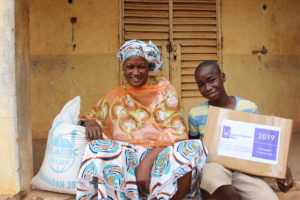
Bringing smiles in Mali

In some countries our teams are taking food parcels direct to people’s doors while in other places our partners are working with national postal services so food parcels are delivered directly to families at home. And where this is not possible, such as in Ethiopia, Sudan and Gaza, we’re issuing vouchers so families can collect food from the suppliers with whom we’ve made arrangements.

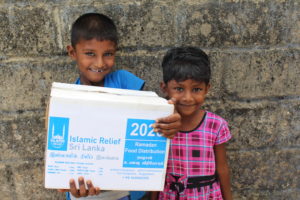
Ramadan: Sri Lanka
Two very happy children after they receive their Ramadan food pack, Sri Lanka

Your donations are reaching the most vulnerable

In these difficult times we’re inspired by the continued generosity of our supporters who are allowing us to reach people’s homes, across countries and continents, to help those less fortunate during the holy month.

Thanks to our big-hearted donors, we’re adapting to the challenges that COVID-19 is throwing at us.

And, crucially, we’re doing so safely. Our priority is and always will be the welfare of those we serve and our dedicated staff and volunteers.

Gaza Palestine
Food packs in Gaza

Help us ease the suffering of some of the world’s most vulnerable families during the holy month.

Donate to our Ramadan Appeal now

03.13.20

Our 2020 Ramadan Campaign – Everyone is welcome

  News

We are  excited to announce the launch of our Ramadan 2020 campaign ‘Everyone is welcome.  With the holy month of  Ramadan  around the corner,  we take this opportunity to remind you that there is no better time to not only nurture and strengthen our relationship with our Creator, Allah (swt), but also those around us.  

We know that Ramadan is one of the holiest months of the Islamic calendar; a month in which Muslims around the world fast from sunrise to sunset each day.  

This holy month is a time for spiritual reflection, charity and solidarity. It is an opportunity to reap great spiritual rewards, but it also serves as a reminder to nurture connections with our communities and to reach out to those in need.  

This Ramadan, everyone is welcome 

O mankind, indeed We have created you from male and female and made you peoples and tribes that you may know one another. [Qur’an 49:13] 

As we work on improving our relationship with God during this blessed month, we are also encouraged to strengthen our relationships with our family, friends, neighbours and communities. There are lots of ways we can do this – including sharing food, volunteering, giving charity and connecting with people of all faiths and none.  

Inspired by the verse above, this year our Ramadan campaign is about welcoming the holy month of Ramadan, but also about welcoming people from all faiths, backgrounds, and walks of life to embrace the spirit of Ramadan by giving charity, practicing tolerance, spending time with loved ones and being kind.  

How you can help those in need:

Your Zakat  

Zakat means ‘growth’ and ‘purification’. We purify our wealth by giving a portion of it to those who need it. As with the pruning of plants, when we cut back we create balance and encourage new growth.  

Many people choose to pay their zakat during this holy month, a blessed month in which the reward for good deeds is multiplied.  

Donate a food pack  

During the holy month, you can purchase a $70  food pack, and provide immediate relief to a family struggling to put meals on the table. 

02.28.20

When is Ramadan 2020 in Australia?

  News     Ramadan

When is it?

This year, Ramadan is expected to begin on the evening of Thursday 23 April. It is expected to end at sunset on Saturday 23 May 2020. Ramadan is the ninth month of the Islamic calendar which is marked by the sighting of the new moon.

During this holy month, Muslims are obligated to fast from before dawn through to sunset every day for 29 or 30 days. Ramadan is the fourth pillar of Islam and is an important time for Muslims to reflect, pray and practice compassion and humility.

A little background on Ramadan

The word ‘Ramadan’ comes from the Arabic word ‘Ramad,’ which means to be intensely heated by the sun.  Scholars have said during the blessed month, the sins of the believers are being burnt.

The Prophet Muhammad (pbuh) said, “Whoever observes fasts during the month of Ramadan out of sincere faith, and hoping to attain Allah’s rewards, then all his past sins will be forgiven.” 

Following the Sunnah

The Prophet (pbuh) epitomised virtuous character and exemplified the Islamic values of mercy, kindness, tolerance and equality. Muslims try to follow his example – or sunnah – in drawing closer to God. In Ramadan, this includes  making du’a for others, feeding people and giving charity.

Our Ramadan message

O mankind, indeed We have created you from male and female and made you peoples and tribes that you may know one another. [Qur’an 49:13] 

To welcome this holy month, we’re asking you to practice compassion and to celebrate diversity – to come together as a community and learn from and help each other.

Furthermore, charity is held in high regard in Islam, therefore, it is made an obligation for Muslims in the form of Zakat. Zakat is one of the major five pillars of Islam. It is a necessity to give Zakat to those who are wealthy enough.

Be prepared this holy month and calculate your Zakat now.

08.05.19

The Grand Mufti of Australia celebrates milestone with Islamic Relief Australia

  News


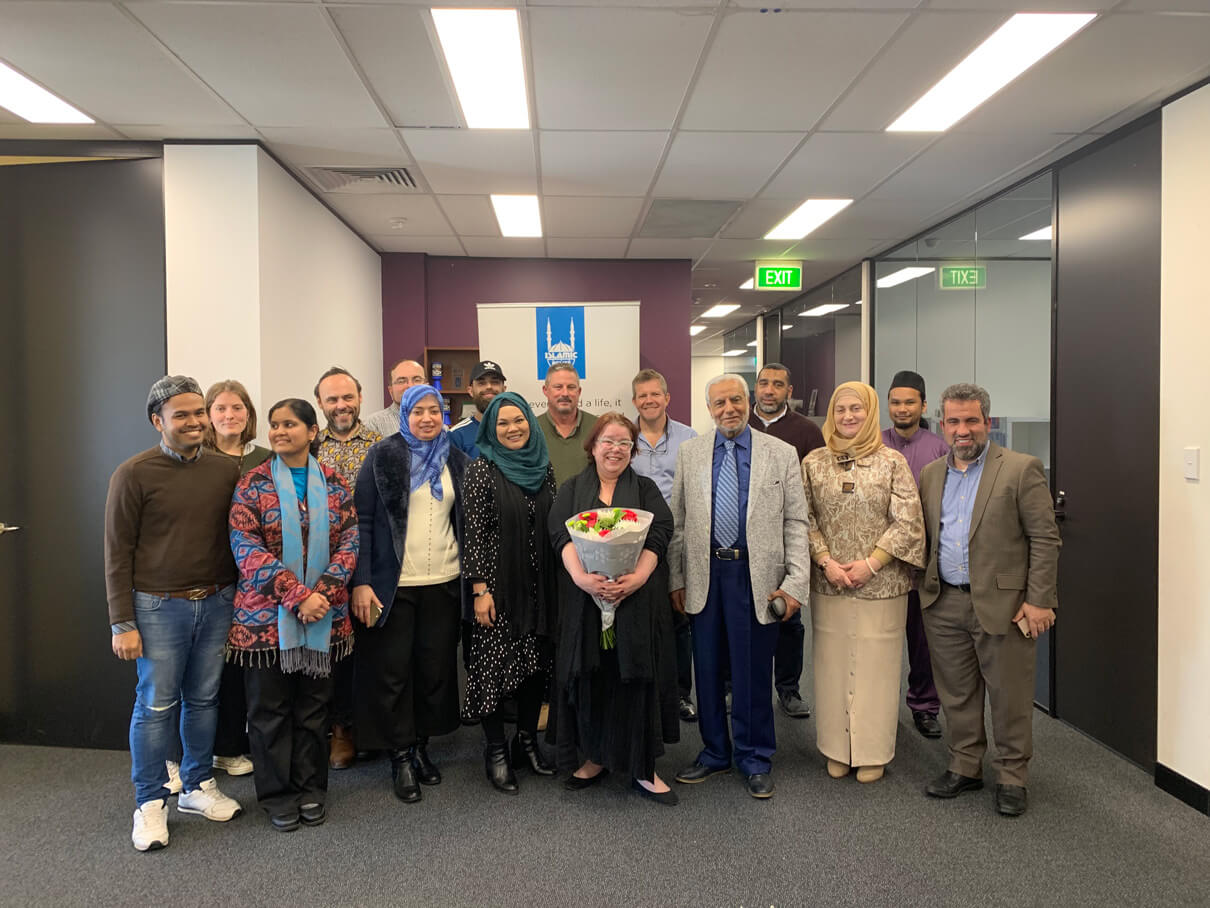
IR team photo
The Grand Mufti of Australia, Dr Ibrahim Abu Mohammed, celebrates milestone with the Islamic Relief Australia team

Mohd Zarith Md Hanipah

On Thursday 1 August 2019, Islamic Relief Australia was honoured by a visit from His Eminence The Grand Mufti of Australia, Dr Ibrahim Abu Mohammed. As a show of his ongoing support to the charity, The Grand Mufti joined Islamic Relief staff in celebrating a milestone for the organisation –having reached over 420,000 vulnerable people globally across its humanitarian and development activities in 2018. As a member of the Australian Council for International Development (ACFID), Islamic Relief Australia has supported projects and activities in 34 countries to combat poverty and injustice while providing vital humanitarian assistance to communities in need.

In the past year, Islamic Relief has benefitted over 9,000 community members in Australia through its domestic violence awareness campaign, youth development programs, migrant and refugee support, and family and women’s support interventions. Dr Ibrahim delivered a moving speech highlighting the importance of giving charity and commended the organisation for building stronger, healthier communities both locally and internationally. Dr Ibrahim was also proud of Islamic Relief’s achievements and gave his unwavering support to the organisation and the work it does in transforming the lives of the world’s most vulnerable people regardless of their background, ethnicity or religion.

The theme of Islamic Relief Australia’s current Qurban campaign is A Prophet’s Legacy, which commemorates the Prophet Ibrahim (pbuh) and the momentous act of submission he made. As part of a global family, Islamic Relief aims to benefit over 3 million people in over 35 countries through its Qurban Program during Eid al-Adha this year. Islamic Relief Australia is made up of a dedicated group of staff, donors, community members, partners and volunteers working together to empower communities in need and create positive change in the world.


07.18.19

Qurban for Aminata and her family

  Dhul Hijjah     Publications

Aminata’s Story

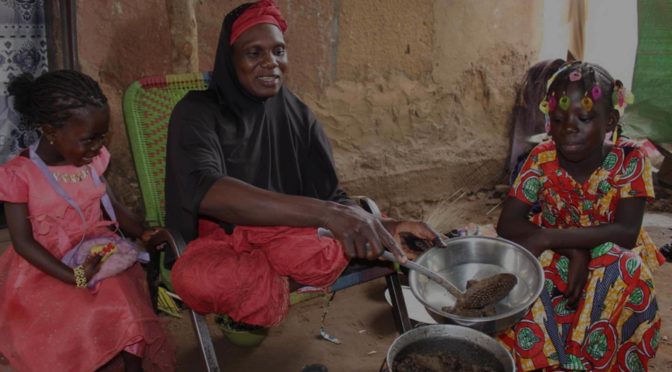
Aminata Samake, is a 36-year-old mother of two and a small trader who lives in Mali. She has two daughters, Almoussa and Fanawele, aged four and ten respectively. As a widow and someone with disabilities, it has been very difficult for Aminata to support her family on her own.

“My family incomes comes from the small trade I am doing which consists of selling traditional medicines. I am the only one to take care of the family. Due to my disability, it is very difficult for me to cover all my children needs. Most of the time, I cannot provide the three required meal to my children. It is my neighbour sends us the remaining of their food. The sponsorship allowance of my daughter, Almoussa, helps me to buy food too,” she says.

2018 was the second year she benefitted from your generous donation.

Aminata Samake, 36-year old disabled mother of two who lives in Bamako.

Qurban Meat Pack is so important for my children and me. It is my second time I benefitted from it. Before Islamic Relief, we used to spend many Eids without eating meat. Sometimes, we got meat from generous neighbours. Ever since we started receiving meat from Islamic Relief, my children are so happy.”

As meat is scarce and expensive, Aminata and her children do not have the luxury of eating meat. She commented:

“Oh meat!! I do not remember the last time we ate meat. My children and I can spend several months without eating even a small piece.”

She is also on the receives support from Islamic Relief’s Orphan Sponsorship and Ramadan programs and is very grateful for all the assistance she receives.

I do thank IR and its generous donors. Without IR I would be begging now. I say this, as I did not have any means to find food for me and my family…ensuring their education. Now, we need good income generating activities in our community. ”

Written by Mohd Zarith Md Hanipah


STAY INFORMED

  • This field is for validation purposes and should be left unchanged.

Quick Donate