05.27.21

Islamic Relief welcomes important ceasefire breakthrough

  News     Press Releases

Islamic Relief welcomes the ceasefire announced between Israel and Hamas that came into effect this morning.

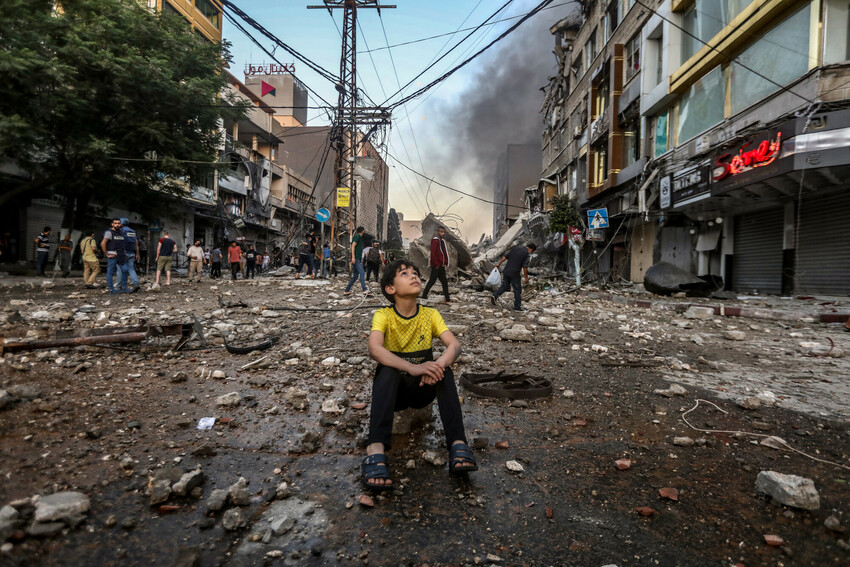
Civilians have been worst affected and more than a quarter of the casualties of the past 11 days have been children – almost all of them in Gaza.

However, a ceasefire alone will not be enough to prevent violence escalating again in future. The world must now seize this moment to kickstart a process that truly addresses the root causes of the crisis.

Waseem Ahmad, the CEO of Islamic Relief Worldwide, says:

“A ceasefire is hugely welcome to stop the death and destruction of recent days. The immediate humanitarian priority now is to open crossings so that vital supplies of food, medicine and fuel can reach those who desperately need them – including tens of thousands of people whose homes are damaged and may be too hazardous to return to.

“However, there is a real threat that violence like this will continue to flare up unless meaningful action is taken to address the deep-rooted injustice and inequality at the heart of the situation. The international community must demand an end to the Israeli occupation, and also the blockade of Gaza that accompanies it. The occupation affects every aspect of Palestinians’ daily life. It denies their basic human rights, undermines their dignity and entrenches poverty. Through its relative silence and inaction, the international community has been complicit in this suffering for too long.

“Islamic Relief strongly condemns all violence against civilians. All Palestinians and Israelis, regardless of religion, have the right to live in safety and dignity, and to have their fundamental human rights upheld. We believe that this will not ultimately be possible until there is an end to the occupation and a lasting solution rooted in international law and justice.”

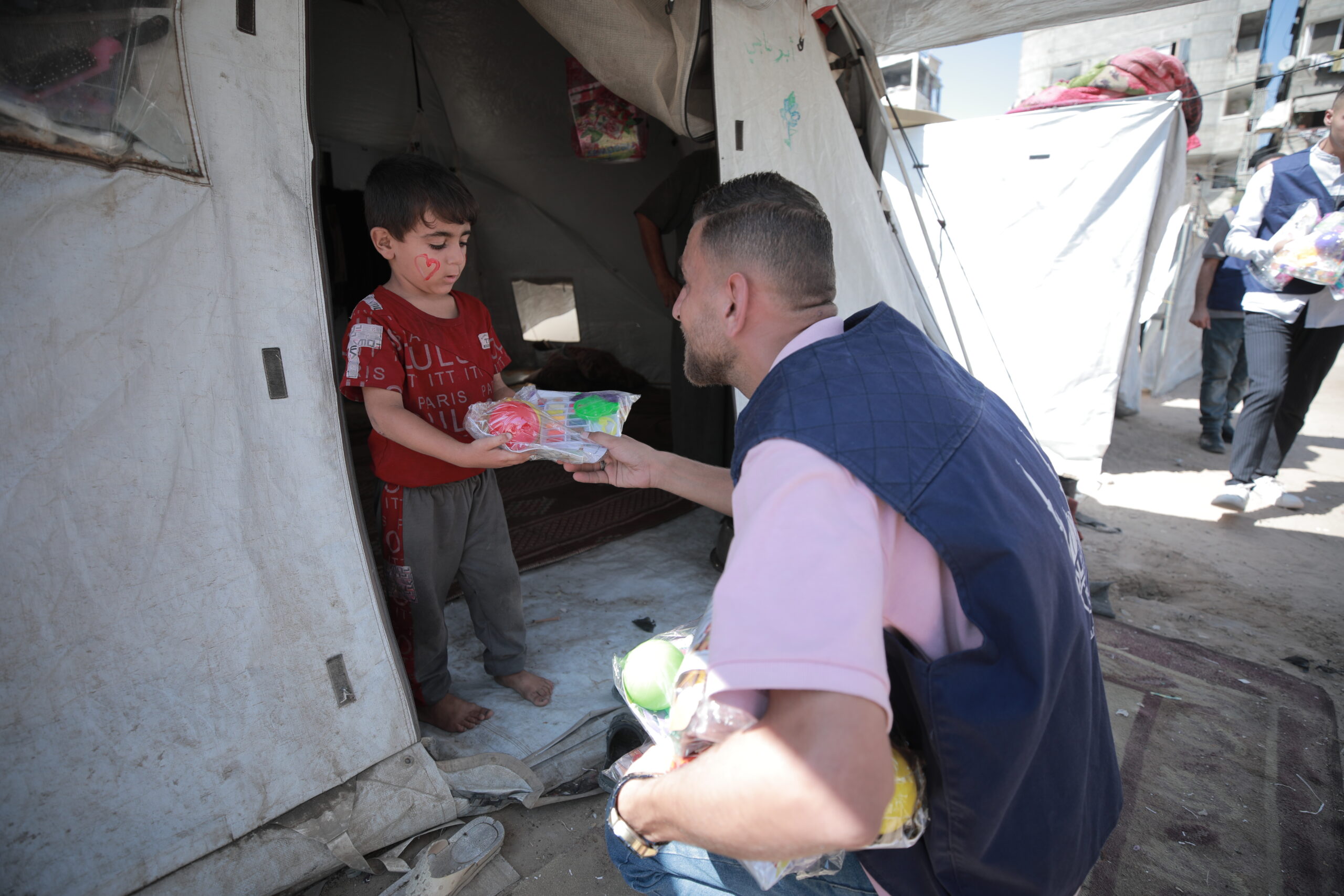
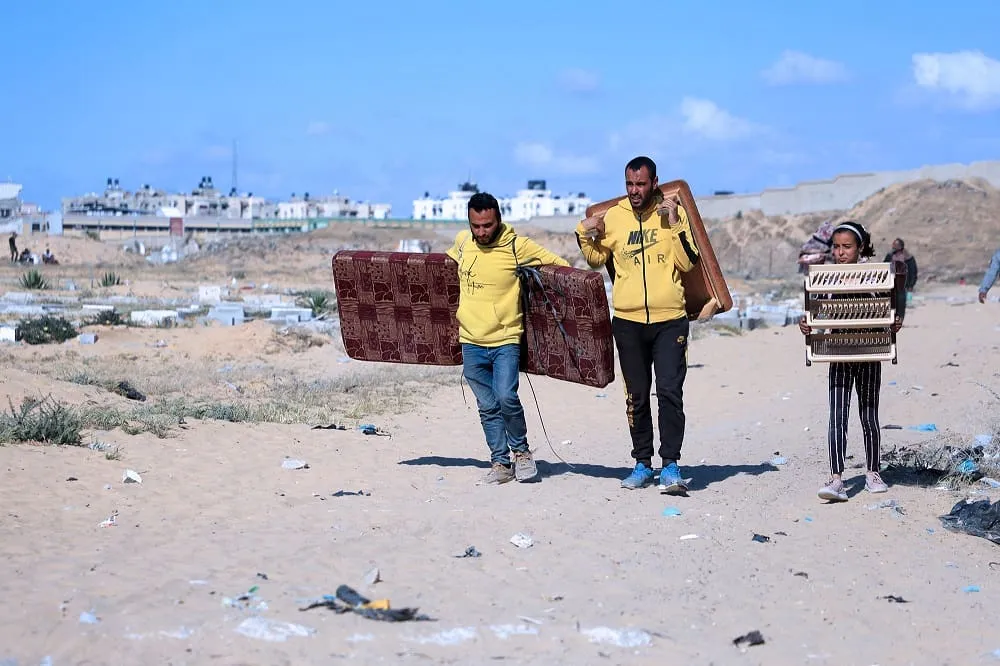
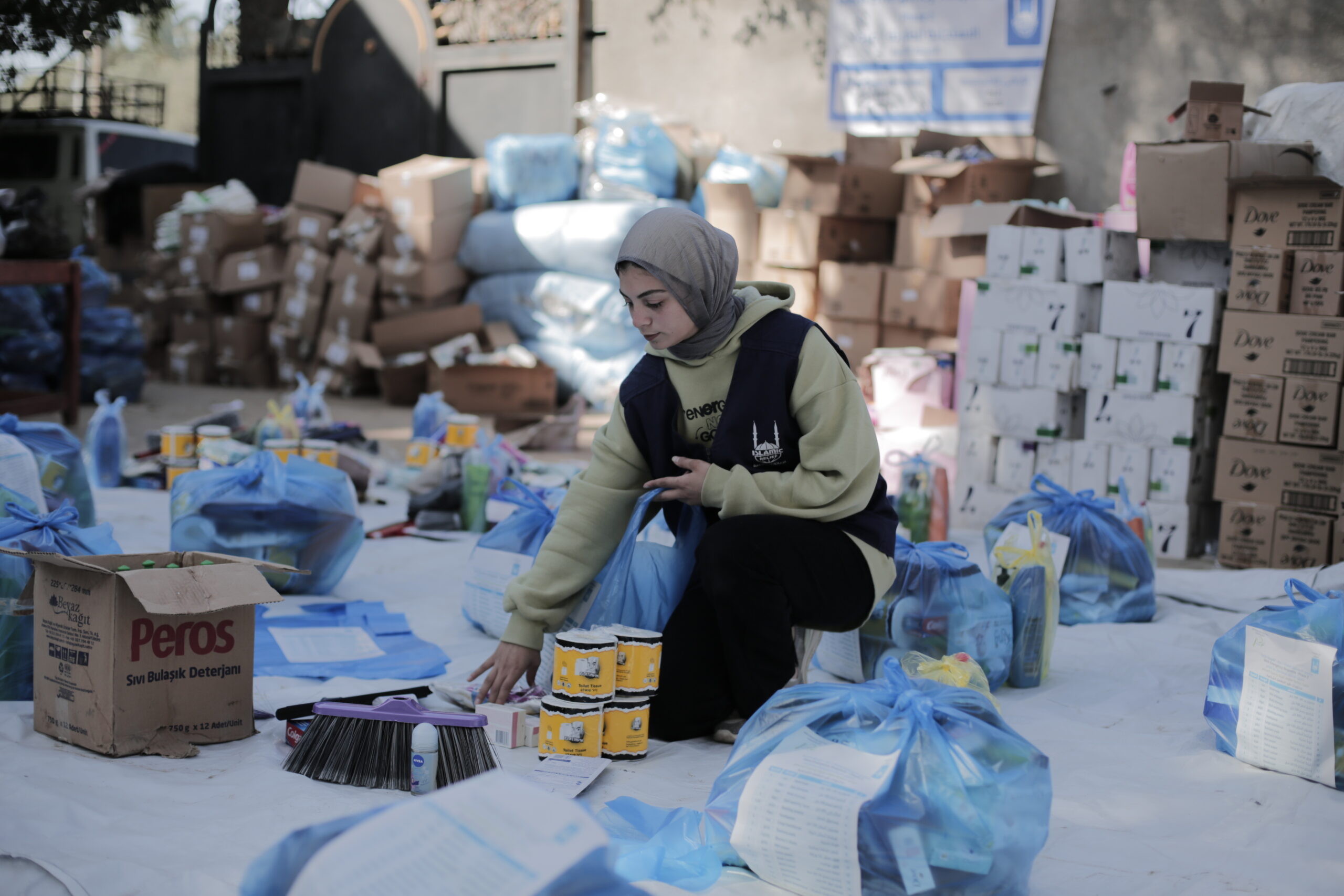
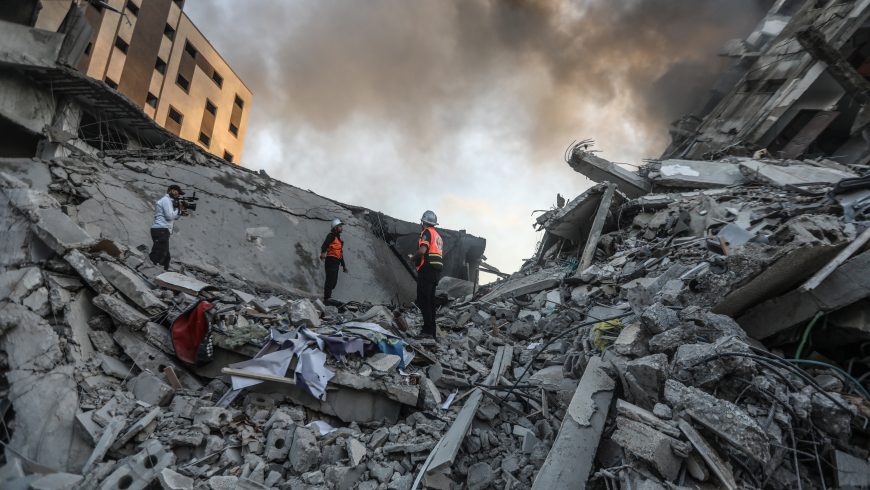
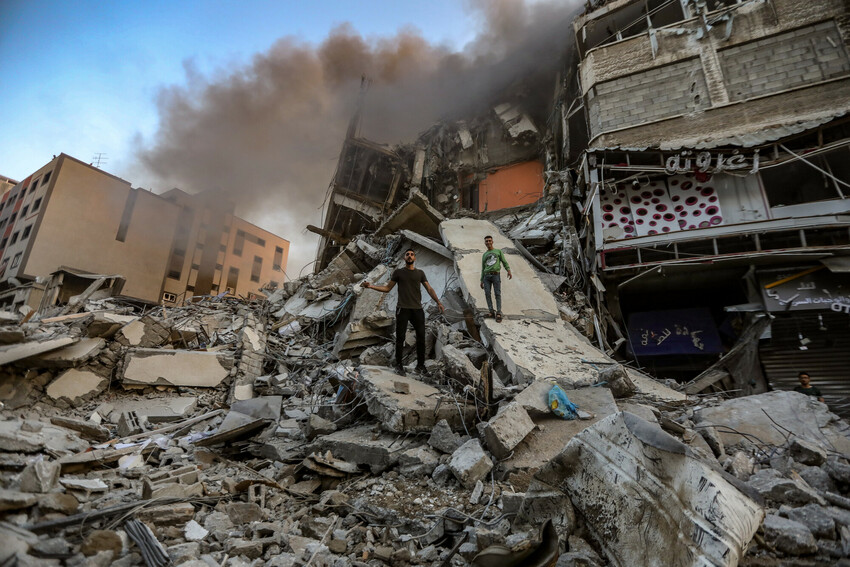
In the meantime, humanitarian aid is urgently needed. Thousands of lives and homes across Gaza have been destroyed by the bombing. Islamic Relief is calling for international aid to support rebuilding damaged infrastructure, strengthening health and electricity networks and providing psychosocial support. Islamic Relief teams are providing bedding, food vouchers and other essential aid to displaced families.

Muneeb Abu Ghazaleh, Islamic Relief’s Country Director based in Gaza, says:

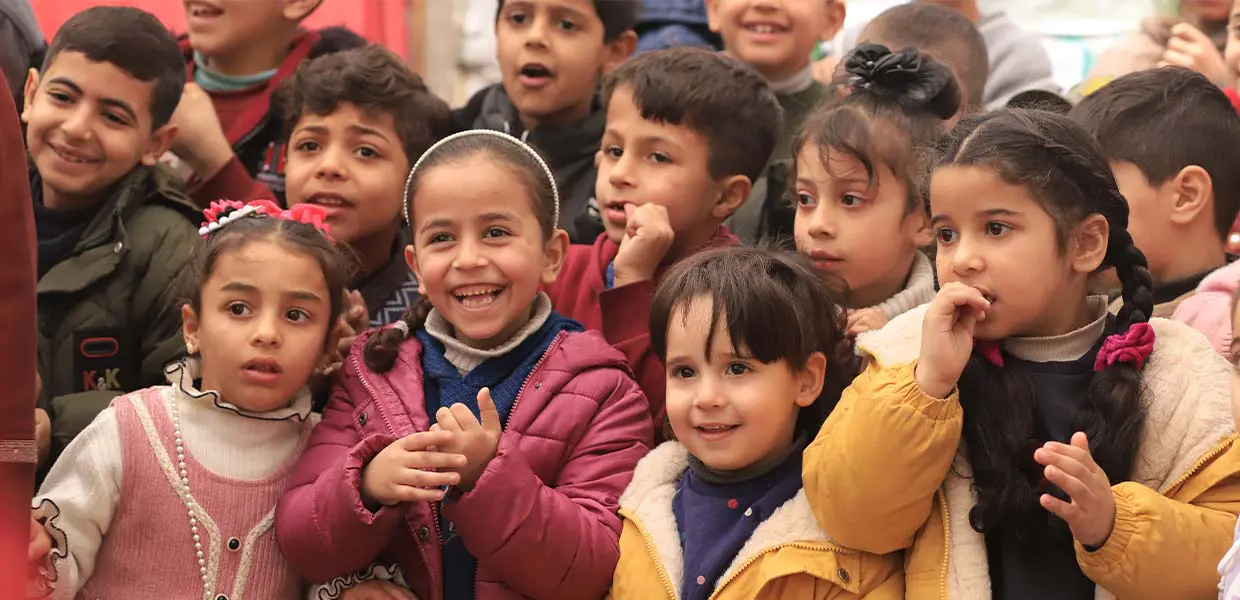
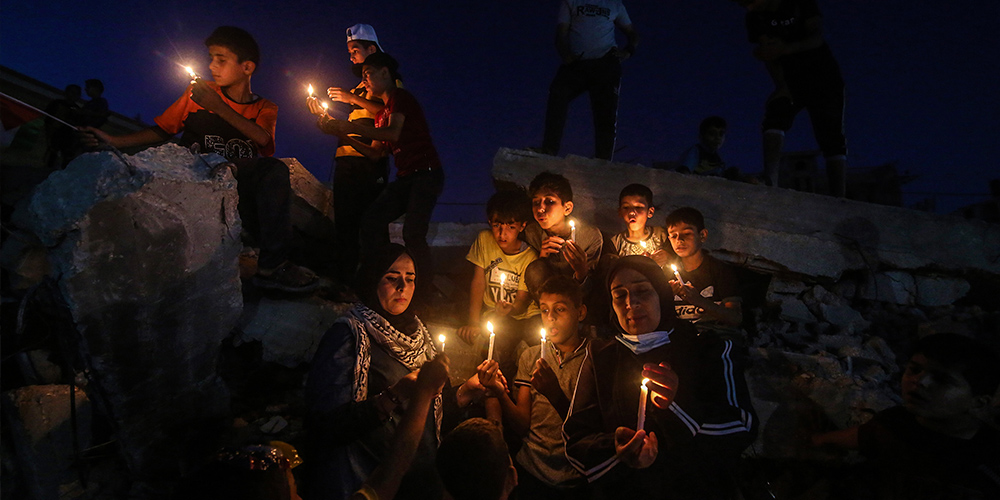
“In recent days I have witnessed some of the worst violence I’ve ever seen. Whole families have been killed and thousands of buildings damaged or destroyed. A generation of children is likely to be psychologically scarred by the bombing and the terrifying fear that accompanies it.

“My son is 13 years old and this is the fourth war he has lived through. We now need world leaders’ commitment to ensure that this is the last. The new ceasefire must not be an excuse to ignore the underlying issues once again until the next explosion erupts. Building lasting peace requires respect for international humanitarian law and adherence to key UN resolutions.

“The Israeli blockade represents collective punishment of the people of Gaza and must be lifted immediately. It cuts people in Gaza off from other Palestinians and the wider world. It imposes tight restrictions on the movement of people and goods – preventing families from seeing each other, crippling essential services, and cutting off markets. It has turned Gaza’s once-vibrant economy into an area where 80 per cent of people now have to rely on aid and many children go to bed hungry at night.

“Gaza now has some of the highest youth unemployment rates in the world. Young people here are increasingly frustrated and see little hope for their future. A lasting solution needs to give them hope and ensure their fundamental human rights.”

Notes

In Gaza at least 230 people have been killed, including 65 children, and more than 1700 injured. Hundreds more Palestinians have been injured in the West Bank, including East Jerusalem. At least 10 Israelis, including two children, have also been killed.

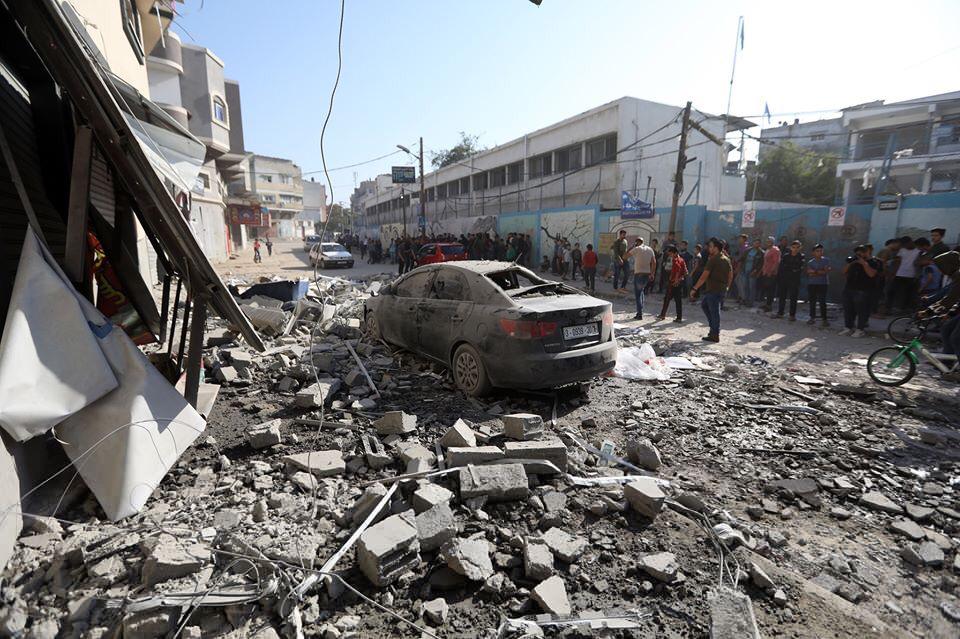
Initial assessments in Gaza show more than 1,335 homes have been destroyed or seriously damaged by bombing, while around 13,000 more have been partially damaged. At least 50 schools and 17 health facilities have been damaged.

05.26.21

UN SECURITY COUNCIL MUST ACT FAST ON GAZA

  News

The UN Security Council must demand an immediate end to the escalating attacks on civilians in the Occupied Palestinian Territory and Israel, Islamic Relief says ahead of a crucial Security Council meeting. It must also address the injustice and inequality that is at the heart of the situation and call for an end to the Israeli occupation.

The death toll is rising rapidly, and more than a quarter of fatalities and injuries over the past few days are children,

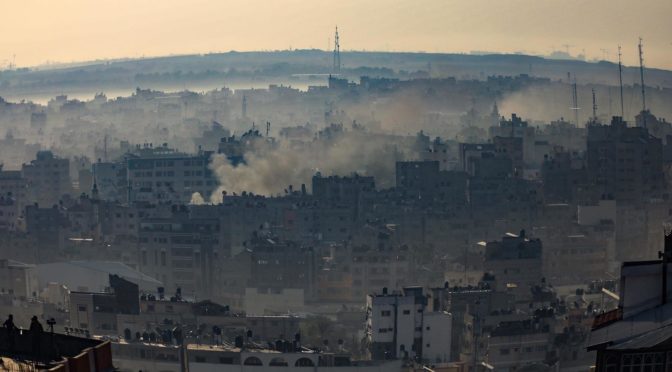
Hundreds of homes and more than 30 schools have been damaged by the bombing in Gaza so far, as well as factories and health facilities. Airstrikes have damaged the electricity network, so power is only available a few hours a day and is likely to completely run out soon. Water supplies to around 500,000 people have been disrupted as a result.

A ground offensive in Gaza would greatly increase humanitarian suffering and force hundreds of thousands of people to flee their homes, with nowhere safe to go. The blockade – which severely restricts the movement of people and goods in and out of Gaza – means that people are trapped and unable to escape any further escalation.

Muneeb Abu-Ghazaleh, Country Director of Islamic Relief in Gaza, describes the situation overnight:

“This was one of our hardest nights ever. The sound of bombing and screaming is everywhere. Houses are shaking from the bombardment. People are afraid and living in darkness because we have no power. Most people here do not have shelters or anywhere to go when the bombing starts.

“Like many other children, my son has spent the last few nights having panic attacks and unable to sleep because of the bombs. A whole generation has been psychologically affected by the years of blockade and bombing. Children should not have to suffer any more.

“The violence must end, but this escalation is a symptom of the injustice of the occupation and the blockade that blights the lives of the people of Gaza on a daily basis. We want the world to address the root causes, not just the symptoms.”

Islamic Relief condemns all violence against civilians and is calling for an immediate end to the current escalation. International law must be upheld, and civilians and civilian infrastructure must not be targeted.

The blockade represents collective punishment of the people of Gaza and must be lifted immediately, in line with previous UN Security Council Resolution 1860.

All Palestinians and Israelis – regardless of religion or ethnicity – have the right to live in safety and dignity, and to have their fundamental human rights upheld. We believe that this will not be possible until there is an end to the occupation.

05.19.21

A Perspective: Islamic Relief staff in Gaza on being under bombardment

  News

“Glass flew over our heads”

As the bombing of Gaza gets worse, Islamic Relief staff are not only helping to provide aid – they and their families are directly affected by the bombardment.

Several of our staff have witnessed horrific moments. Their homes have been bombed, their children and relatives injured, and they have been forced to flee in search of safety.

Hend*, one of Islamic Relief’s project coordinators in Gaza, was at home with her family when the bombing hit around 6am: 

“My family and I have had horrible moments that I cannot describe or forget. There was heavy bombing in the area where we live and shards of glass flew above our heads.

“My daughter’s leg was cut and injured from the glass. It was very dangerous but with difficulty we managed to reach a medical centre to get treatment.

“As we fled our house I saw the fear in my children’s eyes. But I didn’t know how to ease their fear, as the bombardment didn’t stop for a second.

“Now we are sheltering with relatives. My children still can’t sleep as they are afraid that the bombing will return when they are asleep. At night they wake up terrified.     

“I don’t know what happened to my house, but we can’t go back yet as there is still bombing in the area. This morning the block next to ours was also blown up.”

Hassan*, who works in our Gaza office, managed to escape just before bombs hit the residential block where he lives with his family.

“The bombs hit next door, early in the morning. Some of the walls of my house collapsed, windows smashed and furniture was destroyed. Other walls were so badly damaged they need to be removed. My house is now uninhabitable. 

“We fled the house just a few minutes before the bombing, looking for a safer place. But there is no safe place. The bombing continues everywhere.

“Everyone was horrified – children, women and men. Now we are scattered among relatives. Fifteen families were made homeless in an instant, including my brothers.

“I’ve been working for Islamic Relief for more than 16 years, through many emergencies and wars. Islamic Relief is one of the first organisations to provide urgent aid for families. It’s been very difficult to live through the same experiences as the people we are helping.”

Islamic Relief is calling for an immediate end to the escalation in violence against civilians across the Occupied Palestinian Territory and Israel, and for international law to be upheld. Civilians and civilian infrastructure must never be targeted. We are also calling for an end to the Israeli occupation and for a lasting solution that is rooted in international law and justice.

*Names have been changed to protect identities

05.11.21

Islamic Relief condemns violence in Jerusalem

  News

Islamic Relief is appalled at the latest escalation of violence and attacks on Palestinians in East Jerusalem, which is spiraling into the worst violence there for several years.

This morning Israeli forces stormed the Haram al-Sharif compound, injuring many worshippers praying at the Al Aqsa Mosque. Hundreds of Palestinians have been wounded in the past few days.

Tufail Hussain, Interim CEO of Islamic Relief Worldwide, says:

“We are horrified at reports that soldiers have fired rubber bullets and tear gas at worshippers praying at Al Aqsa, the third holiest site in Islam, during the holy month of Ramadan. The right of people to worship freely and in safety must be upheld for all, regardless of faith.

“Children are among the hundreds who have been wounded in recent days and many have been rushed to hospital.

“We condemn all use of indiscriminate violence against civilians. We also condemn the attempts to forcibly evict Palestinian families from their homes in the East Jerusalem neighborhood of Sheikh Jarrah and replace them with Israeli settlements. We call on the Israeli government to immediately cease such evictions, which the UN has warned are against international law, and we call upon the UN and other influential players to facilitate appropriate humanitarian assistance for all those affected by the recent violence.”

Thousands of Palestinians in East Jerusalem face the constant threat of evictions or having their homes demolished, or losing their residency status in the city. In the first quarter of 2021, Israeli authorities demolished 292 Palestinian-owned structures in the West Bank, including East Jerusalem – more than double the rate in 2020. At the same time, Israeli settlements in East Jerusalem continue to expand.

The Israeli occupation has systematically cut East Jerusalem off from the rest of the West Bank, violating human rights and entrenching poverty. Palestinians face severe restrictions on their movement, cutting them off from essential services, loved ones, religious sites, markets, and livelihoods. As a result of the occupation, East Jerusalem suffers from high rates of poverty.

Islamic Relief staff in Gaza report that the situation in Gaza is also increasingly on edge as tensions rise across the Occupied Palestinian Territory over the past few days. Islamic Relief calls for an end to violence on both sides and for the blockade of Gaza to be brought to an end.

Islamic Relief has worked in the Occupied Palestinian Territory since 1997. Last year our programs in Gaza helped nearly 400,000 people with essential medical care, access to education, and skills training for unemployed youth.

Find out more about our work in Gaza

12.02.20

International Day of Solidarity with the Palestinian People

  News     Publications

29 November marks International Day of Solidarity with the Palestinian People, which provides us an opportunity to reflect on the rich culture and history of Palestine and its people.  

Palestine holds a special place in the hearts of millions around the globe, but there are many unknown facts about Palestine. Inhabited since the Stone Age, and home to some of the holiest sites of the Abrahamic faiths, Palestine has seen the rise and fall of many empires, from the Babylonians and Romans to the British. Islam came to the region in the 7th century with the Rashidun Caliphate, which was the first empire to allow the return of the Jewish people following their expulsion by the Romans nearly half a millennium previously. 

While much of the modern discussion of Palestine centres on the local conflict and occupation, its story and culture are often unrecognised. Falastin (the Arabic name for Palestine, derived from the Roman term Palaestina) is in fact a region rich in history and lessons for the world.  

Facts about Palestine: the legacy of the olive tree 

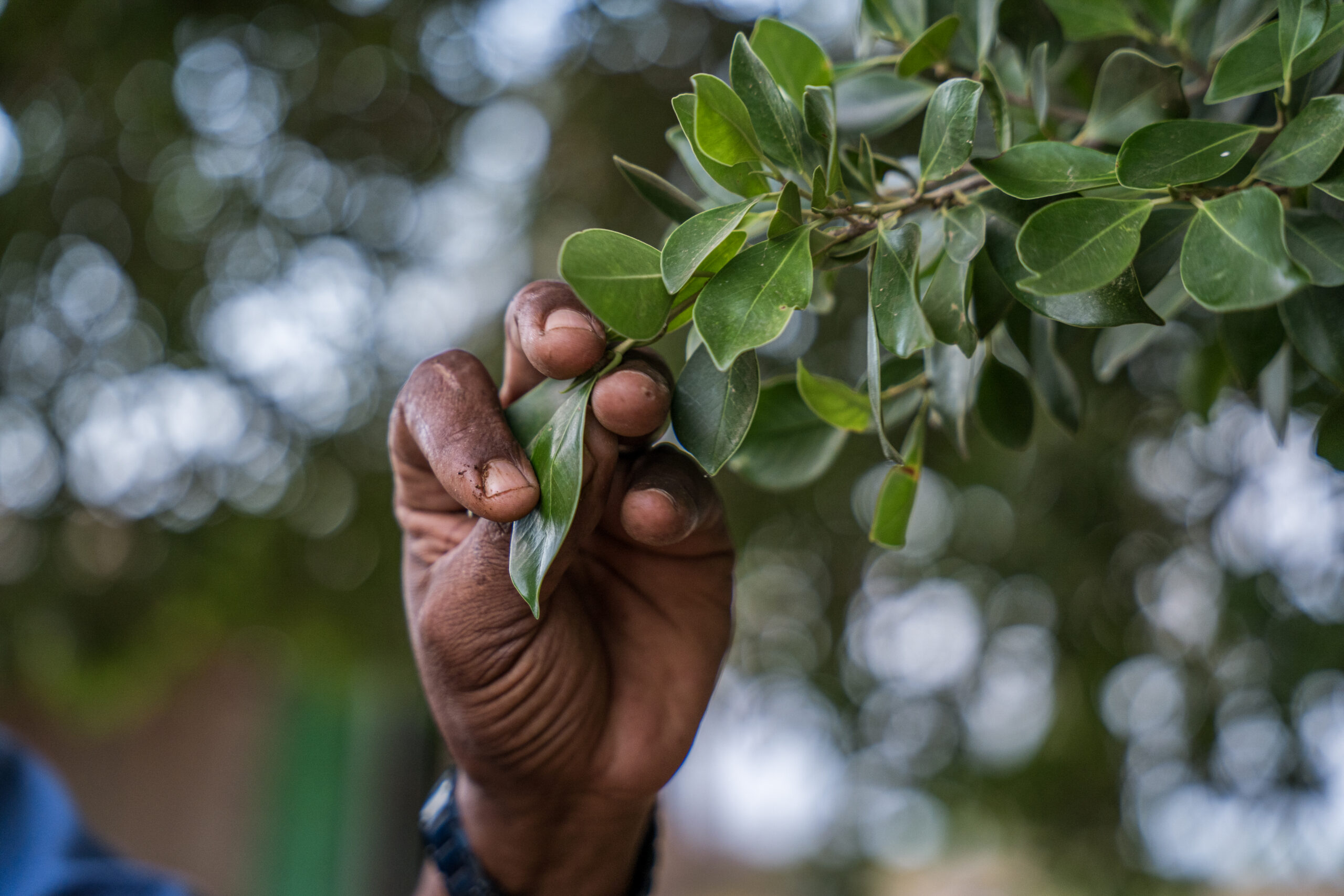
The olive tree is one of the most iconic symbols of Palestine. Making up to 70% of all fruit-bearing trees in the country, the olive tree and its products contribute to roughly 2% – 4.6% of Palestine’s GDP. Beyond its economic significance, the olive tree represents a powerful tie to the past. 

Palestine is home to the oldest olive trees in the world, which date back nearly 4,000 years. The tending of olive trees is passed down through generations, with many families having harvested from the same orchards for hundreds of years. The harvesting season takes place from roughly mid-October to November and is a time for families to gather and reflect. 

“If the olive trees knew the hands that planted them, their oil would become tears” 

– Mahmoud Darwish, Palestinian Poet  

The olive tree itself conveys deep symbolism and meaning; their roots grow deep and are resistant to the harsh climate, much akin to the Palestinian people who are resilient in the face of ongoing adversity. Like the olive trees that have endured on the land for millennia, so too have the people of Palestine.  

Facts about Palestine: significance of Al-Masjid Al-Aqsa (East Jerusalem) 

Some time near the year 671, the Prophet Muhammad (ﷺ) was sent on a miraculous night journey, Al-Isra’ Wal-Mi’raj, in which he was transported from Makkah to the site of Al-Aqsa in Jerusalem. It is here that he is said to have ascended to the heavens and lead the Prophets of the past in prayer. This location served as the first Qibla (the direction in which Muslims turn to prayer) in the early Islamic faith. 

During the Umayyad dynasty, Caliph Abd al-Malik ibn Marwan commissioned the construction of Al-Masjid Al-Aqsa and the Dome of the Rock at this site overtop the Temple Mount (circa 692). At the time, it was the first dome to have been used in Islamic architecture. It was quickly adopted throughout the Muslim world so that now, it’s become a key and most recognisable feature of our architecture all over the world. None of the original structure remains today, as it was first destroyed in an earthquake in 746 and has subsequently been rebuilt and renovated by various ruling dynasties.  

The actual site of Al-Aqsa is a point of confusion and is often thought to refer to the iconic image of the gold-leafed dome. However, Al-Aqsa actually consists of the entire 35-acre compound, which includes both the Dome of the Rock (the gold dome) and several individual mosques such as the Buraq Mosque and Marwani Mosque. Beyond its importance as a place of worship, Al-Aqsa houses a wealth of knowledge in its library which is divided into three sections: 1) humanities and Palestinian studies, 2) children’s education, and 3) Arabic language, literature, and Islamic studies. 

Facts about Palestine: the Islamic Waqf system 

The Islamic Waqf system has been vital in the preservation of Palestinian heritage. Waqf is a special status within Islamic law, typically conferred to a building or piece of land, preventing the property from being exchanged or used solely for consumption. Once a property has received the status of Waqf, it is preserved to fulfil a specific role and its revenue is used solely for its beneficiaries which are often members of the public. With Waqf comes a special religious significance, as the property now belongs solely to God and can never be given away or inherited. 

The Waqf system was established in Palestine shortly after the fall of Acre in 1291, a siege that marked the end of the crusades against Jerusalem. A significant number of buildings were given Waqf status during this time, including mosques, hospitals, and even fountains. During the Ottoman rule, major sites such as Al-Masjid Al-Aqsa were designated as Waqf that came under the direct supervision of state officials, while smaller Waqf properties were often left to local officials. The early establishment of Waqf allowed for the stability of these institutions and played a vital role in defining the iconic characteristics of Islamic architecture moving forward. All Waqf properties had deeds that outlined the conditions for their use, preservation, and beneficiaries; these early documents continue to serve as a vital source of information on these properties. 

Islamic Relief’s Presence 

Islamic Relief has been working in Palestine since 1994, providing emergency humanitarian relief through food distribution and medical aid. We have also established permanent projects to help communities rebuild their lives in the long term, which include improving local access to education, water treatment and sanitation, and healthcare.  

For survivors who have experienced trauma from the ongoing conflict, we have developed recreational activities and psychosocial support programs. Beyond this, Islamic Relief has an Orphan Sponsorship Program which has been established since the start of our operations in Palestine, helping children get a strong and healthy start on life. 

While we help the people of Palestine build a better future, it is important for us to learn and celebrate the rich past of the land and its people. 

Originally published as ‘Unknown Facts about Palestine for Islamic Heritage Month by Yasmeen Razvi from Islamic Relief Canada. Please note slight edits have been made to the original article for International Day of Solidarity with the Palestinian People. 

Palestine

09.24.20

Clinging onto hope in Gaza

  News

“Securing good food for my children has become my greatest hope these days,” says Um Ali, from Gaza as she describes her struggle to provide food and medicine for her family members. 

“In recent years, I used to get aid from family, neighbours, and good people, but unfortunately the economic conditions have become very difficult in Gaza and no one can help us with money or provide us with food these days,” she added.

“We have come to the point of collecting the leftovers that we find on the streets,” she says sadly. “I try to pick out the good ones in order to feed my children.”

“I get very anxious when I collect leftovers for fear of food poisoning, but I don’t have any other solution,” she continues. “I previously benefited from the food aid provided by Islamic Relief. It was alleviating a lot of burden and helping me provide good food for my family. I hope that this aid returns as soon as possible; we are in a strong need to such assistance.”

Um Ali’s family depends on a simple food aid that she gets from a humanitarian institution in Gaza. She says, “With the voucher that I get, I only provide cheese and frying oil for my family, but unfortunately the amount is not enough to buy all the food needs that we are missing.”

Umm Ali’s family has no source of income: In the past, her husband worked as a laborer, but he had many health problems and has become unable to work.

But Umm Ali does not relent, and does what she can to secure money for her family. “I collect the remains of bread, then I dry it, and collect it in a large bag weighing about 25 kilograms, then I sell it for $ 2, so that people can use it to feed poultry and birds.”

“I need long days to collect bread and get this amount. The amount is very small, but it is better than nothing.”

“There is an open yard in my home, roofed by Asbestos sheets, so we get a lot of insects and flies. I need to use cleaning materials such as chlorine regularly to clean the house, but cleaning materials are expensive and I cannot buy them, so I buy small quantities, but unfortunately they are not enough.”

“I hope that in addition to the food aid, there will also be cleaning materials,” she added. “This will reduce a lot of expenses.”

The level of suffering experienced by Umm Ali varies every day, and her suffering increases in the schooling season, as she couldn’t fulfil her children’s stationary needs or buy school uniforms this year.

Her daughter says, “I did not feel the joy at the beginning of the new school year because I could not buy a new bag, uniform, or stationery. My mother gave me old notebooks of previous years to write on.”

Also, one of Um Ali’s sons was absent for two weeks from school because he did not have any shoes to wear for school.

With great sadness, she says, “I am also facing great suffering in saving the medical expenses. My husband and I are sick, and so is one of my sons who suffers from eye problems and needs glasses.”

“When we go to medical clinic and the doctor writes us some kind of medicine, I return home immediately without buying it, simply because I am struggling to save money for transportation, how will I be able to save the price of the medicine?”

“All I ask is to find someone who supports me in order to live a decent life for me and my children,” she says, “I hope Islamic Relief will be the agency that helps and supports me in that.”

Through the support of caring individuals like yourself, families like Umm Ali’s, can regain the resources they need to fulfil their immediate needs and set up longer-term solutions. Islamic Relief needs you to help make this happen. Every donation you give could provide a vulnerable family with vital aid and hope for a better future. Please, do what you can and share your compassion today through our Gaza Appeal today.

09.18.20

Islamic Relief: A lifeline for Palestinians

  News

Islamic Relief has been operating in the Occupied Palestinian Territories since 1998, providing humanitarian support to communities affected deeply by 53 years of occupation and long periods of economic blockade.

The ongoing impact of occupation, blockades and periodic escalations in violence have had a devastating impact on infrastructure and livelihoods in Gaza and the West Bank, taking an enormous toll on the physical and mental wellbeing of Palestinians. In a total population of two million, a staggering 70% of people under 30 in Gaza are unemployed, 53% of the population live below the poverty line and 80% rely on outside aid to survive.

For the past 22 years, Islamic Relief has been a lifeline for Palestinians, providing support through their daily struggles for survival, delivering lifesaving aid in emergencies and giving families hope for a better future.

In 2008, within hours of the start of the 22-day conflict that devastated lives in Gaza, Islamic Relief was on the ground distributing desperately needed aid. We remained one of the few agencies working on the ground throughout the conflict. In the years that followed, as a global family we have delivered a $53 million emergency response and reconstruction program that included equipping and renovating the intensive care units and emergency departments of nine hospitals.

In 2012, as part of our global emergency response to the escalation of another conflict, we delivered approximately $1.8 million worth of medical supplies to hospitals as they received casualties. In 2014, the day after conflict broke out once again, our teams provided medicine and equipment to hospitals and distributed food, water, soap, towels and other essentials to 15,700 displaced people.

Winter is a testing time for Rizq and his family

Rizq and his family have been living in a shelter made of metal sheets since their home was destroyed in the 2014 conflict in Gaza. In the winter of 2019, as temperatures plummeted to below five degrees Celsius, Rizq’s family found themselves without enough heating or blankets, struggling to survive the harsh weather.

Unfortunately their story is far from an isolated case. According to a survey by Shelter Cluster, 23% of Gazan families live in dilapidated housing, while a further 27% live in homes that damage their health.
“I have been suffering since 2014 especially when the winter comes…after the conflict, everything was destroyed. All the things that I had fixed and repaired in our home were destroyed,” says Rizq.

Such poor housing conditions increase the likelihood of contracting harmful infections and developing respiratory problems. Inadequate shelter is also impacting the mental health and wellbeing of families and disrupting children’s education.

Every winter, Islamic Relief helps vulnerable families like Rizq’s survive the harsh weather by repairing homes, providing heating and giving them warm clothes, mattresses and bedding.

Highlights of our current work in Gaza

Islamic Relief is working to empower communities, help rebuild livelihoods and provide opportunities for children and young people in Gaza. In collaboration with partner agencies such as Sida (the Swedish International Development Cooperation Agency), Islamic Relief is providing both emergency aid and long-term development support to help improve the lives of those worst affected by the ongoing crisis.

On average, we spend around $17.6 million a year on supporting people in the Occupied Palestinian Territories. In 2019 alone, as a global family we provided lifesaving aid to almost 400,000 people in Gaza.

Our main priorities are providing access to food, education and shelter, as well as improving livelihoods and ensuring protection for the vulnerable.

Our global program team works tirelessly to help families lift themselves out of poverty and live as dignified a life as possible in a region where the population is increasingly dependent on outside aid.

For more than two decades Islamic Relief has been working with traumatised children to improve their physical and mental health, offering some sort of normality through access to support facilities and sponsorship programs, while improving education and employment prospects for young people. Our teams on the ground have also been working to improve the curriculum at pre-school level, ensuring the educational framework gives Palestinian children the best possible start in life.

‘The Russul centre, which Islamic Relief has established in Nussairat, is considered to be an innovation lighthouse where it takes care of the most marginalised children. It embraces a unique approach that targets talented children with different interventions that add value to their and their community’s life’ The Middle Area Parents Council.
Islamic Relief is also currently supporting over 7,000 children through our global orphan sponsorship program, providing them and their families with invaluable financial assistance. This means that vulnerable children can get an education, have their medical and other needs taken of, and work towards a brighter future.

’Some of the young children we sponsored many years ago have now graduated from university or received training and internship opportunities through our programs. As far as they can remember, Islamic Relief has always been a part of their life.’
– Eman Al Madhoun, Islamic Relief’s Orphan Sponsorship Officer in Gaza.
Beyond Gaza, Islamic Relief has also been a lifeline for displaced Palestinian families as well as those taking refuge in neighbouring countries like Lebanon and Jordan. We help provide safe homes and shelter, winter survival items, access to education, access to healthcare and mental health services for traumatised children.

Support for Palestinians must continue

Working in one of the most volatile regions in the world, Islamic Relief is committed to supporting those affected by this protracted crisis through the many challenges they face. Every escalation of violence and the ongoing struggles of life under blockade bring new trauma and setbacks as Palestinians work hard to make the best of their lives in the face of extreme hardship and poverty.
For an entire generation, Islamic Relief has been a household name, a lifeline and an answer to prayer in times of enormous need. We have supported those worst affected for more than two decades, and this vital work must continue.

Please donate to our Gaza Emergency Appeal.

11.15.19

Latest update on Gaza hostilities

  News

Gaza, November 2019: 34 dead and 100 injured

On the latest hostilities in Gaza, Islamic Relief Gaza Country Director, Muneeb Abu-Ghazaleh, said:  “Islamic Relief is extremely concerned about the recent escalation in violence in the Gaza strip and the ensuing civilian casualties and damage to civilian infrastructure.

“While we welcome the ceasefire that came into force this morning, it is imperative that the peace holds and that civilians are not only protected but supported to ensure that they can live in peace and dignity.

“Living conditions in Gaza have been deteriorating for years due to the never-ending cycles of violence – of which the recent attacks are only the latest round.

“Every time this happens, life is interrupted all over again – children are stopped from going to school and the psychological scars of previous conflicts are brought to the surface. Children we work with are mentally and physically exhausted and have no means of escape.

“In recent days schools have had to close and hospitals have found themselves under even greater strain. Those with disabilities are also being the hardest hit.

“There are not enough medical supplies or doctors to deal with the need and more than 40 per cent of essentials drugs and medication are now entirely out of stock. Every day it also feels like it is getting harder for people to get the necessary permissions to leave and access medical care elsewhere.

“To make matters worse, unemployment is skyrocketing and living standards are collapsing. Food insecurity never used to be an issue in Gaza and now two-thirds of the households in the city say they are not sure if they can put food on the table.

“Even as needs go up, international donor support is not keeping pace. We urgently need to step up our support for the people of Gaza and do what we can to help children go to school, get urgent medical supplies to hospitals so that they can treat the sick and wounded and ensure that people can earn a decent living so they can make sure their families are not going to bed hungry.”

05.17.18

Gaza Protests and Survival – How to Give to Gaza Today?

  News

To apply pressure on the international community to not give up Jerusalem, thousands of people from Gaza decided to initiate the “Great March of Return” – a series of protests at the border fences around Gaza.

These marches started on 30th April and the demonstrations were stepped up on 14th and 15th May in both Gaza and the West Bank in commemoration of the Nakba’ (an annual day of commemoration of the displacement that preceded and followed the Israeli Declaration of Independence in 1948).

Demonstrations quickly evolved into clashes with Israeli forces, mainly at checkpoints, resulting in the loss of life and injuries. A total of 60 Palestinians, including eight children, were killed by Israeli forces in the past week. Shootings and bombings around the borders continued today.

… A total of 60 Palestinians, including eight children, were killed …

The number of people injured amidst the ongoing demonstrations stands at over 12,316 people (including 1,125 children, 486 women, 127 press staff and 212 medical staff).  From this total, 3,597 suffered live ammunition gunshot wounds.  This weeks’ conflict brings the total number of people killed during demonstrations over the past 6 weeks to 115 people (including 10 children, 1 woman, 2 journalists and 1 health worker).

As part of the broader ongoing chronic crisis in Gaza, 50% of all essential drugs list (516 items) are currently at critical stock (less than one month’s supply) and 40% are completely depleted.

50% of all essential drugs list (516 items) are currently at critical stock (less than one month’s supply) and 40% are completely depleted

The Islamic Relief team on the ground in Gaza is coordinating with the Ministry of Health to identify the most urgent needs on the ground and is currently procuring over $180,000 worth of essential medical supplies for distribution to health service providers over the next couple of days.

Islamic Relief is also currently distributing food parcels and vouchers for Ramadan which has come at a very critical time, when markets are empty and where people are facing acute food shortages.


STAY INFORMED

  • This field is for validation purposes and should be left unchanged.

Quick Donate