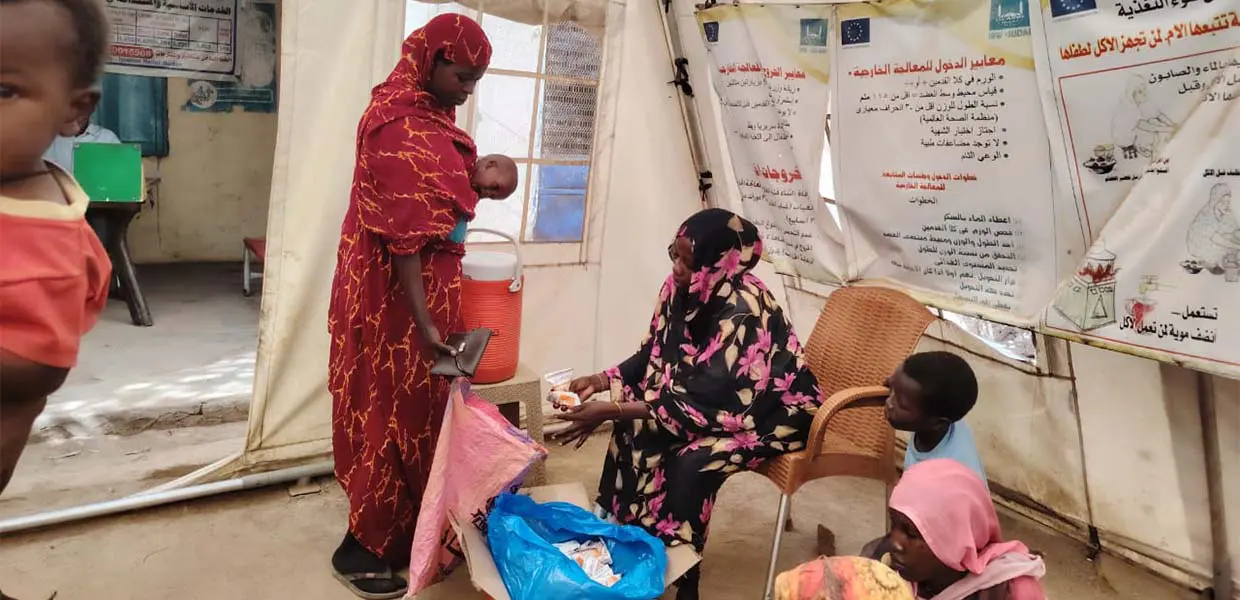
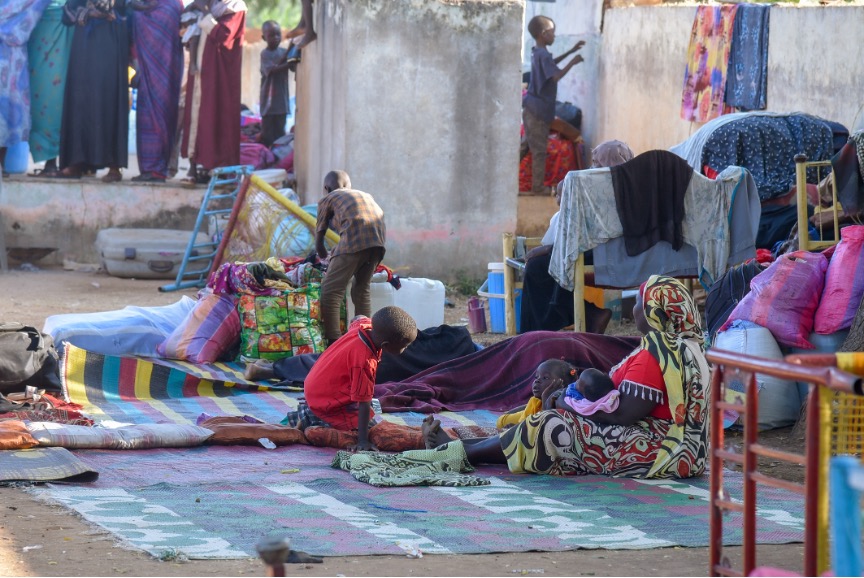
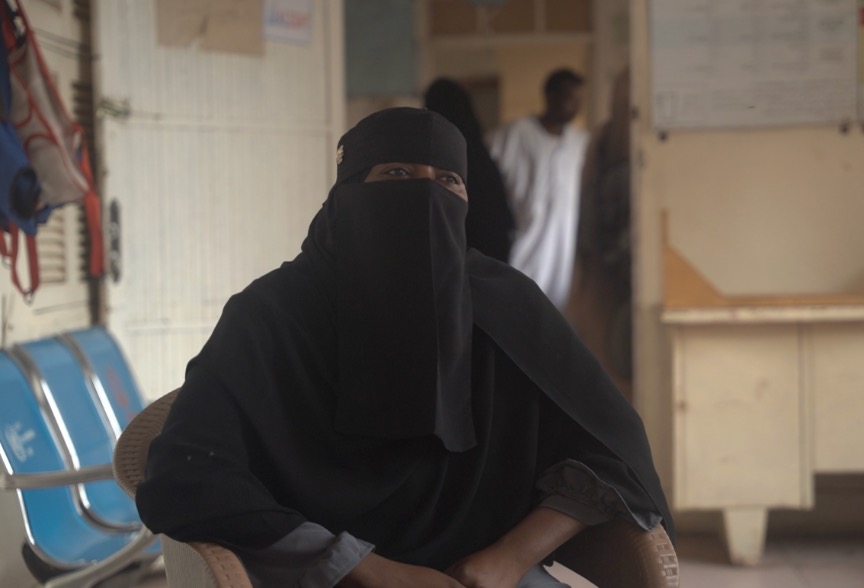
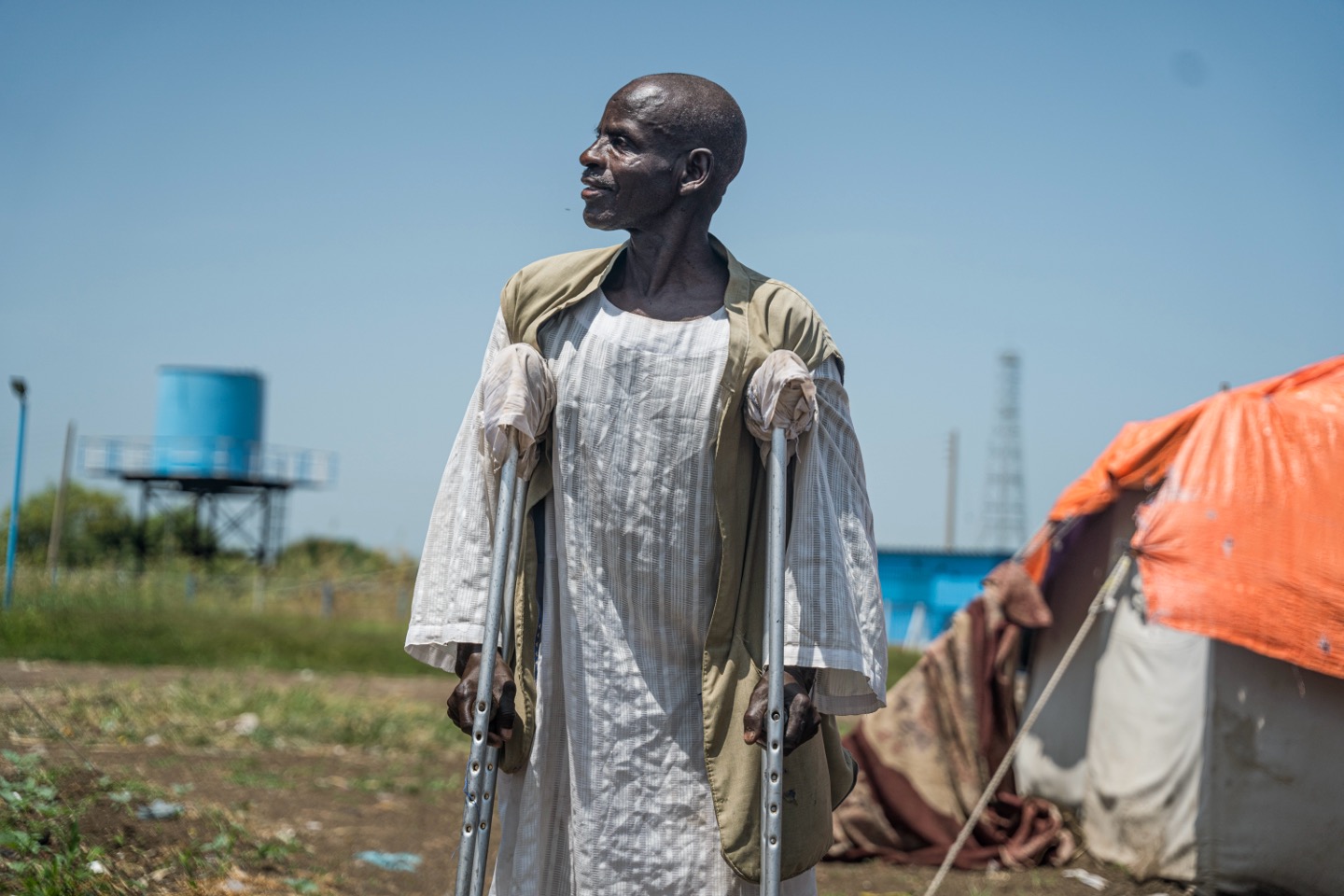
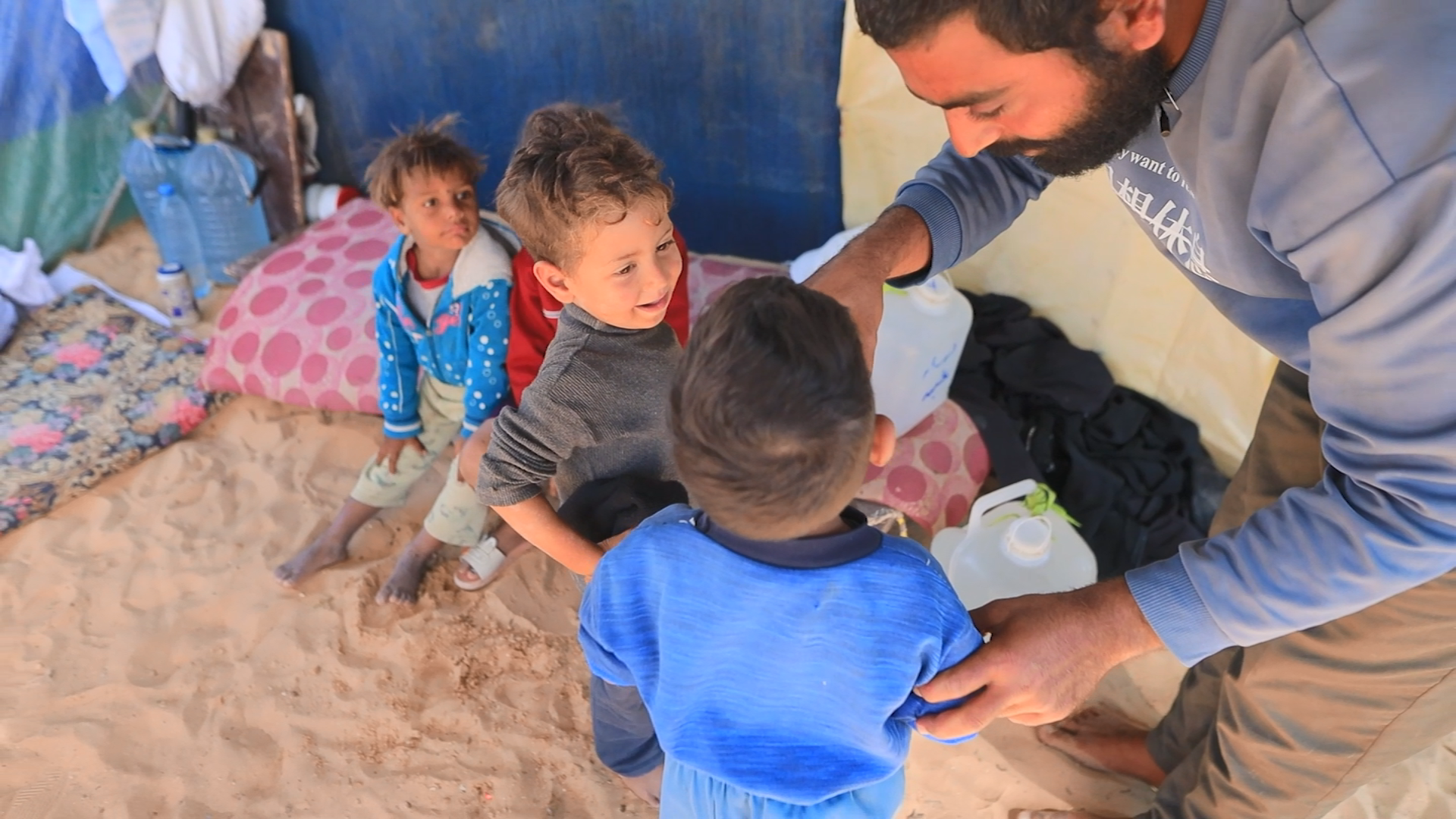
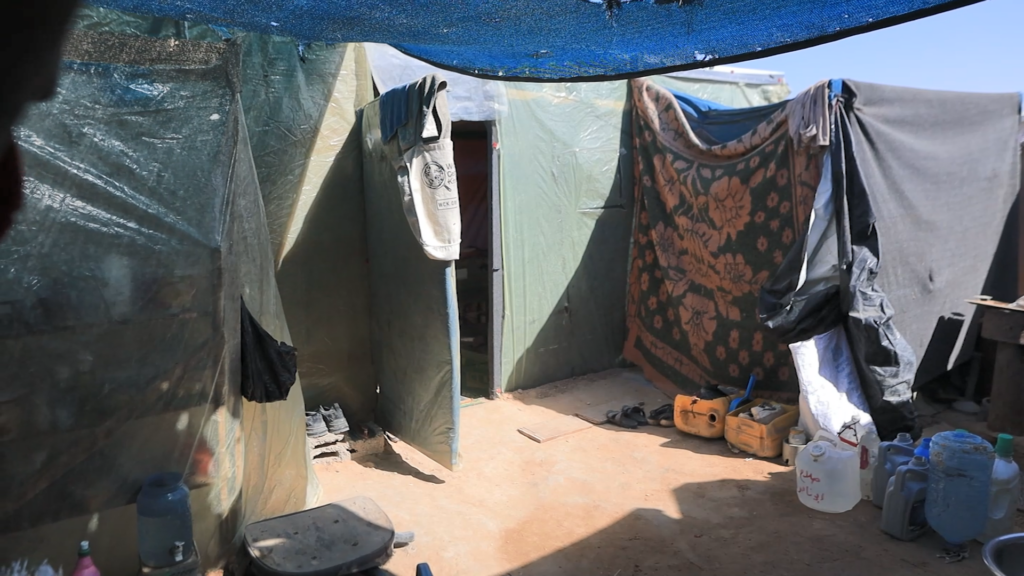
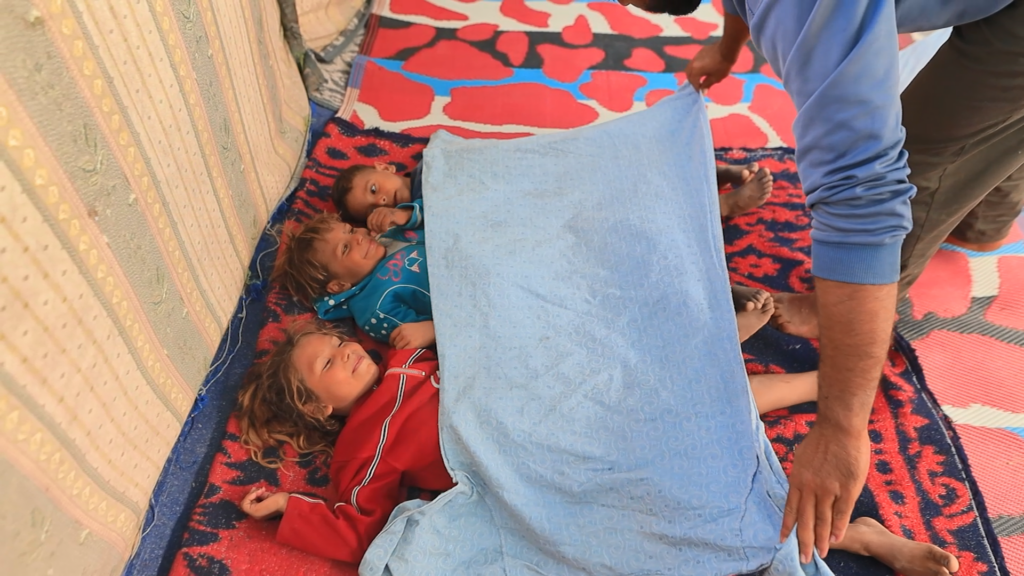
Triplet girls born through Islamic Relief’s maternal healthcare project, which provides rare lifesaving services in besieged Gaza.
Israel’s assault and blockade have turned Gaza into the worst place in the world to give birth. Dozens of babies and infants have starved to death. Where many pregnant women are now too malnourished to stand, and even doctors are facing starvation.
The Israeli blockade has cut off essential supplies, forcing pregnant women to undergo operations without anaesthetics. For nurses to squeeze three or four babies into a single incubator.
Doctors also report a huge increase in miscarriages. Where 28 children are now dying every day1. Moreover, Islamic Relief analysis shows July is now Gaza’s deadliest month since January 20242.
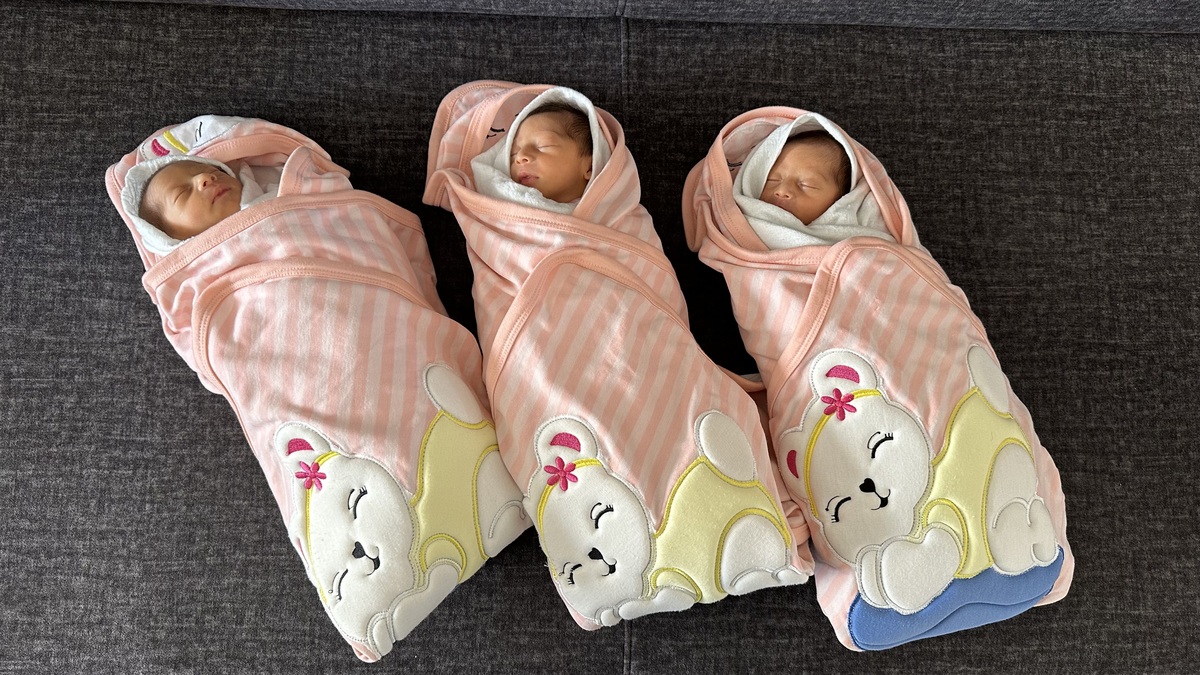
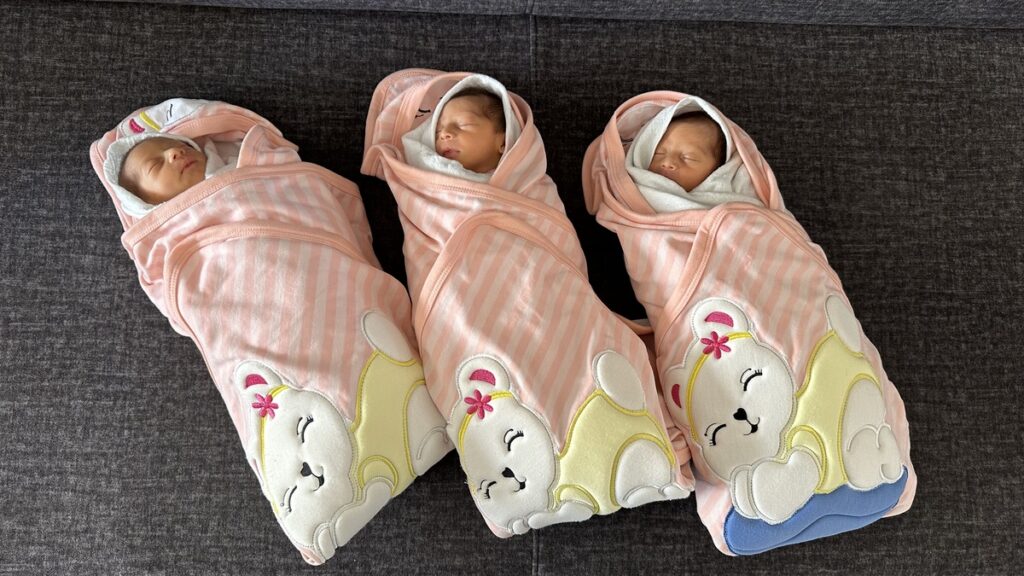
Amid the horrors, an Islamic Relief project to provide pregnant women with maternal care recently delivered triplet girls – Israa, Ayla and Aylol – all born underweight but alive.
Photo: Triplets Israa, Ayla and Aylol born underweight but alive in Gaza.
“They are my miracle. My proof that even in war, life insists on being born.”
During pregnancy, Alaa, 31 was terrified: “There were nights I went to sleep crying, not knowing if my daughters would still be alive in the morning or die. Two of my cousins had miscarriages this year – one lost her baby in the eighth month. I was sure I’d be next.”
Alaa and her family – her husband Louay, 36, and their two children, 7-year-old Alma and 2-year-old Ahmed – have been forcibly displaced three times by the relentless Israeli bombing and military orders demanding that Palestinians leave 88% of Gaza.
One night, the house next door was bombed, so Alaa and her family fled into the dark. “We ran in silence. I held my stomach with both hands and prayed my babies wouldn’t slip away while I escaped death,” she says.
Alaa and her family found shelter in an overcrowded school building. Inside, there was hardly any food, no clean water and no medical care. She became increasingly malnourished, and her hemoglobin dropped to dangerously low levels.
She was dizzy and weak when she met staff from Ajyal Association, one of Islamic Relief’s partner organisations in Gaza. Then, they registered her on our maternal healthcare project, which has so far supported more than 1,080 pregnant women and newborn babies.
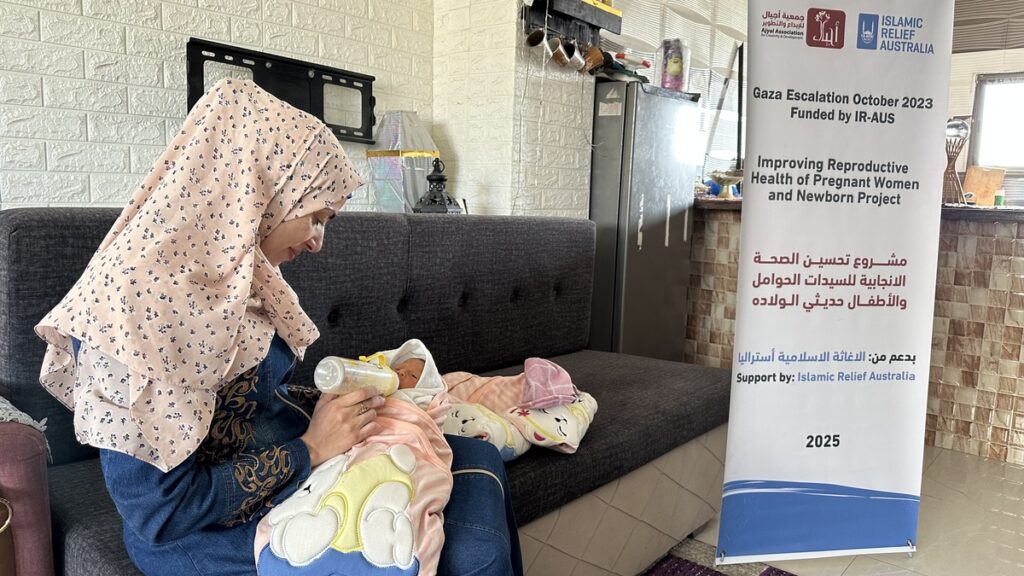
Through this project, Alaa received regular check-ups, blood tests, vitamins, and ultrasound scans at Al Awda hospital, where Islamic Relief has previously provided vital equipment such as incubators that are still being used now.
Photo: Alaa feeding one of her triplets with formula, provided by Islamic Relief and Ajyal Association.
New incubators are among the many medical supplies that are now effectively banned under the Israeli blockade, as well as other vital maternal care equipment, such as ultrasound devices and oxygen pumps, and fuel to keep hospital services running. Most pregnant women in Gaza are now unable to get any pre- or post-natal checks.
Medics at hospitals like Al Awda are risking their lives to keep services going.
The Israeli onslaught has killed more than 1500 health workers and forced two-thirds of primary healthcare centres and half of all hospitals to completely shut down. The rest struggle to keep even partial services functioning. Al Awda has been besieged and hit by Israeli bombs dozens of times, injuring staff and patients and destroying medical supplies and storage facilities.
Alaa says that despite the extreme challenges, she was treated with care and dignity. “The medics didn’t just ask about my babies, they cared about me. They reminded me that my life matters too.”
During one of the checkups, doctors told Alaa she needed an emergency caesarean section, which has become increasingly necessary in Gaza during the crisis. Alaa and her family couldn’t afford it so Islamic Relief covered the costs, as well as the cost of the emergency blood transfusions.
Alaa says, “During the (C-section) operation, I lost a lot of blood. I could feel myself fading. But I heard a cry from one of my daughters.”
That cry brought me back. Without this project, I wouldn’t be here, and neither would they.
“This wasn’t just a medical intervention; it was a rescue mission for four lives.”
The triplets, born in April 2025, were born premature and underweight at 1.8kg (3.9lbs). They are now relatively healthy. But they still remain at risk from the dangers that face all babies and young children in Gaza.
Child malnutrition is rocketing as Israel uses starvation as a weapon of war, blocking humanitarian aid then shooting people trying to get food. Hundreds of thousands of families are now forced into just 12% of Gaza’s territory, with children at greatest risk as diseases spread amid the overcrowding.
Islamic Relief continues to demand that international governments take meaningful action to ensure a ceasefire. To end the Israeli blockade and ensure full, unimpeded humanitarian access. So that children like Israa, Ayla and Aylol can not only survive but have a safe and dignified future.
Islamic Relief has worked in the Occupied Palestinian Territory since 1997. During the current crisis our Palestinian staff and partners have provided vital aid to more than 600,000 people, including food, water, healthcare and education.
In the ongoing crisis, Gaza needs your help
Help us provide urgent medical supplies and other crucial, life-saving support now to families in need by giving with Islamic Relief.
As mass starvation spreads across Gaza, our colleagues and those we serve are wasting away
More than 100 organisations are sounding the alarm to allow in life-saving aid.
As the Israeli government’s siege starves the people of Gaza, aid workers are now joining the same food lines, risking being shot just to feed their families.
With supplies now totally depleted, humanitarian organisations are witnessing their own colleagues and partners waste away before their eyes.
Exactly two months since the Israeli government-controlled scheme, the Gaza Humanitarian Foundation, began operating, more than 100 organisations are sounding the alarm, urging governments to act.
To open all land crossings, restore the full flow of food, clean water, medical supplies, shelter items, and fuel through a principled, UN-led mechanism. To end the siege and agree to a ceasefire now.
“Each morning, the same question echoes across Gaza: Will I eat today?” said one agency representative.
Massacres at food distribution sites in Gaza are occurring near-daily. As of July 13, the UN confirmed 875 Palestinians were killed while seeking food, 201 on aid routes and the rest at distribution points. Thousands more have been injured.
Meanwhile, Israeli forces have forcibly displaced nearly two million exhausted Palestinians with the most recent mass displacement order issued on July 20, confining Palestinians to less than 12% of Gaza.
WFP warns that current conditions make operations untenable. The starvation of civilians as a method of warfare is a war crime.
Just outside Gaza, in warehouses — and even within Gaza itself — tons of food, clean water, medical supplies, shelter items and fuel sit untouched with humanitarian organisations blocked from accessing or delivering them.
The Government of Israel’s restrictions, delays, and fragmentation under its total siege have created chaos, starvation, and death. An aid worker providing psychosocial support spoke of the devastating impact on children: “Children tell their parents they want to go to heaven, because at least heaven has food.”
Doctors report record rates of acute malnutrition, especially among children and older people. Illnesses like acute watery diarrhoea are spreading, markets are empty, waste is piling up, and adults are collapsing on the streets from hunger and dehydration.
Distributions in Gaza average just 28 trucks a day, far from enough for over two million people, many of whom have gone weeks without assistance.
The UN-led humanitarian system has not failed. It has been prevented from functioning.
Humanitarian agencies have the capacity and supplies to respond at scale. But, with access denied, we are blocked from reaching those in need, including our own exhausted and starved teams.
On July 10, the EU and Israel announced steps to scale up aid. But these promises of ‘progress’ ring hollow when there is no real change on the ground.
Every day without a sustained flow means more people dying of preventable illnesses. Children starve while waiting for promises that never arrive.
Palestinians are trapped in a cycle of hope and heartbreak, waiting for assistance and ceasefires, only to wake up to worsening conditions. It is not just physical torment, but psychological.
Survival is dangled like a mirage. The humanitarian system cannot run on false promises. Humanitarians cannot operate on shifting timelines or wait for political commitments that fail to deliver access.
Governments must stop waiting for permission to act. We cannot continue to hope that current arrangements will work.
It is time to take decisive action. Demand an immediate and permanent ceasefire. Lift all bureaucratic and administrative restrictions. Open all land crossings. Ensure access to everyone in all of Gaza. Reject military-controlled distribution models.
Restore a principled, UN-led humanitarian response and continue to fund principled and impartial humanitarian organisations.
States must pursue concrete measures to end the siege, such as halting the transfer of weapons and ammunition.
Piecemeal arrangements and symbolic gestures, like airdrops or flawed aid deals, serve as a smokescreen for inaction.
They cannot replace states’ legal and moral obligations to protect Palestinian civilians and ensure meaningful access at scale.
States can and must save lives before there are none left to save.
More than 100 organisations have signed this statement – click here to see the list of signatories
On World Refugee Day, a mother and her children reveal the crushing reality of displacement: where every day is a battle for water, food, and hope.
The night the bombs came, Neda’a did not have time to gather shoes. She woke her 7 children in the dark, shouting over the explosions. They ran barefoot through streets strewn with broken glass and rubble, the younger ones crying as their feet bled.
Her eldest son, Ahmed, carried his 7-year-old brother Elyas on his back. By dawn, they reached a UN school-turned-shelter. It was the last time Ahmed would see his family.
The next day, he went to buy shoes for his siblings. He never returned.
Now, Neda’a sits on the floor of a crowded classroom that has become their shelter, recounting the moment she learned Ahmed was gone. “We lost our backbone,” she says.
Around her, the walls are cracked from shelling. There is no running water, no privacy, no space to grieve. This is life for Gaza’s displaced. A relentless cycle of survival where death is routine, and the idea of home is reduced to a single question: How do we make it through today?
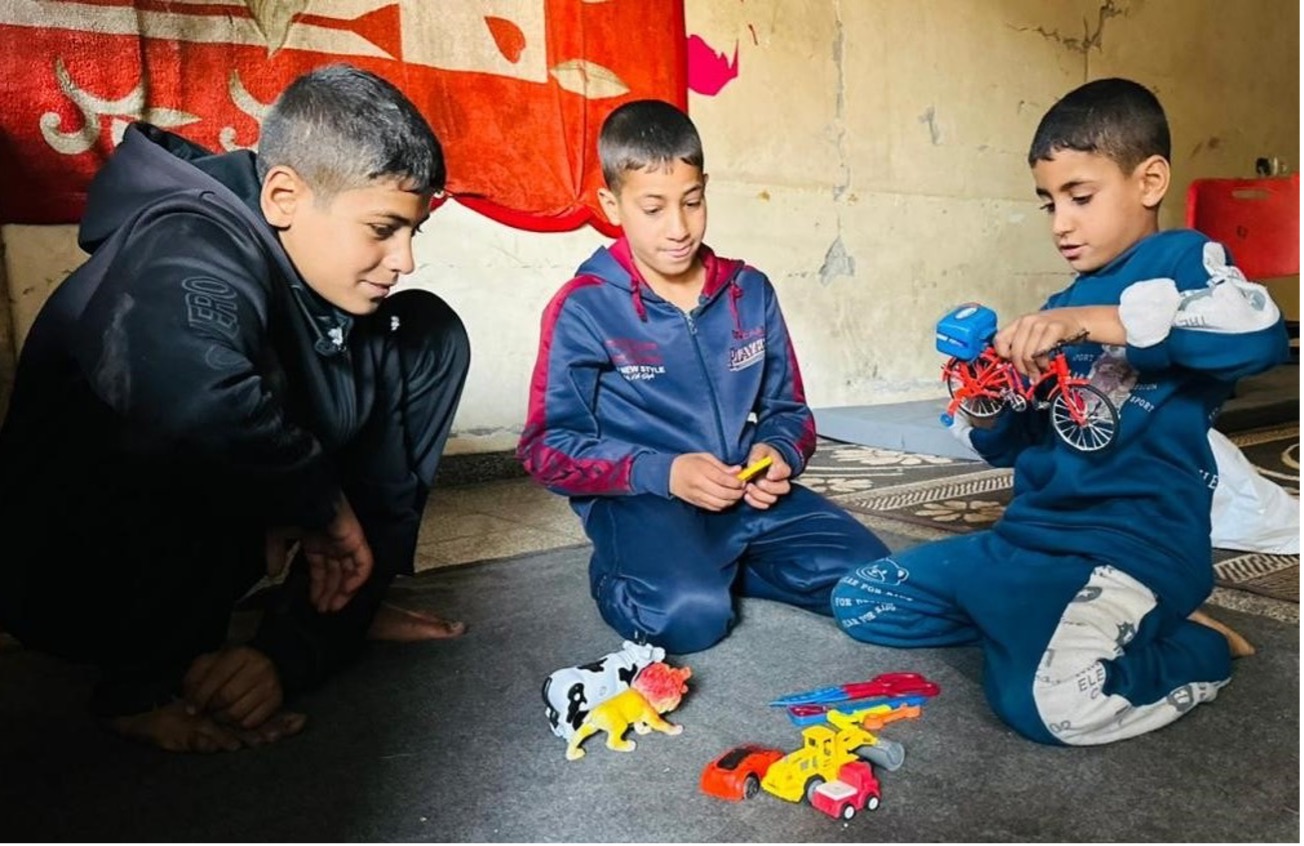
Photo: Neda’a and her familyin a shelter (Gaza)
Fighting for water
This World Refugee Day, 123.2 million people are forcibly displaced worldwide – the highest ever recorded. But displacement is not just a statistic. It’s often a sudden, devastating rupture that overturns entire lives, leaving families scrambling to rebuild amidst chaos.
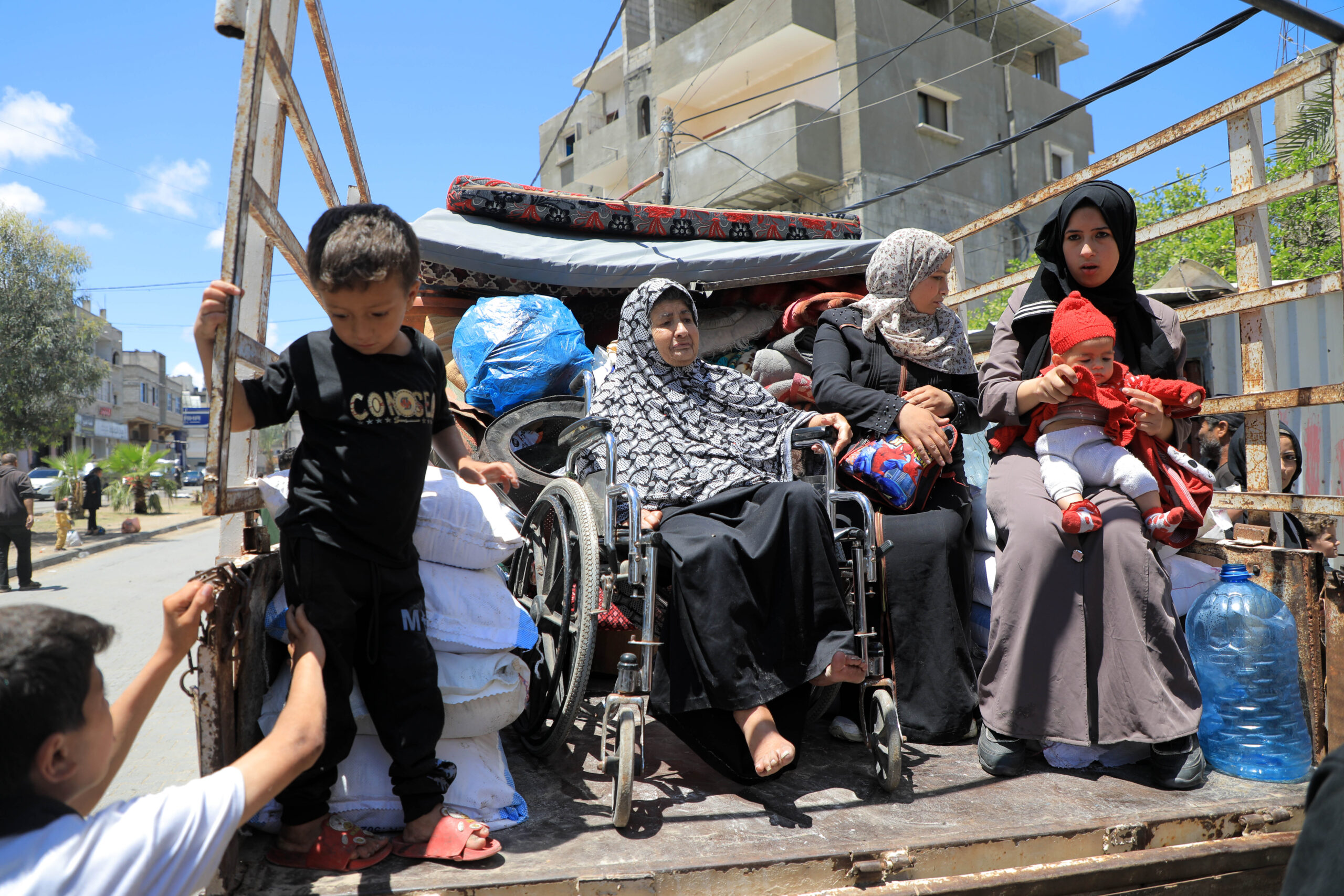
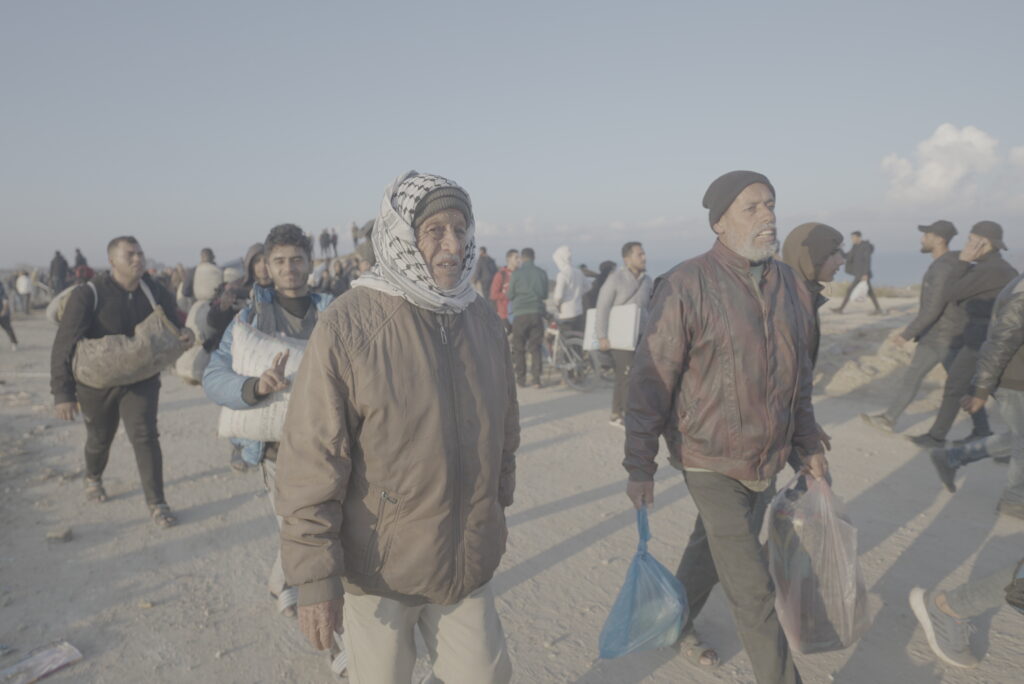
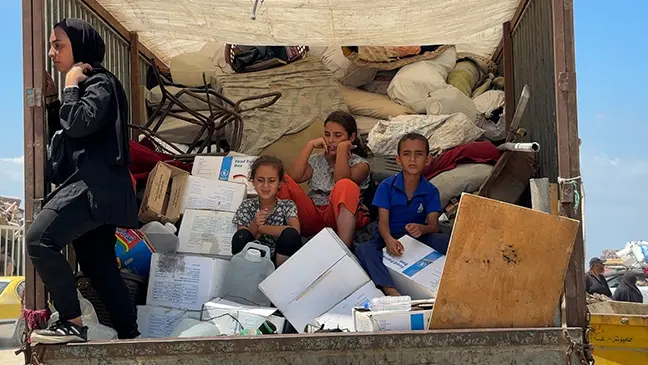
In Gaza, at least 1.9 million people – about 90% of the population – have been forcibly displaced, many of them multiple times. People have fled to try and escape bombs, or have been ordered to leave by the Israeli military. Families sleep in tents, in the skeletons of bombed-out buildings, in hospital corridors where the smell of antiseptic cannot mask the stench of overcrowding.
For Neda’a and her children, displacement means waking before sunrise to join the scramble for water. Mousa, her 12-year-old son, describes the daily ritual. It is the long walk to the well, the fights that break out when the water runs low, the weight of the buckets cutting into his hands as he carries them back. “Before the war, we turned on a tap,” he says. “Now we fight for every drop.”
We have nothing left
Displacement does not end with losing a home. It seeps into every part of life, twisting the ordinary into the unbearable.
For Neda’a’s daughters, it means giving up school to scavenge for firewood, their hands hardened from gathering scraps to burn for cooking. The smoke fills their shelter, making the younger children cough. But there is no gas, no electricity, no other way to eat.
For Mousa, it means bearing the burdens of an adult. To haul water, comfort his siblings when the bombs start again, and try to fill the space left by his older brother.
And for Neda’a, it means waking each morning to the same crushing reality. No money, no safe place, no way to protect her children from the war outside or the despair creeping in.
“I just want to wake up to news that this is over,” she says. “But even if it ends tomorrow, what then? We have nothing left.”
Photo: One of Neda’a’s sons carrying wood among makeshift shelters in Gaza.
Islamic Relief delivers aid in Gaza
While the horror continues, Palestinians have shown incredible resilience. Islamic Relief’s team and local partners in Gaza work tirelessly to provide lifesaving aid, even when they are themselves bombed, displaced and grieving. Over the past 20 months, we’ve cooked millions of hot meals and distributed hygiene kits and emergency cash. Right now, we’re providing aid such as maternal care for pregnant women and cleaning shelters for displaced people to prevent deadly diseases from spreading.
But the need is overwhelming. “We’re not just fighting hunger,” says Program Officer Yasmin Al-Ashy. “We’re fighting the slow death of hope.”
For Neda’a, hope is fragile. She looks at Mousa, now too serious for his age. Ritag, whose hands are rough from gathering wood. Elyas, who is restless every night. She wonders what future awaits them. “I don’t know if they will ever recover from this,” she says.
They desperately need international governments and world leaders to demand an immediate ceasefire and pressure Israel to end its siege.
This World Refugee Day, stand with families like Neda’s. Donate to Islamic Relief’s Palestine emergency appeal to provide lifesaving aid and hope to those who have lost everything. And call on your politicians and governments to demand meaningful political action to end the atrocities.
Today is Nakba Day, an annual day of commemoration. A day of remembrance made especially poignant this year, as we mark over 200 days into ongoing bombardment, displacement, and blockade of Palestinians in Gaza. Here we look at the origins and significance of the day.
What is Nakba Day?
May 15 is Nakba Day. It marks the beginning of the destruction of the Palestinian homeland. The mass displacement in 1948 of the majority of the Palestinian population.
Nakba means ‘catastrophe’ in Arabic. It is the word Palestinians and others use to refer to this historic moment from over 75 years ago. For some, the term is also used to describe the subsequent and ongoing persecution of Palestinians and loss of territory.
In 1998, Nakba Day was officially inaugurated by Palestinian leader Yasser Arafat. But the date had been marked with protests of remembrance and resistance since 1949.
What happened in May 1948?
May 1948 saw the start of a mass displacement, which forced over 700,000 Palestinians out of their homes.
Over the course of the 1948 Palestine War, Israeli forces destroyed more than 530 Palestinian villages and carried out several massacres, killing some 15,000 people. This war lasted until January 1949.
78% of Palestine’s historic territory was captured and used to establish what is now Israel. The remaining land was divided into today’s Occupied West Bank and Gaza Strip.
Following Israeli victory in the war, abandoned homes were given to Jewish settlers. The descendants of many of the Palestinians who fled in 1948 remain displaced to this day, both within Palestine and around the world. Today, there are now some 6 million Palestinian refugees.
What led up to this?
From 1920 to May 1948, Britain ruled over a territory called Mandatory Palestine under an agreement by the League of Nations – a precursor to the United Nations.
Following the end of World War II and the Holocaust, the British announced their intention to end the mandate. Then, the newly created United Nations began seeking to redraw the boundaries of Palestine to allow for the creation of a Jewish state.
None of the various partition plans suggested received support from the Palestinians or the Arab League. However, when the mandate ended, the establishment of the state of Israel was declared. This triggered the 1948 Palestine War, also known as the 1948 Arab-Israeli War.
What happened after the Nakba?
In the 76 years since the Nakba, the Israeli state has continued to encroach on Palestinian territory. They displace families and violate international law in the process.
Among the major instances of this was the Six-Day War of 1967. This war saw Israeli forces occupy all of historic Palestine, including Gaza and the West Bank, expelling 300,000 people from their homes.
In the decades since, tensions in the region have remained high, with relatively frequent flare-ups.
However, the scale of the current escalation is truly unprecedented. Since October 7th, 2023, over 52,700 people have been killed. Many more have been displaced, among them people who moved to Gaza after the Nakba. A reported 450,000 people are said to have fled Rafah over the past week alone.
What was Palestine like before the Nakba?
Immediately before the Nakba, Palestine was administered by the British. The establishment of Mandatory Palestine took place in a period of intense European colonial expansion. It followed the expulsion of Ottoman forces from the Levant in the Arab Revolt (1916-18). Prior to the Mandatory period, Palestine had been part of the Ottoman Empire for 400 years.
During the Mandatory period, Palestine became a cohesive political unit with Jerusalem as its capital. The period saw advances in bureaucracy, infrastructure, and technology. It is also considered to have laid the groundwork for the establishment of Israel in part by promoting Jewish immigration and depriving Palestinians of self-rule.
What are the long-term consequences of the Nakba?
The Nakba resulted in the world’s longest-running unresolved refugee crisis. Some 6 million Palestinian refugees reside within Gaza and the West Bank, as well as in neighbouring countries such as Jordan and Lebanon. In some cases, Palestinian refugees in the Middle East have endured wars and further displacement in their host countries.
The enormous loss of territory that began with the Nakba continues to affect the everyday lives of Palestinians. Many valuable resources are located on land now claimed by Israel. This prevents Palestinians from accessing them and potentially growing their economy.
The Israeli occupation, which has been ruled illegal under international law, impacts every aspect of Palestinians’ lives. It denies their basic human rights, undermines their dignity and entrenches poverty. Restricts movement, trade, and access to water, services, farmland, markets, families and religious sites. Cuts Palestinians in Gaza, East Jerusalem and the West Bank off from each other.
Gaza has been under Israeli blockade since 2007. The blockade restricts the movement of goods and people in and out of the Strip. It devastates the economy and people’s futures and disrupts humanitarian efforts.
For years, thousands of essential items have been restricted from entering Gaza because Israel considers them to have a ‘dual use’. This means items that could potentially be used for both civilian and military purposes. In practice, this can include almost anything that people need—things like fuel, water filters, solar pumps and surgical scissors have been refused entry.
Since October 2023, Israel has tightened the blockade even further, preventing many more vital items from entering. On 2 March 2025, Israel completely closed all crossings into Gaza and stopped all food, medicine, fuel, and other lifesaving supplies from entering.
How is Nakba Day commemorated?
For many, Nakba Day is an opportunity to draw attention to the persecution of Palestinians, historic and ongoing. It is a struggle that is still very much ongoing, particularly in years such as this, when Nakba Day falls during an escalation in the crisis.
The day is also a time to celebrate Palestine’s rich culture and history outside a narrative of suffering, which for many defines the territory and its people. Palestinians are not only resilient. They are talented writers and dancers, gifted embroiderers and generous hosts.
In 2023, for the first time in history, the United Nations marked Nakba Day. The global body held an event to “serve as a reminder of the historic injustice suffered by the Palestinian people,” as well as to highlight the ongoing refugee crisis. The event included speeches, music, photos and personal testimonies.
More than 30 countries voted against the resolution to commemorate Nakba Day. This reflects the inability of many states to balance the acknowledgement of Palestinian suffering with their own support of Israel. Israel often opposes official and unofficial commemorations of Nakba Day, describing them as an obstacle to peace in the region.
Why is Islamic Relief talking about Nakba Day?
Islamic Relief has been working in the Occupied Palestinian Territory since 1997, supporting Palestinians in need through emergency response efforts and development programming.
Many of our staff and local partners have become displaced since October 2023 and are facing the same challenges as the communities we support. Our office in Gaza is among the almost 900,000 buildings destroyed or damaged by the ongoing bombing campaign.
Despite immense challenges, we continue to support vulnerable people in Gaza. Whenever and wherever we can, we provide them with food and water distributions, orphan sponsorship and other assistance. This support is a lifeline for thousands of families in a time of desperate need.
However, our work and the work of many global and local humanitarian organisations is being curtailed as a direct result of the ongoing violence and the tightened blockade. Every minute that supplies are prevented from entering Gaza puts more lives at risk.
Islamic Relief is taking the opportunity presented by Nakba Day to remind donors, decision-makers and the general public, of the longstanding struggle and suffering of the Palestinian people. Their suffering is not consigned to the history books: it is a deepening and devastating humanitarian crisis unfolding before the eyes of the world. We are calling on international governments to demand a ceasefire, an end to the siege and full humanitarian access. As we near 600 days of the current escalation, families are still being separated, starved and killed. International governments must ensure that Palestinians can stay on their land.
This is the present-day reality for everyone in Gaza, but whether it remains their future too depends on the decisions made by world leaders and international bodies today. Please help Islamic Relief to continue supporting families in desperate need in Gaza.
In the ongoing crisis, Gaza needs your help
Help us provide urgent medical supplies, food and other crucial, life-saving aid now to families in need by giving with Islamic Relief.
Gaza is in the grip of starvation as nearly 2 months of Israel’s total closure have left markets empty, children malnourished, and famine conditions spreading.
The humanitarian response is now at a critical breaking point unless supplies are urgently allowed in.
Israel’s illegal and immoral shutdown of all supply routes into Gaza is a deliberate campaign to starve civilians.
Islamic Relief staff on the ground say the situation is now the worst we have ever seen there. Many children are going whole days without eating. Aid trucks packed with food are cruelly blocked from entering just a few miles away.
Supplies in Gaza at a Critical Low
Meat, fruit, eggs, and dairy products are almost impossible to find. Likewise, the scarcity of vegetables means that prices are up to 15 times more expensive than before the crisis. These come at a time when few people have jobs or access to cash.
Almost 18 months of Israeli attacks have destroyed Gaza’s ability to feed itself. Most agricultural land, greenhouses, and fishing boats have been destroyed, and most cattle have been killed. This has left all civilians in Gaza reliant on humanitarian aid. But none have been allowed to enter since 2 March.
A recent survey of 43 aid agencies in Gaza found that 95% have been forced to reduce or suspend activities due to the total closure and the relentless, indiscriminate bombing. Attacks that have killed more than 51,000 people and targeted hospitals and shelters. Our staff hear horrific daily accounts of families burnt to death in their tents and children maimed by the bombing.
Islamic Relief on the Ground
Islamic Relief staff and partners are doing everything we possibly can to keep aid flowing. But even our own response has been severely impacted.
It is becoming increasingly difficult to keep providing food as supplies run out. Over the past week we have been working with the UN World Food Programme (WFP) to distribute high-energy biscuits, date bars and vegetable oil to more than 7,000 people a day. But it is nowhere near enough and no substitute for nutritious meals.
Islamic Relief also continues to provide other life-saving assistance. We are carrying out daily cleaning of more than 60 shelters for displaced families. To help stop the spread of diseases in the overcrowded and desperate conditions.
Hundreds of thousands of people have yet again been forced from their homes by Israeli military orders in recent weeks, herded into ever-shrinking areas. Zones where there is no clean water, no functioning sanitation and no safety.
Israel has now declared almost 70% of Gaza as inaccessible to civilians through a combination of forced displacement orders and military no-go zones.
People affected by malnutrition and disease are unable to access decent healthcare and treatment. As the Israeli closure also blocks all medical supplies from entering. Fuel is also blocked, forcing generators needed for life-saving operations to shut down.
There needs to be a permanent ceasefire in Gaza
There must be a renewed and lasting ceasefire. Starving civilians and denying them humanitarian aid is in clear violation of international law, but the world continues to turn a blind eye. The international community’s lack of action makes them complicit in Israel’s use of starvation as a weapon of war.
Statements of concern are meaningless without genuine action, such as ending arms sales. Governments must put real political and economic pressure on Israel to abide by international law, reopen crossings and allow humanitarian aid and commercial supplies into Gaza without any further delay.
Donia currently lives with her 2 children in a camp for displaced people in Al-Baraka, Deir Al Balah. She is originally from northern Gaza but has been displaced to the south following the escalation in Israeli attacks.
The people of Gaza have endured more than 1 year of intense suffering and relentless attacks. An astonishing 1.9 million people – 9 out of 10 people – have been displaced, often multiple times, from their homes and so-called safe zones since October 2023.
Now, they must face a second winter far from their homes, and with safety and warmth long forgotten.
A new type of winter
“This winter is different from all past winters; it will be so harsh on everyone due to continued displacement,” Donia says.
She describes trying to survive the worsening weather while living in makeshift tents with no real protection from the elements. “When it rained, we were drenched inside our tent. I have just 1 cover and a mattress and they are both full of rain. We felt cold and my little daughter didn’t have any warm clothes. We didn’t know where to go.”
Many displaced Palestinians live in makeshift tents which provide little protection from the elements
Surviving the cold in fragile tents
Winters in Gaza can be challenging, with temperatures sometimes dropping to 0°C. Many Palestinian families fled their homes with nothing but the clothes on their backs, and have lost more and more belongings in each subsequent upheaval, leaving them with few resources to combat the cold.
Intesar describes how her family of 7 is struggling without these necessities.
“We do not even have [winter] clothes. My children wear their summer clothes and put jackets over them. At night they sleep wearing sweaters to avoid feeling cold,” the 35-year-old says.
Children huddle together under a single blanket, trying to stay warm
3 children share a single blanket between them, and the family tries to huddle together at night to keep warm, but it is not enough to keep out the cold.
Whoever saves a life has saved all humanity
Islamic Relief’s annual Winterisation Program provides blankets, fuel and warm clothing to families in need. For many, this can be the difference between life and death. God reminds us in the Qur’an, “whoever saves a life, it will be as if they saved all of humanity.”
Last winter, we provided this vital support to 475,500 people across 18 countries.
For Palestinians, receiving such aid this winter means that at least they need not worry that they will die from the cold.
This year, we plan to continue supporting families in Gaza, while extending the program to reach even more countries than before. With your support, Islamic Relief can be a lifeline to even more people in need.
Please help us protect families from the worst of winter. Donate to our Winter Appeal now.
Keep someone warm this winter appeal
This winter, you can be a lifeline for thousands of families. Give to our Winter Appeal and save lives.
As the recent escalation in Gaza, Palestine reached the one-year mark, approximately 322 aid workers and 986 health workers have been killed among the 43,204 deaths.
We are relieved that, so far, no Islamic Relief staff have been injured or killed. However, all Islamic Relief staff have become displaced, many repeatedly. They are affected in the same ways as the rest of the people of Gaza.
Several staff have lost family members in the bombardment since October 2023.
Amid the dire situation, one of our aid workers in Gaza* began documenting his experiences whilst under siege alongside his wife and two young children.
Here, we explore the challenges of providing aid in Gaza through his eyes, providing an insight into the firsthand experience of the violence and suffering due to Israel’s blockade in Gaza.
Providing aid in Gaza among bombing and violence
For humanitarian workers, one of the main challenges is trying to keep safe when there is nowhere to seek safety.
Only days into the escalation, our colleague explained: “Moving from place to place is very dangerous – ambulances and police cars are the only vehicles in the streets when I look out my window. I am sometimes afraid to even look outside,” he said.
Humanitarian workers trying to travel to other parts of Gaza to help those in need know it could be a one-way trip. They can only hope they will be able to come back to their families.
An Islamic Relief aid worker in Gaza.
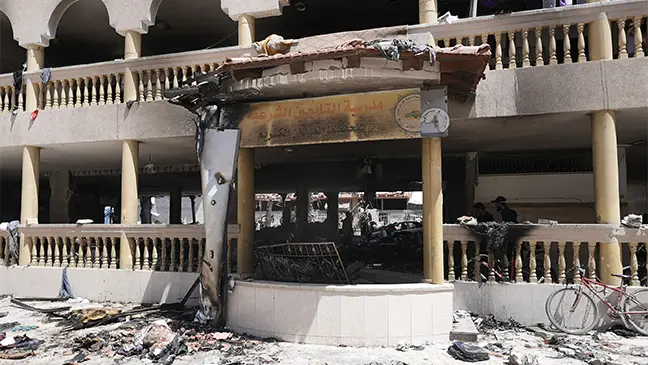
In August 2024, Israel targeted a space for prayer at Al-Tabeen School, where hundreds of displaced families had been sheltering.
Photo: Al-Tabaeen school, previously used as a shelter during the escalations, attacked in August 2024, killing at least 80 Palestinians.
This incident shook our colleague’s team. “We used to deliver hot meals to that place every day. It was home to hundreds of displaced families,” his fellow team member told him. “Any one of our teammates could have been among those who passed away.”
Our colleague explained his fears for his own life as he continues providing aid for the people of Gaza: “Every day I go to work thinking an airstrike could hit nearby. I went to meet with displaced families at one of the schools that have been turned into shelters and I was so afraid that something would happen while I was there, especially as targeting schools is the norm these days.
“I can’t imagine why on Earth a school, mosque, or hospital could be seen as a target.”
Palestinians live a lifetime of suffering
The people of Palestine have lived through many massacres and displacement orders, even before the escalation.
Our colleague recalled how he had witnessed 2 intifada, tens of invasions, and countless escalations at the mere age of 40.
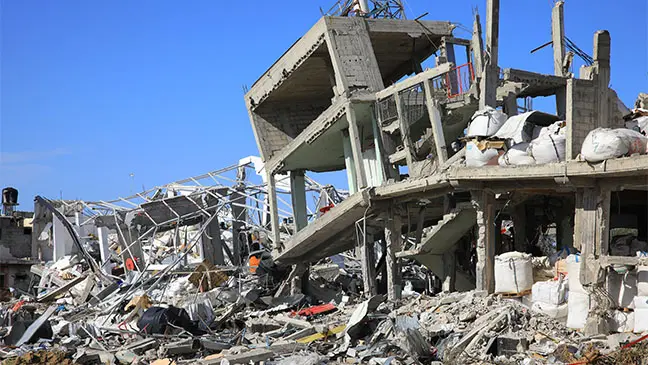
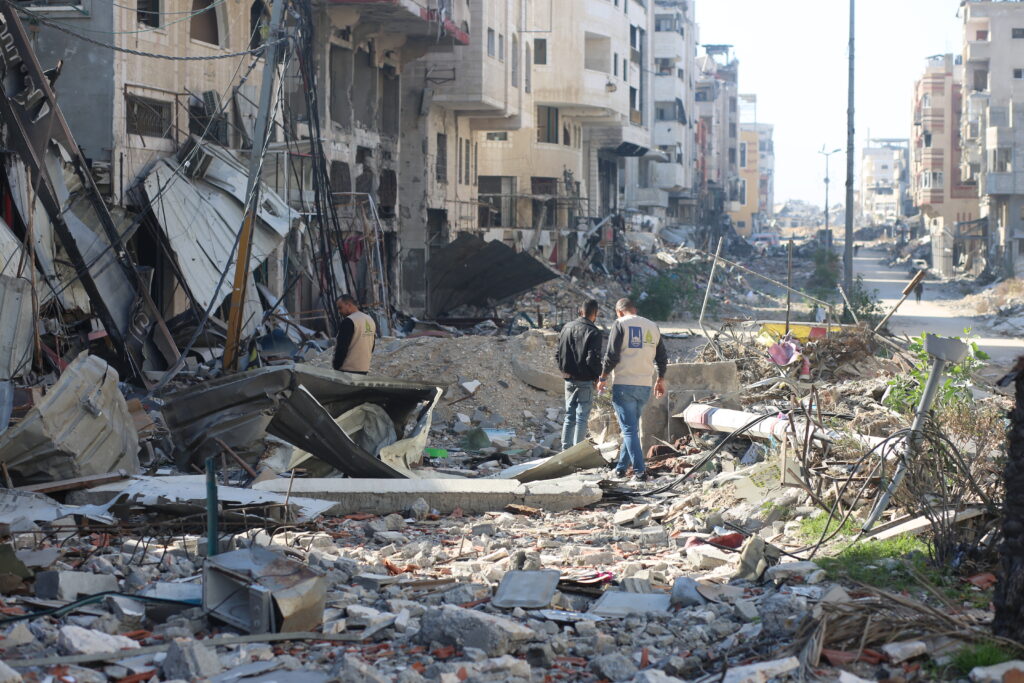
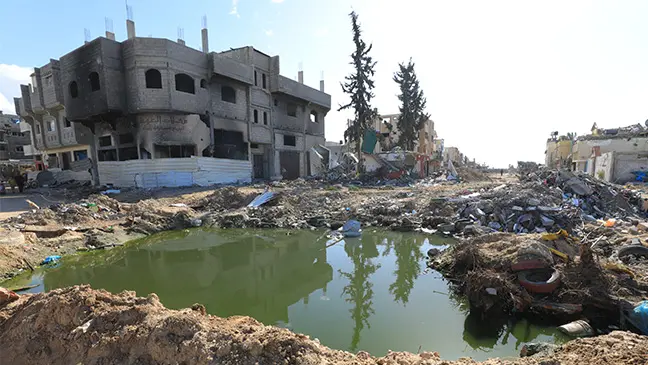
Photo: Buildings left partially standing amongst rubble in Gaza, February 2024.
“We have lived the hardest life,” he explained. “I have faced obstacles to travelling, to being accepted by the countries of the world, and to realising even my basic human rights.”
This struggle is even experienced during childhood: “My kids – 8 and 6 years old – started their lives amid explosions and bombardment. Their concept of the world has developed under fire and airstrikes. They always ask why we are living like this. Every time they ask, I feel a tide of emotion rising up inside me.”
Daily Life in Gaza: Being helpless in the face of death
Despite the obstacles they face daily, our teams have provided nearly 2.3 million medical items to the people of Gaza since last October, as well as healthcare services for more than 9,900 people.
But as the escalation has left 19 out of 36 healthcare facilities out of service or destroyed, access to medical care is among the many challenges for the people of Gaza.
Our teams on the ground are doing everything to provide aid and medical care amid the ongoing bombardment. However, there are times when the situation becomes helpless.
Our colleague recalled speaking with a fellow Islamic Relief aid worker, who had been working on a project which provided incubators for sick newborn babies. With depleting resources due to the escalation, these are now “the same babies who are now being left to die, without power to run their incubators.”
“We are being deprived of everything. I think, if they could, they would even keep oxygen from us,” he said.
Reflecting on the situation, his colleague said: “I can’t understand what is going on. We gave the incubators to Al Shifa Hospital to save the lives of newborn babies. Now, the whole world is watching the babies being slowly killed, live on television. I feel so helpless.”
Witnessing communities being destroyed
After returning to his old high school, which now serves as a makeshift shelter, our colleague took part in a distribution around July 2024. He reported on the dire living conditions that families faced.
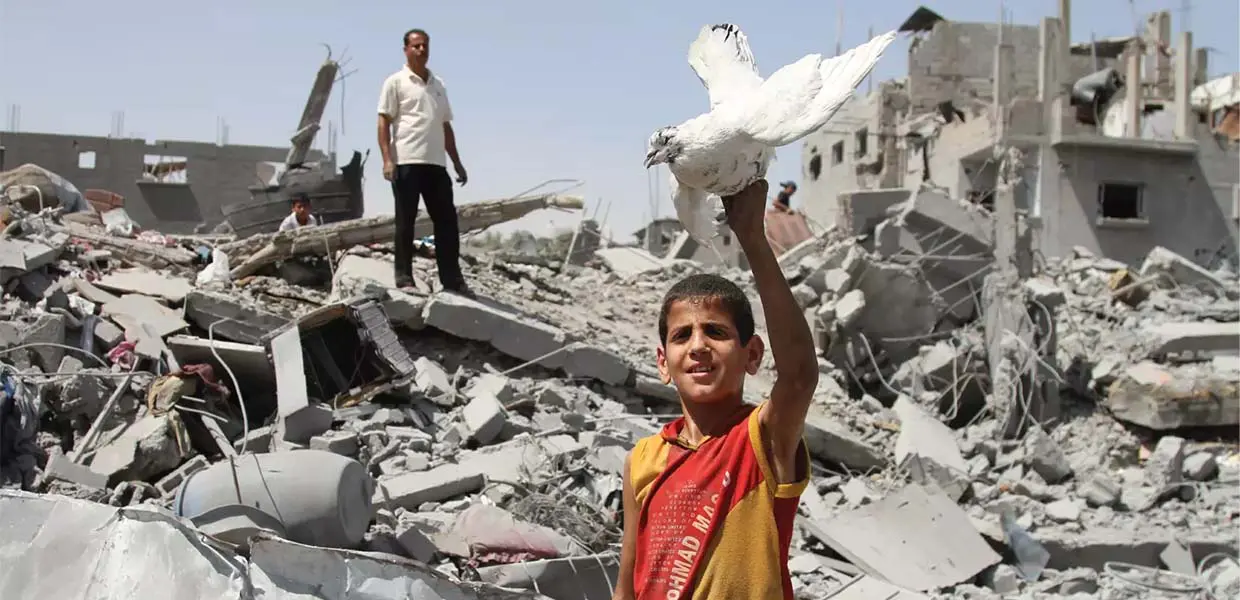
“I could only watch as we passed scenes of misery and suffering all around,” he said. “The beautiful places where I used to live had turned into a dystopian setting with darkness and rubble everywhere.
The streets are filled with trash. Trucks are no longer collecting rubbish because there is no fuel. I could see piles of it everywhere, especially near shelters and tents. There were also ponds of sewage and grey water near the camps.
An Islamic Relief aid worker in Gaza.
The 2-hour field visit was a mere snapshot of the extent of the suffering, transforming a place that once held memories of his school days, to a shelter housing the most vulnerable.
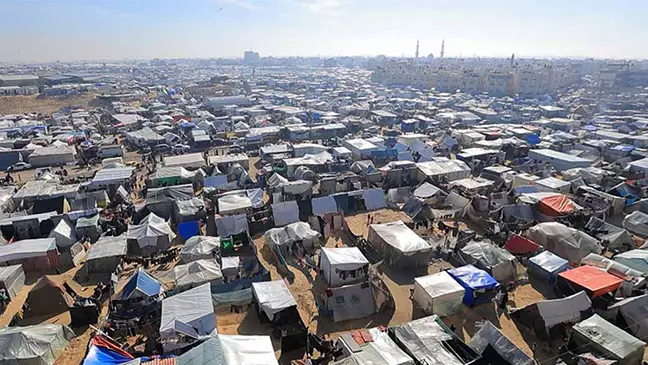
Photo: An aerial view of Internally Displaced Person (IDP) camps in Gaza.
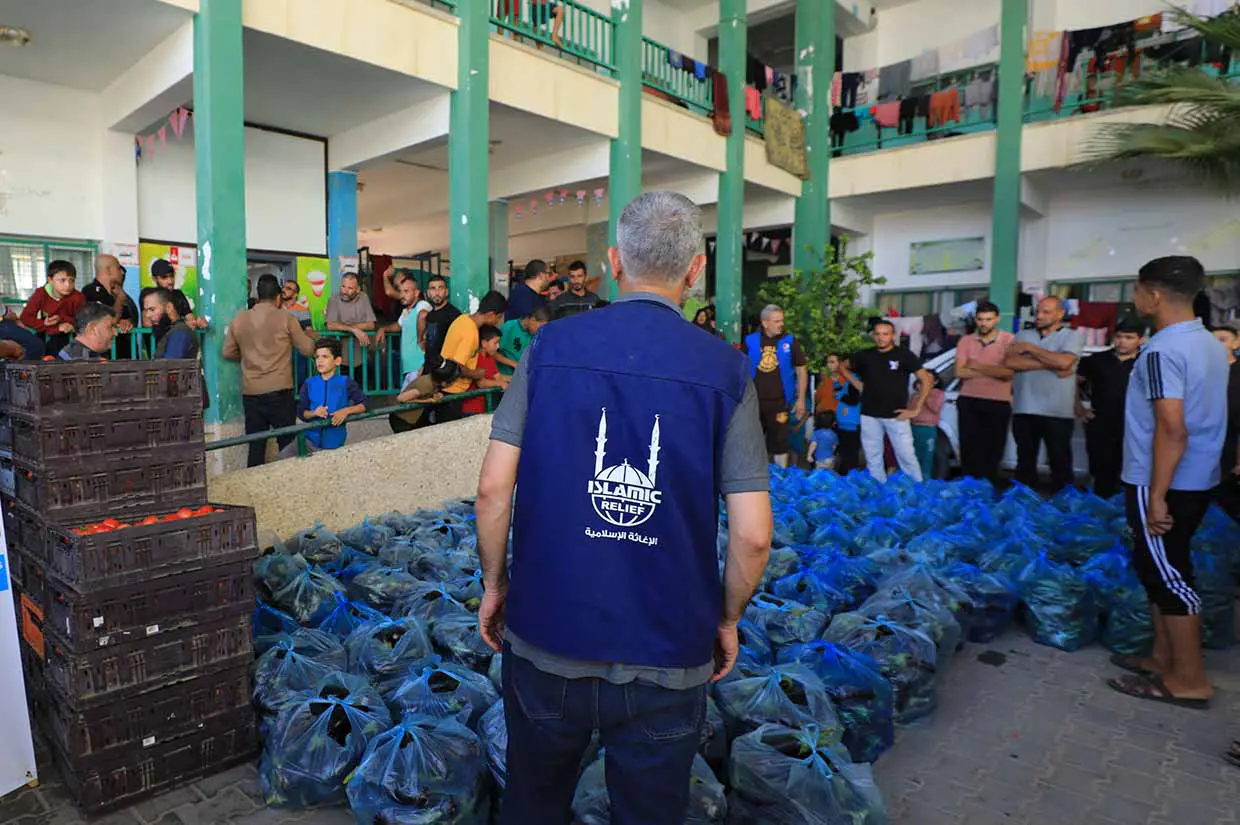
“Our team was delivering vegetables at the school-turned-shelter. A man told me that it had been a long time since he’d been able to get any vegetables, and he was overwhelmed knowing he’d be bringing some back to his family.
“These people used to get good food for their families, but now it’s a struggle to even get some vegetables,” he reflected.
Living in this hell is indescribable. It is a burden that makes it difficult to even breathe. It is a punishment without reason. It is a violation of all our rights and of our humanity. Humanity, to me, is becoming something questionable.
An Islamic Relief aid worker in Gaza.
The struggle for water
Despite being a major part of our teams providing clean water to over 250,000 people, our aid workers are struggling for basic provisions, like most of the people in Gaza.
In October last year, our colleague explained that access to water started becoming scarce. “Most of us are at the point where we don’t care if the water is clean or not, we’re lucky to have any at all,” he said.
Photo: Water in Gaza has become scarce, as the escalation leaves rubble behind and pollutes water sources.
“Families are now taking plastic gallon containers out with them in search of water,” he said. “We are flushing the toilet only 2 times a day, in the morning and at night, and we’re eating less food to avoid going to the toilet as regularly.
“We wash for prayers only once or twice. My mum decided that only the adults can use water for this, the children will pray after performing tayammum [ritual cleansing without water].”
Lack of food
Our teams in Gaza have distributed more than 42 million hot meals to those in need, but they are no strangers to feeling the effects of hunger and increased cost of living.
In many of his accounts, our colleague speaks of not being able to provide food for his family – “not because I don’t have money, but because there is no food” he explains. “The markets are empty. I can’t explain that to my children. Not even to my cat.”
“Most of our diet is canned food. My daughter often has stomachache and pain due to poor food, while my son only has one meal a day, so he is hungry most of the time,” he said in one account.
“All around me, I notice people becoming much thinner,” another account stated.
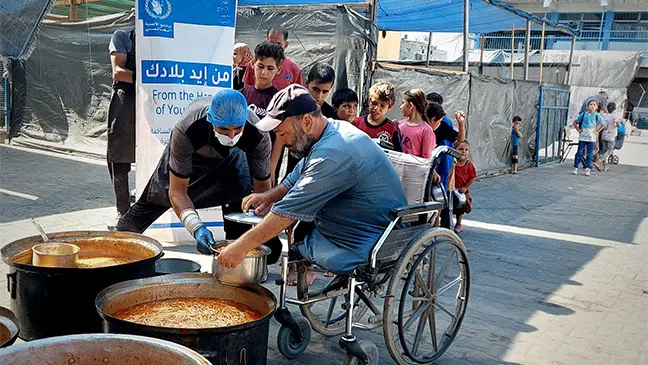
Photo: Islamic Relief prepared and distributed hot meals for vulnerable adults and children in August 2024.
“Children are suffering the most, especially those that need special formula or flour. My family managed to ration our consumption of bread, water… everything. But I noticed my kids’ skin getting yellowish and pale from the poor diet.”
Displacement and loss
Up to 1.9 million people have been displaced in Gaza in the last year. These figures also include our aid workers. They face evacuation orders from their homes or places of refuge multiple times and with nowhere safe to go.
Photo: Children and families faced displacement in Hamad, Khan Younis, in August 2024.
After fleeing his family home in October 2023, our colleague took shelter in his mother’s house in the south. His was among countless other families. His childhood home became a shelter for many of them for 10 months during the escalation.
But Israel announced more evacuation orders in August 2024. Leading his family to uproot their lives and, once again, in search for safety.
Talking about the sense of panic as they lost their place of shelter once again, he explained:
I do not know what to do or where to go. If we leave this house, my family will have to live on the street. How can I let my wife and children sleep on the street?
An Islamic Relief aid worker in Gaza.
These are not only houses that they leave behind. They are homes where they grew up, created memories, and had lasting legacies.
“I look at my father’s grapevine, which he planted when I was only 10 years old and lovingly tended until his death 2 years ago. I struggle to grasp leaving behind this 30-year-old vine, a living reminder of my dear father that has special meaning for all my family,” our colleague explained.
“Today, my little boy asked if the Israeli army will destroy it, so even though the grapes are not fully ripe, I decided we should harvest them. They are ours. We are not leaving them behind.”
Gaza: More than one year on
Nobody is truly safe in Gaza right now. This is the deadliest violence against humanitarian workers that the world has seen in many years.
Our colleague explains:
As an adult who has lived through tens of escalations, I feel terrified. I feel this time we might not be able to survive.
An Islamic Relief aid worker in Gaza.
These accounts are only a mere snapshot of the suffering that aid workers in Gaza are facing. We cannot begin to imagine the extent of the challenges that they face.
We are doing all we can to support our colleagues in Gaza at this time.
Following more than a year of massacre and misery, our heroic teams are still on the ground and serving their community. Thanks to the generosity of our donors and supporters, we are continuing to provide relief to the people of Gaza.
View our recent one year on feedback report to discover how your donations are supporting the people of Gaza.
*These extracts are anonymised to protect the safety and security of our colleague.
Gaza: One Year On Report
Read more in our new report A year of massacre and misery: Israel’s nightmare campaign against Palestinian families in Gaza.
Gaza: One Years of Atrocities, held in Sydney, Brisbane, and Melbourne, were events like no other. Brother Ayman Abdelhady, Marketing Lead at Islamic Relief Australia, shares the journey of hope seen by our team in organising these events. And how they changed both our lives and the lives of those in need.
When I think back on the last few weeks, what strikes me most is the deep sense of unity and purpose that carried each one of us through “Gaza: One Year of Atrocities.”
These events weren’t just gatherings. They were the result of a community’s shared determination. To stand with our brothers and sisters in Gaza. To relieve them from suffering. And to give them hope.
Organising events across Sydney, Melbourne, and Brisbane taught me something more profound than I could ever imagine. For the incredible impact of this mission didn’t just come with the result. But it was also felt within the tireless work done behind the scenes by the many people who made it possible.
I want to share with you, their stories. For they are the real heroes behind this journey of hope and relief.
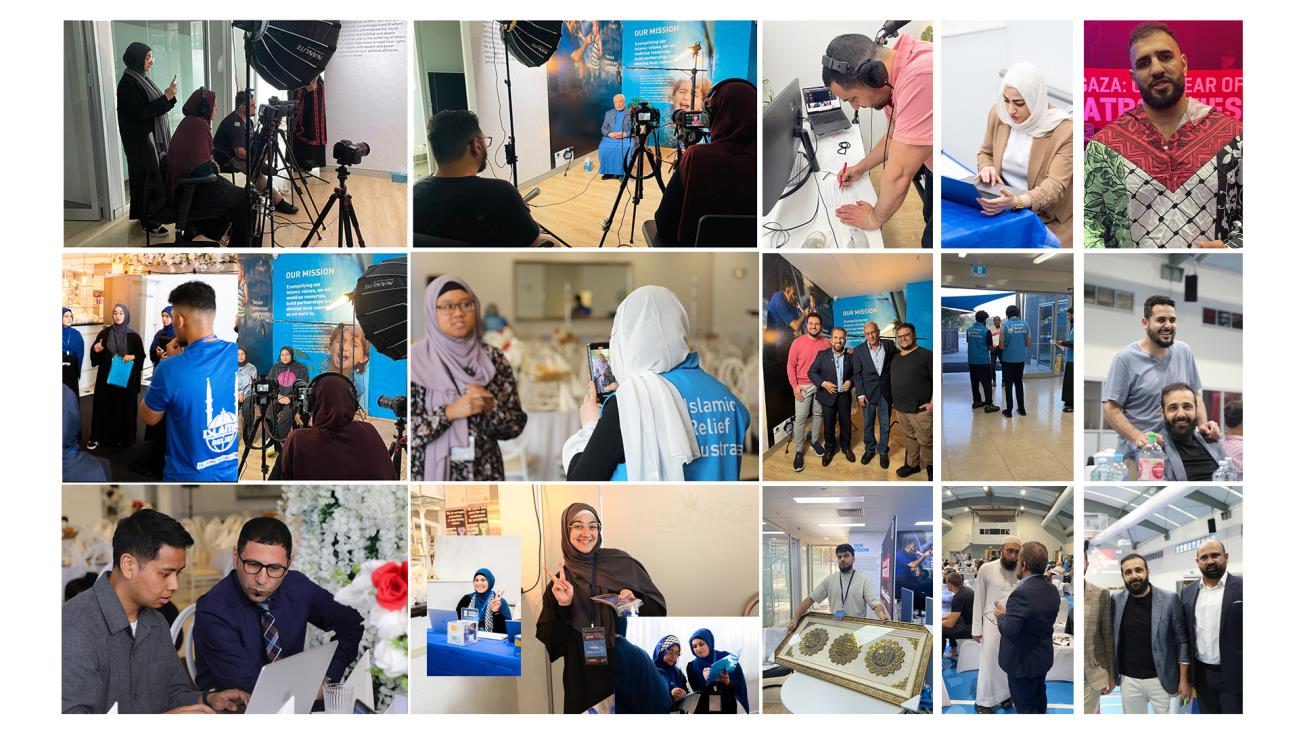
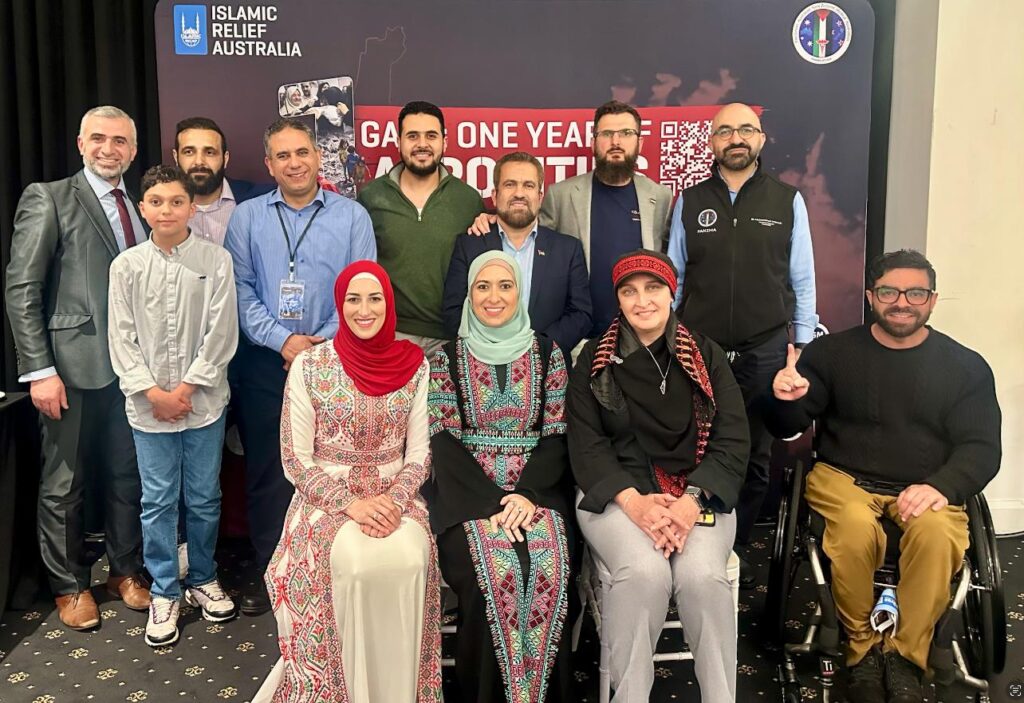
Behind the Scenes, our dedicated Islamic Relief Australia staff across three states, working together to make a difference!
The Long Nights in Sydney: A Lesson in Leadership and Resolve
In Sydney, our team poured countless hours into making sure every detail was in place.
I remember late nights with Ammar and Zainab fine-tuning seating arrangements, Yimen overseeing logistics down to the AV system, Nadya and Arif perfecting presentations, and Nour driving social media outreach, while I was stressing out about the documentary (more to come on this later, continue reading).
Even on her holiday, Maie was making donor calls, while Meilina, Fatima, and Fartun worked tirelessly behind the scenes to boost ticket sales.
Leading us through it all was our CEO, Samir Bennegadi, whose vision never faltered. Samir’s unwavering commitment, boundless energy, and a profound sense of purpose lifted each of us. He constantly reminded us that our efforts were more than tasks—they were a lifeline for Gaza.
Nour Ahmed shared, “His words, resilience, and attention to detail made a deep impression on me.”
Samir didn’t just oversee the events. He inspired every one of us to strive for more. To see our work as not only a duty, but a calling. And for that, I am grateful to work alongside a leader who embodies such dedication and purpose.
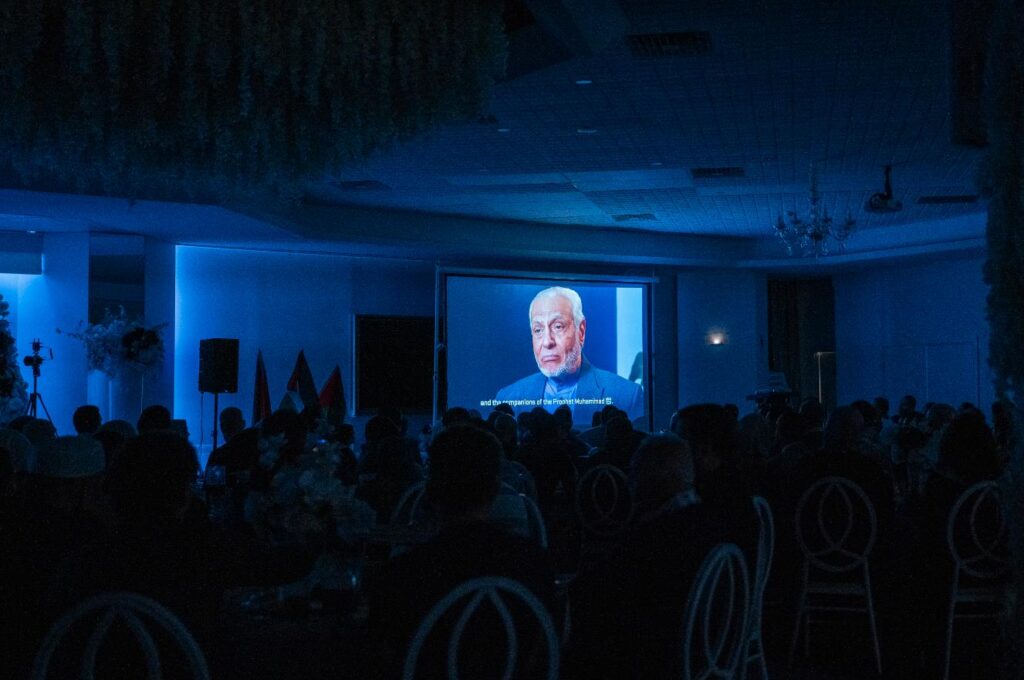
A glimpse of the incredible results from our team’s hard work at the event!
Bringing Gaza’s Reality to Life: Bilal’s Masterpiece
It’s hard to describe the impact of seeing Gaza’s struggles on screen, brought to life by the hearts and minds of Bilal Abdelwahed, and Peter Pham.
Bilal was the main man in charge of crafting One Year of Atrocities – a documentary meant to capture Gaza’s reality from perspectives rarely seen. Through his brilliant directing and video editing, he shared stories of families from Gaza, the doctors who bravely treat them, and community leaders who continue to offer hope amidst unimaginable hardship.
Samir, our CEO, summed it up best when he said, “People were glued to the screen.”
Watching the audience’s eyes fill with emotion, I realised that Bilal’s work was more than a documentary. “It was a bridge connecting people’s hearts with Gaza,” says Ayman Abdelhady
His creativity and dedication made this story unforgettable. And it left an unerasable mark on every person who watched it.
Something we also wanted our online audience to experience too, right HERE, on our website.
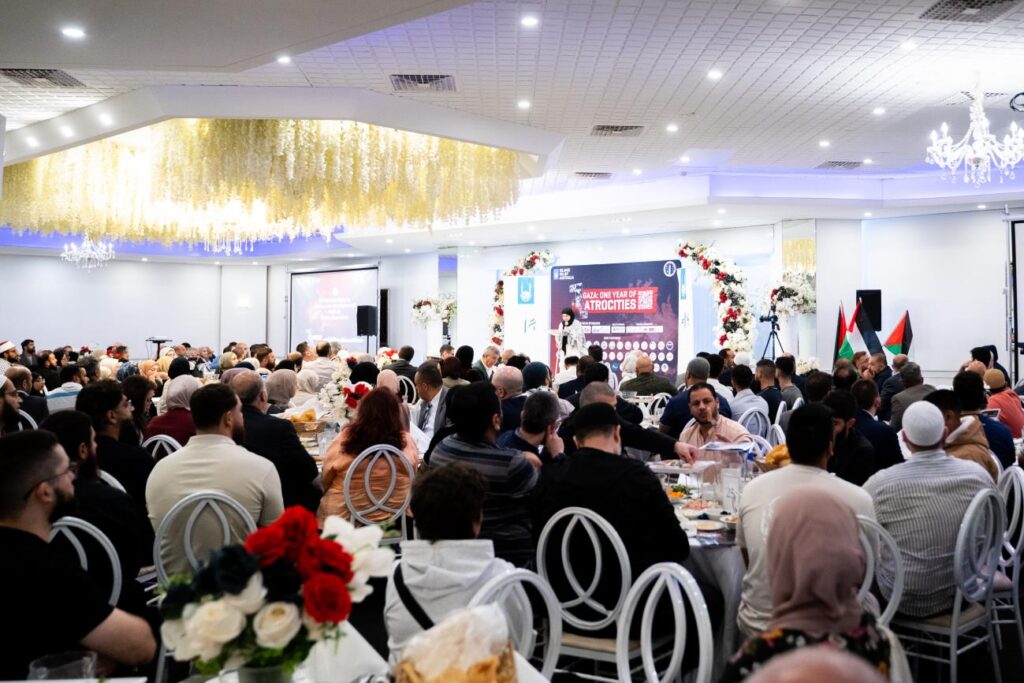
Attendees fully engaged with the powerful documentary created by Bilal
A Doctor’s Courage: Honouring the Medical Heroes
Gaza’s need for medical support is urgent. That urgency was echoed in the words and presence of the incredible Dr. Jamal, Dr. Bushra, and Dr. Mostafa.
These doctors have served on the front lines in Gaza through our partner, PANZMA, and the stories they shared brought home the true cost of conflict. Dr. Jamal recounted a moment when he wished for his patient’s release from suffering — a stark, heartbreaking reality.
Hearing them speak, I was moved by their resilience and selflessness. It reminded me that these doctors are more than healthcare providers. They are heroes, embodying compassion in the face of unimaginable pain.
They’ve shown us what it means to serve, and their presence at the events was a powerful testament to the life-changing impact of our mission.
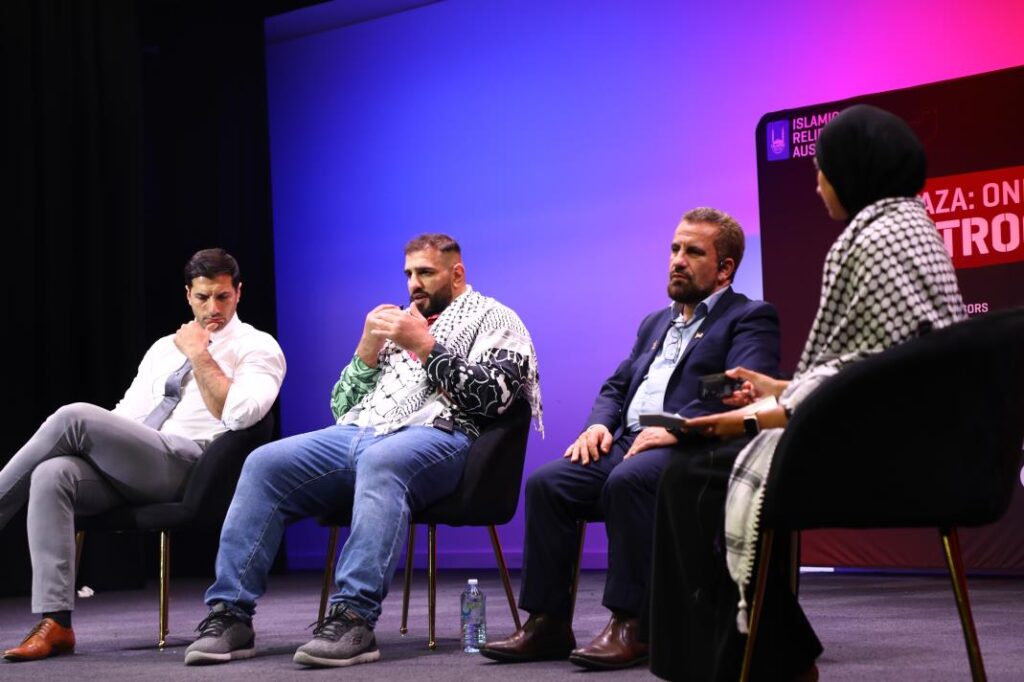
Engaging Minds, Dr. Mohamed and Dr. Ahmed from PANZMA share insights alongside brother Samir at our Brisbane panel discussion
Melbourne’s Celebration of Unity: A Community in Harmony
When Dr. Mohamed Taha and the Melbourne team, Horia, Rahat, and Rabaa, gathered a diverse crowd from all corners of the city, I saw a community united by compassion.
Dr. Taha’s dedication was instrumental in creating an event that transcended barriers, bringing together people from all walks of life. The atmosphere in Melbourne was truly something special. It was as if every person felt they were part of something much greater than themselves.
Seeing so many people come together, bound by a common purpose, made me proud to be part of a community that stands in solidarity with Gaza. Melbourne’s event was more than just a gathering – it was a celebration of unity and humanity. One that strived to give as much support as they could, to relieve our brothers and sisters from their suffering.
Unity in Service, IR Australia Team and Medical Partners
The Brisbane Miracle: A 5-Star Event in Record Time
In Brisbane, Samim, Asif, and Shayma worked with limited time and boundless commitment, transforming their vision into reality. With every detail handled meticulously — from logistics to catering, from speakers to partnerships — they created a five-star event that honoured Gaza’s story and inspired every attendee.
The entire event felt seamless, and the community’s warmth and generosity filled the room. What they accomplished in such a short period showed me that true excellence isn’t in the time you have, but the heart you put into it.
The Unseen Heroes: Volunteers Who Made It Happen
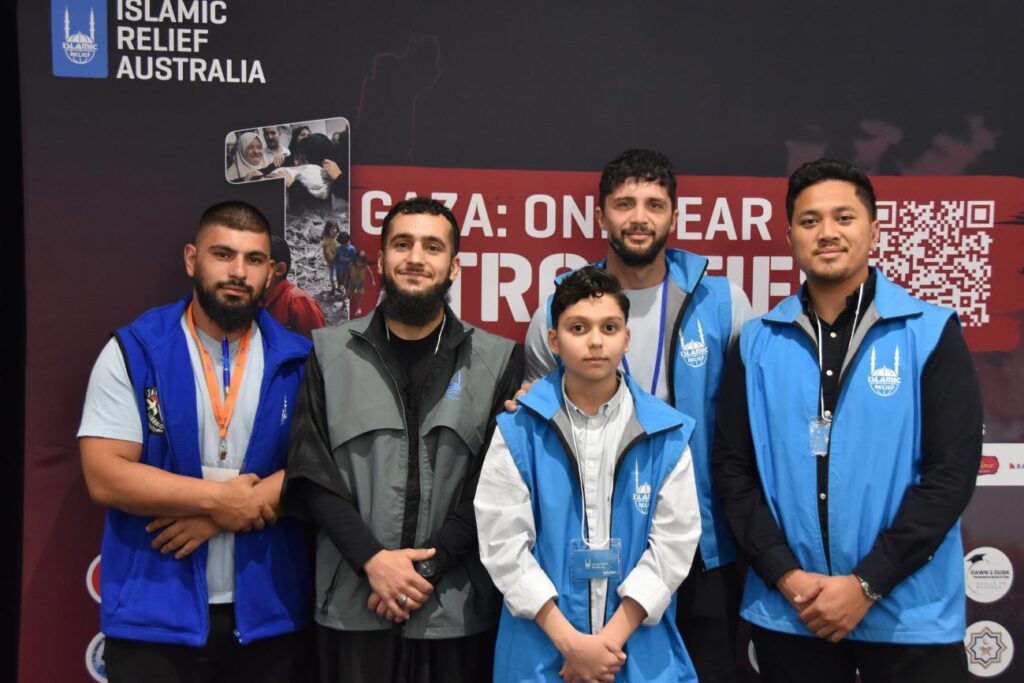
Behind every moment of these events were the selfless efforts of our volunteers. The hidden soldiers – Omar, Firman, and countless others who stepped in to support us.
They worked tirelessly, setting up venues, coordinating with partners, assisting guests, and handling every little detail that brought the events to life. Without them, none of this would have been possible. Their commitment to the cause – their willingness to work without recognition – is something that continues to inspire me.
To each volunteer who stood by us, thank you. You are the backbone of our mission, and your dedication has left a lasting impact.
Dedicated Volunteers, The Backbone of Our Efforts
A Final Reflection
Reflecting on these moments, I am overwhelmed with gratitude. Each person, from staff to volunteers, from doctors to community members, came together to make these events more than just gatherings. They became symbols of hope and resilience. Testaments to what we can achieve when we unite for a common purpose.
This journey has shown me that even in times of darkness, there is light. And we find that light in the people who serve, give, and believe in a better future for Gaza.
Thank you to everyone who stood with us, worked alongside us, and made these events possible. Together, we have sent a powerful message: our brothers and sisters in Gaza are not alone.
“Organising events across three states is no small feat, and challenges were bound to arise. But watching our leaders in Sydney, Melbourne, and Brisbane tackle each issue seamlessly was truly inspiring. With their solutions-oriented mindset, they turned potential obstacles into smooth transitions, making it all look effortless.
This wasn’t just about problem-solving. It was a testament to the dedication and adaptability of every team member involved. They showed that, with the right mindset, even the toughest challenges can be overcome in seconds. And they are the ones who allowed our mission to remain strong and unwavering across all three cities.”
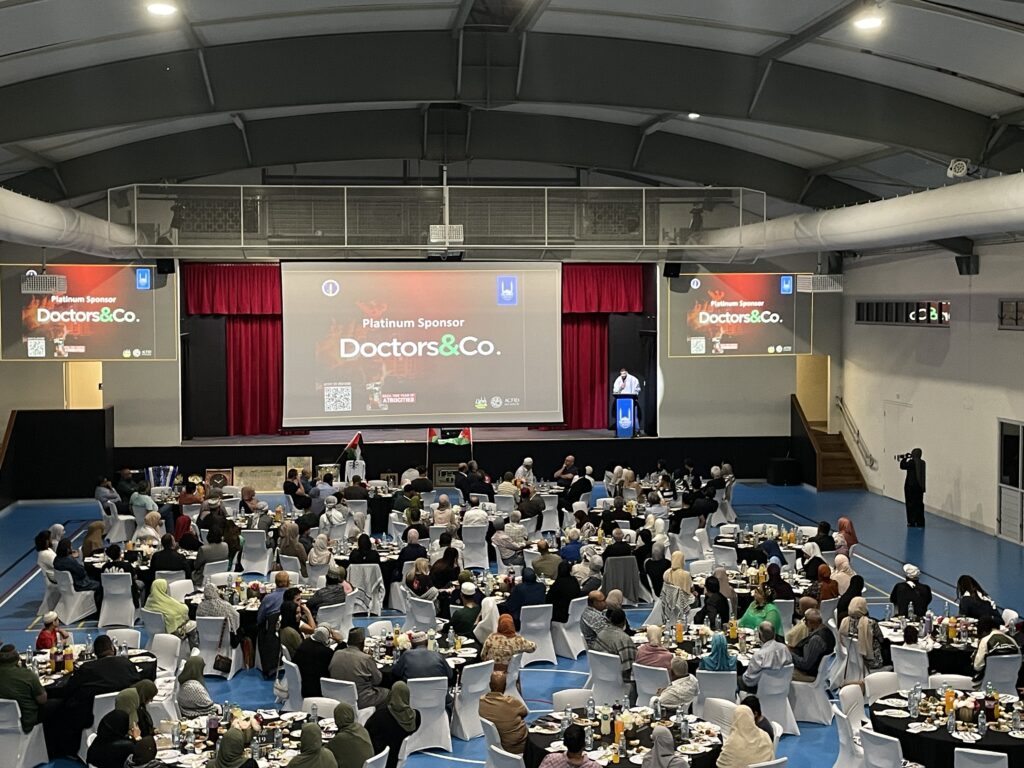
Islamic Relief Australia is extremely grateful to Doctors&Co. A platinum sponsor of our Gaza: One Year of Atrocities event, held across Sydney, Melbourne, and Brisbane. Their invaluable support helped make this event a tremendous success. It also allowed us to raise crucial funds and awareness for those affected by the ongoing crisis in Gaza.
Doctors&Co is a dedicated provider of healthcare management solutions. They, likewise, empower doctors and healthcare professionals to enhance their practices and improve patient outcomes. By offering expert advice in medical practice management, financial services, and business growth strategies, Doctors&Co enables healthcare providers to focus on what truly matters. That is, to deliver exceptional care to their patients.
Their commitment to serving the healthcare community greatly aligns with Islamic Relief’s mission to alleviate suffering. They were a perfect partner for the event.
Gaza: One Year of Atrocities was a powerful commemoration of the struggles faced by the people of Gaza over the past year. Through engaging presentations, fundraising efforts, and powerful testimonials, the event highlighted the dire need for ongoing support in the region, especially in medical aid.
Thanks to sponsors like Doctors&Co, we were able to connect with compassionate individuals across Australia. Where, together, we raised much-needed funds for medical and humanitarian relief in Gaza.
Samir Bennegadi, CEO of Islamic Relief Australia, expressed deep appreciation for Doctors&Co’s sponsorship. He stated, “Their commitment to our cause underscores the importance of businesses working together with charitable organisations to bring meaningful change to the world. We are immensely grateful for their sponsorship and their belief in the work we do.”
Islamic Relief Australia is proud to collaborate with Doctors&Co in such a vital humanitarian effort. We also look forward to continued partnerships in the future. As this support will help us bring hope and relief to the people of Gaza, who continue to face immense hardship and adversity.
Once again, we extend our sincere thanks to Doctors&Co for their generous support and commitment to humanitarian causes.
For more information about Doctors&Co and their services, please visit their website here.
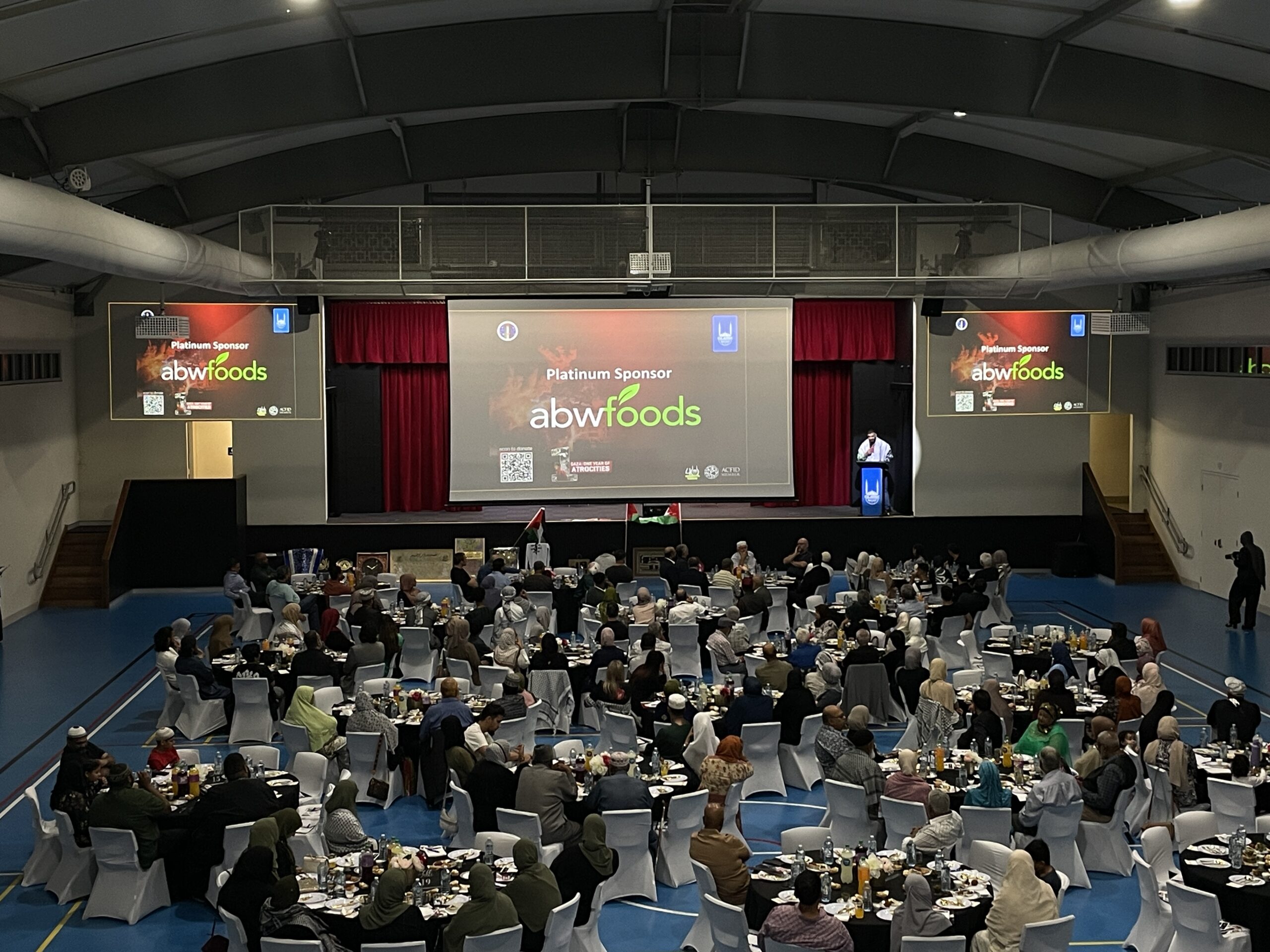
Islamic Relief Australia is deeply thankful to ABW Foods Australia. A platinum sponsor for our Gaza: One Year of Atrocities event, held in Sydney, Melbourne, and Brisbane. Their generous sponsorship played a critical role in the success of this event. It enabled us to raise vital funds for the people of Gaza.
ABW Foods Australia is a leader in premium food distribution. They specialise in a wide range of high-quality products, including dates, nuts, dairy, and condiments. They have a strong focus on offering both popular and culturally significant food products, ensuring the needs of both in the community are fulfilled.
With their passion for excellence and commitment to supporting the community, ABW Foods strongly aligns with Islamic Relief’s mission to alleviate suffering and provide aid to those most in need.
Through their support, they not only contributed financially. They also helped us amplify the message of compassion and solidarity for the people of Gaza during this challenging time. Their partnership and involvement are a testament to the positive impact businesses can have when supporting global humanitarian causes.
Samir Bennegadi, CEO of Islamic Relief Australia, expressed his gratitude for the organisation’s invaluable support. He said, “ABW Foods’ generous sponsorship allowed us to significantly boost our fundraising efforts for Gaza. Their belief in our cause and dedication to serving others through both their products and partnerships is truly commendable.”
Thanks to sponsors like ABW Foods, Islamic Relief Australia can continue to expand its life-saving programs in Gaza. Programs that provide essential medical and humanitarian support to those in dire need.
For its through the power of unity, that we, as a community can help bring hope and relief to our Palestinian brothers and sisters. And help them survive through the immense hardships they continue to face.
We extend our heartfelt appreciation to ABW Foods Australia for their invaluable support. We also look forward to continuing our partnership in future humanitarian efforts.
For more information about ABW Foods and their product offerings, please visit their website here.