06.01.18

Somalia Floods Displace 200,000 People

  News

Somali families displaced by drought and near-famine conditions last year are now on the move again, as catastrophic flash flooding has forced over 200,000 people out of their homes.

The central and state governments of Somalia declared an emergency in April 2018 and asked for humanitarian assistance. More than 900,000 individuals have been affected by the floods and there are predictions for more rains in the coming weeks.

There is increased possibility of around 200,000 more people being displaced during this second phase of flooding is highly likely.

Beledweyne district, located at the Ethopian boarder, has been badly affected. Floods washed away (completely or partially) their households, small shops, crops and livestock. Beledweyne district is divided by the Shebelle River into eastern and western sections so due to heavy floods in the river, it inundated most part of the town.
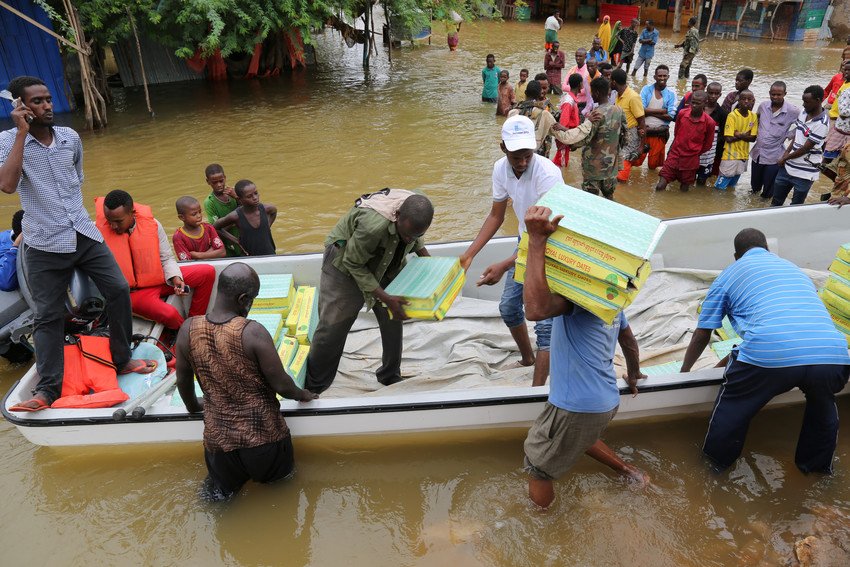
Islamic Relief is one of the few INGOs that has been able to access the most hard-to-reach areas on the outskirts of the town, with our field staff using a tractor and “improvised canoes” to get to stranded people.

Islamic Relief is one of the few INGOs that has been able to access the most hard-to-reach areas on the outskirts of the town

Islamic Relief Somalia has distributed over 3000 food packs from the Ramadan program among the flood affected individuals in Beletweyne, and further distributions as part of our humanitarian response will take place.

In addition to the urgent food needs, the rapid needs assessment conducted by Islamic Relief, identified multiple humanitarian needs. Families affected by floods urgently require shelter (plastic sheeting) and rehabilitation of homes, Non-food items such as kitchen sets, buckets, clothing’s and beddings and the recovery and reconstruction of their livelihoods and access to safe water and sanitation facilities.


Islamic Relief is responding to these needs through the distribution of emergency shelter to the flood affected families, provision of safe water, rehabilitation of water sources and other hygiene kits and services, including fumigation to guard against diseases such as malaria and dengue fever, due to increased risks in times of flooding.

Islamic Relief Australia is currently supporting 3000 people with drinking water and vector control (disease prevention) but there are huge unmet needs.

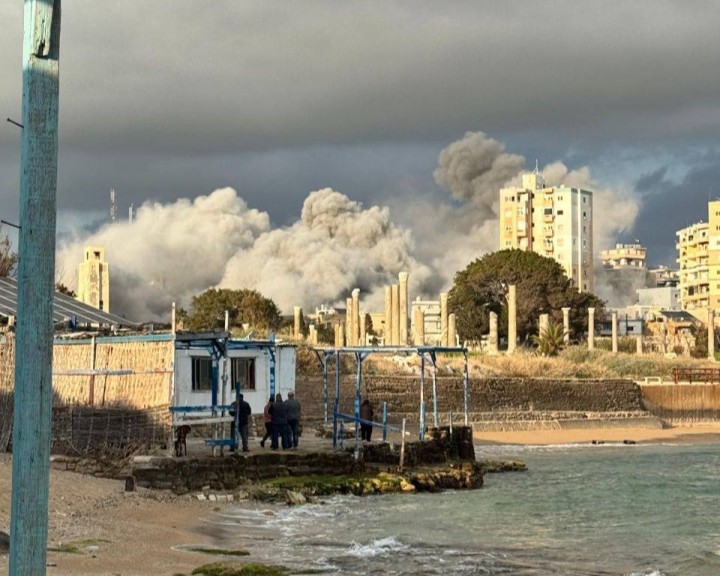
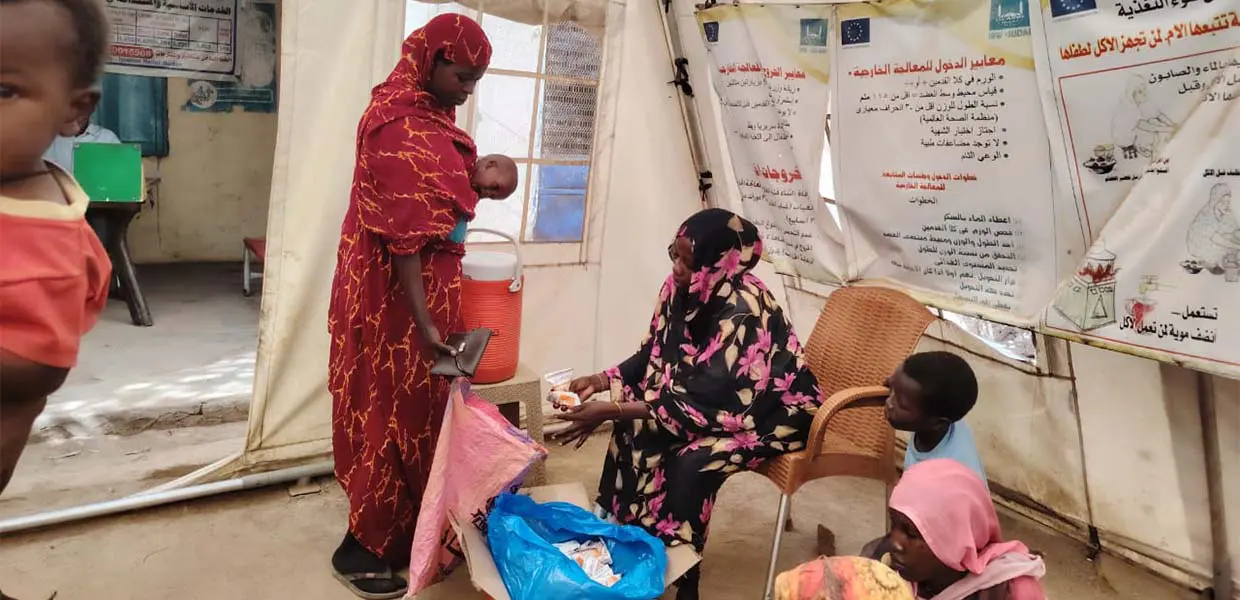
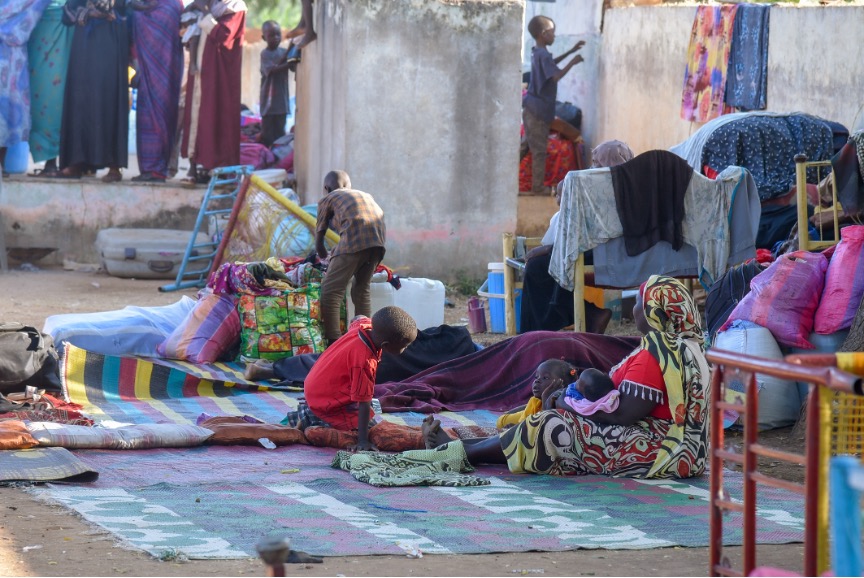
The floods have interceded with our Ramadan Food Pack Distribution in Somalia which can be viewed in the images below.

Our current work in Somalia is under WASH Intervention and Recovery for Somalia Flood Emergency Affected Families (WIRES)


05.25.18

Emergency Update: Floods in East Africa

  News

A recent spike in seasonal rainfall in parts of East Africa has caused widespread flooding across large parts of Somalia, Kenya, and Ethiopia. The situation in the regions affected by the floods is dire – people have lost their homes, their livelihoods and their lives.


In Kenya floods have displaced more than 270,000 people and this figure is expected to rise, based on projections of continued rainfall in flood-prone areas.


Of those that have been affected, many are staying in camps or open areas, while some have sought shelter with host families and communities. Many areas remain inaccessible making it difficult to determine the exact number of people affected. In Ethiopia over 170,000 people have been displaced nationwide.

A national emergency has been declared in Somalia as the floods have destroyed people’s homes and compelled them to leave in order to save their lives. Close to 718,000 people have been affected by the flash flooding in five regions of Somalia. Over 220,000 have been displaced from their homes.

These people have had to flee their homes in order to find shelter and safety for themselves and their families.

A national emergency has been declared in Somalia as the floods have destroyed people’s homes and compelled them to leave in order to save their lives

Beletweyne town and its surrounding areas have been particularly hard hit with over 204,000 people displaced and more than 75% of the town under water. Floods have washed away households, small shops, crops and livestock.

The Islamic Relief teams on the ground have conducted rapids needs assessments and identified the following areas as priority: WASH (water, sanitation, and hygiene), Food, Shelter, Non-Food Items, Livelihoods and Health.

… over 204,000 people displaced and more than 75% of the town under water.

We are working with partners and relevant stakeholders to conduct an effective response. Our team in Somalia is initiating its WASH activities: water trucking and the construction of latrines and in Kenya we have been providing food assistance to affected households.

Islamic Relief is also currently distributing Ramadan food packs, many of which have been diverted to the flood affected people at this critical time, delivering these packs by boat to people who are trapped, surrounded by water.

In response to the emergency, Islamic Relief Australia will be supporting flood affected communities in Beletweyne district through the provision of integrated food security, WASH and shelter interventions.

This will be be implemented through the provision of Emergency Shelter and Hygiene Kits. As well as distribution of food packs, clean water and clean water storage among households.

08.12.16

Searching for life in the Horn of Africa

  News

Fadi Itani, Islamic Relief’s Director for Global Communications and External Relations, returns from Somaliland with this eye-witness report.

Travelling as part of a Muslim Charities Forum delegation, Fadi learned that drought in the Horn of Africa is affecting food security for millions.

“We made from water every living thing” Qur’an (21:30). I have read this verse from the Holy Qur’an hundreds of times, although it may have few words, it has always felt so powerful. I never thought in my wildest dreams that I will come to see the depth of its meaning and the verse in action – human, animals, plants all depending on the existence of water. Simply put, water is life.

The impact of a drought on food security for millions of people such things sadly are not new in the Horn of Africa. Every few years a severe drought hits the region and leads to a major famine. We become sensitised by watching events on our televisions, become emotional and donate.

Our mission as part of a Muslim Charities Forum delegation was to explore and assess the effects of the drought and the damage it is causing in order to mobilise our network. It was also an opportunity to learn about good practices from fellow international NGOs, UN agencies and most importantly local communities and organisations.

Two years of poor rain is showing its toll on local communities, and the passing Nomad communities. We were told that the most affected areas are in the west of the country, bordering Ethiopia. We drove for four and half hours in roads that they look like anything but roads, a continuous bumpy ride on a track that looks like a rally route where yellow or blue painted stones on the side of the road try to keep you away from danger – clear evidence of the absence of any infrastructure.

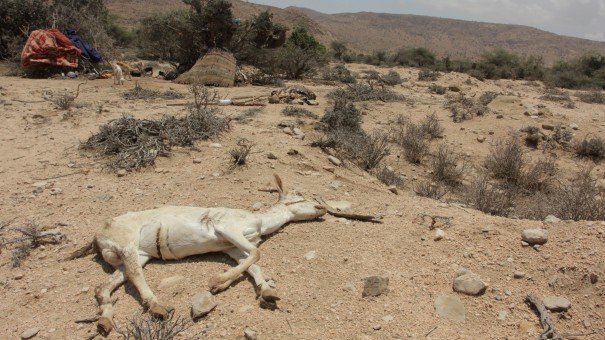
The smell of life and death is clear. We passed through areas that are so dry; you can smell it in the air. I didn’t expect to see the most resilient plants and animals suffering in the extreme weather. Cactuses were dead on the roadside and camels are dying in such heat. Our route included crossing six rivers, a couple around 150 metres wide, all of them completely dry, devoid of any sign that water ever existed in them.

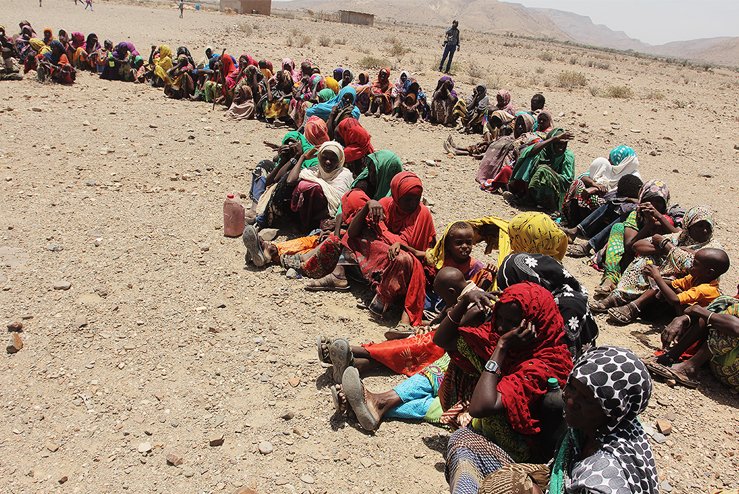
We stopped halfway in an area where Nomads from Ethiopia stopped on their way searching for the signs of life, water and greenery to feed their livestock. They came from Ethiopia chasing clouds, walked for 20 days, crossing 700 km with young children, the elderly and lifesaving livestock moving from one area to another without luck. We met 79 year old Mohammed Omar. Of his 70 cows only one remains, and of 150 sheep and goats there are now only ten. His wife was too ill to make the journey with him, so he left her at home with their youngest son, aged six. His older son, 15, has left for Boroma to try to find food. We also met with a lady who had started her journey with eight children, but only four had survived. Mothers are breastfeeding their young children but have no milk to feed their babies, due to lack of food, but they breastfeed just to keep them calm and quiet.

I was moved to see a 13 year old girl Halima holding a little goat between her arms like a baby. I asked a colleague who speaks Somali to ask her why? She replied it is weak and cannot stand or walk, I was even more surprised to discover that her mum is carrying two baby goats under her garment for the same reason. The livestock they own is as precious as their own children and their survival depends on them.

Every person there has a story, a story about struggling to survive you can clearly read on their faces and in their eyes. I felt shame asking them to recount their story for fear of them suffering again. The current situation is very real and dire. As an international community we must explore and implement long term solutions and tackle droughts early on – not ignore them until the situation becomes an even bigger tragedy than it already is.

I asked a colleague from Islamic Relief Somalia what the possible ways were to reduce the risk of drought. His answer was improved water collecting solutions such as local dams to collect rain water and a mixture of shallow and borehole wells. If this region can collect the rain water it does receive, it will be the first step on the road to long term recovery, supporting livestock and agriculture.

During this trip I truly learnt to appreciate the many blessings we have, from the birds singing and flying around, to the green grass and pastures, to the feel and look of fresh water and the sound of rain dropping, even the dark clouds that comes full of rain, which the people of the Horn of Africa are now praying for that will bring them a renewed hope of life. We have to remember that water is indeed life.

08.12.16

Famine fears as severe drought grips East Africa

  News

A terrible sense of déjà vu hangs over the Horn of Africa, where fears are growing that a severe drought could soon become a famine.

Two years of below-average rainfall have pushed the self-declared independent state of Somaliland to the brink of starvation and nomadic families, who move with the seasons in search of fertile land and fresh water, have faced the heart-wrenching choice between feeding themselves and feeding their animals.

The goats were first to die, followed by the cows. Now even the bodies of drought-resistant camels lie beside shriveled cacti at the side of the road.

For families who rely on these animals for meat, milk, transportation and trade it’s the equivalent of losing their entire life savings.

Now, with nothing left and no food to fuel the onward journey, they’ve settled in camps, living in makeshift tents, waiting for aid to arrive.

In Awdal region, near the Ethiopian border, 1,200 people have gathered at the newly emerged Quljeed camp, without a single toilet.

Nimo Mohamed Abdi lives beneath a tent of twigsIt’s estimated that the people here have lost 5,000 animals between them and hundreds, if not thousands of goats, cows and camels, are buried in mass graves beside a sprawling jumble of circular tents made from branches stuck in the ground and covered with sheets.

Mum-of-three, Nimo Mohamed Abdi, 32, has not yet found any sheets so she and her children sleep on dry earth beneath a dome of twigs, entirely exposed.

She says: “Three months ago we had 150 goats, 20 cows, 10 camels and three donkeys. Now nothing remains. Everything died.

“We were living by the coast then and the animals died so quickly, one after another, that we could do nothing with their corpses but throw them into the sea.

“I’ve been here for 25 days. I don’t know what the future holds for us.”

Since the camp first appeared a month ago, families here have had two basic distributions of rice, flour and dates, and just three litres of water per person per day for all their washing, drinking and hygiene needs.

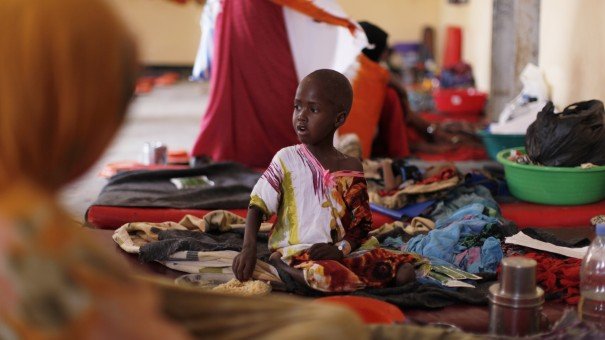
Already, malnourished mothers are unable to breastfeed their babies.

And now the start of the rainy season is bringing a new set of challenges.

When rainfall should be a blessing, in Somaliland erratic rains are wreaking havoc, with a surge in water-borne diseases and flash floods.

“Most deaths we’ve seen have been in women,” says Adan Shariff Gabow, Islamic Relief’s area manager for Somalia’s neighbouring region, Puntland.

“The women are left behind with the children while the men move forward with the livestock.

“There were some cases where women were eaten by hyenas.

“They fell down, malnourished, and we understand they were then set on by the animals.”

Islamic Relief is pushing for long-term solutions in Somalia to break the repetitive cycle of drought and floods, delivering a $5 million borehole project to provide 36 sustainable water supplies across the region and installing underground tanks to store rainwater that currently runs wasted into the Red Sea.

Pastoralists_wait_beside_the_road_v2

Tackling the current crisis, the government of Somaliland has so far raised just $1.5 million to help 10,000 of the people whose livestock have been wiped out.

But the UN estimates 4.7 million people (nearly 40 per cent of the Somali population) are now in need of humanitarian assistance and has launched a $105 million appeal with international aid agencies.

In Somalia, where recurrent droughts are linked to El Niño climate fluctuations, the situation feels hauntingly familiar.

In 2011, following a similar two-year drought in southern Somalia, warnings of an impending famine went unheard.

The resulting crisis claimed more than 250,000 lives.

Now, the Muslim Charities Forum is praying the world doesn’t make the same mistake again.

Chairman Dr Hany El-Banna says: “We cannot wait like we did in 2011 when we acted too late.

“Animals die and we don’t care. We have to see a big number of people die before we act.

“Maybe after 100,000 or 200,000 people die we can then cry, but that’s too late.

“We need to deal with this today – if we don’t this drought will turn into a famine.”

08.12.16

Shining the spotlight on children in Somalia and South Sudan

  News

Day of the African Child focuses on children affected by conflict and crisis

Forty years after the Soweto Uprising, many children across Africa are still struggling to find their voice.

Each year the Day of the African Child remembers June 16, 1976, when 10,000 black school children protested in Soweto against the poor quality of their education, demanding their right to be taught in their own language.

Hundreds of the young students were shot and more than 100 people were killed in the protests of the following two weeks.

This year’s theme of ‘Conflict and Crisis in Africa: Protecting all Children’s Rights’ has special significance in Somalia and South Sudan.

Amir Manghali, Islamic Relief’s regional desk co-ordinator, said: “Hundreds of thousands of children here are embroiled in suffering, witnessing the brutality of conflict.

“Today, many families in South Sudan are walking long distances, carrying heavy luggage on their heads, and hoping to get to safety.

“In Somalia, many remain trapped in camps and social injustice continues to manifest itself in the form of poor health facilities, lack of education and poverty.”

He added: “Conflicts are depriving innocent children of their right to food, clean water and education, and leaving girls more vulnerable to rape, assault and sexual exploitation.”

In the capitals of Mogadishu and Juba, more than 32,000 children have received health services from Islamic Relief in camps for internally displaced people.

Our projects in water, sanitation, hygiene and health have enabled 47,500 girls in Somalia and South Sudan to go to school instead of spending long hours collecting water.

06.06.16

Islamic Relief and AIMS provide Emergency Assistance to Displaced Iraqis

  News

Islamic Relief and Australian Iraqi Muslim Society provide Emergency Assistance to displaced Iraqis

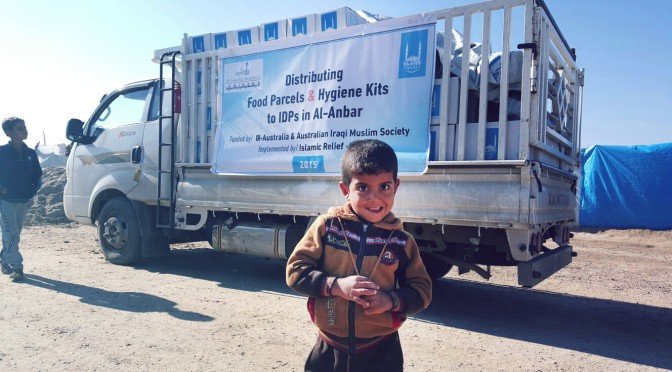
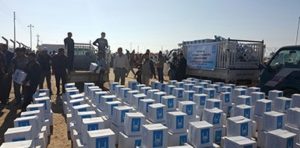
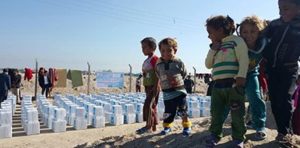
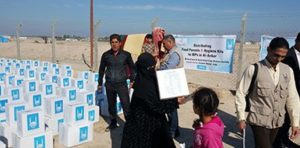
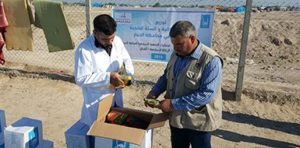
The Australian Iraqi Muslim Society has provided significant support to refugees from the Anbar Province through an Islamic Relief project, delivering food and hygiene kits to the refugees who have fled the front lines of the conflict in Iraq.

Iraq is facing an exacerbated humanitarian emergency as a result of conflict. Millions of Iraqis have fled their homes and towns in search of safety- or at least, a reprieve from violence. Those in conflict affected areas are also suffering from a lack of access to basic services and food, water and medical care.

The Anbar Province has been particularly impacted, and cities within it remain on the front line of the conflict. Those who fled the violence have lost everything, and in many cases they arrive to areas already struggling to provide to the people who live there.

Islamic Relief has been operating in Iraq for twelve years. It was one of very few NGOs which continued humanitarian work throughout the 2003 war and during the 2006-2007 period which saw the withdrawal of many major NGOs due to security concerns. In its first seven years of operation, Islamic Relief Iraq helped over three million Iraqis inside Iraq.

With the funds raised by AIMS, Islamic Relief identified areas where highly vulnerable refugees are living in order to assist the people most in need. As this project is ongoing the exact location of the distribution is withheld to ensure security for our staff and those we are helping. Islamic Relief staff met with these refugees to hear from them first hand. The refugees told our team that most of them had left everything behind, that they had no form of income and no access to food or hygiene supplies.

Thanks to AIMS, Islamic Relief is providing food packs and hygiene kits to 1,050 families who have fled the conflict in Anbar and are now living in informal settlements. The food packs ensure families are able to eat nutritious food for a month, during which time they will be referred into bigger food programmes with the UN and World Food Program. The hygiene kits include soap and toothbrushes and toothpaste, nappies for babies and sanitary napkins for women, providing dignity to the brave families who have lost everything.

The first distribution of food packs and hygiene kits has concluded, and the second and final will take place before the end of the year. Islamic Relief is grateful to AIMS and to all our supporters for enabling us to help those who need it most.


STAY INFORMED

  • This field is for validation purposes and should be left unchanged.

Quick Donate