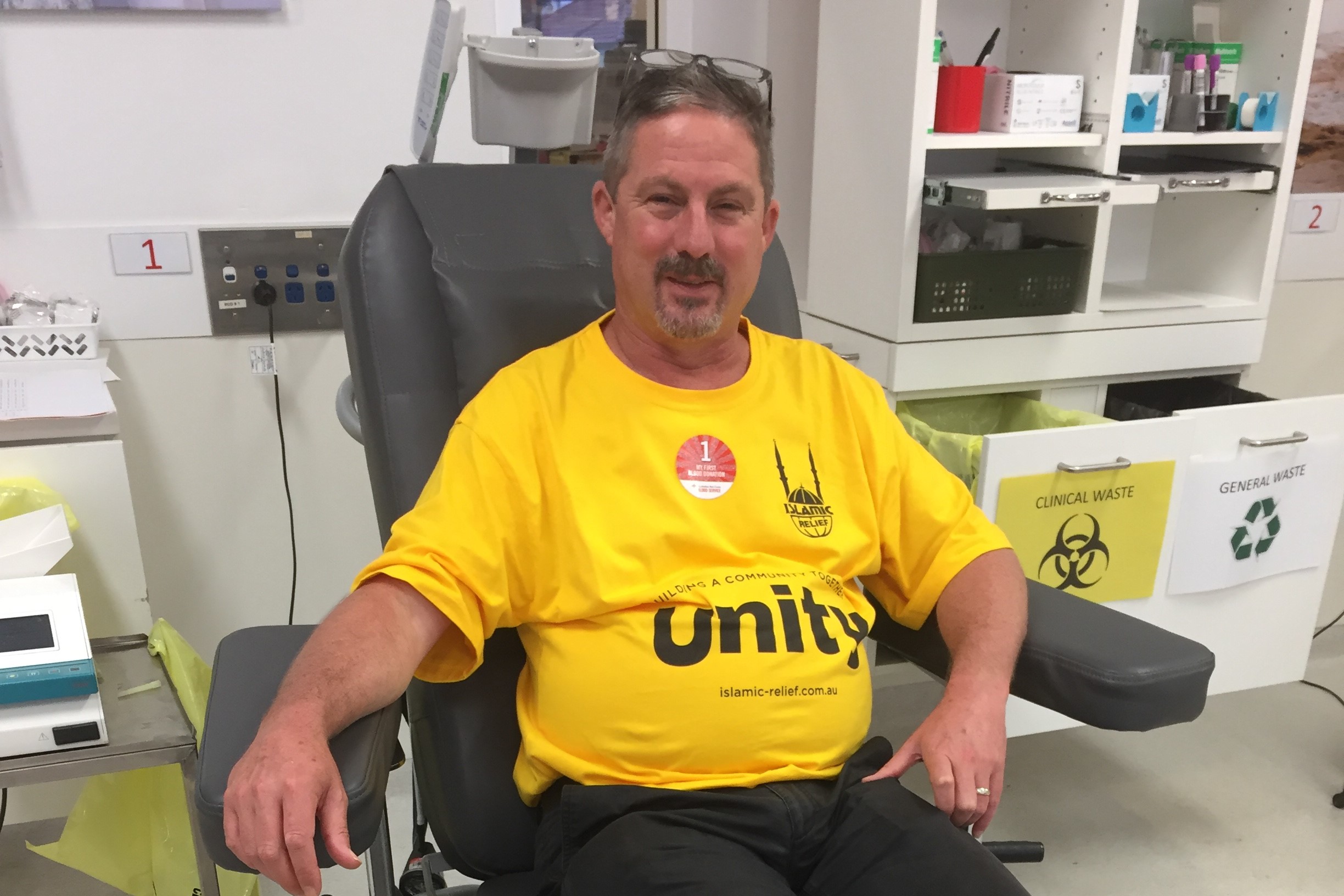
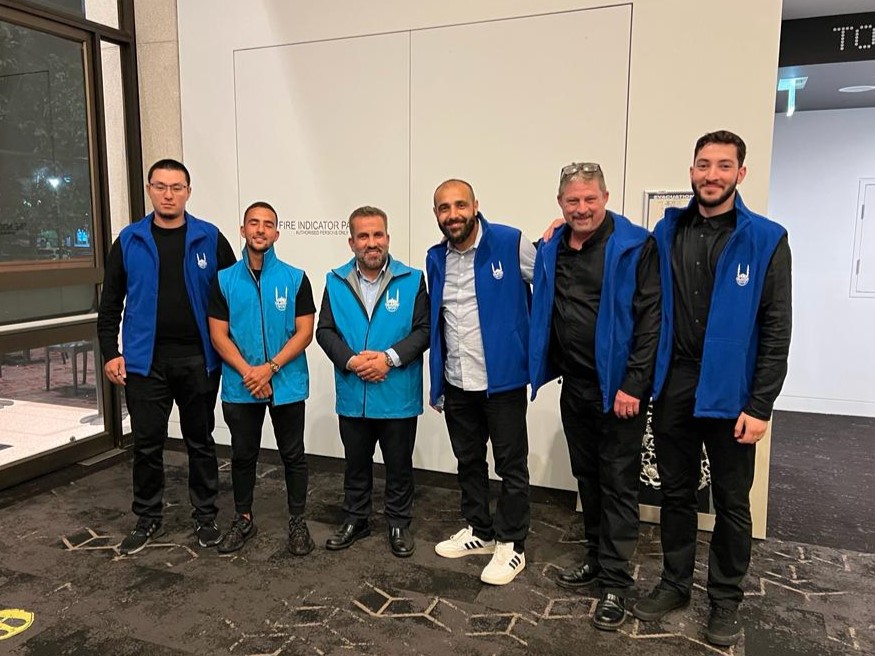
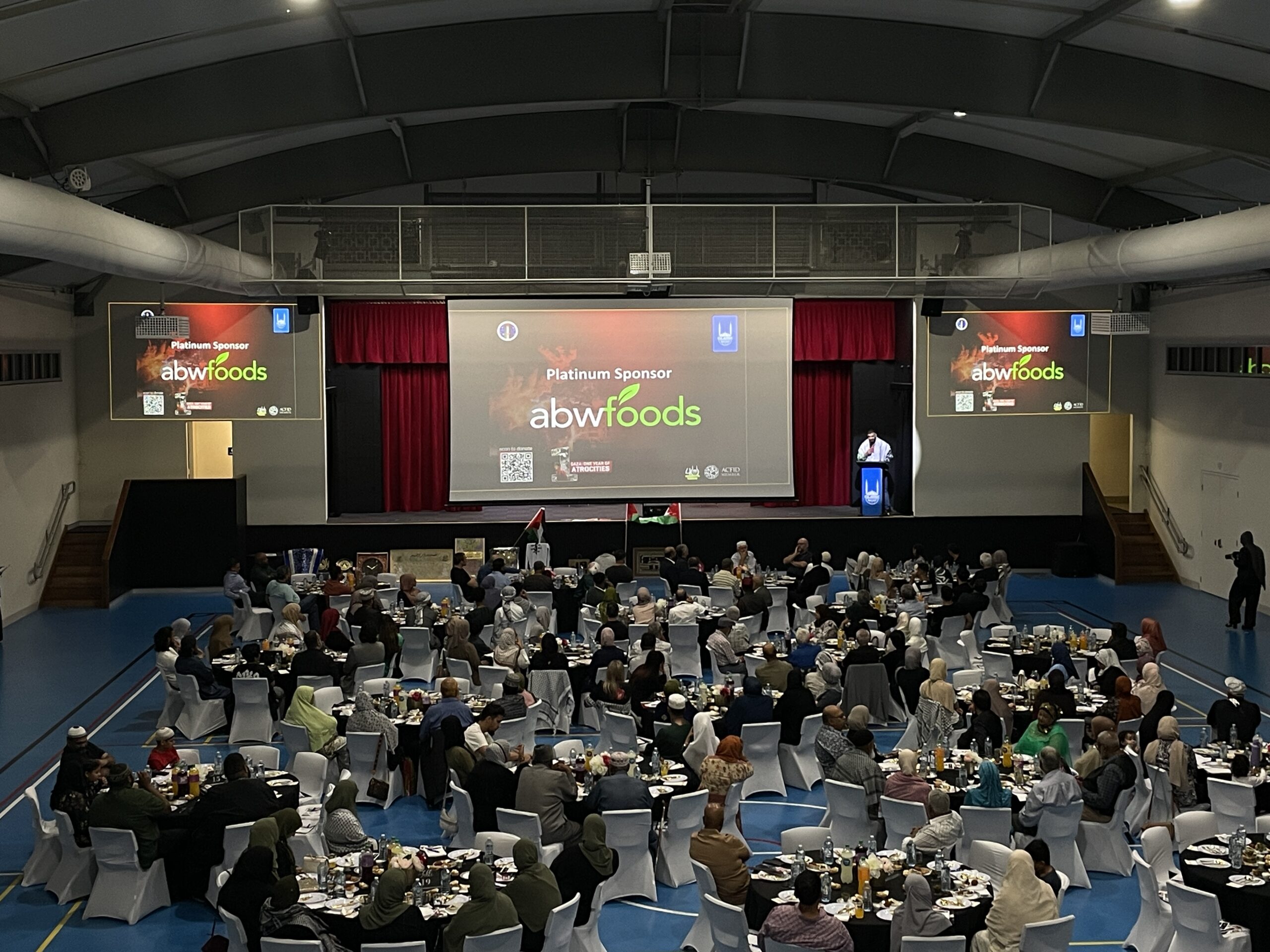
Today, I am honoured to celebrate someone whose dedication, expertise, and passion for our mission at Islamic Relief Australia have made an extraordinary impact—Peter Sapsford.
Firstly, I want to extend my deepest gratitude to Peter. Your efforts have not only strengthened Islamic Relief Australia but also improved countless lives across the globe.
Peter’s Story
Peter joined us six years ago as part of the Programs Department, stepping into the critical role of International Programs Coordinator.
In this role, Peter has been instrumental in ensuring that our aid reaches communities in need around the world. Through his coordination with Islamic Relief Worldwide, he has enabled the logistics and provided the information necessary for our programs to thrive.
Thanks to his efforts, not only have we been able to respond quickly to emergencies, but we’ve also ensured that our donors receive timely and transparent feedback on the progress of our aid response and sustainable development programs.
Reflecting on his six years of service, Peter shared these words:
“These 6 years have brought me incredible joy, satisfaction, and the opportunity to serve humanity through the fantastic work that we do.
“While the opportunity to serve has been at the centre, it is you that has really made it so worthwhile. I cherish our friendship and congeniality; we are a family that cares for one another.
“Our Islamic values bring out our compassion for those in need, but also make us steadfast in knowing what is right and what is wrong. I have learnt so much from all of you. I always say that this is the best job I have ever had, and I mean it.”
Peter’s heartfelt message resonates with the team deeply. It exemplifies what we value most at Islamic Relief – the sense of family and shared purpose that keeps us grounded in our mission.
In turn, Peter’s commitment to excellence is evident in every aspect of his work. Whether facilitating complex logistics or navigating international coordination, his contributions have made a lasting difference for both our rightsholders and supporters.
Once again, thank you, Peter, for your outstanding service, and for being such an integral part of our team. I am excited to see what the future holds as we continue working together to fulfil our mission, making a positive difference in the lives of those in need.
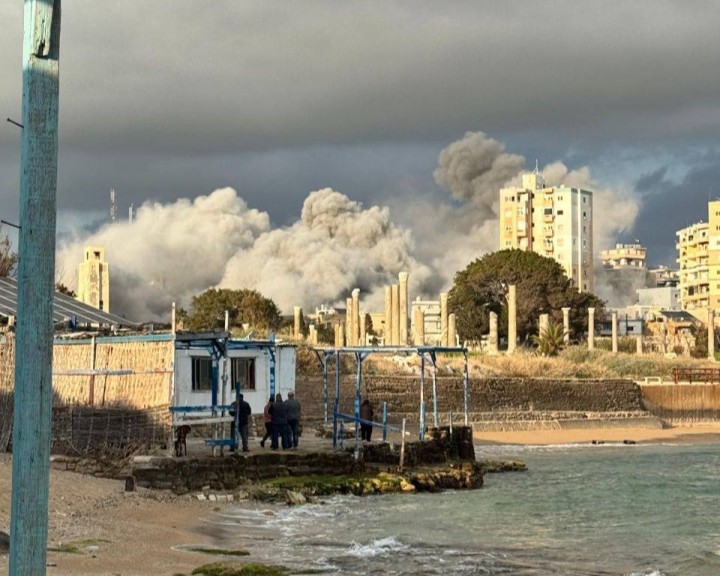
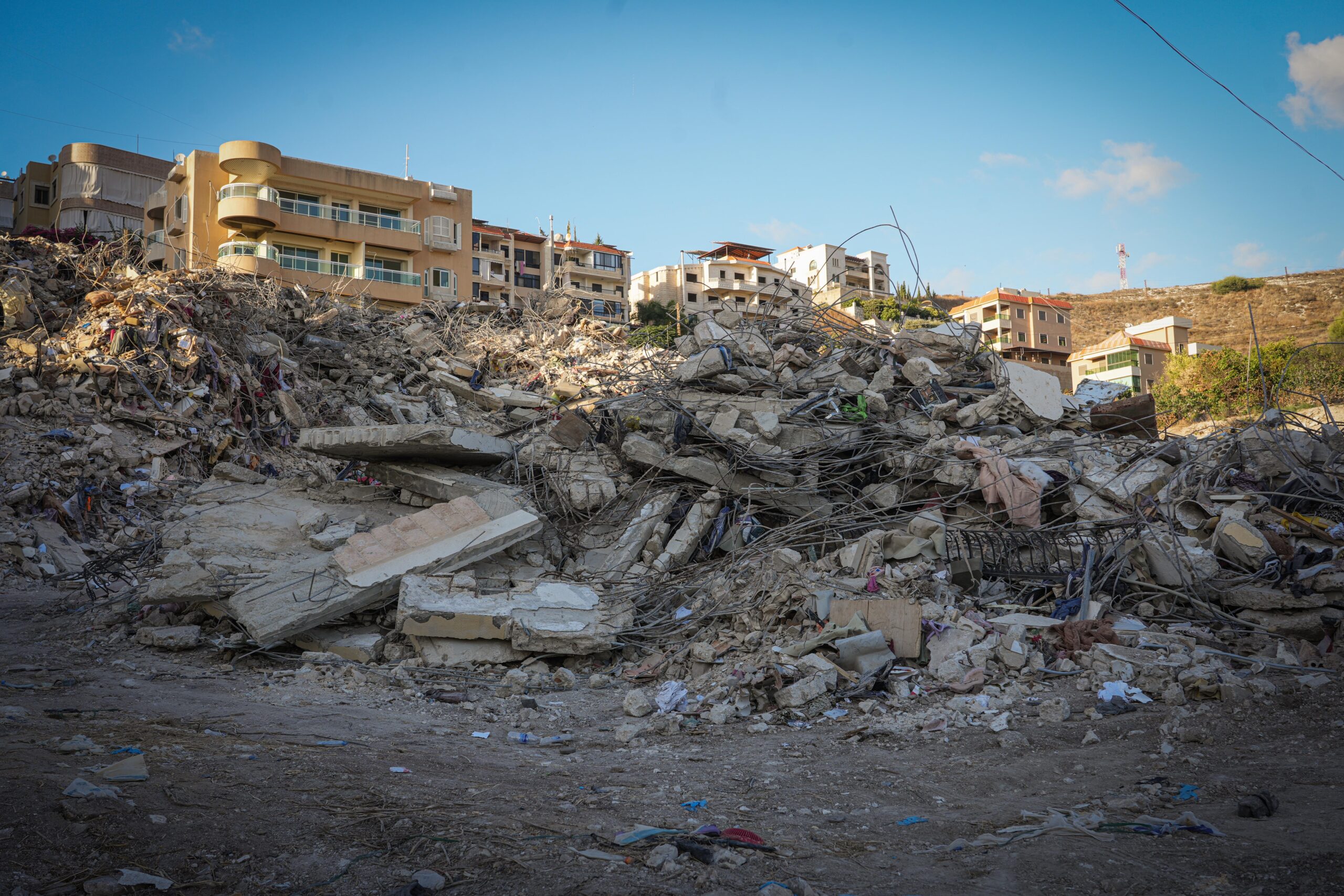
Fear and hunger are rising across Lebanon as Israel bombs entire communities into rubble, attacks health workers and hospitals, and forces more families from their homes. Last night saw the heaviest and deadliest airstrikes in the city centre of Beirut so far.
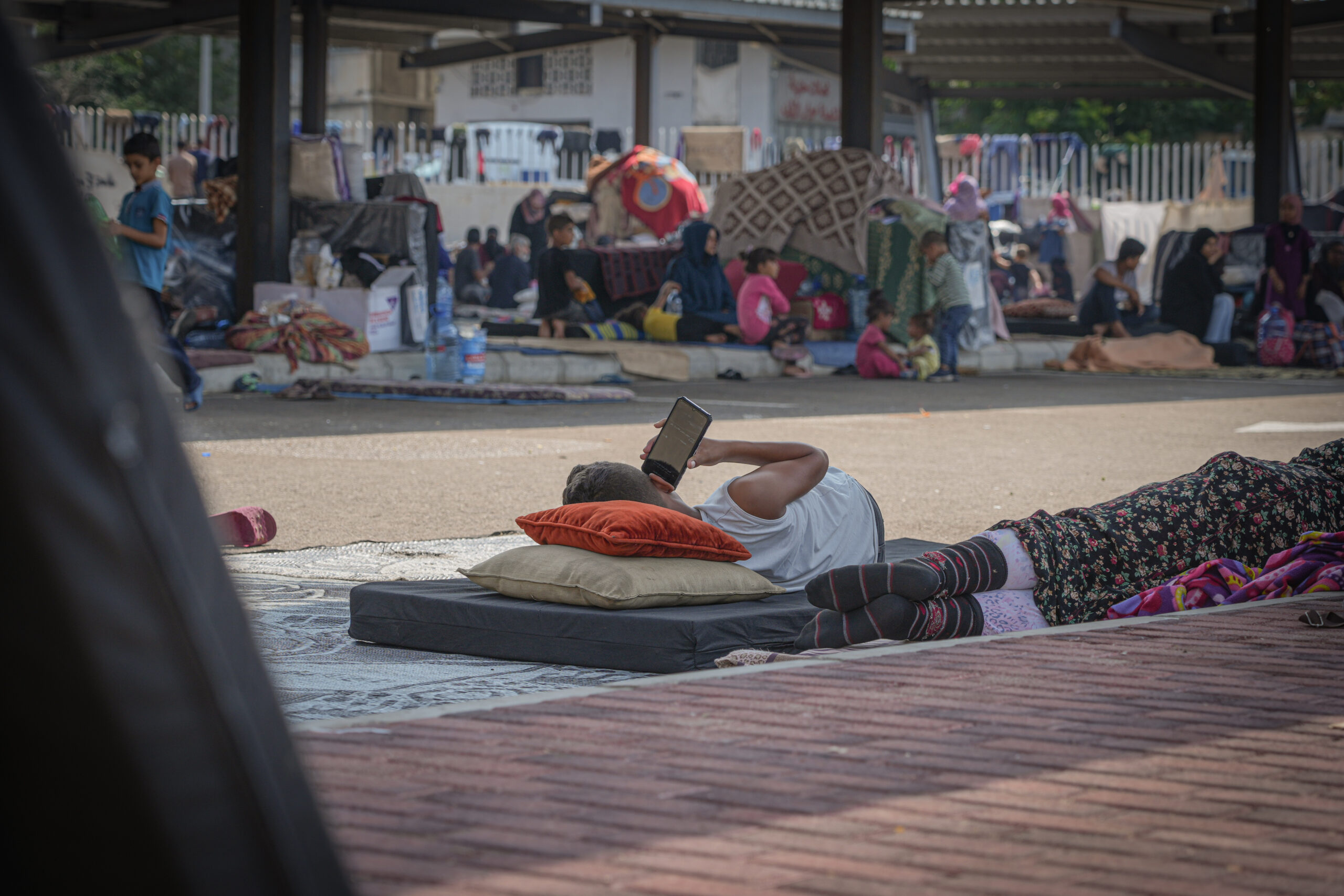
With over 1.2 million people now displaced, conditions in nearly 1,000 communal shelters are getting more desperate by the day. Islamic Relief aid workers in the shelters report that food is becoming so scarce that many families are splitting a single meal to make it last throughout the day.
Newly displaced people have told Islamic Relief staff of horrific conditions in Lebanon, with one woman describing fleeing as bombs fell as like “walking on fire”.
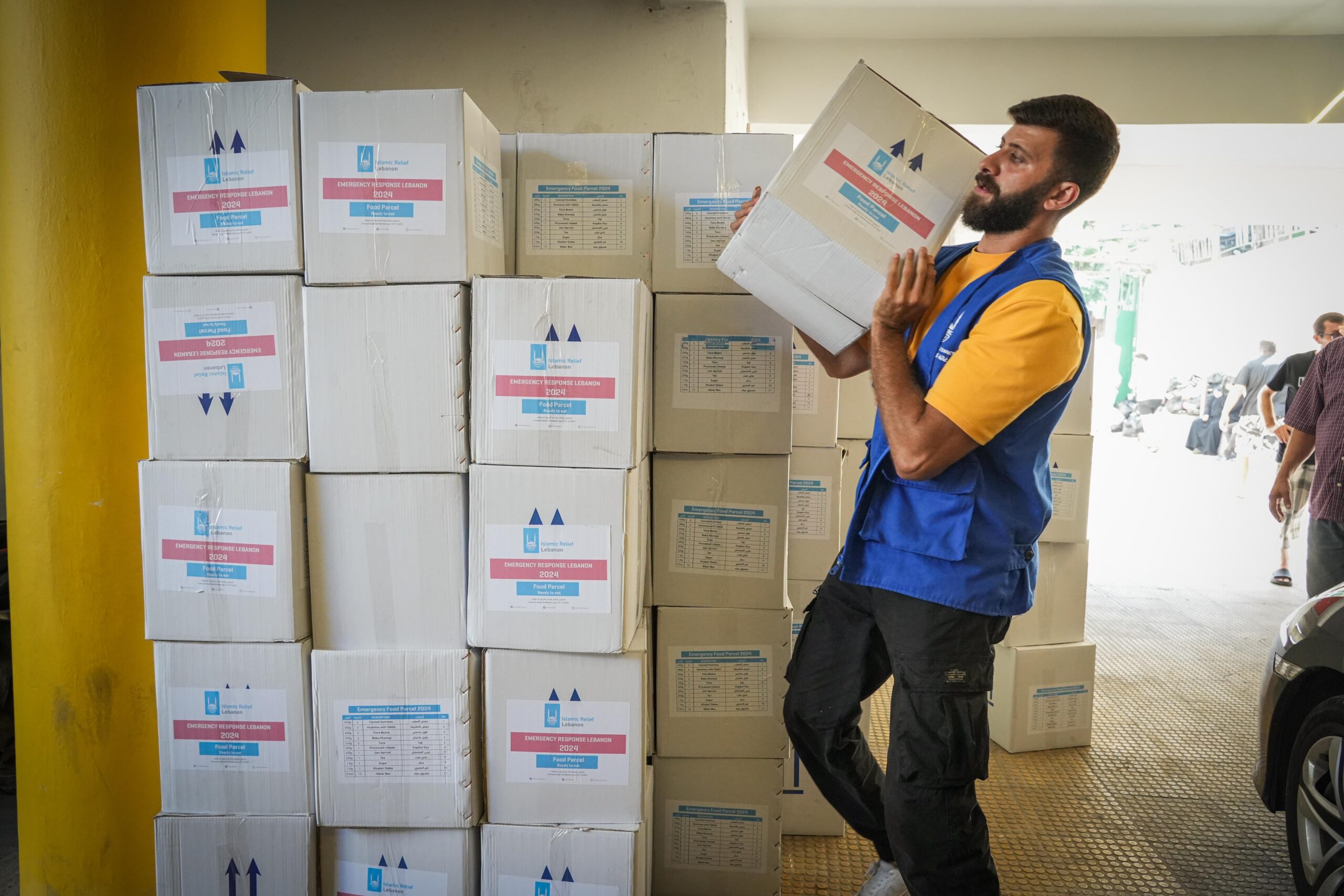
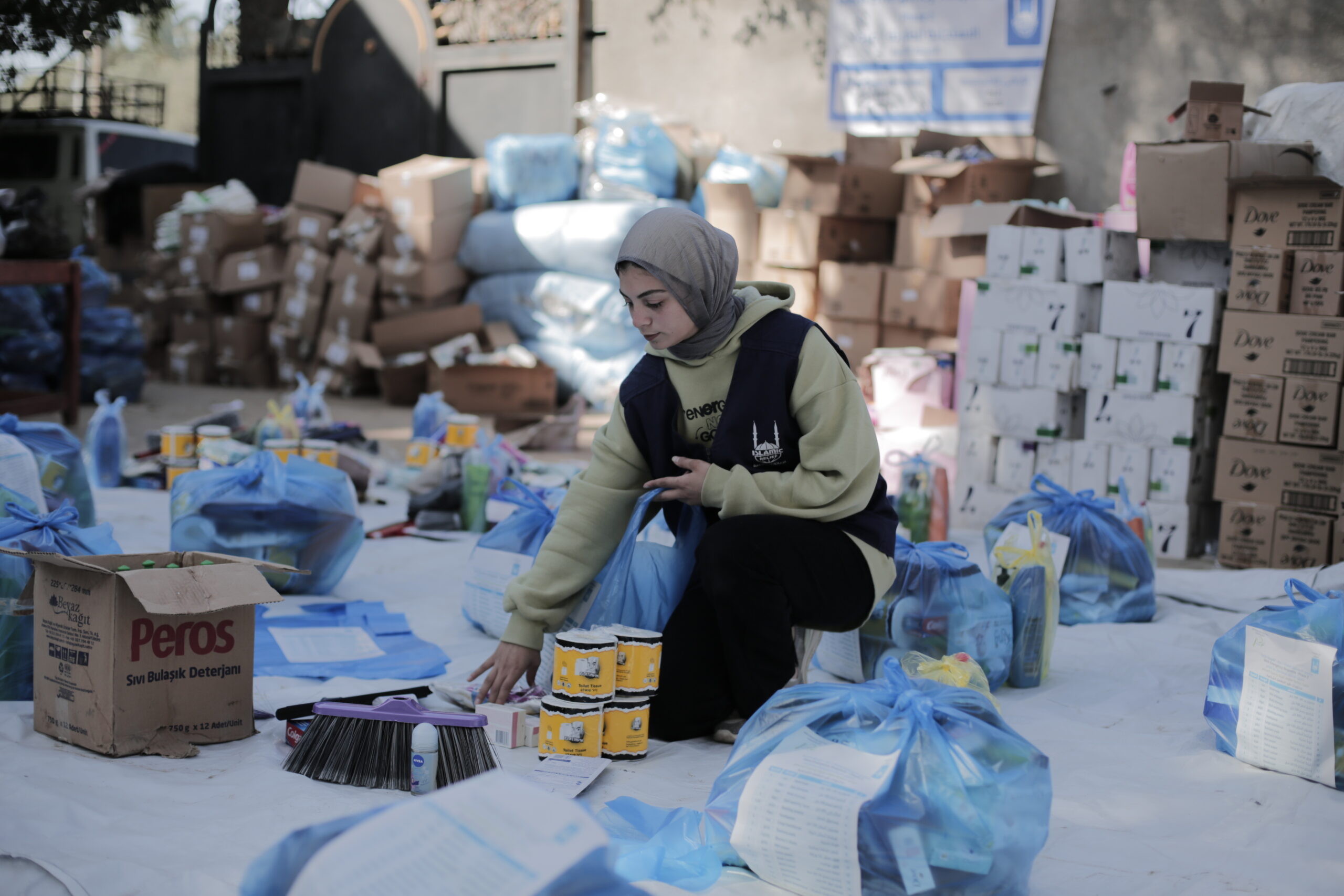
Islamic Relief has so far distributed over 12,000 family-sized ready-to-eat food packs in the shelters, as well as thousands of hygiene kits, blankets, mattresses, medical items and other vital aid*. But the charity is running short of funds to keep distributions going, with existing funds set to run out in less than 10 days.
One woman, Umm Issa, described to Islamic Relief how she and her children fled the bombing in southern Lebanon, taking many hours to drive around 40kms:
“My daughter has cerebral palsy so we didn’t intend to leave the house. Suddenly the bombing started and there were many airstrikes on the roads and inside the town. I left for the sake of my children. They could no longer bear the sounds, the screaming and the strikes. My daughter was anxious and in severe fear.
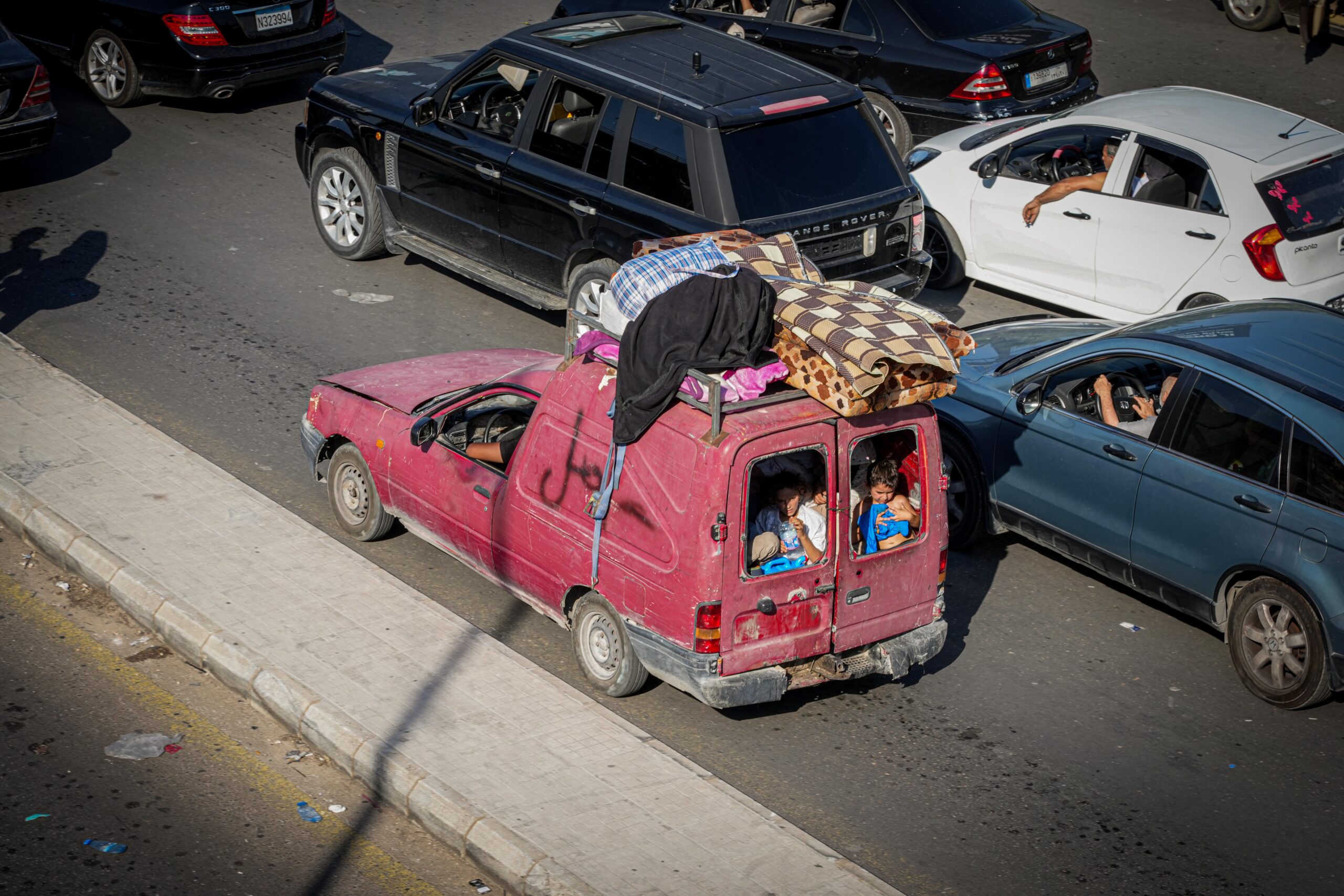
“So we packed up and got into the car. Then there was another airstrike. My son started clearing the rocks and debris from the roads… imagine (it was like) walking on fire and rubble on the road. When we reached Hboush there were more airstrikes and people were fleeing in the opposite direction.
“My daughter started screaming and collapsed from the panic. We stayed on the pavement for 6 hours, listening to the sound of bombing. Every time we tried to leave we had to go back. We reached Al Masayleh and it was the same. Dozens of displaced people were on the roads – refugees, Lebanese, people from all nationalities. They couldn’t walk any more from exhaustion.
“It took us [many hours]… just to get to Anqoun (another town in the south) and the people of this area welcomed us with love and kindness and gave us shelter in this school. But my daughter refuses to sleep in a room and prefers to sleep in the car out of fear. When the doors shut quickly she thinks it the sound of more bombs. It’s something no one should have to endure. It’s a crime in every sense of the word.”
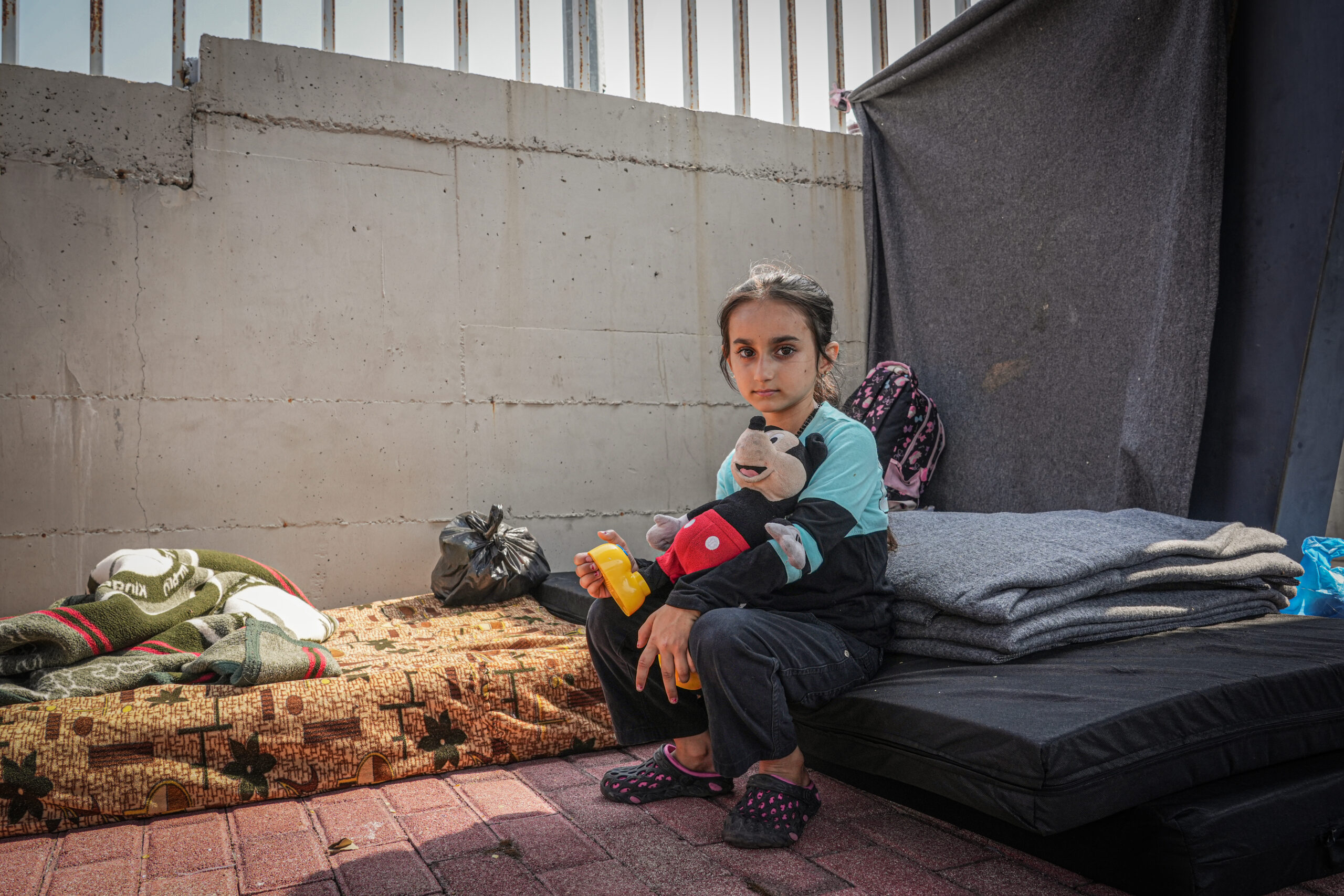
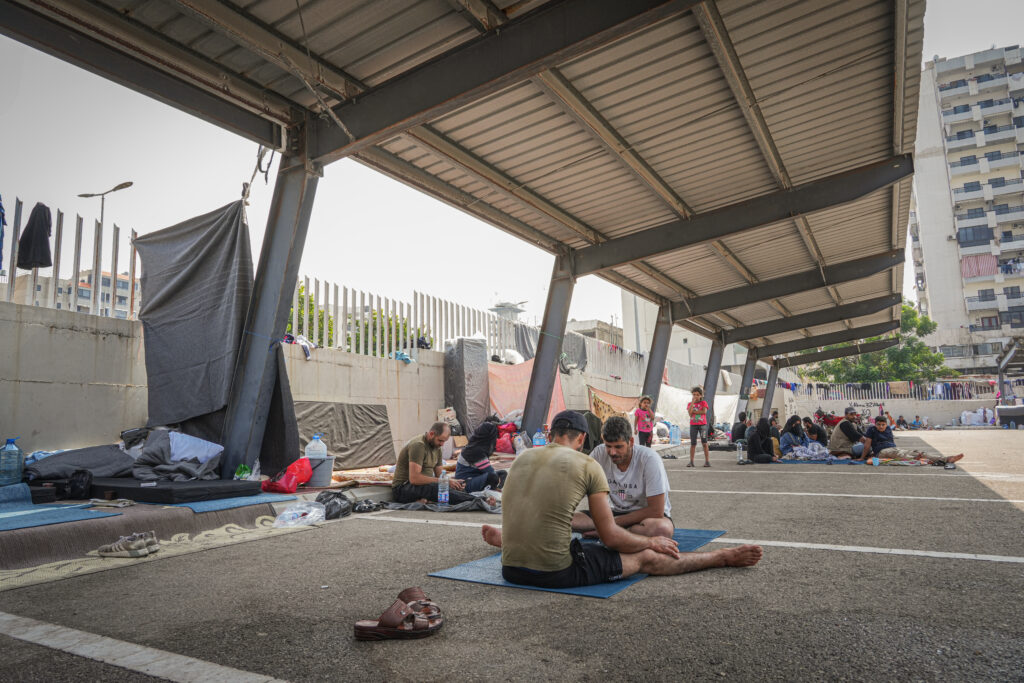
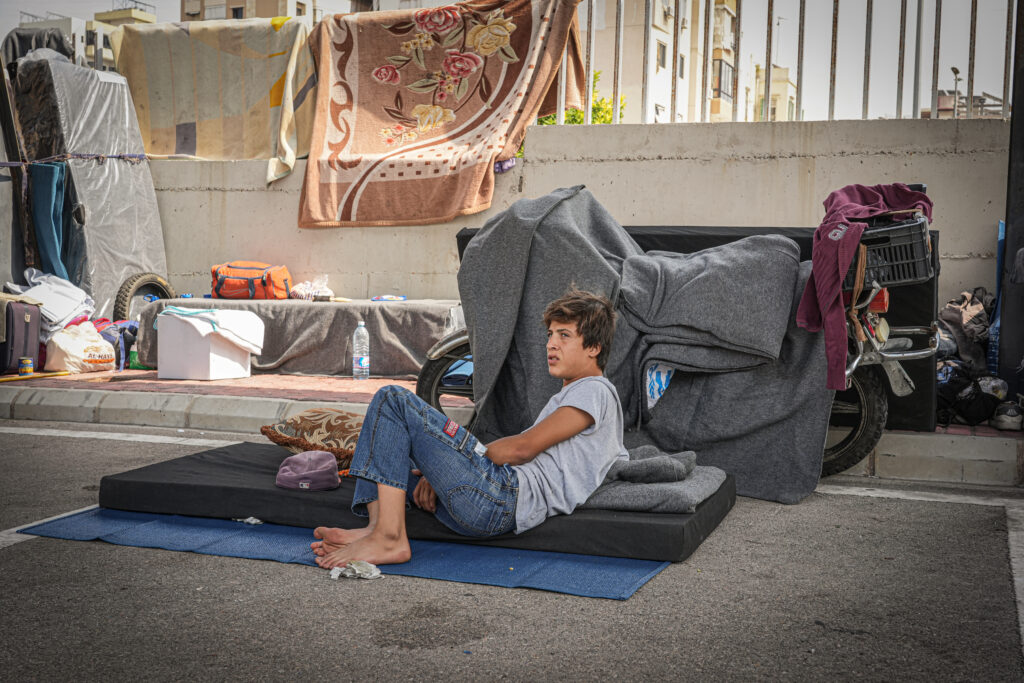
With shelters full to bursting, many families are sleeping on the streets. Another woman, Nazima, a mother of 3 displaced by the bombing in southern Beirut, told Islamic Relief:
“We left because we no longer have a home, nor safety, nor any place to shelter us. We went from bombing to bombing. I escaped and we’re sleeping on the street now. If anyone provides us with food, we eat – if they don’t, we wait for the mercy of God. There’s no place to wash or shower, especially for us women. We all just need a private space to clean ourselves on our own. We’re women with children, babies, there are pregnant women too… We’re all floating on the streets. We have children with fevers, they’re getting sick, vomiting, and we’re not able to do anything because we don’t have money.”
The Israeli invasion and escalation in bombing has so far killed over 1,800 people and injured over 10,000 – with most of the casualties civilians, including hundreds of children.
Jad Assaf, a senior humanitarian program officer with Islamic Relief in Beirut said, “The situation here is critical, it’s getting worse every day, and the resources are not enough. We are in urgent need of more assistance and we urgently need help from the international community. It’s not just about providing aid, we also desperately need diplomatic support to stop the attacks. Right now we’re just trying to stay on top while everything else is crashing around us. Every day we’re confronted with the scale of the crisis. Wherever you go you see people on the streets and that’s just heartbreaking. Everyone is exhausted. You can just feel the anxiety. there is always this fear of what will happen next.”
As Israel also steps up attacks on displaced civilians in Gaza in recent days, a ceasefire across the region is more urgent than ever. Islamic Relief continues to call on international governments to do all they can – such as ending arms sales – to increase pressure for a ceasefire and protection of civilians.
*So far Islamic Relief has distributed at least 11,964 family food parcels, 500 meat packs, 2,308 hygiene kits, 1,335 blankets, 1,335 mattresses, and 17,609 medical items.
Give hope to the people of Lebanon
Your compassion can save lives. With your support we are able to respond immediately to human suffering in Lebanon.
Yomna, an 8-year-old girl in Gaza, describes how her life had become “like a nightmare” since the previous October.
“I have changed during these months. I used to think the future would be bright but now I do not think so: our future is very dark.”
Now, life has only gotten more challenging for Yomna and the more than 2 million others living under bombardment in Gaza. A future that seemed bleak 5 months ago, has gotten even darker. Palestinian families reflect on a year of horror, with still no end in sight.
It’s difficult to describe the loss, destruction, and devastation the Israeli bombardment is having on Gaza. The numbers are overwhelming.
More than 41,000 people have been killed – including over 11,400 women and 16,800 children. At least 96,000 more people have been injured.
Only 17 of Gaza’s 36 hospitals are still functional – and all only partially. Shortages of fuel, medicine and essential supplies are hampering efforts to treat the wounded and care for the chronically ill.
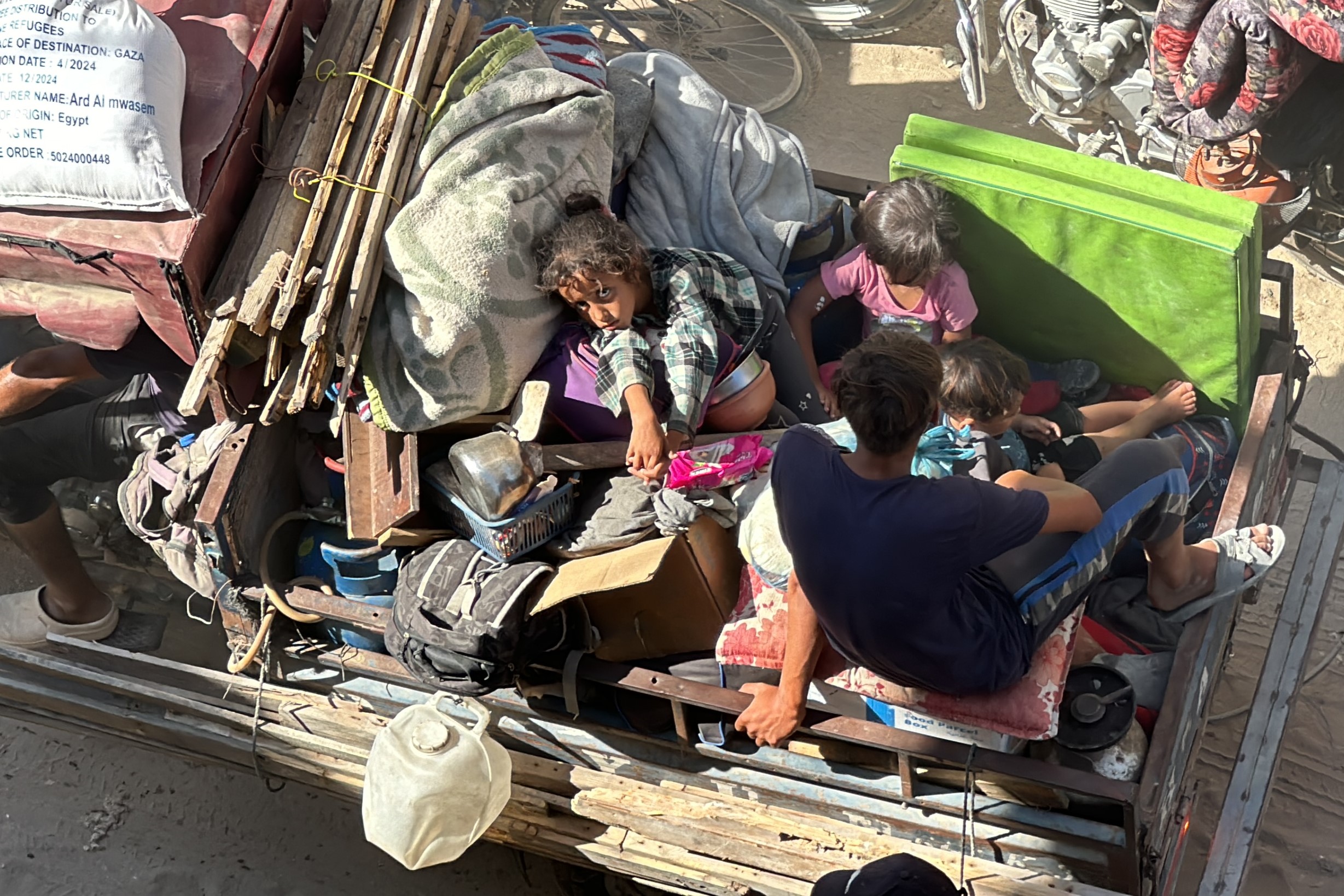
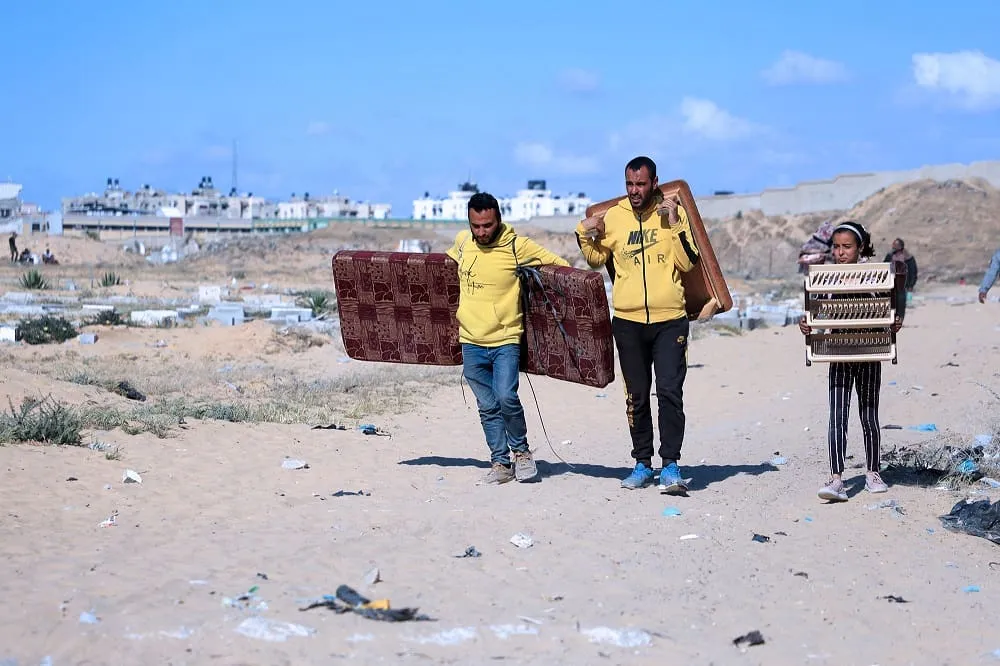
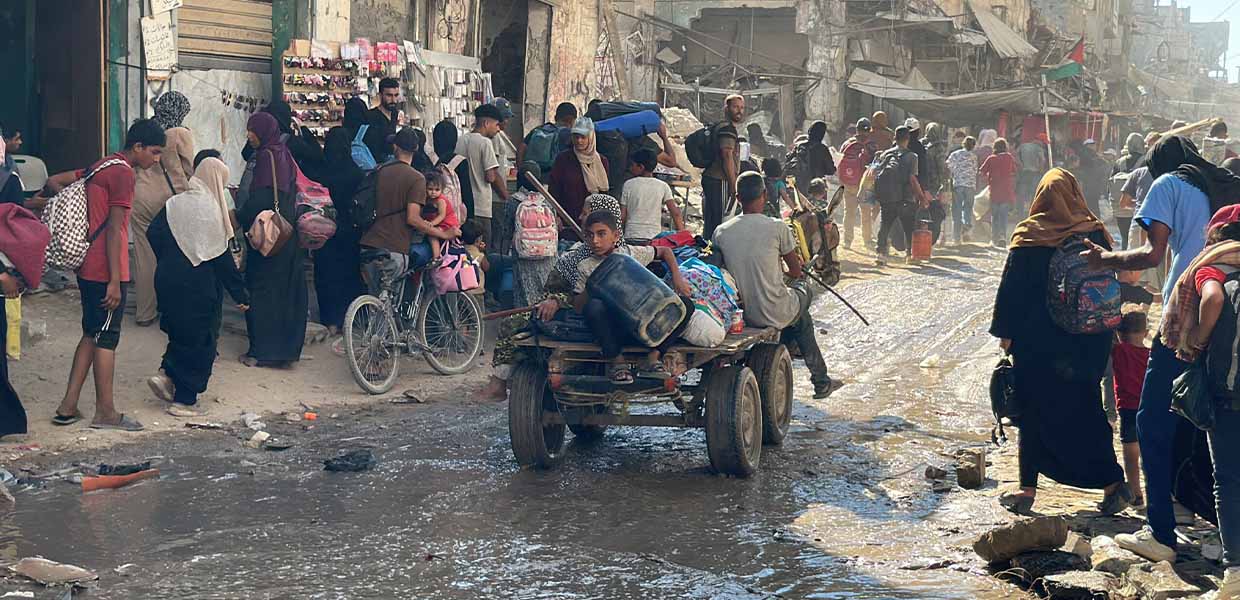
Around 90% of Gaza’s population is now displaced. Many have to flee again and again in search of safety, but there is nowhere safe for them to go. Diseases are spreading in overcrowded shelters and famine conditions are spreading.
Many have no home to return to. The bombing has left more than 60% of Gaza’s residential buildings damaged or destroyed.
Supporting the People of Gaza
In a new report, Islamic Relief outlines how our dedicated staff and partners in Gaza have been supporting people in desperate need over the last year, even as they face great hardship themselves.
With the exception of our Orphan Sponsorship Program, which has expanded considerably, Islamic Relief’s regular programs have been suspended for the safety of our staff, partners and the communities we serve. Instead, we have focused on responding to the emergency.
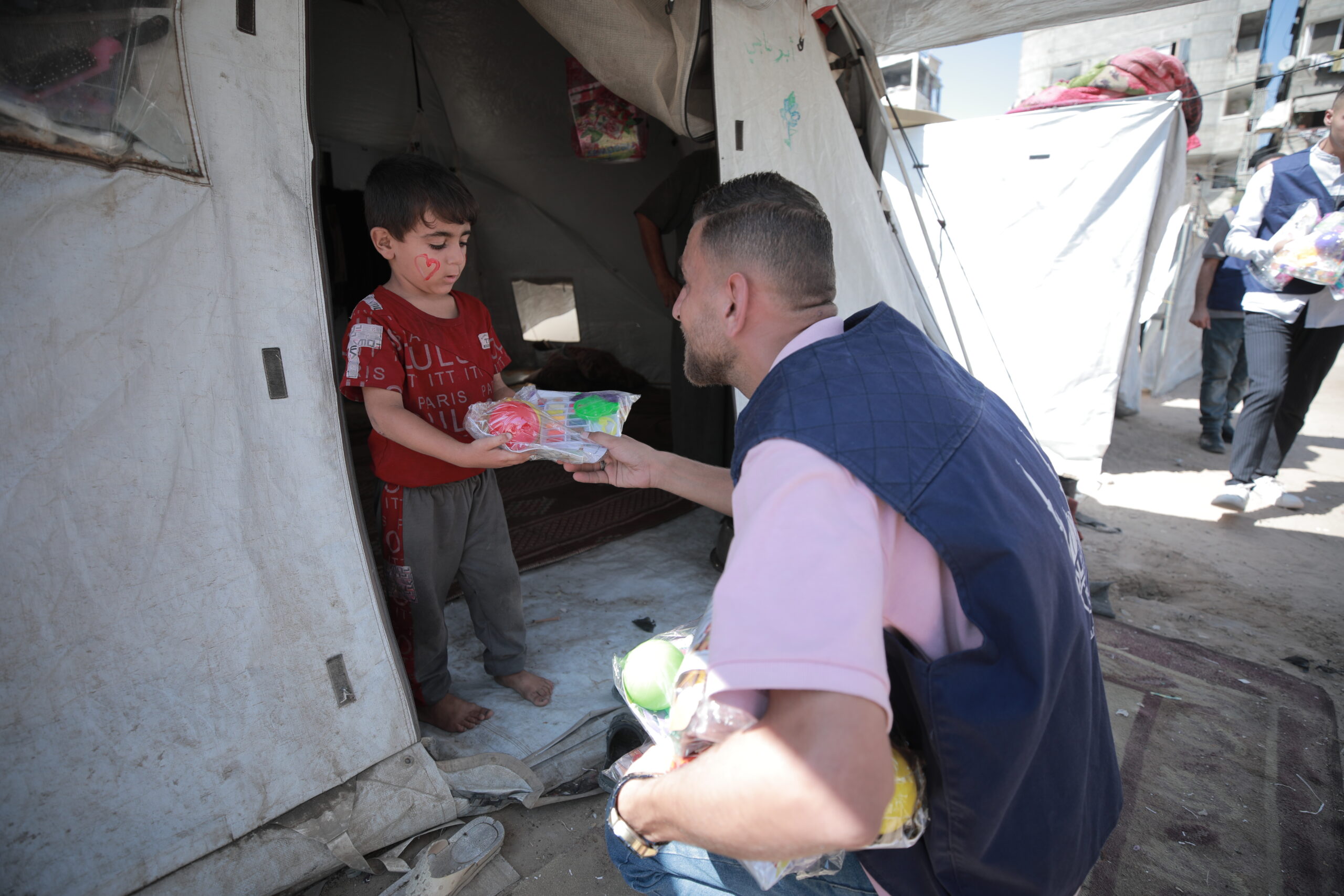
Over the last year, we have helped feed people displaced people in shelters with hot meals, food packs, vegetables and vouchers. We have also distributed desperately needed clean water and nutritional supplements to people in shelters. To help combat the spread of disease, we’ve set up portable toilets and provided hygiene kits to displaced people.
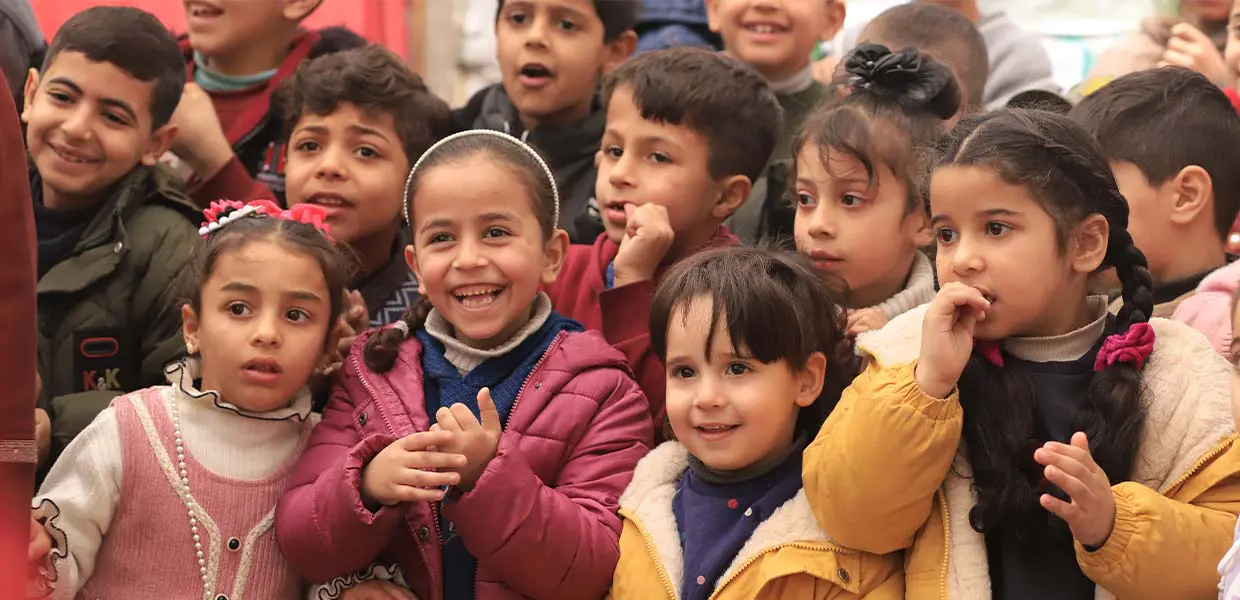
We have organised games and performances for children to help support their mental health and provide a momentary distraction from the hardship they’re enduring.
Prior to October, Islamic Relief supported 8,750 orphans in Gaza through our Orphan Sponsorship Program. Now, more than 16,400 children are receiving a monthly stipend, as well as food parcels and gifts at Ramadan and Eid. While the program has expanded, we are heartbroken that 118 of the children and young people we have cared for have been killed since the crisis began.
Ceasefire Now
The generous support of our donors is putting aid into the hands of families in desperate need in Gaza. But so much more is needed. Humanitarian organisations can ease the suffering of Palestinian families, but we cannot bring it to an end. Devastatingly, world leaders have repeatedly failed to act as international law is violated every single day.
The dire conditions inside Gaza are a stain on the conscience of the world, which has watched on as children are bombed, families are displaced repeatedly, women give birth without medical care, and hope is stripped from ordinary people.
Now, it’s been one year of unfathomable loss. Where Israel’s bombing continues spreading across the region. Islamic Relief is clearer than ever that this nightmare must end. We continue to call for an immediate and permanent ceasefire in the region.
International law must be upheld. Anyone found to have committed violations must be held to account. We are calling for Israel to end its attacks and the forced displacement of civilians. To end the siege so that sufficient humanitarian aid can enter Gaza to alleviate the suffering of its people.
Gaza: One Year On Report
Read more in our new report A year of massacre and misery: Israel’s nightmare campaign against Palestinian families in Gaza.
A year into the unprecedented escalation, an Islamic Relief aid worker* in Gaza looks back in disbelief and despair at all he and his family have endured and wonders what kind of future is left for the people of Gaza.
The first day we met, my dear readers, was one year ago. Back then, I was trying to open a window for you to see what was happening in Gaza. Over the last year, I got used to speaking to you, there was comfort for me in writing about my ups and downs, my hopes and fears, my dreams and nightmares. I never thought I would still be writing these war diaries one year later. I really hoped this was a milestone we’d never reach. I still can’t grasp the idea that a whole year has passed, and the situation is still the same. I was hoping that my words might drive some change, but, as time went on, I resigned myself to the idea that I was just telling my story.
At least I am still able to tell my story.
I am not a hero, I am just like you, my readers. A normal guy – a father who wishes to provide the best for his family, a dreamer who wishes for a better world. A man calling out for peace. I am just me.
This year has been the worst of my life without doubt. I always thought that a single year in a whole lifetime is not a big deal, but this one has exhausted myself and my family beyond measure. The worst thing is that we went through this year keeping hope alive that the crisis would end. We have been following any news of a ceasefire like crazy, hoping that it will happen. But after one year, I still don’t see any ceasefire on the horizon. I feel that has been part of a psychological war to keep feeding us false hope.
In July, I promised my wife that next year, we would not celebrate her birthday like this. We wanted to leave Gaza to give our kids a better chance at life. But we couldn’t. I kept telling myself that the next big family occasion will be celebrated back in our own home. But our home is gone, and our memories gone with it.
This war has deeply affected us. Every breath hurts. Every morning waking up to realise I’m still not sleeping in my own bed hurts. Every moment knowing I can’t fetch my children’s toys for them hurts. It has been a year of torture, of famine, of loss, of annihilation. A year like no other.
Homes, schools, mosques, hospitals in Gaza – all lost
Over the last year, my house has been damaged and left uninhabitable. My 2 sisters and my brother have all lost their homes, and almost all of my colleagues at Islamic Relief Palestine have lost theirs. Worse still, some have also lost their family members. Our Islamic Relief office is gone, as are my children’s schools, the mosque I used to pray at, the hospitals where my kids were born, the restaurants that I liked, the road to work, my Christian neighbours’ church. We’ve lost a country. We’ve lost a home. We’ve lost the faith and belief that has kept us sane.
My son used to have a stuffed monkey toy that he hugged when he went to sleep. Every night, I hear him whispering to his mum that he misses ‘Monkey’, that’s its name. My daughter is growing up without her cousins, without her friends. The place where she used to play basketball is destroyed. Every time she shows me photos with her team she starts crying. She is so sensitive, but I keep pushing her to be stronger. This world is not for sensitive people like my girl. My mum struggles to find the medicine for her diabetes. We check every pharmacy and all the field hospitals but they say they can’t provide it. Israel blocks aid with impunity and the world watches on.
Everyday atrocities, everyday indignities
This year tested all our humanity, and I guess most of us failed. In the first few months of the war our voices were loud but then people got used to the scenes. I remember the Baptist hospital massacres, but dozens of massacres took place after that, all soon forgotten by the outside world. I remember the story of Hind Rajab, trapped helpless in a bombed-out car waiting for ambulances that could not reach her. But since then, thousands of children have been killed without even a mention in news reports.
Now, my readers, we can’t wash because there are no cleaning products. We can’t find clothes for the approaching winter. We can’t find paper to teach our kids to write. We can’t find treatments for our illnesses. My friend is suffering so badly from a kidney stone that they can hardly move, but there is no treatment. I’ve had flu for the past 2 weeks and I can’t find paracetamol. I can’t even find shoes.
My friends living in tents were drowned after the first heavy rain. Families set up their tents on the shoreline and the tide swept them out to sea. Israel isn’t allowing cash into Gaza. We can’t pay for bread, for a haircut, for a water refill. Our backup batteries have long since gone dead and Israel is not allowing new ones.
Yes, my readers, in Gaza it is not only airstrikes and bombs that bring death. Death comes for us when Israel cuts off power for sewage treatment plants, severs vaccine supplies, blocks wounded people from leaving Gaza for treatment, closes our borders to aid, supports and arms criminals, and encourages conflict. Israel is systematically destroying our lives. This deliberate intent to annihilate Palestinian lives could be the end of us.
Suffering families in Gaza desperately need a ceasefire
I had been thinking that after this war ends, I want to use every platform available to tell our story. I wanted to start rebuilding. I was thinking of solutions for the disrupted services – water, electricity, education, health – if we returned to our homes. But I didn’t really think too deeply about it. I wanted to see an end to this, and I knew Allah would provide for us after that. I am a believer, a devout one, I can handle whatever comes.
Now, I feel I’ve lost my faith. I’ve lost belief in this world. I am tired, exhausted and done. This last year has depleted all my energy, and I don’t have any backup batteries to recharge myself. I think this war is killing us all. It targets every possible chance for us to restart any kind of life. I think my story could end here. However, if I do survive to see an end to this war, my only wish will be to go to some quiet place. Somewhere without falsehoods, somewhere as isolated as it gets. I am tired of logic and rationality. I am tired of repeating myself while no one listens. I am done.
Gaza: One Year On Report
Read more in our new report A year of massacre and misery: Israel’s nightmare campaign against Palestinian families in Gaza.
Editor’s note: This blog was submitted amid a fast-changing and deepening crisis. The information was correct as of Friday 20 September 2024.
Over the last year, our colleague in Gaza has submitted at least 50 blogs detailing his experiences under bombardment.
While the blogs, including this one, have been anonymised for his safety, they have formed a deeply personal window into not only the daily lives of his family, but also his darkest thoughts and most fervently held hopes.
Sometimes putting pen to paper has been a relief for our colleague, but often it has been a challenging and upsetting process.
We’ve been humbled to receive and share these regular updates. On this bleak anniversary, we thank him for his selfless dedication to ensuring the Palestinian experience is not lost among headlines and statistics, no matter how futile these efforts have seemed to him at times. Thank you.
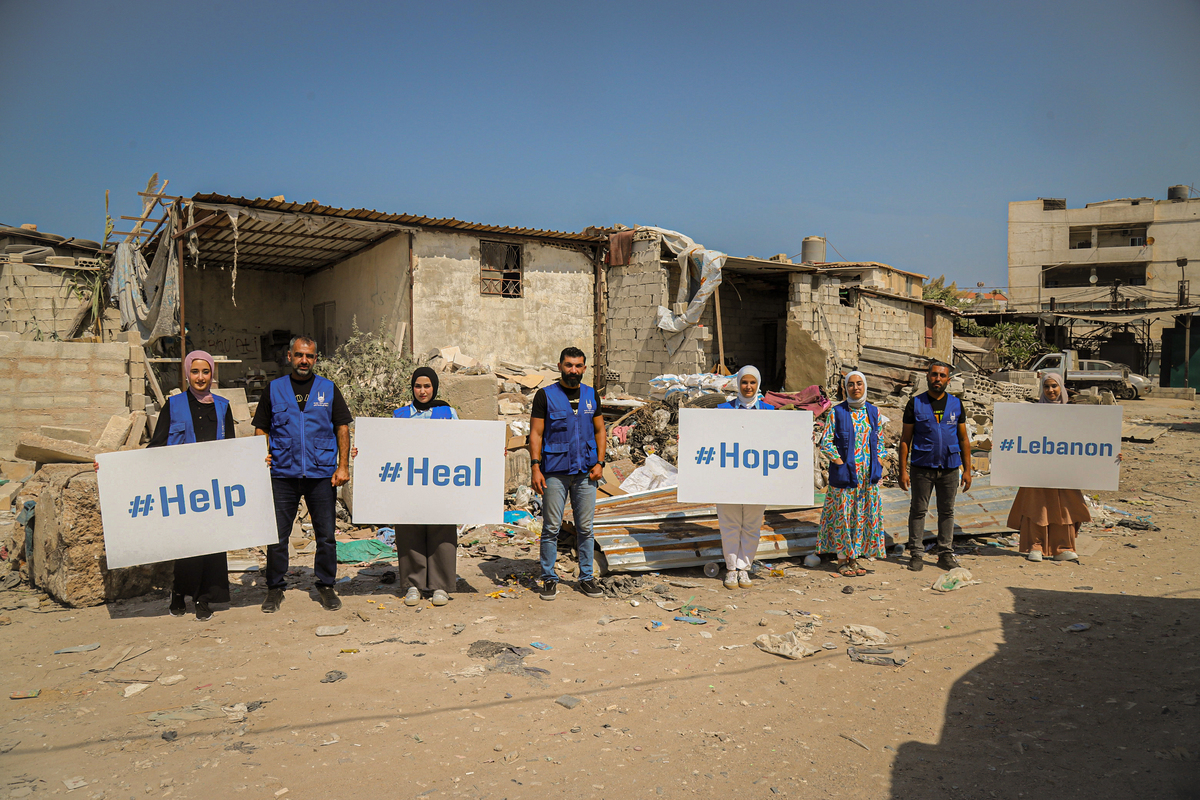
Islamic Relief teams in Beirut have today been distributing emergency aid as thousands more families flee their homes amid the unprecedented escalation in Israeli bombing in the Lebanese capital.
Since October 2023, an ever-growing number of families in Lebanon have become displaced, experiencing similar upheaval and uncertainty. However, numbers have skyrocketed over the last two weeks, amid a sharp increase in violence.
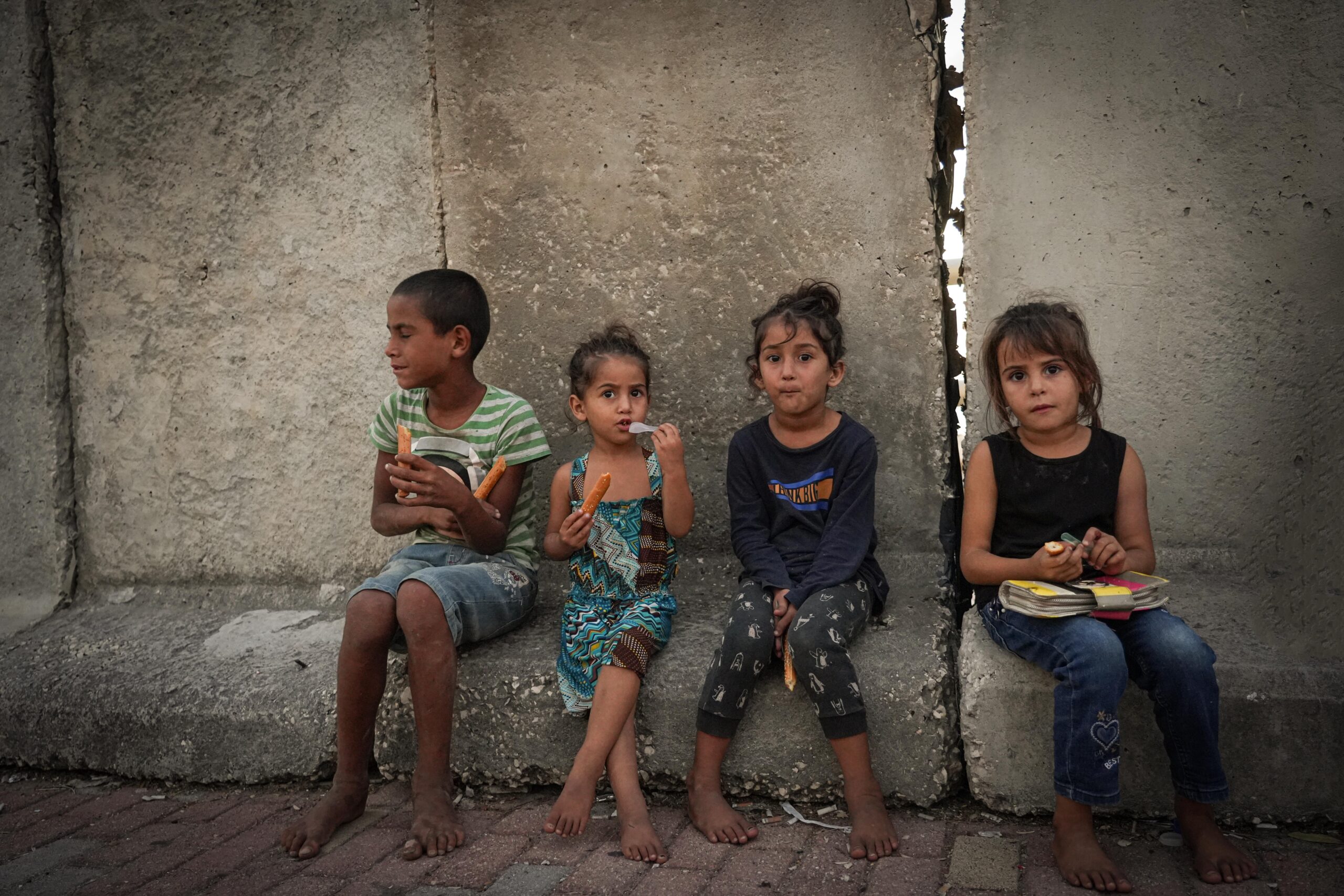
Our staff report catastrophic scenes, with school shelters at bursting point and thousands of terrified families stranded in the open with nowhere to go.
Firsthand Account From the Ground in Beirut
Jad Assaf, Islamic Relief’s Senior Humanitarian Program Officer based in Beirut, says:
“It’s hard to find the words to describe the situation, but it’s getting worse by the hour. People are camping out in parks, on the beach, or just by the side of the road.Wherever you go there are terrified families who don’t know where to go to be safe.
“Hundreds of schools have been turned into shelters across the country, but many of these are now full to bursting point and are having to turn people away as they have no more space. The bombing is continuing and we fear the numbers of displaced people will keep rising.
“Conditions in the schools are awful. There are already multiple families sheltering in each classroom and others have to sleep in the playgrounds as there’s no room left inside. There are 100 or more people sharing a single toilet, and no showers. Women and girls have no privacy and have to share rooms and toilets with complete strangers. People had to flee their homes in a hurry, so they have hardly anything with them.
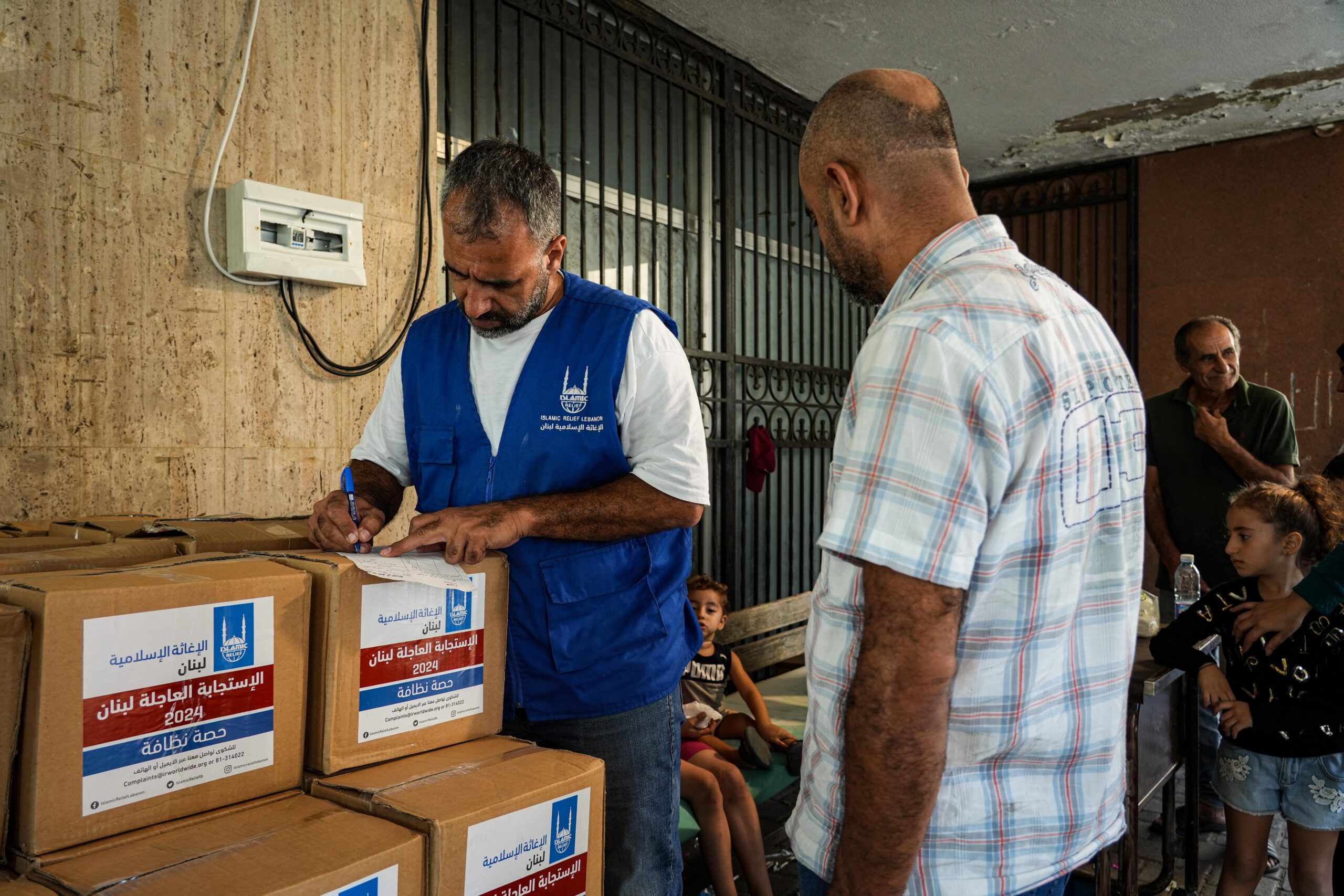
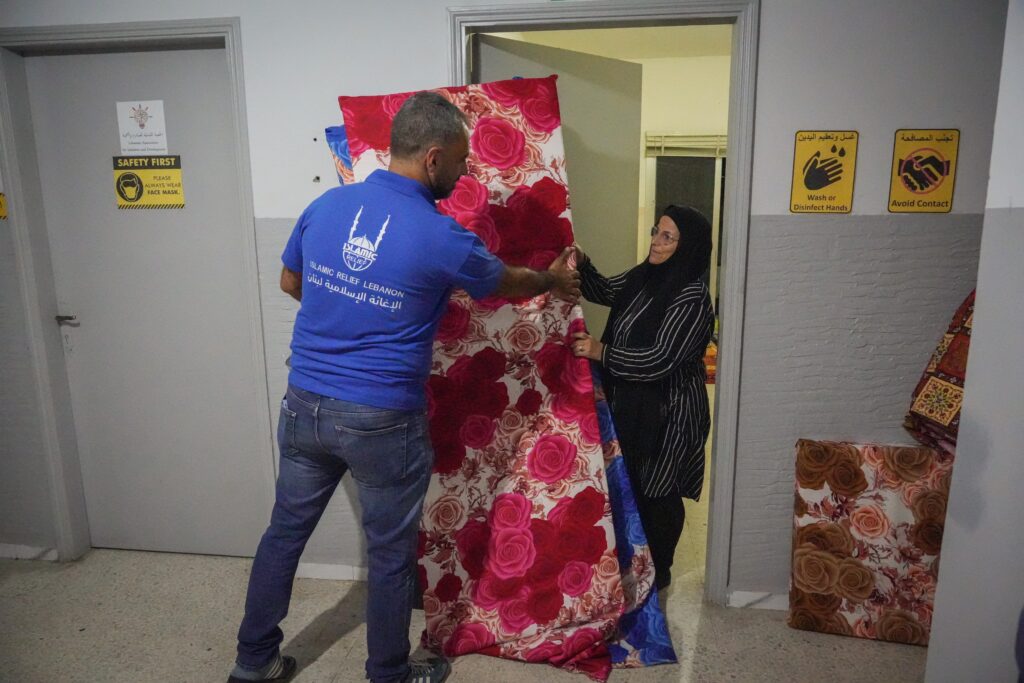
“Since the beginning of the crisis we’ve been distributing food, hygiene kits, mattresses, blankets and medical supplies. Today we’ve distributed food parcels to 1,000 displaced families who have nothing and are absolutely desperate.
“The numbers of people affected are huge, but it is not about numbers – it is about people. These are real people who are in inhumane conditions.”
An Escalating Crisis
More than 100,000 people have been displaced across Lebanon in just five days, and more are fleeing hourly. Many families fled bombing in the south of the country and arrived in Beirut over the past few days, hoping the capital would be safer, only to suffer the massive escalation in bombing there over the past 24 hours.
As the crisis escalates, and the massacre in Gaza continues, Islamic Relief says international governments must step up pressure for an immediate ceasefire across the region and end arms sales.
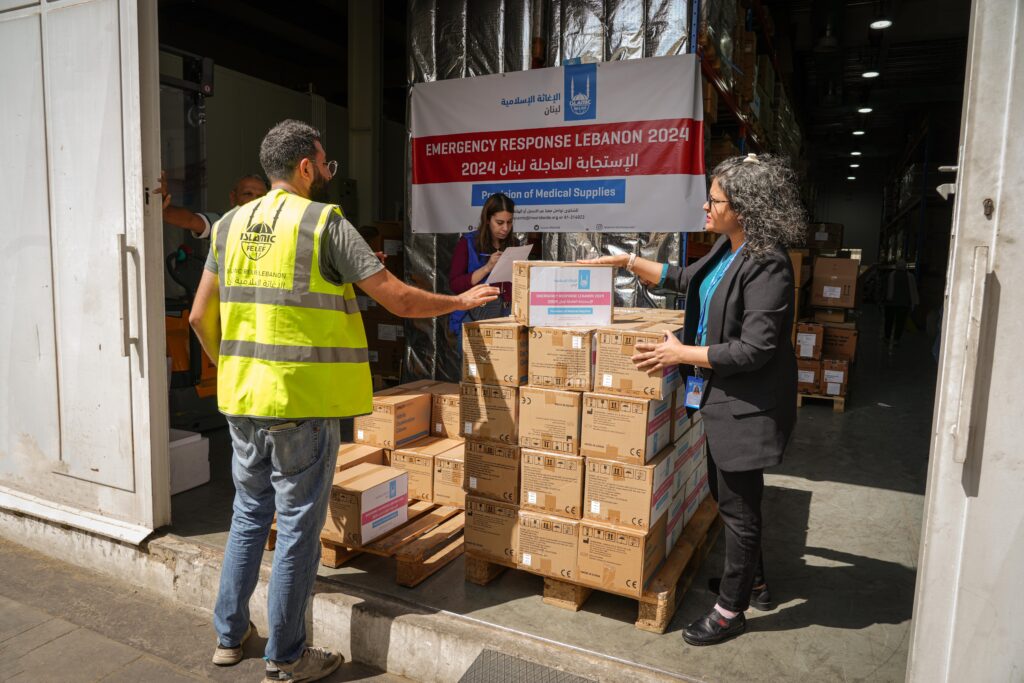
Islamic Relief has launched a $19 million AUD emergency appeal to scale up its response to the Lebanon crisis. Since the beginning of the crisis the charity has distributed 3,653 food parcels, 2,273 hygiene kits help prevent the spread of disease in the shelters, 1,035 mattresses, 1,035 blankets and 6,906 medical items to emergency services.
Give hope to the people of Lebanon
Your compassion can save lives. With your support we are able to respond immediately to human suffering in Lebanon.
As Israeli airstrikes in Lebanon continue to escalate, we share the story of Sara*. She fled with her family from the country’s south last year, where bombing has been the heaviest.
Since October 2023, an ever-growing number of families in Lebanon have become displaced, experiencing similar upheaval and uncertainty. However, numbers have skyrocketed over the last two weeks, amid a sharp increase in violence.
Sara’s Story
“My family and I were worried about our safety and what would happen to us when the war in Gaza broke out. Living on the border is difficult, you must always be cautious. We couldn’t sleep once the war started because we were worried about what might happen next,” Sara says.
“When we heard air strikes on 9 October, we all tried to escape with what little we could carry. The air strike partially damaged my house, my parents’ house, my sister’s house, and our small market shop. Alhamdulillah, we arrived safely in Tyre [a coastal city in Lebanon], although settling there was difficult. We’ve moved 3 times in the last 3-4 weeks because the landowners either won’t let us [stay] or want a high rent, or the building is unsafe for my children.
I have no idea how long we will be here. I don’t have anything to cover my children’s needs, and I have no idea when we will be able to return home safely. We’re all feeling distressed and uncertain about the situation.
“We are currently staying in a small house with other displaced people. There are 10 individuals sleeping in 1 small room. There is no privacy. I’ve had problems using the toilets and managing my period, as well as other hygiene difficulties. I am also worried about infectious diseases that my kids and I could catch.
We are grateful to Islamic Relief for giving food parcels to us. This support gives a sense of comfort that someone cares about us and has compassion for us in this difficult time.
“My children are no longer able to attend school, and they are psychologically disturbed, afraid, and insecure. They ask questions, but we have no answers for them.
Our Ongoing Support in Lebanon
Since the escalation began in October 2023, spilling over from the crisis in Gaza, Islamic Relief has supported more than 27,900 affected people with food, hygiene kits and other basic items. We have also provided much-needed medical supplies to support hospitals and mobile clinics.
We continue to call for an immediate ceasefire and respect for international law across the region.
*Name changed to protect confidentiality.
Give hope to the people of Lebanon
Your compassion can save lives. With your support we are able to respond immediately to human suffering in Lebanon.
Following Lebanon’s deadliest day in decades, Islamic Relief has launched a $19 million (AUD) emergency appeal. To support people affected by the escalating Israeli attacks.
More than 558 people, including over 50 children, have now been reported killed since September 23. More than 1,800 people are wounded.
Thousands of families are fleeing their homes in panic. They now seek shelter in crowded schools, as more Israeli airstrikes tear through neighbourhoods today. After almost a year of gradual escalation, more than 116,000 people in Lebanon have been displaced. They are in desperate need of aid.
Islamic Relief’s appeal is looking to raise an initial $19 million AUD to expand our efforts to provide vital aid to displaced families. With Israeli attacks on Gaza also continuing unrelentingly, Islamic Relief continues to call for an immediate ceasefire across the region. We call for all parties to respect international law and protect civilians.
Akram Sadeq Ali, Islamic Relief’s Country Director in Lebanon, says:
The past few days have seen the heaviest attacks on Lebanon in many years. The country has turned upside down and is in complete chaos, with more people fleeing their homes every hour and taking refuge in crowded schools.
Akram Sadeq Ali
Islamic Relief’s Country Director in Lebanon
“Today our team is delivering mattresses and blankets to new arrivals at some of the schools, and we will be providing displaced families with food and medical supplies for clinics. We’re exhausting all efforts to deliver aid to those affected by this crisis.”
Our Work on the Ground
Islamic Relief has been working in Lebanon since 2006. Since last October, our teams have delivered thousands of food parcels, hygiene kits, blankets, and mattresses to families displaced by the escalating attacks. Currently, our aid reaches almost 30,000 displaced people in Nabatieh, Tyre, Bekaa and Balbek. We have also distributed over 6,900 medical items to hospitals and satellite clinics.
The crisis in Lebanon has been escalating since 8 October 2023, with hundreds of Israeli airstrikes destroying some 4,000 residential buildings and significantly damaging 20,000 more. Farms and markets have been damaged, impacting food production and availability. Access to essential services such as water has been severely disrupted. Over the past year, at least 700 people are thought to have been killed and more than 6,000 injured.
The escalation in Lebanon comes as much of the population struggles to cope with the fallout from a years-long economic crisis. In 2020, a massive explosion in Beirut killed hundreds of people and destroyed parts of the city, contributing to an economic crisis that deepened in the following years. Widespread unemployment, poverty, and hyperinflation in Lebanon have left many families unable to afford even the most basic essentials such as food, water, and medicine.
Give hope to the people of Lebanon
Your compassion can save lives. With your support we are able to respond immediately to human suffering in Lebanon.
Islamic Relief strongly condemns the recent deadly attacks on civilians in Lebanon. We call on world leaders to take urgent action to stop further escalation.
Today’s Israeli bombing has caused by far the deadliest day in Lebanon since the crisis began almost a year ago. The death toll is rising rapidly. So far, more than 180 people have been reported killed and over 700 wounded, including children and many other civilians.
Hundreds of Israeli airstrikes have torn through residential areas and families are fleeing the south of the country in terror.
The Israeli military’s announcement for civilians in parts of Beirut and southern Lebanon to leave their homes is a horrifying echo of the orders we have seen issued repeatedly in Gaza. Orders that come before large-scale attacks on civilians and civilian infrastructure there. Ordering people to leave their homes does not absolve Israel of its obligation under international law to protect civilians, including people who cannot leave or choose not to leave.
Akram Sadeq Ali, Islamic Relief’s Country Director in Lebanon, says:
There is mass panic, families here are terrified and they don’t know what to do or where to go. Civilians and civilian infrastructure such as homes, hospitals, and schools must never be a target and must be protected at all times. Young children are among those killed by the bombs, and any further escalation will be absolutely disastrous for civilians.
Akram Sadeq Ali
Islamic Relief’s Country Director in Lebanon
This latest escalation is likely to force many more families in Lebanon from their homes.
More than 116,000 people in Lebanon have already been displaced over the past year. Many are now in desperate need of aid. At least 24,000 residential buildings have been badly damaged or completely destroyed.
The escalation comes as much of the population in Lebanon struggles to cope with the fallout from a years-long economic crisis. It has forced many families into poverty.
Islamic Relief has helped almost 30,000 people affected by the crisis.
Since tensions escalated in the region last October, our teams on the ground delivered food parcels, hygiene kits, blankets, and mattresses and more. We have also provided thousands of medical supplies for hospitals and primary healthcare clinics. Currently, Islamic Relief supports displaced families and local host communities in Nabatieh, Tyre, Bekaa and Balbek, where most recently displaced people have been seeking refuge.
Islamic Relief has been working in Lebanon since 2006, supporting communities through war, displacement and the current crises.
Give hope to the people of Lebanon
Your compassion can save lives. With your support we are able to respond immediately to human suffering in Lebanon.
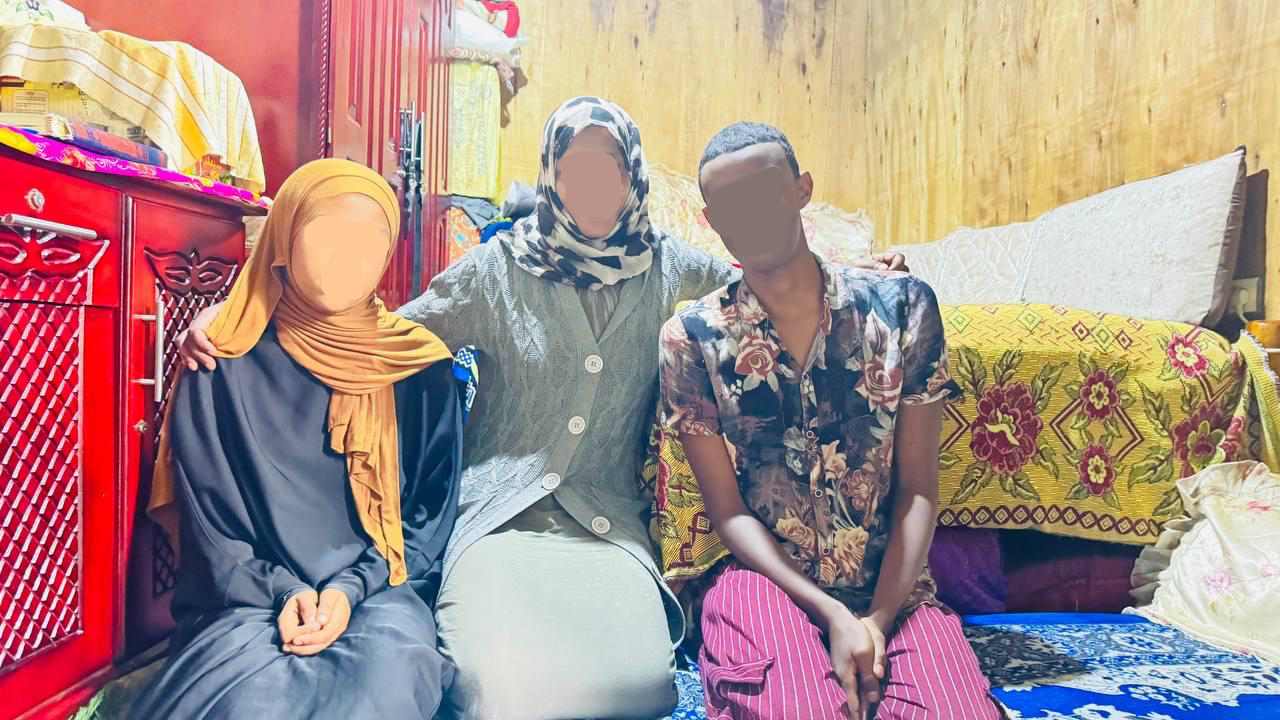
Salahuddin’s story is one of spirit, hope, and the transformative power of an orphan care sponsorship. Born into a family led by a hardworking father, Salahuddin’s early years were filled with the love and support of a supportive family. His father, a courageous labourer, was the sole breadwinner, working tirelessly to provide for his wife, Beheriya Fereja, and their two children, Salahuddin and his younger sister, Amira.
Unfortunately, their world turned upside down when Salahuddin was just three years old. His father passed away due to an illness, leaving the family in a vulnerable state.
Before his father’s passing, the family lived in a modest rental home, paying 3,000 ETB per month. However, after his death, Beheriya found it increasingly difficult to cover the rent and meet other basic needs.
The situation became very bad as the family struggled to secure even two meals a day. The future seemed miserable for Salahuddin, Amira, and their mother, as they faced devastating challenges.
How an Orphan Care Sponsorship Changes Lives
In July 2015, a shine of hope appeared when Salehuddin’s sponsorship began through Islamic Relief. This sponsorship marked a turning point for the family, bringing immediate and significant changes. With the support, Beheriya could finally provide regular meals for her children, and the stress of daily survival started to simplicity. The sponsorship not only covered essential needs like food but also helped in purchasing educational materials, clothing, shoes, and other necessities for Salahuddin and Amira.
Despite the ongoing challenges of high inflation and the economic impacts of COVID-19, the sponsorship supports enabled Beheriya to begin participating in labour work alongside her neighbours, generating a small but vital income to bridge the financial gaps. The family’s situation improved gradually, but a more significant change came with the introduction of the new pricing model for sponsorship.
The Impact of the Updated Orphan Sponsorship Pricing
The increase in sponsorship payments brought a meaningful improvement to the family’s finances. This change motivated Beheriya to explore additional income-generating opportunities. Inspired by the increased support, she began saving a small portion of the funds and invested in a small business selling butter. This undertaking proved to be a game-changer, allowing her to diversify the family’s income sources and achieve a more stable and sustainable livelihood.
Today, Salahuddin and his family are successful, and their future looks brighter than ever. The new pricing structure not only provided immediate financial relief but also inspired Beheriya to take practical steps toward self-reliance.
The story of Salahudin and his family is evidence of the thoughtful impact of sponsorship and how, with a little support, lives can be transformed. The new pricing model has empowered them to move beyond simple survival and into a future filled with possibilities. It is a powerful reminder of the importance of community and the transformative power of giving.
Help support an orphan and change their lives
By donating just $100 a month, you can give a child like Soad the chance to pursue their dreams and build a brighter future.
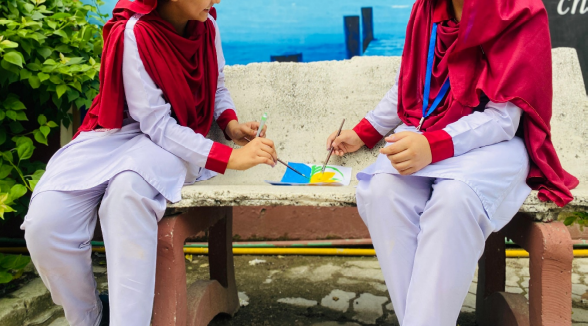
How does an orphan care sponsorship change the life of a child in need? This is the heartwarming story of Rubab, a bright and determined young girl from Pakistan, whose life has been profoundly impacted by your generous support.
Over the past year, Rubab has blossomed in many aspects of her life, and this transformation is a testament to the life-changing difference your contributions have made.
Orphan Care Helped Her Thrive in School
Rubab’s educational journey has been nothing short of remarkable. Before orphan sponsorship, she attended a government school. While she was always a hardworking and dedicated student, the limited resources and opportunities at the government school did not fully allow her to reach her potential.
But now, thanks to your continued generosity, Rubab and her elder sister have transitioned to a well-reputed school. One that offers a much higher standard of education.
This change has had an extraordinary impact on Rubab’s academic performance. She now excels in her studies, consistently achieves high marks, and shows a newfound enthusiasm for learning. Her teachers have noted her active participation in class, her inquisitive nature, and her eagerness to take on challenges.
Moreover, Rubab has embraced extracurricular activities with great enthusiasm. This has not only enhanced her academic experience, but also helped her develop essential life skills such as teamwork, leadership, and time management. These activities have further boosted her confidence, allowing her to express herself more freely and explore her interests beyond the classroom.
Orphan Care Gave Her Family Proper Shelter
The positive changes in Rubab’s life extend beyond her education and health. The new sponsorship pricing has significantly improved the living conditions for Rubab and her family.
They currently live in a modest single-room home. However, before this support, the family faced considerable financial challenges. Rubab’s mother, the sole provider for the family, often struggled to make ends meet. Simple pleasures, such as buying new clothes for Rubab, were luxuries that could only be afforded during Eid.
However, the financial relief provided by the new pricing structure has eased these burdens considerably. Rubab’s mother can now manage the household expenses more effectively, allowing Rubab to enjoy the small joys of childhood, such as wearing new clothes more often. This has not only improved their living standard, but has also brought a sense of security and stability to their lives.
Rubab’s Mother Thanks You For Your Support
Rubab’s mother has expressed her deep and heartfelt gratitude for the difference your support has made. She is incredibly thankful for the new sponsorship pricing, which has lifted a significant weight off her shoulders.
The financial stability it has provided has allowed her to focus more on nurturing her children and less on the day-to-day worries of making ends meet. She is overjoyed to see Rubab thriving in her new school and is confident that this opportunity will pave the way for a brighter future for her daughter.
Your generous contributions have had a transformative impact on Rubab’s life. Because of you, she is receiving an education without obstacles, living in a more stable and supportive environment, and growing up with the hope and determination to achieve her dreams.
The positive ripple effect of your support is evident not only in Rubab’s life but also in the lives of her family members, who are all benefiting from the improved circumstances.
We cannot thank you enough for the difference you have made in Rubab’s life. Your support is not just an investment in her education but in her future, and we are deeply grateful for your continued generosity.
Help support an orphan and change their lives
By donating just $100 a month, you can give a child like Soad the chance to pursue their dreams and build a brighter future.