06.12.24

Aqiqah and Qurban: Sacrifice for the Sake of Allah (SWT) 

  Dhul Hijjah     Publications

Qurban and Aqiqah are both significant acts of worship (ibadah) in Islam that both involve the sacrifice of an animal for the sake of Allah (SWT). Anyone who has the financial means to do Qurban and Aqiqah is highly urged to do it. As these are important rituals the Prophet (ﷺ) did rigorously at their assigned times.

While these two have some similarities, they are two different acts of worship, each with specific rules on how to perform them. So, what are the differences between Qurban and Aqiqah? 

Qurban and Aqiqah in Islam

The Story of Qurban 

Qurban commemorates the divine sacrifice Prophet Ibrahim (AS) made for the sake of Allah (SWT). It plays a significant part in Eid Al-Adha, the “festival of sacrifice”, in Dhul Hijjah.

The story behind the act of worship starts with a dream. A dream sent by Allah (SWT) to Prophet Ibrahim (AS) of him sacrificing his son, Ismail (AS), whom he loved dearly.

Despite his heavy heart, Prophet Ibrahim (AS) had full trust in his Creator to guide him through this hard task. He took his son to the top of Mount Arafah to prepare for the sacrifice. When Prophet Ibrahim (AS) told his son about the dream, Ismail (AS), following his father’s example, accepted this decree of Allah (SWT) and agreed that he must be sacrificed.  

Prophet Ibrahim (AS) then blindfolded himself to ease his heavy heart while carrying out the slaughter. As he was about to begin the sacrifice, Allah (SWT) replaced Ismail (AS) with a ram, and his son was left unharmed. 

The event was a test of Prophet Ibrahim’s obedience to Allah (SWT), which he had greatly demonstrated. In honour of his devotion, Allah named him ‘Khalillullah’ in the Quran, which means an intimate friend of Allah. 

“Who can be better in religion than one who submits his whole self to Allah, does good, and follows the way of Ibrahim the true in faith? For Allah did take Ibrahim for a friend.”

Quran 4:125

Qurban in the Quran

The story of Qurban serves as a reminder for us. To learn from Prophet Ibrahim (AS)’s full submission to Allah (SWT), which is the essence of Islam itself. His sacrifice is commemorated in these verse of Surah As-Saffat, which states:

“When the boy was old enough to work with his father, Ibrahim said, ‘My son, I have seen myself sacrificing you in a dream. What do you think?’

“He said, ‘Father, do as you are commanded and, God willing, you will find me steadfast.’ And when they had both submitted and he put him down upon his forehead, We called out to him, ‘Ibrahim, you have fulfilled the dream.’

“This is how We reward those who do good- it was a test to prove [their true characters]- And We ransomed him with a great sacrifice, And We left for him [favorable mention] among later generations: ‘Peace be upon Ibrahim!’”

Quran 37: 102-109

The Significance of Aqiqah 

The birth of a child is a great blessing and gift from Allah (SWT). One of the many ways this is celebrated is through Aqiqah. It is a sacrifice offered as a symbol of one’s gratitude to Allah (SWT) for their newborn child.  

Aqiqah is a confirmed practice of the Prophet (ﷺ) and his companions. As narrated by Samurah ibn Jundub, the Prophet (ﷺ) said:  

“A boy is in pledge for his Aqiqah, Sacrifice is made for him on the seventh day, his head is shaved and he is given name.”

Sunan Abi Dawud

Likewise, when his two grandsons from his daughter Fatima (RA), Hasan and Husain, were born, the Prophet (ﷺ) offered an ‘Aqiqah for both of them, with two rams for each. (Sunan An Nasai) 

Aqiqah is also not limited to a boy’s birth. It should also be offered when a girl is born. It was narrated that Aisha (RA) said:

“The Messenger of Allah (ﷺ) commanded us to sacrifice two sheep for a boy’s ‘Aqiqah and one sheep for a girl.”

Sunan Ibn Majah

However, Aqiqah should also not be a hardship for a baby’s parents. While the sunnah is to offer two sheep or goats for a newborn son, if a parent can only afford one, then they should not have to bear the hardship of getting two.

When do we perform Qurban and Aqiqah? 

When to perform Qurban

Muslims carry out Qurban during the days of Eid al-Adha, in Dhul Hijjah, the twelfth and final Islamic month. It should be done after Eid prayer, as practised by the Prophet (ﷺ) 

‘Whoever, makes the sacrifice before Eid prayer must repeat the sacrifice, and whoever does it after the prayer has completed his sacrifice.’ 

Sahih Al Bukhari

You can offer Qurban every year, so long as it is during its set days in Dhul Hijjah (the 10th to the 12th or 13th). You can also do it as many times as you wish if you have the financial means to do so.  

By contrast, Aqiqah can only be offered once in a lifetime. If a baby’s parents have already done ‘Aqiqah, there is no need to perform another one the following year.

When to Perform Aqiqah  

Ideally, Aqiqah should be performed seven days after the child’s birth, as per sunnah. However, if the child’s parents or guardians cannot afford it, then they can do it at another time, as long as the child has not hit puberty yet. If a child reaches puberty before their parents can perform Aqiqah, then it is permissible for the child to perform it for himself. 

Aqiqah is also not fixed to any event in the Islamic calendar and can be done anytime in the year. It is also permissible to perform Aqiqah during the Eid al-Adha period. Some Muslims do so as it is cheaper to buy a livestock animal during this time, due to the increase in supply to meet the demand for Qurban.

What animals can be sacrificed for Qurban and Aqiqah? 

Livestock animals that can be sacrificed for Qurban include goats, sheep, cows and camels. For Aqiqah, it is sunnah to offer a goat or sheep for sacrifice.

Animals also make up a different number of shares in Qurban. Smaller animals, such as goats and sheep, count as one Qurban share. Larger animals, like cows and camels, on the other hand, count as seven shares. 

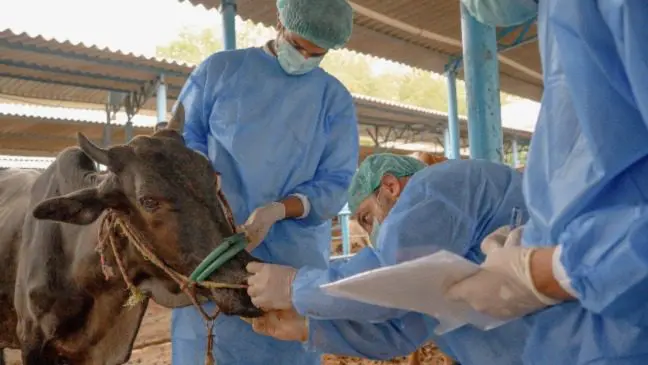
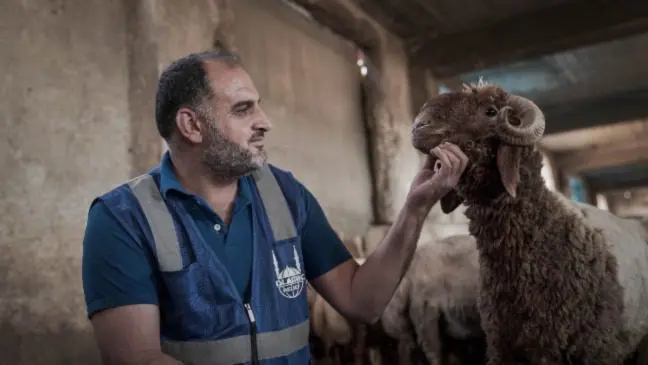
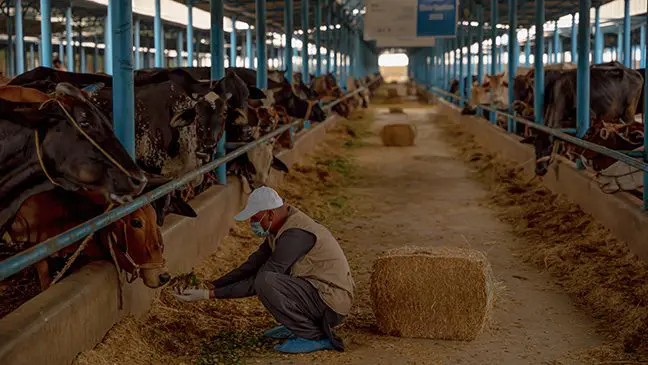
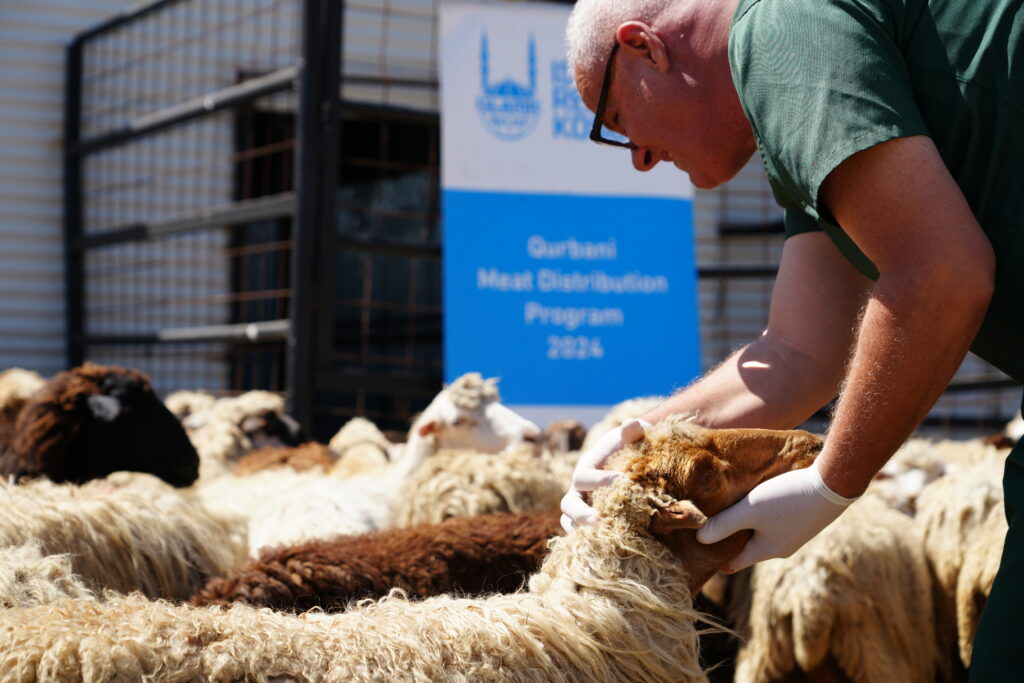
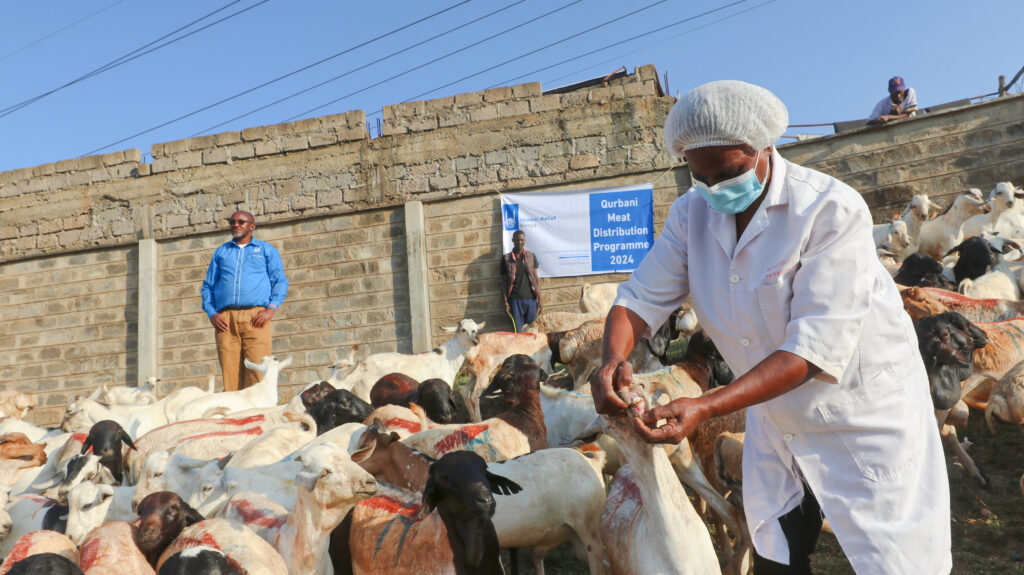
qurban inspection of sheep

For both Qurban and Aqiqah, the sacrifice can be male or female, so long as they are healthy and free from defects. The sacrificed livestock must have also reached a specific minimum age. Goats and sheep must be at least one year old, cows two years old, and camels five years old.  

How should the Qurban and Aqiqah meat be distributed? 

Meat from Qurban should be distributed raw and divided into three parts. One-third goes to the one performing the Qurban, another third to family and friends, and the last third to the less fortunate. 

This sharing of meat is to give thanks to Allah (SWT) and share these blessings with those who live in situations where eating meat is often an unaffordable luxury. Thus, Qurban provides an annual opportunity for the poor and needy to enjoy meat. Especially, if they are unable to have them at other times of the year. 

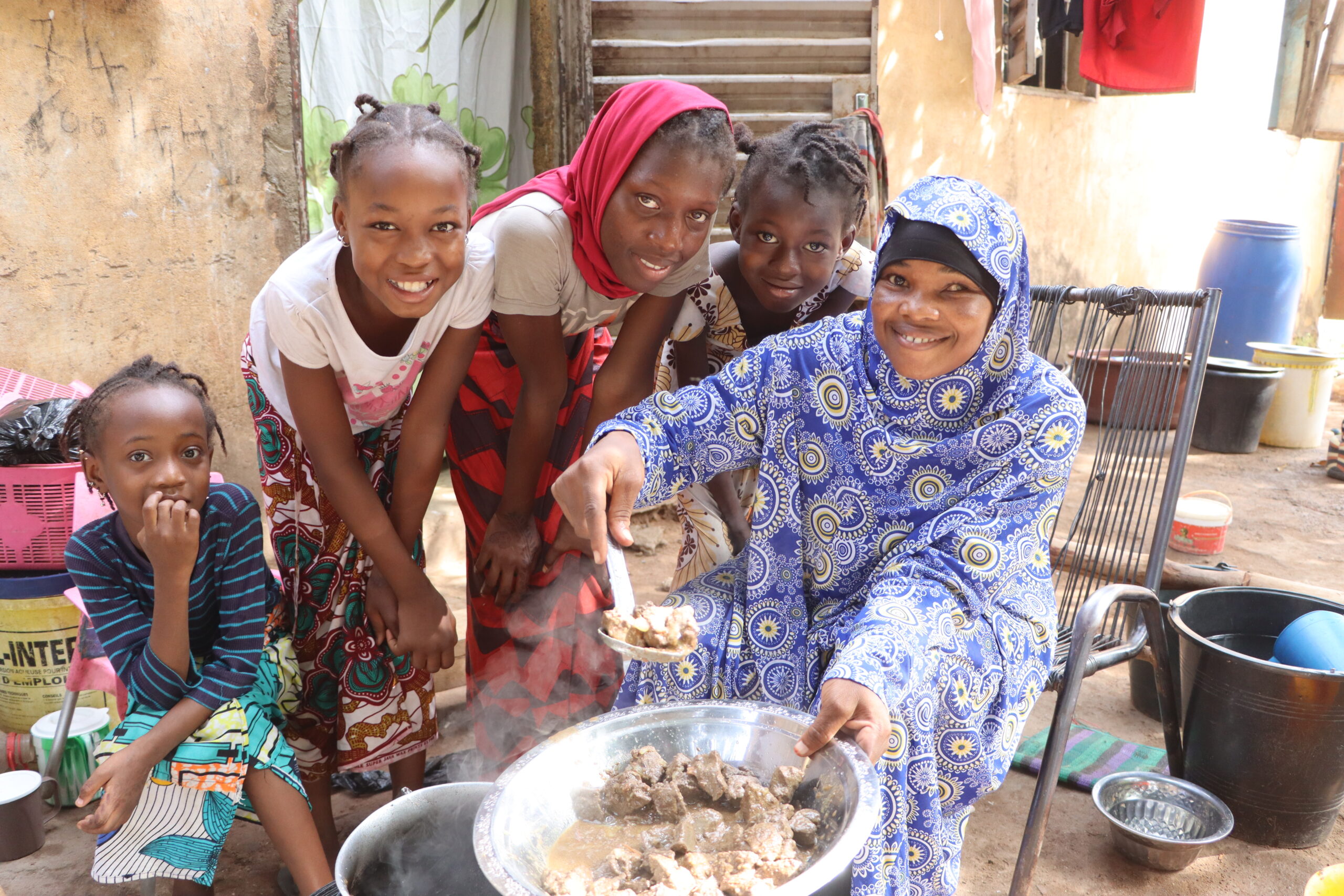
For Aqiqah, it is permissible to eat the meat from it and feed relatives, friends and the poor. While it can given raw, it is sunnah to cook it before giving it to others. Aisha (RA) said, concerning the meat of the Aqiqah that, “It should be cut into pieces, cooked, eaten and also distributed.” (Narrated by Ibn Abi Shaybah in Al-Musannaf).

meat for aqiqah

As such, an Aqiqah ceremony becomes a celebration where the meat from the sacrificed animal is cooked and shared with family, friends and members of the community who are in need.

Summary of differences

In conclusion, while they share some similarities, Qurban and Aqiqah are two distinct acts of worship.

Qurban is done on the three or four days of Eid al-Adha in remembrance of Prophet Ibrahim (AS)’s sacrifice. It is also best to distribute it raw, and you give it as many times each year during the Qurban period as you wish.

Aqiqah, however, is done seven days after a child’s birth, as per Sunnah, and is only done once in their lifetime. It is also sunnah to sacrifice goat or sheep for Aqiqah and to cook the meat before distributing it.

In the 10 blessed days of Dhul Hijjah, do not forget to purchase your Qurban in time for Eid Al-Adha!

This Dhul Hijjah, Share Your Blessings

Help the world’s most vulnerable families enjoy their Eid when you give Qurban with Islamic Relief.

06.07.24

Dhul Hijjah and Sacrifice: The Legacy of Prophet Ibrahim (AS)

  Dhul Hijjah     Publications

The first 10 days of Dhul Hijjah is a sacred time when Allah (SWT) grants many blessings to us. As a time when no deed is more beloved to Allah (SWT), it is also a time for elevating our acts of worship and remembering its legacy of sacrifice. Specifically, the sacrifices made by the Prophet Ibrahim (AS), his wife, Hajar (AS), and his son, Ismail (AS).

Without the trials they were willing to face for the sake of God, we would not have the rituals of the important events of Hajj and Eid Al-Adha, which are integral to the first 10 days of Dhul Hijjah. As their stories remind us of the immense blessings Allah (SWT) grants us for trusting in His Plan.

Hajj and the Story of Hajar (AS)

Hajj, as one of the five pillars of Islam, is a vital aspect of Islam. Starting from the 8th of Dhul Hijjah, the month of the pilgrimage, Muslims from around the world come together to travel to the Ka’aba in Makkah. There, they start to perform the sacred rituals of Hajj. 

One of the most significant rituals of Hajj is the pacing between the hills of Safa and Marwa. In Surah Al-Baraqah, it says:

“Behold! Safaa and Marwa are among the symbols of God. So if those who visit the House in the Season or at other times, should compass them round, there is no blame on them. And if any one obeys his own impulse to Good, be sure that God is One Who is Responsive, Knowing.”

Quran 2:158

Decreed as signs of Allah (SWT), Safa and Marwa represent His Divine Protection, Wisdom and Mercy in our times of distress and hardship. The act of pacing between the two hills seven times during Hajj commemorates the hardship of Hajar (AS), one of the wives of Prophet Ibrahim (AS).

Hajar (AS) , Ismail (AS) and the Birth of Makkah

Before Makkah became a thriving city, it was originally a dry and desolate land. Here, Allah (SWT) asked Prophet Ibrahim (AS) to separate from Hajar (AS) and Ismail (AS). Ibrahim (AS) was initially hesitant to leave his wife and son in the desert. But when Hajar (AS) told him to trust in Allah (SWT), he agreed to go. 

However, left in the arid desert, Hajar (AS) soon ran out of water and food. Without it, she struggled to sustain herself and the infant Ismail (AS). Desperately, Hajar (AS) paced through the valley between the hills of Safa and Marwa. She searched for signs of life, supplicating and calling out to Allah (SWT) for aid. It was through her patience and trust in Allah (SWT) to provide that Allah (SWT) sent the archangel Jibreel to her. The same angel who would later be sent down to the Prophet Muhammad (ﷺ) to give him Quranic revelation. Soon after Jibreel arrived to aid Hajar (AS), water sprung from the ground beneath the feet of Ismail (AS). Thus, the well of Zamzam came to be – a gift from Allah (SWT)  

With the steady water supply, the previously uninhabitable land gave way to life. And when Ibrahim (AS) came back to Hajar and Ismail (AS), he was graced with the sight of a small, but thriving community founded by his wife. 

Ka'aba and Makkah today, thanks to the family of Ibrahim (AS)

For the Makkah we know today, we owe it to Hajar (AS). Not only for finding this site but also for her sacrifice and trust in Allah (SWT) that brought the area to life. In her story and the rituals of Hajj, we reflect on the capacity of Hajar (AS) to trust and believe in Allah (SWT). And follow her example of cherishing His mercy, love and care for us. 

Eid Al-Adha and the Story of Ibrahim (AS)

In Islam, we have two celebration festivals. The firs is Eid Al-Fitr, which signifies the completion of the holy month of Ramadan. The second is Eid Al-Adha, which follows the completion of the annual Hajj pilgrimage, on the 10th day of Dhul Hijjah. 

For both Eids, we pray the Eid prayer and share happiness and blessings with loved ones. But on Eid Al-Adha specifically, Muslims worldwide perform Qurban. An act of worship that involves sacrificing an animal – sheep, goat, cow or camel – for the sake of Allah (SWT). The reason we perform this ritual on Eid Al-Adha is because of Prophet Ibrahim (AS). To commemorate his sacrifice and trust in the Divine Will of Allah (SWT). 

Qurban and the Devotion of Prophet Ibrahim (AS) and Ismail (AS)

One night, Ibrahim (AS) dreamt that Allah (SWT) told him to sacrifice Ismail (AS), his beloved son. At first, Ibrahim (AS) believed the dream was Shaytan playing tricks on him and immediately disregarded it. However, when the same dream came to him the following night, Ibrahim (AS) came to realise that the dream was, in fact, a message from Allah (SWT).

Ibrahim (AS) loved his son, Ismail (AS), but he had faith in Allah’s (SWT) plan and Divine Wisdom and did as he was instructed. When telling his son about his dream and what Allah (SWT) had commanded him to do, Ismail (AS) reassured his father. He too would follow the wishes of God and urged his father to perform the sacrifice.

Then when the boy reached the age to work with him, Ibrahim said, “O my dear son! I have seen in a dream that I ˹must˺ sacrifice you. So tell me what you think.” He replied, “O my dear father! Do as you are commanded. Allah willing, you will find me steadfast.”

Quran 37:102

For their willingness to sacrifice for the sake of God, Allah (SWT) rewarded them both for their steadfastness. He replaced Ismail (AS) with a ram, who was then slaughtered in his place. 

In this story, we see that Eid Al-Adha is not just a celebration. It is a remembrance of one of the greatest sacrifices in history. A festival where we commemorate and be inspired by the trust and belief Prophet Ibrahim (AS) and Ismail (AS) have in Allah (SWT) and His Divine Protection. 

Dhul Hijjah and the Legacy of Sacrifice and Devotion

Indeed, Prophet Ibrahim, Hajar, and their son Ismail (may peace be upon them all) experienced many hardships in their lives. But Allah (SWT) always came through and showered them with mercy and blessings for their steadfast belief and gratitude towards Him. 

As such, the month of Dhul Hijjah is about honouring this legacy of sacrifice and devotion to Allah (SWT). In these most blessed days, take this learn from the stories of Prophet Ibrahim, Hajar and Ismail (may peace be upon them all). To trust that Allah (SWT) knows best for us. To offer support when we see others struggling.

By renewing our intentions to do good deeds and love one another for the sake of Allah (SWT), we have a great opportunity to improve our lives and the lives of others. To be the difference that changes the world for the better, in the 10 greatest days of the year.

Give for the sake of Allah (SWT)

Take advantage of the most rewarding days of the year; give your Qurban and increase your acts of Sadaqah before the ten days are over.

06.06.24

5 Duas for Hajj and Umrah

  Dhul Hijjah     Publications

What’s one of the best ways to make sure we stay safe during Hajj and Umrah? On these journeys of a lifetime, let us seek guidance from Allah (SWT) with sincere Duas specific to travelling and these two pligrimages.


Each year, millions of Muslims from around the world travel to Makkah in Saudi Arabia to perform Hajj, the fifth pillar of Islam.

A pilgrimage that every adult Muslim, who is financially, physically and spiritually able, must make at leasts once in their lifetime, it takes place between the 8th and 12th or 13th of Dhul Hijjah, the twelve final month of the Islamic Calendar.

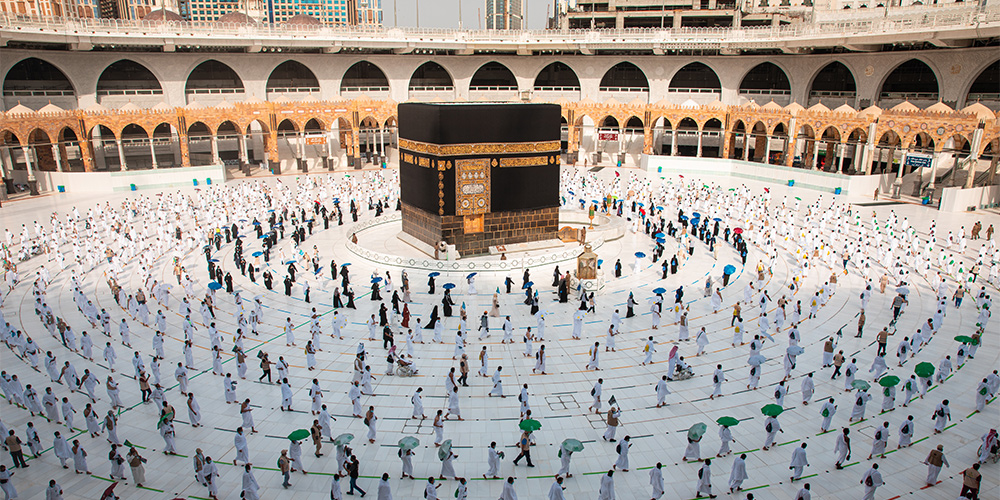
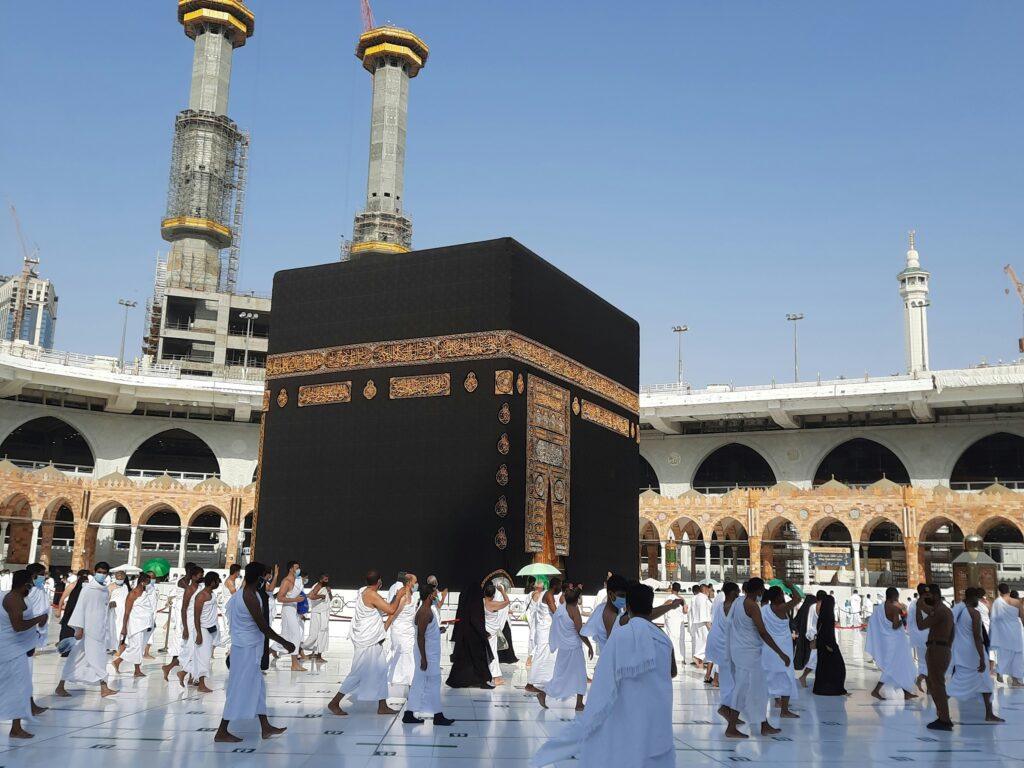
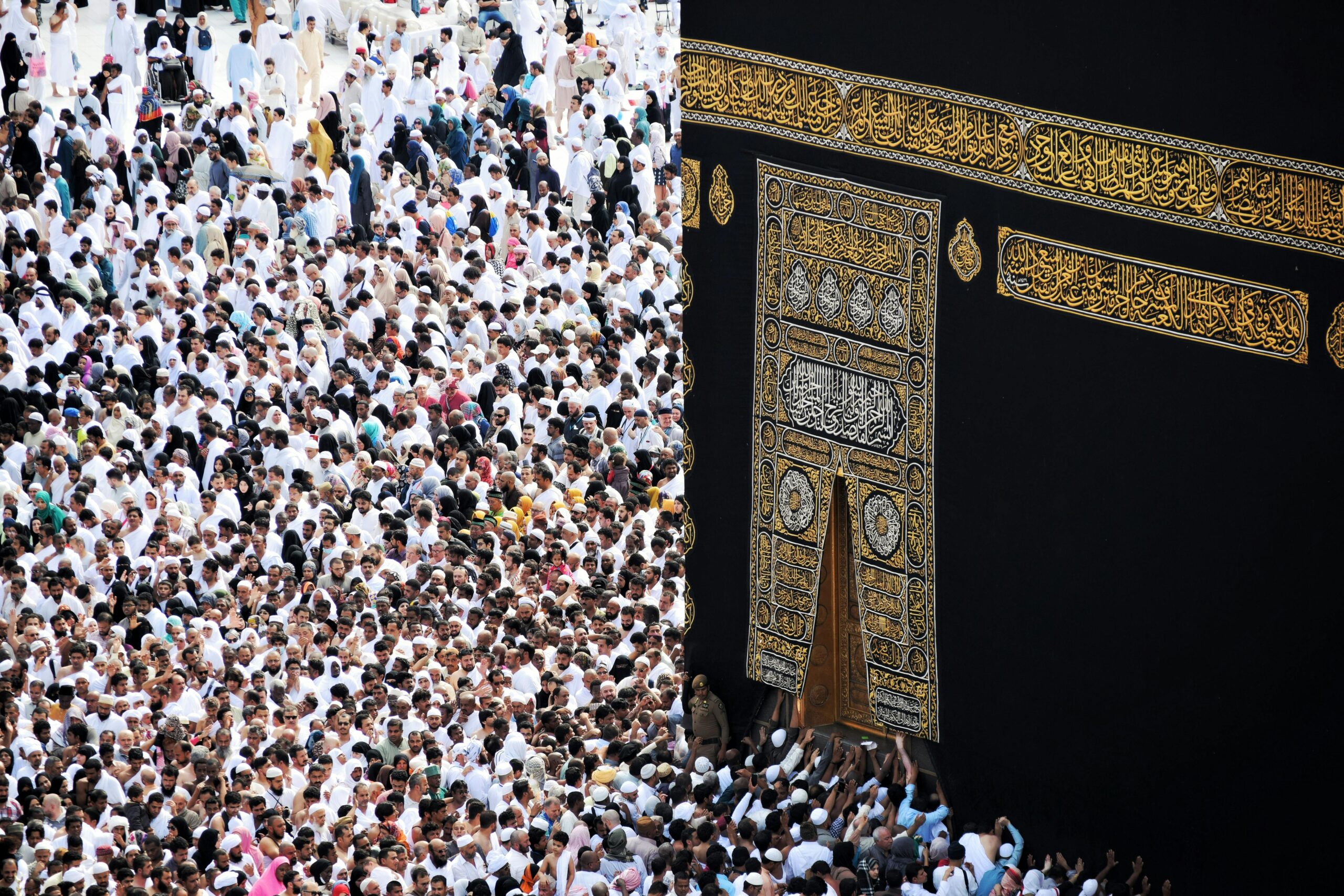
Muslims gather around the Kaaba in Makkah for Hajj and Umrah

However, this period is not the only time Muslims travel to Makkah. Umrah, the voluntary pilgrimage, refers to the journey to Makkah taken at any time of the year outside of the Hajj period.

For both Umrah and Hajj, Allah (SWT) offers believers many rewards for completing them successfully. Prophet Muhammad (ﷺ) said:

“(The performance of) `Umrah is an expiation for the sins committed (between it and the previous one). And the reward of Hajj Mabrur (the one accepted by Allah) is nothing except Paradise.”

Sahih Al-Bukhari 

Hajj and Umrah are incredibly spiritual journeys that we make in our lifetimes. As many of us will be travelling long distances when we go on these journeys, it’s important make sincere dua to Allah (SWT) to keep us safe during this time.

Here are 5 essential duas you can say while on Hajj and Umrah.

Dua for travelling

Bismillah, tawakkaltu ‘alallah, wa la hawla wa la quwwata illa billah.
بِسْمِ اللَّهِ تَوَكَّلْتُ عَلَى اللَّهِ لاَ حَوْلَ وَلاَ قُوَّةَ إِلاَّ بِاللَّهِ
“I begin with the Name of Allah; I trust in Allah; there is no altering of conditions but by the Power of Allah.”

Hisn al-Muslim

Dua when boarding a vehicle

Bismillah, walhamdulillah. Subhanal-ladzi sakh-khara lana hadza wa ma kunna lahu muqrinin. Wa inna ila Rabbina lamun-qalibun.
بِسْـمِ اللهِ وَالْحَمْـدُ لله، سُبْحَانَ الذي سَخَّرَ لَنَا هذا، وَما كُنَّا له مُقْرِنِينَ، وإنَّا إلى رَبِّنَا لَمُنْقَلِبُونَ
“In the name of Allah and all praise is for Allah. How perfect He is, the One Who has placed this (transport) at our service and we ourselves would not have been capable of that, and to our Lord is our final destiny.”

Hisn al-Muslim

Dua upon arrival

A’udzu bikalimatillahit-tammati min sharri ma khalaq.
 أَعُوذُ بِكَلِمَاتِ اللَّهِ التَّامَّةِ مِنْ شَرِّ مَا خَلَقَ
“I seek refuge in Allah’s perfect words from every evil (that has been created).”

Sunan Ibn Majah

Talbiyah Dua (intention to start worship) for Hajj or Umrah

Labbayka Allāhumma labbayk. Labbayk lā shareeka laka labbayk. Inna al-ḥamda, wa n-‘imata, Laka wal mulk. Lā shareeka lak.
لَبَّيْكَ اللَّهُمَّ لَبَّيْكَ، لَبَّيْكَ لَا شَرِيكَ لَكَ لَبَّيْكَ، انَّالْحَمْدَ، وَالنِّعْمَةَ، لَكَ وَالْمُلْكَ، لا شَرِيكَ لَكَ
“Here I am, O Allah, here I am, here I am. You have no partner, here I am. Verily all praise and blessings are Yours, and all sovereignty. You have no partner.”

Bukhari and Muslim

Dua for return

Ayibun, ta’ibun, ‘abidun, sajidun, lirabbina hamidun.
آيبونَ تائبونَ عابدونَ لربِّنا حامِدون
“We return, repentant, worshipping, prostrating and praising our Lord.”

Sahih Muslim

Don’t forget to make lots of Dua’s during Hajj and Umrah, asking Allah (SWT) for forgiveness. Don’t forget to include your friends, relatives, neighbours as well as the wider Ummah in your Dua during these spiritual journeys.

During these first 10 days of Dhul Hijjah, make sure to make the most of it! Reap the rewards of this blessed time by doing as much good as you can. Give your Zakat if you haven’t already. Share blessings with your Sadaqah. And don’t forget to give your Qurban in time for Eid!

This Dhul Hijjah, Share Your Blessings

Help the world’s most vulnerable families enjoy their Eid when you give Qurban with Islamic Relief.

06.05.24

10 Easy Acts You Can Do for the First 10 Days of Dhul Hijjah

  Dhul Hijjah     Publications

The first ten days of Dhul Hijjah hold great religious significance. It is a special period in the annual Islamic (Hijri) calendar. A time when Muslims are advised to increase their acts of goodness and spirituality to reap the rewards of the most blessed days. 

For our noble Prophet Muhammad said,

“There is no deed more precious in the sight of Allah, nor greater in reward, than a good deed done during the ten days of Sacrifice.”

He ‎(Prophet Muhammad ﷺ) was then asked,

“Not even jihaad for the sake of Allah?”

To which he ‎ﷺ replied,

“Not even jihaad for the sake of Allah, except in the case of a man who went out to fight giving himself and his wealth up for the cause, and came back with nothing.”

Sahih Al-Bukhari

The Meaning of Dhul Hijjah

The word “Dhul Hijjah” can be translated to “Month of Pilgrimage”. During the month of Dhul Hijjah, Muslims perform the Hajj. Hajj, also known as the pilgrimage, is one of the five pillars of Islam.

The pilgrimage involves Muslims travelling to Makkah in Saudi Arabia to fulfil this religious obligation and its rituals. Every Muslim, who is of age and physically, financially and spiritually able to go on Hajj, must perform it at least once in their lifetime.

However, even for Muslims not going on Hajj, there are still numerous ways to benefit from the first ten days of Dhul Hijjah. Here are 10 actions anyone can do during this blessed period to maximise their rewards!

Fasting the First 9 Days of Dhul Hijjah

It is a Sunnah of the Prophet (ﷺ) to fast on the first nine days of this month. Fasting is also one of the best acts of worship. As reported by the Prophet (ﷺ), Allah said,

“All the deeds of the son of Adam are for him, except fasting, which is for Me and I shall reward (the fasting person) for it.”

Sahih Al-Bukhari

Even if you cannot fast for all of the first 9 days of Dhul Hijjah, try to at least fast on the 9th day. This is the day of Arafah – the greatest day of the year. By fasting on this day, you gain immense rewards.

“Fasting on the Day of ‘Arafah absolves the sins for two years. The previous year and the coming year, and fasting on ‘Ashura, (the tenth day of Muharram) atones for the sins of previous years.”

Sahih Muslim

Increasing Daily Prayers (Salah)

On these blessed days, take this time to perfect and increase the daily practice of Salah.

If you haven’t been praying the five fardh (obligatory) prayers – Fajr, Dhuhr, Asr, Maghrib and Isha – on time, now is the time to start. Try to pray together with your friends and family, as there are more rewards for praying together.

 “Salat in congregation is twenty-seven times more meritorious than a Salat performed individually.”

Bukhari and Muslim

If you’ve already been praying the fardh prayers, take this opportunity to start praying the sunnah and nafl (voluntary) prayers. You can also start building the habit of praying tahajjud (night prayer done in the last third portion of the night prayers), especially if you’re already fasting for the first 9 days.

Reading Quran

Reciting the Quran is one of the best forms of worship. The Prophet ﷺ said,

“The one who is proficient in the recitation of the Quran will be with the honourable and obedient scribes (angels) and he who recites the Quran and finds it difficult to recite, doing his best to recite it in the best way possible, will have a double reward.”

Bukhari and Muslim

Try to recite the Quran as often in these blessed 10 days. Set up a schedule or attach the recitation to some other activity that you already do regularly. For example, set a goal to recite one page of the Quran after a fardh prayer, as you have to pray these regularly everyday.

Once you build up the habit for the 10 days, you can make it so that you carry this habit for the rest of your life!

read quran during the 10 days of Dhul Hijjah

Dhikr (Remembering Allah SWT)

Making Dhikr is a powerful act of worship and one you can do virtually any time. There are many types of Dhikr you can make to help put your mind at ease and bring you closer to Allah (SWT). Within the first 10 days the Prophet Muhammad emphasised to especially to recite this dhikr:

“There are no days that are greater before Allah or in which good deeds are more beloved to Him than these ten days. So recite a great deal of tahleel, takbeer and tahmeed during them.”

Ahmad

The meaning of Tahmeed, Tahleel and Tasbeeh as are follows:

  • Tahmeed: Al-hamdu Lillah (All praises be to God)
  • Tahleel: Laa ilaha ill-Allah (There is no god but Allah)
  • Tasbeeh: Subhaan-Allah (Glory be to God).

Performing Charity

In these blessed 10 days of Dhul Hijjah, one of the best ways to earn rewards is through Sadaqah (voluntary charity).

The Prophet (ﷺ) said:

“Sadaqah (charity) extinguishes sins just as water extinguishes fire.”

Tirmidhi

Making Istighfar (Seeking Forgiveness from Allah SWT)

It’s part of our human nature to be forgetful and make mistakes. Allah (SWT) understands this, so He says in Surah Al-Baqarah,

“And seek Allah’s forgiveness. Surely Allah is All-Forgiving, Most Merciful.”

Quran 2:199

In the 10 days of Dhul Hijjah, make lots of istighfar, including by saying “Astaghfirullah” (meaning “I seek forgiveness of Allah”). May Allah forgive us for our sins and guide us to the right path.

Strengthening bonds with loved ones

Islam emphasises the importance of having good relationships (Silaturrahim) with our family and fellow Muslims for the sake of Allah (SWT). Abu Hurairah narrated that the Prophet (ﷺ) said,

“Learn enough about your lineage to facilitate keeping your ties of kinship. For indeed keeping the ties of kinship encourages affection among the relatives, increases the wealth, and increases the lifespan.”

Tirmidhi

So, whenever you can these 10 days of Dhul Hijjah, reach out to your loved ones and reconnect.

Letting go of our bad habits

Allah (SWT) loves those who quit their sins and bad habits for His sake. The Prophet Muhammad (ﷺ) said:

“Allah says, ‘If My slave intends to do a bad deed then (O Angels) do not write it unless he does it; if he does it, then write it as it is, but if he refrains from doing it for My Sake, then write it as a good deed (in his account)…

Sahih Al-Bukhari

Make use of these 10 days of Dhul Hijjah to start small and try to overcome one of your bad habits. Once you consistently keep off the sin, you can eventually build on the momentum to address the more difficult habits. In this way, we earn Allah’s pleasure by sacrificing our desires for His sake.

Performing Qurban (Sacrifice)

“For every hair of the Qurban you receive a reward from Allah.”

Tirmidhi

Qurban (also known as Qurbani or Udhiyah) is an Islamic tradition that takes place on the Eid Al-Adha, which starts on the 10th of Dhul Hijjah. During Eid Al-Adha (the “festival of sacrifice”) Muslims slaughter an animal (either a goat, sheep, cow, bull, buffalo or camel). This action is to commorate Prophet Ibrahim (AS)’s willingness to sacrifice his son, Ismail (AS), for the sake of God. 

Qurban is made during Eid Al Adha (10th, 11th and 12th, and sometimes 13th, of Dhul Hijjah)

It is recommended that Qurban is offered after Eid prayer. But if this is not possible, it can also be done on the days of Tashreeq, the three days after Eid Al-Adha. In most cases, Muslims who have not offered Qurban yet will schedule a sacrifice on the 11th or 12th of Dhul Hijjah.

“The first thing we will do on this day of ours, is to offer the (`Id) prayer and then return to slaughter the sacrifice. Whoever does so, he acted according to our Sunna (tradition), and whoever slaughtered (the sacrifice) before the prayer, what he offered was just meat he presented to his family, and that will not be considered as Nusak (sacrifice).”

Sahih Al Bukhari

According to most scholars, every sane, adult Muslim with wealth in excess of his or her needs should give Qurban. It is such an important act of worship during these blessed days. So much so that the Prophet (ﷺ) once said:

Whoever can afford it, but does not offer a sacrifice, let him not come near our prayer place.

Sunan Ibn Majah

Normally those who are eligible to pay Zakat have to give a Qurban. Your Qurban also provides poverty-stricken families meat for Eid al-Adha. As, often, this celebration is the only time that they get to enjoy a meal with meat.

Celebrating Eid

Eid al-Adha, much like Eid Al-Fitr, is a celebration filled with joy, blessings and connecting with loved ones. However, unlike the other Eid, it also commemorates the greatest divine sacrifice in history. Where, in obedience and full submission to Allah (SWT), Prophet Ibrahim agreed to sacrifice his beloved son, Ismail (AS), whom he was only bestowed upon in his old age, after many years of longing for a child.

As reward for obeying His orders, Allah (SWT) replaced the son with a ram as a Qurban (sacrifice), and his Ismail (AS) was left unharmed. The order was a test from Allah to His beloved servant, in which Prophet Ibrahim (AS) had passed with flying colours. 

Like with Eid al-Fitr, follow the sunnah acts of Eid. This includes taking ghusl (bath) in the morning, putting on perfume, performing the Eid prayer and more.

Bonus: Share This Article With Someone You Know!

“Whoever guides someone to goodness will have a similar reward.”

Sahih Muslim

May your 10 days of Dhul Hijjah be full of prayers, prosperity and blessings, ameen!

05.02.24

When is Hajj 2024?

  Dhul Hijjah     News

Hajj is the sacred pilgrimage Muslims perform at the holy mosque of Masjid al-Haram in Makkah, Saudi Arabia. It takes place during Dhul Hijjah, which is the twelfth and final month in the Islamic (Hijri) Calendar.

The beginning of Hajj starts on the starts the 8th of Dhul Hijjah. It then ends on the 12th or 13th of Dhul Hijjah, depending on the sighting of the moon. In 2024, this period is expected to fall between Friday, June 14, 2024, to Wednesday, June 19, 2024.

What is Hajj?

Hajj is one of the five pillars of Islam, alongside Shahada (profession of faith), Salah (prayer), Zakat (almsgiving) and Sawm (fasting).

As such, undertaking Hajj holds great importance in Islam. It is a spiritual duty. Every Muslim is required to perform it at least once in their lifetime, so long as they have the means. This includes being not only financially able, but also physically and emotionally.

The Significance of Hajj 

In the Holy Qur’an, Allah (SWT) commands Muslims to take this sacred journey: 

You will enter the Sacred Masjid, God willing, perfectly secure, and you will cut your hair or shorten it (as you fulfil the pilgrimage rituals) there. You will not have any fear. Since He knew what you did not know, He has coupled this with an immediate victory.

Qur’an 48:27 

Hajj also occurs in Dhul Hijjah during its first ten days, one of the most sacred periods of the entire Islamic calendar.  

As such, performing the pilgrimage offers Muslims the opportunity to refresh their spiritual selves. To cleanse themselves of their sins and draw closer to Allah (SWT). 

How Long Does Hajj Last? 

The pilgrimage is performed over five to six days, from the 8th to the 12th or 13th of Dhul Hijjah. The Day of Arafah (9th Dhul Hijjah) and Eid Al-Adha (10th Dhul Hijjah) also fall between these days.  

The pilgrimage includes a series of rites and rituals, some of which must be performed in order. It can be physically demanding, as pilgrims are required to travel between locations throughout. On average, one can expect to walk between 5km to 15km per day.  
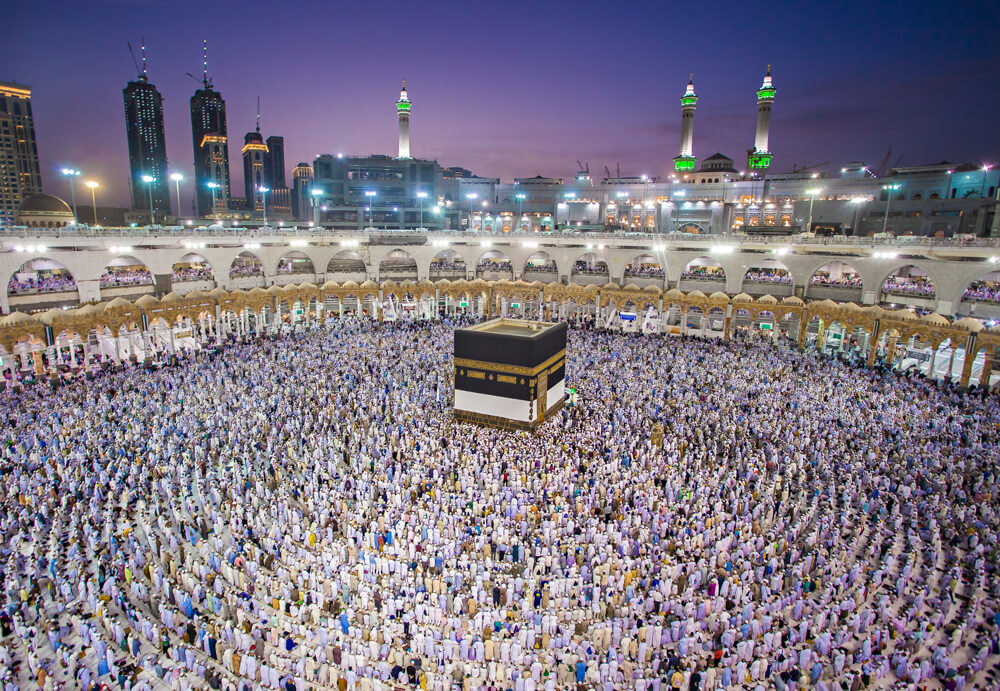
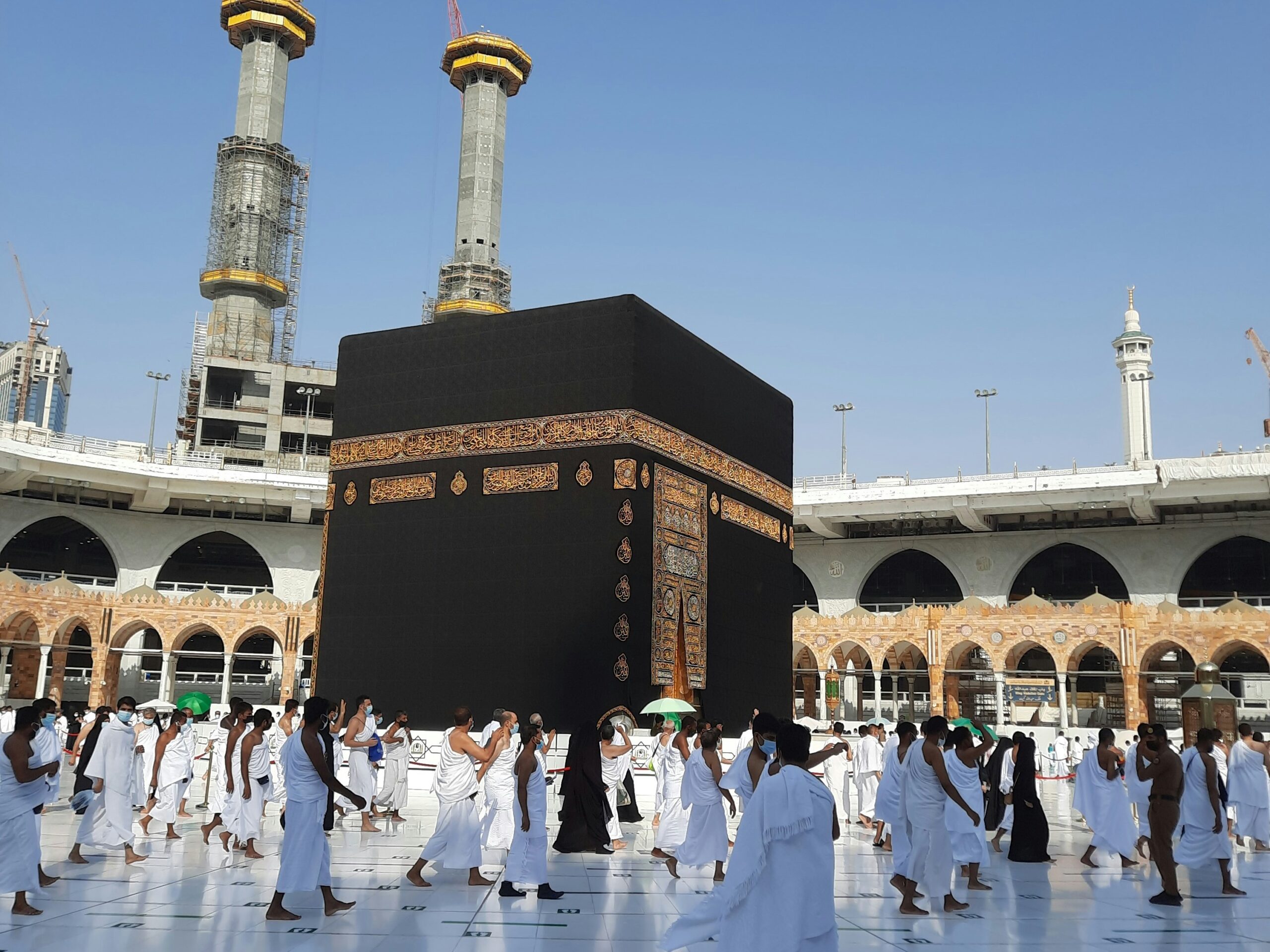
During Hajj, which takes place in Dhul Hijjah, Muslims travel to Masjid al-Haram in Makkah

Performing Hajj is a test of patience and temperament. It is a spiritual, emotional, and physical challenge and can take some preparation. That is why, for many, it is often a once-in-a-lifetime event. 

When Does Hajj Occur?

Hajj takes place between the 8th and the 12th or 13th of Dhul Hijjah each Islamic year, depending on the sighting of the moon.

Dates in the Islamic calendar appear to shift forward approximately 11-12 days as it corresponds to the Gregorian calendar, as the Islamic Calendar operates on the lunar cycle.

This year, the Hajj period is expected to fall between Friday, June 14, 2024, to Wednesday, June 19, 2024.

While Muslims are only required to perform Hajj at least once in their lifetimes, it can be performed multiple times, so long as they fall within the set dates. You can also perform Umrah, a voluntary pilgrimage to Makkah taken at any time of the year.

Where Does Hajj Take Place?

Hajj is performed in Makkah (also referred to as Mecca) in Saudi Arabia. The pilgrimage consists of a series of rites and rituals across five to six days and is performed across several locations within the vicinity of Makkah.

These locations include:

  • The city of Makkah
  • The tent settlement of Mina
  • Mount ‘Arafah
  • Muzdalifah

Who Is Excluded from Hajj? 

It is required of every Muslim to perform Hajj at least once in their lifetime. However, the Hajj is not intended as a burden upon Muslims. Muslims are only required to perform Hajj so long as it is within their capacity. 

Those who are exempt from Hajj are the following: 

  • Children. While they may go to Hajj, only Muslim adults (male or female) are required to perform Hajj. 
  • Very weak, sick, elderly, or otherwise physically incapable Muslims. 
  • Muslims who are financially unable to perform Hajj. However, if one is in debt, they may still perform Hajj if the person they owe money to permits it, they have time to pay off the debt and Hajj does not affect their ability to pay it.  

Brief History of Hajj 

In 628 CE, the Prophet Muhammad (ﷺ) and the early Muslims embarked on the first Islamic Pilgrimage (Hajj), re-establishing the traditions started by the Prophet Ibrahim (AS), who first began the tradition of Hajj millennia before. 

The Story of Hajar (AS) and Ismail (AS)  

The story of Hajj begins with Prophet Ibrahim (AS) receiving a commandment from Allah (SWT). Allah (SWT) orders Prophet Ibrahim (AS) to travel to the barren desert of Makkah and leave his wife Hajar and infant son Ismail (AS). Despite the trials ahead, the family trusted in the Divine Wisdom of Allah (SWT) and set out to follow His commandment.

While in the desert, Hajar (AS) and Ismail (AS) quickly ran out of resources. In a desperate effort to find water, Hajar (AS) ran between the two neighbouring hills of Safa and Marwa in search of someone who could help or nearby water. She did this seven times, only to return to a crying Ismail (AS) empty-handed. 

As the infant Ismail (AS) cried, he struck the ground with his leg and a stream of water burst forth at the commandment of Allah (SWT). This stream of water relieved the mother and son of their thirst and became a resource with which they traded for provisions of all kinds with travelling merchants. This stream of water is known today as the Well of Zam Zam. 

Years later, Allah (SWT) commanded Ibrahim (AS) to return to his family, where he found the miracle of his family alive and indeed thriving. A barren desert that had started with only Hajar and Ismail (AS) was now transforming into a thriving settlement that would become known as Makkah. 

Allah (SWT) then instructed Ibrahim (AS) to mark the space for a stone structure. This would be known as the Kaaba, which Ibrahim (AS) built with his son Ismail (AS).  

The Significance of the Kaaba and Masjid al-Haram

The space surrounding the Kaaba was created for worshippers of the one God to gather. In fact, the Kaaba simply marks the spot where Muslims unite. It is not something that is worshipped, as idolatry is prohibited in Islam. 

Over time, the Kaaba would be taken over by pagan Arabs, who filled it with idols. However, thousands of years later, when the Prophet Muhammad (ﷺ) was given revelation and the final message of Tawheed (monotheism), he was instructed to reinstate Ibrahim’s (AS) sacred tradition – the sacred pilgrimage we know as Hajj today. 

This Dhul Hijjah, Share Your Blessings

Help the world’s most vulnerable families enjoy their Eid when you give Qurban with Islamic Relief.

Frequently Asked Questions 

  • What does Hajj mean?

    The word Hajj, in Arabic, means ‘to intend a journey’. 

  • How many days is Hajj?

    The pilgrimage is performed over five to six days, from the 8th to the 12th or 13th of Dhul Hijjah. The Day of Arafah (9th Dhul Hijjah) and Eid Al-Adha (10th Dhul Hijjah) also fall between these days. 

  • Who is excused from Hajj?

    Those excused from Hajj are children (however, they can accompany their parents) the very weak, sick, elderly, or otherwise physically incapable and those who would be financially burdened if they make the pilgrimage.
05.01.24

When is Eid Al-Adha 2024 in Australia?

  Dhul Hijjah     News

Eid al-Adha is one of the two blessed celebrations Muslims obverse, the other being Eid al-Fitr. There are many observances unique to Eid Al-Adha (and Dhul Hijjah in general), including Qurban.

This year, Eid Al Adha 2024 is expected to fall on Sunday, June 16, 2024, depending on the sighting of the moon.

What is Eid Al-Adha?

Eid al-Adha (meaning “festival of sacrifice”) is an Islamic celebration occurring in Dhul Hijjah, the twelfth and final month of the Islamic (Hijri) Calendar. Depending on the country and lunar cycle for the year, the celebration can last two to four days.

Child with Qurban sheep

Photo: Child with Qurban sheep

The Eid of Sacrifice commemorates the ultimate act of sacrifice performed by our beloved Prophet Ibrahim (AS). The submission he made in his willingness to give up what he loved most, his son, Ismail (AS), for the sake of Allah (SWT). 

As such, Muslims, in turn, also offer a sacrifice, known as Qurban, on this day of celebration.

What is Qurban?

Qurban (also known as Qurbani or Udhiyah) means sacrifice. It is an act of worship unique to Eid al-Adha, commemorating the sacrifice Prophet Ibrahim (AS) made to Allah (SWT).

Following the Eid prayer on the first day of celebration, Muslims around the world slaughter an animal – typically a sheep, goat, camel or cow. The sacrificed animal is then divided into three equal portions. One-third shared goes to the needy, one-third goes to relatives and neighbours, and the remainder Muslims keep for their own families. 

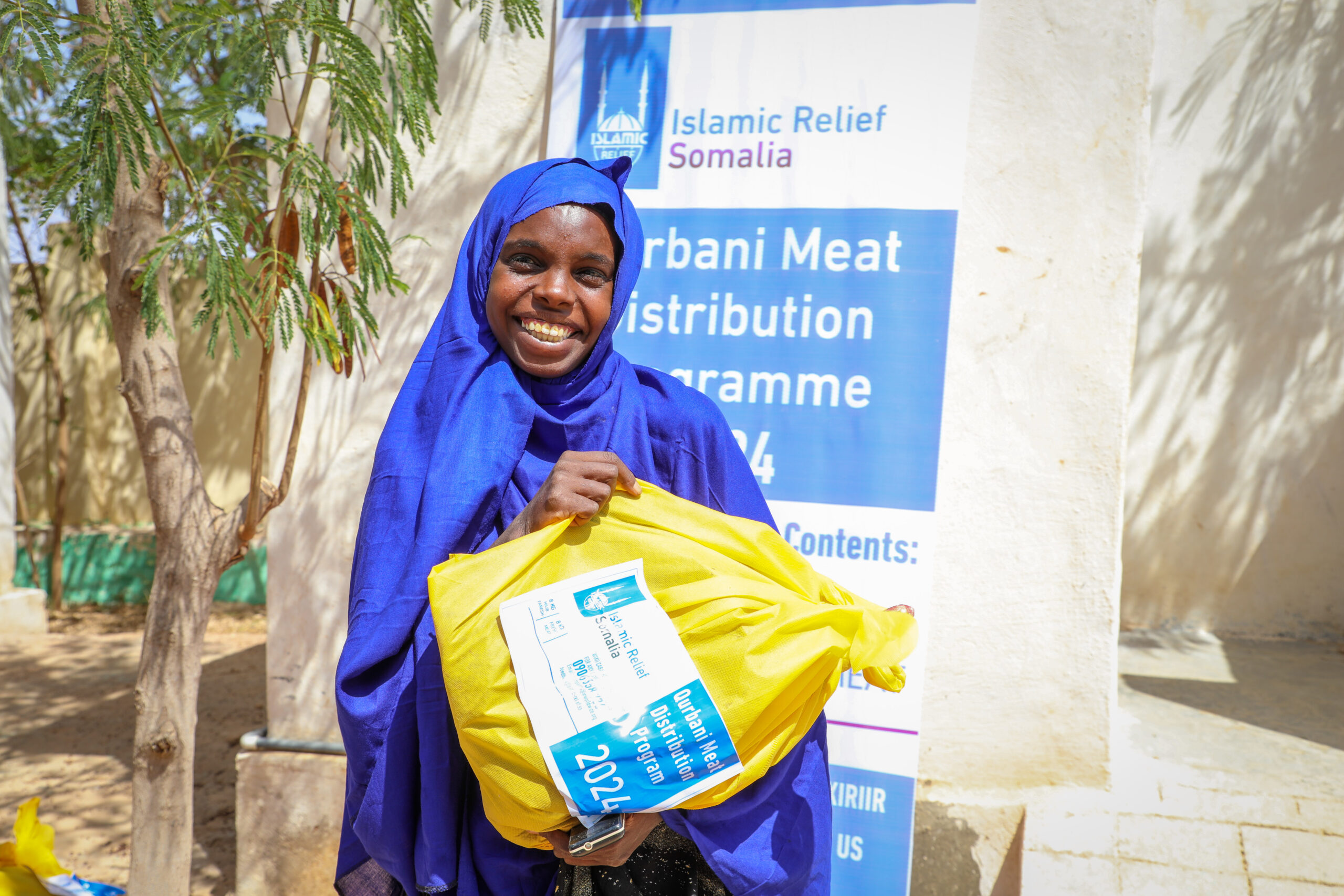
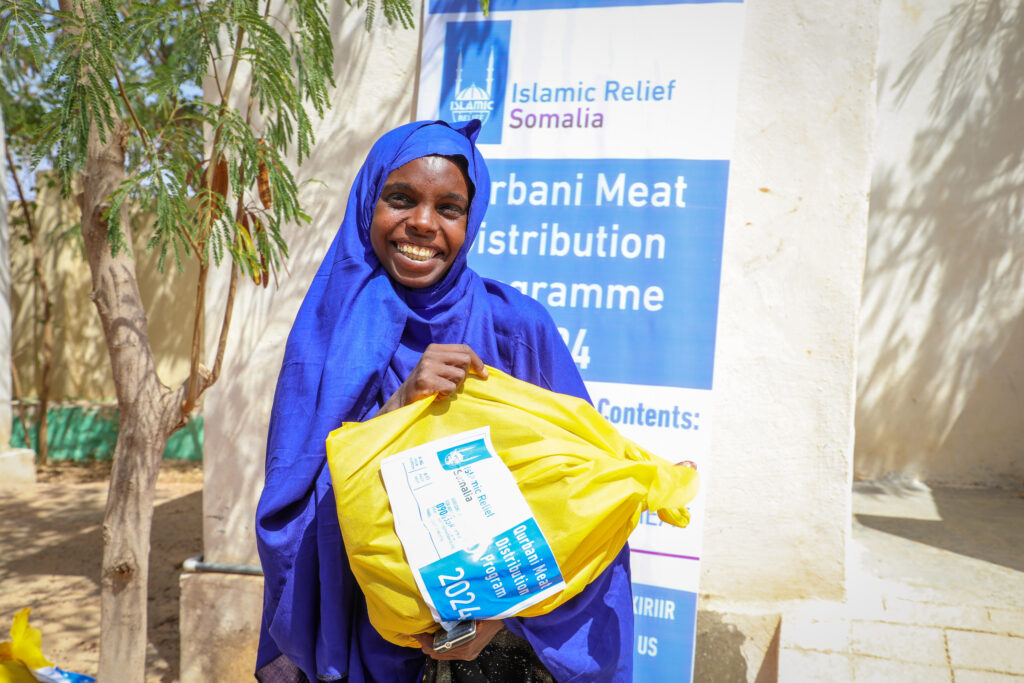
Qurban reaching those most in need in countries like this young child in Somalia during Eid Al-Adha.
Photo: Qurban reaching those most in need in countries like Somalia during Eid Al-Adha.  

Who should give Qurban?

Qurban is an important act of worship that every Muslim who has reached the age of puberty should do if they can afford it. Typically, Muslims who are eligible for Zakat should also give Qurban.

When should I give my Qurban?

It is best practice to purchase your Qurban as early as possible so that it can be performed on time. While one can carry out the sacrifice on any day of Eid al-Adha (from the 10th to the 13th of Dhul Hijjah), performing it on the first day is Sunnah.

The Prophet Muhammad (ﷺ) used to carry out the sacrifice immediately after the Eid prayer. In turn, his first meal on the day of Eid was meat from the sacrifice. 

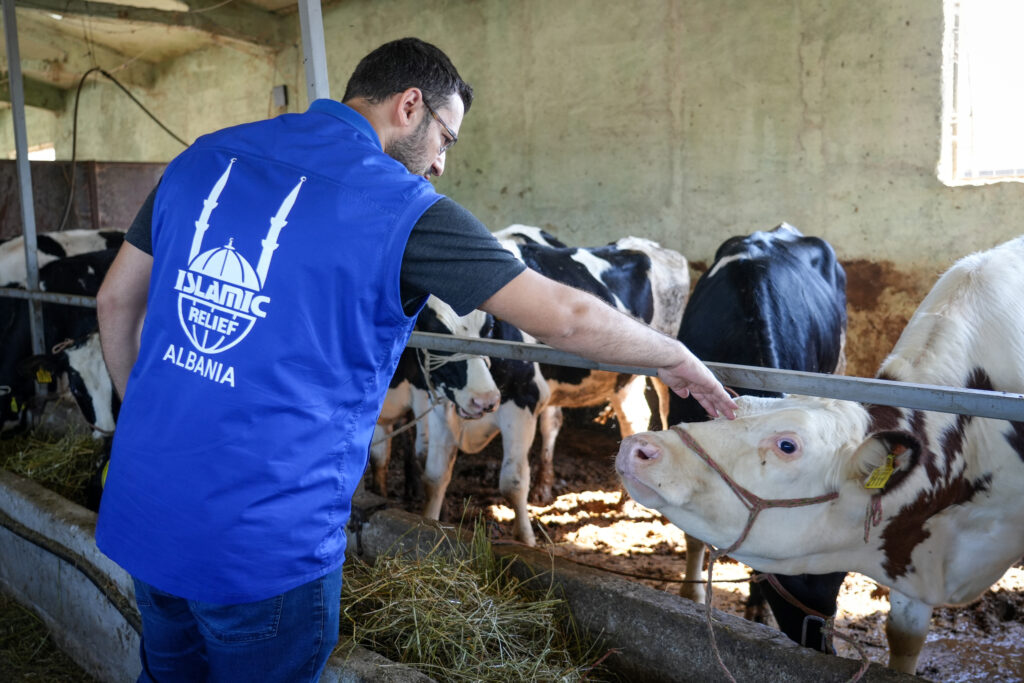
Islamic Relief staff inspecting animals for Qurban, to be sacrificed during Eid Al-Adha
Photo: Islamic Relief staff inspecting animals for Qurban

Other Observances of Eid Al-Adha

As with any festival and important occasion, we follow the example of Prophet Muhammad (ﷺ). There are various Sunnah acts of worship you can do on the day of Eid. These include performing ghusl, wearing one’s best clothes, reciting takbeer and offering Eid greetings.

Similar to Eid al-Fitr, Eid prayer is also an important part of Eid al-Adha. Attending the Eid prayer and walking to the Eid prayer are also Sunan of the Prophet (ﷺ).

Why donate your Qurban to Islamic Relief?

When you donate your Qurban to Islamic Relief, we prioritise providing meat to the most vulnerable families across the world during the Holy season. 

Our international teams work hard to get your donation to the hardest-to-reach regions and conflict-affected areas, including Myanmar, Palestine, and Yemen. 

Meat is sourced locally to support the local economy and distributed fresh. All logistics—from sacrifice to transportation—are handled in accordance with Islamic principles, and with the best hygienic practices possible. Each pack contains 2-5 kilograms of meat and feeds a family of approximately 4-8 people.

Donate Qurban now and make your sacrifice. 

04.29.24

When is Dhul Hijjah 2024 in Australia?

  Dhul Hijjah     News

Dhul Hijjah marks the twelfth and final month of the Islamic calendar. It holds immense significance for Muslims worldwide, especially in the first ten days, when Hajj and Eid Al-Adha (as well as the sacred act of Qurban) take place.

This year, the first day of Dhul Hijjah is expected to begin on Friday, June 7, 2024, depending on the sighting of the moon. But why exactly are the first 10 days of Dhul Hijjah and its events so special?

In this article, we learn about the month’s transformative and spiritual experiences. This includes the profound meaning behind the rituals of Hajj and Eid al-Adha (festival of sacrifice).

The Significance of the First 10 Days of Dhul Hijjah

Similar to the Holy month of Ramadan, the first 10 days of Dhul Hijjah are an extremely blessed time. After Ramadan, we often miss the spiritual high we felt and wish we could’ve done more. But these blessed ten days offer us another chance for us to gain immense rewards. To have our sins forgiven and reach great levels of piety, Insha’Allah.

Benefits of the first 10 days of Dhul Hijjah

In one particular hadith, the Prophet Muhammad (ﷺ) specifically highlights the first 10 days of Dhul Hijjah as better than all the other days of the year. Even better than the days of Ramadan, SubhanAllah!

He (peace and blessings be upon him) said:

“There are no days on which righteous deeds are more beloved to Allah than these ten days”

Sahih Bukhari

In the Qur’an, Allah (SWT) also swears by these first ten days. In Surah Al-Fajr, He states:

“By the dawn; And [by] the ten nights.”

Quran 89:1-2

According to many scholars, these days are the first 10 days of Dhul-Hijjah.

What Happens on the First 10 Days of Dhul Hijjah?

In addition to being the best days to do good deeds, we witness two very special events in Dhul Hijjah: Hajj and Eid al-Adha.

Hajj

Hajj is the fifth and final pillar of Islam. It is a staple of Islamic belief, alongside the Shahada (the belief that there is no god but Allah (SWT) and Muhammad (ﷺ) is His Messenger), Salah (prayer), Zakat (almsgiving) and Sawm (fasting).

Hajj is the pilgrimage Muslims make to Makkah in Saudi Arabia. It takes place from the 8th to the 12th or 13th of Dhul Hijjah each Islamic year. The pilgrimage is obligatory for all able-bodied and financially capable Muslims to perform at least once in their lifetime.

Muslim pilgrims performing Hajj in Makkah, in the days of Dhul Hijjah
Photo: Muslims performing Tawaf during Hajj in Makkah, in the days of Dhul Hijjah

This year, Hajj is expected to take place between Friday, June 14, 2024, and Wednesday, June 19, 2024.

On the 9th of Dhul Hijjah, the blessed Day of Arafah (also Arafat) occurs. The Day of Arafah 2024 is expected to fall on the evening of Saturday, June 15, 2024.

Considered the most blessed day of the year, Arafah was the day when Allah (SWT) perfected Islam. The day He completed His favours upon His beloved Prophet Muhammad (ﷺ) and approved Islam as a way of life.

This day I have perfected for you your religion and completed My favour upon you and have approved for you Islam as religion.

Quran 5:3

On this day, pilgrims performing Hajj gather on the plain of Arafat, seeking forgiveness, supplicating to Allah and engaging in profound acts of worship.

Eid al-Adha

Eid al Adha (or Eid ul Adha), similar to Eid al Fitr (or Eid ul Fitr), is a joyous day Muslims celebrate with family and community. However, in addition to the rituals of Eid, Muslims, who are able to, also give Qurban on Eid Al-Adha.

Qurban (also known as Qurbani or Udhiyah) is an act of worship that involves the sacrifice of an animal, usually a sheep, goat, cow or camel, for the sake of Allah (SWT). The origins of this act of worship come from the story of Prophet Ibrahim (AS) and his willingness to sacrifice his son, Ismail (AS), as a demonstration of his faith, obedience and trust in Allah (SWT).

What Else Can We Do on the First 10 Days of Dhul Hijjah?

Even for those of us not performing the Hajj pilgrimage this year, Dhul Hijjah is still a great time of blessing and immense reward.

Wherever we can, we should engage in good deeds such as giving charity, performing acts of kindness to family and community, fasting and remembrance of Allah (SWT)

Fasting

Fasting is especially encouraged during these first 10 days. The Prophet (ﷺ) used to fast on the first nine days of Dhul-Hijjah as one of his regular fasts.

He especially emphasised the importance of fasting on the 9th day, the Day of Arafah.

Fasting the day of `Arafah expiates the sins of two years: the past one and the coming one.

Sahih Muslim

Making Dhikr

Our Prophet (ﷺ) also said:

“There are no days that are greater before Allah or in which good deeds are more beloved to Him, than these ten days, so recite a great deal of tahleel, takbeer and tahmeed during them.”

Ahmad

When are the 10 days of Dhul Hijjah?

This year, the first day of Dhu al-Hijjah 1445 AH will fall on Friday, June 7, 2024, depending on the sighting of the moon. In turn, Eid al-Adha is expected to fall on Sunday, June 16, 2024.

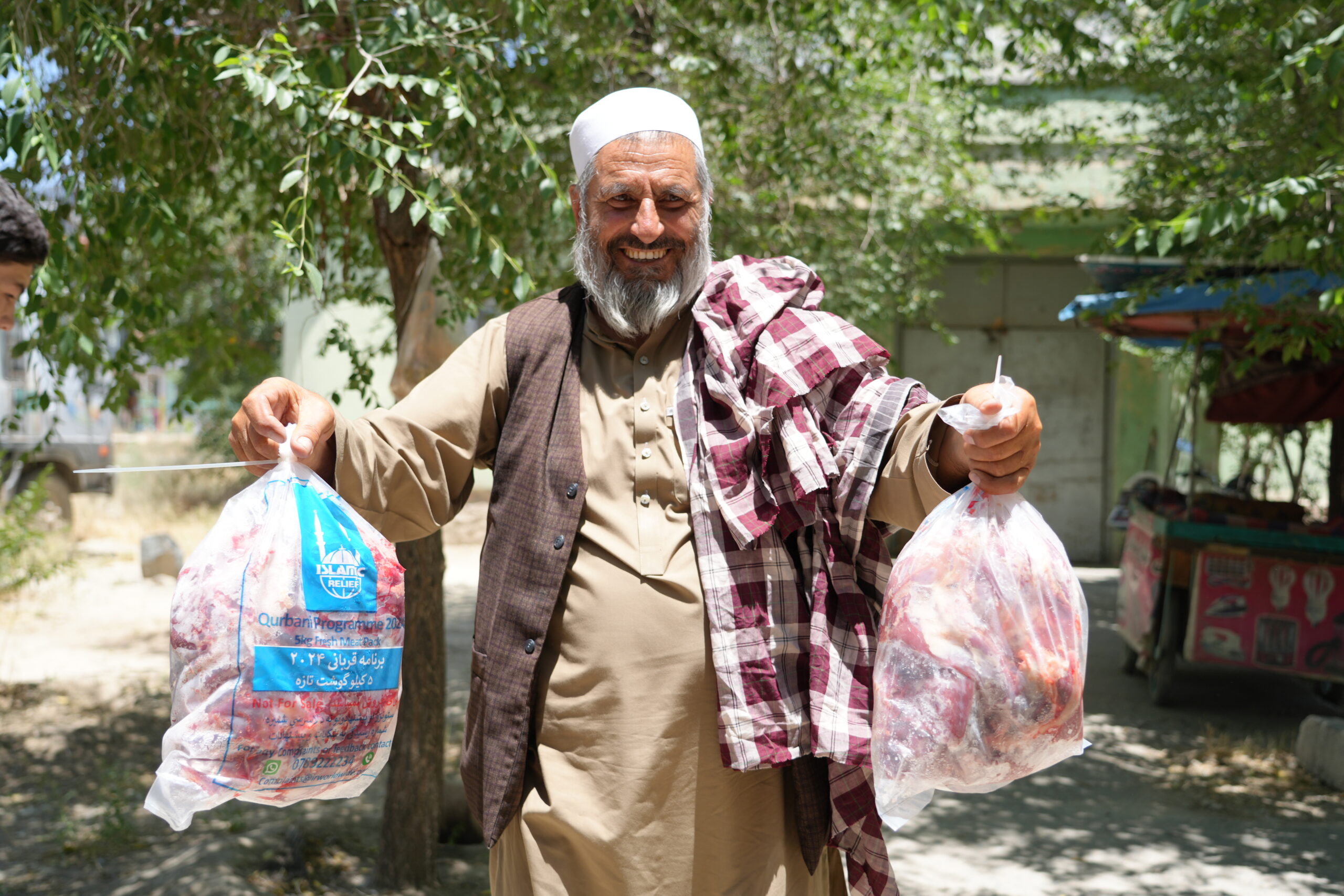
Your Qurban meat bringing smiles to families on Eid Al Adha this Dhul Hijjah
Photo: Your Qurban, helping the world’s most vulnerable families thrive and build sustainable livelihoods.

Give Your Qurban On Time

At Islamic Relief, we work all year round to bring families relief and home. To combat food poverty and help communities build healthy and stable livelihoods.

Every Eid al-Adha, Islamic Relief is at the forefront of distributing Qurban. This year, we strive to deliver nutritious, high-quality meat to the world’s most vulnerable and disadvantaged communities. For many, this is the only time they will be able to eat meat in the entire year.

In over 30 countries worldwide, your Qurban donation will not only bring happiness to the less fortunate, but also empower vulnerable communities. To ensure they can enjoy Eid without worrying about how and what they will feed their families.

Donate during this blessed time and increase your rewards. Help enable families and entire communities to have a happy Eid al-Adha and beyond.

This Dhul Hijjah, Share Your Blessings

Help the world’s most vulnerable families enjoy their Eid when you give Qurban with Islamic Relief.

06.16.23

Dhul Hijjah: Maximising your rewards

  Dhul Hijjah     Publications

The month of Dhul Hijjah is one of the holiest periods of the Islamic year SubhanAllah. A month of increased spirituality, we witness two very special events (Hajj and Eid ul Adha) – all in devotion to Allah (SWT).

The first 10 days of Dhul Hijjah are often referred to as the best 10 days of the year, and a second chance after Ramadan. This year, even if we can’t make the sacred journey of Hajj, there is still a great opportunity for us to earn countless blessings and rewards – at home.

The Prophet (pbuh) said: “There are no days in which righteous deeds are more beloved to Allah than these ten days.” [Bukhari]

So, how can we make the most of these 10 days?

1. Increase your Dhikr (remembrance of Allah) during these 10 days. Seeking forgiveness, increasing your prayers, making lots of du’a (supplication), and spiritual reflection are strongly encouraged during this time.

Our Prophet Muhammad (pbuh)  said: “There are no days that are greater before Allah or in which good deeds are more beloved to Him than these ten days. So recite a great deal of tahleel, takbeer  and tahmeed during them.” [Ahmad]

Tahmeed: Al-hamdu Lillah (All praises be to God)

Tahleel: Laa ilaha ill-Allah (There is no god but Allah)

Tasbeeh: Subhaan-Allah (Glory be to God).

2. Fast, especially on the Day of Arafah

The Prophet said, “One fast during these days is equal to the fasting of one complete year, and the worship of one night during this period is equal to the worship in the Lailatul-Qadr” [Tirmidhi].

Fasting any or all of the first 10 days Dhul Hijjah brings immense rewards. It is said that for each day you fast in these 10 days, Allah rewards you as if you have fasted a whole year. But those who fast on the ninth day (the Day of Arafah) will have their reward doubled: fasting on this day brings with it a reward of up to two years.

The Prophet said: “Fasting the day of Arafah expiates the sins of two years: the past one and the coming one.” [Muslim]

3. Give Sadaqah (voluntary charity)

The rewards for giving charity are multiplied many times over during this special time so don’t miss this opportunity to be as generous as possible.

4. Perform the obligatory sacrifice – Qurban

For every hair of the Qurban you receive a reward from Allah.” [Tirmidhi]

This is an Islamic tradition in which Muslims around the world slaughter an animal – a goat, sheep, cow or camel – to commemorate the Prophet Ibrahim (AS) for his willingness to sacrifice his son Ismail, for the sake of God. This takes place on the 10th, 11th or 12th day of Dhul Hijjah.

Donate your Qurban now by clicking here.

5. Preserve ties of kinship

Maintaining the ties of kinship is from the best of deeds. The Propet Muhammad (pbuh) said “Whoever would like his provision to be increased and his lifespan to be extended, let him maintain the ties of kinship.” [Bukhari].


06.05.23

When is Dhul Hijjah 2023

  Dhul Hijjah     News

Dhul Hijjah, is the twelfth and final month of the Islamic calendar and holds immense significance for Muslims around the world.

It is a month filled with transformative and spiritual experiences, especially in the first 10 days, including the profound journey of Hajj and the joyous celebration of Eid al-Adha.

What Happens in the First 10 Days of Dhul Hijjah?

In Dhul Hijjah, we witness two very special events, Hajj and the blessed day of Eid al-Adha

Hajj

It is also during Hajj that, on the 9th of Dhul Hijjah, the blessed Day of Arafah, the day in which Allah (SWT) perfected Islam, occurs. On this day, pilgrims performing Hajj gather on the plain of Arafat, seeking forgiveness, supplicating to Allah and engaging in profound acts of worship.

Hajj, the fifth and final pillar of Islam, is the pilgrimage Muslims make to Makkah in Saudi Arabia. Occurring on the 8th to 12th of Dhul Hijjah each year, Hajj is obligatory for all able-bodied and financially capable Muslims to perform at least once in their lifetime.

Eid al-Adha

Eid al-Adha is a day when we not only celebrate with family and community but also, for each of us who is able to, a day when give Qurban.

Qurban, also known as Qurbani or Udhiyah, is an act of worship that involves the sacrifice of an animal, usually a sheep, goat, cow or camel, for the sake of Allah (SWT). This righteous deed is rooted in the story of Prophet Ibrahim (AS) and his willingness to sacrifice his son, Ismail (AS), as a demonstration of his faith, obedience and trust in Allah (SWT).

Benefits of the first 10 days of Dhul Hijjah

After the holy month of Ramadan, we often miss the spiritual high we felt and wish we could’ve done more. But the first 10 days of Dhul Hijjah offer us another chance to gain immense rewards, have our sins forgiven and reach great levels of piety, Insha’Allah.

What many people don’t know is that the first 10 days of Dhul Hijjah are better than all the other days of the year – even better than the days of Ramadan, SubhanAllah!

Prophet Muhammad (ﷺ) said: There are no days on which righteous deeds are more beloved to Allah than these ten days (Sahih Bukhari)

In the Qur’an, Allah (SWT) also states, “By the dawn; And [by] the ten nights.” (Al-Fajr, 89:1-2)

According to many scholars, these days mentioned as significant enough for Allah (SWT) to swear by them are the first 10 days of Dhul-Hijjah.

What Can We Do on the First 10 Days of Dhul Hijjah

Even for those of us not performing the Hajj pilgrimage this year, Dhul Hijjah is still a great time of blessing and immense reward. Wherever we can, we should engage in good deeds such as giving charity, performing acts of kindness to family and community, fasting and remembrance of Allah (SWT)

Fasting and Remembrance of Allah (SWT), in particular, are especially encouraged during these first 10 days.

The Prophet (ﷺ) used to fast on the first nine days of Dhul-Hijjah as one of his regular fasts and emphasised the importance of fasting on the 9th day of Dhul Hijjah.

As he (ﷺ) said: Fasting the day of `Arafah expiates the sins of two years: the past one and the coming one. (Sahih Muslim)

Our Prophet (ﷺ) also said: “There are no days that are greater before Allah or in which good deeds are more beloved to Him, than these ten days, so recite a great deal of tahleel, takbeer and tahmeed during them.” (Ahmad)

When are the 10 days of Dhul Hijjah?

This year, the month of Dhu al-Hijjah 1444 AH will begin on June 19, 2023, and Eid al Adha will fall on 28th June 2023, depending on the sighting of the moon.

Giving Qurban

At Islamic Relief, we work all year round to relieve food poverty and help families maintain a healthy and stable livelihood.

Photo: Your Qurban has the power to save lives and give the world’s most vulnerable families the sustenance they need to thrive and build sustainable livelihoods.

Every Eid al-Adha, Islamic Relief is at the forefront of distributing Qurban meat to some of the world’s most vulnerable and disadvantaged communities, in over 30 countries. For many, this is the only time they will be able to eat meat in the entire year.

Your Qurban donation will not only bring happiness to those less fortunate than ourselves, but you’ll also enable vulnerable communities across the globe to enjoy Eid without worrying about how and what they will feed their families.

Donate during this blessed time and increase your rewards by helping enable families and entire communities to have a happy Eid al-Adha and beyond.

This Dhul Hijjah, Share Your Blessings

Help the world’s most vulnerable families enjoy their Eid when you give Qurban with Islamic Relief.

07.30.21

Story of Eid

  Dhul Hijjah     Publications

By Priyanka Mukherjee

The morning is splintered with the Adhan calls,
 The first warm rays spreading their joy, 
Little Raabiya paddles out of bed excited, 
 For the special day of Eid-Ul-Adah is here, 
To celebrate, eat and play with her favourite toy, 

For no play is fun without, Safiya and Nim, 
A holiday is best spent with friends as a team,  
She rushes to the kitchen where mom,
  Is dressed and ready, to start her Eid prayers,
 To Allah Almighty, and the Protector of all evils, 

Mom, Raabiya whispers, “Eid is here”, 
I would like to wear a new dress and go out, 
To meet my friends and play and go on the roundabout,
 I have so much to tell them and then we’ll have a feast,
 Of roast beef and ranadang and some baklava sweet. 

My little one, mom begins,
 Outside is a place right now, where we can’t step in,
 Our world is battling an evil right now, 
Unless we all do the right thing and learn the how, 
To protect our families and friends and us, 
To submit in prayers and remember our lessons,
 From another battle that our father led, 
With his unwavering love for Allah SWT, 

Mom, will you tell me the story of a Great Prophet, 
Who led the Great War, with the evil and stoppeth, 
Said Little Raabiya, her eyes all shining, 
Mom gently picking her little girl and smiling, 

Long years ago, our Prophet Ibrahim (AS) had a dream,
 A command from his beloved Allah, 
To sacrifice his precious son, 
In his devotion unwavering, to submit to Allah’s command, 
The prophet and his son, met the Shaitan, 
Who tried to dissuade them from fulfilling Allah’s mission, 
The accursed tried to cloud Ibrahim’s vision. 

But such was their faith and love for Allah, 
That the father and son went to Kaabah,
 To submit to the prophecy and fulfil, 
The duty of every follower to its anvil, 
But just as the axe was to fell, 
And as the books all tell, 
In Ishmail place stood a ram, 
As a testament of the sacrifice and submission, 
The Prophet has passed a test and gained divine inspiration. 

For dear child, difficult times may arise to test us, 
But our faith in Him will guide us, 
 Just as it did thousands of years ago, 
For the Prophet who followed His words and  Let go,  
Of what was most dear to him, 
 And know,  
That He guides us and looks over us, 
At all times and know,  

That unflinching devotion and love for Allah,  
Is our celebration of Eid-ul- Adha. 
On this day, we offer a Qurban, 
A sheep, a camel, a cow or a ram
 To draw ourselves near to our Creator,  
For, Allah is the Eternal Giver; He asks for nothing but devotion and prayers, 
Good deeds and good thoughts and generosity for the poor. 

My little one, Eid is a celebration of our faith in Allah, 
Of sacrifices and resilience and lessons from the past, 
To remember that we need to defeat, 
The evils that surround us and repeat, 
Allah SWT name and follow His shown path. 


STAY INFORMED

  • This field is for validation purposes and should be left unchanged.

Quick Donate