09.17.25

Gaza: Leaders of major aid groups call on world leaders to intervene following UN genocide conclusion 

  News     Press Releases

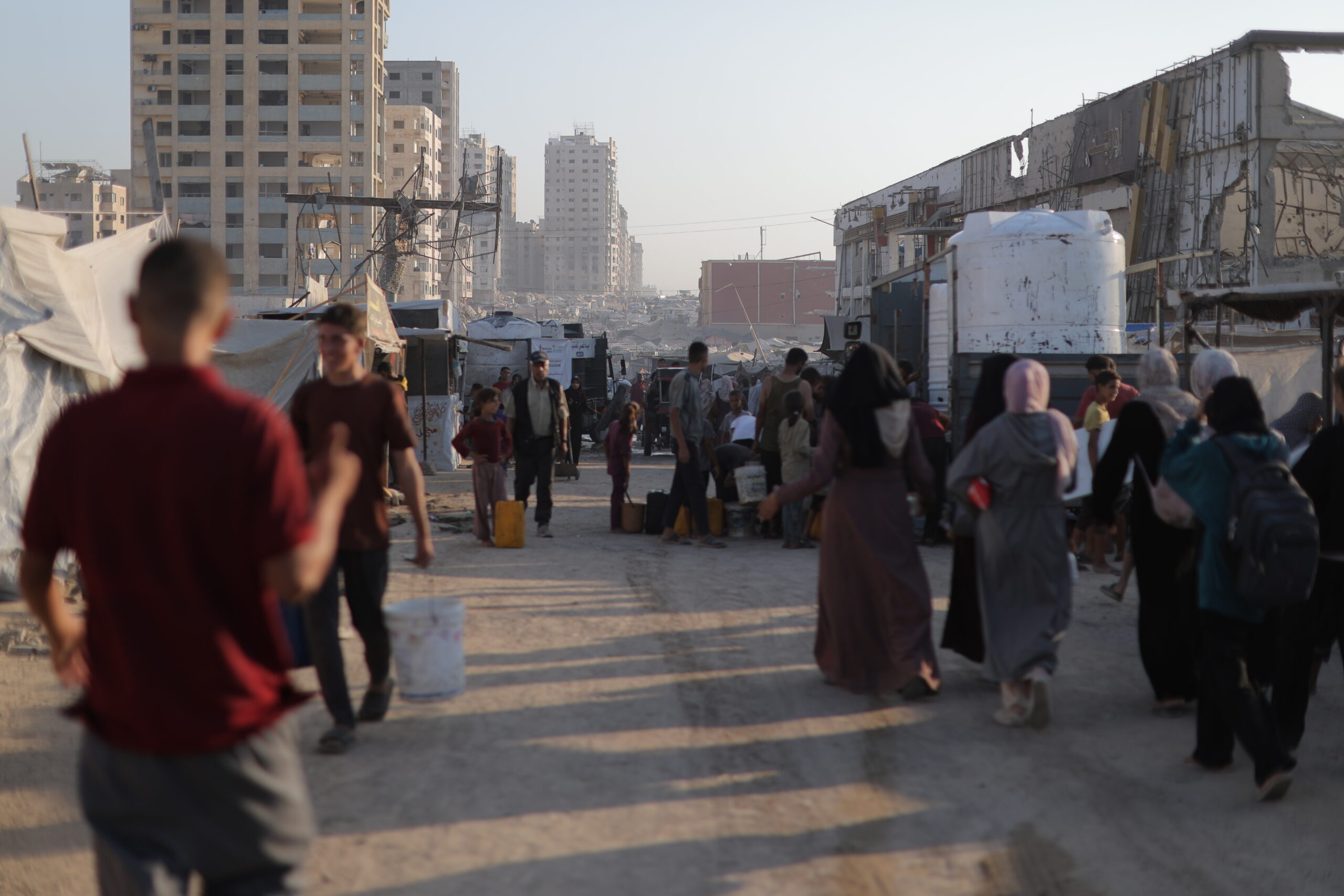
GAZA, 17 Sept 2025: The leaders of over 20 major aid agencies working in Gaza, including Islamic Relief, are calling on world leaders to urgently intervene after a UN commission concluded, for the first time, that genocide is being committed. The statement is below:

As world leaders convene next week at the United Nations, we are calling on all member states to act in accordance with the mandate the UN was charged with 80 years ago.   

What we are witnessing in Gaza is not only an unprecedented humanitarian catastrophe, but what the UN Commission of Inquiry has now concluded is a genocide. With this finding, the Commission joins a growing number of human rights organisations and leaders globally, and within Israel.

The inhumanity of the situation in Gaza is unconscionable. As humanitarian leaders,  we have borne direct witness to the horrifying deaths and suffering of the people of Gaza. Our warnings have gone unheeded, and thousands more lives are still at stake.

Now, as the Israeli government has ordered the mass displacement of Gaza City – home to nearly one million people – we are on the precipice of an even deadlier period in Gaza’s story if action is not taken. Gaza has been deliberately made uninhabitable.  

About 65,000 Palestinians have now been killed, including more than 20,000 children. Thousands more are missing, buried under the rubble that has replaced Gaza’s once lively streets.

Nine out of 10 people in Gaza’s 2.1 million population have been forcibly displaced — most of them multiple times — into increasingly shrinking pockets of land that cannot sustain human life.

More than half a million people are starving. Famine has been declared and is spreading. The cumulative impact of hunger and physical deprivation means people are dying every day.

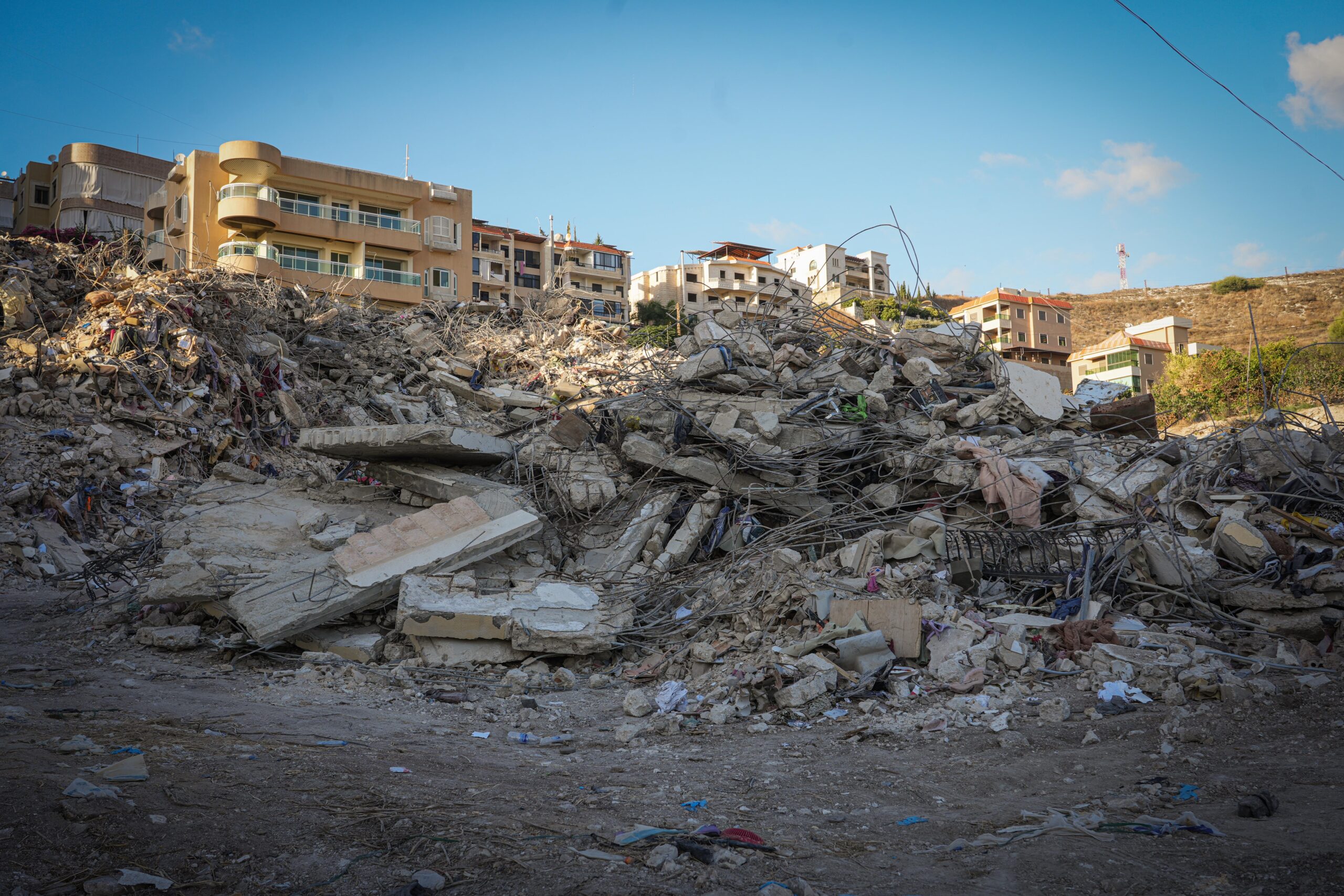
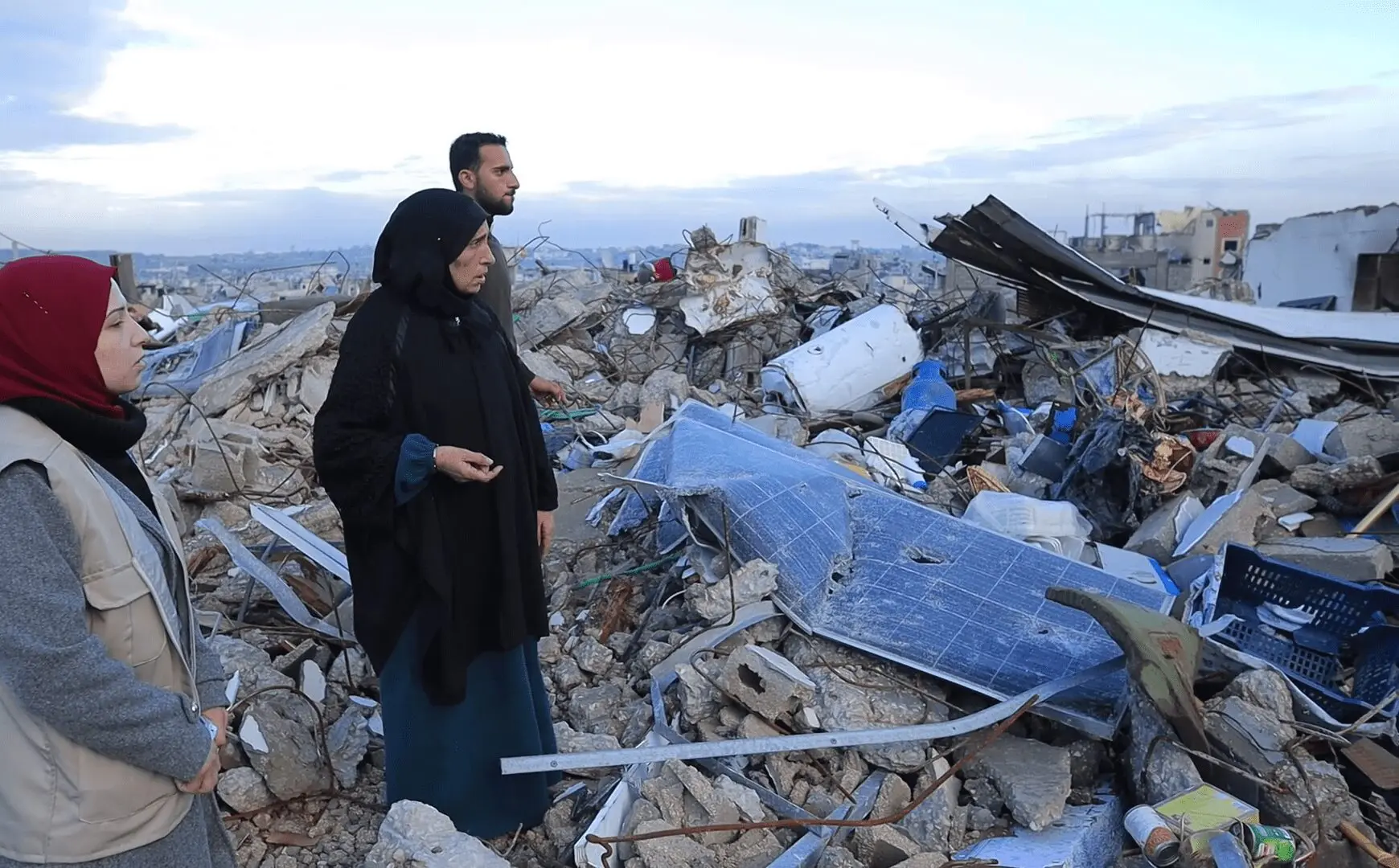
Throughout Gaza, entire cities have been razed to the ground, along with their life-sustaining public infrastructure, such as hospitals and water treatment plants. Agricultural land has been systemically destroyed.  

If the facts and numbers aren’t enough, we have harrowing story upon harrowing story.

Since the Israeli military tightened its siege six months ago, blocking food, fuel, and medicine, we witnessed children and families waste away from starvation as famine took hold. Our colleagues, too, have been impacted.

Many of us have been into Gaza. We have met countless Palestinians who have lost limbs as a result of Israel’s bombardment. We have personally met children so traumatised by daily airstrikes that they cannot sleep. Some cannot speak. Others have told us they want to die to join their parents in heaven.  

We have met families who eat animal food to survive and boil leaves as a meal for their children.  

Yet world leaders fail to act. Facts are ignored. Testimony is cast aside. And more people are killed as a direct consequence.  

Our organisations, together with Palestinian civil society groups, the UN, and Israeli human rights organisations, can only do so much. We have tirelessly tried to defend the rights of the people of Gaza and sustain humanitarian assistance, but we are being obstructed every step of the way.  

We have been denied access, and the militarisation of the aid system has proved deadly. Thousands of people have been shot at while trying to reach the handful of sites where food is distributed under armed guard.

Governments must act to prevent the evisceration of life in the Gaza Strip, and to end the violence and occupation. All parties must disavow violence against civilians, adhere to international humanitarian law and pursue peace.

States must use every available political, economic, and legal tool at their disposal to intervene. Rhetoric and half measures are not enough. This moment demands decisive action.

The UN enshrined international law as the cornerstone of global peace and security. If Member States continue to treat these legal obligations as optional, they are not only complicit but are setting a dangerous precedent for the future. History will undoubtedly judge this moment as a test of humanity. And we are failing. Failing the people of Gaza, failing the hostages, and failing our own collective moral imperative.

Signed by (in alphabetical order):

  1. Arthur Larok, Secretary General of ActionAid International
  2. Othman Moqbel, Chief Executive Officer, Action For Humanity 
  3. Joyce Ajlouny, General Secretary of American Friends Service Committee
  4. Sean Carroll, President and CEO of Anera
  5. Reintje Van Haeringen, Executive Director CARE International 
  6. Kate Higgins, CEO of Cooperation Canada
  7. Jonas Nøddekær, Secretary General of DanChurchAid
  8. Charlotte Slente, Secretary General of the Danish Refugee Council
  9. Manuel Patrouillard, Managing Director, Humanity & Inclusion – Handicap International
  10. Jamie Munn, Executive Director, International Council of Voluntary Agencies (ICVA)
  11. Mahmood Qasim, CEO of International Development and Relief Foundation
  12. Waseem Ahmad, CEO, Islamic Relief Worldwide
  13. Jeremy Konyndyk, President of Refugees International
  14. Joseph Belliveau, Executive Director of MedGlobal
  15. Joel Weiler, Executive Director of Médecins du Monde France
  16. Nicolás Dotta, Executive Director of Médecins du Monde Spain
  17. Morgane Rousseau, CEO of Médecins du Monde Suisse
  18. Christopher Lockyear, Secretary General of Médecins Sans Frontières International 
  19. Kenneth Kim, Executive Director, Mennonite Central Committee Canada
  20. Ann Graber Hershberger, Executive Director, Mennonite Central Committee US
  21. Jan Egeland, Secretary General of the Norwegian Refugee Council
  22. Amitabh Behar, Oxfam International Executive Director
  23. Simon Panek, CEO, People in Need 
  24. Inger Ashing, CEO of Save the Children International
  25. Donatella Vergara, President of Terre des Hommes Italy
  26. Rob Williams, CEO of War Child Alliance 

09.16.25

“A Death Sentence” – Aid Agencies Warn of Israel’s Assault on Gaza City

  Publications

45 Humanitarian and civil society organisations warn that Israel’s assault on Gaza City amounts to a death sentence.

Intensified Israeli military attacks on Gaza City and forced displacement orders for the entire city are leaving families with an impossible dilemma: flee and risk death on the road and in overcrowded displacement areas, or stay and face relentless bombardment in their shelters. Starvation and siege await them regardless.

“Our only demand is life,” said Ayman (name changed), a father sheltering with his family in Gaza City. “We are humans, just like you. We want to live with dignity and safety, not to die from hunger or bombs.”

Nearly one million Palestinians, starved, grieving, and displaced many times over, remain in Gaza City. If Israel’s operation in Gaza City continues, hospitals will be cut off and attacked, shelters and schools bombed, aid convoys blocked, and those too weak, old, or sick to flee will be left to die. “We are tired of running from one place to another,” said Abeer (name changed), a humanitarian worker.

At the same time, Israel is deliberately obstructing humanitarian operations. Aid trucks continue to be denied, and international NGOs are left in limbo by an opaque registration regime, even as famine deepens.

The International Court of Justice has recognised that Palestinians in Gaza have a right to be protected from genocide. Each act of forced displacement and each surge of hunger makes that danger more certain, and the world cannot claim it did not see this coming.

Let our goods enter. Let us work. Stop this assault.

Signed by 45 Humanitarian and Civil Society Organisations

  • 1. ActionAid
  • 2. Action For Humanity
  • 3. American Friends Service Committee
  • 4. Anera
  • 5. Asamblea de Cooperación por la Paz
  • 6. A New Policy
  • 7. Caritas Internationalis
  • 8. Caritas Jerusalem
  • 9. Christian Aid
  • 10. Churches for Middle East Peace
  • 11. CISS – Cooperazione Internazionale Sud Sud
  • 12. Danish Refugee Council
  • 13. Danske Hus i Palæstina
  • 14. Embrace the Middle East
  • 15. Evangelical Lutheran Church in America
  • 16. HelpAge International
  • 17. Humanity & Inclusion – Handicap International
  • 18. Humanity First UK
  • 19. Insecurity Insight
  • 20. INSO
  • 21. Islamic Relief
  • 22. Japan International Volunteer Center (JVC)
  • 23. Médecins Du Monde France (MdM France )
  • 24. Médecins du Monde Switzerland (MdM Switzerland)
  • 25. MedGlobal
  • 26. Medico International
  • 27. Médicos del Mundo (Spain)
  • 28. Mennonite Central Committee
  • 29. National Justice and Peace Network England and Wales
  • 30. Norwegian People’s Aid
  • 31. Oxfam 
  • 32. Pax Christi Flanders
  • 33. Pax Christi München
  • 34. Pax Christi Scotland
  • 35. People in Need
  • 36. Plan International
  • 37. Premiere Urgence Internationale
  • 38. Rebuilding Alliance
  • 39. Saferworld
  • 40. Secours Islamique France
  • 41. Solidarités International
  • 42. Terre des Hommes Italy
  • 43. The Middle East Children’s Alliance (MECA)
  • 44. Vento di Terra
  • 45. War Child Alliance

09.15.25

Orphan Care: A Lifeline for Gaza’s Children

  Publications

The Orphan Sponsorship Program is a lifeline for families in Gaza. It supports them with a monthly stipend paid directly into their accounts. This enables families to buy the items they need most when they are available.  

In response to the ongoing crisis in Gaza, Islamic Relief have massively expanded the program. Prior to October 2023, our family supported 7,200 children in Gaza through orphan sponsorship.  

Now, thanks to our generous supporters, more than 21,000 are receiving desperately-needed support.  

But, with the still unpredicable situation in Gaza, many more children need help. Currently, over 7,300 children registered on our system are in urgent need of sponsorship.   

Gaza’s children face unimaginable hardship 

Gaza is one of the most dangerous places in the world to be a child, especially for an orphan. 

More than 67,000 people have been killed in Gaza and thousands more injured since October 2023. It’s a devastation that has left tens of thousands of children without one or both of their parents.  

Every day, for two years, orphaned children and their remaining family members in Gaza face starvation, water scarcity and displacement. Many now live in overcrowded shelters or makeshift tents, which do not protect them from the harsh weather.  

They are living through trauma that most people can barely imagine. The impact of the crisis on their long term physical and mental health is devastating and, in some cases, irreversible. 

Amid so much suffering, we ask, how will our donation make a difference? 

The answer is: a lot.  

Why Sponsor an Orphan 

Since 1998, Islamic Relief has been supporting orphaned children in Gaza. In turn, because of the unpredicable nature of Gaza’s situation, sponsorship is one of the few reliable and sustainable ways donors can help. 

The prices of basic goods have skyrocketed and livelihoods have been destroyed. Orphans and their families are increasingly reliant on support from humanitarian organisations to survive. 

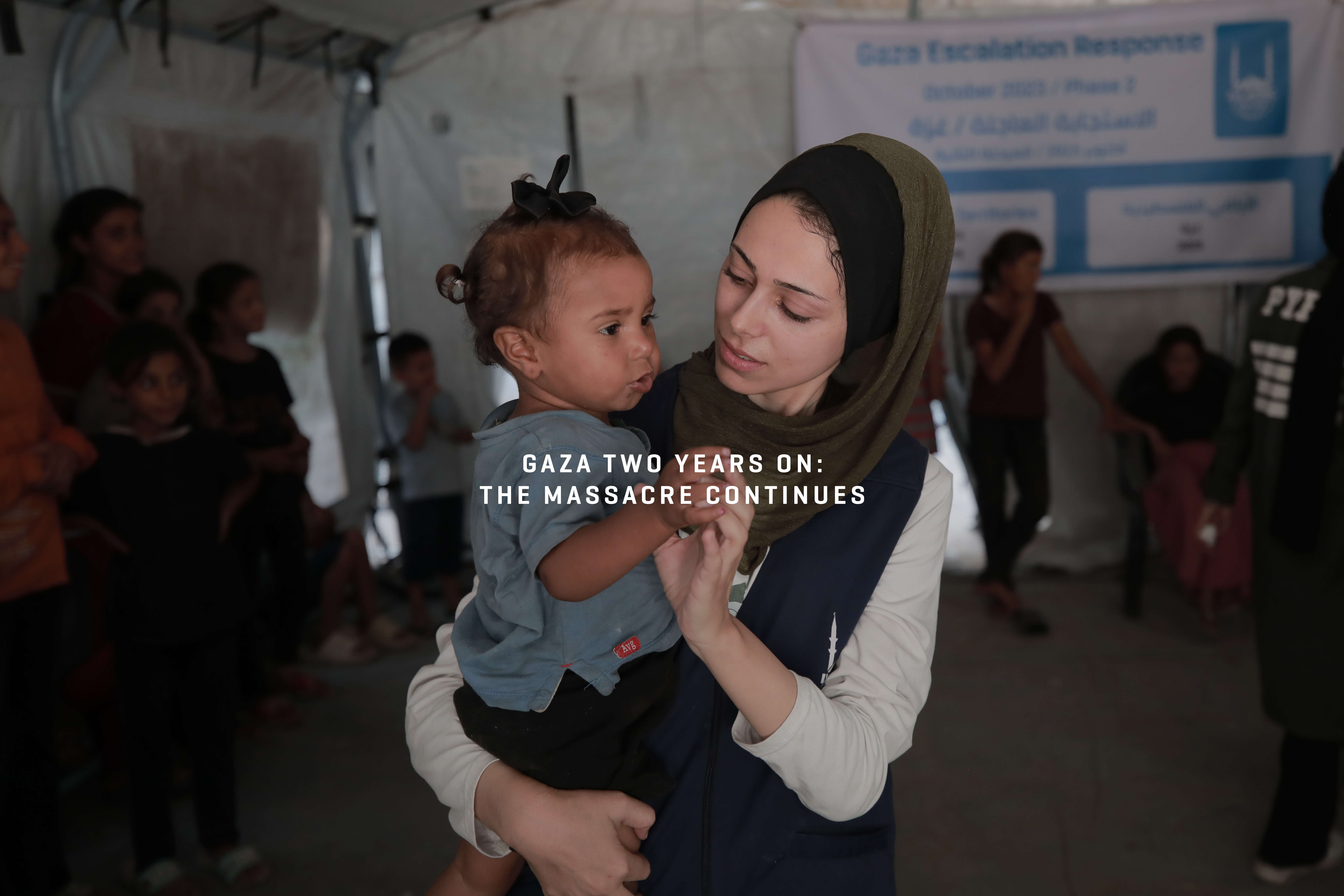
Islamic Relief aid worker and a sponsored orphan girl

This includes through initiatives such as Islamic Relief’s Orphan Sponsorship Program. In our program, donors are matched with orphaned children in need of support. The families looking after the orphan then receive a monthly stipend, where they have the flexibility to use funds to buy what they most need, when available. 

Orphan Sponsorship Program donors can support vulnerable children in Gaza in three ways. Through a one-to-one sponsorship, sponsor multiple children from the same family, or donating to the General Orphans Fund.  

What is a one-to-one-sponsorship?  

A one-to-one sponsorship is where a donor sponsors the needs of a single child. The orphan child receives the donation in the form of a monthly stipend entrusted to their guardian. 

We use electronic cash transfers to put money directly into the accounts of families, making funds available to allow them to circumvent the cash crisis.  

Prior to the current crisis, the stipends were limited to covering health and education expenses. But we now give the money on an unconditional basis, meaning families can use it to buy what they most need when it is available. 

Through the payment system, families are notified that payments have been made to their e-Wallets, which they are able to use to withdraw money from functioning supermarket.  

The system allows Islamic Relief to see which families have redeemed their codes, and has become a helpful tool in checking in on the welfare of families enrolled in the program. 

Donors will also receive updates on the child they’ve sponsored. It is our aim to provide annual updates, but the situation on the ground has meant that there can be delays in gathering this information and sharing it with donors. 

What is multiple child sponsorship?  

The ongoing bombardment of Gaza has tragically often orphaned multiple children within the same family. Many of our donors have expressed their kind wish to sponsor more than one child from the same family, which we have now made possible.  

 Multiple child sponsorship allows donors to do more to alleviate the suffering of one family by supporting up to 3 children.  

 Multiple child sponsorship fundamentally operates in the same way one-to-one sponsorship does.   

Donors are matched with orphaned children from the same family who are in need of support. The family then receives the donation in the form of a monthly stipend.  

We also provide donors with regular updates on the children and families they sponsor, but due to the situation on the ground we often experience delays in gathering this information and sharing it with donors. 

How many orphans in Gaza need sponsors? 

More than 7,300 orphaned children are in our system, waiting to be matched with sponsors. With a tentative ceasefire and blockade that could return at any moment, it’s very possible that the number of orphans in Gaza will continue to rise. 

Islamic Relief has been working tirelessly to upscale our Orphan Sponsorship Program to reach as many children as we possibly can. With your donations, we can reach even more orphans and their families with much needed support. 

Help support an orphan and change their lives

For just $100 a month, you can give the children of Gaza a chance to rebuild and see a brighter tomorrow.

09.01.25

Sumud and Palestine

  Publications

Sumud, or steadfastness, is a word that has become synonymous with the people of Palestine. As they face ongoing occupation and mounting adversity, their collective resilience and perseverance of their cultural identity deeply embody the concept of sumud.

What is Sumud?

Sumud (صمود) is an Arabic word meaning steadfastness or perseverance. It is a term that embodies the concept of everyday resistance. One of non-violent, collective resilience, and maintaining dignity, identity, and connection despite ongoing oppression. 

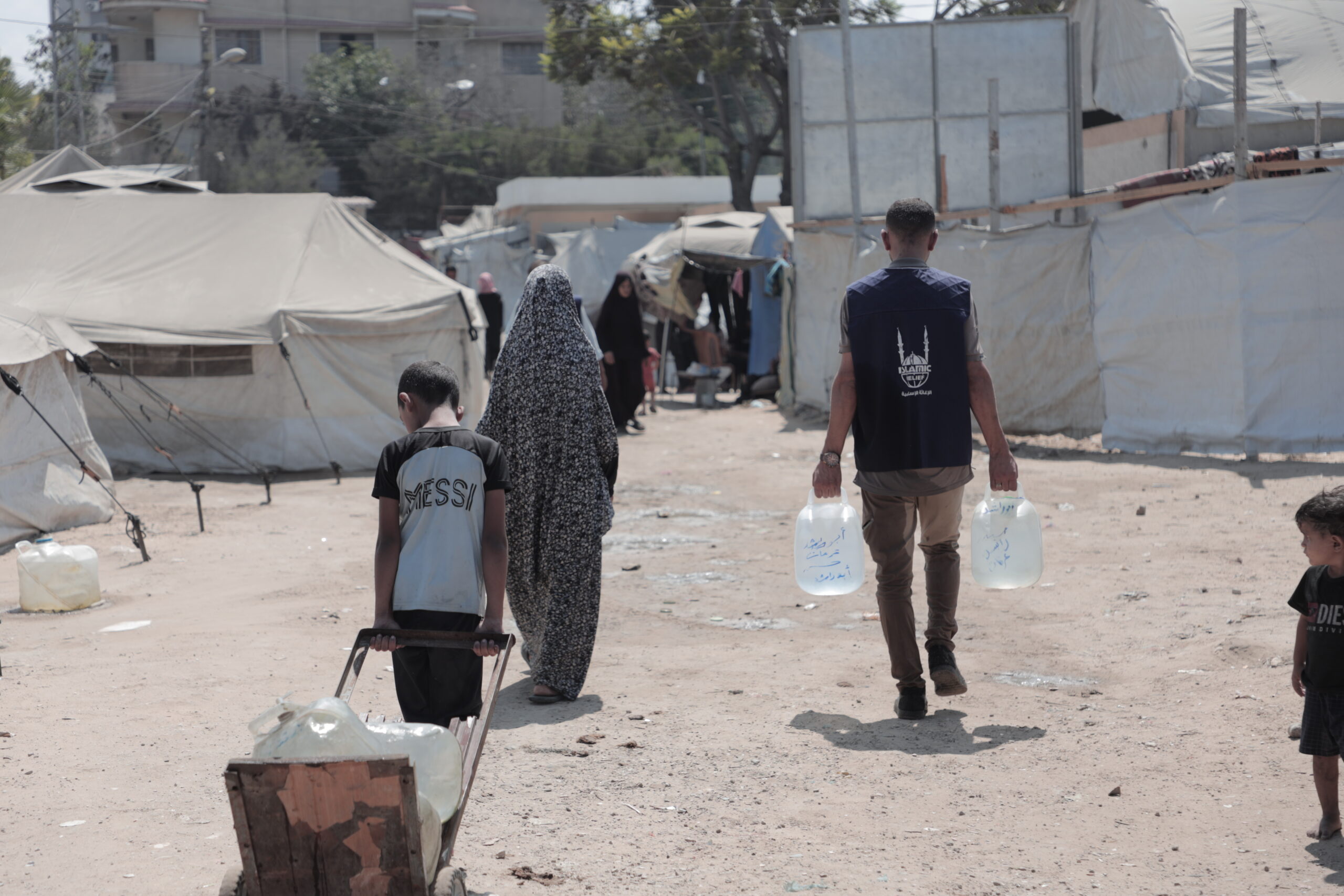
Sumud means a displaced Palestinian carrying water to their makeshift shelter
Photo: Displaced Palestinian carrying water to their makeshift shelter

In turn, Palestinians use sumud to interpret, cope and respond to ongoing injustice and traumatic experiences. For them, it is both a value and an action. Sumud strengthens their sense of purpose and meaning. It manifests through individual and collective action. Actions that protect family and community survival, wellbeing, dignity, Palestinian identity and culture, and a determination to remain on the land.  

History of Steadfastness in Palestine 

From when their homeland was seized by occupying forces in 1948, Palestinians have continually show resilience, both actively and passively.  

The establishment of Israel led to the Nakba (catastrophe). This was a massive destruction that the terrorist Zionist movement committed on Palestinian lands. With more than 530 Palestinian cities and villages entirely demolished, and hundreds of thousands of Palestinians killed and expelled from their homes.  

In 1967, the Naksa (setback in English) occurred, and Palestinians lost new parts of their lands – the West Bank, Gaza Strip and East Jerusalem. Other Arab countries also came under direct Israeli occupation, such as Sinai and the Golan Heights. The Nakba and Naksa taught the Palestinians sumud, and that leaving their lands was not a viable alternative for their future. 

Palestine and Sumud Today  

Today, as Palestinians remain targeted by occupying forces in every aspect of life, sumud has become a way of resistance.  

To Palestinians, sumud is when bombs destroy your house. But you still stand up on the rubble of the house and say that this is my homeland, and it will be so forever. Sumud when the Israeli settlers burn the olive trees. But you still plant new ones. Because the more the Zionists destroy, the more the Palestinian people rebuild.  

Sumud means displaced persons setting a makeshift camp amid ongoing conflict
Photo: Displaced persons camp in Gaza

Because sumud is the action of standing against all kinds of injustice and discrimination and the protection of the Palestinian identity, culture, tradition, and custom. It is the way Palestinians maintain their homeland as well as the continuation of the struggle against the Israeli occupation. 

Where the occupying regime tries to devastate and destroy the Palestinian people, sumud gives Palestinians hope and determination. Sumud focuses on preserving the self in the present to open up new horizons, perspectives, and desires in the future for self-determination, liberty, and equality. 

Struggle and Sumud

Both struggle and Sumud, in Palestinian culture, have become intertwined. Struggle, or resistance, for Palestinians is their physical actions against the Israeli occupation. Sumud is the structure and framework in which these actions are organised. It is their determination and confidence not to lose again. To prevent another Nakba and Naksa. It is a style of life and ethical responsibility in which an individual sacrifices themselves tirelessly.

In other words, Sumud is to give up what you love and embrace patience for the coming pain. That this is all for the sake of the homeland as well as for others. 

This is why Sumud, for Palestinians, is a core cultural and national concept. One that means more than steadfastness, but staying strong in all possible ways. Even in the face of unimaginable cruelty and injustice.

Sumud means a displaced Palestinian boy still smiling
Photo: Displaced Palestinian boy smiling

It presents a form of social solidarity and coherence against injustice and oppression. One that can be a model for emancipation for other nations that suffer persecution in the world. A symbol of resistance against colonisation, hegemony and suppression, and as a means to achieve self‑determination, freedom and justice. 

In a time when the Israeli regime restricts every single aspect of Palestinian freedom and liberty, Sumud presents a solution as a way of surviving in the struggle against Israeli colonisation and hegemony. Both in the way individuals stand up as one person against the whole Israeli apartheid, sacrificing themselves for the sake of others. As well as collective organised resistance and fighting Israeli injustice. The profound term has deep and well-established roots for Palestinians and their land, reflecting their strength and perseverance as a nation and culture.  

08.22.25

Gaza famine is a shameful global failure

  News     Publications

Today’s official confirmation of famine in Gaza brings shame on the entire world. Every day, our team there sees more people starving to death and children turning into living skeletons before our eyes. Many more will die unless the world acts now.

The famine is no accident – Israel is intentionally starving Palestinians to death. It is entirely man-made, caused by Israel’s cruel and illegal blockade and the complicity of world leaders who have failed to stop the daily war crimes. Never before has a famine – the most extreme and rarest form of starvation – been so widely predicted and so easily preventable, yet repeated warnings have been ignored. 

Israel has destroyed Gaza’s ability to feed itself, then blocked lifesaving aid from entering and gunned down starving people trying to get food for their children. It has destroyed Gaza’s health system, denying malnourished people treatment. Truckloads of food, medicine, and other vital aid are just a few miles from starving people, but are barred from reaching them. Even as horrific images of emaciated children touch hearts around the world, Israel has further accelerated its attacks on civilians, continued to restrict aid, and stepped up its efforts to shut down and militarise the humanitarian response. Young children are the most vulnerable to starvation, but even aid workers and medics are now wasting away.     

In the face of relentless violence and suffering, Palestinians in Gaza have shown incredible courage and resilience, but there is a limit to what humans can endure.  

There can be no more excuses. World leaders must finally act to save lives and prevent genocide. The only way to stop this famine from spreading further across Gaza and killing even more people is to demand a ceasefire and pressure Israel to fully reopen all land crossings so that Gaza can be flooded with sufficient supplies. A small, temporary increase is not enough – it must be large-scale, sustained, and delivered through the UN-led system that Israel is trying to shut down.  

More paltry words of condemnation will not make any difference now. To save lives, governments must apply meaningful economic and diplomatic pressure, such as ending all arms sales, suspending trade agreements, and banning trade and investment with illegal Israeli settlements.  

08.19.25

When hope is quiet: reflections from Yemen on World Humanitarian Day 

  News     Publications

Nada Abu Taleb has documented Yemen’s silent suffering as Islamic Relief’s Media and Communication Coordinator in the country. Now, she reveals what humanitarian work truly means in one of the world’s most neglected crises. 

World Humanitarian Day is a moment to pause, reflect, and remember why we choose to stand together amid crises. After nearly 15 years of humanitarian work, I have learned that to #ActForHumanity is not simply a theme; it’s a daily commitment, deeply personal and urgent, especially here in Yemen. 

As a Yemeni who has lived and worked through this crisis, I know that suffering is not a distant headline; it confronts us every day. I see it in the strained expressions of my neighbours, hear it in the despair of families struggling to survive. But amid these painful encounters are moments of profound dignity that stay etched in memory. 

I recall a mother who had just received a modest cash assistance package. Her hands held her child tightly. They were visibly malnourished, yet her eyes expressed overwhelming gratitude rather than complaint. In that moment, aid became about more than food or money; it became about dignity, it became about making people feel seen and valued. 

Another defining moment was my encounter with a displaced father living in a makeshift shelter after losing nearly everything: his home, livelihood, and even family members. Despite his burden, his greatest concern was maintaining his children’s sense of normality. “Even when we have nothing,” he said quietly, “I still make sure my children feel safe, clean, and believe things will get better.” This humble, steadfast courage reshaped my understanding of dignity. Humanitarian work is not merely about distributing aid; it’s about honouring people’s resilience, acknowledging their identity, and protecting the fragile sense of hope they still hold. 

Education: Yemen’s silent crisis 

While the world rightly recognises and responds to immediate crises like hunger and the need for shelter, Yemen’s overlooked crisis is the systematic erosion of our education system. Schools are emptying, teachers haven’t been paid, and children’s dreams are fading. I remember a classroom without doors or windows, children huddled together sharing torn notebooks. When asked about his dreams, one boy replied earnestly, “I want to be a pilot, but I don’t know if I will ever fly a plane. We can barely eat.” 

This stark realisation hit me deeply. Education is not a luxury, it’s the promise of a future. Without schooling, children lose more than knowledge; they lose structure, security, and the ability to envision a better tomorrow. Protecting education is protecting hope itself, yet this urgent truth rarely makes international headlines. That’s why Islamic Relief teams in Yemen are working to rebuild classrooms, train teachers, and create safe learning spaces in some of the hardest-hit communities. 

Finding strength in small acts 

Humanitarian workers frequently grapple with overwhelming despair. I recall one particularly difficult day, consumed by endless stories of families skipping meals, children leaving school, communities crushed by hardship. The scale of suffering was paralysing. 

But what pulled me back was the quiet joy of Eid celebrations. Families smiling because their children had new clothes, or because, for the first time in months, they had meat on their table. I remembered a father weeping quietly with relief as he watched his daughters recover from malnutrition, their laughter a testament to a small triumph. These moments of humanity remind me why this work matters, small gestures can reverberate deeply, sustaining hope amid despair. 

Innovating amid challenges 

The complexity of Yemen’s crisis, which is marked by checkpoints, instability, and dwindling funds, often hampers our physical presence in affected communities. Our office responds creatively, training colleagues in remote areas in photography and storytelling so the voices of the communities we support can be heard. This initiative ensures we can document, communicate, and respond swiftly, preserving transparency and maintaining critical connections even amid logistical nightmares. This adaptive resilience underscores the resourcefulness required to deliver impartial and dignified humanitarian assistance under seemingly impossible circumstances. 

Women’s silent strength 

Throughout this crisis, I have come to see my fellow Yemeni women quietly shoulder extraordinary burdens. Their courage often lies not in grand gestures but in daily persistence despite exhaustion, fear, or loss. Witnessing their quiet determination consistently reshapes my understanding of what true bravery looks like.  

But some of their strength also comes from Yemen’s extraordinary community solidarity. Where official systems fail, neighbours have stepped forward, sharing limited resources, organising responses, and ensuring no one is abandoned. This local strength profoundly shapes our humanitarian approach, reminding us that true assistance is collaborative, respectful, and humble. Our role is not to lead from above, but to support and amplify the resilience already thriving on the ground. 

The world’s shared responsibility 

Today, when global attention feels overstretched and crises rage everywhere, from Gaza to Sudan, solidarity is not a limited resource; it’s our shared responsibility. Acting for humanity means refusing to normalise suffering, no matter how frequent it becomes. It requires compassion, dignity, and fairness, consistently and urgently, even when no one is watching. 

Yemen is often misunderstood, painted simplistically as a land of endless conflict and helplessness. In reality, Yemenis are remarkably spirited and resourceful. Our task as humanitarian workers is not to save them, but to stand beside them, preserving dignity, amplifying their voices, and working towards sustainable recovery. 

On World Humanitarian Day, let us remember that behind every statistic, there’s a person with a story to tell. That is my job as a communicator. To act for humanity is to remain present, compassionate, and brave, even in the face of immense challenges. This work is not just our choice, but our collective answer to a world that desperately needs humanitarians. May our actions always reflect that calling. 

Families in Yemen are fighting for survival every day. With your support, Islamic Relief can deliver life-saving aid to those who need it most. Your donation can help provide food, medicine, and hope to vulnerable communities. Please donate to our Yemen Emergency Appeal today. 

08.19.25

Sudan’s collapse, carried on local shoulders

  News     Publications

As systems fail, displaced doctors operate without pay, families shelter strangers, and aid workers navigate chaos. Ahead of World Humanitarian Day, their #ActForHumanity in Sudan defies despair.

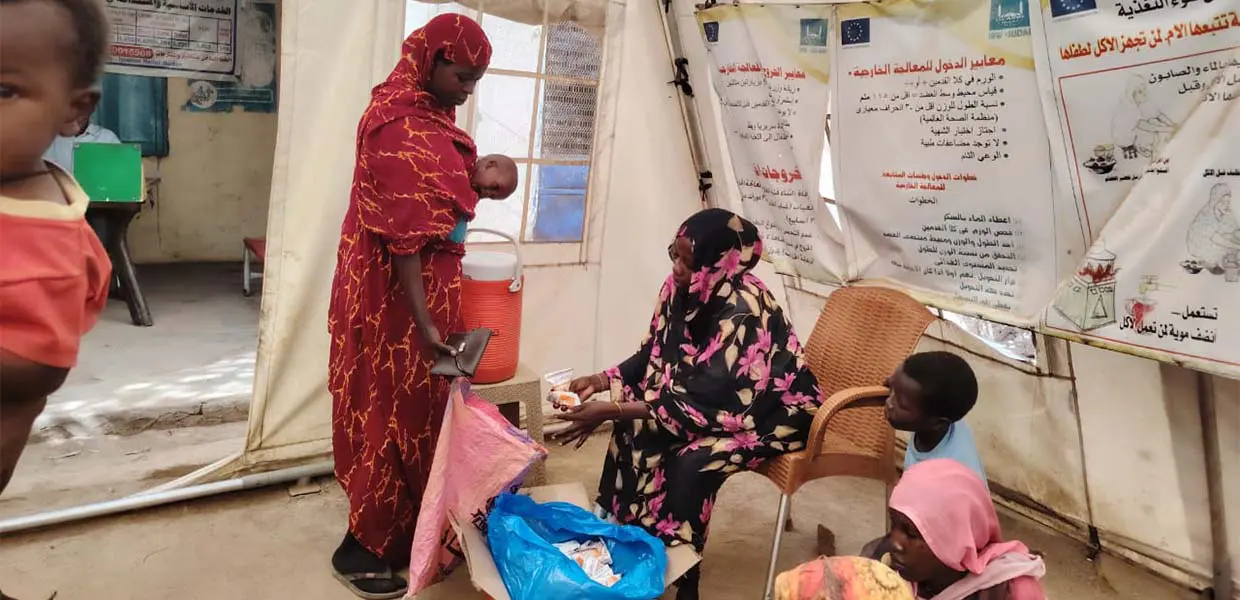
Two years of war have shattered Sudan’s already limited health services, leaving communities to shoulder the crisis. In Gedaref’s Alameen Hospital, an eastern Sudanese facility near the Ethiopian border, overcrowded wards force two patients to share a single bed. A third rests on a couch. Others, with nowhere else to go, receive treatment and vanish back into the streets they walked in from, carrying wounds and illnesses back to makeshift shelters.  

“The responsibility grows heavier every day,” says Dr. Abdalbasit Alameen, the hospital’s director. “People arrive having lost everything: homes, livelihoods, even the certainty of their next meal. Now imagine they also need lifesaving antibiotics we cannot provide.” 

Photo: Head of Alameen Hospital, Dr. Abdalbasit Alameen, visits patients in one of Sudan’s many overstretched hospitals. 

A health system on life support 

When Khartoum’s medical factories were bombed, supply chains snapped. Now, Dr. Alameen’s hospital – serving 200,000+ displaced people - functions at 30% capacity. His team reuses gloves, rations anaesthesia, and faces impossible choices: “Repair the last infant incubator or buy malaria pills for 50 children?” Across conflict-affected areas, many facilities have shut or can no longer function safely, forcing families to travel long distances or go without care.  

As World Humanitarian Day approaches under the banner #ActforHumanity, the stories emerging from Gedaref, a border state absorbing wave after wave of displacement, reveal a painful truth: when institutions collapse, only the compassion of people and the persistence of aid workers keep the system going. Our organisation, alongside other international NGOs, works hand-in-hand with local communities to patch together what remains. 

Filling cracks in a system that is shattered 

From Islamic Relief’s field office in Gedaref, country director Elsadig Elnour witnesses both the desperation and determination. “We are not saviours but partners in a collective effort,” he says. “Our goal is to fill the gaps left by the shattered infrastructure, and ensure essential supplies and support reach those trying to survive in displacement camps and overstretched hospitals.” 

The complexity of Elsadig’s role mirrors the crisis itself: ensuring his staff coordinates deliveries of scarce medical supplies, emergency nutritional support, and logistical aid through fractured routes and volatile zones. “Every shipment we deliver represents days of negotiation, planning, and risk management,” he explains. “But the relief in exhausted doctors’ eyes and the quiet thanks from families remind us why we stay.” 

Photo: Islamic Relief Sudan Country Director Elsadig Elnour inspects aid distribution efforts in Port Sudan, where humanitarian needs continue to rise amid the ongoing crisis.

Communities as first responders 

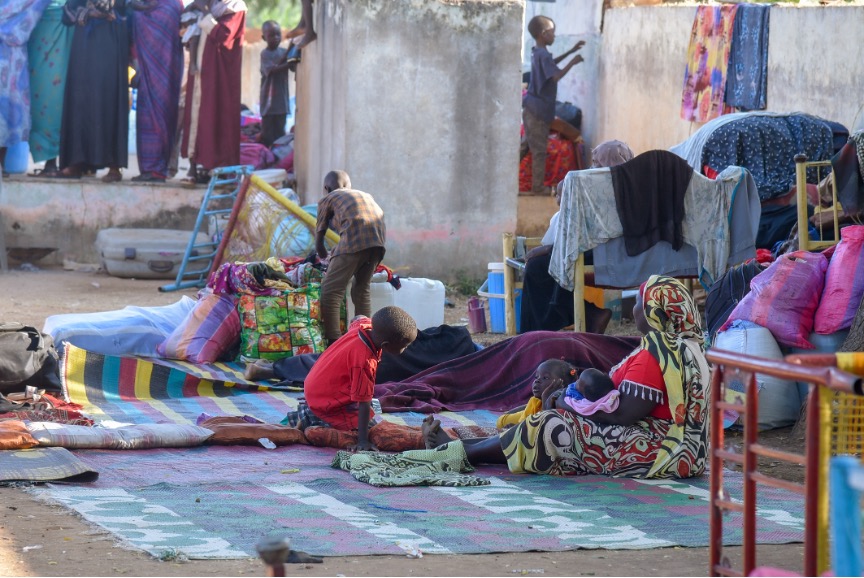
About 70 kilometres from Gedaref town, in the village of Hamra in Gedaref State, Rabha Saeed has rebuilt a life in displacement.  “When displaced people approach your home, you simply take them in. You share your bread,” says Rabha, herself displaced from Omdurman after burying her sister amid airstrikes. She now shares a cramped home with 7 family members. “We arrived with nothing. No money, no food. But thank God, the community welcomed us.” 

This grassroots compassion defines Gedaref’s response. University students ran Ramadan campaigns collecting clothes, mosquito nets, and sorghum for new arrivals. Locals converted schools into shelters despite overcrowded classrooms and children sleeping on mud floors during the rains. Still, as Rabha notes, solidarity has limits: “If displaced people cannot find work, the burden falls on those who host them.” Rabha says. She is among many who lost government employment during the crisis. “INGOs gave us monthly support. When they left, we were left crying for ourselves.” We need organisations like Islamic Relief that stay back when most leave.  

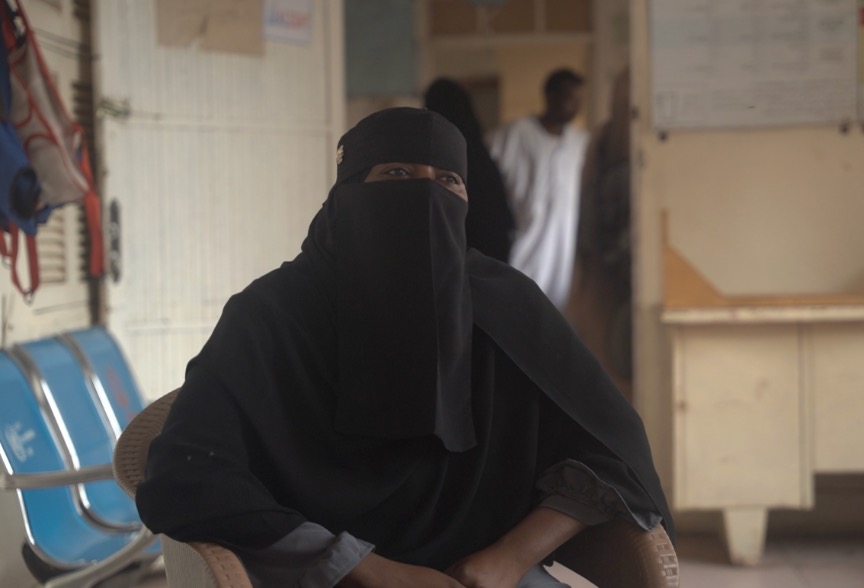
Photo: A patient waits for medical care in one of Sudan’s overwhelmed hospitals, where shortages of staff, supplies, and space leave many struggling to access treatment. 

Stand for humanity 

Elsadig echoes her call for action. “Humanitarian response isn’t just about immediate relief,” he says. “It’s about helping communities stand on their own again. Islamic Relief is committed to staying, but this work needs sustained investment and collective global action.” 

“The international community must act, not tomorrow, now. Our shared humanity demands it.” 

Donate to our Sudan emergency appeal now to help empower Sudan’s communities as they rebuild their own future. 

08.19.25

World Humanitarian Day: An aid worker from Gaza reflects on a desperate situation 

  News     Publications

Displaced from Gaza and now living in another country in the Middle East, Islamic Relief’s Mariam* continues working tirelessly to support vulnerable people back home in Gaza, including her colleagues, who are facing incredible hardship. This World Humanitarian Day, we pay tribute to humanitarian workers doing all they can to support the people of Gaza. 

Mariam carries the weight of 2 wars.  

By day, she documents Gaza’s collapse in stark statistics: 90% of the population displaced, often multiple times; 71,000 children under 5 years old acutely malnourished, and critically, over 100 confirmed deaths from malnutrition so far – deaths that include children under 5. and no hospitals in North Gaza functioning as they either have been destroyed or forced to cease operations.  

By night, she counts personal losses: How many days since she last heard from her brother in northern Gaza, how long it’s been since her husband – also still in Gaza – last ate, how many nights she’s spent lying awake worrying about her sister and family. 

Since Mariam left Gaza 16 months ago, 2 phones are her tether to home. While a work device blinks with constant reports from colleagues, her personal phone holds precious voice notes from her husband. 

“This is my reality now, supporting and monitoring food distributions while wondering if my husband ate today,” says Mariam, who has been working for Islamic Relief for 16 years.  

“I review reports of infants starving to death in northern Gaza, then make breakfast for my own children.” 

When the helpers need help 

Now displaced and still supporting Islamic Relief’s response remotely, Mariam embodies both the extraordinary strength and impossible choices facing Palestinian aid workers.  

“My colleagues who are still in Gaza work under bombs with no safe place to sleep. All of them have been displaced – most more than once – yet they continue their work. I sit here with a roof and running water, supporting their efforts remotely. But we hold our breath every day until we know they are safe. We try to take as much workload off them as possible, even though we are under pressure ourselves, because we know they are working under unimaginable conditions. They are exhausted, traumatised, yet still show up every single day. How can I not do the same?”  

Over 483 aid workers, including 326 UN staff, have been killed in Gaza since October 2023. Mariam recounts an attack on a UN school sheltering displaced families – one of numerous such incidents targeting civilian shelters this year. In July this year, 3 staff members from Human Appeal were killed while doing their job.  

“That could have easily been one of us”, Mariam says. “I was working inside Gaza under the same risks, moving between distribution points and shelters, fully aware that any moment could be my last. The only difference between me and those we lost is chance. 

“This isn’t collateral damage, it is targeted,” Mariam adds. Among those killed were colleagues she once worked closely with, people she considered friends. One was Aseel Khudr, a nurse who lost her life while treating patients at Al-Sahaba Medical Centre. Another was a healthcare worker at an organisation Islamic Relief partners with, killed while fulfilling their humanitarian duty. 

The statistics Mariam monitors tell the story of Gaza’s collapse as a result of Israel’s systematic and deliberate destruction of everything people need for survival. Even after Israel allowed aid into Gaza in July, only 40% of UN-led convoys were completed. The rest were either denied or impeded by Israeli forces or suspended due to insecurity. 2 million people – almost everyone in Gaza – face acute food insecurity. People have been gunned down and bombed while trying to get food, with over 1,239 civilians killed and more than 8,152 wounded while seeking humanitarian assistance since May 2025. 

But numbers alone can’t capture what it means to deliver aid when the rules of war are being completely ignored with impunity. 

The women keeping Gaza alive 

What sustains Mariam is the women of Gaza — the doctors performing surgeries by the light of their phones, the teachers holding lessons in bombed-out buildings, the mothers inventing ways to stretch a cup of flour into 3 meals. She describes colleagues who spend mornings documenting war crimes and afternoons searching for firewood. 

“Before this war, we had washing machines, universities, and cinemas,” Mariam says. “Now, women wash clothes in sewage-contaminated water and teach maths in rubble.”  

Mariam pushes back against the stereotype that Palestinian women are somehow ‘used to’ hardship – that’s simply not true. “People looking from the outside might think we had lived like this all our lives, but in reality, [since October 2023] we have had to reinvent everything just to survive.” 

Mariam shares the story of Fatema, a graduate of Islamic Relief’s Orphan Sponsorship Program, who is now an aid worker herself.  

“I first met her when she was 12, when I was starting my own career. She was bright, writing poetry despite losing both parents,” Mariam says. “Years later, she joined our team.”  

Fatema’s husband and son were killed in an airstrike while she was at work.  

“When I saw her on TV crying, holding the toy she just bought for her son, my heart broke into pieces. Later, I learned she went back to work, with even more determination, because somehow, she didn’t let it break her. For me, she is the true meaning of strength and dignity in the middle of so much pain. Whenever I feel like giving in to exhaustion or despair, I think of her, and she reminds me why we keep going. 

What acting for humanity really requires 

For Mariam, this World Humanitarian Day’s slogan, #ActForHumanity, isn’t just a hashtag, but a daily practice with concrete demands: 

First, stop the weapons fuelling this catastrophe. “No more ‘deep concern’ statements while bombs keep falling. We need enforceable arms embargoes now.” 

Second, pressure Israel to end its blockade and guarantee unfettered aid access. “Every day our convoys are blocked means more children like Fatema’s son are buried in mass graves.” 

Right now, people are starving, drinking polluted water, and dying, not just from bombs but from hunger and preventable diseases. No hashtag can replace trucks filled with food, medicine, and fuel. Nor can it rebuild the homes, schools, and hospitals, reduced to rubble. 

Mariam adds that “acting for humanity also means seeing us as people, not numbers. For Gaza, it means listening to communities, respecting their dignity, and ensuring aid reaches the most vulnerable, in a fair and dignified way. It also means holding those who violate humanitarian law accountable, because silence in the face of this suffering is complicity.” 

And finally, she says, remember the displaced. “Whether in neighbouring countries or elsewhere, many Palestinians outside of Gaza are living without residency rights, school access, and healthcare. Survival shouldn’t be the endpoint of dignity.” And for those forced to flee Gaza, the right to return must never be forgotten.  

On World Humanitarian Day, Mariam hopes her message cuts through the noise: because true solidarity means showing up, not just when it is trending, but when it is terrifying and the world looks away.  

Islamic Relief continues delivering lifesaving aid in Gaza against almost-impossible odds. Support our Palestine Emergency Appeal today. 

*Name has been changed to protect confidentiality 

08.15.25

Gaza: Israel threatens to ban major aid organisations as starvation deepens

  News     Publications

Despite claims by Israeli authorities that there is no limit on humanitarian aid entering Gaza, most major international NGOs have been unable to deliver a single truck of lifesaving supplies since 2 March.

Instead of clearing the growing backlog of goods, Israeli authorities have rejected requests from dozens of NGOs to bring in lifesaving goods, citing that these organisations are “not authorised to deliver aid.” In July alone, over 60 requests were denied under this justification.

This obstruction has left millions of dollars’ worth of food, medicine, water, and shelter items stranded in warehouses across Jordan and Egypt, while Palestinians are being starved.

“Anera has over $7 million worth of lifesaving supplies blocked from entering Gaza – including 744 pallets of rice, enough for six million meals, blocked in Ashdod just kilometres away,” said Sean Carroll, President and CEO of Anera.

Many of the NGOs now told they are not “authorised” to deliver aid have worked in Gaza for decades, are trusted by communities and experienced in delivering aid safely. Their exclusion has left hospitals without basic supplies, children, people with disabilities, and older people dying from hunger and preventable illnesses, and aid workers themselves going to work hungry.

The obstruction is tied to new INGO registration rules introduced in March. Under these new rules, registration can be denied on the basis of vague and politicised criteria, such as alleged “delegitimisation” of the state of Israel. INGOs warned that the process was designed to control independent organisations, silence advocacy, and censor humanitarian reporting. This new bureaucratic obstruction is inconsistent with established international law as it entrenches Israel’s control and annexation of the occupied Palestinian territory.

Unless INGOs submit to the full registration requirements, including the mandatory submission of details of private donors, complete Palestinian staff lists and other sensitive information about personnel for so-called “security” vetting to Israeli authorities, many could be forced to halt operations in Gaza and the West Bank, including East Jerusalem, and remove all international staff within 60 days. Some organisations have even been issued a seven-day ultimatum to provide Palestinian staff lists.

NGOs have made clear that sharing such data is unlawful (including under relevant data protection laws), unsafe, and incompatible with humanitarian principles. In the deadliest context for aid workers worldwide, where 98 per cent of those humanitarians killed were Palestinian, NGOs have no guarantees that handing over such information would not put staff at further risk, or be used to advance the government of Israel’s stated military and political aims.

Today, INGOs’ fears have proven true: the registration system is now being used to further block aid and deny food and medicine amid the worst-case scenario of famine.

“Since the full siege was imposed on 2 March, CARE has not been able to deliver any of our $1.5 million worth of pre-positioned supplies into Gaza,” said Jolien Veldwijk, Country Director of CARE. “This includes critical shipments of food parcels, medical supplies, hygiene kits, dignity kits, and maternal and infant care items. Our mandate is to save lives, but due to the registration restrictions, civilians are being left without the food, medicine, and protection they urgently need.”

“Oxfam has over $2.5 million worth of goods that have been rejected from entering Gaza by Israel, especially WASH and hygiene items as well as food,” said Bushra Khalidi, Oxfam Policy Lead. “This registration process signals to INGOs that their ability to operate may come at the cost of their independence and ability to speak out.”

These restrictions are part of a broader strategy that includes the so-called “GHF” scheme – a militarised distribution mechanism promoted as a humanitarian solution. In reality, it is a deadly tool of control, with at least 859 Palestinians killed around “GHF” sites since it began operating.

“The militarised food distribution scheme has weaponised starvation and curated suffering. Distributions at GHF sites have resulted in extreme levels of violence and killings, primarily of young Palestinian men, but also of women and children, who have gone to the sites in the hope of receiving food,” according to Aitor Zabalgogeazkoa, MSF emergency coordinator in Gaza.

Both the “GHF” scheme and the INGO registration process aim to block impartial aid, exclude Palestinian actors, and replace trusted humanitarian organisations with mechanisms that serve political and military objectives. They come as the government of Israel escalates its military offensive and deepens its occupation in Gaza, making clear these measures are part of a broader strategy to entrench control and erase Palestinian presence.

“At this point, everyone knows what the correct, humane answer is, and it’s not a floating pier, airdrops or the “GHF.” The answer, to save lives, save humanity and save yourselves from complicity in engineered mass starvation, is to open all the borders, at all hours, to the thousands of trucks, millions of meals and medical supplies, ready and waiting nearby,” said Sean Carroll of Anera.

We call on all states and donors to:

  • Press Israel to end the weaponisation of aid, including through bureaucratic obstruction, such as the INGO registration procedures.
  • Insist that INGOs are not forced to share sensitive personal information, in violation of the General Data Protection Regulation (GDPR), or compromise staff safety or independence as a condition for delivering aid.
  • Demand the immediate and unconditional opening of all land crossings and conditions for the delivery of lifesaving humanitarian aid.

Editor’s note

  • The occupied Palestinian territory is the deadliest setting for aid workers worldwide, with Palestinian staff accounting for 98% of aid worker fatalities: 509 out of 517 killings that took place between 2023-2025, according to the Aid Worker Security Database.
  • On 6 May, 55 organisations warned that Israel’s new INGO registration measures are a grave threat to humanitarian operations and international law.
  • On 1 July, 200+ organisations called for immediate action to end the deadly Israeli distribution scheme, including the so-called “GHF” in Gaza, revert to the existing UN-led coordination mechanisms, and lift the Israeli government’s blockade on aid and commercial supplies.
  • On 23 July, 100+ organisations warned that, as mass starvation spreads across Gaza, our colleagues and those we serve are wasting away.
  • On 29 July, the Integrated Food Security Phase Classification (IPC) wrote that the worst-case scenario of famine is currently playing out in the Gaza Strip.
  • Israel has consistently denied restricting the amount of aid allowed into Gaza, including throughout July 2025, when most of the denials discussed in this statement were issued.
  • On 31 July, OHCHR wrote that since 27 May, at least 1,373 Palestinians have been killed while seeking food; 859 in the vicinity of the “GHF” sites and 514 along the routes of food convoys. Most of these killings were committed by the Israeli forces.
  • On 4 August, a Palestinian nurse in Gaza was killed when an airdrop struck him.
  • On 5 August, it was reported that Israeli authorities are planning for the full occupation of the Gaza Strip.
  • On 6 August, UN agencies and NGOs warned that without immediate action, most international NGO partners could be de-registered by Israel in the coming weeks.
  • On 6 August, the Dutch Data Protection Authority (DPA) concluded that Israel’s information requests under the INGO registration process risk violating the General Data Protection Regulation (GDPR). The DPA advised that INGOs should not comply with these requests, and that the only solution is for Israel to amend its requirements and for the relevant ministries to issue a formal protest.
  • On 7 August, MSF released a report stating food distributions in Gaza run by the so-called “GHF” are sites of “orchestrated killing and dehumanisation” that must be shut down.”
  • On 10 August, Save the Children reported the deaths of 100 children due to starvation in Gaza since October 2023.
  • On 12 August, a group of UN Special Rapporteurs on human rights published a letter to the Israeli government, stating deep concern that the INGO registration measures “weaken the ability of INGOs to operate independently and impartially and to carry out their humanitarian and human rights work without interference or fear of reprisal” and that “that the obligation to report on INGO personnel, in the context of occupation, armed conflict and serious violations of international law, could raise serious protection and reprisal concerns.”

Signatories:

  1. Action Against Hunger (ACF)
  2. A New Policy
  3. ACT Alliance
  4. Action For Humanity
  5. ActionAid Denmark
  6. ActionAid International
  7. All We Can
  8. Alliance Sud
  9. American Friends Service Committee (AFSC)
  10. Americares
  11. Anera
  12. Asamblea de Cooperación por la Paz
  13. Bystanders No More
  14. Campaign Against Arms Trade
  15. Canadian Foodgrains Bank
  16. CARE
  17. Caritas Internationalis
  18. Caritas Jerusalem
  19. Caritas Middle East and North Africa
  20. Caritas Switzerland
  21. Center for Jewish Nonviolence
  22. Charity & Security Network
  23. Children Not Numbers
  24. Christian Aid
  25. Churches for Middle East Peace (CMEP)
  26. CISS – Cooperazione Internazionale Sud Sud
  27. Committee to Protect Journalists
  28. Cooperation Canada
  29. COORDINADORA VALENCIANA ONGD
  30. DanChurchAid
  31. Danish Refugee Council (DRC)
  32. Department of Service to the Palestinian Refugees
  33. Diakonia
  34. Diakonie Katastrophenhilfe
  35. EDUCO
  36. Embrace the Middle East
  37. Emergency – Life Support for Civilian War Victims Ong Ets
  38. Entreculturas
  39. Forum Ziviler Friedensdienst e.V. (Pro Peace)
  40. Frieda – the Feminist Peace Organization
  41. Friends Committee on National Legislation (FCNL)
  42. Fund for Global Human Rights
  43. Glia
  44. HEKS/EPER (Swiss Church Aid)
  45. HelpAge International
  46. Humanitarian Coalition
  47. Humanity Auxilium
  48. Humanity & Inclusion – Handicap International
  49. Humanity First UK
  50. INARA
  51. Insecurity Insight
  52. International Development and Relief Foundation (IDRF)
  53. INTERSOS
  54. Islamic Relief
  55. Jahalin Solidarity
  56. Japan International Volunteer Center (JVC)
  57. Jüdische Stimme für Demokratie und Gerechtigkeit in Israel/Palästina JVJP Switzerland
  58. KinderUSA
  59. Kvinna till Kvinna Foundation
  60. La Coordinadora de Organizaciones para el Desarrollo (The Spanish Development NGO Platform)
  61. Médecins du Monde France
  62. Médecins du Monde International Network
  63. Médecins Sans Frontières (MSF)
  64. MedGlobal
  65. Medical Aid for Palestinians (MAP)
  66. Medico International
  67. Medico International Schweiz
  68. Mennonite Central Committee (MCC)
  69. Middle East Children’s Alliance
  70. MPower Change Action Fund
  71. Muslim Aid
  72. NORWAC – Norwegian Aid Committee
  73. Norwegian Church Aid
  74. Norwegian People’s Aid (NPA)
  75. Norwegian Refugee Council (NRC)
  76. Oxfam
  77. Palestinian Children’s Relief Fund (PCRF)
  78. PANZMA – Palestinian Australian New Zealand Medical Association
  79. PARCIC
  80. Pax Christi International
  81. Peace Watch Switzerland
  82. People in Need (PIN)
  83. Plan International
  84. Polish Humanitarian Action (PAH)
  85. Portuguese Platform of Development NGOs
  86. Premiere Urgence Internationale (PUI)
  87. Project HOPE
  88. Relief International
  89. Sabeel-Kairos UK
  90. Save the Children International
  91. Secours Islamique France (SIF)
  92. Solidar Suisse
  93. Solidarités International
  94. SWISSAID
  95. Terre des Hommes Italy
  96. Terre des Hommes Lausanne
  97. The Eastern Mediterranean Public Health Network (EMPHNET)
  98. The United Church of Canada
  99. United Against Inhumanity (UAI)
  100. Vento di Terra
  101. War Child Alliance
  102. Weltfriedensdienst e.V.

07.30.25

Orphan Care: Its Transformative Impact on Ahlam Dayib Abdillahi

  News

Islamic Relief’s Orphan Sponsorship Program (OSP) had a profound impact on Ahlam Dayib Abdillahi, a 13-year-old girl residing in Hargeisa, Somaliland.

The program, initiated in 1986 with a mission to provide financial support to orphans in various countries. It expanded its reach to Somalia in 2010 and now supports nearly 4800 orphans currently.

Ahlam’s life has been shaped by hardship. She lives with her mother, Kos, and eight siblings in a modest two-room shack house made of tin sheets.

The family’s struggles began with the passing of Ahlam’s father in 2017. This left Kos as the sole provider for her large family.

Before joining the OSP, the family faced immense difficulties meeting their basic needs. Kos tirelessly worked at a stall alongside a street, selling cooked food to support her children. It made it incredibly challenging to afford school fees, uniforms, and essential educational supplies for Ahlam and her siblings.

She afterward transitioned to a clothes and tailoring shop after getting support from Islamic Relief Somalia’s Orphan Sponsorship Program.

Kos, orphan Ahlam's mother, in her clothes and tailoring shop
Photo: Kos, Ahlam’s mother, in her clothes and tailoring shop

The OSP became a lifeline for Ahlam and her family. The program has provided consistent quarterly financial support, covering the crucial expenses of education, transportation, uniforms, and books.

This timely assistance has dramatically improved Ahlam’s academic performance. It enabled her to excel in her studies and rise to the top of her class for the past two years.

Ahlam is a bright young girl with a keen interest in science and mathematics. Her dreams extend beyond academic success. She aspires to become a businesswoman, a testament to her ambition and desire to create a better life for herself and her family. Ahlam envisions a future where she can make meaningful contributions to her community and provide stability for those she loves.

How the new pricing for orphan care sponsorship provides more support

The OSP’s recent implementation of a new pricing plan has been a game-changer for Ahlam and other orphans within the program. The plan increased the quarterly support per orphan, significantly amplifying the impact on their lives.

This generous increase has resulted in a comprehensive support system, encompassing enhanced educational resources, improved healthcare, better access to nutritious food, and additional resources for daily living.

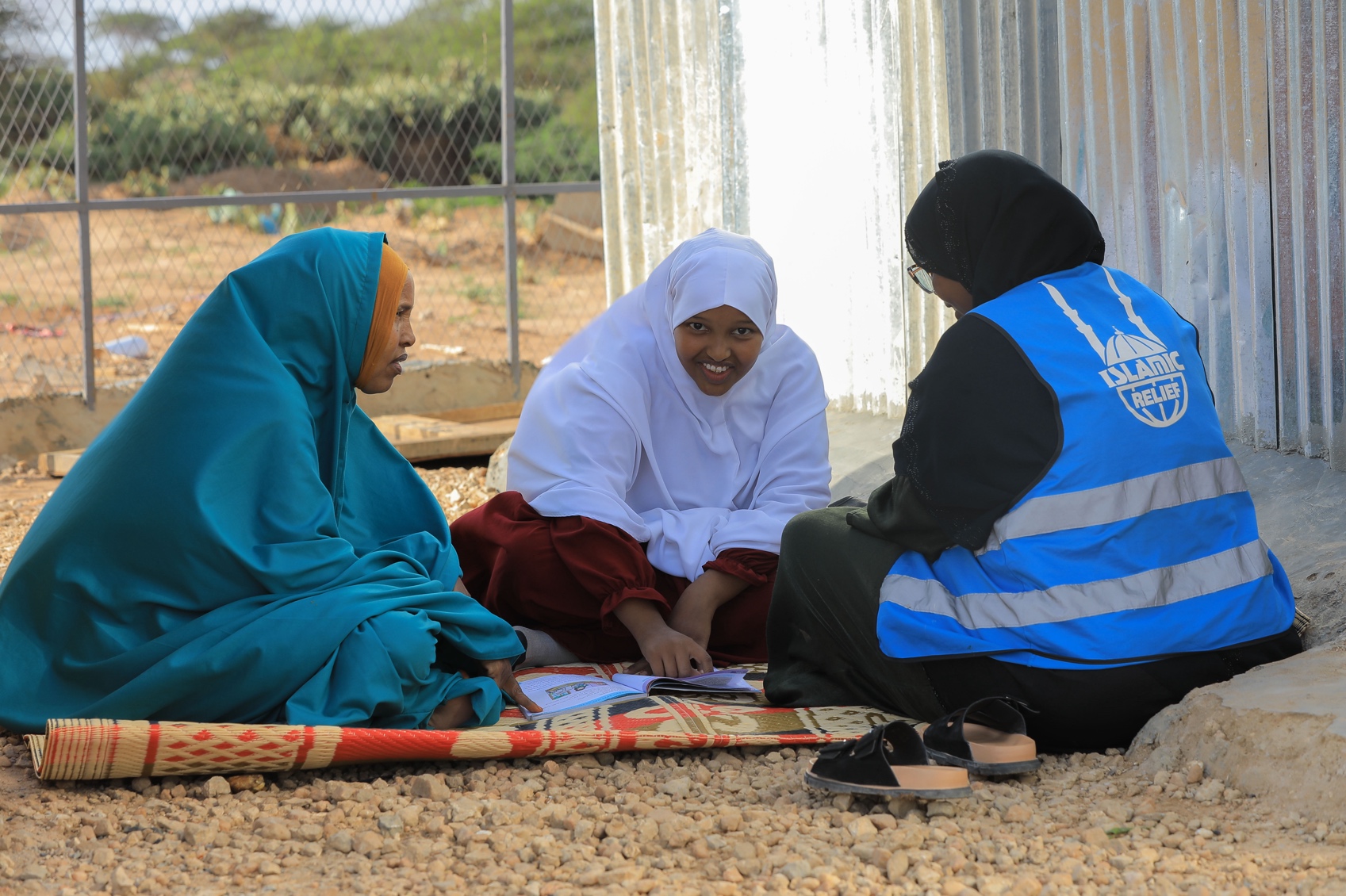
Ahlam and her mother Kos conversing with one of the Islamic Relief orphan staff
Photo: Ahlam and her mother, Kos, conversing with one of the Islamic Relief orphan staff

The new pricing plan has alleviated the financial burdens on Kos, allowing her to better manage her livelihood issues while focusing on providing for her children. This increased stability has created a ripple effect, positively impacting the overall well-being of Ahlam and her siblings.

Kos expresses her profound gratitude for the OSP’s unwavering support. She emphasises its transformative impact on her family’s financial situation, educational opportunities, and overall well-being.

How Islamic Relief’s OSP Continues to Save Lives

The program has not only provided essential financial assistance but also extended crucial emotional and psychological support. Thus, creating a more stable and hopeful environment for the family.

The new pricing plan has not only benefited Ahlam. But has also had a widespread positive impact on other orphans under the program.

It has fostered a significant enhancement in educational opportunities, improved healthcare access, increased access to nutritious food, and provided emotional and psychological support.

These improvements have led to better academic performance, improved health outcomes, and a more stable home environment for these children, creating a brighter future for them.

Given the economic challenges faced by Somalia, donors’ increased support for the vulnerable orphan families is better appreciated. This investment is not merely about providing immediate relief. It is about laying the foundation for a brighter future for these children and their communities.

By contributing to the new pricing plan, donors can be a catalyst for lasting change in the lives of those who need it most. We empower them to reach their full potential and contribute to a better tomorrow.

Help support an orphan and change their lives

By donating just $100 a month, you can give a child like Soad the chance to pursue their dreams and build a brighter future.


STAY INFORMED

  • This field is for validation purposes and should be left unchanged.

Quick Donate