02.11.21

Zakat: your 2020 in action!

  News

“…and those in whose wealth there is a recognised right, for the needy and deprived” (Qur’an 70:24-5)  

Thank you for giving your zakat to help vulnerable families globally. As a faith-inspired NGO we are guided by the Prophet’s (PBUH) way of life (Sunnah) and the Qur’an. We take your trust in us very seriously and work tirelessly to ensure your zakat donations are not just a simple transaction, but rather a means to end global poverty and suffering. Your zakat reaches those who need it most in the form of medicine, education, food, water, shelter, and so much more. May you be rewarded for you generosity and faith.  

In 2020, your zakat has touched the lives of over 28,751 people in dire need all over the world. These are some of the ways in which your zakat has been used.  

Providing warmth for refugees and disadvantaged communities in winter 

In 2020, we used your zakat to provide warmth to refugees and displaced families battling freezing winter conditions across Jordan, Bangladesh, Pakistan, and Afghanistan. In these parts of the world, severe storms and blizzards make it almost impossible for vulnerable families to stay warm and dry during winter. Uprooted by war or conflict, the greatest struggle is for refugees and displaced communities who are left exposed to the extreme cold. As part of our 2020 winter campaign, your zakat supported 16,000 men women and children with essentials like clothes, fuel, blankets and mattresses.   

Community-based healthcare for displaced persons in Afghanistan 

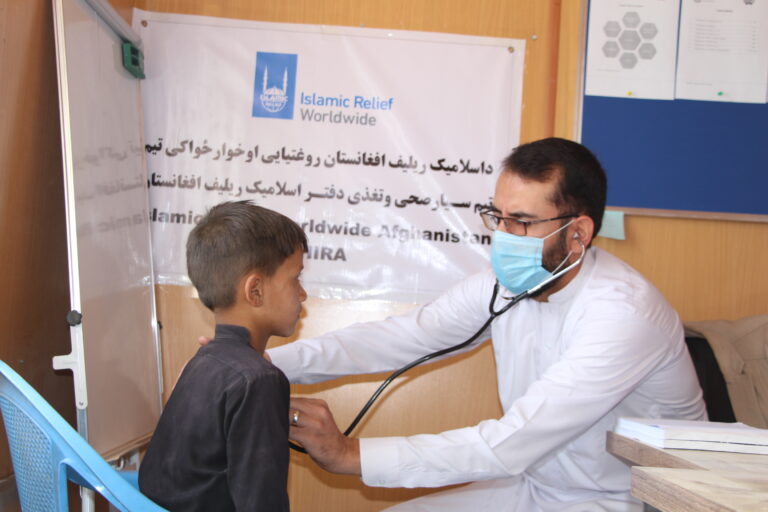
With decades of conflict in Afghanistan and the surrounding region, internal displacement is at record levels. Many have had to return to Afghanistan from neighbouring countries and thousands more are internally displaced, leading to a growing humanitarian crises. Using your zakat donations, we are funding a primary healthcare project largely focussed on mothers, children and young people. As part of this project, we will work to deliver: 

  • improved maternal healthcare including antenatal and postnatal care for mothers; 
  • nutrition support and psycho-social counselling for pregnant women; 
  • improved nutritional levels for under-five children; and  
  • intensive health support for severely and acutely undernourished children.  

We will also strengthen public health services through improved community-based health points and referrals, with learning and self-development opportunities for young people through youth clubs and community activities. The project will help over 4,000 community members, primarily mothers and children.  
aid

Improving the economic conditions of vulnerable communities in Mindanao, Philippines

This is a three-year development project in Mindanao, Philippines that aims to improve the economic conditions of 1,000 women, people with disabilities and youth in some of the most vulnerable communities in the region. The project is focused on supporting the local community become self-sufficient by increasing the production and marketing of local products.
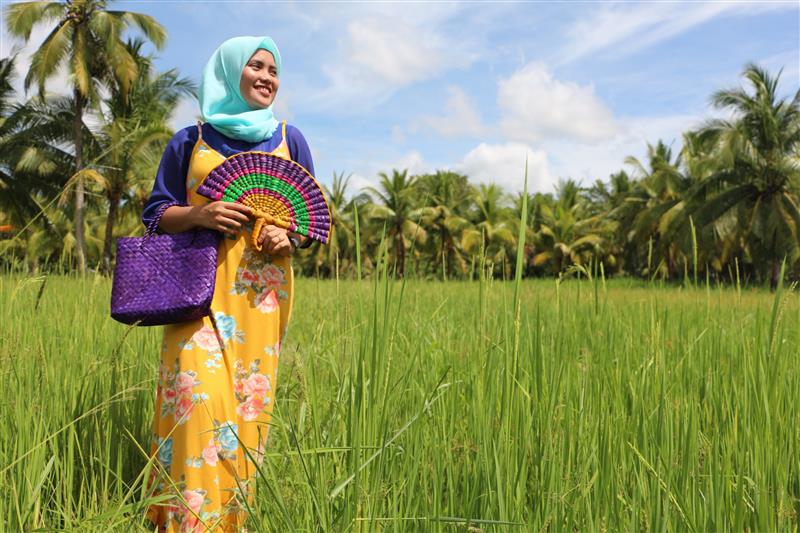
Philippines

Building the resilience of vulnerable communities in Indonesia 

Your zakat is benefitting over 3,000 community members in Bima City, Indonesia. The project is assisting mainly farmers achieve two main goals; to learn to prepare for and manage local disasters, and to save lives and livelihoods. Community members are being assisted to improve their farming techniques and to develop additional livelihoods through small business opportunities. Beneficiaries will be supported by training and mentoring initiatives as well as start-up capital. 
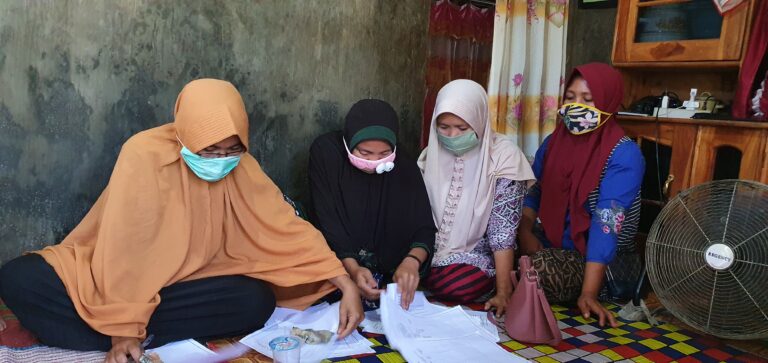
indonesia

Alleviating suffering at home 

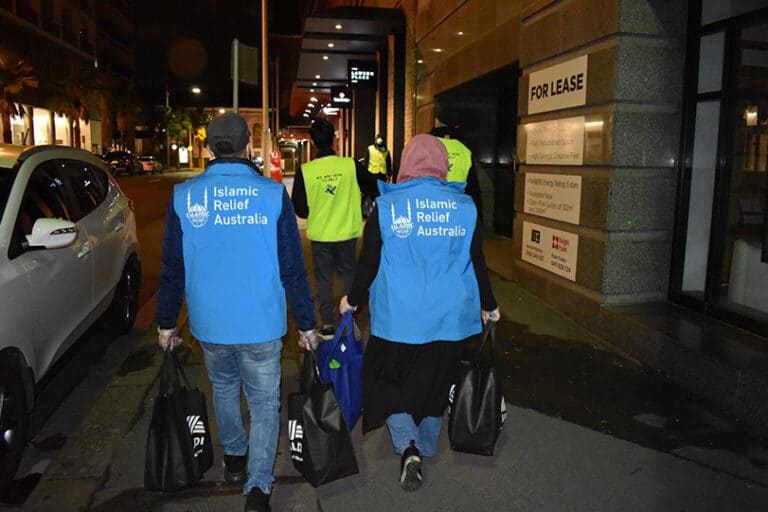
Your zakat has also been used to relieve suffering in Australia during 2020. Although Australia is a largely developed country, there are pockets of chronic disadvantage. To address this, we have a partnership with Brothers in Need where, amongst other activities, we support an initiative to provide food and essential items to the homeless.  

Your zakat is making a difference locally and more broadly – in countries that have experienced conflict and disasters, and in communities battling crippling poverty where development is so badly needed.  
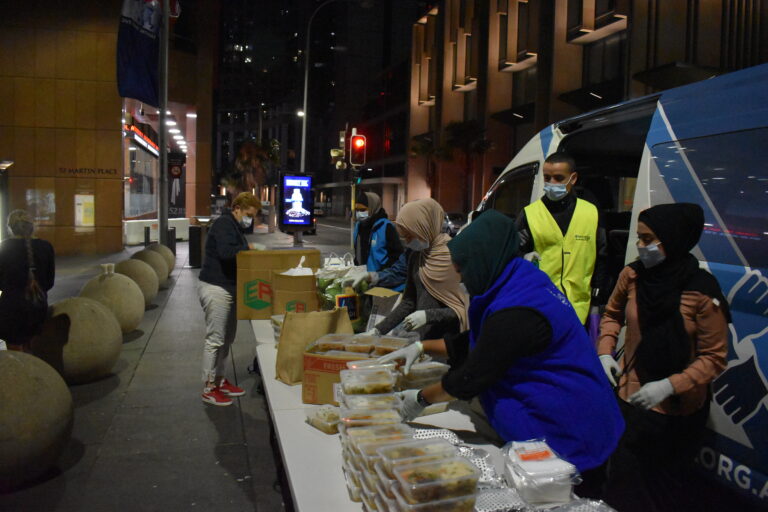
Australia

02.11.21

When is Ramadan 2021 in Australia?

  News     Ramadan

UPDATE: This year, Ramadan is expected to begin on Saturday 2 April and end on Sunday 1 May 2022, depending on the sighting of the moon. 

Alhamdulillah! The blessed month of Ramadan is almost here! For Muslims across the globe, the holy month of Ramadan is a sacred time for worshipping Allah (SWT).  

It is an opportunity for new beginnings; for spiritual renewal and reflection, increased devotion, and celebration of the mercy and love of Allah (SWT).  

Ramadan is the ninth month in the Islamic lunar calendar, in which healthy adult Muslims are required to fast each day from dawn until dusk. This includes abstaining from drinking, eating, immoral acts and anger. Other acts of worship such as prayer, reading the Quran and charity are also encouraged during the holy month. 

As the Islamic calendar is based around the lunar cycle, the Holy month of Ramadan rotates by approximately ten days each year. This year, Ramadan is expected to begin on Monday 12 April and end on Wednesday 12 May 2021, depending on the sighting of the moon. 

The Night of Power – Laylatul Qadr 

The month of Ramadan contains the most blessed of nights, also known as Laylatul Qadr, which Allah SWT describes as: 

“What will make you realise what the Night of Power is like? 

The Night of Power is better than a thousand months. 

Angels and the Spirit descend upon it with their Lord´s permission with every command; 

There is peace that night until the coming of dawn.” [Quran: 97:1-5] 

Ramadan

Do good deeds properly, sincerely and moderately and know that your deeds will not make you enter Paradise, and that the most beloved deed to Allah’s is the most regular and constant even though it were little. [Prophet Muhammad (s) as narrated by A’isha (ra) in Sahih Bukhari, vol. 8, hadith 471]

When is Eid al-Fitr? 

Eid al-fitr marks the end of the blessed month of Ramadan. 

This year Eid al-Fitr is expected to be celebrated on the evening of Wednesday 12 May 2021. However, the exact date is subject to the sighting of the moon of Shawwal (the 10th month of the Islamic Calendar).

FIND OUT MORE

Find out more about ways you can help this Ramadan.

12.04.20

Trusting God in times of difficulty

  News

We’re often told to “trust God” when things don’t quite go our way – maybe you didn’t get that job you were relying on, a relationship didn’t work out the way you hoped or youre battling a bigger challenge that no one really knows about. As Muslims, tawakkul (having complete trust in and reliance on God) is a concept which we all theoretically understand but many of us actually struggle to practice – particularly when we’re going through difficulties or thinking about the unknown future. So, how do we conquer our fears and reduce our anxieties about things we can’t control? 

Well, below we look at some practical ways you can nurture your tawakkul on a daily basis.  Trusting God in all his teachings. 

1. Know Allah (SWT) through his many attributes 

Trusting in God; it is important that we first get to know Him as best we can. So, learn, study and reflect on the many names and attributes of Allah (SWT). The best way to do this is to set aside time regularly to read the Qur’an and learn more about the Sunnah.  

You’ll soon realise that the more you understand His names and attributes, the easier it will be to have complete trust in Him. For example, in the Qur’an Allah (SWT) beautifully reassures the Prophet Muhammad (PBUH): 

(O Prophet), your Lord has neither forsaken you, nor is He displeased. Indeed what is to come will be better for you than what has gone by.”  (Qu’ran 93:3-4) 
This is an important reminder that no matter whatever befalls us, Allah (SWT) loves us and only wants the best for us – even if we do not immediately see the silver lining in a “bad” situation. After all, the Prophets,  who were so dear to Allah (SWT), were tested the most.   

2. Do your best 

Islam recognises that humans have limited capacity to comprehend everything – after all it is God who holds infinite knowledge and wisdom. So, while we don’t always have the knowledge or insight to make sense of a situation, e.g. a global pandemic, we are encouraged to “tie our camels” – that is to do our due diligence and then put our trust in Allah.  

3. Make dua’a 

“And your Lord says, ‘Call upon Me; I will respond to you.’ ” Qur’an 40:60 

You shouldn’t underestimate the power of dua’a; it is the greatest form of worship and an important part of tawakkul. If you want to be among those who wholeheartedly believe; trusting in Allah (SWT), then ask Him sincerely for whatever your heart desires – nothing is impossible for Him! Above all, have firm belief that your prayer will be answered in a way that is best for you. Remember, what you might want could be very different to what you actually need – He knows, while we do notOnce we submit to this reality, the road ahead doesn’t seem so daunting. 

12.01.20

Your guide to Sydney’s best halal food spots

  News     Publications

Your guide to Sydney’s best halal food spots 

Sydneys iconic harbourside and west offers a surprising yet tasty halal food scene. To guide you through the sea of options we have compiled a list of options that are not to be missed. Whether you’re an IG foodie, casual foodie or just looking for somewhere nice to eat – we’ve got you covered.
Rashays 
If you’re from Sydney then you know, Rashays is a staple. They offer aenticing range of halal burgers, meats and pizzas as well as an all day brekky that would be on par with your local Italian pizzeria. They have many great locations; including Darling Harbour, Parramatta, Lidcombe and many more. And to save you the hassle, yes, all their branches are Halal certified.

 El Janna/ Hawa
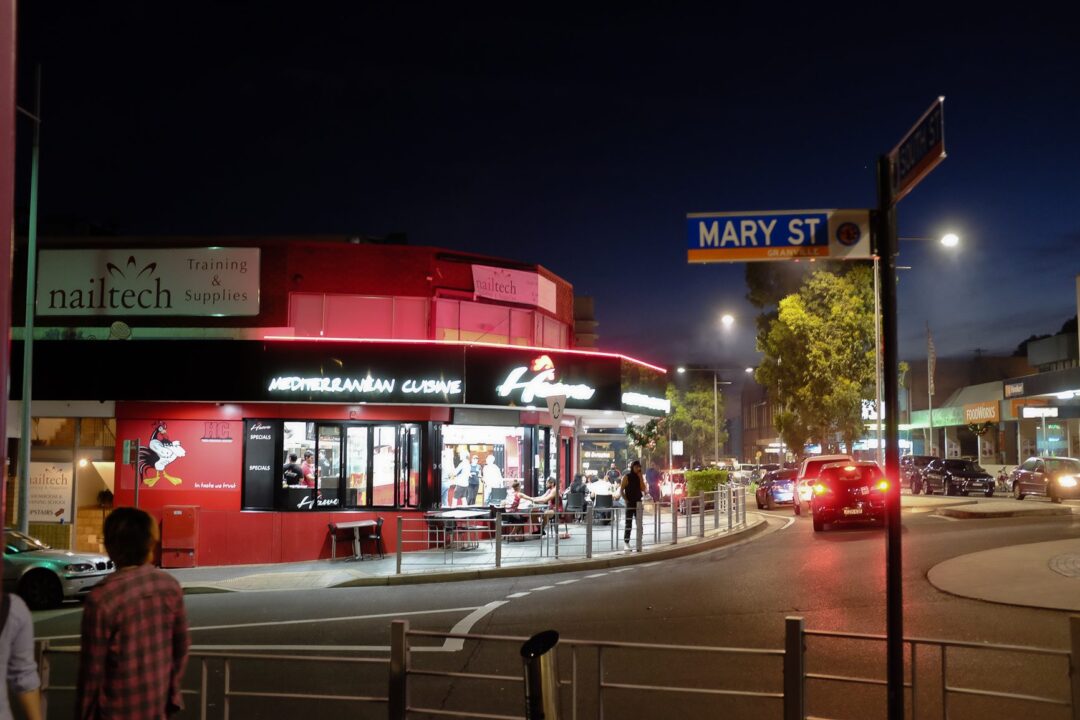
If you are from the west and love your chicken, then the El Janna, Hawa combo is definitely a must. Run for years in the heart of Granville, they both offer the best charcoal chicken man can get. Their wraps are a crowd favourite, alongside the half chicken and chips, and of course, dinein options are suitable with ample space for your next group functionThe only downside is parking can get a bit hectic on busy nights such as Friday or Saturday, but for me it’s never been a real issue.

Hawa

Sydney Fish Market
Any local will tell you, “have you even been to Sydney if you haven’t visited the Sydney Fish Market?!”. If you are a fan of the grilled/battered fish combo (like any other human) then you cant leave here without trying it. They also have a wide selection of fresh seafood including, prawns, oysters, lobster and barramundi to harder-to-find delicacies such as sea urchin, marron, spanner crab and scampi. And before you say, “is that it”, there are over 100 species available every day, so our enthusiastic foodies will never get bored with the selection.  Also, have a look at the new revamped Sydney Fish Market, said to be open in 2023.


Sydney Fish Market

Thai Garden Auburn
What’s life without Thai food? Tucked away on 129 Parramatta Road across from the Nike Factory, is a Halal friendly, cosy Thai restaurant that not many locals even know about. I can go on about the amazing taste of their Green Curry (personal green curry enthusiast) and Chilli Jam Stir-Fry but to be honest, the main thing that sets them apart from the rest is their amazing customer service. A warm reception and speedy service makes you feel right at home while enjoying your favourite dish. You really cant go wrong here.


Thai Garden

Now there is more to this list, but like any good cliff-hanger, we will
wait until the last Instalment of
 our 2020 newsletter to reveal the second half of our certified Islamic Relief Australia Halal foodie list.  

05.29.20

Founder of Islamic Relief marks the end of Ramadan with a 6km walk while fasting

  News

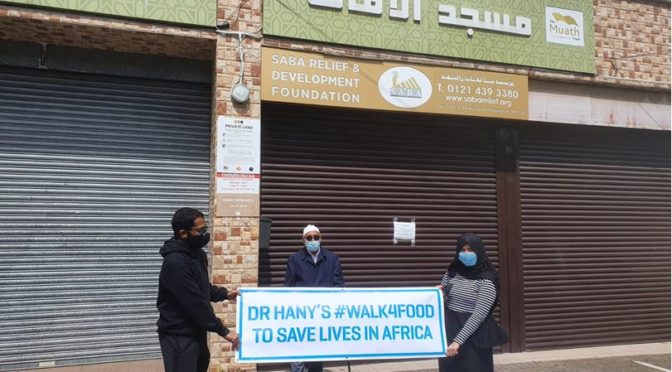
As Muslims around the world celebrated Eid-al-Fitr under lockdown last weekend, the founder of Islamic Relief, Dr Hany El Banna proudly showed the world his humanitarian nature with a six kilometre fundraising walk.

He embarked on this challenge, while fasting from dawn until dusk and on one of the hottest days of the year so far, to raise funds for Islamic Relief’s global food program.

Money raised from the Walk4Food challenge will help provide food for people in some of the world’s poorest countries in which Islamic Relief works, including Somalia, Ethiopia and South Sudan.

Dr El Banna began his walk from 477 Moseley Road, where Islamic Relief started in 1984 and walked to Birmingham Central Mosque in the UK.

Food supply chains across the world have been disrupted by Covid-19. The economic downturns are affecting the ability of millions to afford food. Children and vulnerable families will suffer the most from extreme hunger as they cannot access food.

The United Nations’ World Food Programme (WFP) last month cautioned that the coronavirus crisis could double the number of people in acute food insecurity this year, to around 265 million globally.

Dr Hany El Banna said:

“We have all felt the effects of the coronavirus pandemic. Many of us have struggled with sickness or day-to-day life in isolation, and sadly many have lost loved ones. Around the world, the effects of this pandemic are being felt.

“In sub-Saharan Africa 319 million people do not have access to clean drinking water. Millions of people are being pushed into poverty. Food shortages, lack of medical equipment and those infected face an impossible struggle with the virus due to a lack of proper medical support. This is why I’ve decided to do a Walk4Food – to help feed vulnerable people in Africa and ensure they don’t go hungry.

“Muslims believe that in the month of Ramadan rewards for good deeds such as giving charity are multiplied many times. Muslims around the world will be engaged in increased worship as they look to make the most of the holy month before it ends. Many will be paying their mandatory zakat dues and optional charity, called Sadaqah, during this time.”

05.25.20

Eid in a pandemic: maintaining mental well being

  Publications

The essence of Eid is that it brings us together – our families, friends and community. But this year, as we approach Eid with social distancing measures in place, many people will find themselves feeling lonely in what is the most festive time of year for Muslims. During this period, here are a few things you can do to look after your mental health and support others, especially those living away from their families during Eid.

Connect with your friends and family

Eid

While we may not be able to physically spend time with those closest to us during Eid, it is still possible to celebrate with family and friends from a distance. Check in with them over video calls, social media and text messages. Hearing a friendly, familiar voice, or reading a message from those we care about helps us feel more connected. This is important for our mental health and especially for those who may be feeling lonely, isolated and afraid about what is happening with the pandemic.

Try holding a virtual Eid gathering via video call. This can be as big or intimate as you like, perhaps starting off with a prayer or dhikr and then eating ‘together.’ It may seem a little odd at first, but it can help to create a community feel and keep our spirits up especially during one of the best times of the year!

Share food with your neighbours

share

Helping and being kind to others can help with our own wellbeing as it creates a sense of purpose and helps to strengthen bonds.

Muslims love to share food with Muslim and non-Muslim neighbours and friends during Ramadan and Eid. In some communities there is a tradition of organising Eid parties and running free food kitchens for poorer families. This year, you can still cook food and send food to your neighbours provided you take care to do so hygienically. In order to avoid social contact, you may want to simply leave the food on their doorstop and drop them a note over text. Anyone receiving the food should also take care to ensure all packaging is removed and disposed of safely to avoid any risk of contamination. Always follow the advice of your local health authority.

Take extra care to look out for particularly vulnerable neighbours this Eid, such as the ill and elderly who may not be able to buy groceries or cook for themselves. Indeed, the Prophet (peace be upon him) advised: “He does not truly believe who eats his fill while his neighbour remains hungry by his side,” (Hadith, Bukhari).

Reach out for support

reach

As well as reaching out to your friends and family, the internet can also be a great way to find external support if the current situation has left you feeling anxious or low in mood. For example, faith leaders across the world are holding advice sessions, prayers and Qur’an readings over social media. These can help to create a much-needed sense of community and help us realise that we are all in this difficult situation together.

Some of us may want to reach out beyond the people we already know, to make new connections with other people. Online communities are ideal for this and can be extremely supportive. You may want to join an online community to talk about your mental health, which can provide a safe place to listen, share and be heard.

Remember Allah is in control

dua

This may feel like an unprecedented situation that is out of our control but remember it is the qadr of Allah and we were never in control. Worrying will not change the situation but take consolation in the fact that Allah can protect us if we reach out to Him.

The Prophet (peace be upon him) said:

“…Be mindful of Allah and Allah will protect you. Be mindful of Allah and you will find Him in front of you. If you ask, then ask Allah [alone]; and if you seek help, then seek help from Allah [alone]. And know that if the nation were to gather together to benefit you with anything, they would not benefit you except with what Allah had already prescribed for you. And if they were to gather together to harm you with anything, they would not harm you except with what Allah had already prescribed against you. The pens have been lifted and the pages have dried,” (Hadith, Tirmidhi).

05.13.20

Catch Laylatul Qadr and make the last 10 the best 10!

  Publications     Ramadan

Alhamdulillah we have reached the last ten nights of Ramadan – the most sacred period of the whole year! It is during these days that many of us will dedicate more time to Dhikr, Salah and offering Sadaqah so we can increase our rewards and become closer to Allah (swt), especially if we catch the blessed Laylatul Qadr (The Night of Power). To ensure you have a blessed and productive end to Ramadan, we bring you our top tips to make the most of this time!

Dedicate your time to dhikr

Offer lots of dhikr in remembrance of Allah (SWT) and reap the rewards! Here’s some of the ways you can reach out to Allah (SWT):

  • Allāhu Akbar (God is the Greatest)
  • SubḥānAllāh (Glory be to God)
  • Alḥamdulillāh (All praise is due to God)
  • Astaghfirullāh (I seek forgiveness from Allah)
  • Lā ilaha illAllāhu waḥdahoo lā sharikalahoo, lahul mulku wa lahul ḥamdu wa Huwa ‘alaa hulli shai’in qadeer (There is no god but Allah, alone, without partners. He is the Sovereign and His the praise, and He has power over everything)
  • SubhānAllāhi wa biḥamdihi, SubhānAllāhi al-‘Aẓeem (Glory be to Allah, and Praise Him, Glory be to Allah, the Supreme)
  • Lā ilaha illā Anta, subḥānaka inni kuntu min al-ẓālimeen (There is no God but Allah, Glory be to You, verily I was one of the wrongdoers)
    With these sacred words, you can become closer to Allah (SWT) and feel the benefits, insha’Allah.

Limit digital distractions

Ramadan is a special time, so limit your use of social media, TV and phones. Once the last ten nights are gone, they’re gone for a whole year! So make the most of these blessed nights and put your TV remote and phone down (unless you’re reading the Qur’an of course!).

Give extra charity

Sadaqah – no matter how small – is such a blessing, so why not strive to offer extra charity during the last ten nights? You could donate money, feed those in need, commit to giving throughout the year or sponsor an orphan. No matter what it is, with a pure intention and kind heart, you’ll be able to support vulnerable people and worship Allah (SWT) at the same time, subhanAllah!

Spend nights in worship

If you really want to take time out, then why not spend your days dedicated in worship at home? Follow the principle of i’tikaaf and spend as many hours as possible in isolation offering extra prayers and devoting yourself to worshipping Allah (SWT).

Seek forgiveness from Allah (SWT)

Allah (SWT) loves those who ask for forgiveness. If guilt and past sins are holding you back, then make a fresh start. Perhaps you’d like to give up a bad habit and would like to “wipe the slate clean”? Well this is the perfect time to seek forgiveness and make ‘istighfar for the love of Allah (SWT). Try this du’a – especially in the early hours of the morning: Allāhumma innaka ‘Afuwwun tuḥibbul ‘afwa fa’fu ‘annii (‘O Allah, You are The Forgiver, You love to forgive, so forgive me’).

Share the gift of knowledge

Ramadan was the period in which the Holy Qur’an was first revealed and many of us dedicate this month to reading the Holy Book. However, as well as ensuring that you’re reading as much as possible, why not share the blessings? Gift a Qur’an to a friend, family member or a neighbour and help them on their spiritual journey.

Develop a yearly game-plan

Let Ramadan inspire you to make positive changes for the year ahead. Set yourself a challenge, create a Qur’an schedule, start a new charity project – whatever it is, let the positive energy of Ramadan push you to create even more blessed change, all for the love of Allah (SWT).

With these tips, you can make not only the most of the last holy nights of Ramadan must the most of the year ahead insha’Allah.

05.05.20

Five tips for Ramadan in lockdown

  Publications     Ramadan

The COVID-19 pandemic has devastated lives across the world. So far, there have been over 3,356,205 confirmed cases globally and over 238,730 people have lost their lives.

While the coronavirus continues to disrupt lives and livelihoods, Muslims around the world are celebrating one of the holiest months of the year: Ramadan. In this new landscape, it is increasingly challenging for many of us to celebrate and appreciate the month of Ramadan when we have lost jobs, watched loved ones get sick, and are struggling with stress. With the ongoing lockdowns around the world, many are struggling to accept a Ramadan affected by self-isolation and physical distancing.

While it is a little disheartening to experience Ramadan without family and friends – with restrictions limiting large communal gatherings – it is more important than ever before to reflect on the true essence of Ramadan, and ensure that we remain steadfast in our worship and faith.

Here are five simple ways you can lift your spirits and achieve some of your personal and spiritual goals this Ramadan, while observing social isolation and physical distancing rules. Remember, no matter what is happening around us, the greatest source of strength we have is our connection with Allah (swt)

Keep a routine

It can be incredibly challenging to stick to a routine in lockdown – when the lines between your personal and work life have been blurred with working from home becoming commonplace, the kids  are at home from childcare or school, and other family members sharing your new “workspace”. Often, it may seem like the hours, days and even weeks all meld together, making it easy to lose our sense of time. That’s why, it is important to keep some sense of normality by putting in place a routine to make sure we structure our days effectively, especially during Ramadan when we may be struggling to keep your energy levels up during the day.

Make a daily schedule, divide your day into different sections, or plan your day with time limits on certain activities to make sure you’re making the most out of your day.Stay physically active

Whether you have been exercising from before or just getting started, staying active provides many benefits such as improved mental health, strengthening muscles, and reducing aches and pains. This is a great healthy habit to develop! Aim for 30 minutes of exercise that will increase your heart rate. You can do full body workouts at home with little to no additional equipment.

Make the most of “lonely” iftars

For many of us, this Ramadan marks a stark contrast to others – with community iftars, large family gatherings and taraweeh prayers at the mosque all off the agenda. With physical distancing becoming the new norm, many of us will be forced to have iftar alone or will fewer people than usual.

But just because there are fewer people does not make the iftar any less significant. In fact, this may be an opportunity to really connect with Allah (swt) and appreciate the true meaning of fasting all day. Even if it’s just you, make sure you’re still having a healthy, meaningful iftar – this can be the best time for some important me-time, connecting with Allah (swt) and expressing gratitude to Him.

Make the most of Laylatul Qadr this year

Laylatul Qadr is the holiest night of the holiest month, in which the Qur’an was revealed. The rewards for prayer and good deeds on Laylatul Qadr (the night of power) are immensely multiplied. “The night of al-Qadr is better than a thousand months” (Qur’an 97:3). It is said that du’a and seeking forgiveness on this holy night have the power to change Divine decree and relieve stress and sorrow.

So, the power of this holy night cannot be understated, and despite our current situation in lockdown, we can still have a night of devotion and supplication in your own home alone with Allah during Laylatul Qadr. While we don’t know when Laylatul Qadr falls, we do know that it occurs during the last ten nights of Ramadan. The Prophet (peace be upon him) said; Look for Laylatul Qadr on an odd-numbered night during the last ten nights of Ramadan (Bukhari).

Giving charity is also an important way you can make the most of this blessed night and help those who are suffering. There really is no better time to give than the last ten days of Ramadan – good deeds are multiplied by more than 700 times in this blessed month, and during the night of Laylatul Qadr the rewards are beyond bounds, SubhanAllah!

Don’t miss this opportunity to really ensure you’re spending this special night in prayer and devotion.

Share your Ramadan

Remember the true essence of Ramadan: You only need Allah

Finally, despite the challenges and anxiety that has come out of the current situation, remember that at the end of the day, we only truly need Allah (swt) and Him alone. Yes, this Ramadan is different with less social interaction and closed mosques, but Ramadan is about so much more.

In fact, being alone during Ramadan is the ideal time for reflection – and to experience a simpler, quieter, and introspective Ramadan. It is a chance for us to connect on a deeper, more authentic level, to our sense of self and to our Creator.  It is worth noting that self-isolation was a common practice of our Prophet Muhammed (PBUH) who would isolate himself for days in a cave at the top of a mountain to introspect, reflect, worship and connect with God.

So, rather than feeling sad about Ramadan being a little different this year, we can see this situation as a blessing in disguise – we’ve been stripped of the white noise and have been gifted an opportunity to reconnect with our faith and Creator.

05.04.20

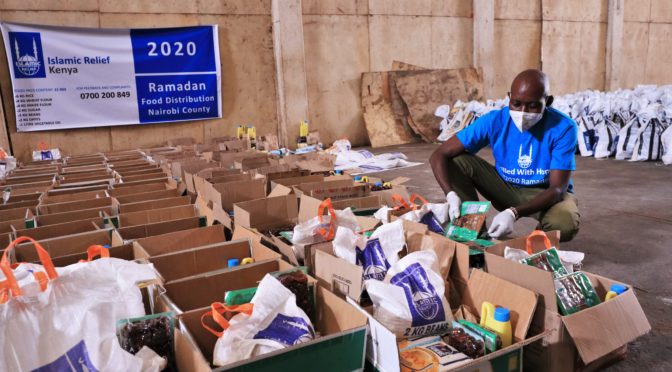
Your Ramadan food packs in action

  News

Families need your help, now more than ever

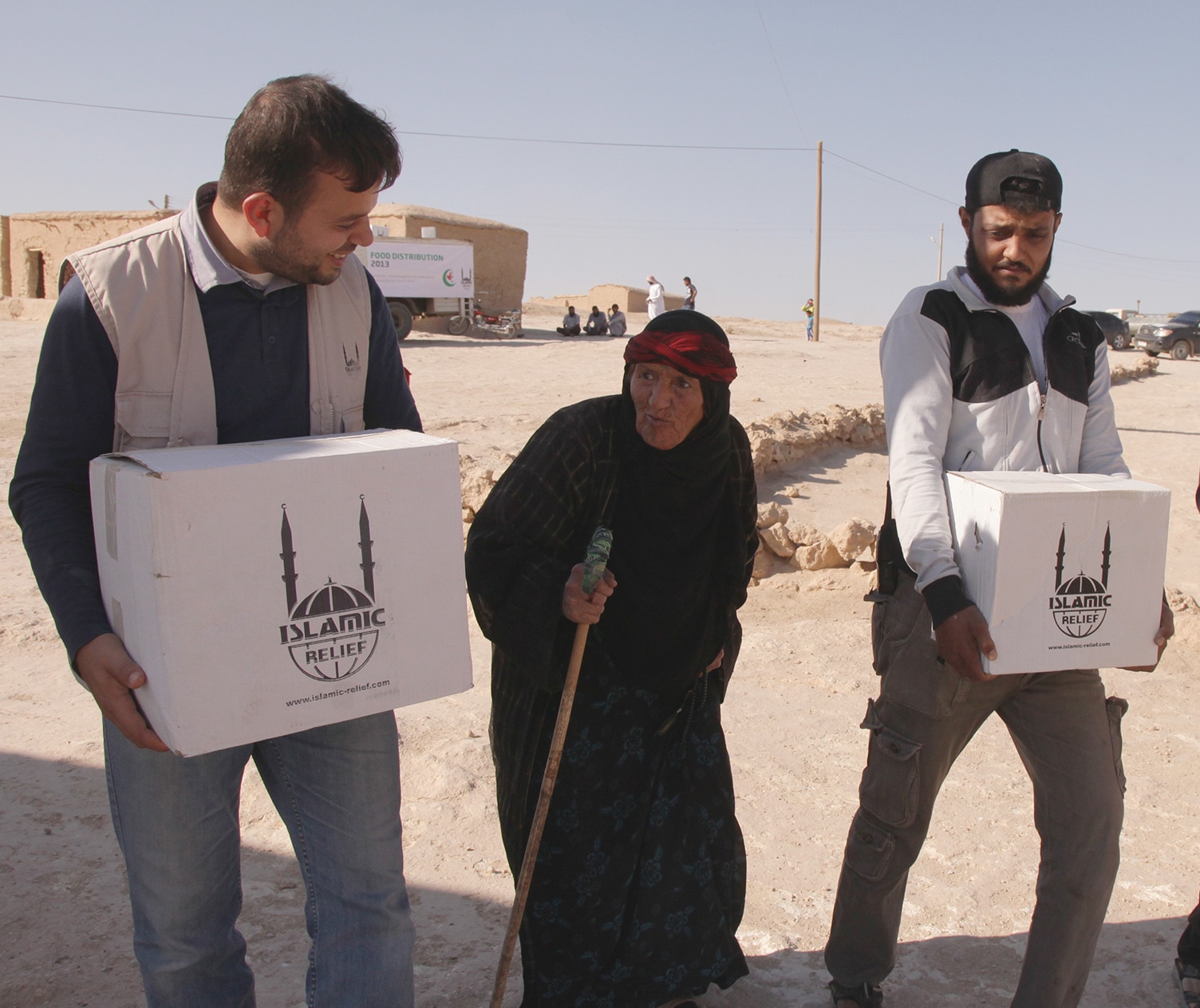
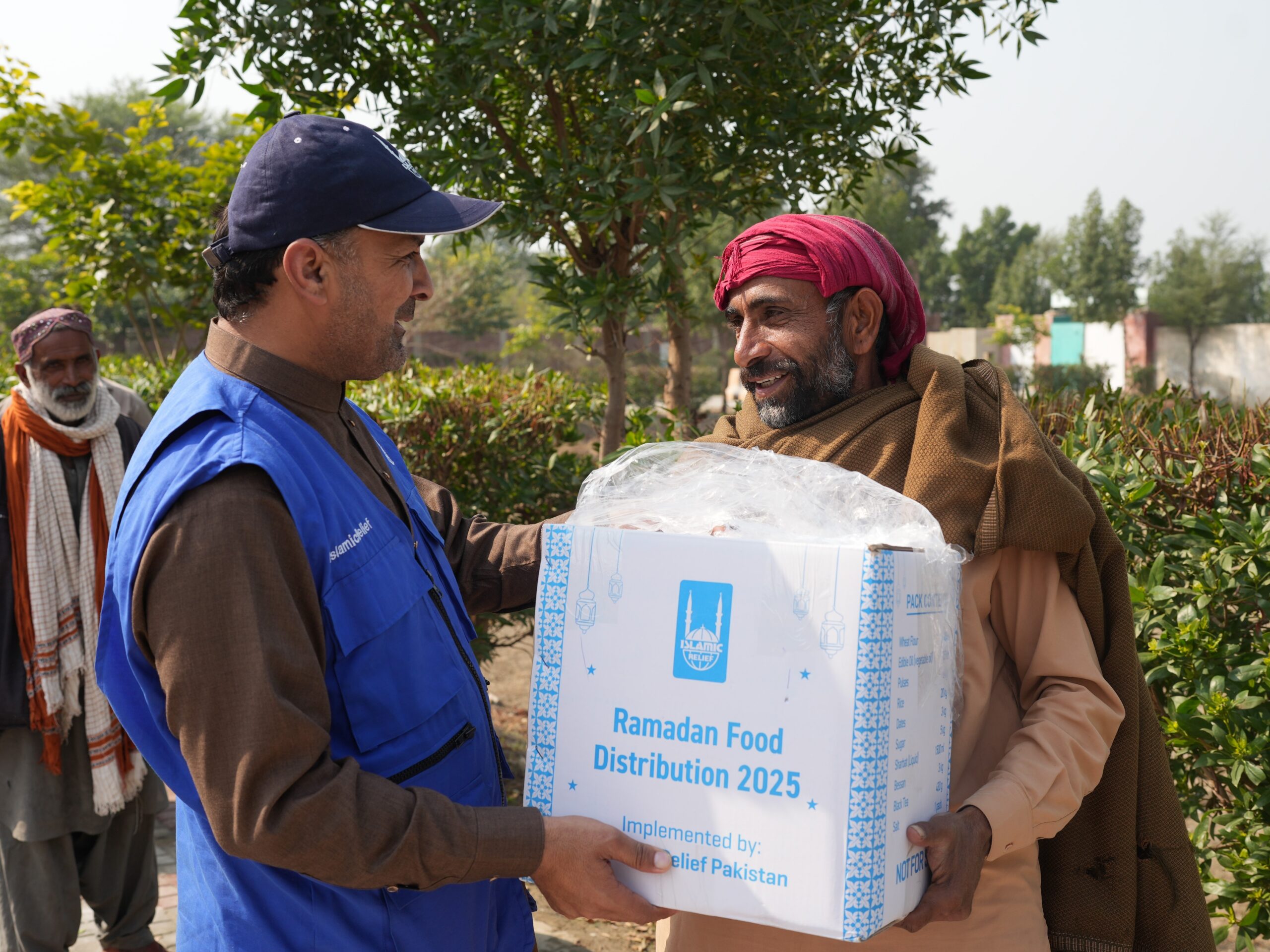
As coronavirus reaches communities worldwide, our Ramadan food parcels are needed more desperately than ever. Many people will have fallen sick or lost loved ones to COVID-19. Countless families have seen their incomes plummet or disappear altogether, as work dries up and lockdowns prevent them from earning a living.

The holy month is still a time of joy, as we spend the blessed month drawing closer to God. But it is also a time of great anxiety and suffering – especially in the poorest households. Already on the edge of survival, they are least able to cope with this public health emergency and desperately need help.

Islamic Relief will not fail them, insha’Allah.

Lebanon packs
Our team in Lebanon packs food parcels for distribution.

We have been hard at work to adapt our Ramadan distributions to ensure we can still get food parcels to the families that need them – and that we do so safely without endangering our staff or the people and communities we serve.

It is a massive undertaking because the situation is different in each of the 25 countries covered by our Ramadan program this year.

In some countries there are no restrictions on movement; others are starting to tentatively ease restrictions while others still – such as Indonesia, Kenya, and Lebanon – remain in full or partial lockdown.

We’re delivering food safely in 25 countries

Our global family is working closely with the authorities in each country to make sure our teams on the ground adhere to their COVID-19 guidelines. Fortunately, in most countries we are able to distribute food packs while observing social distancing.

Usually, our teams distribute food packs in the first 10 days of Ramadan but this year they’re doing things differently to avoid generating large gatherings of people. This year, the distribution period is being extended so it is spread across 4-6 weeks – the extended dates means fewer people attend collection points at one time. Our teams on the ground  are also offering people time slots to collect their parcels and encouraging them to come alone to avoid overcrowding.

Bringing smiles in Mali

In some countries our teams are taking food parcels direct to people’s doors while in other places our partners are working with national postal services so food parcels are delivered directly to families at home. And where this is not possible, such as in Ethiopia, Sudan and Gaza, we’re issuing vouchers so families can collect food from the suppliers with whom we’ve made arrangements.

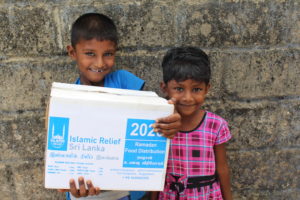
Ramadan: Sri Lanka
Two very happy children after they receive their Ramadan food pack, Sri Lanka

Your donations are reaching the most vulnerable

In these difficult times we’re inspired by the continued generosity of our supporters who are allowing us to reach people’s homes, across countries and continents, to help those less fortunate during the holy month.

Thanks to our big-hearted donors, we’re adapting to the challenges that COVID-19 is throwing at us.

And, crucially, we’re doing so safely. Our priority is and always will be the welfare of those we serve and our dedicated staff and volunteers.

Gaza Palestine
Food packs in Gaza

Help us ease the suffering of some of the world’s most vulnerable families during the holy month.

Donate to our Ramadan Appeal now

04.08.20

Making the most of Ramadan in the time of coronavirus

  Publications

Each year, Muslims around the world eagerly await the holy month of Ramadan. It’s around this time – with just two weeks to go – that many of us prepare to fast from dawn until sunset, increase acts of worship, and practice patience and spiritual discipline.

And then there is the social aspect which brings much excitement: buzzing markets, colourful street festivals, family get-togethers, community iftars, and, of course, the daily congregational prayers (tarawih). But, this year, amid the coronavirus crisis and strict social distancing rules, many of these things will seem like a distant memory. Naturally, this may leave us feeling a little apprehensive and uncertain about how we approach Ramadan.

As we all come to terms with the fact that Ramadan may be very different this year, we must not lose sight of the timing of our current situation – and the hidden opportunity it brings. Here are just some ways you can make the most of Ramadan and keep the community spirit alive during this holy month.

1. Maintain social ties (virtually) this year

dinner

While we’re so used to catching up with our family and friends to break our fast over a mouth-watering iftar, this year might be a little different. While we may not be able to be in the physical presence of loved ones, we can still bond over virtual iftar dinners. You can consider live-streaming your iftar with family and friends over social media (But, beware of food envy!) and having Zoom catch-ups with those who don’t live with you.

Although the circumstances are quite unusual at the moment, it’s important to not let the stress of what’s going on create even more separation and distance between us and our loved ones, especially during Ramadan.

2. Pray together as a family

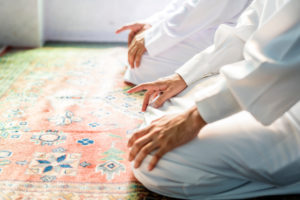
We all know there is ample reward for praying in congregation (Salah al-ja’mmah), and while it might not be possible to carry out communal worship at the mosque – which may be felt especially during Jummah and evening tarawih prayers – you can still pray together with your family, spouse or roommate at home. By establishing prayer as a family affair, you will feel a sense of comfort and serenity – similar to that of praying in congregation at the mosque.

It might also be worthwhile to check in with your local mosque or Islamic centre to see if they are running any online sermons (many are!) and signing up to online courses to increase your knowledge and recharge your spirituality during this holy month.

3. Show mercy and compassion, and give charity

Ramadan is the perfect opportunity for us to maximise our rewards, reflect on our blessings and show empathy for those less fortunate than us. As the spread of coronavirus brings the world to a halt, now is the time to practice kindness, generosity and care – whether it is caring for your elderly parents, calling to check in on your neighbours or giving charity to those less fortunate. As a human family, this pandemic is teaching us to work together to ensure everyone’s health, safety and dignity. It is a reminder that our response to each other must be like one body – if one limb aches, the whole body is impacted. In the wake of this crisis, as we are beginning to see clearly the many blessings and privileges we often take for granted, now is our chance to share what we can with those in need.

We’ve also made a fun document to keep your children occupied during Ramadan and also a Ramadan daily planner to keep up to date with all your needs.

You can find our Ramadan Calendars below:
Sydney
Melbourne

Share your Ramadan: https://ramadan.islamic-relief.com.au/


STAY INFORMED

  • This field is for validation purposes and should be left unchanged.

Quick Donate