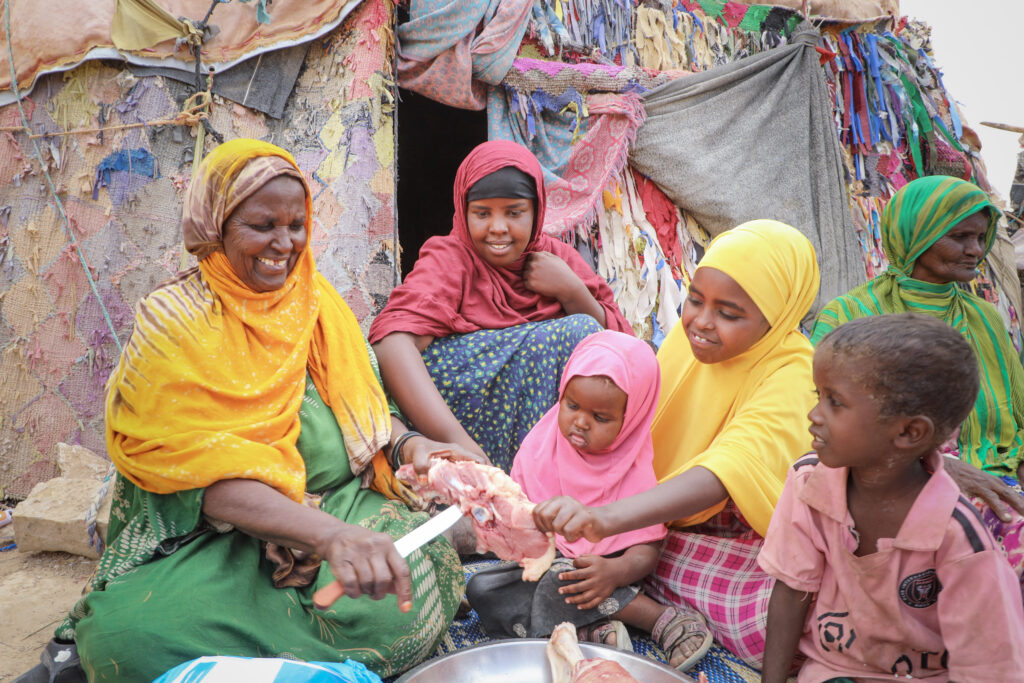
Qurban, the act of sacrificing an animal for the sake of Allah, is a central part of Eid al-Adha and commemorates the unwavering faith of Prophet Ibrahim (AS).
The spiritual act of devotion and charity has deep roots in the Qur’an and the teachings of our beloved Prophet ﷺ. It remains a powerful reminder of sacrifice, submission and generosity.
Here, we explore how Qurban is mentioned in the Qur’an and Hadith, highlighting its significance and spiritual rewards.
What does the Qur’an say about Qurban?
The Qur’an has several references to the act of sacrifice, illustrating both its historical roots and spiritual meaning.
Surah Al-Kawthar (108:2)
“So pray and sacrifice to your Lord [alone].”
Quran 108:2
This concise verse ties together the two fundamental acts of worship – prayer and sacrifice – as signs of our dedication to Allah alone. It serves as a reminder to purify our intentions and perform Qurban solely for the sake of Allah’s pleasure
Surah Al-Baqarah (2:196)
“And complete the Hajj and ‘umrah for Allah. But if you are prevented, then [offer] what can be obtained with ease of sacrificial animals. And do not shave your heads until the sacrificial animal has reached its place of slaughter. And whoever among you is ill or has an ailment of the head [making shaving necessary must offer] a ransom of fasting [three days] or charity or sacrifice. And when you are secure, then whoever performs ‘umrah [during the Hajj months] followed by Hajj [offers] what can be obtained with ease of sacrificial animals. And whoever cannot find [or afford such an animal] – then a fast of three days during Hajj and of seven when you have returned [home].”
Quran 2:196
This verse connects Qurban directly with the rituals of Hajj, underscoring its role as a devotional act. It also reflects Allah’s mercy by offering flexibility when pilgrims are unable to fulfil their obligations, showing that the intent and effort remain valuable.
Surah Al-Hajj (22:34)
“For every community We appointed a rite of sacrifice so that they may pronounce the Name of Allah over the sacrificial animals He has provided for them. For your God is only One God, so submit yourselves to Him [alone]. And give good news [O Prophet] to the humble.”
Quran 22:34
This verse shows that sacrifice is a universal practice ordained by Allah for all communities. It reminds us that Qurban is a means of expressing gratitude for the blessings we have received. The act of sacrifice draws us closer to Allah through humility and submission.
Surah As-Saffat (37:107-110)
“And We ransomed his son with a great sacrifice, and blessed Abraham ˹with honourable mention˺ among later generations: “Peace be upon Abraham.” This is how We reward the good-doers.”
Quran 37:107-110
These powerful verses commemorate the moment Allah replaced Prophet Ibrahim (AS)’s son with a ram, rewarding his willingness to obey the divine command. It is the foundational moment behind the practice of Qurban. For it symbolises complete trust in Allah and the spirit of selfless devotion.
Surah Al-Hajj (22:36)
“We have made sacrificial camels [and cattle] among the symbols of Allah, in which there is [much] good for you. So pronounce the Name of Allah over them when they are lined up [for sacrifice]. Once they have fallen [lifeless] on their sides, you may eat from their meat, and feed the needy—those who do not beg, and those who do. In this way We have subjected these [animals] to you so that you may be grateful.”
Quran 22:36
This verse details the process and purpose of Qurban. It includes the remembrance of Allah, the distribution of meat, and the importance of sharing. It highlights that the act is not only one of worship but also of charity, compassion, and communal care.
Hadiths on Qurban
Prophet Muhammad ﷺ strongly encouraged the practice of Qurban and taught its immense spiritual reward and significance.
The most beloved deed on the day of Qurban
Aishah (RA) narrated that the Messenger of Allah ﷺ said:
“A human does no action from the actions on the day of Nahr more beloved to Allah than spilling blood (of sacrificial animals). On the Day of Judgement, it will appear with its horns, and hair, and hooves, and indeed the blood will be accepted by Allah from where it is received before it even falls upon earth, so let your heart delight in it.”
Tirmidhi
This Hadith highlights the virtue of offering Qurban during Dhul Hijjah, particularly on the day of Eid Al-Adha.
Performing the sacrifice in remembrance of Prophet Ibrahim (AS)’s devotion is one of the most beloved acts to Allah during this sacred time. For it helps Muslims fulfil a profound Sunnah and demonstrate gratitude and obedience to Allah.
The Sunnah of the Prophet ﷺ
Anas bin Malik (RA) said:
“The Prophet ﷺ offered as sacrifices, two horned rams, black and white in color. He slaughtered them with his own hands and mentioned Allah’s Name over them and said Takbir and put his foot on their sides.”
Sahih Al-Bukhari
This Hadith illustrates the Prophet ﷺ’s care in performing the sacrifice with attention, reverence, and gratitude to Allah, affirming its status as a meaningful Sunnah.
The Prophet’s sacrifice
Jabir bin ‘Abdullah said:
“The Messenger of Allah (ﷺ) sacrificed two rams on the Day of ‘Eid. When he turned them to face towards the prayer direction he said: ‘Verily, I have turned my face towards Him Who has created the heavens and the earth, as a monotheist, and I am not of the polytheists. Verily, my prayer, my sacrifice, my living, and my dying are for Allah, the Lord of all that exists. He has no partner. And of this I have been commanded, and I am the first of the Muslims. [6:79,162-163] O Allah, from You to You, on behalf of Muhammad and his nation.”
Quran 12:28
This Hadith highlights the spiritual significance of Qurban, with our beloved Prophet (PBUH) emphasising the intention behind the sacrifice and dedicating it entirely to Allah.
His actions highlight the importance of performing Qurban with sincerity, acknowledging Allah as the ultimate recipient of the sacrifice.
The timing of the Qurban
Al-Bara’ bin `Azib narrated:
The Prophet (ﷺ) delivered the Khutba after offering the prayer on the Day of Nahr and said:
“Whoever offers the prayer like us and slaughters like us then his Nusuk (sacrifice) will be accepted by Allah. And whoever slaughters his sacrifice before the `Id prayer then he has not done the sacrifice.”
Sahih Al-Bukhari
This narration clarifies that timing is essential for our Qurban to be valid. It underscores the need to observe the correct order of worship: first the Eid prayer, then the sacrifice. This is part of fulfilling the Sunnah properly and respectfully.
The significance of Qurban
Qurban is a symbol of our submission to Allah, our willingness to give, and our connection to the legacy of Prophet Ibrahim (AS)
Through this sacred act, we reflect on sacrifice and faith while bringing joy to those in need.
The meat from your Qurban reaches those struggling with hunger, ensuring that they, too, can share in the joy of Eid.
Give for the sake of Allah (SWT)
Take advantage of the most rewarding days of the year; give your Qurban and increase your acts of Sadaqah before the ten days are over.
In the Islamic (Hijri) calendar, Dhul Hijjah marks the final month of the year. It is a month where we are thankful to have experienced another year. But it is also a time most blessed by Allah (SWT).
This is especially true for the first 10 days of Dhul Hijjah. For in these sacred days of the Islamic month, Muslims around the world increase in worship towards our Allah (SWT). They also prepare for two important events: Hajj, the fifth pillar of Islam, and Eid al-Adha, the “festival of sacrifice”.
Why is Dhul Hijjah Important?
Similar to the Holy month of Ramadan, the first 10 days of Dhul Hijjah are an extremely blessed time. In Islam, several verses and ahadith emphasise the importance of these 10 days.
In the Quran, Allah (SWT) swears an oath by these first 10 days, as told in Surah Al-Fajr saying:
“By the dawn and by the ten nights,”
Quran 89:1-2
As the Creator of the universe and beyond, Allah (SWT) does not swear an oath by something unless it provides great benefit to us as His creations. This is the Divine Knowledge and Wisdom of Allah (SWT).
A time for great rewards
The blessed 10 days of Dhul Hijjah also offer us a chance to gain immense rewards, even more so than Ramadan. For in one particular hadith, the Prophet Muhammad (ﷺ) specifically highlights the first 10 days of Dhul Hijjah as better than all the other days of the year.
“There are no days on which righteous deeds are more beloved to Allah than these ten days.”
Sahih Bukhari
Dhul Hijjah and the Day of Arafah
On the 9th day of Dhul Hijjah, the Day of Arafah, the Prophet Muhammad (ﷺ) received this verse from Surah Al-Ma’idah:
“This day I have perfected for you your religion and completed My favour upon you and have approved for you Islam as religion.”
Quran 5:3
Much like how Laylatul Qadr, during the blessed month of Ramadan, is considered the greatest night of the year, the Day of Arafah is considered the greatest day of the year. For it was on this Day of Arafah that Allah (SWT) perfected His religion. He completed His favours upon His beloved Prophet Muhammad (ﷺ) and approved Islam as a way of life.
The coming together of the pillars of Islam
The first 10 days of Dhul Hijjah are a time when the greatest acts of worship are performed.
“The most apparent reason for the ten days of Dhul Hijjah being distinguished in excellence is due to the assembly of the greatest acts of worship in this period – salawat (prayers), siyam (fasting), sadaqah (charity) and the Hajj (pilgrimage). In no other periods do these great deeds combine.”
Fath al-Bari
As such, many Muslims use the first 10 days of Dhul Hijjah to increase their remembrance of Allah (SWT). It’s a time beyond Ramadan when we have the best opportunity to maximise our blessings and rewards from Allah (SWT).
This year, the first day of Dhul Hijjah is expected to begin on Monday, May 18, 2026, depending on the sighting of the moon. As such, we should make the most of the best 10 days by elevating our acts of worship.
What Should We Do During the First Ten Days of Dhul-Hijjah?
Generally, all good deeds are greatly rewarded during the blessed 10 days of Dhul Hijjah. This is especially true on the 9th day of Dhul Hijjah, the Day of Arafah. As the Messenger of Allah (ﷺ) said:
“There is no day on which Allah frees people from the Fire more so than on the day of ‘Arafah.”
Sahih Muslim
Good deeds include actions such as praying, reading the Quran, making Dua (supplication), seeking Allah’s forgiveness (Istighfar), Tawbah (repentance), giving in charity and being good to our families, and other voluntary (nafl) righteous deeds of worship.
On the other hand, there are also specific good deeds mentioned in the Qur’an and Sunnah we are encouraged to carry out during these best 10 days.
Hajj
The month of Dhul Hijjah is also known as “The Month of the Pilgrimage”. From the 8th of Dhul Hijjah, Muslims from all around the world come together in Makkah to perform Hajj. Hajj is the fifth pillar of Islam and is a compulsory act of worship for anyone who is financially, emotionally and physically able to do it. Muslims who are able to also only have to do Hajj once in their lifetime.
Many Muslims hope to get the opportunity to go on Hajj and have their sins forgiven after completing it. As performing Hajj is one of the best deeds one can do during the first ten days of Dhul Hijjah. In turn, for one who sincerely performs and completes Hajj, the Prophet Muhammad (ﷺ) said
“An accepted Hajj brings no less a reward than Paradise.”
Ibn Majah
Fasting
Fasting in the month of Dhul Hijjah is greatly encouraged during the first nine days. This is especially true for the Day of Arafah. As the Prophet Muhammad (ﷺ) said:
“Fasting the day of Arafah expiates the [minor] sins of two years.”
Sahih Muslim
Dhikr
Dhikr, the verbal remembrance of Allah (SWT), is another virtuous act. In the Quran, in Surah Al-Hajj, it states:
“And mention the name of Allah on the appointed days”
Quran 12:28
The Prophet Muhammad (ﷺ) also encouraged Muslims to recite a lot of Tasbeeh (SubhanAllah), Tahmeed (Alhamdulillah) and Takbeer (Allahu-Akbar) during this time.
There are no days that are greater before Allah in which Good Deeds are more beloved to Him, than these ten days, so recite a great deal of tahleel, takbeer and tahmeed during them.”
Ahmad
Sacrifice
The 10th day of Dhul-Hijjah is the first day of Eid Al-Adha. On this day, we perform Qurban (sacrifice, also known as Udhiyah or Qurbani). This ritual of Eid Al-Adha commemorates the devotion of Prophet Ibrahim (AS) to Allah (SWT). In his willingness to sacrifice his son, Ismail (AS) for the sake of Allah (SWT), God intervened and sent a ram to be sacrificed in Ismail (AS)’s place.
Thus, on Eid Al-Adha, the festival of the sacrifice, Muslims around the world slaughter an animal (a goat, sheep, cow or camel) to reflect this great act of worship. This year, Eid al-Adha is expected to fall on Wednesday, May 27, 2026.
Following the sacrifice, which is usually carried out after Eid prayer, the meat is divided. At least one-third of the meat must go to the poor or vulnerable.
Donating Qurban is a highly encouraged act for every Muslim who is financially able to do so. It can be done so through a certified charity, such as Islamic Relief Australia, with specific Qurban programs.
As the first 10 days of Dhul Hijjah fast approach, we hope that this blessed time is one of great joy, reflection and blessings for all. May we take this opportunity to make the most of the rewards Allah (SWT) has bestowed upon us, insha’Allah!
Give for the sake of Allah (SWT)
Take advantage of the most rewarding days of the year; give your Qurban and increase your acts of Sadaqah before the ten days are over.
Dhul Qadah is the 11th month of the Islamic (Hijri) Calendar. It is one of the four sacred months as ordained by Allah (SWT).
“Indeed, the number of months with Allah is twelve [lunar] months in the register of Allah [from] the day He created the heavens and the earth; of these, four are sacred. That is the correct religion, so do not wrong yourselves during them…”
Qur’an, 9:36
It is during this month that the initiation of fighting (unnecessary violence) is prohibited. As it is also in the three remaining sacred months, Dhul Hijjah, Muharram and Rajab.
They ask you [Prophet] about fighting in the prohibited month. Say, “Fighting in that month is a great offence…”
Qur’an, 2:217
When is Dhul Qadah 2026?
In 2026, Dhul Qadah began on Saturday, 18th April 2026, according to the sighting of the moon. It follows the month of Shawwal, which follows Ramadan.
How many days are in Dhul Qadah?
As with other Islamic months, there are either 29 or 30 days in Dhul Qudah. This also depends on the sighting of the moon’s crescent.
Importance of Dhul Qadah
While there are no days of worship that are prescribed for Muslims during the month of Dhul Qadah, Ibn Kathir mentions it is a month that has been selected by Allah (SWT) as one of His sacred months. In it, both the sins and good deeds of humanity are deemed to be of more significance.
“In all (twelve) months, Allah then chose four out of these months and made them sacred, emphasising their sanctity, making sinning in them greater, in addition to multiplying the rewards of righteous deeds during them.”
Tafseer Ibn Katheer
History of Dhul Qadah
Historically, since violence is prohibited by Allah during the month of Dhul Qadah, pilgrims have been able to perform Hajj safely without the worry of war.
The month also holds some notable events, and dates are significant to Islam. This includes the signing of the Treaty of Hudaybiyyah in 628 AD, signifying the day the Quraysh tribe recognised Islam. This allowed Prophet Muhammad (ﷺ) and his companions to safely return to Mecca without fear of violence.
This ultimately led to the Prophet (ﷺ) and his companions being able to complete the first Umrah to Makkah, after their migration to Madinah, which took place in 629 AD.
Tips for increasing your good deeds in Dhul Qadah
As this sacred month amplifies our sins as well as our good deeds, there are a number of acts you can do to increase your blessings during the month of Dhul Qadah.
Here are some things you can do:
Don’t hurt others: Fighting (to harm others) is prohibited during this holy month. It’s important not to take out your anger on others or be resentful towards them this month.
Increase in voluntary acts of worship: Increase in your Sunnah and Nafl prayers, incorporate Tahajjud prayers, increase Dhikr or read more Qur’an. As good deeds are amplified during this month, we should reap the benefits and do as many voluntary acts of worship as we can.
Give Sadaqah: The Prophet (ﷺ) said: “Charity extinguishes sinful deeds just as water extinguishes fire.” [Ibn Majah]. Give charity with Islamic Relief during this blessed month.
Seek forgiveness: As sins are heavier in this month, turn to Allah (SWT) in repentance and ask for forgiveness for the wrong you have done.
Embrace the Sacred Months
Dhul Qadah is an opportunity Allah (SWT) gifts us to reflect and renew our intentions. A chance to amplify our good deeds and be extra mindful of our actions.
It is a time to distance ourselves from wrongdoings, while drawing closer to Allah (SWT) through doing good. By honouring the sanctity of Dhul Qadah, we show our respect for Allah’s divine commands and prepare our hearts for the approaching season of Hajj and Dhul Hijjah.
Let us make the most of this sacred month. So that we may enter the months ahead with a heart purified and a spirit renewed.
Giving Qurban is a sacred duty given by Allah (SWT). Every year, during Eid Al-Adha in Dhul Hijjah, Muslims worldwide engage in this important act of worship. One that reflects on Prophet Ibrahim (AS)’s devotion to Allah (SWT) and his ultimate sacrifice.
What is Qurban?
Qurban (also known as Qurbani or Udhiyah) means sacrifice. It refers to the slaughtering of an animal – typically a sheep, goat, camel, or cow – for the sake of Allah (SWT), during the days of sacrifice.
“That they may witness benefits for themselves and mention the name of Allah on known days over what He has provided for them of [sacrificial] animals. So eat of them and feed the miserable and poor.”
Quran 22:28
The ritual commemorates Prophet Ibrahim (AS)’s willingness to sacrifice his beloved son, Ismail (AS), for the sake of Allah (SWT), and both their steadfastness in carrying out this order from the Creator. Their story reminds us to trust in Allah (SWT) and know that He will help us overcome our hardships.
“Then when the boy reached the age to work with him, Ibrahim said, “O my dear son! I have seen in a dream that I ˹must˺ sacrifice you. So tell me what you think.” He replied, “O my dear father! Do as you are commanded. Allah willing, you will find me steadfast.”
Then when they submitted ˹to Allah’s Will˺, and Ibrahimlaid him on the side of his forehead ˹for sacrifice˺, we called out to him, “O Ibrahim! You have already fulfilled the vision.”
Indeed, this is how We reward the good-doers. That was truly a revealing test. And We ransomed his son with a great sacrifice, and blessed Ibrahim ˹with honourable mention˺ among later generations: “Peace be upon Ibrahim.”
Quran 37:102-109
Qurban is usually carried out after Eid prayer, on the first day of Eid Al-Adha. But it can also be performed on 11th, 12th and 13th of Dhul Hijjah. Once the sacrifice is completed, the animal’s meat is then divided into three equal portions. One-third is shared with the needy, one-third is distributed to relatives and neighbours, and the remainder is kept for one’s own family.
Eid al-Adha 2026 will fall on Wednesday, May 27, 2026, depending on the moon sighting. It takes place in the twelfth and final month of the Islamic calendar, Dhul Hijjah.
What are the rules of Qurban?
Who needs to give Qurbani? When do we offer our sacrifice? Are there any other things we need to take into consideration?
Worry not! We’ve put together everything you need to know about this sacred sacrifice.
Qurban Rule #1: Sacrifice is a sacred duty
Giving Qurban (Qurbani or Udhiyah) is an important act of worship. Every sane, adult Muslim who has wealth in excess of their needs is highly urged to give Qurban. Normally, those who are eligible to pay Zakat should also give Qurban.
In the Hanafi school of thought, Qurban is obligatory for every sane Muslim of mature age (who has reached puberty) who is not travelling and owns wealth which is beyond their needs, equal to (or more than) the current level of nisab (87.48 grams of gold or 612.35 grams of silver).
Qurban Rule #2: Your sacrifice must be given on time
It is best to purchase your Qurban as early as possible. This is because it is better to carry out the sacrifice immediately after the Eid prayer. This is the Sunnah of the Prophet Muhammad (ﷺ). His first meal on the day of Eid was also meat from the sacrifice, the third given to one’s family.
However, if one is unable to pay for Qurban before Eid, payments can be made right up until the end of the third day (13th of Dhul-Hijjah) before Maghrib salah.
At Islamic Relief, we purchase the animals to be slaughtered in advance based on forecasted quotas. Hence if you give a Qurban on any of these days, the Qurban will be carried out in time. We aim to implement all Qurbans over three days (10th to 12th Dhul Hijjah).*
*There is a difference of opinion amongst the scholars as to whether Qurbans can be done over three or four days. To respect this difference of opinion, Islamic Relief strives to perform Qurbans in three days. We only extend into the fourth day in localities where this is religiously accepted by the local Muslim population. – and if there is an operational need for this extra day.
Qurban Rule #3: Offering a sacrifice comes with restrictions
For those who want to offer a sacrifice, it’s recommended that once the new moon of Dhul Hijjah appears (i.e. on the 1st of Dhul Hijjah), one does not remove anything from his hair, nails or skin until the sacrifice has been offered. This is because the Prophet ﷺ said:
“When you see the new moon of Dhu’l-Hijjah, if any one of you wants to offer a sacrifice, let him not remove anything from his hair or nails until he has offered his sacrifice.”
Sahih Muslim
Why donate your Qurban to Islamic Relief?
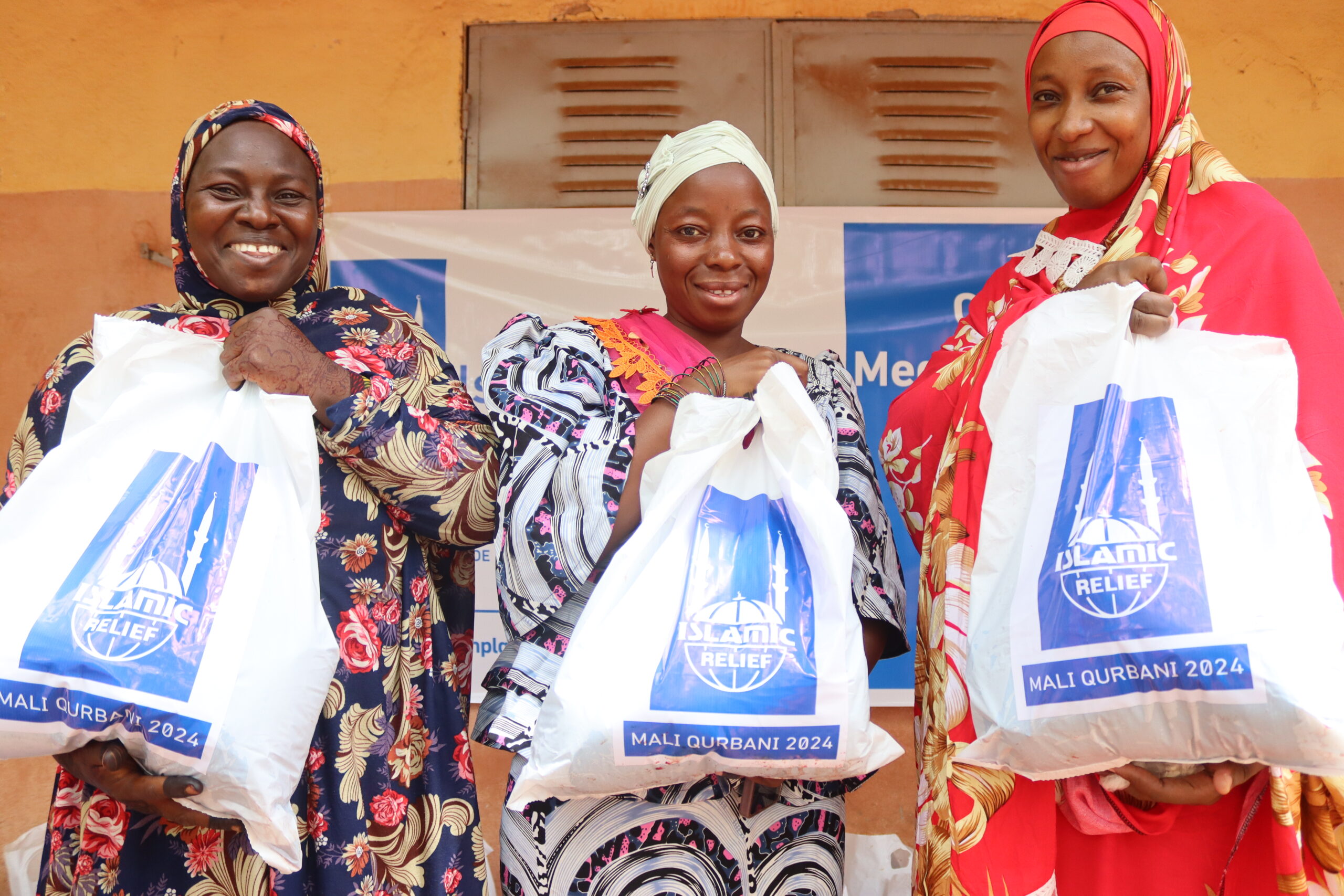
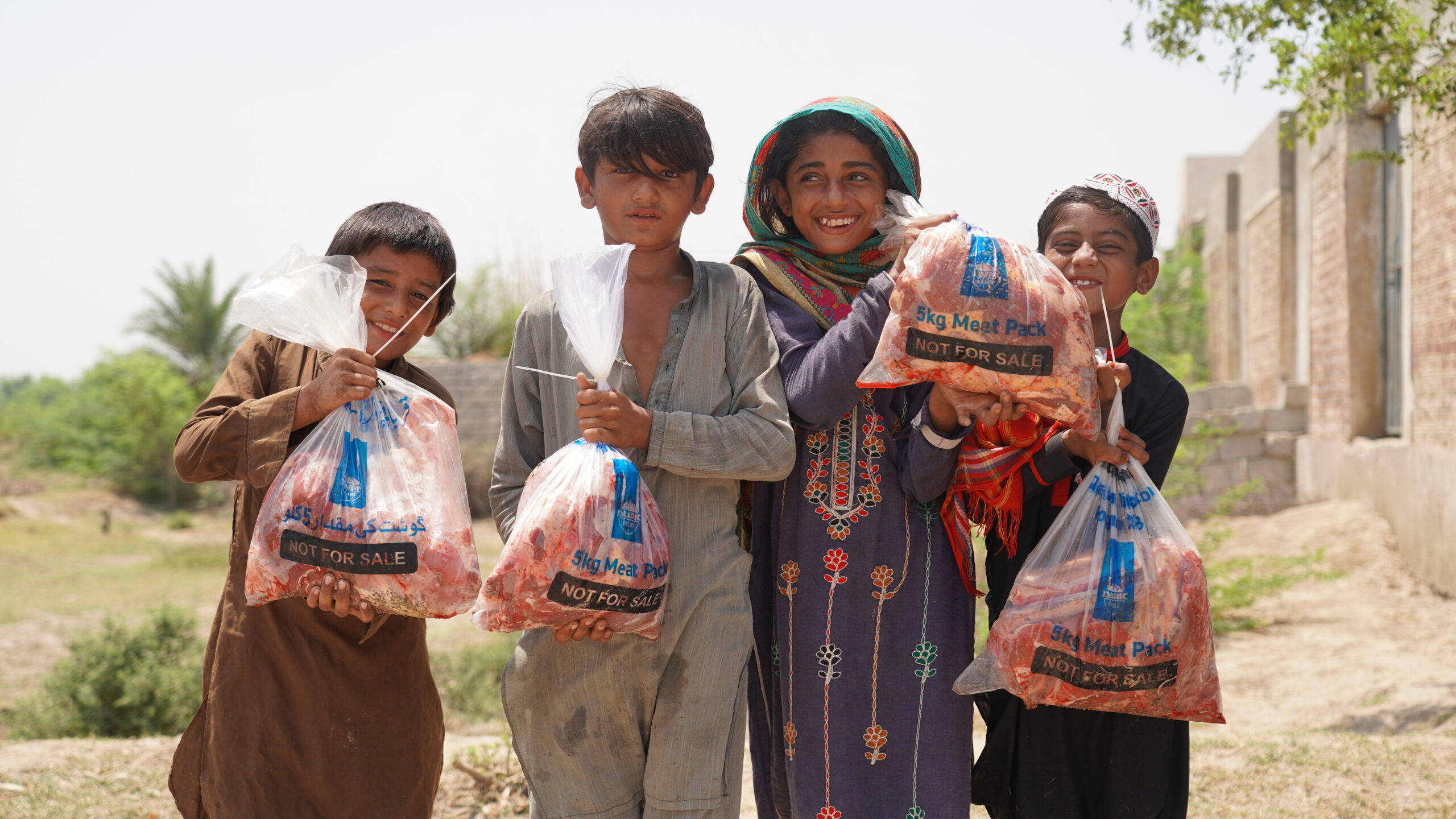
When you donate your Qurban to Islamic Relief, we prioritise providing meat to the most vulnerable families around the world.
Our international teams work hard to get your donation to the most hard-to-reach regions and conflict-affected areas, including Sudan, Afghanistan and more. Where we cannot perform Qurban, we still provide meat packs and food packs to our brothers and sisters in need worldwide, including in Gaza.
Typically, meat is sourced locally in order to support the local economy and distributed fresh, though, in difficult situations like conflict zones, we may send frozen meat so it can arrive to our recipients in good condition. Each Qurban feeds a family of approximately 4-8 people.
All logistics—from sacrifice to transportation—are handled in accordance with Islamic principles, and with the best hygienic practices possible. When you give Qurban with Islamic Relief, we considered it our Amanah. To deliver it with Ihsan and with the highest standards of compliance.
This Dhul Hijjah, Share Your Blessings
Help the world’s most vulnerable families enjoy their Eid when you give Qurban with Islamic Relief.
Each year, millions of Muslims from around the world travel to Makkah to perform the sacred pilgrimage of Hajj. As one of the five pillars of Islam, it is an important staple of the religion, alongside Shahada, Salah, Zakat and Sawm. Thus, every adult Muslim, if able, must perform it at least once in their lifetime.
The pilgrimage occurs during the same time each lunar year, in Dhul Hijjah, the twelfth month in the Islamic (Hijri) Calendar. It begins on the 8th of Dhul Hijjah and lasts approximately five to six days, depending on the sighting of the moon. The blessed days of Arafah and Eid al-Adha also occur during this period.
The year, the Hajj period is expected to fall between Sunday, May 24, 2026, and Friday, May 29, 2026. Learn more about when Hajj is in 2026 here.
Why Do Muslims Go On Hajj?
Hajj is the fifth and final pillar of Islam. Being a pillar of the religion, it is a spiritual duty on every adult Muslim to perform Hajj. However, unlike the pillars of prayer (Salah), Zakat and fasting (Sawm), Muslims only have to perform the pilgrimage once in their lifetime, so long as they are physically, emotionally, and financially able.
The Importance of Hajj in Islam
In the Holy Qur’an, Allah (SWT) mentions the pilgrimage in Surah Al-Baqarah, in verse 197, where He states that its season falls within the “well-known months” of the Islamic Calendar. This includes Dhul Hijjah, when the main Hajj period takes place.
Allah (SWT) also commands Muslims to fulfil the sacred pilgrimage, as mentioned in Surah Ali Imran:
And [due] to Allah from the people is a pilgrimage to the House – for whoever is able to find thereto a way. But whoever disbelieves – then indeed, Allah is free from need of the worlds.”
Quran 3:97
The Prophet Muhammad (ﷺ) also stressed the many rewards of Hajj. He stated:
“Whoever performs Hajj for the sake of Allah and does not utter any obscene speech or do any evil deed, will go back (free of sin) as his mother bore him.”
Bukhari and Muslim
The Hajj pilgrimage is a test of patience and temperament, and can be spiritually, emotionally, and physically challenging. However, it is also a momentous occasion that delivers an experience like no other. An opportunity to draw closer to Allah (SWT) more than ever before.
That is why many Muslims around the world strive their whole lives for the opportunity to perform Hajj – sometimes even more than once!
What Happens During Hajj?
Each year, millions of Muslims travel by land, sea and air to Makkah, Saudi Arabia and perform Hajj. Approximately 2-3 million people attend Hajj each year, with each of them having to complete a series of rites and rituals.
Here are the 18 steps of Hajj at a glance:
Preparation and Intention
Enter state of Ihram
Tawaf x7
Safa and Marwa
Clip/Shave Hair (Umrah ends)
Resting and Praying
Enter state of Ihram
Arrive at Mina
Day of ‘Arafah
Muzdalifah (under the night sky)
Rami (stoning of the devil)
Qurbani
Shave Head
Tawaf al-Ifadha
Rami (stoning of the devil)
Spend night at Mina
Rami (stoning of the devil)
Farewell Tawaf al-Wida
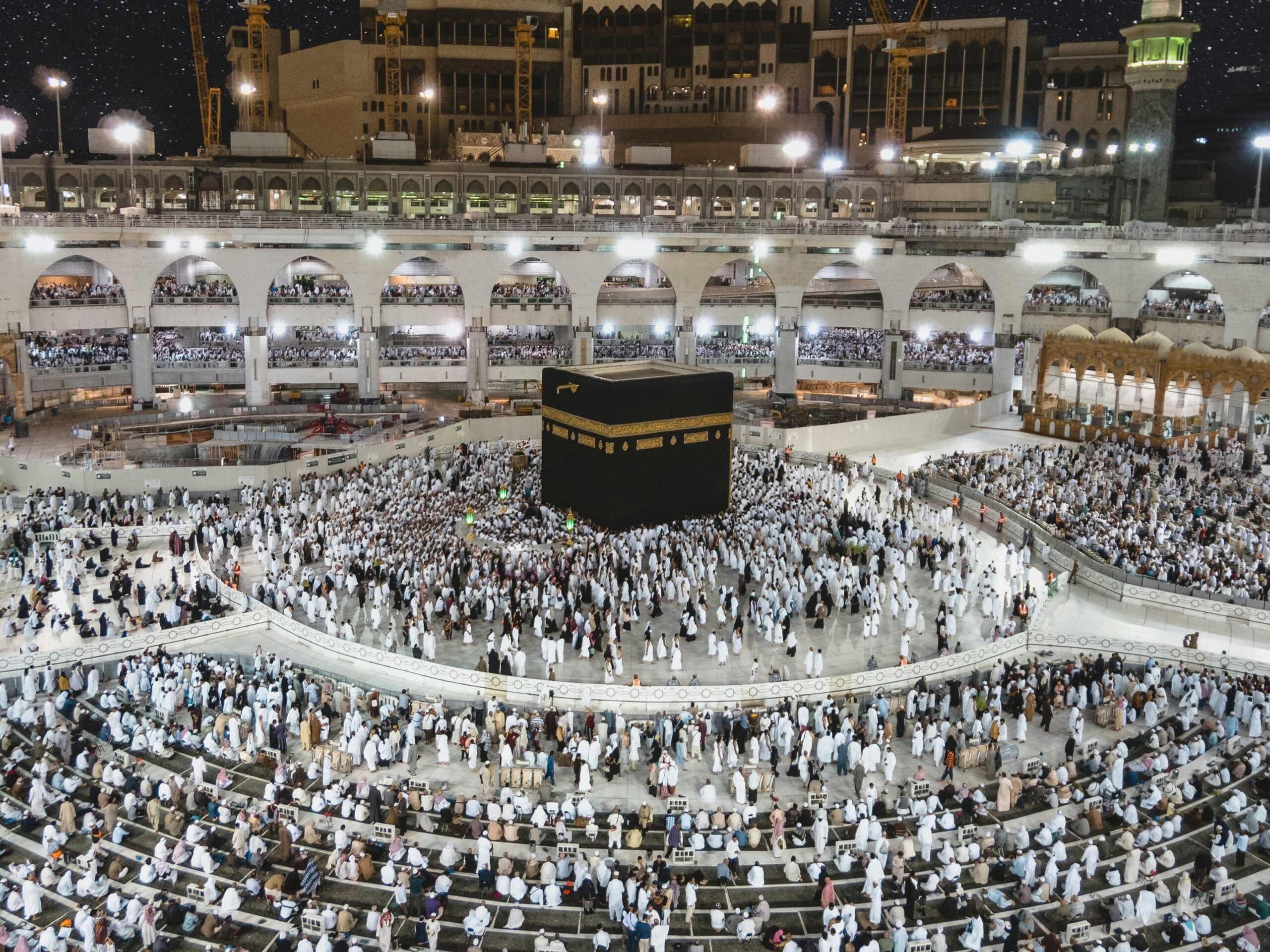
Each action of Hajj has its spiritual, emotional, and physical challenges. During the five or six days of the pilgrimage, pilgrims can expect to walk between 5 km and 15 km per day, as there is some travel between locations. But much of the pilgrimage takes place at the Masjid al-Haram, where the Kaaba is located.
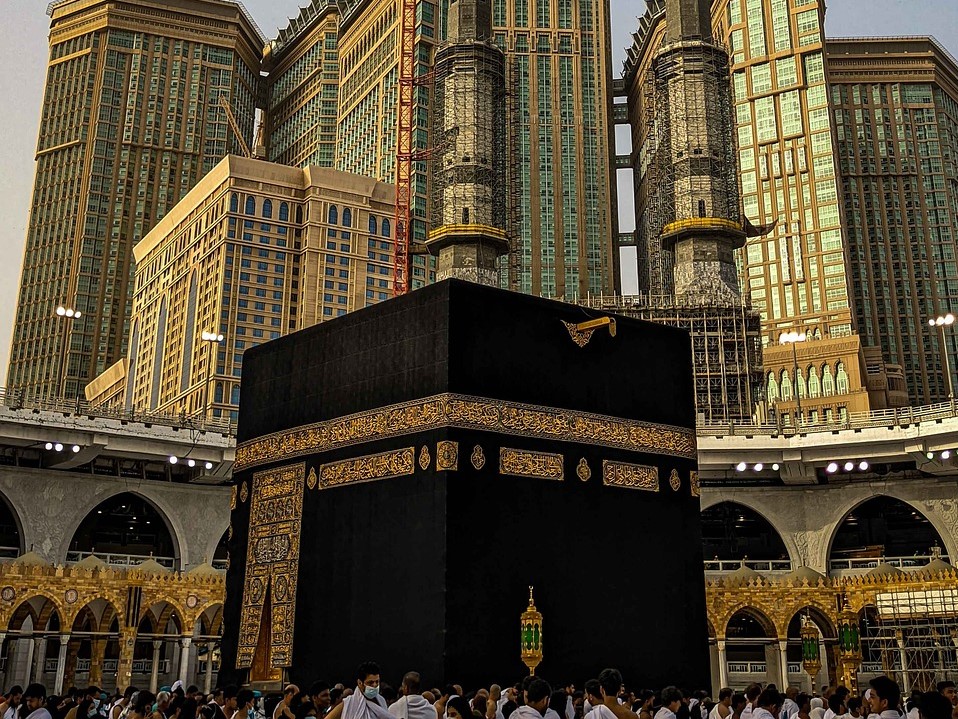
What is the Ka’aba?
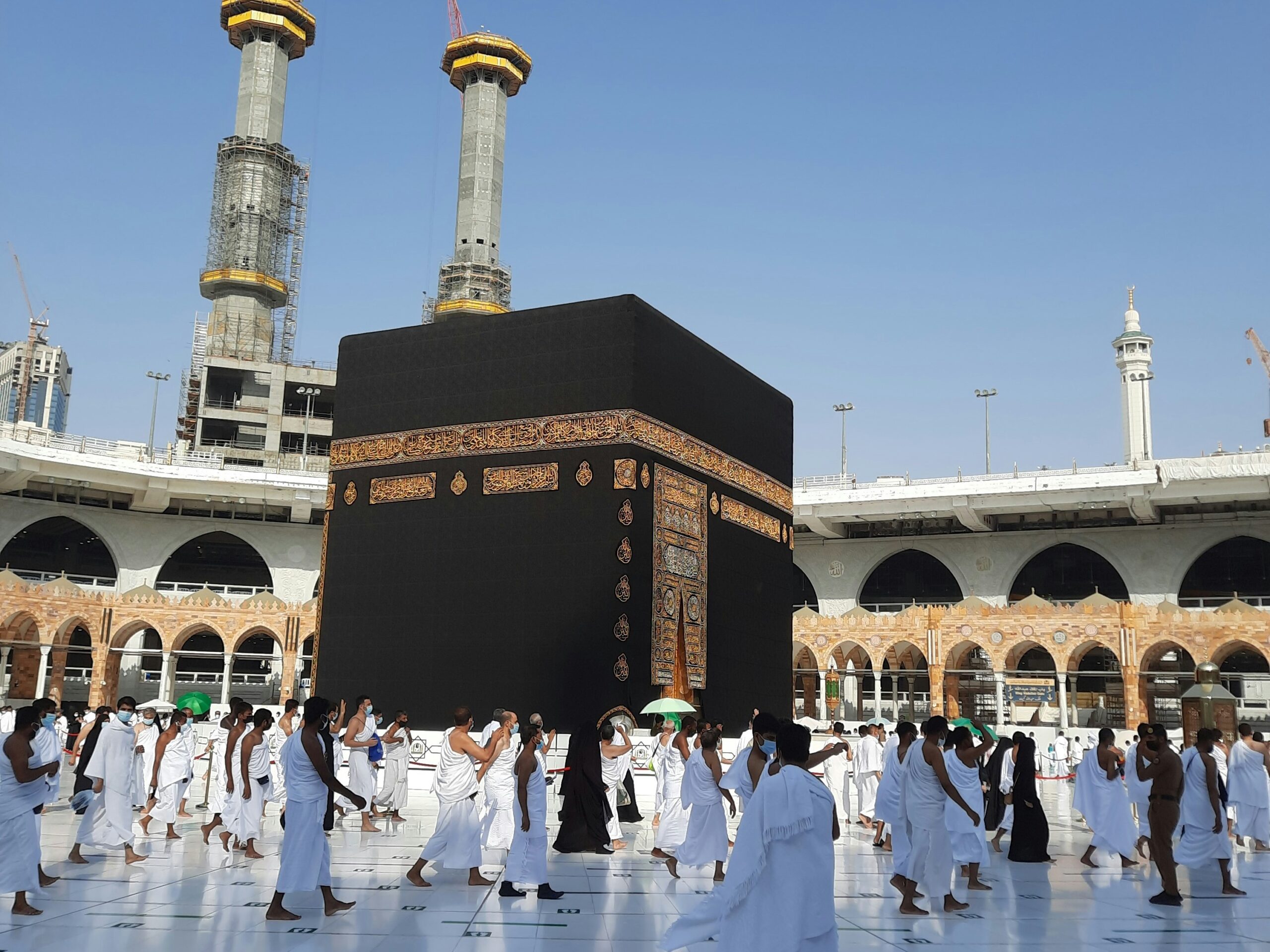
The Ka’aba (meaning “cube” in Arabic) is the most sacred site in Islam. It is the sacred bayt Allah (House of God) and was first built by Prophet Ibrahim (AS) and his son Ismail (AS).
“And remember Ibrahim and Ismail raised the foundations of the House (With this prayer): “Our Lord! Accept (this service) from us: For Thou art the All-Hearing, the All-knowing.”
Quran 2:127
The Ka’aba is a fundamental part of the Tawaf ritual in Hajj. It is also the qibla (direction) towards which Muslims turn in prayer five times a day. Previously, Muslims would pray facing Al-Aqsa in Jerusalem.
How Do You Prepare for Hajj?
Hajj is an act of worship that is also very physically demanding. For this reason, many Muslims try to prepare for it weeks in advance, so that the travel required between locations across the five-to-six-day pilgrimage does not come as a shock.
Being physically prepared helps pilgrims complete the emotionally and spiritually demanding aspects of Hajj. This allows them to focus on performing the actions of the pilgrimage to the best of their ability, doing the most for Allah (SWT)’s sake.
Other Times Muslims travel to Makkah
Hajj is not the only time Muslims can travel to Makkah. Umrah is a lesser pilgrimage that can be performed at any time of the year. While it is not obligatory, it also offers many rewards for Muslims who choose to take it. For Allah’s Messenger (ﷺ) said,
“(The performance of) `Umra is an expiation for the sins committed (between it and the previous one). And the reward of Hajj Mabrur (the one accepted by Allah) is nothing except Paradise.”
Sahih al-Bukhari
There are also far fewer steps in Umrah when compared to Hajj. Hajj lasts approximately five to six days (depending on the sighting of the crescent moon), whereas Umrah can be performed within a much shorter period. However, one can perform either pilgrimage as many times as one likes in their lifetime, if one has the means to do so.
Conclusion
Hajj as we know it today was first performed in 628 CE by the Prophet Muhammad (ﷺ) and the first Muslims. He (ﷺ) was instructed to re-establish the traditions started by the Prophet Ibrahim (AS) as instructed by Allah (SWT), millennia before.
Last year, over 1.67 million Muslims from around the world travelled to Makkah for Hajj 2025. They, like many Muslims who performed the pilgrimage before them, have now become Hajji (Hajjah for women).
Best of luck to those who are going for the Hajj this year. May Allah (SWT) grant you safe travels! And may those who have not been one day embark on this momentous journey, insha’Allah!
This Dhul Hijjah, Share Your Blessings
Help the world’s most vulnerable families enjoy their Eid when you give Qurban with Islamic Relief.
Eid al-Adha is one of the two blessed celebrations Muslims observe, the other being Eid al-Fitr. There are many observances unique to Eid Al-Adha (and Dhul Hijjah in general), including Qurban.
This year, Eid Al Adha 2026 is expected to fall on the evening of Tuesday, May 26, 2026, depending on the sighting of the moon. Eid prayer will take place on Wednesday, May 27, 2026.
What is Eid Al-Adha?
Eid al-Adha (meaning “festival of sacrifice”) is an Islamic celebration occurring in Dhul Hijjah, the twelfth and final month of the Islamic (Hijri) Calendar. Depending on the country and lunar cycle for the year, the celebration can last two to four days.
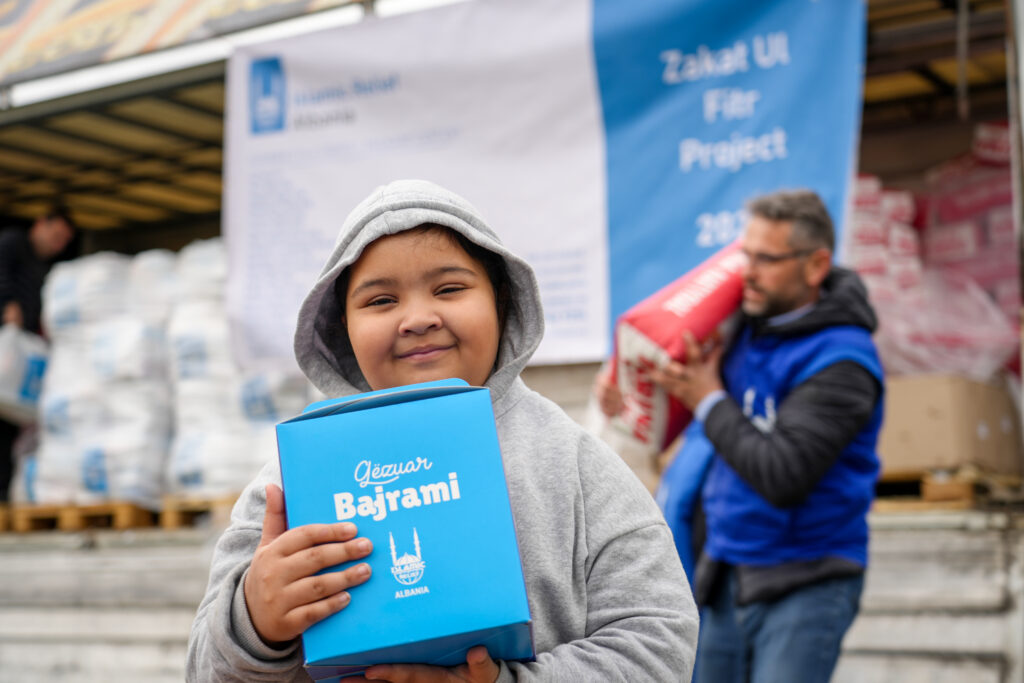
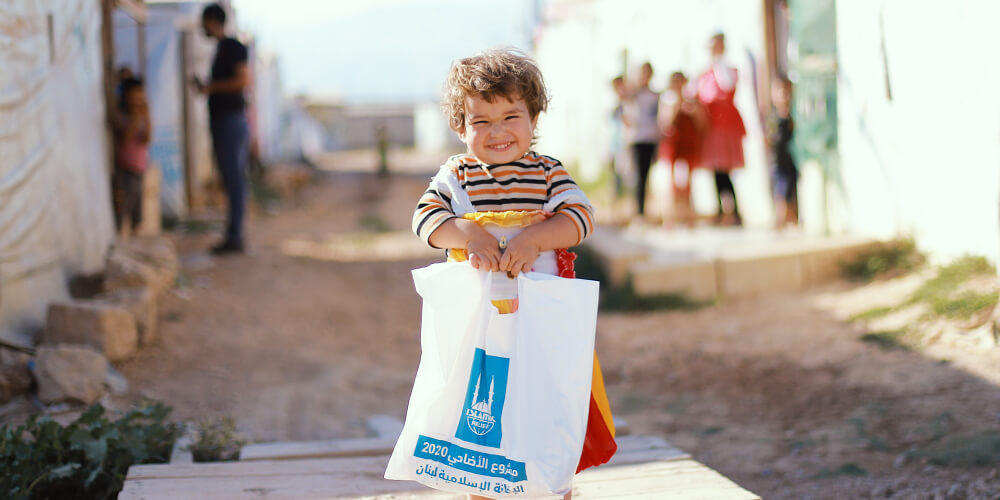
Photo: Child with Eid gift
The Eid of Sacrifice commemorates the ultimate act of sacrifice performed by our beloved Prophet Ibrahim (AS). The submission he made in his willingness to give up what he loved most, his son, Ismail (AS), for the sake of Allah (SWT).
As such, Muslims, in turn, also offer a sacrifice, known as Qurban, on this day of celebration.
What is Qurban?
Qurban (also known as Qurbani or Udhiyah) means sacrifice. It is an act of worship unique to Eid al-Adha, commemorating the sacrifice Prophet Ibrahim (AS) made to Allah (SWT).
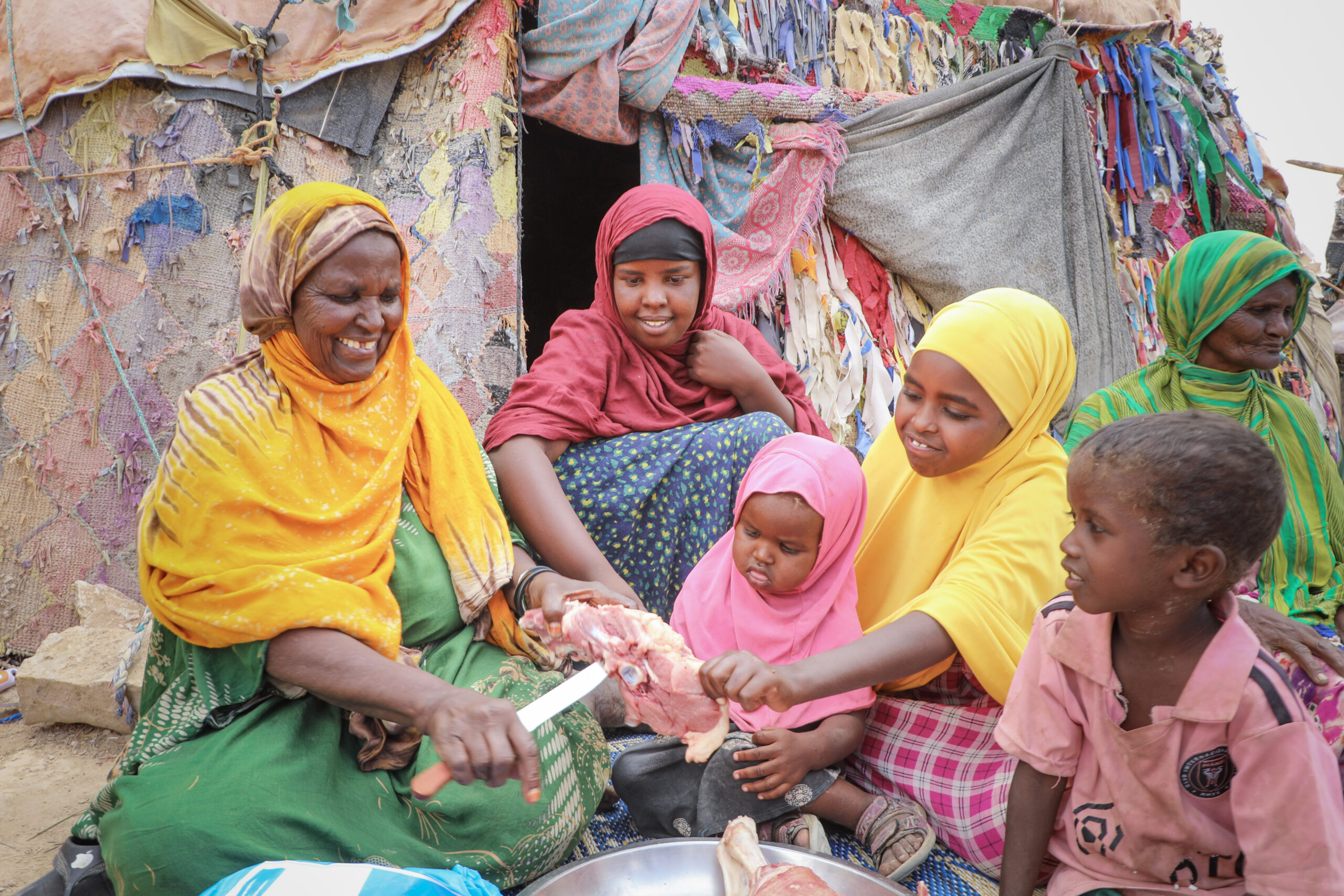
Following the Eid prayer on the first day of celebration, Muslims around the world slaughter an animal – typically a sheep, goat, camel or cow. The sacrificed animal is then divided into three equal portions. One-third goes to the needy, one-third goes to relatives and neighbours, and the remainder Muslims keep for their own families.
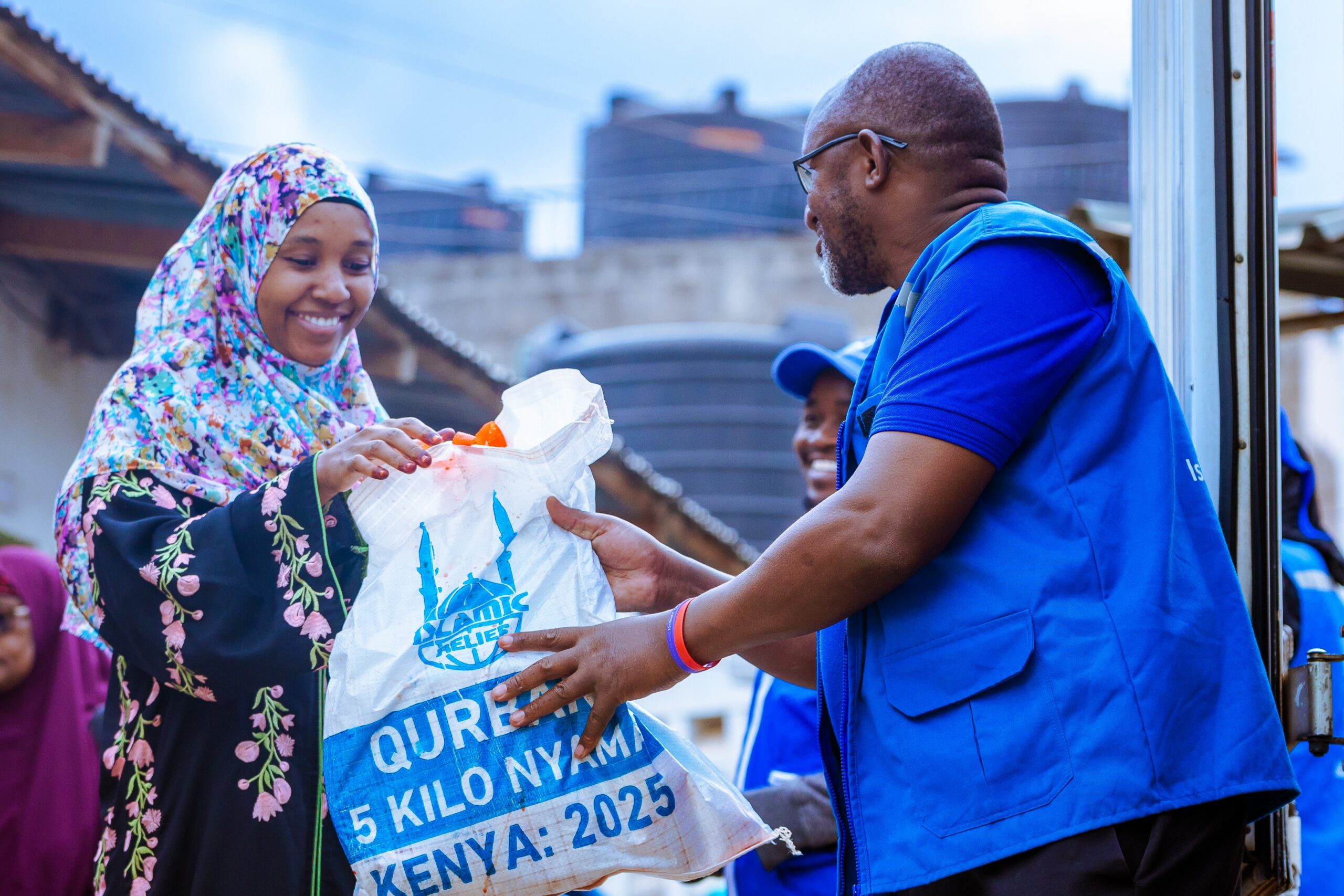
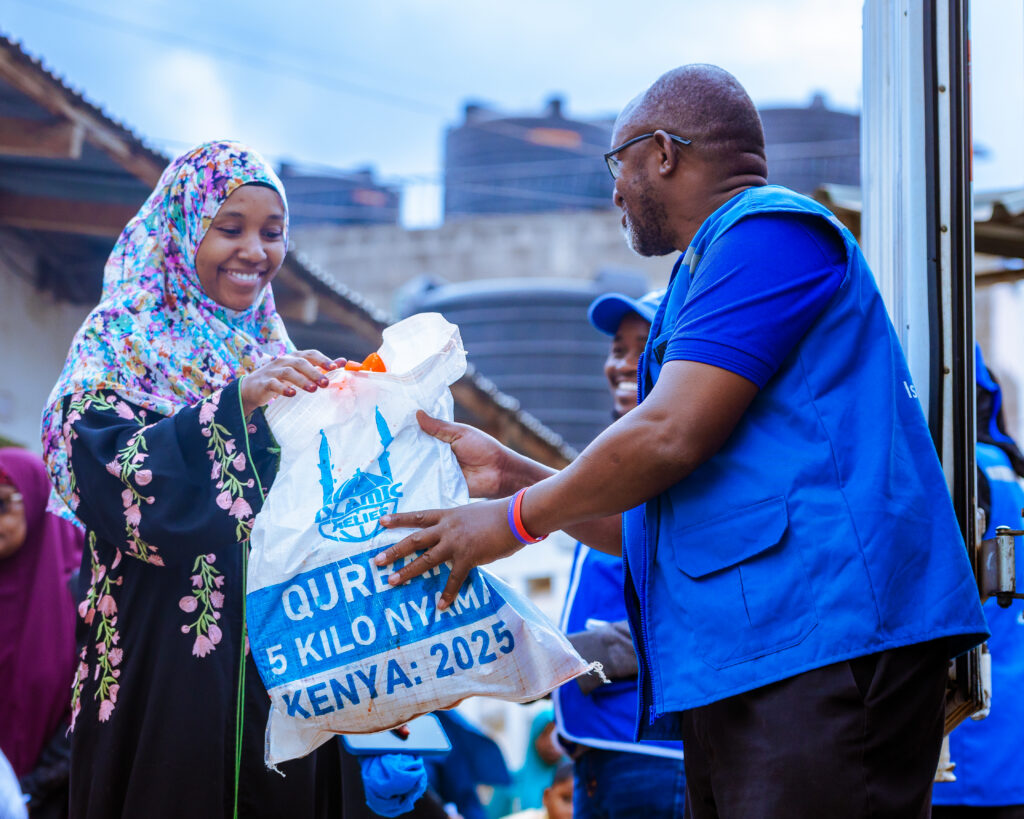
Photo: Qurban reaching those most in need in countries like Kenya during Eid Al-Adha.
Who should give Qurban?
Qurban is an important act of worship that every Muslim who has reached the age of puberty should do if they can afford it. Typically, Muslims who are eligible for Zakat should also give Qurban.
When should I give my Qurban?
It is best practice to purchase your Qurban as early as possible so that it can be performed on time. While one can carry out the sacrifice on any day of Eid al-Adha (from the 10th to the 13th of Dhul Hijjah), performing it on the first day is Sunnah.
The Prophet Muhammad (ﷺ) used to carry out the sacrifice immediately after the Eid prayer. In turn, his first meal on the day of Eid was meat from the sacrifice.
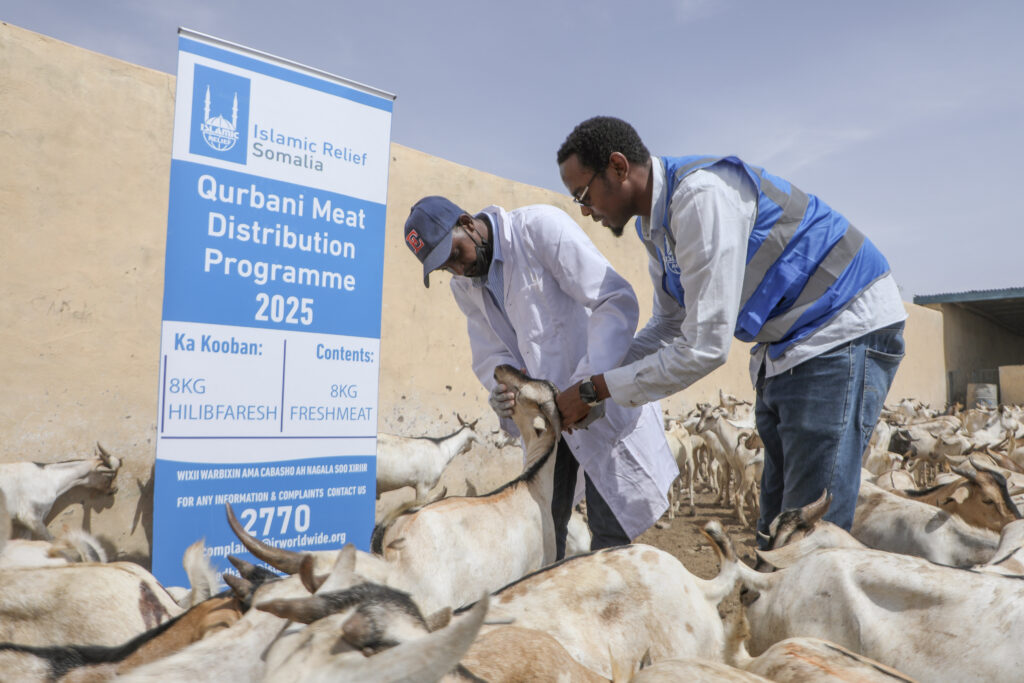
Photo: Islamic Relief staff inspecting animals for Qurban
Other Observances of Eid Al-Adha
As with any festival and important occasion, we follow the example of Prophet Muhammad (ﷺ). There are various Sunnah acts of worship you can do on the day of Eid. These include performing ghusl, wearing one’s best clothes, reciting takbeer and offering Eid greetings.
Similar to Eid al-Fitr, Eid prayer is also an important part of Eid al-Adha. Attending the Eid prayer and walking to the Eid prayer are also Sunan of the Prophet (ﷺ).
Why donate your Qurban to Islamic Relief?
When you donate your Qurban to Islamic Relief, we prioritise providing meat to the most vulnerable families across the world during the Holy season.
Our international teams work hard to get your donation to the hardest-to-reach regions and conflict-affected areas, including Myanmar, Palestine, and Yemen.
Meat is sourced locally to support the local economy and distributed fresh. All logistics—from sacrifice to transportation—are handled in accordance with Islamic principles and with the best hygienic practices possible. Each pack contains 2-5 kilograms of meat and feeds a family of approximately 4-8 people.
The Day of Arafah (also spelt Day of Arafat) is on the 9th of Dhul Hijjah, the day before Eid Al Adha. This year, Arafah is expected to fall on the evening of Monday, May 25, 2026 and end on the evening of Tuesday, May 26, 2026.
Arafah is also one of the most important days in the Islamic calendar. It was on this day that Allah (SWT) perfected His religion, completed His favours upon His beloved Prophet Muhammad (ﷺ), and approved Islam as a way of life. As Allah (SWT) stated in Surah Al-Ma’idah:
This day I have perfected for you your religion and completed My favour upon you and have approved for you Islam as religion.
Quran 5:3
What is the Day of Arafah?
The Day of Arafah is the 9th day of Dhul Hijjah in the annual Islamic (Hijri) Calendar. It falls on the first 10 days of Dhul Hijjah, which, similar to Ramadan, holds significant meaning in Islam.
In many ahadith, the Prophet (ﷺ) made several references to the importance, virtues and rewards of these blessed 10 days. In one particular hadith, he said:
“No good deeds are better than what is done in these first ten days of Dhul-Hijjah…Not even jihad in the way of Allah, except for a man who goes out with his life and wealth at risk and he returns with nothing.”
Sahih Al Bukhari
The Importance of the Day of Arafah
For Muslims, Arafah is a day of immense divine forgiveness, mercy and blessings. For many of us, we often worry that we fell short during Ramadan. Hence, this day marks another chance for us to improve our character and behaviour and become closer to Allah (SWT).
Arafah is also the day in which the Prophet Muhammad (ﷺ) made his farewell sermon during his final pilgrimage. A day he bore witness that Allah (SWT) perfected His religion, completed His favours upon him, and approved Islam as a way of life.

The Day of Arafah is also known as Yawm Al-Waqf (the Day of Standing). It refers to the fact that pilgrims stand in front of their Lord for long periods of time, asking for His Divine Mercy.
Prophet Muhammad (ﷺ) also said:
There is no day on which Allah frees people from the Fire more so than on the day of ‘Arafah. He comes close to those (people standing on ‘Arafah), and then He reveals before His Angels saying, ‘What are these people seeking.
Sahih Al Muslim
For those performing Hajj, the 5th Pillar of Islam, the Day of Arafah is the most important day.
Hajj is a pilgrimage every financially able and healthy Muslim must make at least once in their lifetime. During the pilgrimage, Arafah marks the essence and heart of it. As the Prophet Muhammad (ﷺ) said: “Hajj is Arafat” (Abu Dawud).
When is the Day of Arafah 2025?
The Day of Arafah is on the 9th day of Dhul Hijjah, the twelfth and final month of the Islamic calendar. This year, it is expected to fall on the 26th May 2026, depending on the sighting of the moon.
As the Islamic calendar is based on the lunar calendar, the Day of Arafah occurs ten days earlier each year.
What to do on the Day of Arafah?
The Day of Arafah is extremely blessed. It is a chance for us to receive more rewards by devoting ourselves to Allah (SWT), seeking His forgiveness and performing many good deeds for His sake.
In turn, these following acts of worship are highly encouraged on the Day of Arafah.
Arafah Rituals During Hajj
After praying Fajr Salah in Mina, pilgrims performing Hajj head to the plains of Mount Arafat. Pilgrims stand on the Plains of Arafat and make lots of Dua, asking Allah (SWT) for forgiveness. They also observe shortened Dhuhr and Asr prayers (two rakat instead of four).
There is also a sermon delivered from Masjid al-Nimra on Mount Arafat. If you are performing Hajj, remember to listen to the khutbah if possible.
Fasting on the Day of Arafah
“The people of knowledge consider it recommended to fast on the Day of ’Arafah, except for those at ‘Arafat’.
Tirmidhi
If one is not performing Hajj, fasting on the Day of Arafah is a way to make the most of the blessed day’s rewards. While fasting on the Day of Arafah is not mandatory, it is highly recommended, according to all Madhabs (schools of thought).
The Prophet (ﷺ) emphasised the great rewards of fasting on the day of Arafah, as stated in this hadith:
“It will expiate the sins of the previous and upcoming years.”
Sahih Muslim
In general, it is also Sunnah for a Muslim to fast on the first nine days of Dhul-Hijjah.
“The Prophet used to fast on the first nine days of Dhul-Hijjah and the day of Ashura, and three days each month, the first Monday of the month and two Thursdays.”
Abu Dawood
Increasing in Acts of Worship
Afarah is the most virtuous day of the year for Muslims. The Day of Arafah is a day of acceptance of dua and Allah (SWT) showers His mercy and forgiveness to those who turn to Him.
Therefore, it is important to increase in our good deeds to make the most of the blessings of the day. Whether we are performing Hajj or at home this year, we can reap rewards by performing acts of worship. This includes devoting ourselves to Dhikr (Remembrance of God), making Istighfaar (seeking forgiving) and seeking nearness to Allah (SWT).
The best acts of worship on this day include offering Nafl (optional) prayers, reading Qur’an and sending Salawat (salutations) upon the Prophet (peace be upon him).
It is also Sunnah to recite the Tahleel (Laa ilaaha il-lal-laah), Takbeer (Allahu Akbar) and Tahmeed (Alhamdulillaah) frequently on the Day of Arafah, and on the days of Eid – 11th, 12th and 13th of Dhul Hijjah. As our Prophet (ﷺ) said:
“There are no days that are greater before Allah or in which good deeds are more beloved to Him than these ten days. So recite a great deal of tahleel, takbeer and tahmeed during them.”
Ahmad
Give Sadaqah
It’s important to remember our brothers and sisters in need across the globe on this blessed day. Giving Sadaqah is one of the most virtuous acts of worship, and giving Sadaqah on this holy day can help us gain blessings.
The Prophet Muhammad (ﷺ) said:
“Sadaqah extinguishes sin as water extinguishes fire”
Timidhi
Remember to Give Qurban for Eid al-Adha
Qurban is obligatory upon every sane Muslim who has wealth in excess of his/her needs. Normally, those who are eligible to pay Zakat and Fitrana (Zakat al-Fitr) have to give a Qurban.
If you haven’t given it yet, join us this Dhul Hijjah by donating your Qurban or sending an Eid Gift to a child.
Each year, millions of Muslims from around the world travel to Makkah, Saudi Arabia, to perform Hajj.
The fifth pillar of Islam, Hajj, is a sacred pilgrimage that must be performed by every Muslim at least once in their lifetime, so long as they are financially, physically and emotionally able to do so.
And [due] to Allah from the people is a pilgrimage to the House – for whoever is able to find thereto a way. But whoever disbelieves – then indeed, Allah is free from need of the worlds.
Qur’an 3:97
Hajj occurs during the holy month of Dhul Hijjah, the 12th month in the Islamic (Hijri) calendar. It falls between the 8th and 12th or 13th of Dhul Hijjah, depending on the sighting of the moon.
As the Hijri calendar is lunar (following the cycles of the moon), the corresponding date on our Gregorian calendars varies year by year. This year, Hajj 2025 is between Sunday, May 24, 2026, and Friday, May 29, 2026.
For anyone preparing to go on the pilgrimage this year, it’s an incredibly exciting time. While it will certainly be a test of patience, with great spiritual, emotional, and physical challenges, it also offers an opportunity to cleanse oneself of one’s sins and draw closer to Allah (SWT).
As Prophet Muhammad (ﷺ) said:
Whoever performs Hajj for the sake of Allah and does not utter any obscene speech or do any evil deed, will go back (free of sin) as his mother bore him.
Bukhari and Muslim
To help review our knowledge of Hajj and its rituals, this handy and comprehensive guide is here to explore the different aspects of the holy pilgrimage: from its origin to how to perform it.
The Story Of Hajj
The origin of Hajj dates back to the time of Prophet Ibrahim (AS). This was thousands of years before the time of Prophet Muhammad (ﷺ).
Prophet Ibrahim (AS) built the Kaa’ba, the cubic-like structure in Masjid al-Haram. It is the qibla (direction) that Muslims pray towards and is known as Baitullah, or ‘the House of God’. It also plays an important part in the rituals of Hajj. However, it is not something that Muslims worship itself.
Because of Ibrahim (AS), Muslims are able to perform Hajj. A practice that remains the same as Prophet Muhammad (ﷺ) and Sahabah (companions) did hundreds of years ago, during the month of Dhul Hijjah in 632CE (10AH).
Hajar, Isma’il (AS) And The Well Of Zamzam
During his prophethood, Ibrahim (AS) encountered several trials. Challenges that became lessons to mankind, teaching us about the importance of devotion to Allah (SWT), sacrifice, faith and more.
These trials include the test of Ibrahim’s (AS) willingness to sacrifice his son for the sake of Allah (SWT), which is why Muslims perform Qurban on Eid Al Adha. Allah (SWT) also tested Ibrahim by instructing him to leave his wife Hajar and son Isma’il (AS) alone in the desert of Makkah. This is the test that provides the basis for Hajj.
Entrusting in Allah (SWT)’s plan, Ibrahim (AS), Hajar and Isma’il (AS), carried through with the command and endured the trials ahead. When the little food and water that they had soon ran out, Isma’il (AS), an infant at the time, cried of thirst. Hajar, desperately searching for water, ran between the nearby hills of Safa and Marwah in the hope of spotting someone who could help them.
Unable to find help, Hajar returned and found Isma’il (AS) striking and scraping the ground with his leg in distress. Suddenly, a spring burst forth from the barren desert. By Allah (SWT)’s command, a source of water from deep within the earth (that is still in use today), provided Hajar and Isma’il (AS) with water. This is known as the well of Zam Zam.
The water source provided Hajar with a means of trade and livelihood. It enables her to exchange food and other provisions with passing nomads for water. Soon, the site became prosperous. And when Ibrahim (AS), with Allah (SWT)’s permission, returned to his family in the desert, he was amazed to see the miracles that had unfolded for them. These were the fruits of their faith in Allah (SWT).
The Construction Of The Kaa’ba
At the site of the well of Zam Zam, Allah (SWT) commanded Ibrahim (AS) to build the Kaa’ba. He (AS) and his son Isma’il (AS) worked together to build its small stone structure. It marked a space for the sacred gathering of Muslims – all those who believed in the one God, Allah (SWT).
The Inception of Hajj (The Sacred Pilgrimage)
As time passed, the site of the miracle well of ZamZam and the Kaa’bah gave way for Makkah to become a thriving and prosperous settlement. Ibrahim (AS) returned to the site each year to offer his pilgrimage to Allah (SWT). In turn, years later, when Isma’il (AS) was given his prophethood, he continued the tradition. Thus, began the inception of the Hajj.
However, during the thousands of years that would pass, this would change. The site that was built to commemorate the lessons of Ibrahim’s (AS) trial, the miracle of Allah (SWT) and most importantly the belief in one God was later taken over by pagan Arabs and the worship of idols and spirits. It grew into a city for trade and the worship of pagan gods. And the Kaa’ba eventually came to house these false gods.
Until, thousands of years later, when Muhammad (ﷺ) became a prophet and came with the commandment to restore the Kaa’ba to its original purpose. The last of Allah’s (SWT) messengers, he established Islam in the land for mankind. He (ﷺ) likewise resumed Hajj, performing the first official pilgrimage with his companions in 632 CE, re-establishing the traditions started by the Prophet Ibrahim (AS).
Hajj As We Know It Today
Today, each year, over 2.5 million Muslims worldwide, of every race, class, and culture, travel to Makkah in Dhul Hijjah. Where they stand equal before Allah (SWT) – one’s status, race, culture, and wealth are irrelevant –as they fulfil the rites of Hajj.
These days, Hajj pilgrims travel to Makkah by land, air and sea days and weeks prior to the pilgrimage period. If you’re travelling from Australia, you are likely to fly to Saudi Arabia, touching down in Jeddah or Medina. From there you will travel with your Hajj group to Makkah.
Some people save up money their entire lives to be able to perform Hajj, while others are fortunate enough to fulfil it more than once. Regardless, each Muslim are only required to perform Hajj once in his or her lifetime, and only after meeting the requirements.
Who Is Eligible To Perform Hajj?
Hajj forms one of the five pillars of Islam. The other five pillars include the Shahada (the declaration that “There is no god but God, and Muhammad is the Messenger of God”), Salah (Prayer), Zakat (Almsgiving) and Sawm (Fasting).
As a pillar of the faith, Hajj is a spiritual duty for all Muslims. However, there are still certain conditions Muslims need to meet for it to be obligatory for them to perform the sacred pilgrimage.
Firstly, one must be an adult. While children may go to Hajj, they are not required to. Secondly, one must be healthy. The very weak, sick, elderly, or otherwise physically incapable Muslims are exempt from having to perform the pilgrimage.
Thirdly, one must be financially able to perform Hajj. A person in debt is not obliged to perform Hajj until he has cleared it. However, if one is in debt, one may still perform Hajj as long as their creditor permits it, they have time to pay off the debt and performing Hajj does not affect their ability to pay it off.
When Do I Perform Hajj?
In the Islamic tradition, Muslims use the Hijri calendar which follows the cycle of the moon. This contrasts with the more commonly used Gregorian calendar, which calculates dates using the sun.
Hajj occurs each year between the 8th to 12th or 13th of Dhul Hijjah. However, the corresponding Gregorian dates differ year to year as the lunar calendar appears to shift forward approximately 11-12 days.
How Do I Perform Hajj?
There are three forms of Hajj: Tamattu, Ifraad and Qiran. In this guide, we will use the Tamattu, the form that the Prophet Muhammad (ﷺ) encouraged the Muslims to perform.
A Step-By-Step Guide To Performing Hajj
Preparation and Intention
Before you arrive at Makkah to begin Hajj, it’s important to make your intention (niyyah) within your heart. The intention must be to perform the Hajj for the sake of Allah (SWT) alone. It should not be done with the intention of being seen by others or for worldly gain. Only for a desire for good in the Hereafter.
Entering The State Of Ihram
Next, you’ll enter into the state of Ihram (ritual purity). The rules around the clothing of Ihram are extremely simple, yet strict and must be adhered to.
For men, this means wearing the designated white cloth. One piece should be wrapped around your shoulder and one around your waist. Ladies may wear any clothing of their choice but should ensure they observe the rules of Hijab. Face coverings, however, are not permitted. Fully covering shoes are also not permitted. Both women and men must wear sandals for footwear.
Whilst in the state of Ihram, we should also be particularly mindful of our behaviour and words. We should avoid smoking, engaging in sexual relations, swearing, shaving our hair, and cutting our nails. Fighting, arguing, hunting, killing, or unjustifiably breaking anything while in the state Ihram is also forbidden.
We must also not use scented products such as perfumes, moisturisers, makeup, or soaps. We, however, substitute them for unscented toiletries which are permissible to use.
Tip: Carry spare Ihram clothing if you can. Likewise, invest in a decent pair of trekking sandals. They tend to be the most comfortable and practical, given that you will be walking long distances on tarmac as well as gravel. Try and wear-in your sandals before you depart for Saudi so that you don’t break out in blisters or face discomfort once you’re there. Upon arriving in Makkah, get ready for the biggest spiritual journey of your life! First, you must perform your Umrah. This means doing the rites of Tawaf and Sa’i, as outlined in the next steps.
Tawaf x 7
Tawaf is one of the principal rites of the pilgrimage. It refers to walking in circles around the Kaa’bah in an anti-clockwise motion.
One Tawaf is made up of seven complete circuits. Each one starts and ends at the black stone, situated within the Kaa’bah.
In addition to your Tawaf, you can also offer voluntary prayers. To thank Allah (SWT) for arriving safely and mark the start of this incredibly special spiritual journey.
Safa and Marwa
After you’ve performed your Tawaf, you’ll then perform what’s known as Sa’i (walking and running between the two hills of Safa and Marwa).
You’ll begin the Sa’i on the hill of Safa and walk towards the hill of Marwa. You will eventually see the green marker, at which point you will run until the next green marker and continue walking until you reach Marwa. This completes one lap.
You will then return to Safa to complete your second lap. Your Sa’i is complete once you have performed a total of seven laps between the hills of Safa and Marwa.
This is an important ritual in memory of Prophet Ibrahim’s (AS) wife Hajar, and her struggle in the desert in search of water for her son Prophet Isma’il (AS). Sa’i symbolises the ongoing struggle that we encounter throughout our lives, as Hajar experienced herself.
Clip/Shave Hair (Umrah Ends)
Once Sa’i is complete, men will have their hair clipped or shaved, while women will clip their hair to the length of a fingertip. This marks the completion of your umrah, allowing you to leave Ihram, until the 8th of Dhul Hijjah.
Tip: Be very patient here. You’ll likely be tired from tawaf. You also might notice fellow pilgrims in a hurry to complete the Sa’i. Feel free to take your time. Take regular breaks, and drink Zam Zam water which is available between Safa and Marwa.
Resting and praying
Now that you’ve performed your Umrah, for the rest of this blessed month, you’ll stay in Makkah to complete your spiritual journey of Hajj, surrounded by your fellow Muslim sisters and brothers, SubhanAllah! Make sure to get plenty of rest and make the best use of your time by performing sincere acts of worship. Your Hajj will begin on the 8th of Dhul Hijjah.
Re-entering State of Ihram (Day 1/8th Dhul Hijjah)
Fulfilling your sacred obligation of Hajj will be the most spiritual period of your life Insha’Allah (God willing), filled with blessings and forgiveness from Allah (SWT)! The 8th day of Dhul Hijjah marks the beginning of the days of Hajj and the next stage of your spiritual journey. You’ll purify yourself and enter the state of Ihram once again.
Once you’re all set to enter the Ihram, you’ll begin reciting the following invocation called the Talbiyah:
Labbayka Allāhumma labbayk. Labbayk lā shareeka laka labbayk. Inna al-ḥamda, wa n-‘imata, Laka wal mulk. Lā shareeka lak.
“Here I am, O Allah, here I am, here I am. You have no partner, here I am. Verily all praise and blessings are Yours, and all sovereignty. You have no partner.”
You will then proceed with your Hajj group to the neighbourhood of Mina in Makkah, located roughly eight kilometres from the centre of Makkah.
Tip: Carry some essentials such as unscented sun cream, moisturiser, Vaseline and soap. Sun cream is particularly handy, especially if you have no hair as it is not permissible for men to cover their head or face whilst in Ihram. Vaseline is also particularly valuable for both women and men to protect against painful rashes that may occur as a result of constant walking. All of these are readily available in Saudi Arabia.
Arrive At Mina
Once you arrive in the tent city (neighbourhood) of Mina, you’ll settle into your allocated tent. Here you’ll pray Salah (obligatory prayers), including Dhuhr, Asr, Maghrib, ‘Isha and Fajr, shortening your four-unit prayers to two units each, without combining them, as stated in the Qu’ran.
You’ll spend the night and pray to Allah (SWT), reading the Qur’an and preparing for day two. It’s an important time for spiritual reflection and devotion, so try and make the most of this special night.
Tip: Be patient here, as space inside the tents can be very tight. You might find yourself very close to fellow pilgrims. The weather is also likely to be very hot, so remember to keep yourself hydrated. The Saudi authorities have installed cold water stations close to all tents, so familiarise yourself with your surroundings.
You may also notice that Hajj authority workers regularly stock up on complimentary cold drinks in cooler boxes next to your tent. They’re there for you to consume, so enjoy them to quench your thirst, but don’t forget the spiritual purpose of being there.
Day of ‘Arafah (Day 2/9th Dhul Hijjah)
After sunrise in Mina, you’ll then head to the plains of ‘Arafah, where you should be spending your time in contemplation and prayer. This includes reciting Istaghfar (asking for forgiveness) and making supplications – marking the Day of ‘Arafah when we ask Allah (SWT) for forgiveness for our sins.
Upon reaching the plains of Mount ‘Arafah, pilgrims observe shortened Dhuhr and Asr prayers combined (two Rakat instead of four). However, according to Abu Hanifa, the combining of Dhur and Asr is only valid if one prays behind the Imam in the Masjid. Therefore if one were to pray in the tent, then they should not combine both salah.
On this day, there will be a sermon delivered from Masjid al-Nimra on Mount ‘Arafah. Try to listen to the Khutbah (sermon) if possible. Your group may also facilitate an English translation of this sermon.
Tip: Don’t be tempted to exhaust your energy and trek up Mount ‘Arafah, also known as Jabal al-Rahmah, on this day. Jabal al-Rahmah is the hill from where the Prophet Muhammad ﷺ) delivered his sermon. There is no authentic source to suggest any benefit in trekking the hill itself or to undertake this climb as a religious ritual.
Importance of ‘Arafah
The day of ‘Arafah is one of the most important days for Muslims across the world. Allah (SWT) refers to the Day of ‘Arafah in Surah al-Maidah as the Day on which He perfected His religion, completed His favours upon His beloved Prophet Muhammad (ﷺ) and approved Islam as a way of life!
The Prophet (ﷺ) also said:
“There is no day on which Allah frees people from the Fire more so than on the day of ‘Arafah. He comes close to those (people standing on ‘Arafah), and then He reveals before His Angels saying, ‘What are these people seeking.”
Muslim
So, be sure to stand on the plains of ‘Arafah and make lots of Du’a (supplication), focusing your energy on Allah (SWT), asking Him for forgiveness and blessings for you and your family. Don’t forget to include your friends, relatives, neighbours as well as the wider Ummah (community) in your Du’a on this special day.
Arrive in Muzdalifah
After sunset, you’ll depart ‘Arafah and head to Muzdalifah – an open plain between Mina and ‘Arafah. Once you reach Muzdalifah you’ll perform your Maghrib and ‘Isha Salah, one after the other, shortening the ‘Isha Salah to two Rakat.
As Abdullah ibn Umar (RA) narrates:
“The Prophet (peace and blessings be upon him) offered the Maghrib and ‘Isha prayers together at Muzdalifah with a separate Iqamah (second call to prayer) for each of them and did not offer any optional prayer in between them or after each of them.”
Sahih Bukhari
Afterwards, you can then spend the night in worship or resting. The Prophet (ﷺ) went to sleep until shortly before Fajr, choosing not to engage in night worship as he normally did. So, follow the Sunnah. Don’t be tempted to exhaust yourself but rest instead. You have a long day ahead of you!
While in Muzdalifah, you may also collect pebbles to perform Rami (the stoning of the devil) over the next three days. You can collect the pebbles from anywhere in Mina.
The size of the pebbles should be similar to the size of date stones/seeds. You will need a total of 49 pebbles. However, it is better to pick up 21 more pebbles as a precautionary measure. When you proceed to the phases of throwing the pebbles at the Jamarat (the stone pillars), you may miss the target, or some pebbles may fall from your hand. Therefore, it is better to have more than to be short.
Tip: At Muzdalifah, you will stay under the night sky. There are no tents or other accommodation facilities here. Although there are plenty of lights, it is still fairly dark. Try to stay near your group. It’s very easy to get lost among the thousands of pilgrims.
Toilets and Wudhu facilities are also available in Muzdalifah. We highly recommend you use the toilets and freshen up before you leave ‘Arafah. However, they will also likely be crowded so remember to be patient.
Rami and Hady (Day 3/10th Dhul Hijjah & start of Eid al-Adha)
The 10th of Dhul Hijjah is also called the Yawm al-Nahr, or the Day of Sacrifice (Qurbani).
After performing Fajr Salah you will depart Muzdalifah and go back towards Mina. Remember to continuously recite the Talbiyah.
On this day, Pilgrims perform the Hady (sacrificial animal) and also commence the first of three days “stoning of the devil” rite or Rami. Muslims around the world also offer Qurban (Qurbani or Udhiyah) during this time and begin the four-day festival of Eid al-Adha. We know this from this verse in the Qur’an:
“And when you are safe, then, whoever avails the advantage of the ‘Umrah along with the Hajj shall make an offering of whatever animal is available. However, any one who finds none shall fast for three days during Hajj, and for seven days when you return; thus they are ten in all. This is for him whose family folk are not residents of Al-Masjid-ul-Harām.”
Qur’an 2:196
Origin Of Rami (The Stoning Of The Devil)
The stoning of the Jamarat (also referred to as the ‘stoning of the devil’) is a ritual carried out by Hajj pilgrims whereby pebbles are thrown at three stone structures in Mina across three days.
The act of throwing stones at the Jamarat is known as Rami. The ritual of Rami is symbolic of the actions of Ibrahim (AS) when he was faced with the trial of having to sacrifice his son, Isma’il (AS) upon the commandment of Allah (SWT).
On the way to carry out the commandment, Iblis (Satan) repeatedly tried to tempt Ibrahim (AS) into disobeying Allah (SWT). As Ibrahim (AS) reached Jamarat al-Aqaba, Allah (SWT) ordered Angel Jibreel (AS) to instruct Ibrahim (AS) to throw seven stones at Iblis. He obliged, and Iblis fled immediately. The three Jamarat indicate the three places where Iblis tried to dissuade Ibrahim (AS) from obeying the command of Allah. However, the pillars do not contain Iblis, as many people are wrongly led to believe.
How To Perform The Rami (The Stoning Of The Devil)
On the 10th, 11th, and 12th day of Dhul Hijjah, you will perform Rami (the stoning of the devil). The size of the pebbles should be similar to the size of date stones or seeds. You will need a total of 49 pebbles.
You’ll need a certain number of pebbles for each of the three days. The breakdown is as follows:
7 pebbles for the 10th of Dhul Hijjah
21 pebbles for the 11th of Dhul Hijjah
21 pebbles for the 12th of Dhul Hijjah
Try to carry four small pouches per person for your pebbles. Coin bags are a good size and convenient to carry. Use the four pouches to group pebbles according to the breakdown above.
Once you reach the Jamarat, you will head to Jamarat al-Aqaba, the largest pillar. Here, you will throw the first seven pebbles at the concrete pillar. You will only pelt this one pillar on the first day.
Upon each throw, you’ll say the Takbir:
Allāhu ‘Akbar
اللهُ أَكْبَرُ
Allah is Greater
Tip: Don’t rush to perform the Rami. The Hajj authority will most likely allocate a set time for your group to go and perform Rami. They do this to minimise overcrowding and the risk to pilgrims.
Try not to get angry and throw your sandals or other valuable possessions at the pillars. Iblis is not contained within the pillar, so you’ll only lose your valuables and there is no benefit in doing so!
Qurbani and Eid al-Adha
The festival of Eid al-Adha, or the Feast of Sacrifice, is also celebrated by Muslims around the world not performing Hajj on the 10th Dhul Hijjah. By offering Qurbani (sacrifice), Muslims commemorate Prophet Ibrahim’s (AS) willingness to sacrifice his son Isma’il (AS) upon the commandment of Allah (SWT).
Shaving The Head (Day 4/11th Dhul Hijjah)
After offering the Hady, male pilgrims will shave or trim their hair, as the Prophet Muhammad (ﷺ) did. For women, they will trim their hair by the length of a fingertip.
Now you are allowed to leave the state of Ihram and wear comfortable clothing. You are also allowed to resume otherwise Halal activities forbidden during the state of Ihram, except for sexual intimacy. It is Sunnah to apply perfume as the Prophet Muhammad (ﷺ) smelt strongly of musk at this point.
Tip: Use disposable blades to shave each other’s head within your group. If that’s not possible, a number of barbers in Mina will shave your head for a price. Ensure that the barbers use new blades to avoid infection.
Tawaf al-Ifadha and Saai’ (Day 5/12th Dhul Hijjah)
You will now go to Makkah to perform Tawaf al-Ifadha and then another circuit of Sa’i as part of your Hajj rituals.
Tawaf al-Ifada and Sa’i are obligatory. You must perform the tawaf al-Ifadha and the Sa’i after the Rami, the Qurbani (sacrifice) and shaving (or trimming) of the head.
With the completion of the Tawaf and Sa’i, you are then allowed to relax and do everything that was lawful before entering the Ihram, including engaging in marital relations.
You will, however, return to your tents in Mina and continue with the remaining rituals of Hajj.
Tip: The Tawaf area will be extremely crowded during this time. Try to use the upper levels of the Haram or the roof. You might want to do this around midnight when it tends to be quieter.
The Second Day of Rami
On the 11th Dhul Hijjah, you will proceed to your second day of Rami (the stoning of the devil).
On this occasion, you pelt each of the three pillars in order. You will begin with Jamarah al-Ula (the small pillar), then Jamarah al-Wusta (the second/middle pillar) and finally, Jamarah al-Aqaba (the third/large pillar). You stop after the first and second Jamarat to make Du’a facing the qibla. Each one should be stoned with seven consecutive pebbles accompanied by the Takbir. Remember to take your spare pebbles with you in case you lose some!
Spend the night in Mina
Once your second Rami is completed, you will return to your camp in Mina and spend the rest of the day and night in worship, making the most of the remaining time you have.
The Third Day of Rami
On the afternoon of the 12th Dhul Hijjah, you’ll have your final batch of pebbles (21 pebbles) ready to repeat the same steps as the previous day.
Tawaf al-Wida (The Farewell Tawaf)
You now have only one step left to perform before completing Hajj. This is the farewell Tawaf – the last rite Muslims must perform.
This Tawaf is Wajib (obligatory) according to Hanafis, Shafi’is and Hanbalis but Sunnah according to Malikis. It must be performed before leaving the boundaries of the Haram. Omitting this Tawaf, without a valid reason, is not deemed lawful in Islam.
Ibn Abbas (RA) narrated:
“The people were ordered to perform the Tawaf al-Wida as the last thing before leaving (Makkah), except the menstruating women who were excused. “
Bukhari
For this Tawaf, you will complete seven laps of Tawaf. Then perform two Rakat of Salah and drink Zam Zam water. There is no Sa’i or shaving/trimming of the head after this Tawaf.
Hajj Mabrook! You’ve now completed your Hajj!
For those of us who are unable to travel and perform Hajj this year, don’t despair! The best ten days of the year are the 1st to the 10th of Dhul Hijjah.
These days are a second chance to earn the mercy and forgiveness of Allah (SWT) after Ramadan. We should use this blessed time to do more good deeds. These can be giving charity, connecting with the Qur’an, helping out within the community and more. It is also important to enhance our obligatory acts of worship by being mindful of our prayers and ensuring we pay our Zakat on time.
Our Prophet (ﷺ) also said:
There are no days that are greater before Allah or in which good deeds are more beloved to Him, than these ten days, so recite a great deal of Tahleel (saying of la illaaha illa Allah), Takbeer (saying of Allahu Akbar) and Tahmeed (Alhamdulillah) during them.
Ahmad
Thus, the first 10 days of Dhul Hijjah is an ideal time to make du’a for Allah (SWT) and remember Him as much as we can. It’s also highly recommended for us to fast during these ten, especially on the day of ‘Arafah, as “it will expiate the sins of the previous and upcoming years.” (Sahih Muslim).
Qurban (Qurbani, Udhiyah on Eid Al-Adha for non-travellers is Sunnah muakkadah (confirmed Sunnah) according to most scholars and Waajib (a religious duty) according to the Hanafis. If you can afford to offer the sacrifice, then you are encouraged to do so. This would be in remembrance of the struggle and dedication of Prophet Ibrahim (AS) to Allah (SWT). It also supports a struggling family, as a third of the sacrifice goes to the needy.
Regardless of whether or not you’ve been able to attend Hajj, the month of Dhul Hijjah holds countless blessings for Muslims around the world! So let us make the most of these best 10 days of Dhul Hijjah, and seek to achieve a similar reward as those going to Hajj during this most blessed time!
This Dhul Hijjah, Share Your Blessings
Help the world’s most vulnerable families enjoy their Eid when you give Qurban with Islamic Relief.
Dhul Hijjah marks the twelfth and final month of the Islamic calendar. It holds immense significance for Muslims worldwide, especially in the first ten days, when Hajj and Eid Al-Adha (as well as the sacred act of Qurban) take place.
This year, the first day of Dhul Hijjah is expected to begin on Monday, May 18, 2026, depending on the sighting of the moon. But why exactly are the first 10 days of Dhul Hijjah and their events so special?
In this article, we learn about the month’s transformative and spiritual experiences. This includes the profound meaning behind the rituals of Hajj and Eid al-Adha (festival of sacrifice).
The Significance of the First 10 Days of Dhul Hijjah
Similar to the Holy month of Ramadan, the first 10 days of Dhul Hijjah are an extremely blessed time. After Ramadan, we often miss the spiritual high we felt and wish we could’ve done more. But these blessed ten days offer us another chance to gain immense rewards. To have our sins forgiven and reach great levels of piety, Insha’Allah.
Benefits of the first 10 days of Dhul Hijjah
In one particular hadith, the Prophet Muhammad (ﷺ) specifically highlights the first 10 days of Dhul Hijjah as better than all the other days of the year. Even better than the days of Ramadan, SubhanAllah!
He (peace and blessings be upon him) said:
“There are no days on which righteous deeds are more beloved to Allah than these ten days”
Sahih Bukhari
In the Qur’an, Allah (SWT) also swears by these first ten days. In Surah Al-Fajr, He states:
“By the dawn; And [by] the ten nights.”
Quran 89:1-2
According to many scholars, these days are the first 10 days of Dhul-Hijjah.
What Happens on the First 10 Days of Dhul Hijjah?
In addition to being the best days to do good deeds, we witness two very special events in Dhul Hijjah: Hajj and Eid al-Adha.
Hajj
Hajj is the fifth and final pillar of Islam. It is a staple of Islamic belief, alongside the Shahada (the belief that there is no god but Allah (SWT) and Muhammad (ﷺ) is His Messenger), Salah (prayer), Zakat (almsgiving) and Sawm (fasting).
Hajj is the pilgrimage Muslims make to Makkah in Saudi Arabia. It takes place from the 8th to the 12th or 13th of Dhul Hijjah each Islamic year. The pilgrimage is obligatory for all able-bodied and financially capable Muslims to perform at least once in their lifetime.
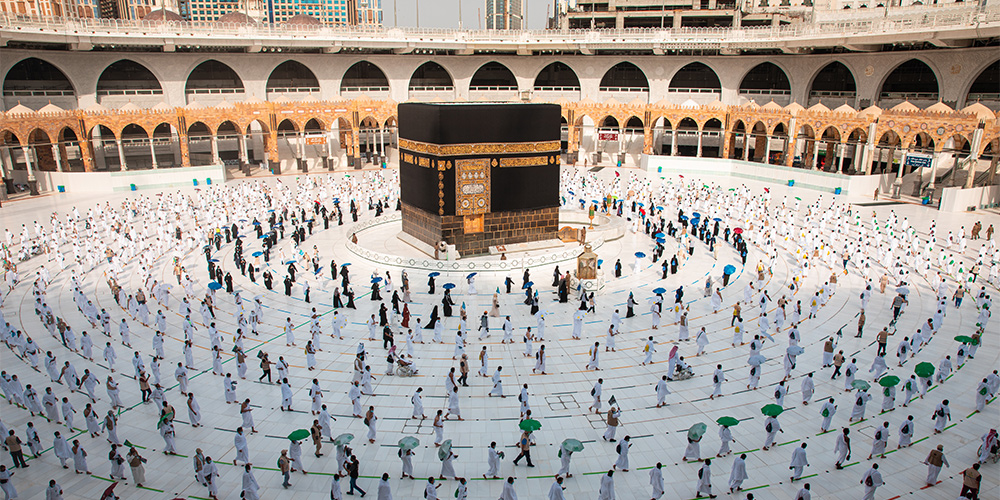
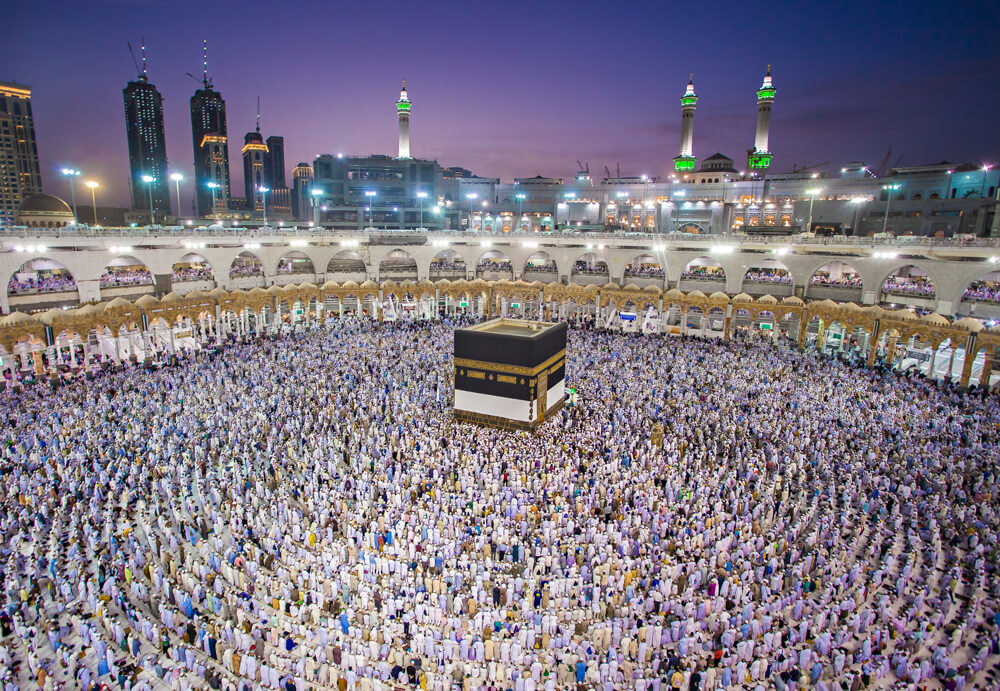
Photo: Muslims performing Tawaf during Hajj in Makkah, in the days of Dhul Hijjah
This year, Hajj is expected to take place between the evening of Sunday, May 24, 2026, and Friday, May 29, 2026.
On the 9th of Dhul Hijjah, the blessed Day of Arafah (also Arafat) occurs. The Day of Arafah 2025 is expected to fall on the evening of Monday, May 25, 2026.
Considered the most blessed day of the year, Arafah was the day when Allah (SWT) perfected Islam. The day He completed His favours upon His beloved Prophet Muhammad (ﷺ) and approved Islam as a way of life.
This day I have perfected for you your religion and completed My favour upon you and have approved for you Islam as religion.
Quran 5:3
On this day, pilgrims performing Hajj gather on the plain of Arafat, seeking forgiveness, supplicating to Allah and engaging in profound acts of worship.
Eid al-Adha
Eid al Adha (or Eid ul Adha), similar to Eid al Fitr (or Eid ul Fitr), is a joyous day Muslims celebrate with family and community. However, in addition to the rituals of Eid, Muslims, who are able to, also give Qurban on Eid Al-Adha.
Qurban (also known as Qurbani or Udhiyah) is an act of worship that involves the sacrifice of an animal, usually a sheep, goat, cow or camel, for the sake of Allah (SWT). The origins of this act of worship come from the story of Prophet Ibrahim (AS) and his willingness to sacrifice his son, Ismail (AS), as a demonstration of his faith, obedience, and trust in Allah (SWT).
What Else Can We Do on the First 10 Days of Dhul Hijjah?
Even for those of us not performing the Hajj pilgrimage this year, Dhul Hijjah is still a great time of blessing and immense reward.
Wherever we can, we should engage in good deeds such as giving charity, performing acts of kindness to family and community, fasting and remembrance of Allah (SWT)
Fasting
Fasting is especially encouraged during these first 10 days. The Prophet (ﷺ) used to fast on the first nine days of Dhul-Hijjah as one of his regular fasts.
He especially emphasised the importance of fasting on the 9th day, the Day of Arafah.
Fasting the day of `Arafah expiates the sins of two years: the past one and the coming one.
Sahih Muslim
Making Dhikr
Our Prophet (ﷺ) also said:
“There are no days that are greater before Allah or in which good deeds are more beloved to Him, than these ten days, so recite a great deal of tahleel, takbeer and tahmeed during them.”
Ahmad
When are the 10 days of Dhul Hijjah?
This year, the first day of Dhu al-Hijjah 1445 AH will fall on Monday, May 18, 2026, depending on the sighting of the moon. In turn, the day of Eid al-Adha is expected to fall on Wednesday, May 27, 2026.
Photo: Your Qurban, helping the world’s most vulnerable thrive and build sustainable livelihoods.
Give Your Qurban On Time
At Islamic Relief, we work all year round to bring families relief and home. To combat food poverty and help communities build healthy and stable livelihoods.
Every Eid al-Adha, Islamic Relief is at the forefront of distributing Qurban. This year, we strive to deliver nutritious, high-quality meat to the world’s most vulnerable and disadvantaged communities. For many, this is the only time they will be able to eat meat in the entire year.
In over 30 countries worldwide, your Qurban donation will not only bring happiness to the less fortunate but also empower vulnerable communities. To ensure they can enjoy Eid without worrying about how and what they will feed their families.
Donate during this blessed time and increase your rewards. Help enable families and entire communities to have a happy Eid al-Adha and beyond.
This Dhul Hijjah, Share Your Blessings
Help the world’s most vulnerable families enjoy their Eid when you give Qurban with Islamic Relief.
Hajj is the sacred pilgrimage Muslims perform at the holy mosque of Masjid al-Haram in Makkah, Saudi Arabia. It takes place during Dhul Hijjah, which is the twelfth and final month in the Islamic (Hijri) Calendar.
The Hajj begins on the 8th of Dhul Hijjah. It then ends on the 12th or 13th of Dhul Hijjah, depending on the sighting of the moon. In 2026, this period is expected to run from the evening of Sunday, May 24, 2026, to Friday, May 29, 2026.
What is Hajj?
Hajj is one of the five pillars of Islam, alongside Shahada (profession of faith), Salah (prayer), Zakat (almsgiving) and Sawm (fasting).
As such, undertaking Hajj holds great importance in Islam. It is a spiritual duty. Every Muslim is required to perform it at least once in their lifetime, so long as they have the means. This includes being not only financially able, but also physically and emotionally.
The Significance of Hajj
In the Holy Qur’an, Allah (SWT) commands Muslims to take this sacred journey:
You will enter the Sacred Masjid, God willing, perfectly secure, and you will cut your hair or shorten it (as you fulfil the pilgrimage rituals) there. You will not have any fear. Since He knew what you did not know, He has coupled this with an immediate victory.
Qur’an 48:27
Hajj also occurs in Dhul Hijjah during its first ten days, one of the most sacred periods of the entire Islamic calendar.
As such, performing the pilgrimage offers Muslims the opportunity to refresh their spiritual selves. To cleanse themselves of their sins and draw closer to Allah (SWT).
How Long Does Hajj Last?
The pilgrimage is performed over five to six days, from the 8th to the 12th or 13th of Dhul Hijjah. The Day of Arafah (9th Dhul Hijjah) and Eid Al-Adha (10th Dhul Hijjah) also fall between these days.
The pilgrimage includes a series of rites and rituals, some of which must be performed in order. It can be physically demanding, as pilgrims are required to travel between locations throughout. On average, one can expect to walk between 5km and 15km per day.
Performing Hajj is a test of patience and temperament. It is a spiritual, emotional, and physical challenge and can take some preparation. That is why, for many, it is often a once-in-a-lifetime event.
When Does Hajj Occur?
Hajj takes place between the 8th and the 12th or 13th of Dhul Hijjah each Islamic year, depending on the sighting of the moon.
Dates in the Islamic calendar appear to shift forward approximately 11-12 days as it corresponds to the Gregorian calendar, as the Islamic Calendar operates on the lunar cycle.
This year, the Hajj period is expected to fall between Sunday, May 24, 2026, and Friday, May 29, 2026.
While Muslims are only required to perform Hajj at least once in their lifetimes, it can be performed multiple times, so long as they fall within the set dates. You can also perform Umrah, a voluntary pilgrimage to Makkah taken at any time of the year.
Where Does Hajj Take Place?
Hajj is performed in Makkah (also referred to as Mecca) in Saudi Arabia. The pilgrimage consists of a series of rites and rituals across five to six days and is performed across several locations within the vicinity of Makkah.
These locations include:
The city of Makkah
The tent settlement of Mina
Mount ‘Arafah
Muzdalifah
Who Is Excluded from Hajj?
It is required of every Muslim to perform Hajj at least once in their lifetime. However, the Hajj is not intended as a burden upon Muslims. Muslims are only required to perform Hajj so long as it is within their capacity.
Those who are exempt from Hajj are the following:
Children. While they may go to Hajj, only Muslim adults (male or female) are required to perform Hajj.
Very weak, sick, elderly, or otherwise physically incapable Muslims.
Muslims who are financially unable to perform Hajj. However, if one is in debt, they may still perform Hajj if the person they owe money to permits it, they have time to pay off the debt, and Hajj does not affect their ability to pay it.
Brief History of Hajj
In 628 CE, the Prophet Muhammad (ﷺ) and the early Muslims embarked on the first Islamic Pilgrimage (Hajj), re-establishing the traditions started by the Prophet Ibrahim (AS), who first began the tradition of Hajj millennia before.
The Story of Hajar (AS) and Ismail (AS)
The story of Hajj begins with Prophet Ibrahim (AS) receiving a commandment from Allah (SWT). Allah (SWT) orders Prophet Ibrahim (AS) to travel to the barren desert of Makkah and leave his wife Hajar and infant son Ismail (AS). Despite the trials ahead, the family trusted in the Divine Wisdom of Allah (SWT) and set out to follow His commandment.
While in the desert, Hajar (AS) and Ismail (AS) quickly ran out of resources. In a desperate effort to find water, Hajar (AS) ran between the two neighbouring hills of Safa and Marwa in search of someone who could help or nearby water. She did this seven times, only to return to a crying Ismail (AS) empty-handed.
As the infant Ismail (AS) cried, he struck the ground with his leg, and a stream of water burst forth at the command of Allah (SWT). This stream of water relieved the mother and son of their thirst and became a resource with which they traded for provisions of all kinds with travelling merchants. This stream of water is known today as the Well of Zam Zam.
Years later, Allah (SWT) commanded Ibrahim (AS) to return to his family, where he found the miracle of his family alive and indeed thriving. A barren desert that had started with only Hajar and Ismail (AS) was now transforming into a thriving settlement that would become known as Makkah.
Allah (SWT) then instructed Ibrahim (AS) to mark the space for a stone structure. This would be known as the Kaaba, which Ibrahim (AS) built with his son Ismail (AS).
The Significance of the Kaaba and Masjid al-Haram
The space surrounding the Kaaba was created for worshippers of the one God to gather. In fact, the Kaaba simply marks the spot where Muslims unite. It is not something that is worshipped, as idolatry is prohibited in Islam.
Over time, the Kaaba would be taken over by pagan Arabs, who filled it with idols. However, thousands of years later, when the Prophet Muhammad (ﷺ) was given revelation and the final message of Tawheed (monotheism), he was instructed to reinstate Ibrahim’s (AS) sacred tradition – the sacred pilgrimage we know as Hajj today.
This Dhul Hijjah, Share Your Blessings
Help the world’s most vulnerable families enjoy their Eid when you give Qurban with Islamic Relief.
The pilgrimage is performed over five to six days, from the 8th to the 12th or 13th of Dhul Hijjah. The Day of Arafah (9th Dhul Hijjah) and Eid Al-Adha (10th Dhul Hijjah) also fall between these days.
Those excused from Hajj are children (however, they can accompany their parents) the very weak, sick, elderly, or otherwise physically incapable and those who would be financially burdened if they make the pilgrimage.