03.19.26

Gaza Update: How Does Islamic Relief Continue to Deliver Aid?

  News     Publications

Through escalating assaults and fragile ceasefires, how is Islamic Relief delivering aid in Gaza?

Two years on, Israel’s deadly attacks have killed hundreds of civilians, including babies and children, to the point that nowhere is safe in Gaza.

This current update provides clarity on how our teams can continue delivering aid inside Gaza at the moment. This includes how Islamic Relief delivers aid and what type we distribute. 

The Breaking of the Ceasefires

The onslaught on 18 March 2025 was the deadliest since the ceasefire was announced in January. Families were woken as bombs tore through homes and shelters for displaced people. The attack struck without warning in the dead of night, with complete disregard for the safety of civilians.

Even before then, on March 2, Israel blocked all food, medicine, fuel, and other vital supplies from entering Gaza. This, along with bombing and starving Palestinians in Gaza, was a clear violation of international law.

The Israeli military started to order evacuations in northern and eastern Gaza, causing mounting fears of a renewed ground offensive.

The situation horrifyingly echoed last year’s forced displacement orders. Actions that forced families into increasingly confined areas, without adequate humanitarian assistance and under continuous bombardment.

Today, despite the ceasefire deal effective Friday, 10 October 2025, continuous shelling and attacks across Gaza, including “safe” zones, are causing persistent civilian casualties.

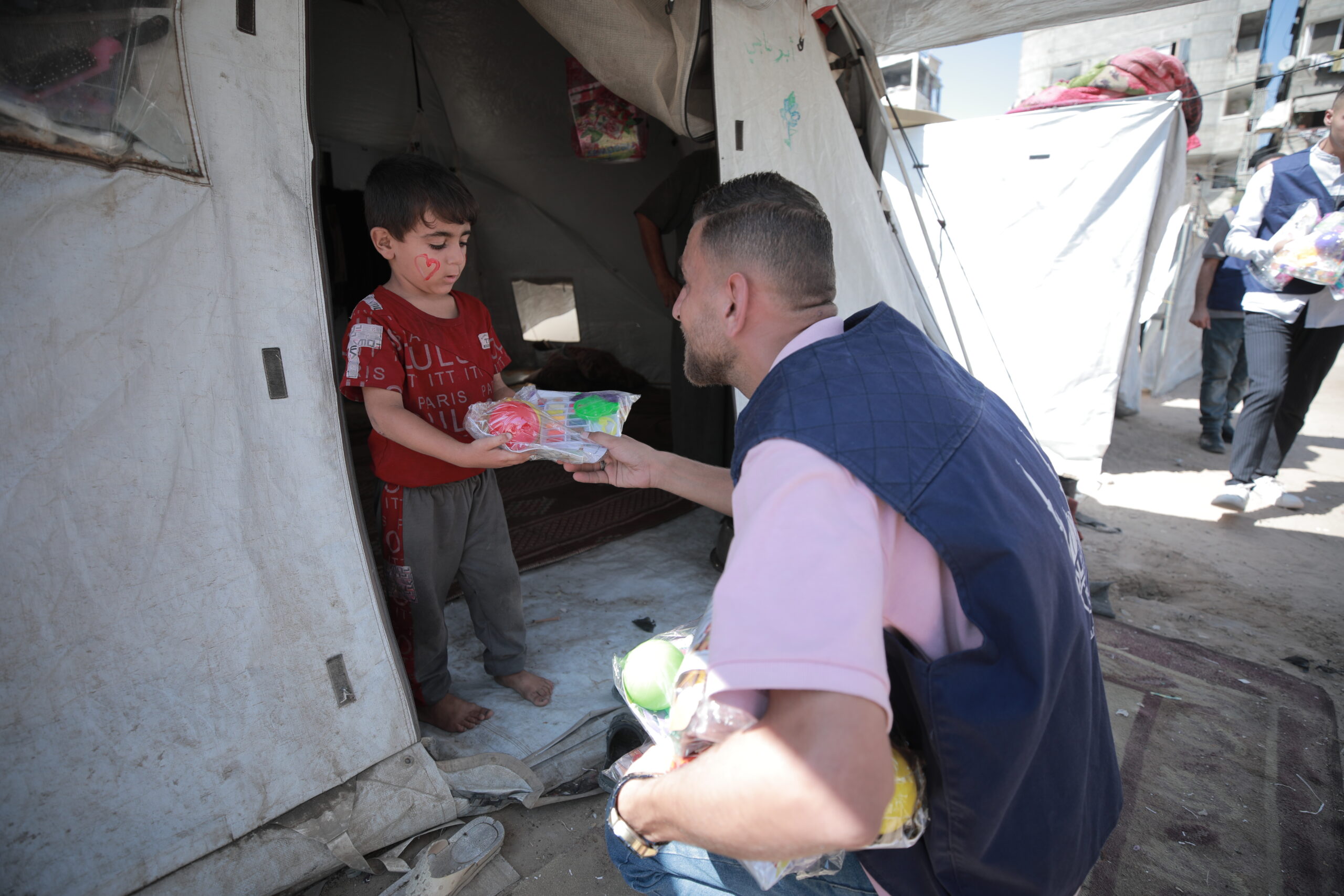
Yet, even with the dangers of delivering aid in Gaza, we, at Islamic Relief, remain committed to supporting the people and preventing further suffering. Currently, our team continues to deliver on the ground, distributing essential aid such as food, water, education, and other urgent support.

Islamic Relief’s Ongoing Presence in Gaza

Islamic Relief has been active in Palestine since 1997. We had a permanent office in Gaza, which was unfortunately destroyed late last year during one of the many airstrikes. However, our team is still active. We continue to operate in the Gaza Strip and deliver aid on a daily basis.  

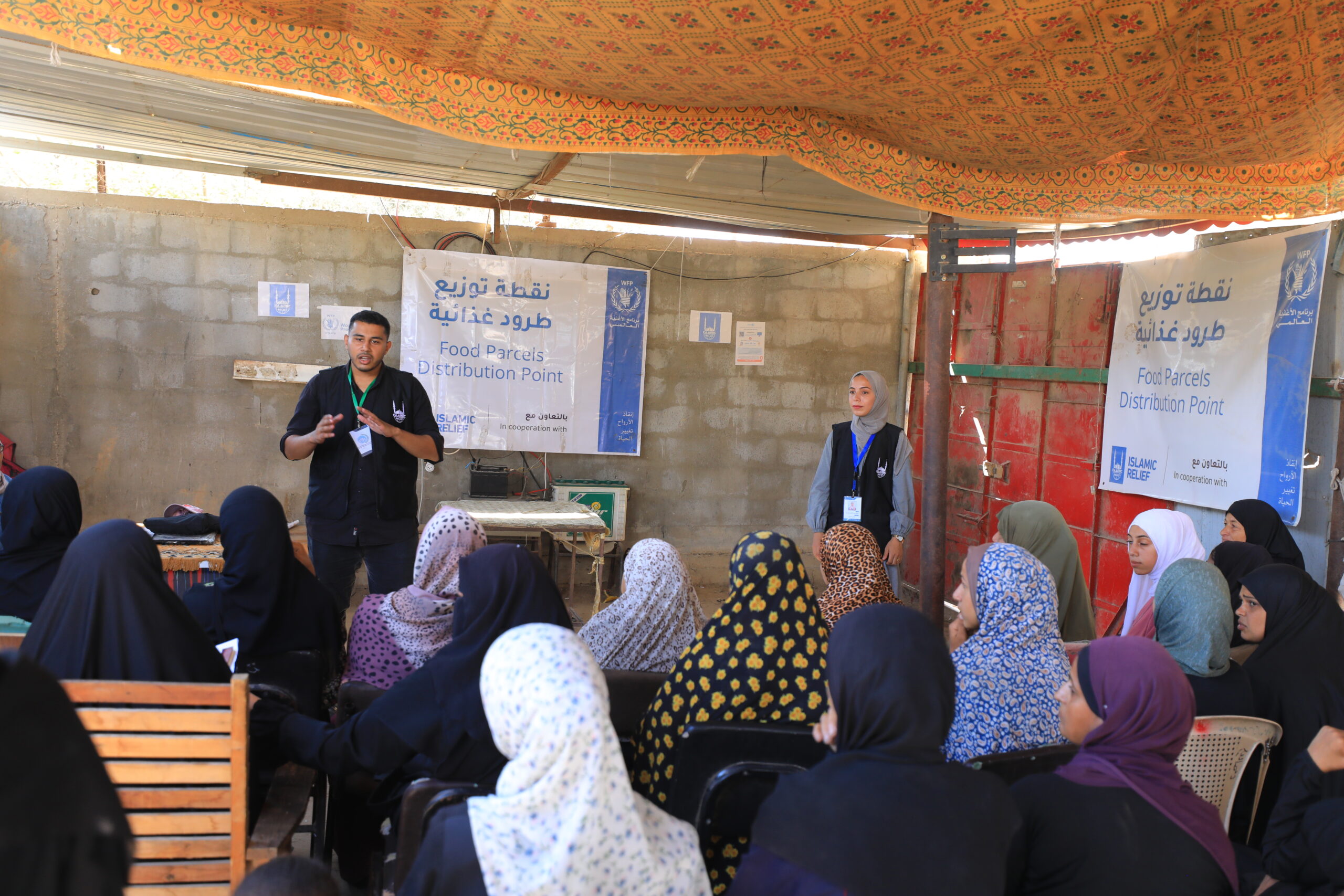
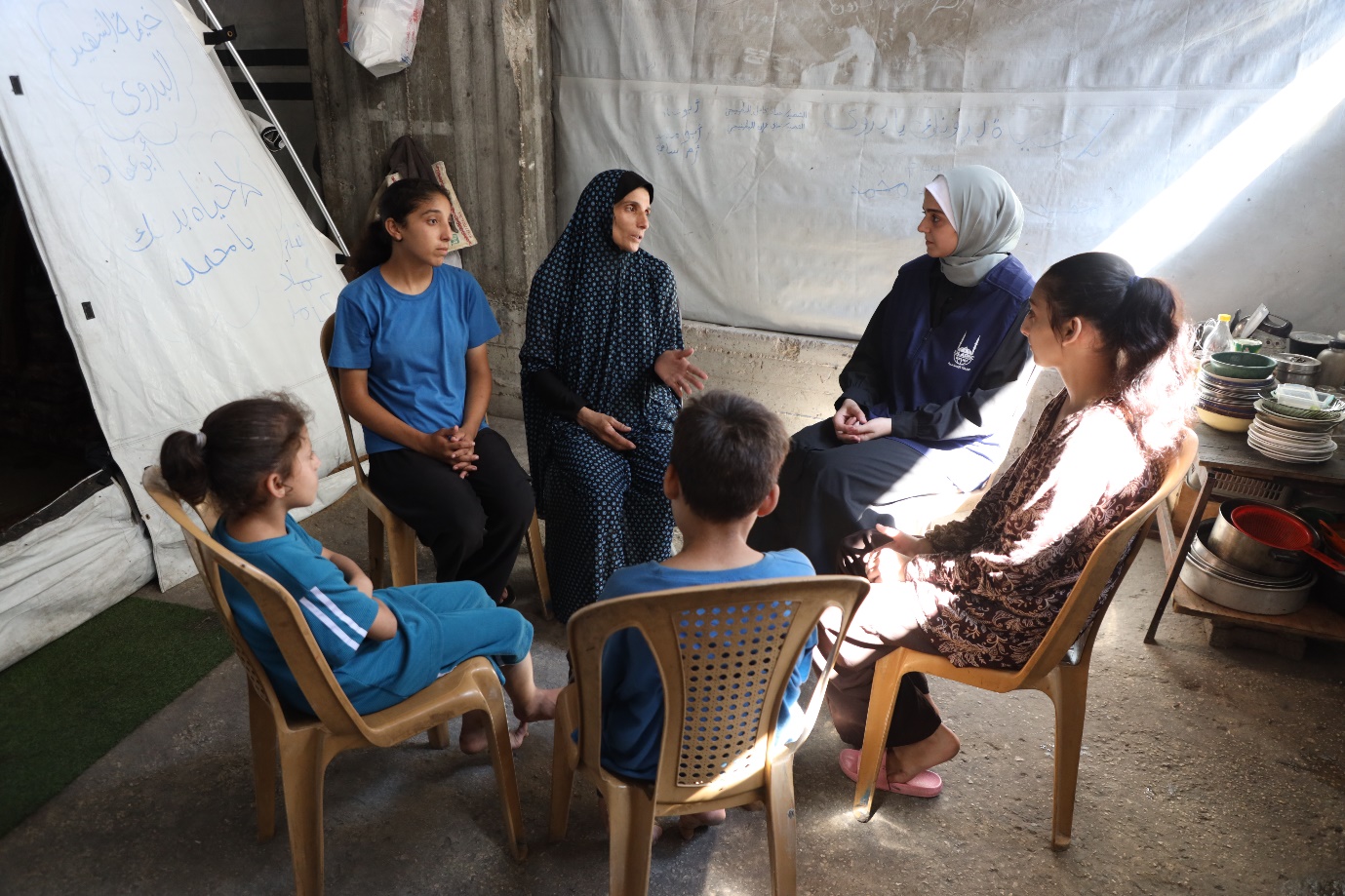
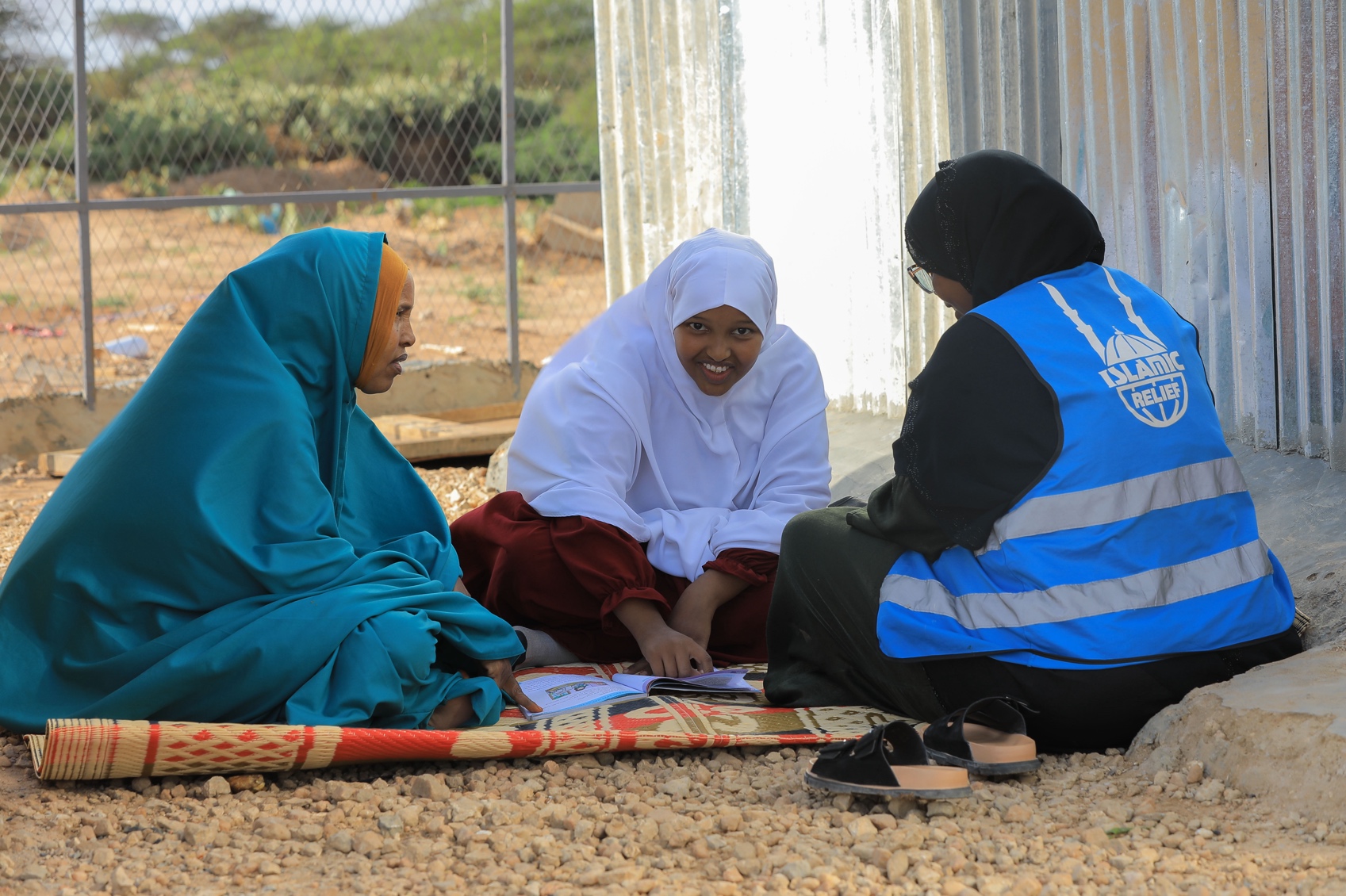
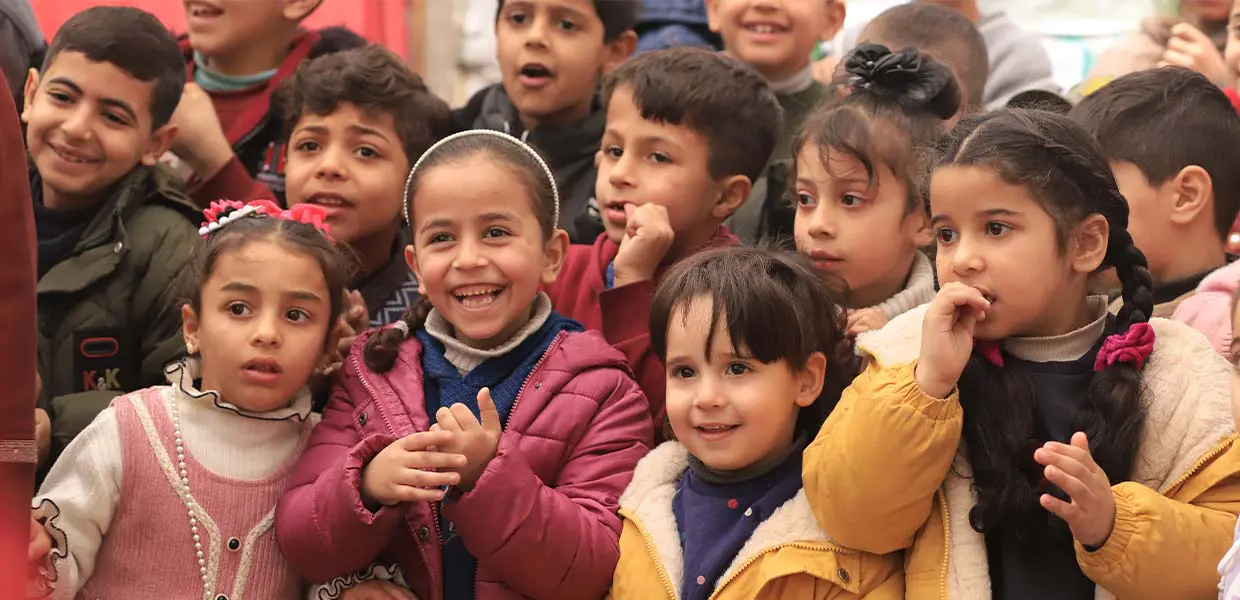
Islamic Relief providing awareness sessions for families in Gaza.
Photo: Islamic Relief providing awareness sessions for families in Gaza.

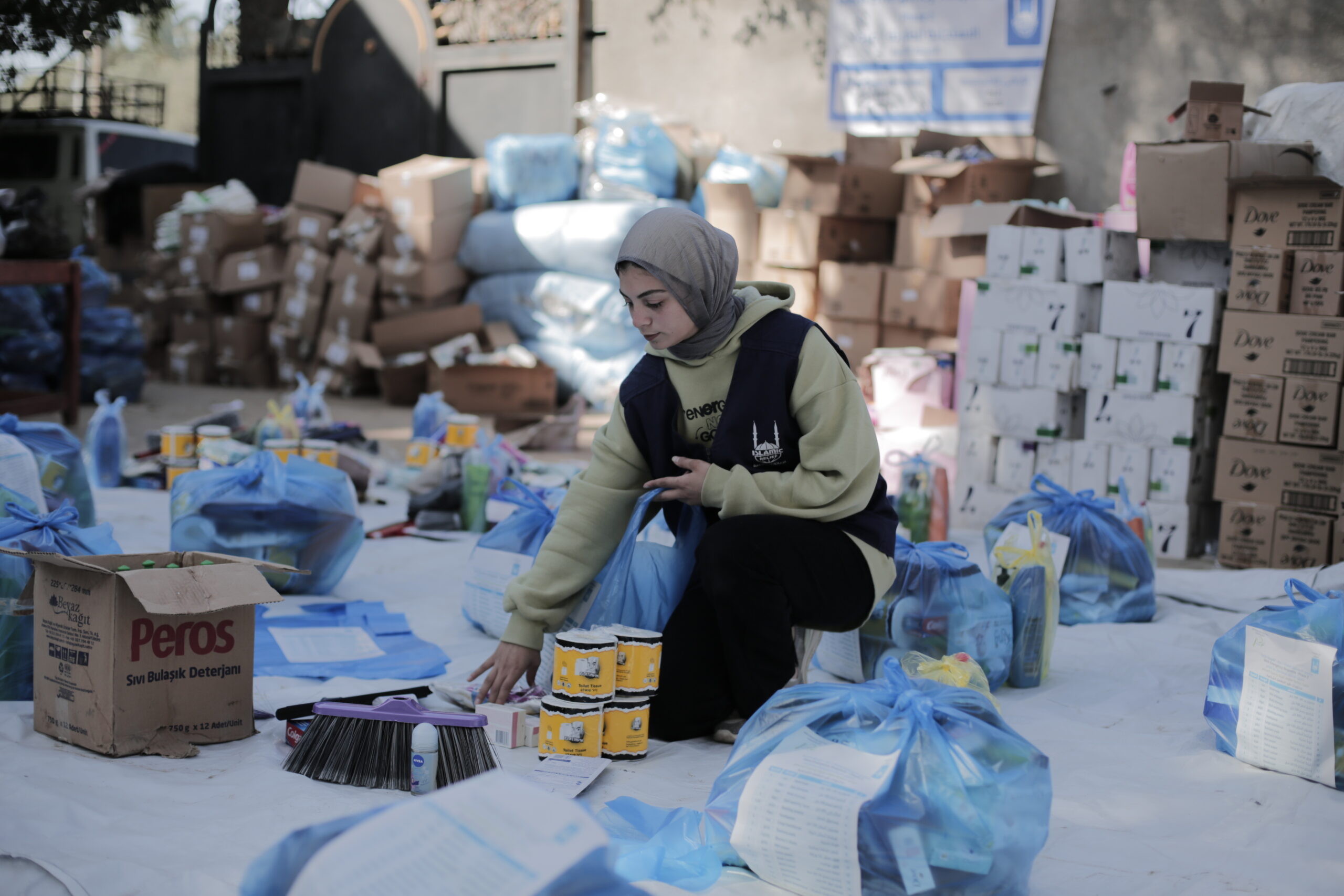
Our team is active throughout Gaza. Currently, Islamic Relief focuses on supporting orphan families, distributing food, wellbeing support, education, cleaning, and hygiene services and other essential aid. Since October 7, 2023, we have delivered water, medicine, medical items, hygiene/dignity kits, psychosocial support, and healthcare services. 

Addressing Current Concerns About Getting Aid in Gaza

There is a significant amount of confusion regarding the delivery and distribution of aid in Gaza. News agencies are not always providing accurate or up-to-date information. As a result, some of our donors are confused as to what is happening, and three current general concerns have emerged.  

How Does Anything Get into Gaza?

The first concern is that nothing is getting into Gaza due to the ongoing blockade. Yes, the truth is that major international NGOs face imminent deregistration by the Israeli authorities, and most have been unable to deliver any supplies to Gaza since 2 March, even with the new ceasefire. However, many aid organisations, like Islamic Relief and our partnering organisations, such as the World Food Programme (WFP) and UNICEF, still have operations on the ground. We are searching every avenue possible to obtain supplies to continue delivering aid. Furthermore, our partnerships that help deliver medical aid, such as with the Palestinian Australian and New Zealand Medical Association (PANZMA), remain our most consistent form of aid.

How Can There Be Supplies Available in Gaza?

The second concern is that nothing is available within Gaza – no shops or suppliers, and no cash economy. While it is true that food and goods are hard to find, there are suppliers. Recently, prices for almost all items have been significantly lower due to increased supply. However, they remain above pre-war levels, partially because of an added illegal cost referred to as “coordination fees.” 

Likewise, availability remains critically low for essential, nutritious items, such as meat, chicken, fish, eggs, and dairy. On the other hand, non-essential items, such as sweets, chocolate, and soft drinks, are becoming increasingly visible in markets. Limited quantities of fuel and cooking gas are also now entering Gaza.

There is also some cash available, though getting access to this money is difficult and expensive. This is where the multipurpose cash grants Islamic Relief provides can help. Through a specialised account system, it tries to help ease the process of attaining cash, allowing families to purchase the supplies they need, without leaving them with unnecessary items.

Where Does Islamic Relief Operate in Gaza?

The last concern relates to where within Gaza Islamic Relief is working. We are currently still working all throughout Gaza. If the bombing in the north and east escalates once again, we will continue to work in Middle Gaza and southern Gaza (where Rafah and Khan Younis are).

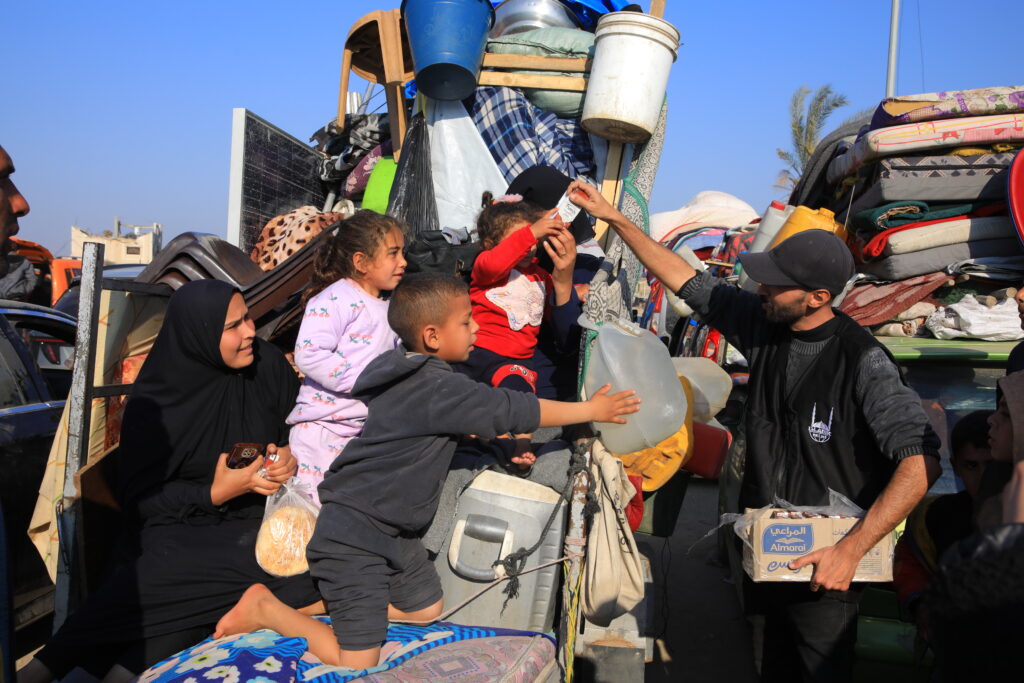
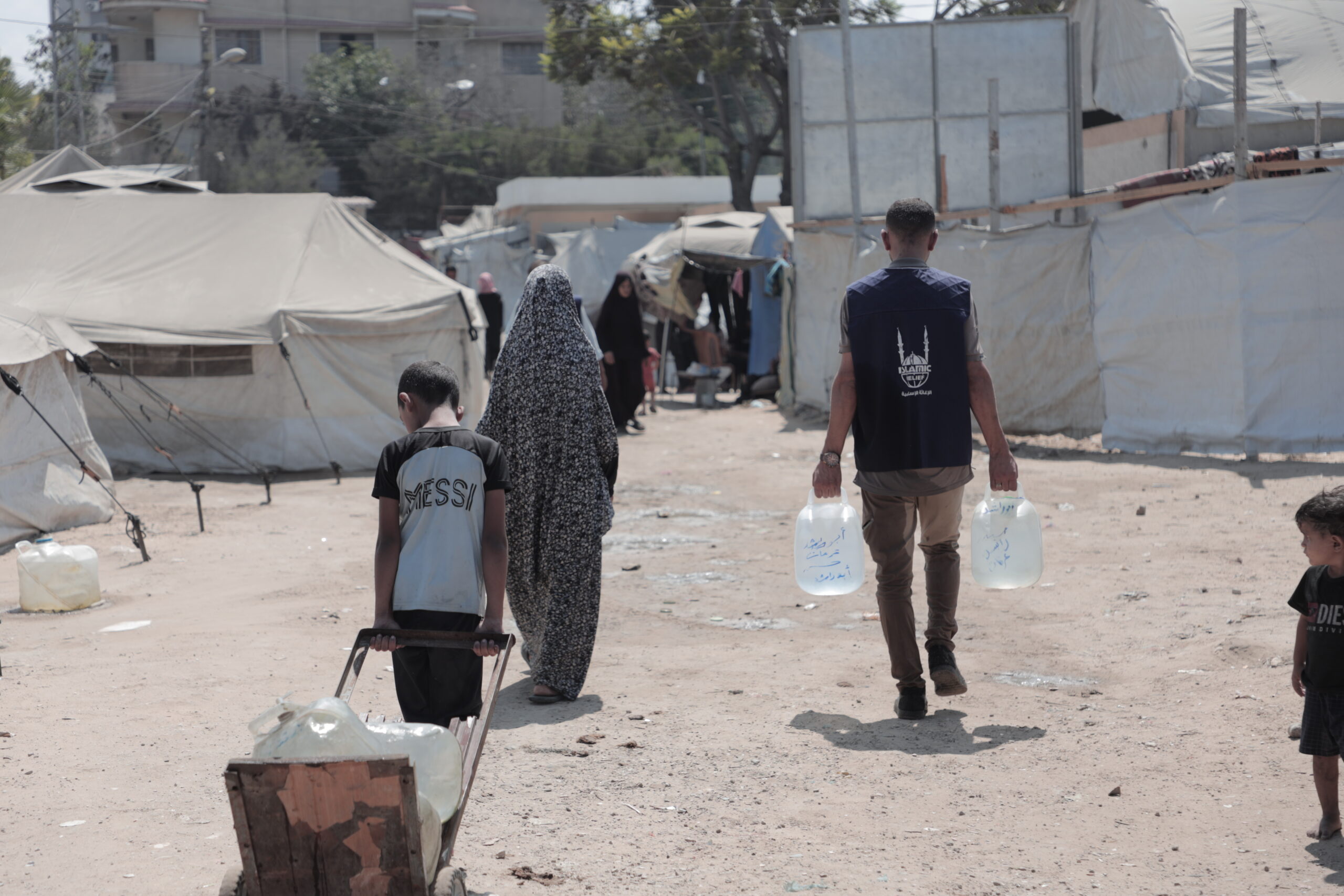
Islamic Relief providing clean water to needy families.
Photo: Islamic Relief providing clean water to needy families.

Overall, the situation is uncertain and subject to change. It is reasonable to consider the entire Gaza Strip to be a war zone, with the possibility that intense fighting will break out anywhere. 

Our Current Response

Islamic Relief teams in Palestine are active right now! Below is an update on the total activities implemented as of March 19, 2026. We are currently focusing on providing medical aid, delivering food where possible, and distributing multipurpose cash grants to orphans and their families.  

This week, we successfully provided educational programs to 110 displaced students through Al-Tawasol Educational Center and Marah Kindergarten.

IR Partners (Overall Emergency Responses)

  • Distributed food parcels to over 169,000 HH.
  • Delivered over 936,000 people clean water.
  • Distributed vegetable packs to 1.6 million HH.
  • Delivered cleaning services and hygiene supplies for 85 shelters.
 

Overall, we, in partnership with the IR family and the World Food Programme (WFP), have delivered over 75 million hot meals and food items since October 2023.

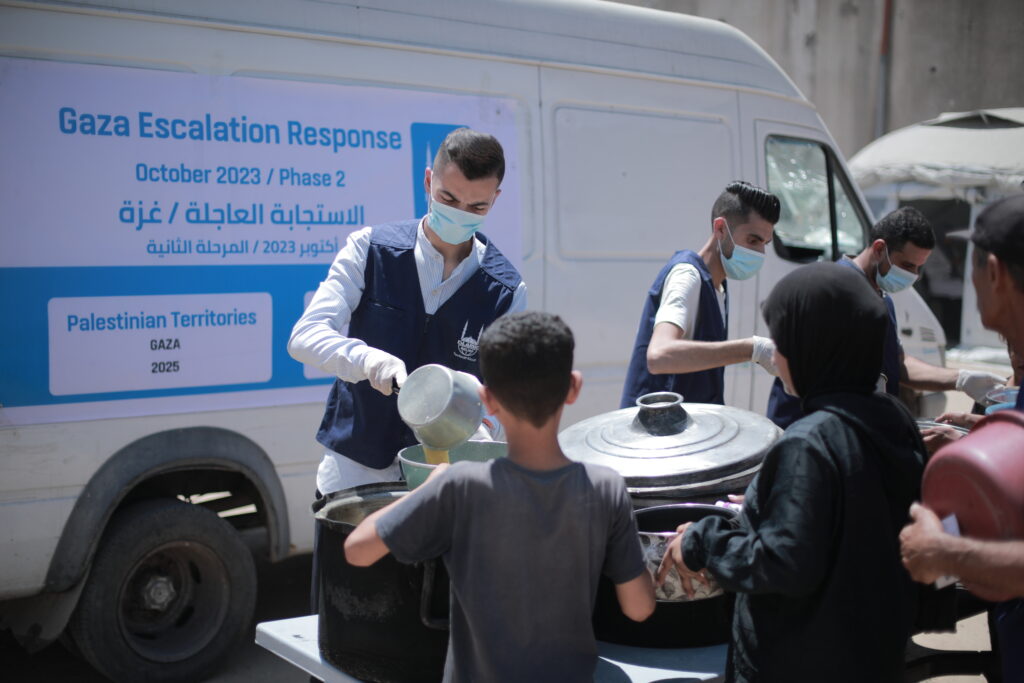
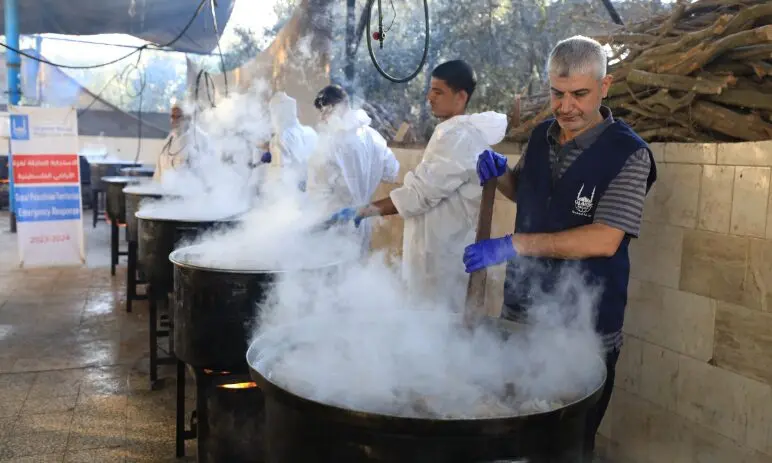
Islamic Relief, with World Food Program (WFP), delivering hot meals for cancer patients in Gaza.
Photo: Islamic Relief, with World Food Program (WFP), delivering hot meals for cancer patients in Gaza.

Making Food More Accessible in Gaza

At this stage, we are able to access a significant amount of food through our partnership with the World Food Program (WFP). WFP is a UN agency and supposedly has open access. Although this is not always the case, they do have the best chance of getting trucks in. We are therefore very fortunate to be partnering with them. We are also able to source some food within Gaza, although this is very limited and very expensive.  

What the Future Holds

As pointed out by the media and reports, the situation in Gaza is extremely volatile, dangerous, fluid, and unpredictable.

Our team is extremely courageous and committed and is doing everything in its power to continue delivering aid. It is hard to predict what will happen, so while we are very proud that we are delivering significant aid, particularly in distributing medical assistance and hot meals where possible, nobody can guarantee anything going forward.

We are committed to assisting and supporting our team by making sure they have the resources to carry on. Islamic Relief is committed to the rebuilding and reconstruction of Gaza in the long term.  

As everyone is probably aware, it is difficult to get aid into Gaza. However, our teams on the ground are working with various partners, international and local, which allows us to access aid for distribution. Together, with the World Food Programme (WFP), we have been able to deliver over 75 million hot meals since October 2023. Islamic Relief is also providing cleaning services and hygiene supplies for shelters, supplying clean water, hygiene, and sanitation amid the dire situation. 

We will continue doing everything in our power to alleviate the suffering of our brothers and sisters in Gaza. Islamic Relief is committed to the rebuilding and reconstruction of Gaza, currently and in the long term. We are committed to assisting and supporting our team by making sure they have the resources to carry on. And it is our donors who make it possible for us to continue our efforts in Gaza, as their support helps us reach even more people in need, as swiftly as possible.
Asif Sana, Director of Programs and Institutional Relations

In the ongoing crisis, Gaza needs your help

Help us provide urgent medical supplies, food and other crucial, life-saving aid now to families in need by giving with Islamic Relief.
11.13.25

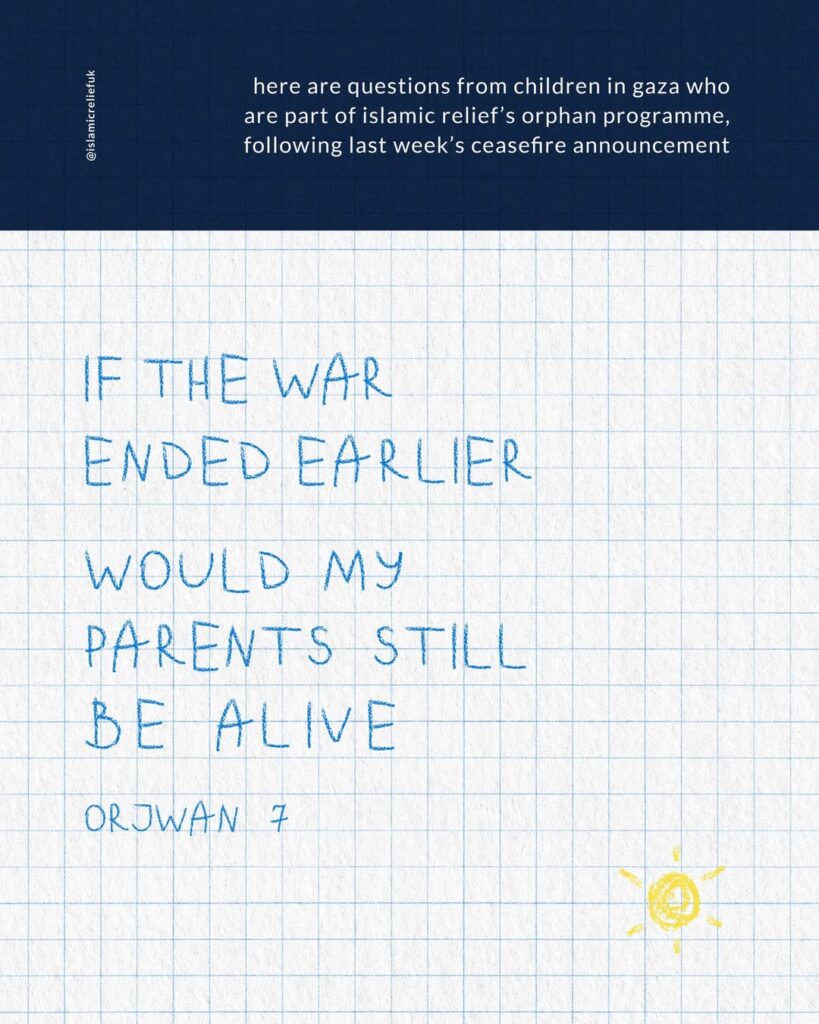
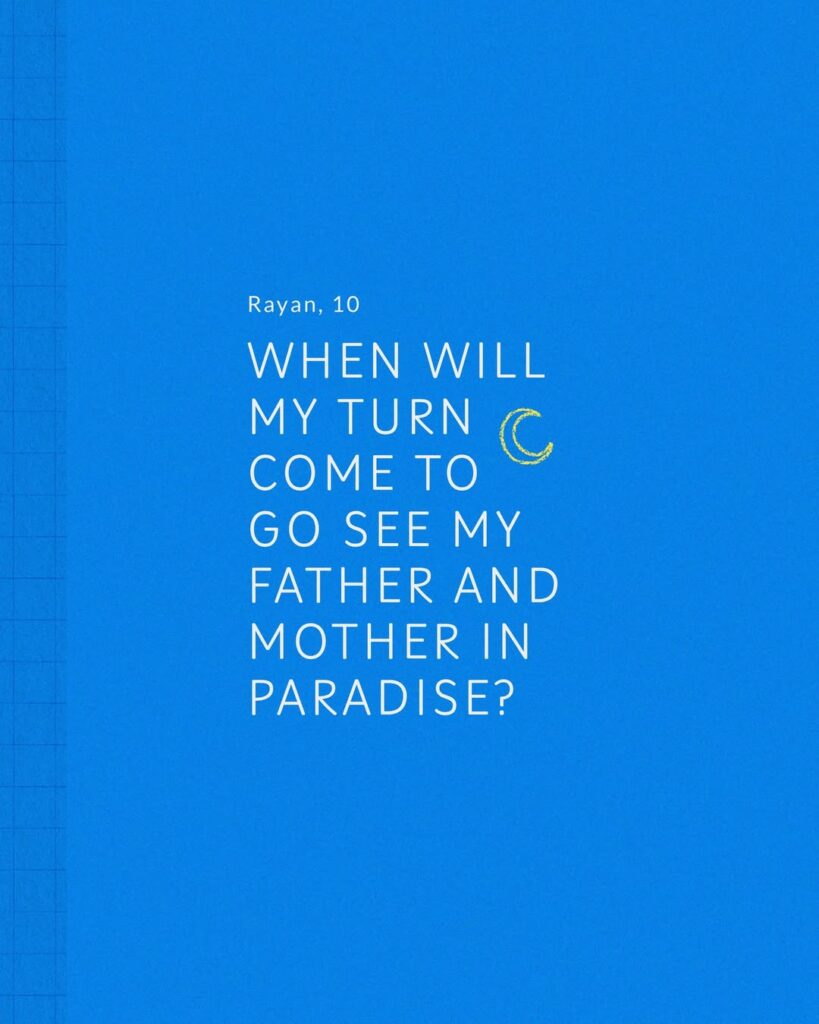
“If the war ended earlier, would my parents still be alive?”: Voices from Gaza’s orphan children

  News     Publications

After more than two years of relentless atrocities, a ceasefire deal has been agreed. But for Palestinians in Gaza this is not an end to the nightmare. The toll on children has been devastating.

Homes, hospitals, and schools lie in ruins, and countless families remain displaced. More than 65,000 people have been killed. Furthermore, 39,000 children have been left without parents or guardians to care for them.

Grieving, exhausted, and hungry, they have been shattered and are facing a man-made famine.

Among them are children supported through Islamic Relief’s Orphan Sponsorship Program – young lives marked by unimaginable loss and pain.

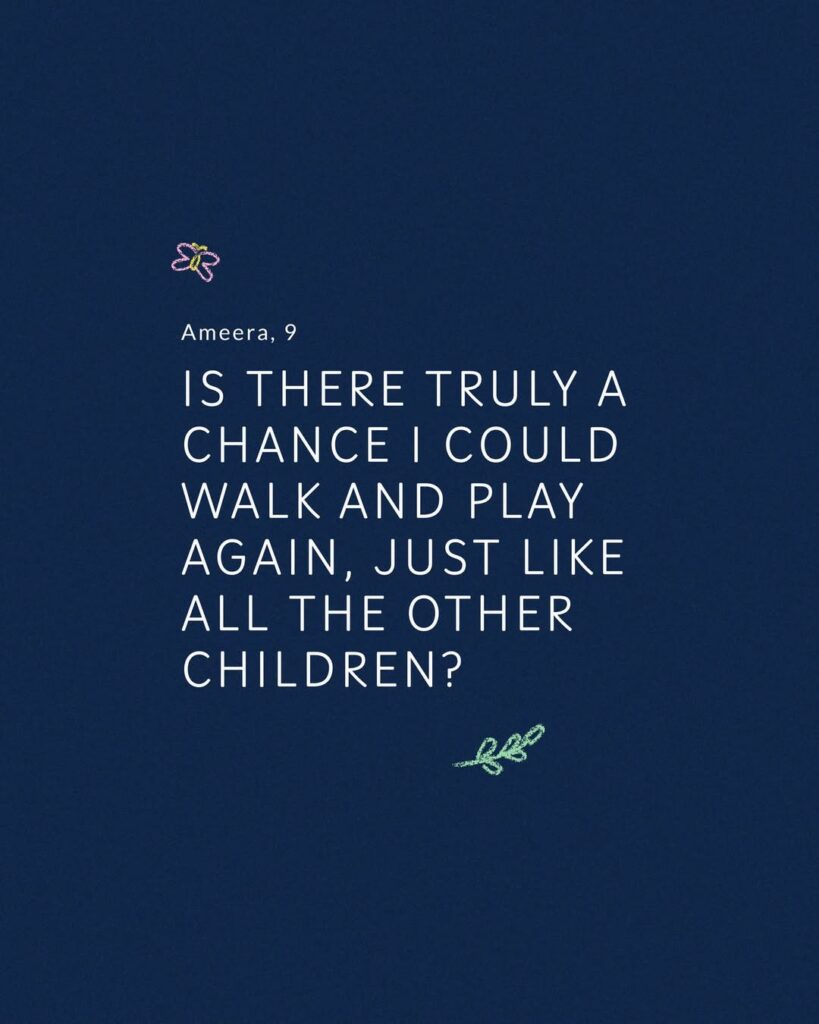
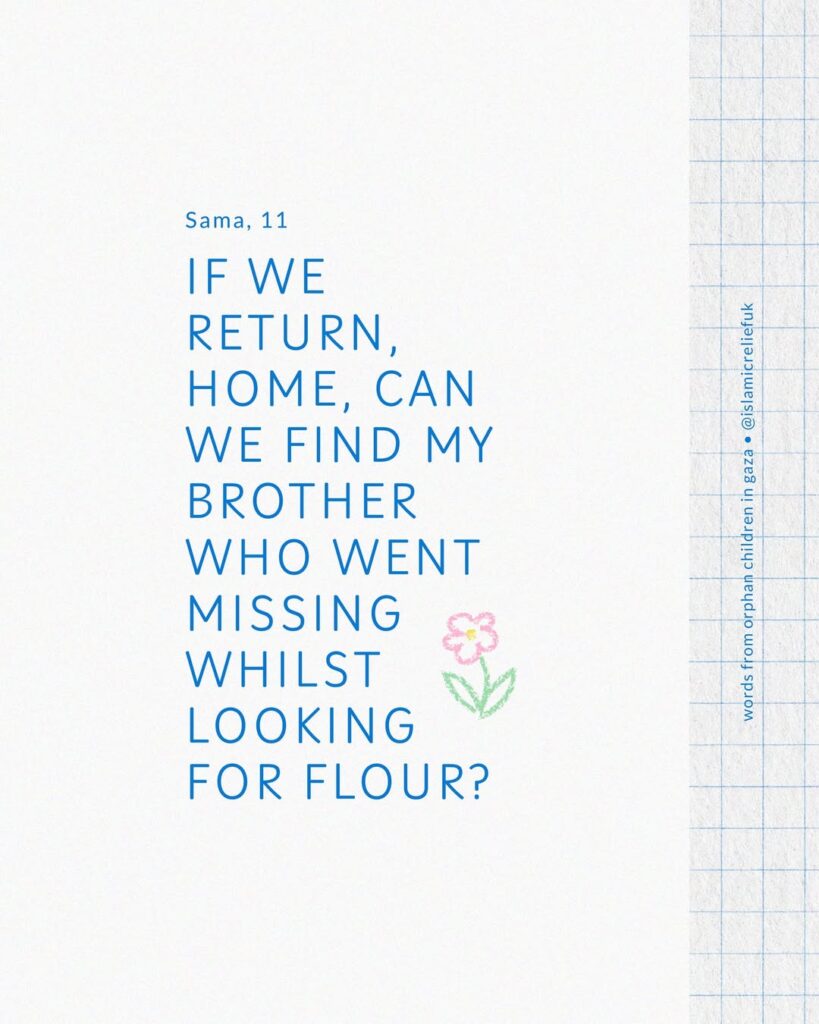
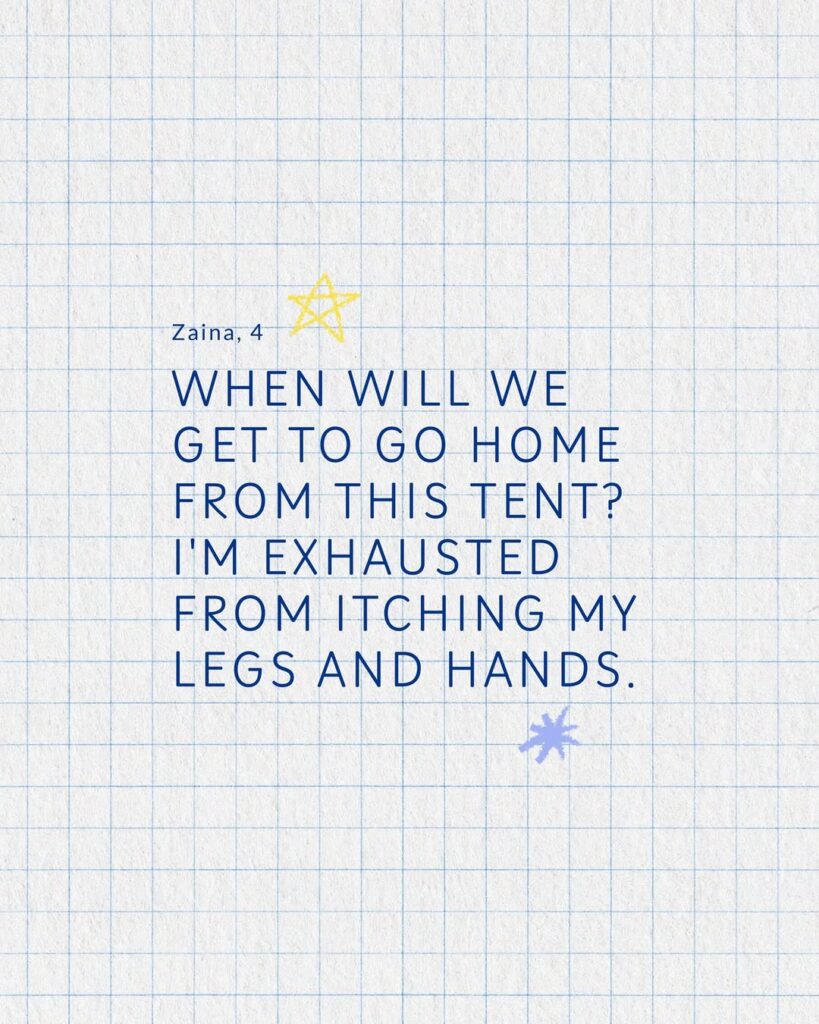
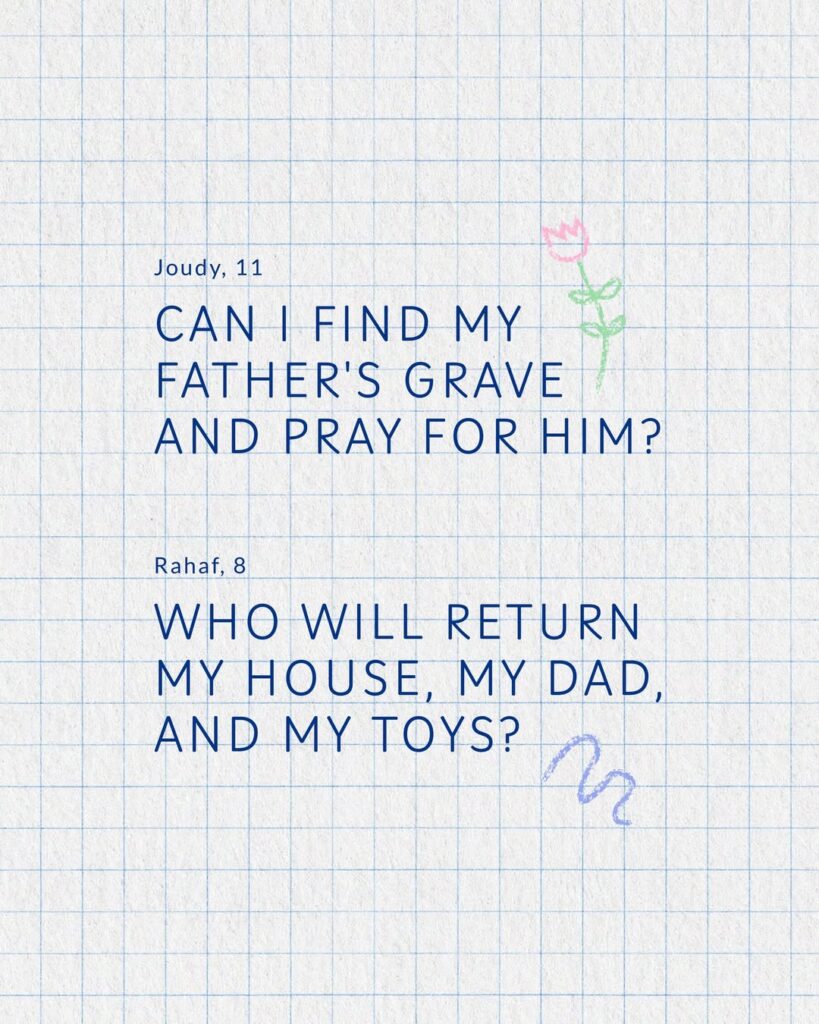
Recently, our teams received questions from some of these children following the ceasefire announcement last month. Their words lay bare the trauma of the bombardment, and the longing for safety, home, and family.

Here, we hear from some of Gaza’s most vulnerable.

The questions no child should have to ask

Each question reflects a child’s attempt to understand what has been taken from them. Despite their pain, they hold onto the possibility of a future beyond loss, and here at Islamic Relief, we’re here to support them through some of their hardest moments.

A lifeline of hope

For over 22 years, Islamic Relief has been supporting orphans in Gaza. Since October 2023, the scale of need has grown unimaginably. But thanks to your support and generosity, our Orphan Sponsorship Program has been a lifeline for thousands of children – giving them hope when everything else has been taken away from them.

Islamic Relief has been able to expand our Orphan Sponsorship Program to reach over 21,000 children in Gaza – including 13,500 who have been newly sponsored since the escalation began.

However, we are devastated to report that since October 2023, 175 of our sponsored orphans and 72 guardians have been killed.

Your orphan sponsorship has continued to be a lifeline for the children of Gaza, in the midst of blockade and bombardment.

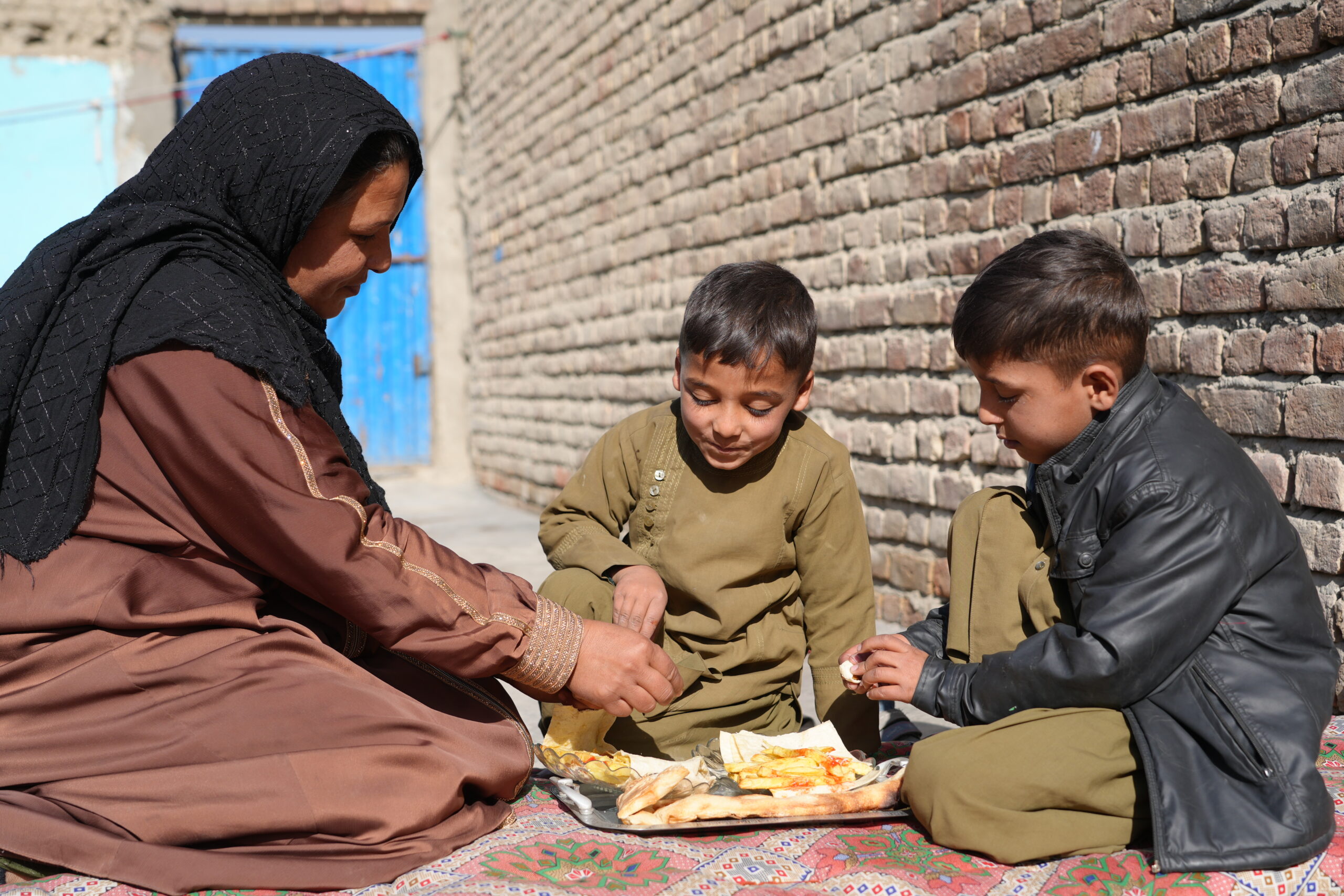
These vital cash grants help families with access to urgent funds, providing orphan families with access to food , and more importantly, hope.

Supporting Gaza’s orphan children

Now, Gaza’s children continue to face extraordinary hardship. Yet, through your generosity, they are finding strength and hope.

Together, we can ensure that orphans in Gaza are cared for, protected, and given the chance to rebuild their lives.

Help support an orphan and change their lives

For just $100 a month, you can give the children of Gaza a chance to rebuild and see a brighter tomorrow.

10.29.25

Gaza Ceasefire Must be Upheld as Civilians Suffer a Night of Terror

  Press Releases

Islamic Relief is appalled at the death and destruction in Gaza overnight – the deadliest period since the ceasefire was announced, as Israeli bombs tore through tents and shelters of displaced families and killed dozens of Palestinians, including more than 20 children.

The ceasefire announcement brought hope, but last night brought pure terror – families who were celebrating with relief just days ago are now buried under rubble. The initial hope is rapidly fading as commitments are broken on a daily basis and Israel continues to kill Palestinians and block humanitarian aid.

Despite promises to allow a surge of aid into Gaza to stop the famine, nowhere near enough is being allowed in. Lifesaving food, medicine, and shelter continue to be blocked, and many NGOs are prevented from bringing aid in.

World leaders must act urgently to ensure the ceasefire is upheld, and pressure Israel to stop killing civilians, end its illegal blockade and allow full, unimpeded humanitarian access.

In the endless terror, Gaza needs your help

Help us provide urgent medical aid and other crucial, life-saving support now to families in need by giving with Islamic Relief.
10.15.25

Gaza Ceasefire Explained

  News     Press Releases

On 10 October, the first phase of a ceasefire between Israel and Hamas came into effect. While aid organisations, including Islamic Relief, welcomed the news, much uncertainty remains, and the humanitarian situation is still catastrophic.

Here, we explain what the ceasefire involves and what it could mean for the humanitarian crisis in Gaza.

What is a ceasefire?

A ceasefire is an agreement to pause acts of violence by military and/or other armed forces and groups in a conflict. Ceasefires usually have a series of conditions attached and last for a sustained period of time.

Ceasefires can be a first step in de-escalating a conflict. They can be employed for humanitarian purposes, such as bringing more aid into a conflict zone or allowing civilians to escape to safety.

A ceasefire is not the same as an armistice, which is a formal agreement to permanently end all military operations in a conflict. Armistices do not establish peace, but rather end fighting so involved parties can commit to resolving their differences through negotiations.

How did the Gaza ceasefire happen?

The first phase of the ceasefire came into effect on 10 October at 12:00 local time (09:00 GMT), after Hamas agreed and the Israeli government voted to approve the US-brokered agreement.

The announcement is a significant step. But long overdue after around 68,000 people have been killed, Gaza has been bombed into rubble, and a man-made famine.

Islamic Relief and many other organisations have repeatedly called on the international community to demand a ceasefire. There has been huge and sustained public pressure, but little apparent progress. However, in recent weeks, mediators including the US, Qatar, and Türkiye had increased pressure on both sides.

What are the terms of the Gaza ceasefire?

The ceasefire is expected to follow several stages, with negotiations continuing throughout the first stage to agree key unresolved issues such as disarmament and who will govern Gaza after the ceasefire.  

The first stage is now underway, with Hamas releasing the 20 still-living hostages captured on 7 October and the bodies of other hostages, and Israel releasing almost 2,000 Palestinians from Israeli jails and also beginning to return the bodies of hundreds of Palestinians.

Israeli forces have also partially withdrawn from parts of Gaza. But they retain full control of more than half of the enclaveIsrael has also said it will allow 600 trucks carrying aid and essential items to enter Gaza each day, and will allow displaced Palestinians to return through the Rafah crossing under EU-supervised coordination with Egypt.

The US has deployed 200 troops to Israel, which it says will oversee the ceasefire’s implementation. These troops will not enter Gaza itself.

Are there any barriers to the ceasefire’s success?

Yes. Relations between the two sides are incredibly strained, and any violations from either side risk completely derailing negotiations.

Israel’s blockade remains in place, which means it retains full control over what comes in and out of Gaza. On 14 October, Israel announced it would cut the number of aid trucks allowed in to just 300 per day and shut the Rafah crossing once more. It reportedly reversed this decision the following day, but this illustrates the fragility of the agreement and the level of control that Israel continues to have over humanitarian access.

The humanitarian crisis in Gaza is catastrophic, and aid delivery to starving people must not be a bargaining chip for negotiations that can be withdrawn at any moment.

Over the past 24 hours, there have also been reports of several Palestinians shot dead by Israeli forces. While many other sticking points will need to be ironed out to see future stages of the ceasefire implemented successfully. For example, questions remain over whether Hamas will disarm and who should govern Gaza after the ceasefire.

The ceasefire agreement does not apply to the West Bank, including East Jerusalem, where we have seen an increase in Israeli attacks and human rights violations over the past two years. A further escalation there could also jeopardise the deal.

Despite the challenges, both sides have already made compromises to agree to the current ceasefire, and international pressure for an end to the conflict is likely to remain intense during this first stage.

What happened to the last ceasefire in early 2025?

The previous ceasefire agreement, announced in January 2025, initially brought some respite for people and allowed aid agencies, including Islamic Relief, to scale up our work. However, it quickly broke down. Within weeks, Israel resumed and intensified its bombing and enforced a total siege of Gaza, shutting off all aid and commercial supplies. Israel also escalated its attacks on Palestinians in the West Bank, including East Jerusalem, during the ceasefire period. This must not be allowed to happen again this time.

What’s happening in Gaza right now?

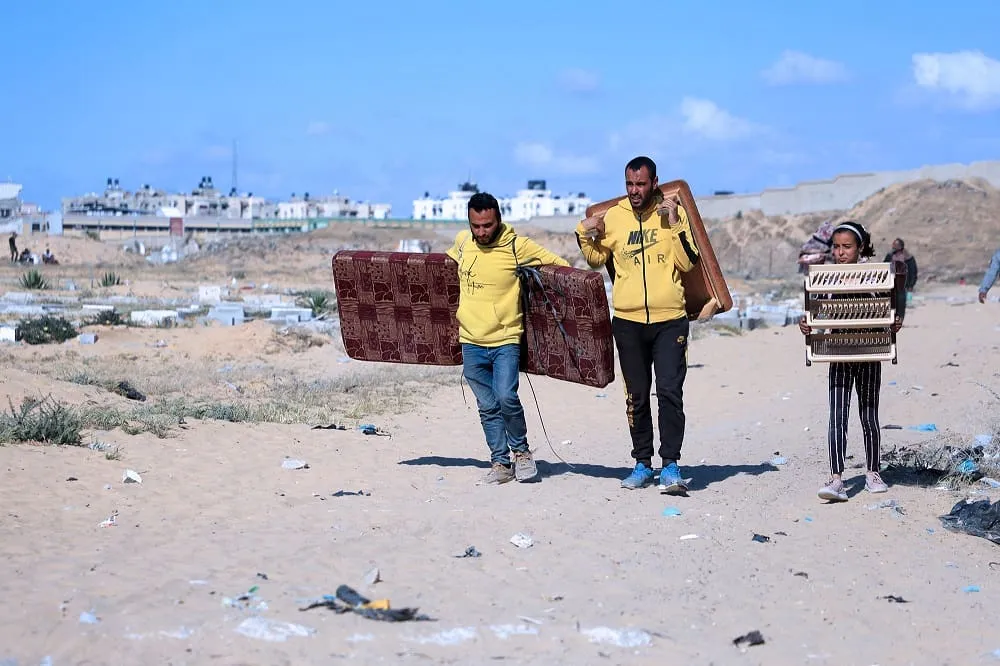
Since the ceasefire was announced, over 332,000 people are thought to have moved to other parts of the Gaza Strip. Many return to find their homes reduced to rubble. While some are recovering what belongings they can and returning to shelters, others are setting up tents on the sites of their former homes. Some family members have been able to reunite after months of sheltering separately.

Is more humanitarian aid entering Gaza?

The ceasefire commits to a target of 600 trucks a day. This is similar to the number reaching Gaza before the current crisis. However, in recent months, the influx of aid has been practically non-existent, meaning 600 trucks a day will be a small drop in an ocean of need.

So far, we are seeing a small but significant increase in the amount of aid getting in. But it is still just a fraction of what has been agreed.

Restrictions on the types of goods that can enter Gaza remain in place and are likely to impact the delivery of some desperately needed items. Gaza has been under Israeli blockade since 2007, which restricts the movement of goods and people in and out of the Strip.

This has huge implications for humanitarian efforts. For example, thousands of essential items are restricted from entering Gaza because Israel considers them to have a ‘dual use’. This means it can be used for both civilian and military purposes. Things like fuel, water filters, solar pumps and surgical scissors have been refused entry on these grounds.

The United Nations Secretary-General has committed to scaling up humanitarian relief in Gaza. They urge the unimpeded entry of aid and essential commercial materials.

Will Islamic Relief deliver more aid to Gaza?

Islamic Relief is ready to massively scale up our current lifesaving aid and help reconstruction efforts as soon as restrictions on humanitarian access are lifted. We hope the ceasefire agreement will enable us and other aid agencies to get aid to Palestinian families in dire need.

We note that previous promises to allow more aid into Gaza have been immediately broken and urge that all restrictions on humanitarian access be lifted. The international community must hold Israel to account if aid continues to be blocked.

As of October 2025, all of Islamic Relief’s programming in Gaza has been made up of emergency projects.

Throughout the crisis, we have supported Palestinians in Gaza by delivering hot meals, food parcels, water, and hygiene kits. We also expanded our Orphan Sponsorship Program, and are addressing mental and physical healthcare needs wherever possible. This work will expand in the coming days and weeks.

What was the situation like before the ceasefire?

Prior to the ceasefire, Palestinian families trapped in Gaza suffered over 2 years of relentless bombardment. Pleas for a ceasefire went largely ignored. The Gaza Strip has been left in ruins. Around 68,000 people in Gaza have been killed, including around 20,000 children, and many more left with life-changing injuries.

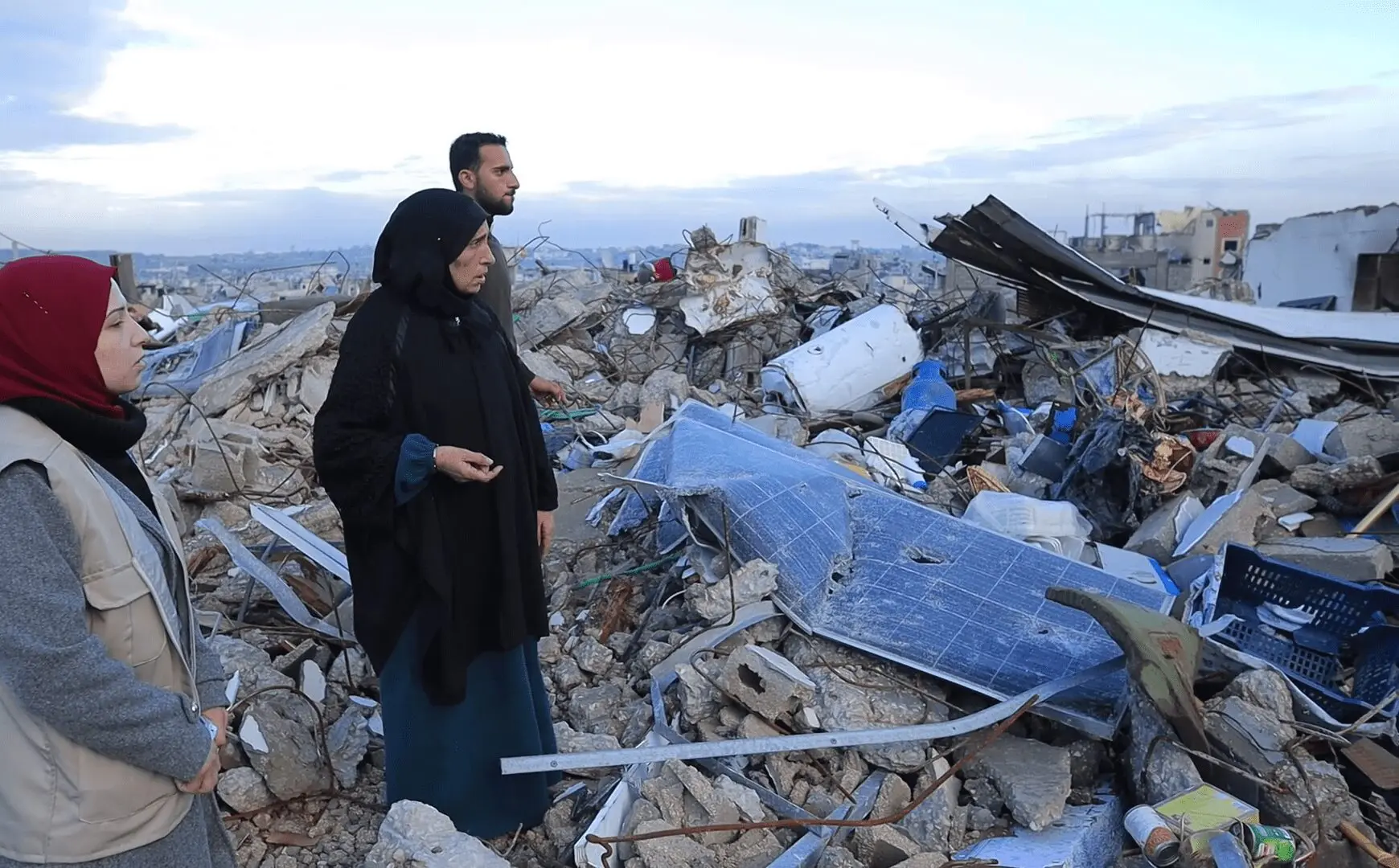
Israeli bombs destroyed hospitals, schools and shelters, while families were forced to flee their homes time and time again. Famine has been declared in Gaza City, while starvation and malnutrition are rife throughout the Strip.

Amid so much suffering, the entry of aid and other essential items was severely restricted, hampering efforts to preserve life.

The ceasefire is not an immediate resolution to the humanitarian crisis in Gaza. Rather, it is the first step towards enabling Palestinians to recover and, eventually, rebuild.

What else is needed to support vulnerable people in Gaza?

It is vital that this ceasefire agreement is fully and immediately implemented. 

This agreement must lead to a lasting peace, with justice and accountability for the horrors perpetrated against civilians. All people must be able to live in safety and dignity, and have their fundamental human rights upheld.

Islamic Relief believes this will not be possible until the root causes of the crisis are addressed. Not until there is an end to the illegal Israeli occupation of Palestine.

In the endless terror, Gaza needs your help

Help us provide urgent medical aid and other crucial, life-saving support now to families in need by giving with Islamic Relief.
10.09.25

Gaza Ceasefire Announcement Must Not Be Another False Dawn

  Press Releases

Today’s news that Israel and Hamas have agreed to the first phase of a ceasefire deal is a significant but long-overdue step, after two years of relentless atrocities. In what a UN expert panel determined amounts to genocide against Palestinians in Gaza.  

But the big test will be what happens next.

There must be no more false dawns and broken promises. World leaders must now ensure there is a permanent end to Israel’s systematic attacks, displacement, and starvation of civilians. All restrictions on humanitarian access must be immediately lifted so that desperately needed aid can reach people in Gaza. Any agreement must not further entrench Israeli control over Gaza.  

There can be no sustainable peace without justice and accountability, an end to impunity, and respect for international law. We need security, rights, and dignity for all people, and this will only be possible when there is an end to Israel’s illegal occupation of Palestine.  

The most urgent need right now is to get aid into Gaza. There is no time to waste, as children are starving to death every day in a man-made famine and homes, hospitals, schools, and other essential services are now rubble. Today’s announcement alone does not stop the famine. Islamic Relief is ready to massively scale up our current lifesaving aid and help reconstruction efforts as soon as restrictions on humanitarian access are lifted. 

The international community must ensure that new commitments are adhered to and hold parties accountable for any violations. A repeat of the last ceasefire – when Israel resumed its bombing and cut off all humanitarian aid after only a few weeks of respite – must not be tolerated. Israel must also not be allowed to use this opportunity to escalate its attacks and violations of the rights of Palestinians in the West Bank. The world must act now to safeguard this moment and pursue a credible pathway to lasting peace.

10.07.25

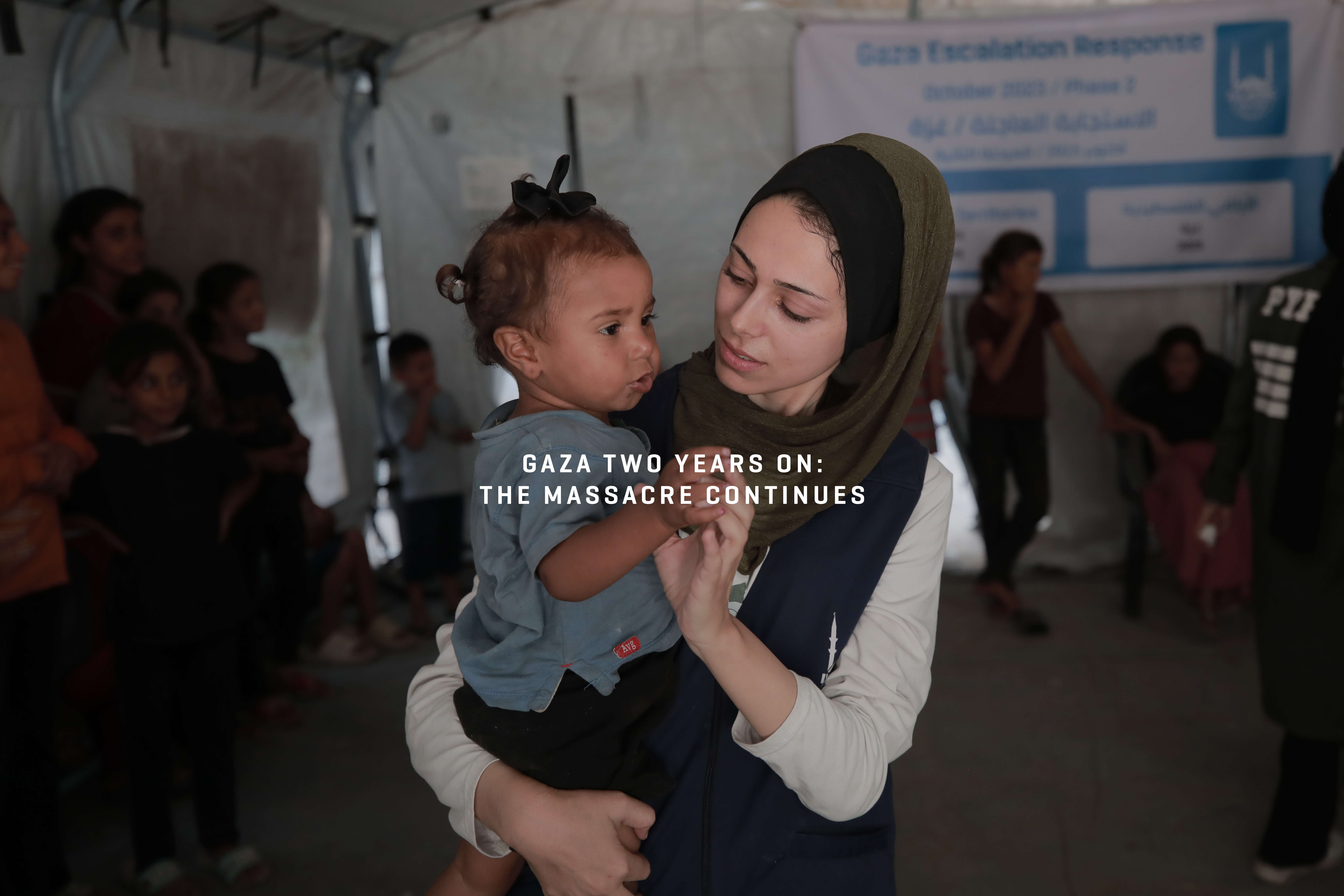
Gaza 2 Years On: The Massacre Continues

  Publications

October marks 2 years of Israel’s relentless assault on Gaza. That we’ve reached this grim milestone is testimony to the complicity of world leaders who have failed to stop the daily war crimes being carried out on Gaza.

More than 66,200 people have been killed – including some 20,000 children – and over 168,900 injured since the onslaught began.

Life in Gaza today is clouded by danger and uncertainty. Children are starving to death in a man-made famine and, each day, more civilians are massacred. The Israeli blockade traps families in a daily struggle to get food, medicine, shelter, water – everything they need to survive.

Uprooted repeatedly

Almost everyone in Gaza has been forced from their homes, often multiple times. 90% of families have been displaced an average of 6 times, while others have been forced to flee many more times – including Islamic Relief’s own staff.

The situation is getting even worse, with Israel intensifying its attack on Gaza City and ordering people to leave.

For some, leaving Gaza City is just not an option. Relocating is extremely expensive, and many say they have nowhere else to go. Others fear that if they leave, they’ll never be able to return. With famine declared in Gaza City and the surrounding areas, others are too sick or weak to survive another journey. Those who have left are being forced into increasingly overcrowded camps, where diseases and starvation are rife.

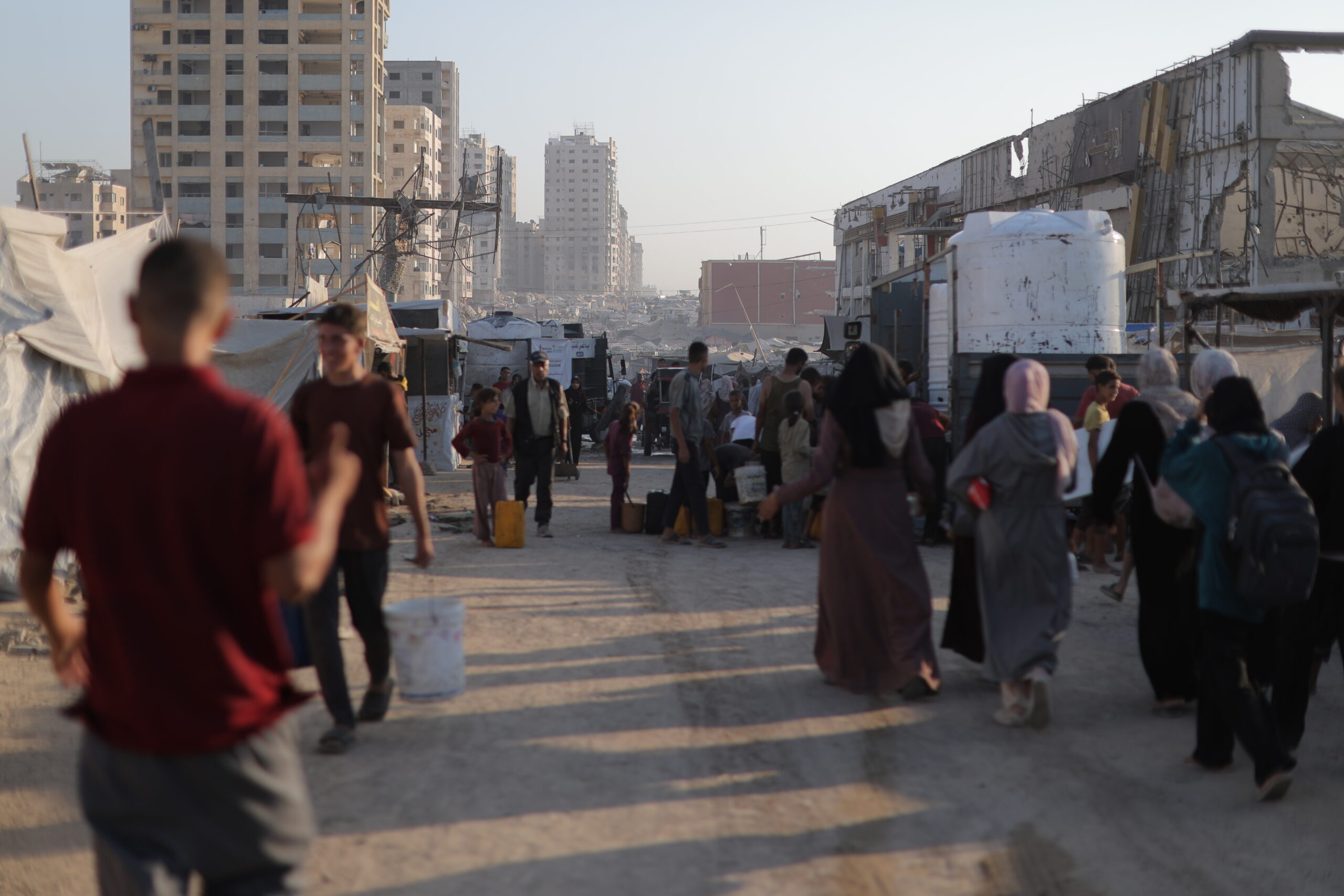
Hundreds of thousands of people are squeezed into tents along the beach, in the wreckage of bombed buildings and along the streets.

Perhaps no one is suffering more than Gaza’s children. Struggling to survive, they are also seeing their hopes for the future being snuffed out. Famine threatens the lives of over 132,000 children, and all children under 5 are at risk of severe malnourishment, which can lead to long-term health issues, even for those who manage to get treatment. An entire generation of children is now in their third year out of school, and we are seeing rising mental health issues due to the extreme suffering and grief.

Your impact, their resilience 

Israel’s illegal blockade continues to restrict humanitarian aid, but amid so much hardship, Islamic Relief continues to be a lifeline to people in desperate need in Gaza.

Thanks to your support, our staff and partners have been delivering life-saving aid. Most recently, we have delivered clean drinking water to more than 37,500 displaced people in shelters.

In addition, we have expanded our programs supporting new and expectant mothers and babies. We have carried out almost 400 medical check-ups for pregnant women and supported deliveries, including C-sections.

Over the last 2 years, we have constantly adapted our response in light of the highly fluid situation on the ground, striving to ensure that our staff, partners, and the communities we serve are not endangered. Our response has included:

  • Distributing fresh fruit and vegetables to families living in temporary shelters
  • Providing hot meals and hygiene kits to displaced people
  • Distributing ready-to-eat meals, food packs and qurbani meat
  • Providing psychosocial care to children experiencing trauma
  • Trucking in clean drinking water
  • Delivering medical supplies to hospitals and healthcare centres
  • Setting up medical points and supporting these with medications and supplies
  • Providing lipid-based nutritional supplements in partnership with the World Food Programme
  • Cleaning shelters
  • Providing multi-purpose cash assistance so families can buy what they need most
  • Expanding our Orphan Sponsorship Programme to reach more than 21,000 children

Speaking up for Gaza

These efforts are helping to ease suffering, but the people of Gaza need more than aid.

Palestinians have shown incredible resilience, but there is a limit to what humans can endure. World leaders must finally act to demand a ceasefire and pressure Israel to fully reopen all land crossings so that sufficient supplies can arrive before it’s too late for those struggling for survival.

More paltry words of condemnation will not make any difference now. To save lives, governments must apply meaningful economic and diplomatic pressure, such as ending all arms sales, suspending trade agreements, and banning trade and investment with illegal Israeli settlements.

We continue to call for action. Help Islamic Relief to continue supporting people in desperate need in Gaza.

In the endless terror, Gaza needs your help

Help us provide urgent medical aid and other crucial, life-saving support now to families in need by giving with Islamic Relief.

09.29.25

Sources for Struggle & Sumud Infographics

  Publications

Timeline of Struggle & Sumud Brochure

Deliberate Targeting of Hospitals by Israel Infographic

09.21.25

ACFID Welcomes Humanitarian Declaration

  News     Publications

As a proud partner of ACFID, Islamic Relief Australia stands united to ensure the safety and dignity of humanitarian workers worldwide.

As humanitarian organisations, we are united in our commitment to provide life-saving assistance for communities facing conflict, disaster, and crisis. In order to operate in these contexts, our personnel must be able to operate with safety, dignity, and protection.

It has never been more dangerous to be an aid worker. 2024 was the deadliest year on record for humanitarian personnel, with more than 380 aid workers killed worldwide. Alarmingly, 2025 is on track to be even worse, with 267 aid workers having already lost their lives.

We commend the global leadership of the Australian Government and nations around the world who have endorsed the Declaration for the Protection of Humanitarian Personnel, reaffirming commitments to respect and uphold international law, at a time when it is being defied in all corners of the globe.

International humanitarian law provides a shared framework which applies to all parties involved in an armed conflict. The existing international legal framework is clear and comprehensive, and there is renewed hope that this Declaration will bring practical action to ensure greater respect for the protection of humanitarian personnel while putting an end to impunity for those who violate international law.

We, the undersigned, support the Declaration for the Protection of Humanitarian Personnel to improve the safety and security of humanitarians, reflecting existing obligations under international humanitarian law.

09.17.25

Gaza: Leaders of major aid groups call on world leaders to intervene following UN genocide conclusion 

  News     Press Releases

GAZA, 17 Sept 2025: The leaders of over 20 major aid agencies working in Gaza, including Islamic Relief, are calling on world leaders to urgently intervene after a UN commission concluded, for the first time, that genocide is being committed. The statement is below:

As world leaders convene next week at the United Nations, we are calling on all member states to act in accordance with the mandate the UN was charged with 80 years ago.   

What we are witnessing in Gaza is not only an unprecedented humanitarian catastrophe, but what the UN Commission of Inquiry has now concluded is a genocide. With this finding, the Commission joins a growing number of human rights organisations and leaders globally, and within Israel.

The inhumanity of the situation in Gaza is unconscionable. As humanitarian leaders,  we have borne direct witness to the horrifying deaths and suffering of the people of Gaza. Our warnings have gone unheeded, and thousands more lives are still at stake.

Now, as the Israeli government has ordered the mass displacement of Gaza City – home to nearly one million people – we are on the precipice of an even deadlier period in Gaza’s story if action is not taken. Gaza has been deliberately made uninhabitable.  

About 65,000 Palestinians have now been killed, including more than 20,000 children. Thousands more are missing, buried under the rubble that has replaced Gaza’s once lively streets.

Nine out of 10 people in Gaza’s 2.1 million population have been forcibly displaced — most of them multiple times — into increasingly shrinking pockets of land that cannot sustain human life.

More than half a million people are starving. Famine has been declared and is spreading. The cumulative impact of hunger and physical deprivation means people are dying every day.

Throughout Gaza, entire cities have been razed to the ground, along with their life-sustaining public infrastructure, such as hospitals and water treatment plants. Agricultural land has been systemically destroyed.  

If the facts and numbers aren’t enough, we have harrowing story upon harrowing story.

Since the Israeli military tightened its siege six months ago, blocking food, fuel, and medicine, we witnessed children and families waste away from starvation as famine took hold. Our colleagues, too, have been impacted.

Many of us have been into Gaza. We have met countless Palestinians who have lost limbs as a result of Israel’s bombardment. We have personally met children so traumatised by daily airstrikes that they cannot sleep. Some cannot speak. Others have told us they want to die to join their parents in heaven.  

We have met families who eat animal food to survive and boil leaves as a meal for their children.  

Yet world leaders fail to act. Facts are ignored. Testimony is cast aside. And more people are killed as a direct consequence.  

Our organisations, together with Palestinian civil society groups, the UN, and Israeli human rights organisations, can only do so much. We have tirelessly tried to defend the rights of the people of Gaza and sustain humanitarian assistance, but we are being obstructed every step of the way.  

We have been denied access, and the militarisation of the aid system has proved deadly. Thousands of people have been shot at while trying to reach the handful of sites where food is distributed under armed guard.

Governments must act to prevent the evisceration of life in the Gaza Strip, and to end the violence and occupation. All parties must disavow violence against civilians, adhere to international humanitarian law and pursue peace.

States must use every available political, economic, and legal tool at their disposal to intervene. Rhetoric and half measures are not enough. This moment demands decisive action.

The UN enshrined international law as the cornerstone of global peace and security. If Member States continue to treat these legal obligations as optional, they are not only complicit but are setting a dangerous precedent for the future. History will undoubtedly judge this moment as a test of humanity. And we are failing. Failing the people of Gaza, failing the hostages, and failing our own collective moral imperative.

Signed by (in alphabetical order):

  1. Arthur Larok, Secretary General of ActionAid International
  2. Othman Moqbel, Chief Executive Officer, Action For Humanity 
  3. Joyce Ajlouny, General Secretary of American Friends Service Committee
  4. Sean Carroll, President and CEO of Anera
  5. Reintje Van Haeringen, Executive Director CARE International 
  6. Kate Higgins, CEO of Cooperation Canada
  7. Jonas Nøddekær, Secretary General of DanChurchAid
  8. Charlotte Slente, Secretary General of the Danish Refugee Council
  9. Manuel Patrouillard, Managing Director, Humanity & Inclusion – Handicap International
  10. Jamie Munn, Executive Director, International Council of Voluntary Agencies (ICVA)
  11. Mahmood Qasim, CEO of International Development and Relief Foundation
  12. Waseem Ahmad, CEO, Islamic Relief Worldwide
  13. Jeremy Konyndyk, President of Refugees International
  14. Joseph Belliveau, Executive Director of MedGlobal
  15. Joel Weiler, Executive Director of Médecins du Monde France
  16. Nicolás Dotta, Executive Director of Médecins du Monde Spain
  17. Morgane Rousseau, CEO of Médecins du Monde Suisse
  18. Christopher Lockyear, Secretary General of Médecins Sans Frontières International 
  19. Kenneth Kim, Executive Director, Mennonite Central Committee Canada
  20. Ann Graber Hershberger, Executive Director, Mennonite Central Committee US
  21. Jan Egeland, Secretary General of the Norwegian Refugee Council
  22. Amitabh Behar, Oxfam International Executive Director
  23. Simon Panek, CEO, People in Need 
  24. Inger Ashing, CEO of Save the Children International
  25. Donatella Vergara, President of Terre des Hommes Italy
  26. Rob Williams, CEO of War Child Alliance 

09.16.25

“A Death Sentence” – Aid Agencies Warn of Israel’s Assault on Gaza City

  Publications

45 Humanitarian and civil society organisations warn that Israel’s assault on Gaza City amounts to a death sentence.

Intensified Israeli military attacks on Gaza City and forced displacement orders for the entire city are leaving families with an impossible dilemma: flee and risk death on the road and in overcrowded displacement areas, or stay and face relentless bombardment in their shelters. Starvation and siege await them regardless.

“Our only demand is life,” said Ayman (name changed), a father sheltering with his family in Gaza City. “We are humans, just like you. We want to live with dignity and safety, not to die from hunger or bombs.”

Nearly one million Palestinians, starved, grieving, and displaced many times over, remain in Gaza City. If Israel’s operation in Gaza City continues, hospitals will be cut off and attacked, shelters and schools bombed, aid convoys blocked, and those too weak, old, or sick to flee will be left to die. “We are tired of running from one place to another,” said Abeer (name changed), a humanitarian worker.

At the same time, Israel is deliberately obstructing humanitarian operations. Aid trucks continue to be denied, and international NGOs are left in limbo by an opaque registration regime, even as famine deepens.

The International Court of Justice has recognised that Palestinians in Gaza have a right to be protected from genocide. Each act of forced displacement and each surge of hunger makes that danger more certain, and the world cannot claim it did not see this coming.

Let our goods enter. Let us work. Stop this assault.

Signed by 45 Humanitarian and Civil Society Organisations

  • 1. ActionAid
  • 2. Action For Humanity
  • 3. American Friends Service Committee
  • 4. Anera
  • 5. Asamblea de Cooperación por la Paz
  • 6. A New Policy
  • 7. Caritas Internationalis
  • 8. Caritas Jerusalem
  • 9. Christian Aid
  • 10. Churches for Middle East Peace
  • 11. CISS – Cooperazione Internazionale Sud Sud
  • 12. Danish Refugee Council
  • 13. Danske Hus i Palæstina
  • 14. Embrace the Middle East
  • 15. Evangelical Lutheran Church in America
  • 16. HelpAge International
  • 17. Humanity & Inclusion – Handicap International
  • 18. Humanity First UK
  • 19. Insecurity Insight
  • 20. INSO
  • 21. Islamic Relief
  • 22. Japan International Volunteer Center (JVC)
  • 23. Médecins Du Monde France (MdM France )
  • 24. Médecins du Monde Switzerland (MdM Switzerland)
  • 25. MedGlobal
  • 26. Medico International
  • 27. Médicos del Mundo (Spain)
  • 28. Mennonite Central Committee
  • 29. National Justice and Peace Network England and Wales
  • 30. Norwegian People’s Aid
  • 31. Oxfam 
  • 32. Pax Christi Flanders
  • 33. Pax Christi München
  • 34. Pax Christi Scotland
  • 35. People in Need
  • 36. Plan International
  • 37. Premiere Urgence Internationale
  • 38. Rebuilding Alliance
  • 39. Saferworld
  • 40. Secours Islamique France
  • 41. Solidarités International
  • 42. Terre des Hommes Italy
  • 43. The Middle East Children’s Alliance (MECA)
  • 44. Vento di Terra
  • 45. War Child Alliance

STAY INFORMED

  • This field is for validation purposes and should be left unchanged.

Quick Donate