




02.05.25

Shaban 2026: The Month of Nurturing and Growing

  News     Ramadan

Shaban (or Sha’ban, Shaaban), is the eighth month in the Islamic calendar. Coming before the ninth month, Ramadan, it is a bridge to the blessings the holy month brings.

Thus, we explore, “What is Shaban?”, as a time to prepare for the important month ahead, and one we must not neglect.

When is Shaban 2026?

Shaban, this year, begins on the evening of Monday, January 19, 2026, according to the new moon’s sighting. This makes the first day of Shaban, Tuseday, January 20, 2026.

This Islamic month may end on the evening of Friday, February 17, 2026, depending on the moon’s sighting for the start of Ramadan.
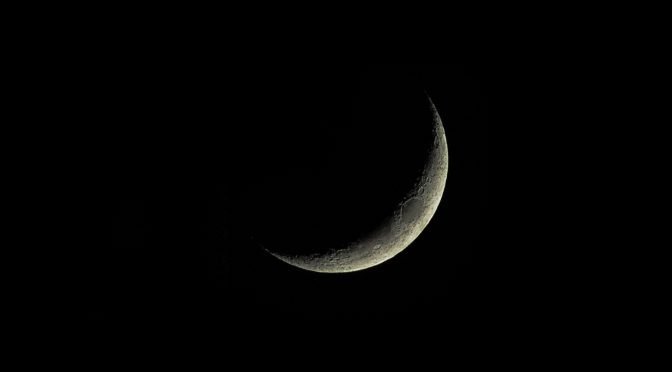
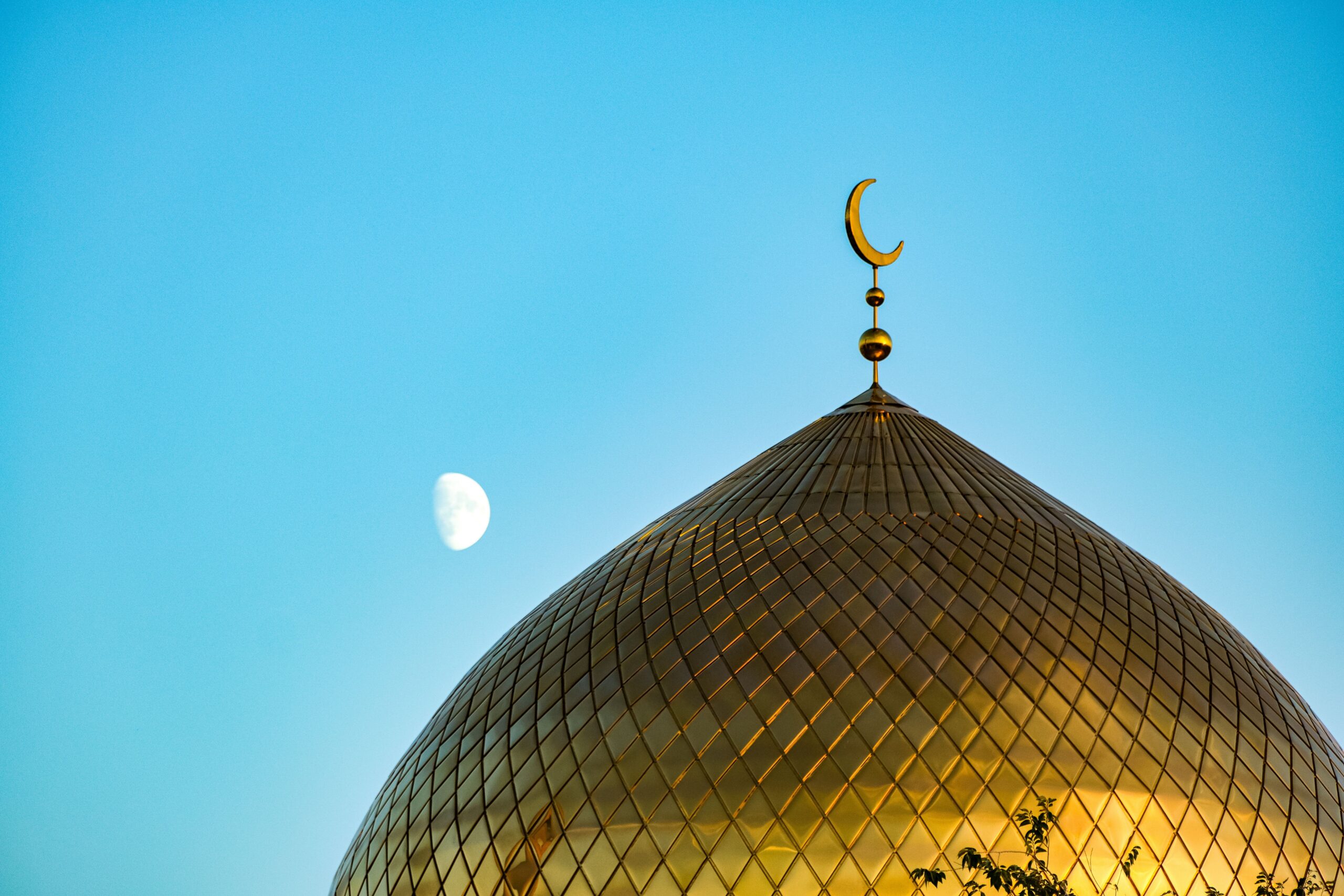
A crescent moon in the night sky, the sighting of which can be used to determine the dates for the Islamic months, such as Shaban
Photo: The sighting of the moon is used to determine the dates of the Islamic months of the lunar calendar.

What is the Significance of Shaban?

Imam Abu Bakr al-Warraq al-Balkhi (RA), the uncle of Imam Tirmidhi (RA), said: 
“The month of Rajab is the month of planting (your seeds), Sha‘ban is the month of irrigating / watering (them), and Ramadan is the month of harvesting the crop.”

Lataiful Ma’arif

Shaban, being the month just before Ramadan, is a perfect time to prepare for the blessed month. But it too, holds great importance on its own. Here are key reasons why:

More Fasting Than Any Other Month (Except Ramadan)

The Prophet Muhammad (ﷺ) would fast in Shaban more than any other month except Ramadan. Aisha (RA) said:

“I never saw the Messenger of Allah ﷺ fasting for an entire month except in Ramadan, and I never saw him fasting more than he did in Sha’ban.”

Sahih Al-Bukhari

He (ﷺ) also loved to fast in this month. So much so, that it was recorded in hadith. In Sunan Abu Dawud, it states, “The most beloved of months for the Messenger of Allah ﷺ to fast in was Sha’ban, and his fasting in Sha’ban was continuous with his fasting in Ramadan.”

More Opportunity for Rewards

Many scholars of the past (Salaf) also believed that fasting in Shaban was better than fasting in other months, even the sacred ones.

Ibn Rajab (RA) said, “Fasting in Sha’ban is better than fasting in the Sacred Months, and the best of voluntary fasts are those that are (observed in the months) closest to Ramadan, before or after.”

A hadith in Silsilat ul-Ahadith-as Sahiha also states, “Allah forgives all the believers in general; except the polytheists and the jealous people on the middle night of Sha’ban.” Some Muslims refer to this night as a Shab-e-Barat, however no Quranic verses specifically mention it.

Good Deeds to Do on Sha’ban

There are a lot of good deeds you can perform in the month of Shaban to make the most of it. Here are some simple acts of worship (ibadah) to add to your daily routine to earn good deeds AND prepare for Ramadan.

1. Do Voluntary Fasts

Prophet Muhammad (ﷺ) used to fast most of the days of Shaban. Thus, we should follow his Sunnah (actions and way of living) and keep as many voluntary fasts as we can in Shaban too. If it is hard to fast most of the month, try to fast on the 13th, 14th, and 15th as they are the White Days (Al-Ayyam al-Bid) of the Islamic month.  

However, there are also exceptions to fasting in Shaban. Abu Hurayrah (RA) mentioned that the Messenger of Allah (ﷺ) said, “Do not anticipate Ramadan by fasting one or two days before it begins, but if a man habitually fasts, then let him fast.” (Sahih Muslim)
He also reported that the Prophet (ﷺ) said to not fast if Sha’ban is half over. (Tirmidhi)

The exception to this would be someone who fasted regularly, such as the Prophet (ﷺ) and many of his companions. Thus, if you are someone who regularly observes the sunnah fast, then you may still observe them in the second half of Sha’ban. It is also permissible to make up a Ramadan fast at this time, if necessary, as Aisha (RA), one of the wives of the Prophet (ﷺ), herself said she would make up fasts in Shaban.

2. Recite the Quran

Ramadan is the month of revelation of the Quran. Naturally, it is the month when we recite it the most. Thus, to help us get ready and see the best results in Ramadan, we should start the habit of reciting it more, starting from Shaban. 
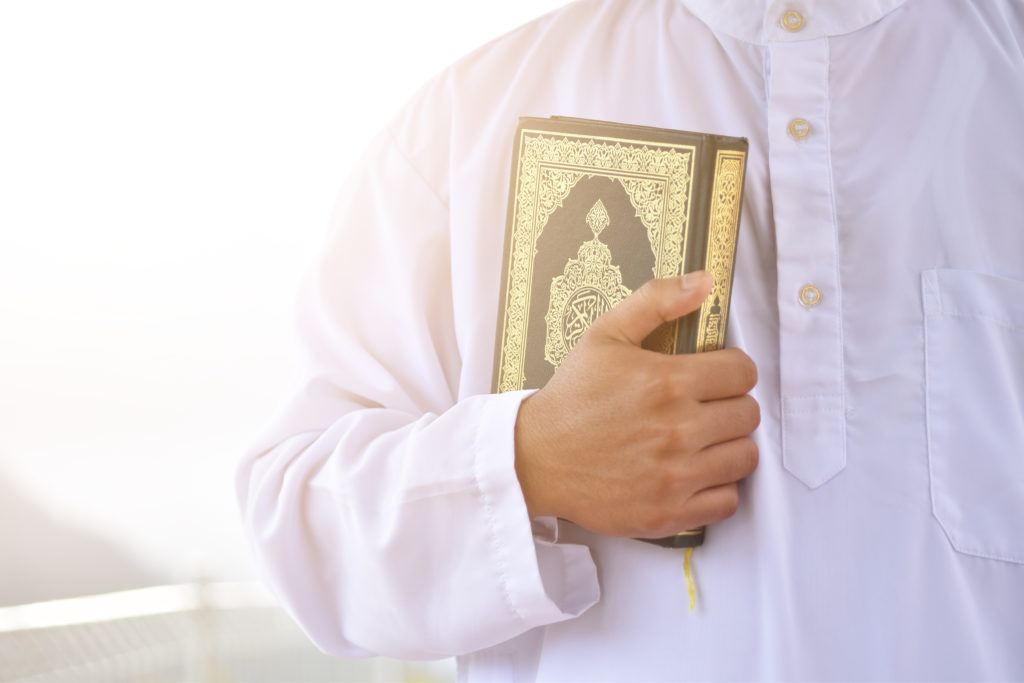
Salamah ibn Kuhayl (RA) said, “It was said that Shaban was the month of the Quran readers.” (Lataiful Ma'arif)
Salamah ibn Kuhayl (RA) said, “It was said that Sha’ban was the month of the Quran readers.” (Lataiful Ma’arif)

3. Make Lots of Duas

Apart from obligatory prayers and observing fasting in Shaban, reciting different duas, tasbeeh, and staying engaged in remembrance of Allah (SWT) is also a good way of making the most of this month.

Here are some duas you can say to seek forgiveness and blessings from Allah (SWT).

“O Allah (SWT), I seek refuge in Your pleasure from Your anger and in Your forgiveness from Your punishment. I seek refuge in You from You. I cannot praise You enough. You are as You have praised Yourself.”

(Sahih Muslim)

Rabbanā lā tuākhidh’nā in nasīnā aw akh ta’na

رَبَّنَا لاَ تُؤَاخِذْنَا إِن نَّسِينَا أَوْ أَخْطَأْنَا

“Our Lord! Take us not to task if we forget or fall into error”

Qur’an 2:286

4. Perform Voluntary Prayers

To make it easier to do more voluntary prayers in Ramadan, start the practice of praying Tahajjud from Shaban. It will help you get used to the Ramadan schedule quicker and also bring you many rewards. 

5. Start Preparing Money for Ramadan

The Prophet Muhammad (ﷺ) was the most generous in giving charity (Zakat and Sadaqah) during Ramadan. To prepare for giving in Ramadan, we should start getting ready in Shaban, including finding Zakat calculations.

Like other forms of Ibadah, charity in Shaban is also an act of worship as you show kindness to others. For every good deed, specifically charity during Shaban, you can gain blessings in abundance.

Shaban: A Pathway to Blessings and Rewards

The Prophet Muhammad (ﷺ) said, “(Shaban) is a month to which people do not pay much attention, between Rajab and Ramadan. It is a month in which the deeds are taken up to the Lord of the worlds, and I like that my deeds be taken up when I am fasting.” (An-Nasa’i).

With this in mind, it is important not to neglect this blessed time. To make the most of it by increasing worshipping, observing fasting, reciting Quran and duas, and engaging in charitable activities.

Thus, it will be a month that not only strengthens your bond with Allah (SWT), but also help you prepare for the sacred month of Ramadan.

Your Zakat Heals Our Ummah

Make the most of Shaban by preparing for Ramadan. Give the gift of happiness and hope to our brothers and sisters in need with Islamic Relief.
01.26.25

Isra’ and Mi’raj 2025: The Night Journey (27th Rajab)   

  Publications     Ramadan

Isra’ and Mi’raj is an important night occurring on the 27th of Rajab. One that we should not slip by without reflecting on its lessons and its significance. 

This year, Al Isra’ wal-Mi’raj 2025 is predicted to take place on the evening of January 26th 2025, depending on the sighting of the moon. 

What is Isra’ and Mi’raj (Al-Isra’ wal-Mi’raj)? 

Isra’ and Mi’raj, known as Al-Isra’ wal-Mi’raj in Arabic, is a miracle second only to the revelation of the Qur’an.  

Translated, it means the Night Journey and Ascension. It refers to the event when that transported Prophet Muhammad (ﷺ) from al-Masjid al-Haram to al-Masjid al-Aqsa, from where he (ﷺ) ascended to heaven. It was an incredible journey, filled with many wonders and miracles.  

Night, when the Prophet (ﷺ) embarked on the incredible night journey and ascension (Isra’ and Mi’raj)
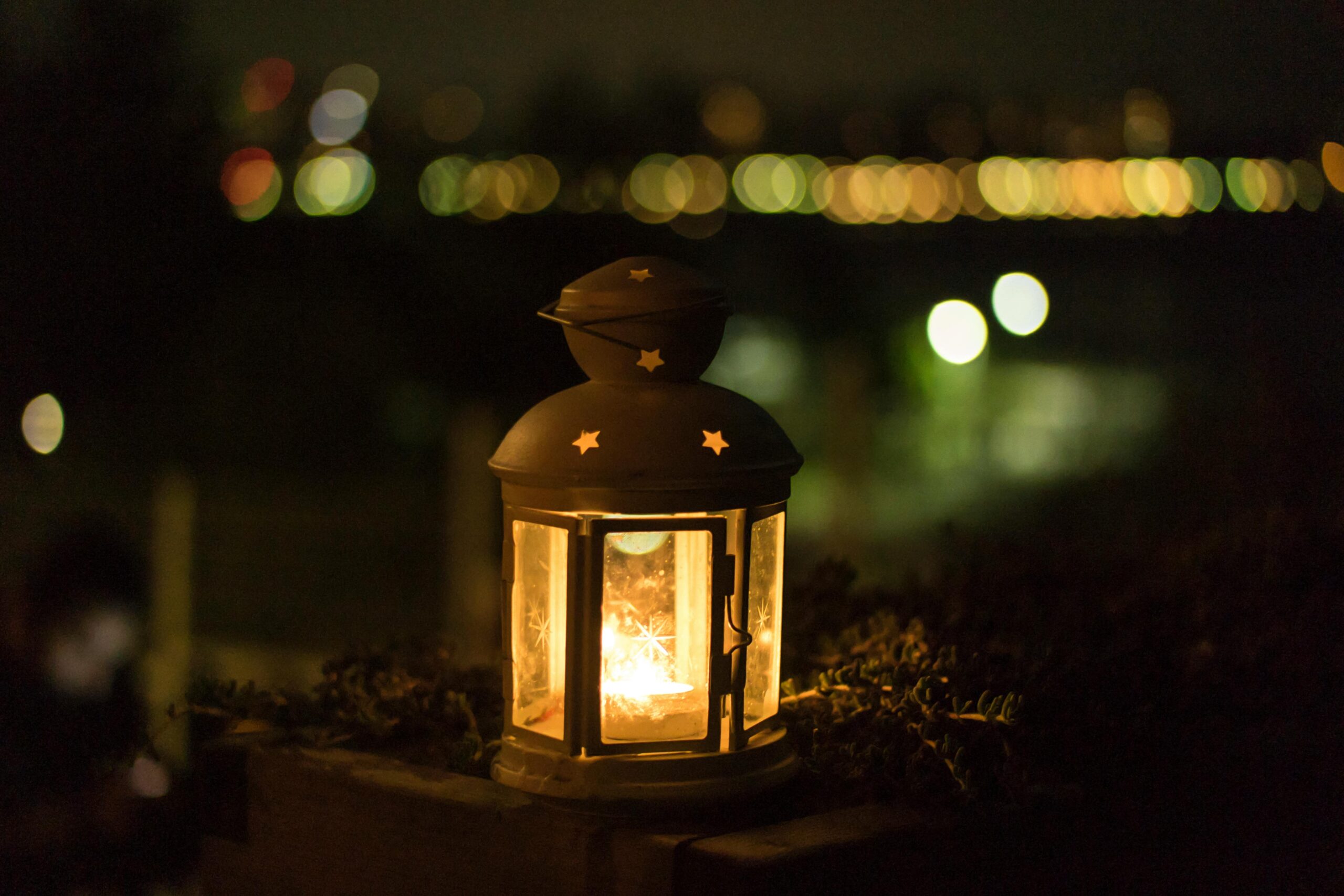
Photo: Night, when the Prophet (ﷺ) embarked on the incredible night journey and ascension.

When did the Night Journey and Ascension (Al-Isra’ wal-Mi’raj) Happen?  

Isra’ and Mi’raj took place during a time when Prophet Muhammad (ﷺ) was facing intense hardship and pain.  

The Quraysh constantly ridiculed, humiliated and oppressed the Prophet (ﷺ) and his followers. Moreover, he (ﷺ) had just faced the Year of Sorrow (’Aam al-Huzn), during which he (ﷺ) lost his beloved wife Khadijah (RA) and his uncle Abu Talib, his protector and ally. 

In addition to all these struggles, when the Prophet (ﷺ) travelled to Ta’if to spread the message of Islam, the people of Ta’if rejected him, sending their children after him to stone him until he left the city. 

Having gone through so much grief and suffering, Al-Isra’ wal-Mi’raj came to the Prophet (ﷺ) as a beautiful and comforting gift.  

He was transported not only through the skies but ultimately into the presence of Allah (SWT), the source of all comfort and hope.

Al-Isra’: From the Ka’bah to Al-Aqsa 

When the Prophet (ﷺ) was sleeping in the house of Umm Hani (ra) in Makkah when the roof of his house opened and the Angel Jibril (AS) descended (Bukhari).  

He (ﷺ) was then taken to the Hijr, the semi-circular wall of the Ka‘bah. It was there that Jibril (AS) opened the Prophet (ﷺ)’s chest and washed it with Zamzam water. Jibril then brought a golden tray full of wisdom and faith, and having poured its contents into the Prophet (ﷺ)’s chest, he closed it. (Bukhari) 

Jibril then brought to the Prophet (ﷺ) a white beast called al-Buraq (from the Arabic word barq, meaning lightning). It was bigger than a donkey and smaller than a mule. Its stride was as long as the eye could reach. (Muslim)

Buraq first shied from the Prophet (ﷺ) before they set off. So Jibril (AS) said to a saddled and reined Buraq, “Is it from Muhammad (ﷺ) that you do this? For nobody has ridden you who is more honourable to Allah than him! Then Buraq started sweating profusely. (Tirmidhi) 

At several points along the journey, Jibril (AS) stopped Buraq and told the Prophet (ﷺ), “Dismount and pray”. The first stop was at “the place of emigration”, Madinah. Soon, after this night, the Prophet (ﷺ) would meet the Ansar and migrate to Madinah.  

The second stop was on Mount Sinai, where Allah (SWT) revealed the Torah to Musa (AS). The third stop was at Bethlehem, where ’Isa (AS) was born. 

The fourth stop was the grave of Musa (AS), located “a stone’s throw” away from the holy land of the Blessed Masjid Al-Aqsa (Bukhari).  

The Prophet (ﷺ) said: “On the night on which I was taken on the Night Journey, I passed by Musa and he was praying in his grave.”

Sunan an-Nasai

Arriving at Al-Aqsa 

When Messenger of Allah (ﷺ) arrived in the holy city of Al-Quds (Jerusalem), they approached Masjid Al-Aqsa. There, Jibril (AS) pointed to the Masjid with his finger, causing a crack in the rock, and tied Buraq to the western wall of the noble sanctuary. (Tirmidhi).  

Waiting inside were all 124,000 Prophets (AS), and among them included Musa (AS), Isa (AS) and Ibrahim. Jibril (AS) led the Prophet (ﷺ) to the front, and he (ﷺ) led them all in prayer in this blessed space.  

When the Prophet (ﷺ) completed the prayer, someone said, “Here is Malik (AS), the keeper of Hellfire, so convey Salams to him”. So, he (ﷺ) turned to him, but the angel Malik preceded him in Salams’ (Muslim).  

The Prophets (AS) also discussed, after praising Allah (SWT), about “the Hour”. Both Ibrahim (AS) and Musa (AS) stated that they “did not have any knowledge of it”. Whilst ’Isa (AS) ’mentioned the Dajjal (anti-Christ). (Ibn Majah) 

Following the discussion, the Prophet (ﷺ) came out and Jibril (AS) brought him (ﷺ) a vessel of wine and a vessel of milk. When the Prophet (ﷺ) chose the milk Jibril (AS) said, “You have chosen the natural state (Fitrah)” (Muslim). 

The Prophet (ﷺ), with Jibril (AS), then proceeded to the Noble Rock (as-Sakhrah al-Musharrafah), currently housed by the holy Dome of the Rock Masjid, at the centre of the noble sanctuary (al-Haram ash-Sharif) of the Blessed Masjid Al-Aqsa.  

He (ﷺ) then ascended into the heavens for the next part of this incredible journey – the Mi‘raj, the Ascension! 

What is the Mi’raj? 

He (ﷺ) certainly saw some of his Lord’s greatest signs.  

Qur’an 53:18

The word Al-Mi’raj is a noun of instrument in Arabic morphology, which literally means ‘an instrument you use to ascend’. But how does this relate to the Prophet (ﷺ)’s night journey? 

In the Prophet’s Night Journey and Heavenly Ascent by Sayyid Muhammad ibn Alawi al-Maliki, it states that:  

View Preview

The Prophet (ﷺ), “saw the wide-eyed maidens of Paradise at the left of the Rock (at the Dome of the Rock Masjid). He greeted them and they returned his greeting.

“Then he asked them something and they replied with an answer that cools the eyes. Then the Prophet (ﷺ) was brought the ladder by which the spirits of the children of Adam (AS) ascend.  

“It had alternate stairs of silver and gold and came down from the Highest Garden of Paradise, Jannat al-Firdaus. It was encrusted with pearls and surrounded (by) angels on its right and left”

As recorded in The Life of Muhammad (ﷺ) Ibn Ishaq, the Prophet (ﷺ) also said the ladder was finer than any he had ever seen, and that this was the ladder which “the dying man looks when death approaches”.

Then the Prophet (ﷺ), accompanied by Jibril (AS), ascended into the layers of sky. 

The First Sky 

Allah ascended the Prophet (ﷺ) from the Dome of the Rock through the skies, where he saw many miraculous sights reaching heaven, the first layer of the sky and the end of the known universe. 

Jibril (AS) then asked the (gate of heaven) to be opened (by knocking on one of its doors). (Bukhari)

The dwellers of Paradise asked, ‘Who is it?’ He said, ” Jibril.” They said, “Who is accompanying you?” He said, “Muhammad (ﷺ).” They said, “Has he (ﷺ ) been called?” He said, “Yes,” They said, “He (ﷺ) is welcomed.” (Bukhari)

The Prophet (ﷺ) also reported that when (the door of heaven) was opened for them “…suddenly I was with (the Prophet) Adam (AS). Then he welcomed me and supplicated for good for me”. (Muslim)

The Second to Seventh Sky 

The Prophet (ﷺ) continued to ascend the layers of the skies with Jibril (AS). Each time, they again sought permission to enter, and the angelic guards were delighted and welcomed the Messenger of Allah (ﷺ).  

It was also through passing these skies that the Prophet (ﷺ) met many of the prophets (AS) who came before him. At the second sky, he met prophets Isa (AS) and Yahya (AS). In the third sky, the Prophet (ﷺ) met the Prophet Yusuf (AS). 

At the fourth sky, the Prophet (ﷺ) met the Prophet Idris (AS). In the fifth sky, he met the Prophet Harun (AS), before meeting Prophet Musa (AS) in the next sky – the sixth.  

At each one of these levels, these Prophets (AS) welcomed the Prophet (ﷺ) and supplicated good for him saying, “Welcome O pious Prophet and pious brother!” (Bukhari) 

 At the seventh sky, the Prophet (ﷺ) met his greatest ancestor, the Prophet Ibrahim (AS) who was “reclining his back against al-Bayt al-Ma‘mur. And there enter into it seventy thousand angels every day ever to return to it (again)”. [Muslim] 

(Bayt al-Ma’mur, in Arabic, means “the much-visited House”. It is the heavenly Ka‘bah directly above the one on earth). Like Adam (AS), Ibrahim (AS) also greeted the Prophet (ﷺ). 

The Lote Tree 

As the Prophet (ﷺ) carried on his journey, he reached the Furthest Lote Tree, known, in Arabic, as “Sidrah al-Muntaha” (Qur’an 53:14). 

In several ahadith, the Prophet (ﷺ) described the tree in great detail. 

“(Its) leaves were like elephant ears and its fruit like big earthenware vessels”. (Muslim)

“Then when it was covered by the Command of Allah, it underwent such a change that none amongst the creation has the power to praise its beauty” (Muslim)

“A rider will travel in the shade of one of its branches for a hundred years,” or “a hundred riders will seek to shade themselves with its shade”. (Tirmidhi)

The tree is surrounded (by) “golden butterflies”. (Tirmidhi)

He (ﷺ) further said: “many a colour had covered it which I do not know (i.e. the colours of this tree were indescribable)”. (Muslim)

He also stated that, “There terminates everything that ascends from the earth, and everything that descends from above”. (Tirmidhi) 

The Divine Meeting 

Then Allah revealed to His servant (ﷺ) what He revealed 

Qur’an 53:10

At the end of this journey, the Prophet (ﷺ) was brought to Allah (SWT), the ultimate source of strength and relief.  

Regarding this important meeting, the Prophet (ﷺ) said, ‘Then Allah revealed to me what he revealed to me and then He made obligatory for me fifty prayers every day and night’. [Muslim] 

It was here that Allah gave this Ummah the gift of compulsory Salah. A daily source of strength to Muslims, giving them the opportunity to communicate with Allah (SWT) directly and draw closer to Him.  

We also know, that through the Prophet Musa (AS)’s intervention and advice that fifty prayers were eventually reduced to five, but still rewarded as fifty, subhanAllah! 

Returning Home 

Finally, the Prophet (ﷺ) was taken back down to the Blessed Masjid Al-Aqsa and returned to Makkah on the Buraq. 

As he was transported home, he saw various caravans heading towards Makkah, which he would later describe to the Quraysh as proof that he really had made this miraculous journey.  

Allah (SWT) even displayed Bayt al-Maqdis to the Prophet (ﷺ), while the Quraish were cross-examining him in the Hijr of the Ka‘bah [Bukhari].  

The entire journey had taken place in a small portion of a night, and there were many who would mock the Prophet (ﷺ) for making such a claim. 

For the Muslims, however, the story was a source of wonder and hope, as it continues to be for us today.  

On this night, the Prophet (ﷺ) was given the honour of travelling to various blessed places on earth, then ascending the levels of sky and being finally welcomed by Allah (SWT)! All this to honour the beloved Prophet (saw) and “to show him some of Our signs!” (Qur’an 17:1)

Your Zakat Heals Our Ummah

Make the most of Rajab by preparing for Ramadan. Give the gift of happiness and hope to our brothers and sisters in need with Islamic Relief.
12.30.24

Rajab: The Month to Sow the Seeds of Goodness

  News     Ramadan

Imam Abu Bakr al-Warraq al-Balkhi (RA), the uncle of Imam Tirmidhi (RA), said: ‘The month of Rajab is the month of planting (your seeds), Sha‘ban is the month of irrigating / watering (them), and Ramadan is the month of harvesting the crop’. 

It’s now the sacred month of Rajab, the seventh month of the Islamic calendar. The beginning of the spiritual season. It is when the miraculous events of Isra’ (the Night Journey) and Mi’raj (Ascension) took place – a journey that Prophet Muhammad (ﷺ) took from Mecca to Jerusalem, and then ascended to the heavens. 

The month of Rajab also means that Ramadan is around the corner. Thus, it reminds us to prepare for the holiest month in the entire year – spiritually, mentally and physically. 

So how can we use this month to prepare for Ramadan 2025? 

Start to self-reflect and purify your intentions in Rajab

Spend some time alone and reflect on how you can improve spiritually. Ask yourself questions like: 

  • Would Allah SWT be pleased with me if I died today? 
  • What could I do to improve spiritually? 
  • Am I sincere in my words and actions? Am I conscious of how I treat those around me? 
  • Am I doing my best to prepare for Ramadan? What can I do better? 
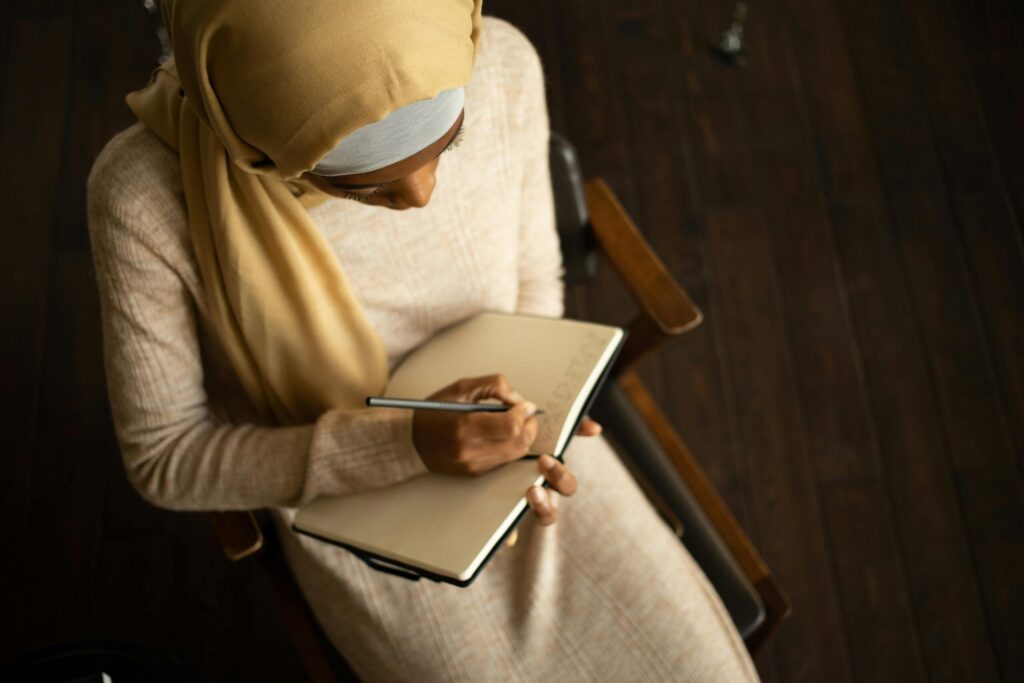
Muslim lady writing in book, self-reflecting, which is important to do in Rajab
Photo: Preparing well is the key to making the most of Ramadan. Rajab is a time to sow the seeds of self-reflection and purified intentions.

Seek forgiveness and make dua’a 

We all make mistakes and it is always the right time to seek Allah SWT’s forgiveness. After all, He is the most forgiving and merciful. Strive for sincere repentance and ask those you may have wronged to forgive you.  

The Prophet ﷺ said: “All the children of Adam constantly err, but the best of those who constantly err are those who constantly repent.” 

Tirmidhi

Fast extra days in Rajab

To get yourself into a routine for Ramadan, start fasting those extra fasts or making up your missed fasts from last Ramadan. 

The best way to prepare fasting for a whole month is to start fasting often, in order to gain control over your actions, stomach, and desires. 

Fast Mondays and Thursdays

Abu Hurairah reported that the most the Prophet (ﷺ) would fast would be Monday and Thursday. He was asked about that and he said: “The deeds of people are presented to Allah on every Monday and Thursday. Allah forgives every Muslim except for those who are deserting each other.” (Hasan) 

Follow the Sunnah and pray extra prayers 

Learn more about the Prophet Muhammad (ﷺ) and follow him by emulating his actions. 

“Say, [Oh Muhammad], If you should love Allah, then follow me, [so] Allah will love you and forgive you your sins. And Allah is Forgiving and Merciful.” 

Qur’an 3:31

Give Charity 

The Prophet Muhammad (ﷺ) said: “Allah is in the aid of His servant as long as His aide is in the assistance of others.” (Muslim) 

This world can only be a better place if we help each other. In return, Allah SWT rewards us in both worlds. 

“Who is it that would loan Allah a goodly loan so He will multiply it for him and he will have a noble reward?”

Qur’an 57:11

Start your spiritual growth for Ramadan in Rajab

Ramadan is right around the corner. This year, Ramadan is expected to begin on the evening of Friday, February 28, 2025.

Rajab is the time to plant seeds of intention, nurture them with acts of worship, and prepare our souls for the harvest of Ramadan. Each step we take this month, from fasting to prayer to giving charity, brings us closer to Allah SWT and prepares us for the spiritual marathon ahead.

By planting these seeds now, we build habits and intentions that will flourish during the holy month. May Allah SWT grant us the strength to use this time wisely, forgive our shortcomings, and bless us with the ability to enter Ramadan with hearts full of imaan and readiness.

Your Zakat Heals Our Ummah

Make the most of Rajab by preparing for Ramadan. Give the gift of happiness and hope to our brothers and sisters in need with Islamic Relief.
07.15.24

The Significance of the 99 Names of Allah

  Publications

Allah – there is no deity except Him. To Him belong the best names.

Qur’an 20:8

The 99 Names and Attributes of Allah (SWT) – Al-Asma-ul-Husna ( اَلاسْمَاءُ الْحُسناى )

Why should we know the 99 names of Allah (SWT)? To begin with, the first of the five pillars of Islam is the Shahada. This is the proclamation of belief in Allah (SWT) and His Messenger (ﷺ).

one of the five pillars of Islam is belief in Allah (SWT) and His messenger, the Prophet (SAW). Allah (SWT) has 99 names.

Secondly, as Muslims, we believe in Allah (SWT) according to His beautiful names and attributes. Learning and memorising these 99 names will help us associate these traits with Him. Thus, identifying the correct way to believe in Him.

And to Allah belong the best names, so invoke Him by them.

Qur’an 7:180

The 99 Names of Allah (SWT) with Meaning

#NAMETRANSLITERATIONMEANING
1الرَّحْمَنُAR-RAHMAANThe Beneficent
2الْمَلِكُAR-RAHEEMThe Merciful
3الْمَلِكُAL-MALIKThe King
4الْقُدُّوسُAL-QUDDUSThe Most Sacred
5السَّلاَمُAS-SALAMThe Source of Peace, The Flawless
6الْمُؤْمِنُAL-MU’MINThe Infuser of Faith
7الْمُهَيْمِنُAL-MUHAYMINThe Preserver of Safety
8الْعَزِيزُAL-AZIZAll Mighty
9الْجَبَّارُAL-JABBARThe Compeller, The Restorer
10ُالْمُتَكَبِّرAL-MUTAKABBIRThe Supreme, The Majestic
11الْخَالِقُAL-KHAALIQThe Creator, The Maker
12الْبَارِئُAL-BAARIThe Evolver
13الْمُصَوِّرُMUSAWWIRThe Fashioner
14الْغَفَّارُAL-GHAFFARThe Constant Forgiver
15الْقَهَّارُAL-QAHHARThe All-Prevailing One
16الْوَهَّابُAL-WAHHAABThe Supreme Bestower
17الرَّزَّاقُAR-RAZZAAQThe Provider
18الْفَتَّاحُAL-FATTAAHThe Supreme Solver
19اَلْعَلِيْمُAL-‘ALEEMThe All-Knowing
20الْقَابِضُAL-QAABIDThe Withholder
21الْبَاسِطُAL-BAASITThe Extender
22الْخَافِضُAL-KHAAFIDHThe Reducer
23الرَّافِعُAR-RAAFI’The Exalter, The Elevator
24الْمُعِزُّAL-MU’IZZThe Honourer, The Bestower
25ٱلْمُذِلُّAL-MUZILThe Dishonourer
26السَّمِيعُAS-SAMEE’The All-Hearing
27الْبَصِيرُAL-BASEERThe All-Seeing
28الْحَكَمُAL-HAKAMThe Impartial Judge
29الْعَدْلُAL-‘ADLThe Utterly Just
30اللَّطِيفُAL-LATEEFThe Subtle One, The Most Gentle
31الْخَبِيرُAL-KHABEERThe All-Aware
32الْحَلِيمُAL-HALEEMThe Most Forbearing
33الْعَظِيمُAL-‘AZEEMThe Magnificent, The Supreme
34الْغَفُورAL-GHAFOORThe Great Forgiver
35الشَّكُورُASH-SHAKOORThe Most Appreciative
36الْعَلِيُّAL-‘ALEEThe Most High, The Exalted
37الْكَبِيرُAL-KABEERThe Most Great
38الْحَفِيظُAL-HAFEEDHThe Preserver
39المُقيِتAL-MUQEETThe Sustainer
40اﻟْﺣَسِيبُAL-HASEEBThe Reckoner
41الْجَلِيلُAL-JALEELThe Majestic
42الْكَرِيمُAL-KAREEMThe Most Generous, The Most Esteemed
43الرَّقِيبُAR-RAQEEBThe Watchful
44ٱلْمُجِيبُAL-MUJEEBThe Responsive One
45الْوَاسِعُAL-WAASI’The All-Encompassing, the Boundless
46الْحَكِيمُAL-HAKEEMThe All-Wise
47الْوَدُودُAL-WADUDThe Most Loving
48الْمَجِيدُAL-MAJEEDThe Glorious, The Most Honorable
49الْبَاعِثُAL-BA’ITHThe Infuser of New Life
50الشَّهِيدُASH-SHAHEEDThe All Observing Witnessing
51الْحَقُAL-HAQQThe Absolute Truth
52الْوَكِيلُAL-WAKEELThe Trustee, The Disposer of Affairs
53الْقَوِيُAL-QAWIYYThe All-Strong
54الْمَتِينُAL-MATEENThe Firm, The Steadfast
55الْوَلِيُّAL-WALIYYThe Protecting Associate
56الْحَمِيدُAL-HAMEEDThe Praiseworthy
57الْمُحْصِيAL-MUHSEEThe All-Enumerating, The Counter
58الْمُبْدِئُAL-MUBDIThe Originator, The Initiator
59ٱلْمُعِيدُAL-MUEEDThe Restorer, The Reinstater
60الْمُحْيِيAL-MUHYIThe Giver of Life
61اَلْمُمِيتُAL-MUMEETThe Creator of Death
62الْحَيُّAL-HAYYThe Ever-Living
63الْقَيُّومُAL-QAYYOOMThe Sustainer, The Self-Subsisting
64الْوَاجِدُAL-WAAJIDThe Perceiver
65الْمَاجِدُAL-MAAJIDThe Illustrious, the Magnificent
66الْواحِدُAL-WAAHIDThe One
67اَلاَحَدُAL-AHADThe Unique, The Only One
68الصَّمَدُAS-SAMADThe Eternal, Satisfier of Needs
69الْقَادِرُAL-QADEERThe Omnipotent One
70الْمُقْتَدِرُAL-MUQTADIRThe Powerful
71الْمُقَدِّمُAL-MUQADDIMThe Expediter, The Promoter
72الْمُؤَخِّرُAL-MU’AKHKHIRThe Delayer
73الأوَّلُAL-AWWALThe First
74الآخِرُAL-AAKHIRThe Last
75الظَّاهِرُAZ-ZAAHIRThe Manifest
76الْبَاطِنُAL-BAATINThe Hidden One, Knower of the Hidden
77الْوَالِيAL-WAALIThe Sole Governor
78الْمُتَعَالِيAL-MUTA’ALIThe Self Exalted
79الْبَرُّAL-BARRThe Source of All Goodness
80التَّوَابُAT-TAWWABThe Ever-Pardoning
81الْمُنْتَقِمُAL-MUNTAQIMThe Avenger
82العَفُوُAL-‘AFUWWThe Pardoner
83الرَّؤُوفُAR-RA’OOFThe Most Kind
84َمَالِكُ ٱلْمُلْكُMAALIK-UL-MULKMaster of the Kingdom, Owner of the Dominion
85ذُوالْجَلاَلِ وَالإكْرَامِDHUL-JALAALI WAL-IKRAAMLord of Glory and Honour, Lord of Majesty and Generosity
86الْمُقْسِطُAL-MUQSITThe Just One
87الْجَامِعُAL-JAAMI’The Gatherer, the Uniter
88ٱلْغَنيُّAL-GHANIYYThe Self-Sufficient, The Wealthy
89ٱلْمُغْنِيُّAL-MUGHNIThe Enricher
90اَلْمَانِعُAL-MANI’The Withholder
91الضَّارَAD-DHARRThe Distresser
92النَّافِعُAN-NAFI’The Propitious, the Benefactor
93النُّورُAN-NURThe Light, The Illuminator
94الْهَادِيAL-HAADIThe Guide
95الْبَدِيعُAL-BADEE’The Incomparable Originator
96اَلْبَاقِيAL-BAAQIThe Everlasting
97الْوَارِثُWAARITHThe Inheritor, The Heir
98الرَّشِيدُAR-RASHEEDThe Guide, Infallible Teacher
99الصَّبُورُAS-SABOORThe Forbearing, The Patient

The Benefits of Learning Allah (SWT)’s Names

There are immense benefits to learning and memorising the beautiful 99 names of Allah, as it brings us closer and strengthens our relationship with the Almighty Allah.

Prophet Muhammad (ﷺ) said:

Allah has ninety-nine names, i.e. one-hundred minus one, and whoever knows them will go to Paradise.

Sahih Al Bukhari

How to Use Allah (SWT)’s Names in Duas

Knowing Allah (SWT) and His beautiful names is a pathway towards loving Him and to know Him. One of the best ways to learn His names and attributes is by applying them in our duas.

For every need you have, find an attribute of your Lord which suits it. For example, “Yaa Tawwaab (O Acceptor of repentance), accept my repentance.”

Remove the ‘al’ when invoking Allah with any of His 99 names. As such, you would say ‘Yaa Razzaaq’ and not ‘Ya al-Razzaaq,’ for example.

Whoever attains the ma‘rifah (experiential knowledge) of Allah through His Names, Attributes and Actions, will undoubtedly love Him.

Ibn al-Qayyim

07.15.24

Fasting: Islamic Dates to Look Out for Beyond Ramadan

  Publications

Fasting (Sawm) is an important pillar of Islam. It’s a beloved act of worship, as it shows our gratitude towards Allah (SWT) for the provisions he’s given us.  

Most of us know fasting is mandatory during Ramadan. But did you know there are other times when it’s highly recommended?  

There are additional days in the year when it’s encouraged to fast. An opportunity to gain extra reward for following the Sunnah, the actions and words of our Prophet (ﷺ).  

sunnah for fasting is to break it dates, you are also encouraged to increase in good deeds, such as reading qur'an

There are also days when we cannot fast, as it is haram (forbidden) or makruh (extremely disliked) to do so. 

Hence, it’s important to know which days we can fast to prepare for them in advance. 

Days of Fasting Outside of Ramadan 

There are several days in the Islamic Calendar when it’s sunnah (highly recommended) to fast. As the Hijri year follows the moon’s cycle, the dates of these days on the conventional Western calendar change every year.  

Mondays and Thursdays  

The Prophet Muhammad (ﷺ) would fast on Mondays and Thursdays. The reasons for why can be found in several ahadith.  

There are also several health benefits that come with fasting two times a week. These include, but are not limited to, reduced levels of total cholesterol and lowered risk factors for heart disease.  

Six Days in Shawwal  

Shawwal is the 10th Islamic month. It is the month that follows Ramadan, as the first of Shawwal is Eid al-Fitr.

The rewards for fasting six days in Shawwal alongside Ramadan are great – as if one has fasted for the entire year!

These six days can be spread out throughout the month. It also does not have to be consecutive days.  

The only day of Shawwal you are not allowed to fast is Eid al-Fitr. This is because it is forbidden to fast on the days of Eid.  

First 9 Days of Dhul Hijjah, Especially Arafah

Dhul Hijjah is the twelfth and final month of the Islamic Calendar. The first ten days of the month are extremely blessed, for “there are no days during which righteous deeds are more beloved to Allah than these days.” (Sunan Ibn Majah)

One of the best deeds to do is to fast. Hence, on the first 9 days (as one cannot fast on Eid Al-Adha) it is recommended for us to fast, alongside doing other good deeds, such as reading Qur’an, making dhikr, giving charity and performing nafl (voluntary) prayers.

Fasting in Dhul Hijjah is also sunnah, as the Messenger of Allah (ﷺ) used to fast the month’s first nine days. (Sunan Abi Dawud

He (ﷺ) especially encouraged it on the Day of Arafah, the 9th of Dhul Hijjah. It is also the most blessed day of the year. This is because fasting on the day of Arafah “will expiate the sins of the previous and upcoming years.” (Sahih Muslim)

However, for those going on Hajj, it is fine for them to leave the sunnah fast of Arafah.

One of the companions of the Prophet (ﷺ), Ibn Umar, noted that, while performing the pilgrimage, the Prophet (ﷺ) did not fast during Arafat.

In turn, some of the closest companions of the Prophet (ﷺ) – Abu Bakr, Umar and Uthman (may peace be upon them all) – also did not fast on Arafat while on Hajj. (Tirmidhi)  


Hajj in Makkah, during the first 10 days of Dhul Hijjah. Those going on Hajj are exempt from fasting on the day of Afarah

Hence, fasting on the first 9 days of Dhul Hijjah, especially on Arafah, is a highly recommended act for those not on Hajj.

Ashura (and the Day Before or After it)  

Ashura occurs on the 10th of Muharram, the first Islamic month. It is a blessed day that commemorates several significant events in Islamic history.  

The origins of fasting on Ashura have been documented in this hadith collected by Al-Bukhari and Muslim and reported by Ibn ‘Abbas (RA). The narration goes as follows:  

The Prophet (ﷺ) observed the Jewish people fasting on this day and asked why they did so. The Jews replied that this was the day Allah (SWT) granted victory to Musa (AS) and Bani Isra’il over Fir’aun (Pharaoh). Thus, they fasted on this day out of respect.  

The Prophet (ﷺ) then said, “We are closer to Musa (AS) than you,” and enjoined in fasting on that day.  

There are also great blessings for fasting on Ashura. When asked about fasting on the 10th of Muharram, the Prophet (ﷺ) said, “It will expiate the sins of the past year.” (Sahih Muslim)

It is also recommended to fast the day before Ashura (9th Muharram). Ibn ‘Abbas (RA) reported:

Thus, to differentiate Muslims from other religions (who also celebrated this day), the Prophet (ﷺ) instructed us to fast on the 9th and 10th of Muharram.   

If one fears they may miss Ashura because of the difference in moon sighting, then scholars also permit fasting on the 10th and 11th of Muharram.   

Most of Sha’ban  

As the 8th Islamic month, Sha’ban is the month before Ramadan. The Prophet fasted for the majority of this month, with accounts of it recorded in several ahadith. This includes a hadith where ‘Aisha (RA) said:

In another hadith, ‘Aisha (RA) also said, “The most beloved month to the Messenger of Allah (ﷺ) for fasting was Sha’ban, then he would connect it with Ramadan.” (Sunan Abi Dawud)

Exceptions to Fasting in Sha’ban 

In a hadith collected by Al-Bukhari and Muslim, ‘Aisha (RA) also reported that the Prophet (ﷺ) observed fasting during the whole month of Sha’ban except for a few days. 

Abu Hurayrah (RA) similarly mentioned that the Messenger of Allah (ﷺ) said:

Abu Hurayrah (RA) also reported that the Prophet (ﷺ) said to not fast if Sha’ban is half over. (Tirmidhi)  

The exception to this would be someone who fasted regularly, such as the Prophet (ﷺ) and many of his companions. Thus, if you are someone who regularly observes the sunnah fast, then you may still observe them in the second half of Sha’ban.  

It is also permissible to make up a Ramadan fast at this time, if necessary. ‘Aisha (RA), one of the wives of the Prophet (ﷺ), herself would make up her fast in Sha’ban. Regarding this, she said, “I had to make up some fasts I missed during the month of Ramadan, but I was unable to do so until the month of Sha’ban as I was busy with the Messenger of Allah (ﷺ).” (Bukhari and Muslim)

The White Days  

The white days are the 13th, 14th and 15th of each Islamic month. They are called White Days (Ayam al Beedh) as the moon is most lit on these nights.  

Qatadah Ibn Malhan al-Qaysi said that the Prophet (ﷺ) used to command them to fast the days of the White (nights). He (ﷺ) said that to fast these days “is like keeping perpetual fast.” (Sunan Abi Dawud)

In another hadith, Jarir bin ‘Abdullah recalled that the Prophet (ﷺ) said:

Are There Days Muslims Cannot Fast? 

Generally, most days of the year should be okay for you to fast. The exceptions are the two days of Eid and the days of Tashreeq. It is also severely disliked for one to fast on Fridays, Saturdays and towards the end of Sha’ban unless it falls on a day they regularly fast.  

Days of Celebration 

As mentioned before, it is forbidden to fast on Eid al-Fitr and Eid al-Adha. These Islamic celebrations have been designated for us to enjoy and feast with loved ones. 

Eid days are a time of joy and celebrating with family. Therefore, fasting on this day is forbidden.

Similarly, it is also forbidden to fast on the days of Tashreeq, three days after Eid al-Adha. This is because these are “days of eating, drinking and remembering Allah.” (Sahih Muslim

However, there is an exception. In one hadith, ‘Aisha (RA) and Ibn ‘Umar (RA) reported:

“No concession was granted allowing anyone to fast on the days of al-Tashreeq, except for the (pilgrim) who could not find a sacrificial animal.” 

Al-Bukhari

Hence, those on Hajj who are unable to perform the sacrifice for Eid Al-Adha are permitted to fast on the days of Tashreeq.  

Fridays and Saturdays 

It is severely disliked to fast on Friday alone. The Prophet (ﷺ) said, “No one of you should fast on Friday, unless he fasts (a day) before it or after it.” (Sahih Al Bukhari)  

This is because Friday (called Jumuah or Jummah in Arabic) is a dedicated day of worship. As fasting can make one easily tired, it may prevent them from making the most of Jumuah.  

Similarly, it is also discouraged to fast on a Saturday. The Prophet (ﷺ) said:

“Do not fast on Saturday except for what has been made obligatory upon you (by Allah). If one of you does not find but a grape peal or a tree’s twig, then let him chew it.” 

Sunan Abi Dawud

Fasting on Saturday may also cause one to resemble the practice of the Jewish people, as they observe Saturday as a day of rest.  Another reason why the Prophet (ﷺ) advised against it unless fasting was necessary.

Exceptions to Avoiding Fasting on Friday or Saturday 

Obviously, one must fast on Friday and Saturday if it falls in the month of Ramadan. It is also permissible to fast on these days if it happens to fall on a day when it is sunnah to fast, such as Arafah, Ashura or one of the White Days. 

You may also make up a fast from Ramadan on Friday or Saturday if this is the only time you can fast. But it is better to combine it with another day if you can.  

Differences between Voluntary Fasting and Fasting in Ramadan

The rulings on what breaks a fast outside of Ramadan and during Ramadan are the same. However, there are two key differences. 

When to Make the Intention  

The Prophet (ﷺ) said, “Whoever does not have the intention to fast before dawn, there is no fasting for him.” 

According to At-Tirmidhi, the hadith specifically refers to fasting in Ramadan. The fast is invalid if the intention is not made before sunrise in Ramadan. This also extends to when one is making up a Ramadan fast or fasting for a vow.  

However, for voluntary fasting, it is permissible to make an intention after morning, in the opinion of Al-Shafi’i, Ahmad, and Ishaq. 

Leaving the Fast 

During Ramadan, you must remain fasting from dawn to dusk. Even if you have a valid excuse to break it, you must make up the full day you missed outside of Ramadan. Or, if you are unable to fast, pay compensation (fidyah) for it.  

However, for a voluntary fast, you can break the fast if you wish without sin. As it is voluntary, you don’t need to make up the fast later or pay compensation if you miss it.  

There was a time when the Prophet (ﷺ) received an invitation to a feast (outside of Ramadan) but one of the companions was fasting. The Prophet (ﷺ) then requested,

“Your brother has invited you and incurred expenses on your behalf, break your fast and fast another day in its place if you wish.”

Ahmad


May Your Sunnah Fasting Be Accepted by Allah (SWT) 

All in all, there are several specific voluntary fasts recommended for Muslims to do outside of Ramadan. These are:  

  • Mondays and Thursdays 
  • Six days in Shawwal (except Eid Al-Fitr) 
  • First 9 days of Dhul Hijjah (especially the 9th, Arafah) 
  • Ashura (10th Muharram) – if possible, combined with either the 9th or 11th Muharram 
  • Most of Shaban 
  • The White Days (13th, 14th and 15th of each Islamic month)
 

If we can fast continually during Ramadan, then we already have the mental mindset to fast some or even all these voluntary days.  

In this new Hijri year, let us make the intention to perform as many of these fast as possible! May Allah (SWT) grant us the strength to observe these days and accept our fasts, ameen! 

07.07.24

5 Duas to Learn for the Islamic New Year

  Publications

With Muharram comes the beginning of the new Islamic year, 1446 AH. Along with being the first month of the Hijri calendar, it is also one of the four sacred months of Allah (SWT).  

As a sacred month, the rewards of doing good deeds in Muharram are substantial. It is a time that gives us a great opportunity to reflect on the past year and renew our intentions. While also seeking Allah (SWT)’s blessings for the coming year.  

One of the best ways to ask Allah (SWT) for guidance and support is through heartfelt du’a, for, as the Prophet Muhammad (ﷺ) said, “du’a is the essence of worship.” (Tirmidhi

There are many du’as you can make to Allah (SWT), from asking for good health to seeking forgiveness. To help you get started, we’ve prepared a list of 5 important du’as you can learn for the Islamic New Year. 

Du’a for a New Month 

‘Abdullah ibn Hisham (RA) reported that the Sahabah (companions of the Prophet (ﷺ) would learn the following Du’a for upon the start of a new month or new year:  

Allahumma adkhilhu ‘alayna bil amni wal iman, was salamati wal islam, wa jiwarim minash shaytan, wa ridwanim minar Rahman. 

اللّهم أَدْخِلْهُ عَلينا بِالأمْنِ وَالإيمان، وَالسَّلامَةِ وَالإسْلام، وِجوارٍ مِّنَ الشَّيْطان، وَرِضْوَانٍ مِّنَ الرَّحْمن 

“O Allah, bring this [month or year] upon us with security, iman, safety, Islam, protection from shaytan, and your pleasure.”

Baghawi and Tabarani

This du’a is a general prayer for the arrival of the new month or year. One we should say if we wish for the incoming season to be filled with success and spiritual growth. 

Du’a for Seeking Forgiveness 

If you’ve been meaning to make a fresh start, use the Islamic New Year as one! Take this time as a chance to reflect on past actions. To seek forgiveness from Allah (SWT) and make it a regular habit moving forward.  

This du’a, in particular, is one to use if you want to start the new year with a clean slate. It’s a supplication that acknowledges our imperfections and seeks Allah SWT’s forgiveness in the best way. For the Prophet (ﷺ) said, “The most superior way of asking for forgiveness from Allah SWT is: 

Allahumma anta Rabbi la ilaha illa anta. Khalaqtani wa ana `Abduka, wa ana ‘ala ‘ahdika wa Wa’dika mastata’tu abu’u Laka bi ni ‘matika wa abu’u Laka bidhanbi; faghfirli fa’innahu la yaghfiru-dh-dhunuba ill a ant a. A’uidhu bika min sharri ma sana’tu.

اللَّهُمَّ أَنْتَ رَبِّي لاَ إِلَهَ إِلاَّ أَنْتَ، خَلَقْتَنِي وَأَنَا عَبْدُكَ، وَأَنَا عَلَى عَهْدِكَ وَوَعْدِكَ مَا اسْتَطَعْتُ، أَبُوءُ لَكَ بِنِعْمَتِكَ، وَأَبُوءُ لَكَ بِذَنْبِي، فَاغْفِرْ لِي، فَإِنَّهُ لاَ يَغْفِرُ الذُّنُوبَ إِلاَّ أَنْتَ، أَعُوذُ بِكَ مِنْ شَرِّ مَا صَنَعْتُ‏.‏ إِذَا قَالَ حِينَ يُمْسِي فَمَاتَ دَخَلَ الْجَنَّةَ ـ أَوْ كَانَ مِنْ أَهْلِ الْجَنَّةِ ـ وَإِذَا قَالَ حِينَ يُصْبِحُ فَمَاتَ مِنْ يَوْمِهِ ‏”‏‏ 

“O Allah! You are my Lord. None has the right to be worshipped except You. You created me and I am your servant and I abide by your covenant and promise as best I can. I seek refuge in you from the evil, which I have committed. I acknowledge your favour upon me and I acknowledge my sins, so forgive me, for verily none can forgive sin except you.” 

Bukhari

The Messenger of Allah (ﷺ ), he the same hadith, also said, “If somebody recites this invocation during the night, and if he should die then, he will go to Paradise (or he will be from the people of Paradise). And if he recites it in the morning, and if he should die on the same day, he will have the same fate.”  

Du’a for a Sound Heart and Beneficial Knowledge 

Seeking knowledge is highly encouraged in Islam. So is Tazkiyah, which is the highest level of Ihsan (excellence). It purifies our hearts and brings us closer to the One who created us and all knowledge. So, what better way to seek knowledge than to ask Allah (SWT)’s help in attaining it and a sound heart?  

Abu Hurairah (RA) said, “One of the supplications that the Prophet (ﷺ) used to say was:  

Allahumma inni a’uzu bika min ‘ilmin la yanfa’, wa min du’a-in la yusma’, wa min qalbin la yakhsha’, wa min nafsin la tashba’.

اللَّهُمَّ إِنِّي أَعُوذُ بِكَ مِنْ عِلْمٍ لاَ يَنْفَعُ, وَمِنْ دُعَاءٍ لاَ يُسْمَعُ, وَمَنْ قَلْبٍ لاَ يَخْشَعُ, وَمِنْ نَفْسٍ لاَ تَشْبَعُ 

“O Allah, I seek refuge with You from knowledge that does not bring benefit, from a supplication that is not heard, from a heart that does not fear (You) and from a soul that never satisfies.” 

Sunan Ibn Majah

Du’a for Comprehensive Security  

When we need to ask Allah (SWT) for security against any distress, grief, hardship, harm, trials and tribulations, all of that and much more is included in this short, but powerful dua. 

Allahumma inni as’alukal-‘afwa wal-‘aafiyah(ta) fid-dunya wal-aakhirah 

اللَّهُمَّ إِنِّي أَسْأَلُكَ الْعَفْوَ وَالْعَافِيَةَ فِي الدُّنْيَا وَالآخِرَةِ 

O Allah, I ask You for forgiveness and well-being in this world and in the Hereafter. 

This du’a draws from a hadith recorded by Al-Bukhari, where Anas ibn Malik (RA) narrated, 

“A man came to the Prophet (ﷺ) and said: ‘O Messenger of Allāh, which supplication is the best?’  

He (ﷺ) said: ‘Ask Your Lord for pardon and well-being in this world and the Hereafter’.  

Then he came to him the next day and said: ‘O Prophet of Allāh, which supplication is the best?’  

He (ﷺ) said: ‘Ask Your Lord for pardon (afwa) and well-being (aafiyah) in this world and the Hereafter, for if you are granted well-being in this life and in the Hereafter, then you have indeed succeeded.” 

What is Afiyah? 

Afiyah means having complete protection from afflictions, good health, forgiveness of Allah (SWT) and means to provide for you and your family.  

Basically, Afiyah encompasses every form of security you can think of. This includes both for the Dunya and Akhirah. Hence, why the Prophet (ﷺ) told us to wish for ‘afiyah in our du’as.  

Du’a for Anxiety and Sorrow 

Du’a is a powerful tool for seeking solace and relief in difficult times. It is a heartfelt conversation with our Creator, where we express our deepest concerns and seek comfort and guidance.  

Allāhumma innī `abduk, ibnu `abdik, ibnu amatik, nāsiyatī biyadik, māḍin fiyya ḥukmuk, `adlun fiyya qaḍā’uk, as’aluka bikullis’min huwa lak, sammayta bihi nafsak, aw anzaltahu fī kitābik, aw `allamtahu aḥadan min khalqik, aw‘ista’tharta bihi fī `ilmil-ghaybi `indak, an taj`ala ‘l-Qur’āna rabī`a qalbī, wa nūra ṣadrī, wa jalā’a ḥuznī, wa dhahāba hammī.  

اللّهُـمَّ إِنِّي عَبْـدُكَ ابْنُ عَبْـدِكَ ابْنُ أَمَتِـكَ نَاصِيَتِي بِيَـدِكَ مَاضٍ فِيَّ حُكْمُكَ عَدْلٌ فِيَّ قَضَاؤكَ أَسْأَلُـكَ بِكُلِّ اسْمٍ هُوَ لَكَ سَمَّـيْتَ بِهِ نَفْسَكَ أِوْ أَنْزَلْتَـهُ فِي كِتَابِكَ أَوْ عَلَّمْـتَهُ أَحَداً مِنْ خَلْقِـكَ أَوِ اسْتَـأْثَرْتَ بِهِ فِي عِلْمِ الغَيْـبِ عِنْـدَكَ أَنْ تَجْـعَلَ القُرْآنَ رَبِيـعَ قَلْبِـي وَنورَ صَـدْرِي وجَلَاءَ حُـزْنِي وذَهَابَ هَمِّـي 

“O Allah, I am Your slave, and the son of Your male slave, and the son of your female slave. My forehead is in Your Hand (i.e. you have control over me). Your Judgment upon me is assured, and Your Decree concerning me is just. I ask You by every Name that You have named Yourself with, revealed in Your Book, taught any one of Your creation, or kept unto Yourself in the knowledge of the unseen that is with You, to make the Qur’an the spring of my heart, and the light of my chest, the banisher of my sadness, and the reliever of my distress.” 

 Hisn al-Muslim 

Start of the Islamic New Year Well with Du’a

Making du’a is a reminder for us that we are not alone in our struggles. In this time when many of us worry if we’re doing enough for our brothers and sisters suffering around the world, making du’a can help bring you a sense of ease.  

For it’s by asking Allah (SWT) for guidance on how to support our ummah struggling in Gaza, Sudan and all over the world that we can find strength and hope.  

As we embark on the Islamic New Year, making heartfelt du’as can bring us closer to Allah (SWT). Let use this time moving forward to seek His (SWT) guidance, forgiveness, and blessings. To express our dependence on Him (SWT) and renew our intentions to improve ourselves spiritually and outwardly.  

May Allah (SWT) accept our du’as and grant us a blessed and successful year, ameen! 

Make the most of Muharram

Give and change the lives of the most needy and vulnerable of our Ummah on one of the most blessed of months.

06.12.24

Aqiqah and Qurban: Sacrifice for the Sake of Allah (SWT) 

  Dhul Hijjah     Publications

Qurban and Aqiqah are both significant acts of worship (ibadah) in Islam that both involve the sacrifice of an animal for the sake of Allah (SWT). Anyone who has the financial means to do Qurban and Aqiqah is highly urged to do it. As these are important rituals the Prophet (ﷺ) did rigorously at their assigned times.

While these two have some similarities, they are two different acts of worship, each with specific rules on how to perform them. So, what are the differences between Qurban and Aqiqah? 

Qurban and Aqiqah in Islam

The Story of Qurban 

Qurban commemorates the divine sacrifice Prophet Ibrahim (AS) made for the sake of Allah (SWT). It plays a significant part in Eid Al-Adha, the “festival of sacrifice”, in Dhul Hijjah.

The story behind the act of worship starts with a dream. A dream sent by Allah (SWT) to Prophet Ibrahim (AS) of him sacrificing his son, Ismail (AS), whom he loved dearly.

Despite his heavy heart, Prophet Ibrahim (AS) had full trust in his Creator to guide him through this hard task. He took his son to the top of Mount Arafah to prepare for the sacrifice. When Prophet Ibrahim (AS) told his son about the dream, Ismail (AS), following his father’s example, accepted this decree of Allah (SWT) and agreed that he must be sacrificed.  

Prophet Ibrahim (AS) then blindfolded himself to ease his heavy heart while carrying out the slaughter. As he was about to begin the sacrifice, Allah (SWT) replaced Ismail (AS) with a ram, and his son was left unharmed. 

The event was a test of Prophet Ibrahim’s obedience to Allah (SWT), which he had greatly demonstrated. In honour of his devotion, Allah named him ‘Khalillullah’ in the Quran, which means an intimate friend of Allah. 

“Who can be better in religion than one who submits his whole self to Allah, does good, and follows the way of Ibrahim the true in faith? For Allah did take Ibrahim for a friend.”

Quran 4:125

Qurban in the Quran

The story of Qurban serves as a reminder for us. To learn from Prophet Ibrahim (AS)’s full submission to Allah (SWT), which is the essence of Islam itself. His sacrifice is commemorated in these verse of Surah As-Saffat, which states:

“When the boy was old enough to work with his father, Ibrahim said, ‘My son, I have seen myself sacrificing you in a dream. What do you think?’

“He said, ‘Father, do as you are commanded and, God willing, you will find me steadfast.’ And when they had both submitted and he put him down upon his forehead, We called out to him, ‘Ibrahim, you have fulfilled the dream.’

“This is how We reward those who do good- it was a test to prove [their true characters]- And We ransomed him with a great sacrifice, And We left for him [favorable mention] among later generations: ‘Peace be upon Ibrahim!’”

Quran 37: 102-109

The Significance of Aqiqah 

The birth of a child is a great blessing and gift from Allah (SWT). One of the many ways this is celebrated is through Aqiqah. It is a sacrifice offered as a symbol of one’s gratitude to Allah (SWT) for their newborn child.  

Aqiqah is a confirmed practice of the Prophet (ﷺ) and his companions. As narrated by Samurah ibn Jundub, the Prophet (ﷺ) said:  

“A boy is in pledge for his Aqiqah, Sacrifice is made for him on the seventh day, his head is shaved and he is given name.”

Sunan Abi Dawud

Likewise, when his two grandsons from his daughter Fatima (RA), Hasan and Husain, were born, the Prophet (ﷺ) offered an ‘Aqiqah for both of them, with two rams for each. (Sunan An Nasai) 

Aqiqah is also not limited to a boy’s birth. It should also be offered when a girl is born. It was narrated that Aisha (RA) said:

“The Messenger of Allah (ﷺ) commanded us to sacrifice two sheep for a boy’s ‘Aqiqah and one sheep for a girl.”

Sunan Ibn Majah

However, Aqiqah should also not be a hardship for a baby’s parents. While the sunnah is to offer two sheep or goats for a newborn son, if a parent can only afford one, then they should not have to bear the hardship of getting two.

When do we perform Qurban and Aqiqah? 

When to perform Qurban

Muslims carry out Qurban during the days of Eid al-Adha, in Dhul Hijjah, the twelfth and final Islamic month. It should be done after Eid prayer, as practised by the Prophet (ﷺ) 

‘Whoever, makes the sacrifice before Eid prayer must repeat the sacrifice, and whoever does it after the prayer has completed his sacrifice.’ 

Sahih Al Bukhari

You can offer Qurban every year, so long as it is during its set days in Dhul Hijjah (the 10th to the 12th or 13th). You can also do it as many times as you wish if you have the financial means to do so.  

By contrast, Aqiqah can only be offered once in a lifetime. If a baby’s parents have already done ‘Aqiqah, there is no need to perform another one the following year.

When to Perform Aqiqah  

Ideally, Aqiqah should be performed seven days after the child’s birth, as per sunnah. However, if the child’s parents or guardians cannot afford it, then they can do it at another time, as long as the child has not hit puberty yet. If a child reaches puberty before their parents can perform Aqiqah, then it is permissible for the child to perform it for himself. 

Aqiqah is also not fixed to any event in the Islamic calendar and can be done anytime in the year. It is also permissible to perform Aqiqah during the Eid al-Adha period. Some Muslims do so as it is cheaper to buy a livestock animal during this time, due to the increase in supply to meet the demand for Qurban.

What animals can be sacrificed for Qurban and Aqiqah? 

Livestock animals that can be sacrificed for Qurban include goats, sheep, cows and camels. For Aqiqah, it is sunnah to offer a goat or sheep for sacrifice.

Animals also make up a different number of shares in Qurban. Smaller animals, such as goats and sheep, count as one Qurban share. Larger animals, like cows and camels, on the other hand, count as seven shares. 

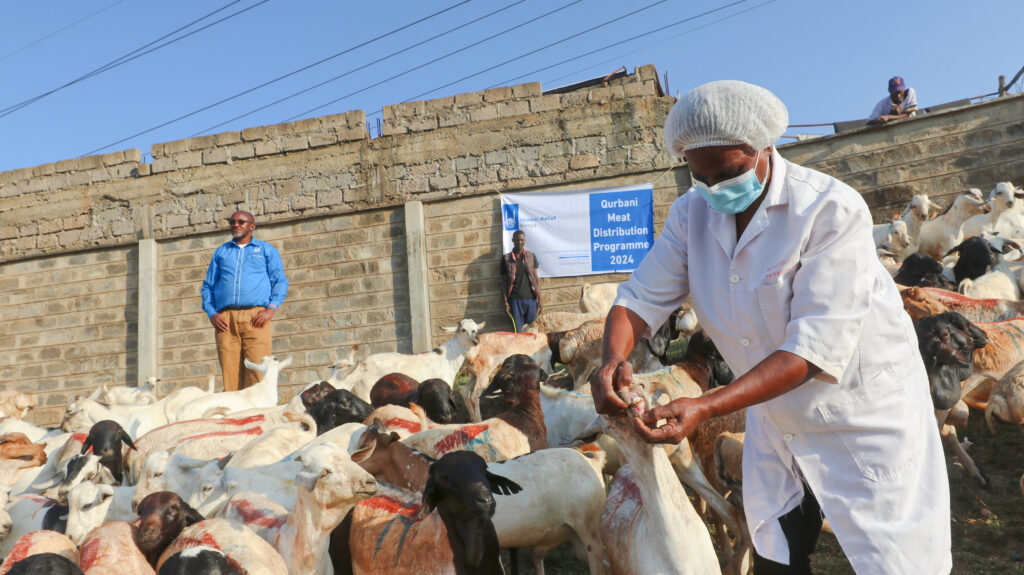
qurban inspection of sheep

For both Qurban and Aqiqah, the sacrifice can be male or female, so long as they are healthy and free from defects. The sacrificed livestock must have also reached a specific minimum age. Goats and sheep must be at least one year old, cows two years old, and camels five years old.  

How should the Qurban and Aqiqah meat be distributed? 

Meat from Qurban should be distributed raw and divided into three parts. One-third goes to the one performing the Qurban, another third to family and friends, and the last third to the less fortunate. 

This sharing of meat is to give thanks to Allah (SWT) and share these blessings with those who live in situations where eating meat is often an unaffordable luxury. Thus, Qurban provides an annual opportunity for the poor and needy to enjoy meat. Especially, if they are unable to have them at other times of the year. 

For Aqiqah, it is permissible to eat the meat from it and feed relatives, friends and the poor. While it can given raw, it is sunnah to cook it before giving it to others. Aisha (RA) said, concerning the meat of the Aqiqah that, “It should be cut into pieces, cooked, eaten and also distributed.” (Narrated by Ibn Abi Shaybah in Al-Musannaf).

meat for aqiqah

As such, an Aqiqah ceremony becomes a celebration where the meat from the sacrificed animal is cooked and shared with family, friends and members of the community who are in need.

Summary of differences

In conclusion, while they share some similarities, Qurban and Aqiqah are two distinct acts of worship.

Qurban is done on the three or four days of Eid al-Adha in remembrance of Prophet Ibrahim (AS)’s sacrifice. It is also best to distribute it raw, and you give it as many times each year during the Qurban period as you wish.

Aqiqah, however, is done seven days after a child’s birth, as per Sunnah, and is only done once in their lifetime. It is also sunnah to sacrifice goat or sheep for Aqiqah and to cook the meat before distributing it.

In the 10 blessed days of Dhul Hijjah, do not forget to purchase your Qurban in time for Eid Al-Adha!

This Dhul Hijjah, Share Your Blessings

Help the world’s most vulnerable families enjoy their Eid when you give Qurban with Islamic Relief.
06.07.24

Dhul Hijjah and Sacrifice: The Legacy of Prophet Ibrahim (AS)

  Dhul Hijjah     Publications

The first 10 days of Dhul Hijjah is a sacred time when Allah (SWT) grants many blessings to us. As a time when no deed is more beloved to Allah (SWT), it is also a time for elevating our acts of worship and remembering its legacy of sacrifice. Specifically, the sacrifices made by the Prophet Ibrahim (AS), his wife, Hajar (AS), and his son, Ismail (AS).

Without the trials they were willing to face for the sake of God, we would not have the rituals of the important events of Hajj and Eid Al-Adha, which are integral to the first 10 days of Dhul Hijjah. As their stories remind us of the immense blessings Allah (SWT) grants us for trusting in His Plan.

Hajj and the Story of Hajar (AS)

Hajj, as one of the five pillars of Islam, is a vital aspect of Islam. Starting from the 8th of Dhul Hijjah, the month of the pilgrimage, Muslims from around the world come together to travel to the Ka’aba in Makkah. There, they start to perform the sacred rituals of Hajj. 

One of the most significant rituals of Hajj is the pacing between the hills of Safa and Marwa. In Surah Al-Baraqah, it says:

“Behold! Safaa and Marwa are among the symbols of God. So if those who visit the House in the Season or at other times, should compass them round, there is no blame on them. And if any one obeys his own impulse to Good, be sure that God is One Who is Responsive, Knowing.”

Quran 2:158

Decreed as signs of Allah (SWT), Safa and Marwa represent His Divine Protection, Wisdom and Mercy in our times of distress and hardship. The act of pacing between the two hills seven times during Hajj commemorates the hardship of Hajar (AS), one of the wives of Prophet Ibrahim (AS).

Hajar (AS) , Ismail (AS) and the Birth of Makkah

Before Makkah became a thriving city, it was originally a dry and desolate land. Here, Allah (SWT) asked Prophet Ibrahim (AS) to separate from Hajar (AS) and Ismail (AS). Ibrahim (AS) was initially hesitant to leave his wife and son in the desert. But when Hajar (AS) told him to trust in Allah (SWT), he agreed to go. 

However, left in the arid desert, Hajar (AS) soon ran out of water and food. Without it, she struggled to sustain herself and the infant Ismail (AS). Desperately, Hajar (AS) paced through the valley between the hills of Safa and Marwa. She searched for signs of life, supplicating and calling out to Allah (SWT) for aid. It was through her patience and trust in Allah (SWT) to provide that Allah (SWT) sent the archangel Jibreel to her. The same angel who would later be sent down to the Prophet Muhammad (ﷺ) to give him Quranic revelation. Soon after Jibreel arrived to aid Hajar (AS), water sprung from the ground beneath the feet of Ismail (AS). Thus, the well of Zamzam came to be – a gift from Allah (SWT)  

With the steady water supply, the previously uninhabitable land gave way to life. And when Ibrahim (AS) came back to Hajar and Ismail (AS), he was graced with the sight of a small, but thriving community founded by his wife. 

Ka'aba and Makkah today, thanks to the family of Ibrahim (AS)

For the Makkah we know today, we owe it to Hajar (AS). Not only for finding this site but also for her sacrifice and trust in Allah (SWT) that brought the area to life. In her story and the rituals of Hajj, we reflect on the capacity of Hajar (AS) to trust and believe in Allah (SWT). And follow her example of cherishing His mercy, love and care for us. 

Eid Al-Adha and the Story of Ibrahim (AS)

In Islam, we have two celebration festivals. The firs is Eid Al-Fitr, which signifies the completion of the holy month of Ramadan. The second is Eid Al-Adha, which follows the completion of the annual Hajj pilgrimage, on the 10th day of Dhul Hijjah. 

For both Eids, we pray the Eid prayer and share happiness and blessings with loved ones. But on Eid Al-Adha specifically, Muslims worldwide perform Qurban. An act of worship that involves sacrificing an animal – sheep, goat, cow or camel – for the sake of Allah (SWT). The reason we perform this ritual on Eid Al-Adha is because of Prophet Ibrahim (AS). To commemorate his sacrifice and trust in the Divine Will of Allah (SWT). 

Qurban and the Devotion of Prophet Ibrahim (AS) and Ismail (AS)

One night, Ibrahim (AS) dreamt that Allah (SWT) told him to sacrifice Ismail (AS), his beloved son. At first, Ibrahim (AS) believed the dream was Shaytan playing tricks on him and immediately disregarded it. However, when the same dream came to him the following night, Ibrahim (AS) came to realise that the dream was, in fact, a message from Allah (SWT).

Ibrahim (AS) loved his son, Ismail (AS), but he had faith in Allah’s (SWT) plan and Divine Wisdom and did as he was instructed. When telling his son about his dream and what Allah (SWT) had commanded him to do, Ismail (AS) reassured his father. He too would follow the wishes of God and urged his father to perform the sacrifice.

Then when the boy reached the age to work with him, Ibrahim said, “O my dear son! I have seen in a dream that I ˹must˺ sacrifice you. So tell me what you think.” He replied, “O my dear father! Do as you are commanded. Allah willing, you will find me steadfast.”

Quran 37:102

For their willingness to sacrifice for the sake of God, Allah (SWT) rewarded them both for their steadfastness. He replaced Ismail (AS) with a ram, who was then slaughtered in his place. 

In this story, we see that Eid Al-Adha is not just a celebration. It is a remembrance of one of the greatest sacrifices in history. A festival where we commemorate and be inspired by the trust and belief Prophet Ibrahim (AS) and Ismail (AS) have in Allah (SWT) and His Divine Protection. 

Dhul Hijjah and the Legacy of Sacrifice and Devotion

Indeed, Prophet Ibrahim, Hajar, and their son Ismail (may peace be upon them all) experienced many hardships in their lives. But Allah (SWT) always came through and showered them with mercy and blessings for their steadfast belief and gratitude towards Him. 

As such, the month of Dhul Hijjah is about honouring this legacy of sacrifice and devotion to Allah (SWT). In these most blessed days, take this learn from the stories of Prophet Ibrahim, Hajar and Ismail (may peace be upon them all). To trust that Allah (SWT) knows best for us. To offer support when we see others struggling.

By renewing our intentions to do good deeds and love one another for the sake of Allah (SWT), we have a great opportunity to improve our lives and the lives of others. To be the difference that changes the world for the better, in the 10 greatest days of the year.

Give for the sake of Allah (SWT)

Take advantage of the most rewarding days of the year; give your Qurban and increase your acts of Sadaqah before the ten days are over.

06.06.24

5 Duas for Hajj and Umrah

  Dhul Hijjah     Publications

What’s one of the best ways to make sure we stay safe during Hajj and Umrah? On these journeys of a lifetime, let us seek guidance from Allah (SWT) with sincere Duas specific to travelling and these two pligrimages.


Each year, millions of Muslims from around the world travel to Makkah in Saudi Arabia to perform Hajj, the fifth pillar of Islam.

A pilgrimage that every adult Muslim, who is financially, physically and spiritually able, must make at leasts once in their lifetime, it takes place between the 8th and 12th or 13th of Dhul Hijjah, the twelve final month of the Islamic Calendar.

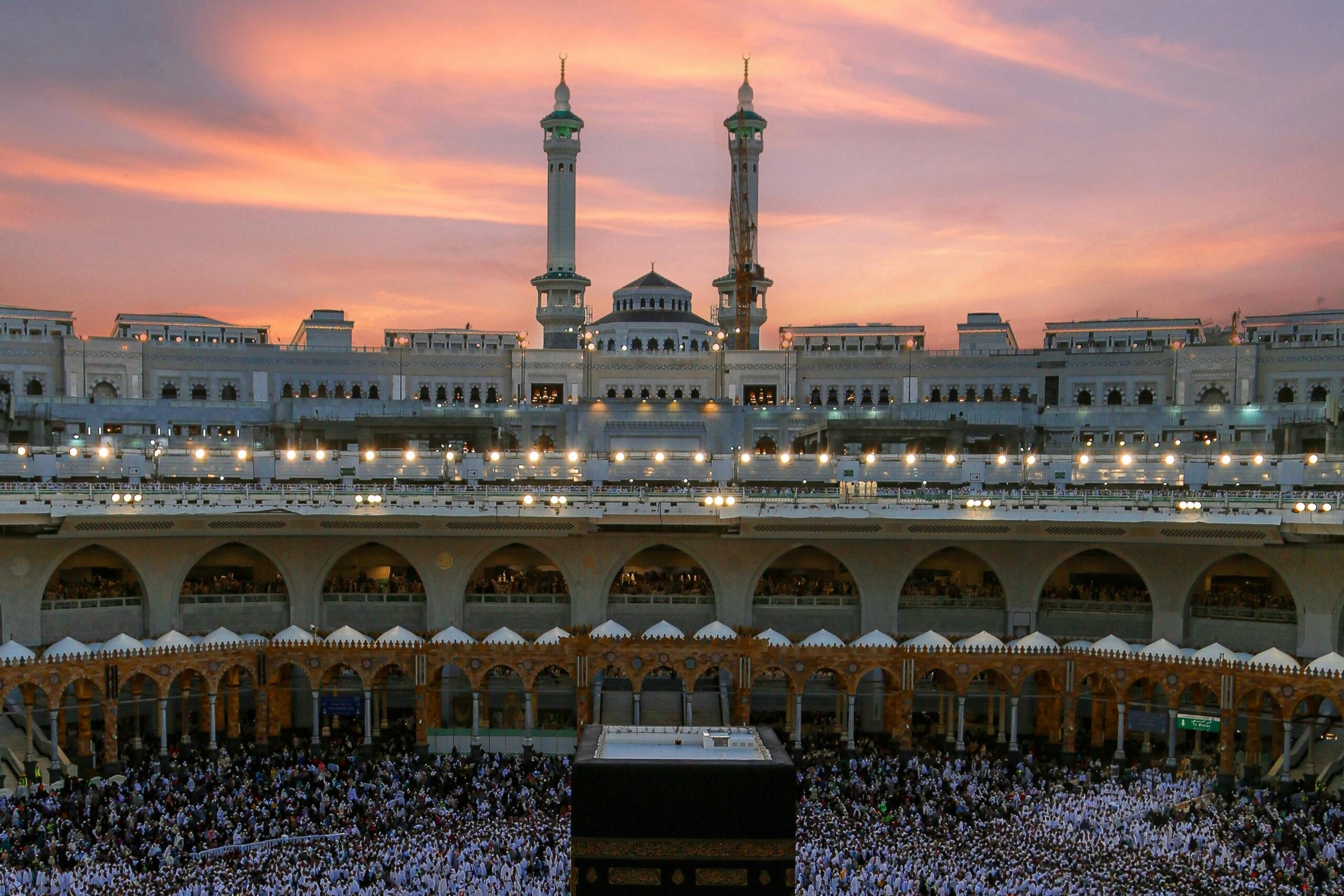
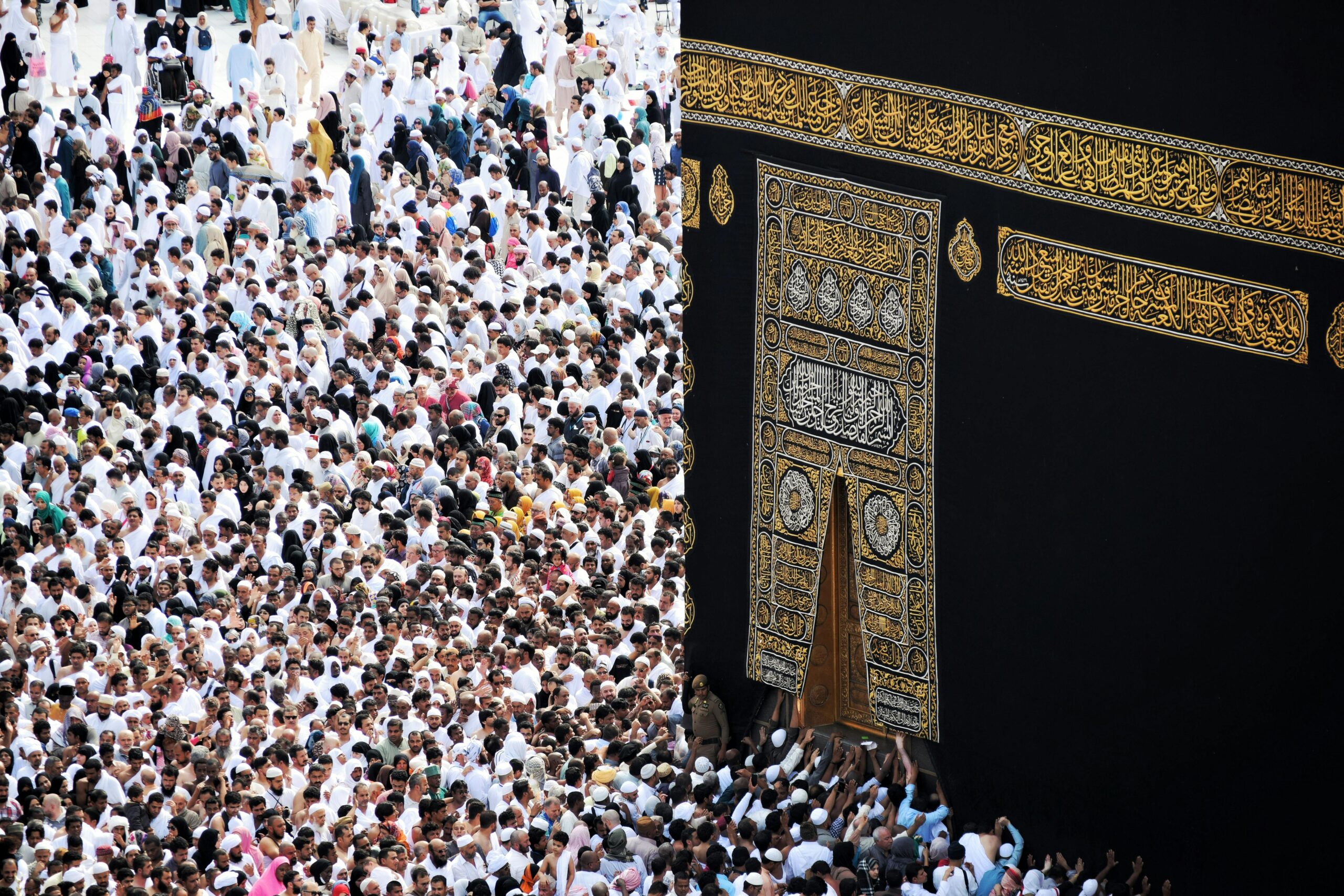
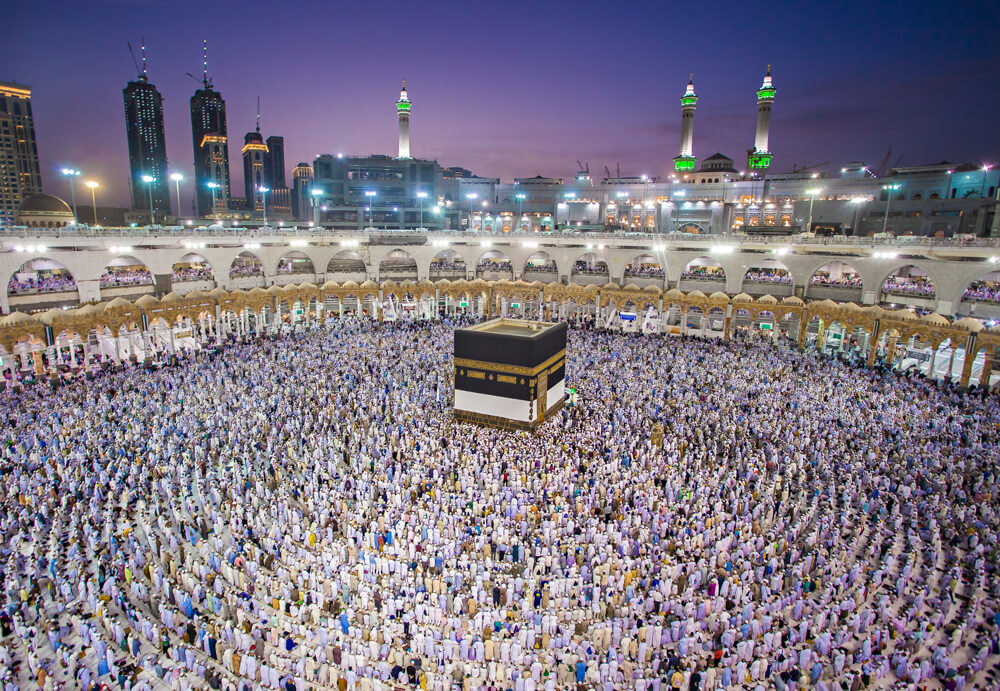
Muslims gather around the Kaaba in Makkah for Hajj and Umrah

However, this period is not the only time Muslims travel to Makkah. Umrah, the voluntary pilgrimage, refers to the journey to Makkah taken at any time of the year outside of the Hajj period.

For both Umrah and Hajj, Allah (SWT) offers believers many rewards for completing them successfully. Prophet Muhammad (ﷺ) said:

“(The performance of) `Umrah is an expiation for the sins committed (between it and the previous one). And the reward of Hajj Mabrur (the one accepted by Allah) is nothing except Paradise.”

Sahih Al-Bukhari 

Hajj and Umrah are incredibly spiritual journeys that we make in our lifetimes. As many of us will be travelling long distances when we go on these journeys, it’s important make sincere dua to Allah (SWT) to keep us safe during this time.

Here are 5 essential duas you can say while on Hajj and Umrah.

Dua for travelling

Bismillah, tawakkaltu ‘alallah, wa la hawla wa la quwwata illa billah.
بِسْمِ اللَّهِ تَوَكَّلْتُ عَلَى اللَّهِ لاَ حَوْلَ وَلاَ قُوَّةَ إِلاَّ بِاللَّهِ
“I begin with the Name of Allah; I trust in Allah; there is no altering of conditions but by the Power of Allah.”

Hisn al-Muslim

Dua when boarding a vehicle

Bismillah, walhamdulillah. Subhanal-ladzi sakh-khara lana hadza wa ma kunna lahu muqrinin. Wa inna ila Rabbina lamun-qalibun.
بِسْـمِ اللهِ وَالْحَمْـدُ لله، سُبْحَانَ الذي سَخَّرَ لَنَا هذا، وَما كُنَّا له مُقْرِنِينَ، وإنَّا إلى رَبِّنَا لَمُنْقَلِبُونَ
“In the name of Allah and all praise is for Allah. How perfect He is, the One Who has placed this (transport) at our service and we ourselves would not have been capable of that, and to our Lord is our final destiny.”

Hisn al-Muslim

Dua upon arrival

A’udzu bikalimatillahit-tammati min sharri ma khalaq.
 أَعُوذُ بِكَلِمَاتِ اللَّهِ التَّامَّةِ مِنْ شَرِّ مَا خَلَقَ
“I seek refuge in Allah’s perfect words from every evil (that has been created).”

Sunan Ibn Majah

Talbiyah Dua (intention to start worship) for Hajj or Umrah

Labbayka Allāhumma labbayk. Labbayk lā shareeka laka labbayk. Inna al-ḥamda, wa n-‘imata, Laka wal mulk. Lā shareeka lak.
لَبَّيْكَ اللَّهُمَّ لَبَّيْكَ، لَبَّيْكَ لَا شَرِيكَ لَكَ لَبَّيْكَ، انَّالْحَمْدَ، وَالنِّعْمَةَ، لَكَ وَالْمُلْكَ، لا شَرِيكَ لَكَ
“Here I am, O Allah, here I am, here I am. You have no partner, here I am. Verily all praise and blessings are Yours, and all sovereignty. You have no partner.”

Bukhari and Muslim

Dua for return

Ayibun, ta’ibun, ‘abidun, sajidun, lirabbina hamidun.
آيبونَ تائبونَ عابدونَ لربِّنا حامِدون
“We return, repentant, worshipping, prostrating and praising our Lord.”

Sahih Muslim

Don’t forget to make lots of Dua’s during Hajj and Umrah, asking Allah (SWT) for forgiveness. Don’t forget to include your friends, relatives, neighbours as well as the wider Ummah in your Dua during these spiritual journeys.

During these first 10 days of Dhul Hijjah, make sure to make the most of it! Reap the rewards of this blessed time by doing as much good as you can. Give your Zakat if you haven’t already. Share blessings with your Sadaqah. And don’t forget to give your Qurban in time for Eid!

This Dhul Hijjah, Share Your Blessings

Help the world’s most vulnerable families enjoy their Eid when you give Qurban with Islamic Relief.

STAY INFORMED

  • This field is for validation purposes and should be left unchanged.

Quick Donate