03.19.26

Gaza Update: How Does Islamic Relief Continue to Deliver Aid?

  News     Publications

Through escalating assaults and fragile ceasefires, how is Islamic Relief delivering aid in Gaza?

Two years on, Israel’s deadly attacks have killed hundreds of civilians, including babies and children, to the point that nowhere is safe in Gaza.

This current update provides clarity on how our teams can continue delivering aid inside Gaza at the moment. This includes how Islamic Relief delivers aid and what type we distribute. 

The Breaking of the Ceasefires

The onslaught on 18 March 2025 was the deadliest since the ceasefire was announced in January. Families were woken as bombs tore through homes and shelters for displaced people. The attack struck without warning in the dead of night, with complete disregard for the safety of civilians.

Even before then, on March 2, Israel blocked all food, medicine, fuel, and other vital supplies from entering Gaza. This, along with bombing and starving Palestinians in Gaza, was a clear violation of international law.

The Israeli military started to order evacuations in northern and eastern Gaza, causing mounting fears of a renewed ground offensive.

The situation horrifyingly echoed last year’s forced displacement orders. Actions that forced families into increasingly confined areas, without adequate humanitarian assistance and under continuous bombardment.

Today, despite the ceasefire deal effective Friday, 10 October 2025, continuous shelling and attacks across Gaza, including “safe” zones, are causing persistent civilian casualties.

Yet, even with the dangers of delivering aid in Gaza, we, at Islamic Relief, remain committed to supporting the people and preventing further suffering. Currently, our team continues to deliver on the ground, distributing essential aid such as food, water, education, and other urgent support.

Islamic Relief’s Ongoing Presence in Gaza

Islamic Relief has been active in Palestine since 1997. We had a permanent office in Gaza, which was unfortunately destroyed late last year during one of the many airstrikes. However, our team is still active. We continue to operate in the Gaza Strip and deliver aid on a daily basis.  

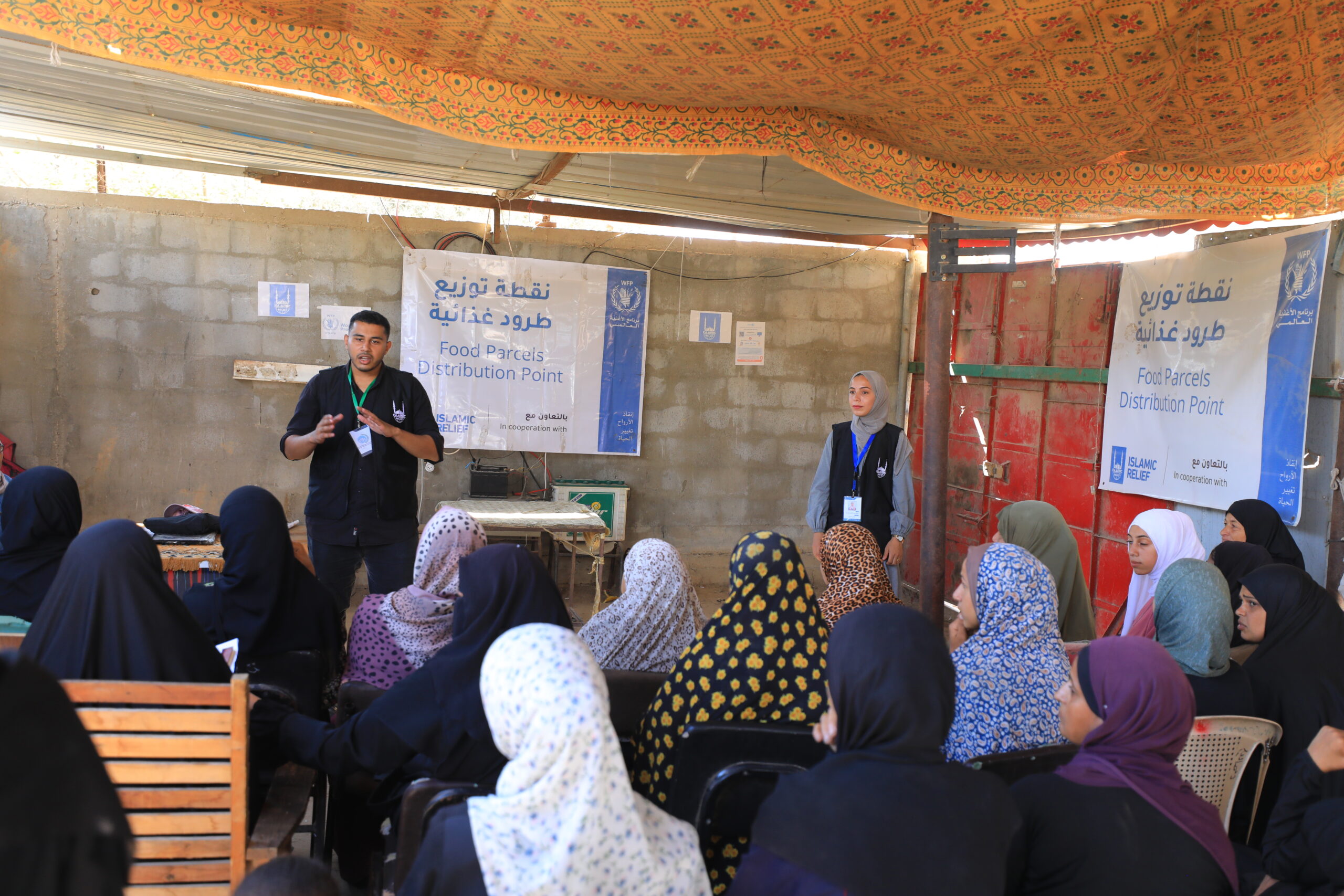
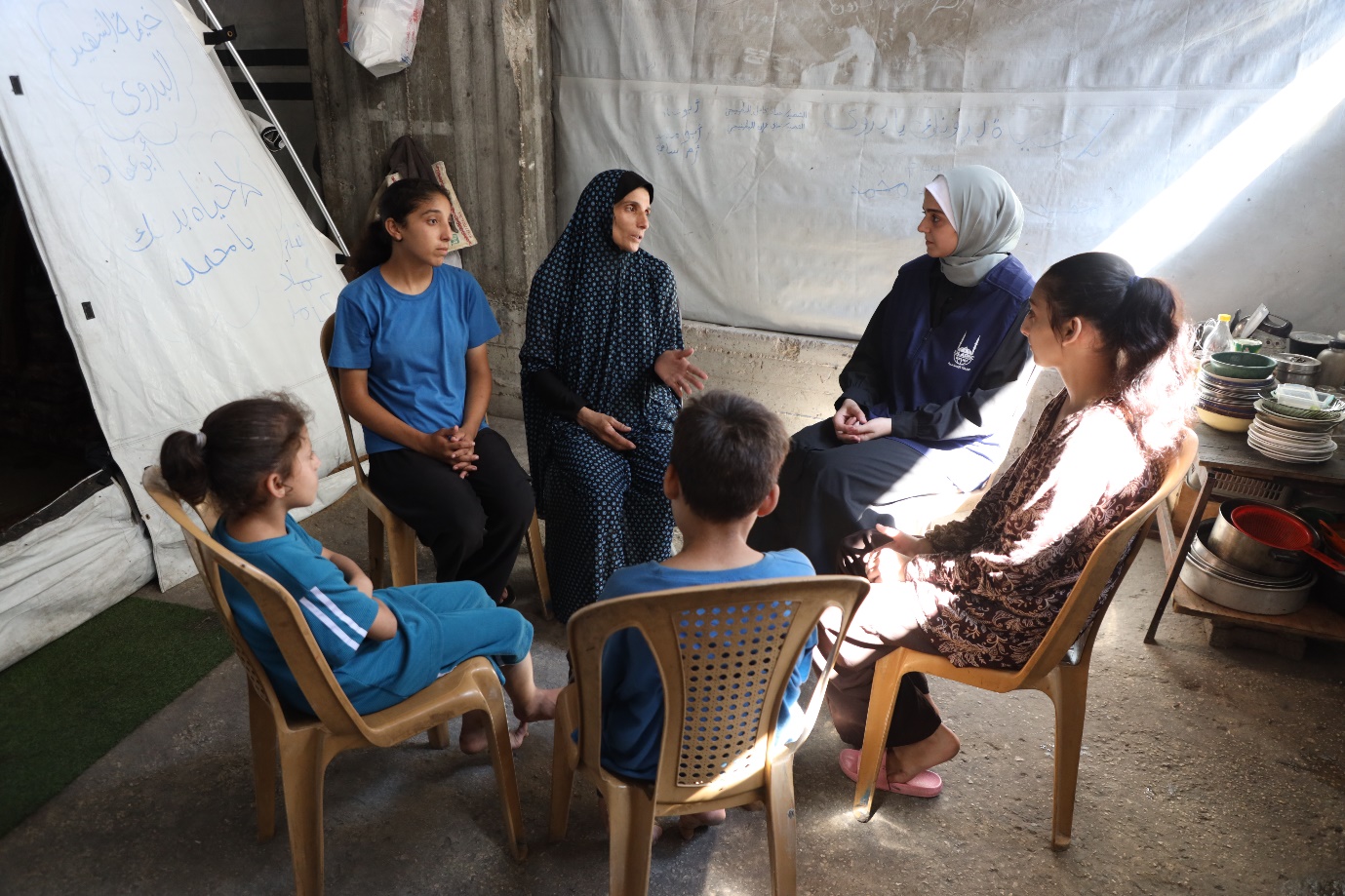
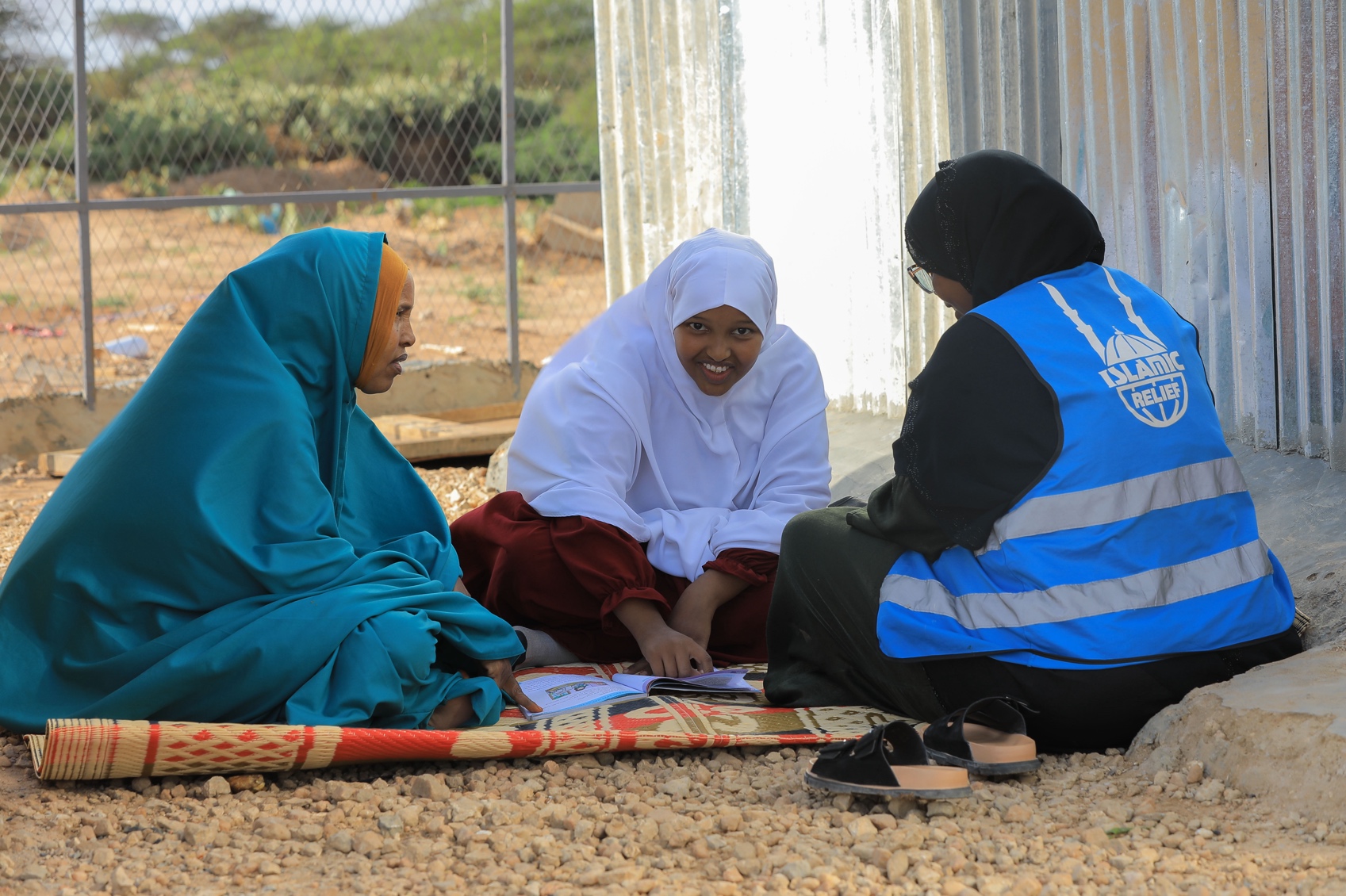
Islamic Relief providing awareness sessions for families in Gaza.
Photo: Islamic Relief providing awareness sessions for families in Gaza.

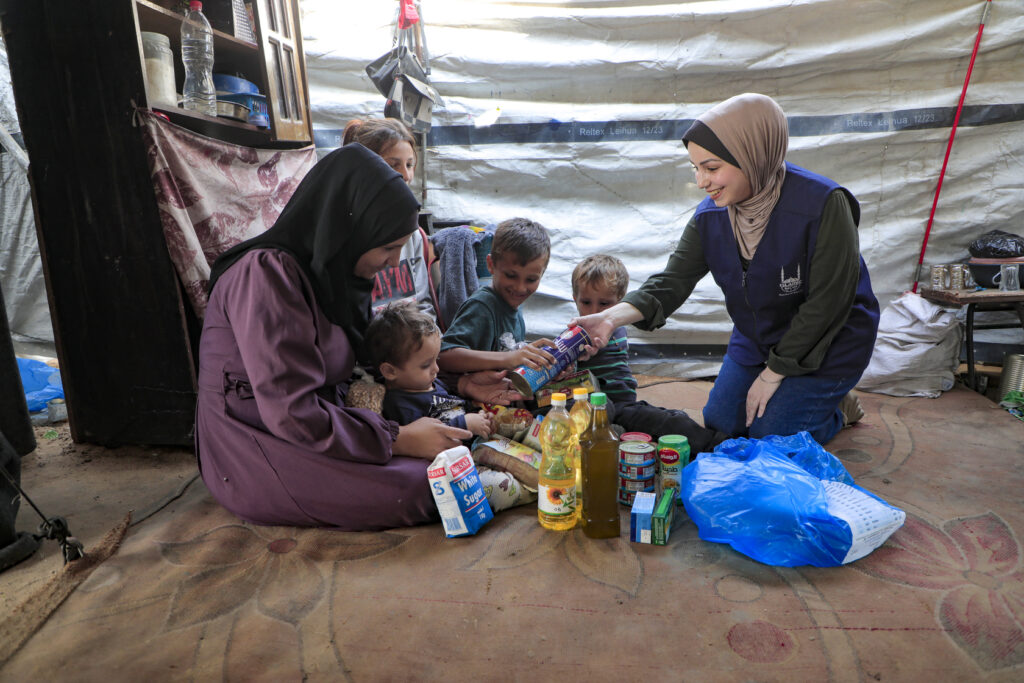
Our team is active throughout Gaza. Currently, Islamic Relief focuses on supporting orphan families, distributing food, wellbeing support, education, cleaning, and hygiene services and other essential aid. Since October 7, 2023, we have delivered water, medicine, medical items, hygiene/dignity kits, psychosocial support, and healthcare services. 

Addressing Current Concerns About Getting Aid in Gaza

There is a significant amount of confusion regarding the delivery and distribution of aid in Gaza. News agencies are not always providing accurate or up-to-date information. As a result, some of our donors are confused as to what is happening, and three current general concerns have emerged.  

How Does Anything Get into Gaza?

The first concern is that nothing is getting into Gaza due to the ongoing blockade. Yes, the truth is that major international NGOs face imminent deregistration by the Israeli authorities, and most have been unable to deliver any supplies to Gaza since 2 March, even with the new ceasefire. However, many aid organisations, like Islamic Relief and our partnering organisations, such as the World Food Programme (WFP) and UNICEF, still have operations on the ground. We are searching every avenue possible to obtain supplies to continue delivering aid. Furthermore, our partnerships that help deliver medical aid, such as with the Palestinian Australian and New Zealand Medical Association (PANZMA), remain our most consistent form of aid.

How Can There Be Supplies Available in Gaza?

The second concern is that nothing is available within Gaza – no shops or suppliers, and no cash economy. While it is true that food and goods are hard to find, there are suppliers. Recently, prices for almost all items have been significantly lower due to increased supply. However, they remain above pre-war levels, partially because of an added illegal cost referred to as “coordination fees.” 

Likewise, availability remains critically low for essential, nutritious items, such as meat, chicken, fish, eggs, and dairy. On the other hand, non-essential items, such as sweets, chocolate, and soft drinks, are becoming increasingly visible in markets. Limited quantities of fuel and cooking gas are also now entering Gaza.

There is also some cash available, though getting access to this money is difficult and expensive. This is where the multipurpose cash grants Islamic Relief provides can help. Through a specialised account system, it tries to help ease the process of attaining cash, allowing families to purchase the supplies they need, without leaving them with unnecessary items.

Where Does Islamic Relief Operate in Gaza?

The last concern relates to where within Gaza Islamic Relief is working. We are currently still working all throughout Gaza. If the bombing in the north and east escalates once again, we will continue to work in Middle Gaza and southern Gaza (where Rafah and Khan Younis are).

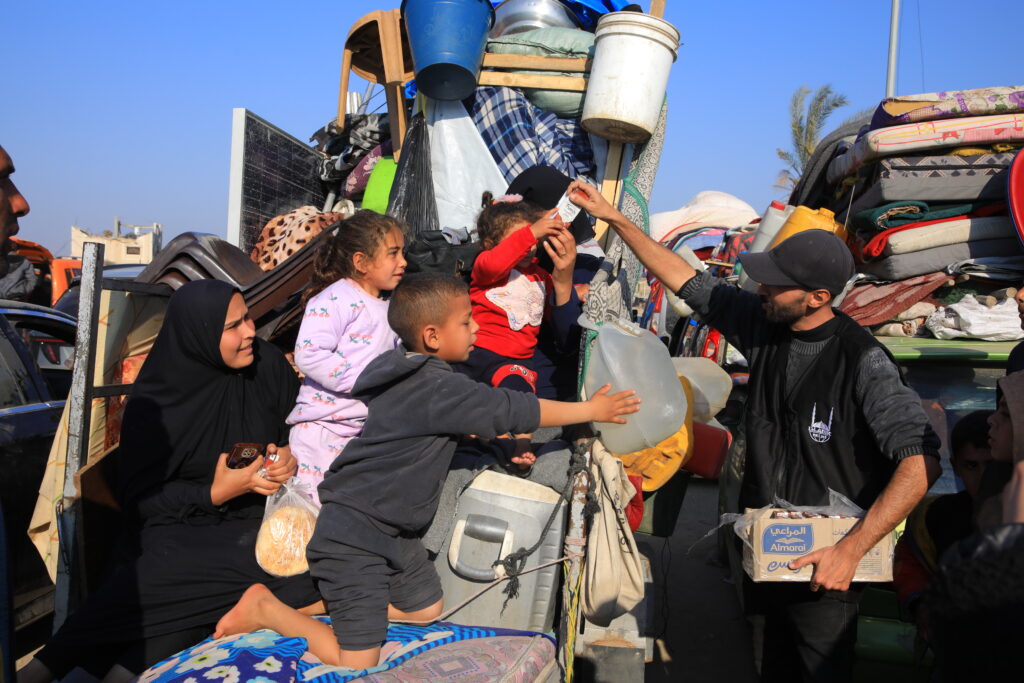
Islamic Relief providing clean water to needy families.
Photo: Islamic Relief providing clean water to needy families.

Overall, the situation is uncertain and subject to change. It is reasonable to consider the entire Gaza Strip to be a war zone, with the possibility that intense fighting will break out anywhere. 

Our Current Response

Islamic Relief teams in Palestine are active right now! Below is an update on the total activities implemented as of March 19, 2026. We are currently focusing on providing medical aid, delivering food where possible, and distributing multipurpose cash grants to orphans and their families.  

This week, we successfully provided educational programs to 110 displaced students through Al-Tawasol Educational Center and Marah Kindergarten.

IR Partners (Overall Emergency Responses)

  • Distributed food parcels to over 169,000 HH.
  • Delivered over 936,000 people clean water.
  • Distributed vegetable packs to 1.6 million HH.
  • Delivered cleaning services and hygiene supplies for 85 shelters.
 

Overall, we, in partnership with the IR family and the World Food Programme (WFP), have delivered over 75 million hot meals and food items since October 2023.

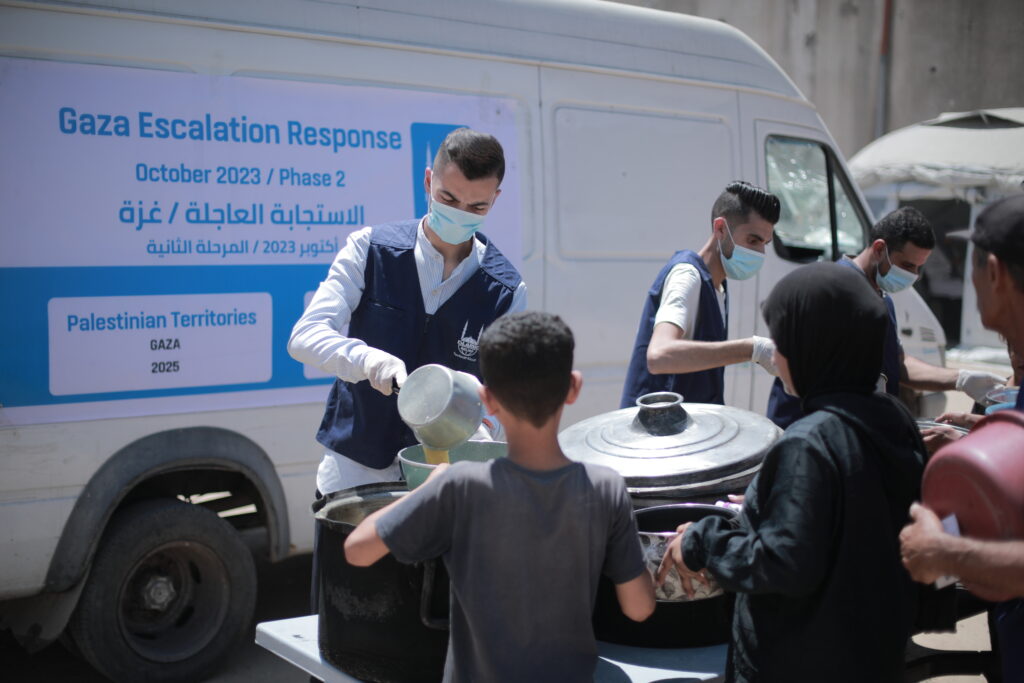
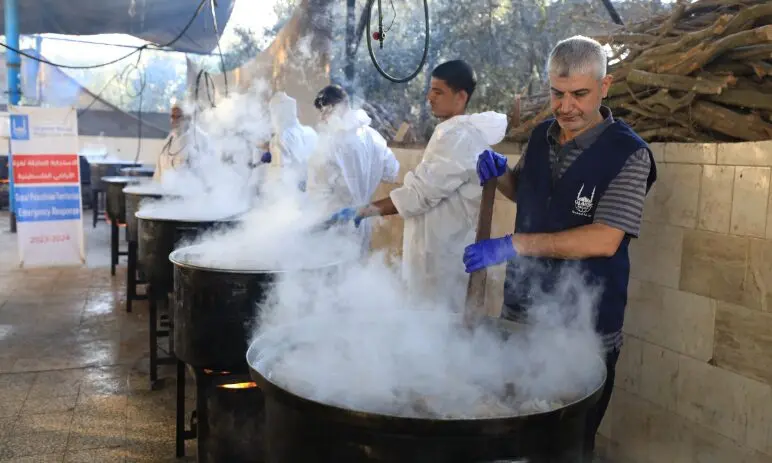
Islamic Relief, with World Food Program (WFP), delivering hot meals for cancer patients in Gaza.
Photo: Islamic Relief, with World Food Program (WFP), delivering hot meals for cancer patients in Gaza.

Making Food More Accessible in Gaza

At this stage, we are able to access a significant amount of food through our partnership with the World Food Program (WFP). WFP is a UN agency and supposedly has open access. Although this is not always the case, they do have the best chance of getting trucks in. We are therefore very fortunate to be partnering with them. We are also able to source some food within Gaza, although this is very limited and very expensive.  

What the Future Holds

As pointed out by the media and reports, the situation in Gaza is extremely volatile, dangerous, fluid, and unpredictable.

Our team is extremely courageous and committed and is doing everything in its power to continue delivering aid. It is hard to predict what will happen, so while we are very proud that we are delivering significant aid, particularly in distributing medical assistance and hot meals where possible, nobody can guarantee anything going forward.

We are committed to assisting and supporting our team by making sure they have the resources to carry on. Islamic Relief is committed to the rebuilding and reconstruction of Gaza in the long term.  

As everyone is probably aware, it is difficult to get aid into Gaza. However, our teams on the ground are working with various partners, international and local, which allows us to access aid for distribution. Together, with the World Food Programme (WFP), we have been able to deliver over 75 million hot meals since October 2023. Islamic Relief is also providing cleaning services and hygiene supplies for shelters, supplying clean water, hygiene, and sanitation amid the dire situation. 

We will continue doing everything in our power to alleviate the suffering of our brothers and sisters in Gaza. Islamic Relief is committed to the rebuilding and reconstruction of Gaza, currently and in the long term. We are committed to assisting and supporting our team by making sure they have the resources to carry on. And it is our donors who make it possible for us to continue our efforts in Gaza, as their support helps us reach even more people in need, as swiftly as possible.
Asif Sana, Director of Programs and Institutional Relations

In the ongoing crisis, Gaza needs your help

Help us provide urgent medical supplies, food and other crucial, life-saving aid now to families in need by giving with Islamic Relief.

01.29.26

Gaza Aid During Ramadan: How Your Support Helps

  Impact     Publications     Ramadan

Ramadan is a month defined by mercy, generosity, and care for those facing hardship. For many Muslims, it is also a time when attention turns to Gaza, where families continue to endure immense suffering and uncertainty in the midst of a horrific genocide.

Supporting Gaza during Ramadan is not only an act of compassion, but also a way of fulfilling religious responsibility through Zakat and voluntary charity. Islamic Relief Australia provides multiple pathways to support Gaza, allowing donors to give with clarity, confidence, and intention during this sacred month.

This guide explains how Islamic Relief Australia supports Gaza, the different forms that aid takes, and how your support makes a meaningful difference during Ramadan.

Why Gaza Needs Support During Ramadan

The humanitarian situation in Gaza remains catastrophic. Years of blockade, repeated escalations, and the destruction of essential infrastructure have left families struggling to meet basic needs.

During Ramadan, these challenges are often felt more acutely. Food insecurity, limited medical access, and shortages of essential supplies place additional strain on households already living in difficult conditions.

Islam encourages believers to respond to such hardship with compassion and responsibility, particularly during times of heightened spiritual awareness.

Giving to Gaza as Zakat and Sadaqah

Zakat is a pillar of Islam and a means of redistributing wealth to those in need. Aid provided to Gaza through Islamic Relief Australia is Zakat-eligible, allowing donors to fulfil their religious obligation while responding to urgent humanitarian needs.

In addition to Zakat, many people choose to give Sadaqah during Ramadan, seeking closeness to Allah through acts of generosity and kindness. Both forms of giving play an important role in supporting families facing hardship in Gaza.

Islamic Relief Australia’s Approach to Gaza Aid

Islamic Relief Australia has a long-standing presence in Palestine and works closely with trusted partners to deliver aid responsibly and effectively.

Rather than offering a single form of assistance, Islamic Relief Australia supports Gaza through a layered approach that addresses both immediate survival needs and critical medical care.

This approach allows donors to support Gaza in ways that align with their intentions and priorities.

Emergency Humanitarian Support

Islamic relief team on the ground saving lives in Gaza
Photo: Islamic Relief team on the ground saving lives in Gaza

At the foundation of Gaza assistance is emergency humanitarian relief.

This includes support such as:

  • food assistance for families facing shortages
  • access to clean water
  • essential relief items needed for daily survival.

Emergency aid helps families meet basic needs with dignity, particularly during times of crisis and heightened vulnerability.

Supporting emergency relief allows Islamic Relief Australia to respond flexibly as needs evolve on the ground.

Medical Assistance in Partnership With PANZMA

Medical needs in Gaza are critical and complex. Hospitals and clinics face shortages of equipment, supplies, and specialist care, particularly during periods of heightened conflict.

Islamic Relief Australia works in partnership with PANZMA, a trusted medical organisation, to deliver essential healthcare services in Gaza.

Through this partnership, donations support:

  • medical supplies and equipment
  • hospital services
  • urgent treatment for injured and vulnerable patients.

This collaboration allows Islamic Relief Australia to provide specialised medical assistance that would not be possible without trusted local and regional partnerships.

Urgent ICU Support for Critical Patients

Some medical needs in Gaza are immediate and life-threatening.

Through PANZMA’s urgent ICU program, Islamic Relief Australia supports critical care services for patients requiring intensive medical treatment. This includes access to essential ICU equipment and life-saving interventions.

Supporting urgent ICU care helps ensure that patients facing the most severe conditions receive timely and appropriate treatment.

Heart of Hope: Cardiac Care in Gaza

Cardiac conditions, particularly among children, require specialised and ongoing medical care.

The Heart of Hope program, delivered in partnership with PANZMA, supports cardiac treatment for patients in Gaza who would otherwise have limited access to such care.

This program reflects a commitment to long-term health outcomes, offering hope and healing beyond immediate emergency response.

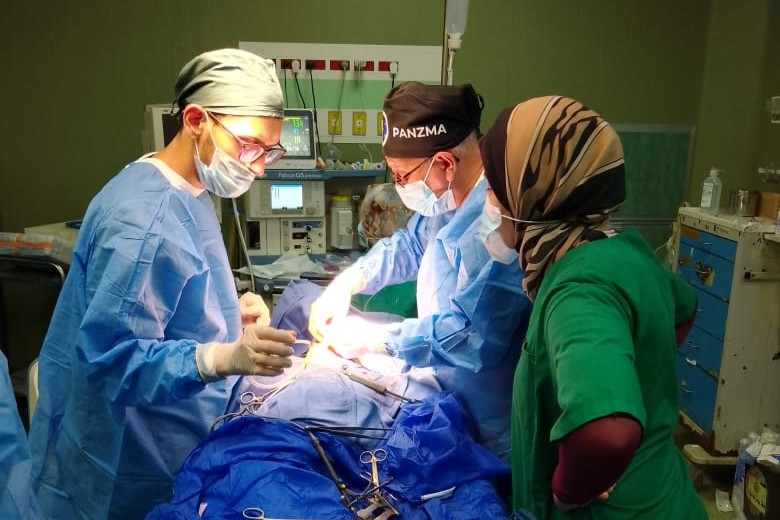
PANZMA doctors doing Heart Surgery, which will still be ongoing Gaza aid in Ramadan
Photo: PANZMA doctors performing surgery on a patient in Gaza

Giving With Intention During Ramadan

Ramadan encourages believers to give with sincerity, awareness, and compassion.

Whether supporting emergency relief or specialised medical care, every contribution helps alleviate hardship and restore dignity to families in Gaza.

Islamic Relief Australia’s range of Gaza programs allows donors to give in a way that reflects their intentions, while ensuring assistance reaches those most in need.

A Balanced and Responsible Way to Support Gaza

Supporting Gaza during Ramadan does not require choosing one form of aid over another. Emergency relief, medical assistance, and specialised care all play vital roles.

By giving through Islamic Relief Australia, donors can trust that their support is delivered responsibly, in line with Islamic principles, and through established partnerships.

Supporting Gaza through Islamic Relief Australia allows generosity to take meaningful form, providing both immediate relief and critical medical care to those facing immense hardship.

Through thoughtful and intentional giving, your support helps bring relief, healing, and hope to families in Gaza during this blessed month.

11.13.25

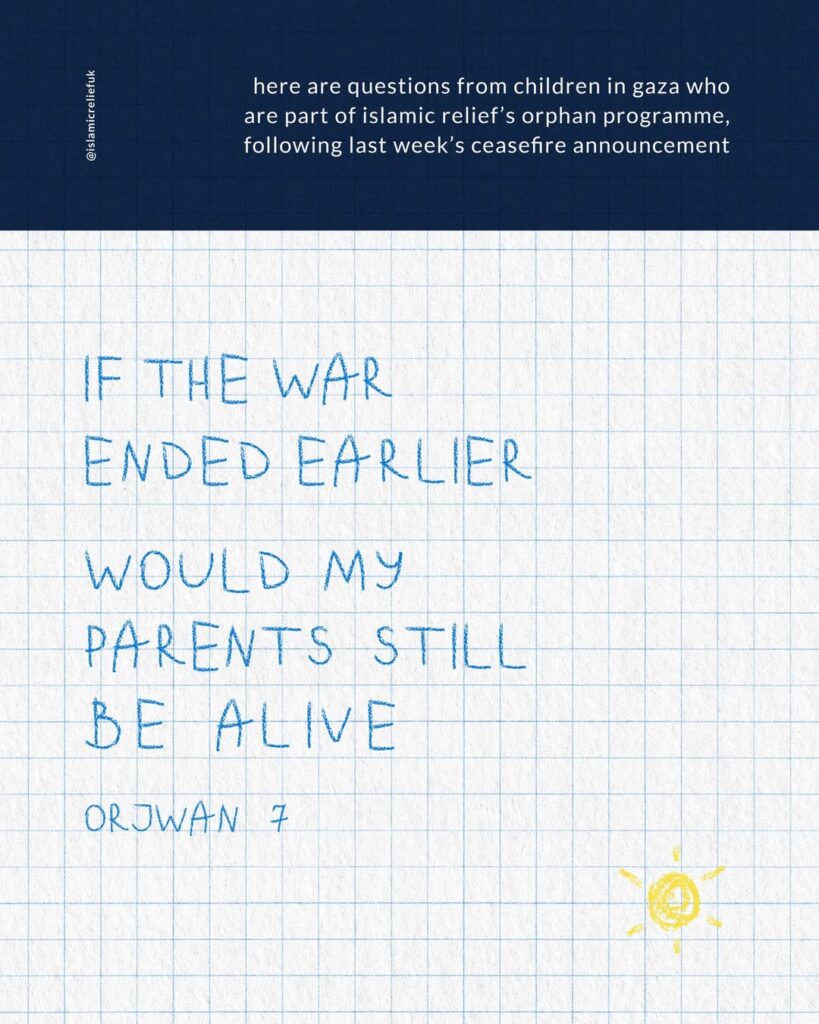
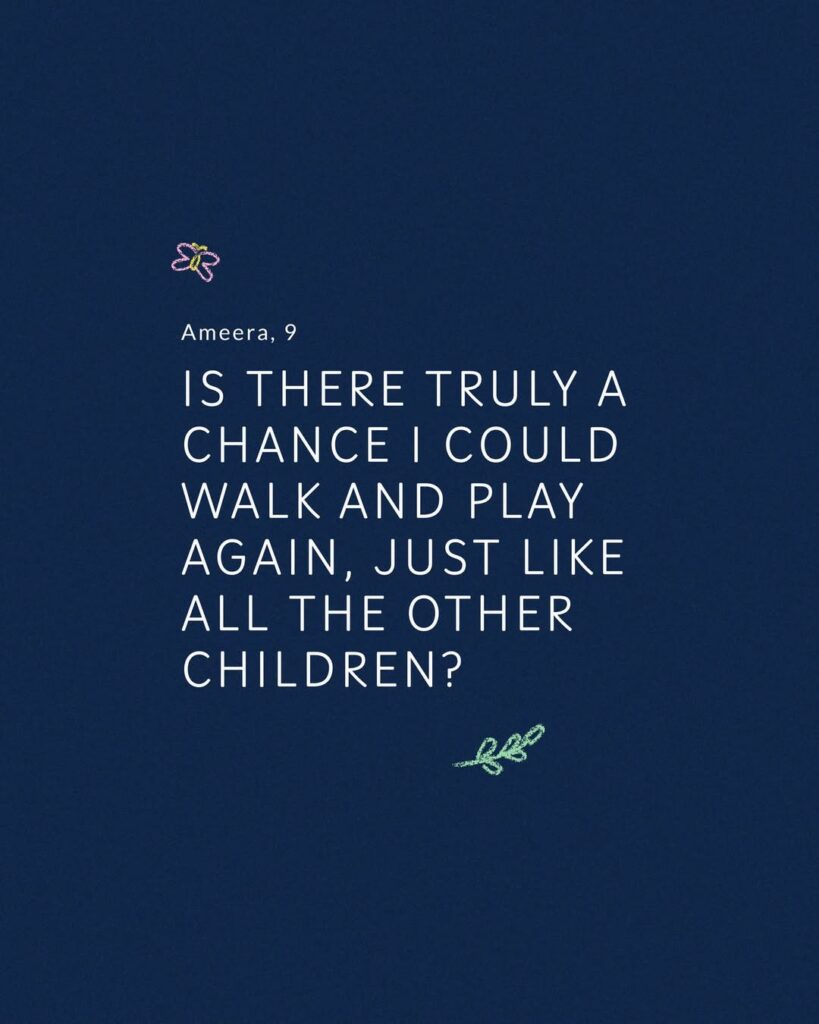
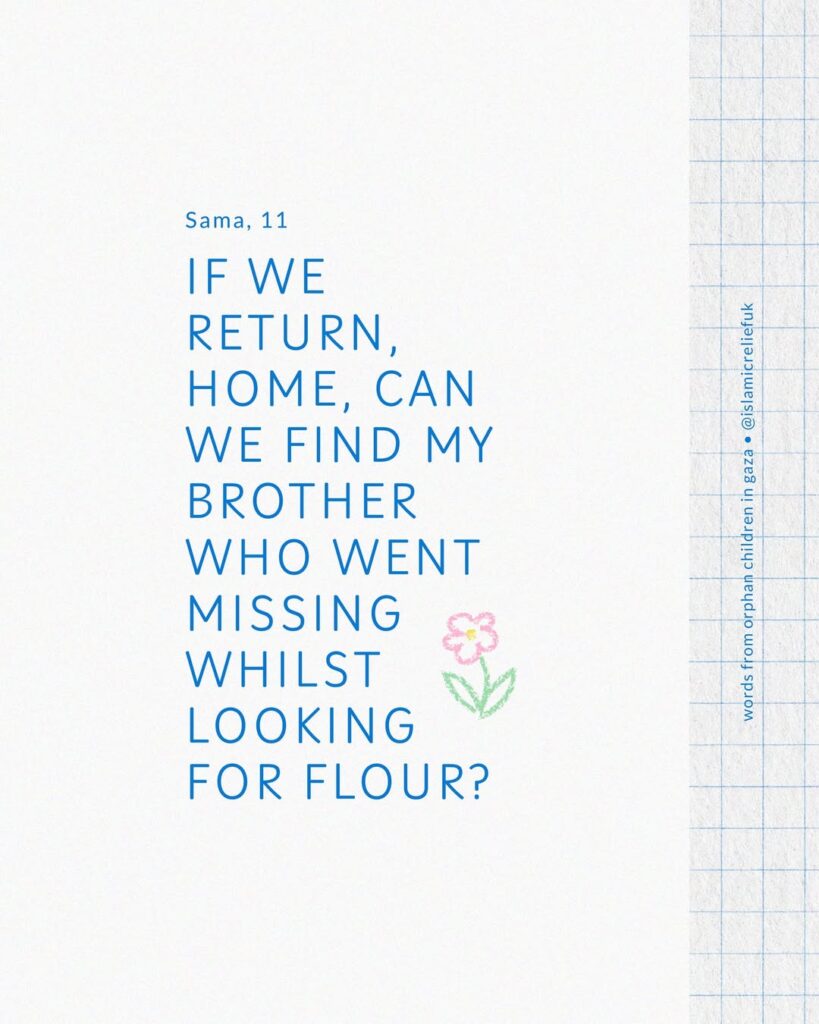
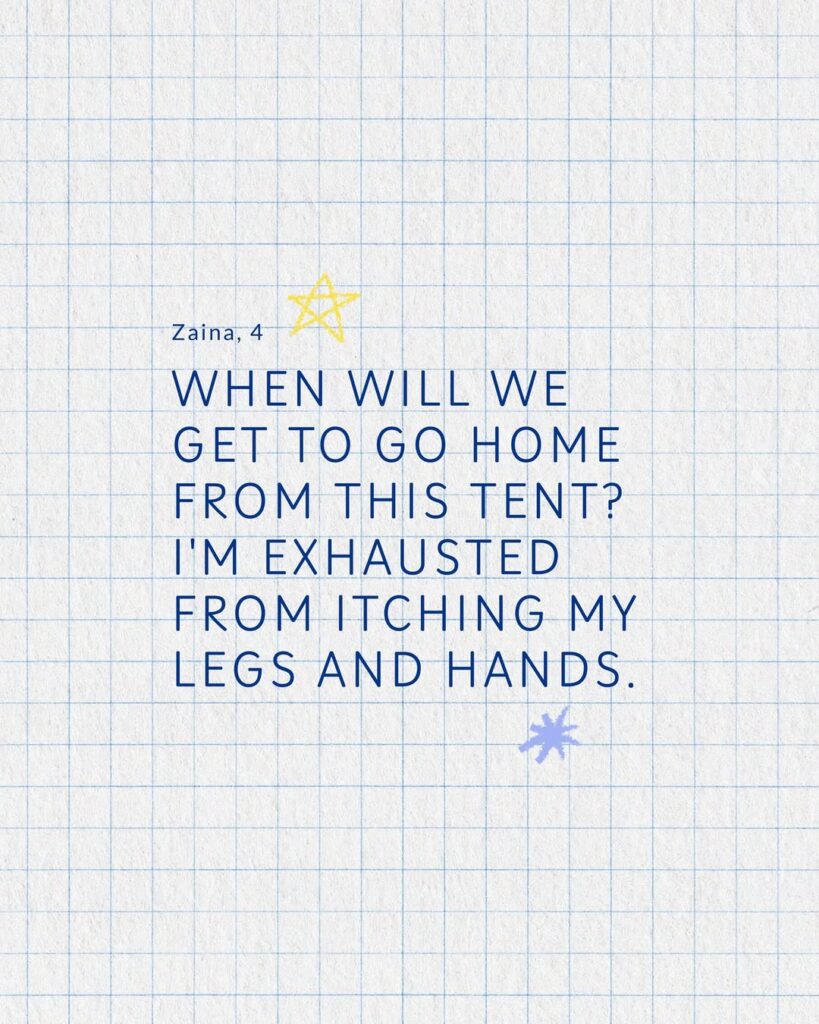
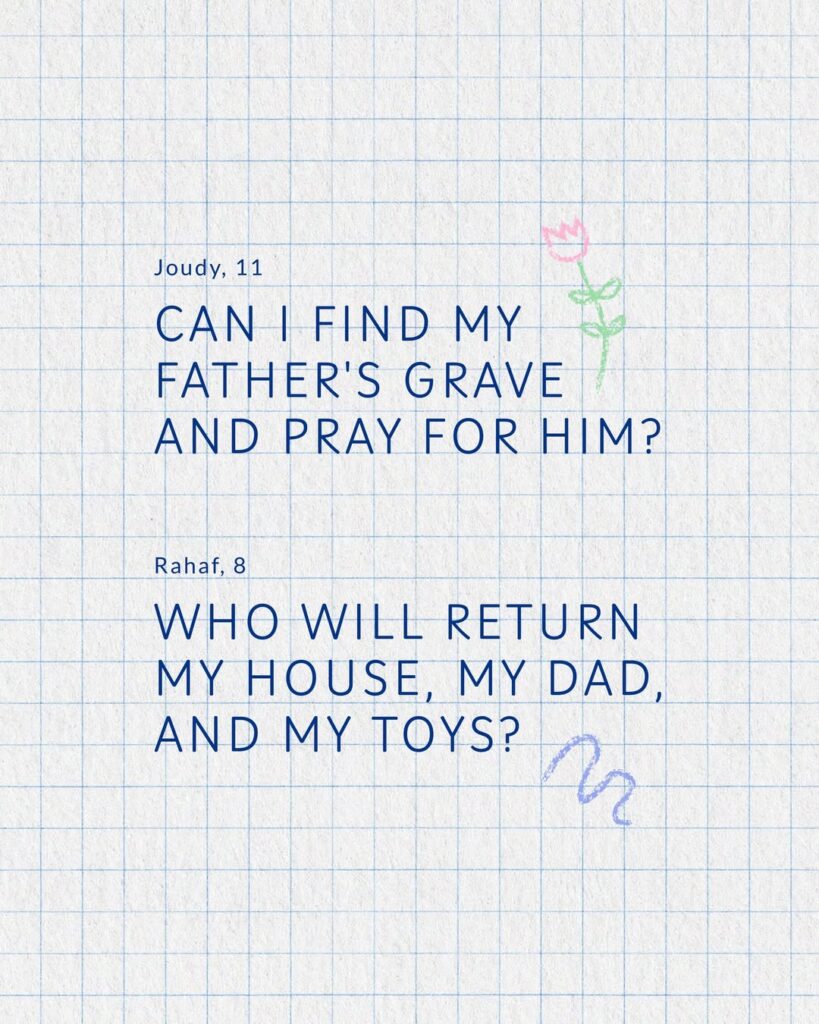
“If the war ended earlier, would my parents still be alive?”: Voices from Gaza’s orphan children

  News     Publications

After more than two years of relentless atrocities, a ceasefire deal has been agreed. But for Palestinians in Gaza this is not an end to the nightmare. The toll on children has been devastating.

Homes, hospitals, and schools lie in ruins, and countless families remain displaced. More than 65,000 people have been killed. Furthermore, 39,000 children have been left without parents or guardians to care for them.

Grieving, exhausted, and hungry, they have been shattered and are facing a man-made famine.

Among them are children supported through Islamic Relief’s Orphan Sponsorship Program – young lives marked by unimaginable loss and pain.

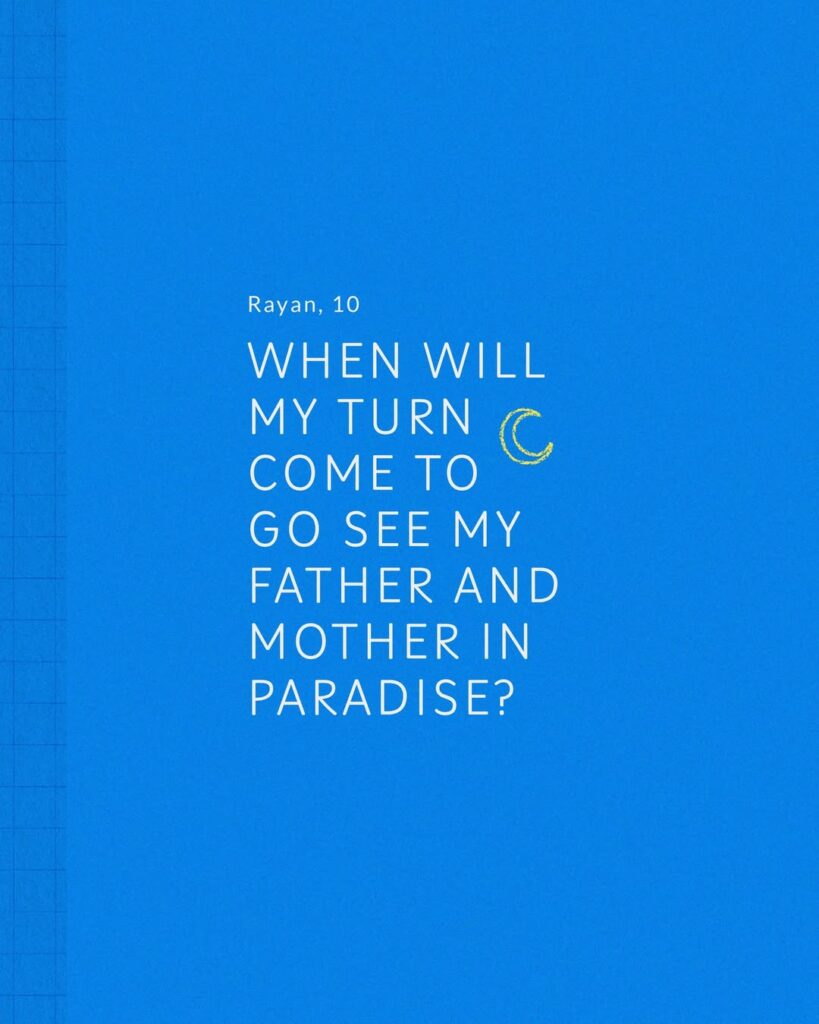
Recently, our teams received questions from some of these children following the ceasefire announcement last month. Their words lay bare the trauma of the bombardment, and the longing for safety, home, and family.

Here, we hear from some of Gaza’s most vulnerable.

The questions no child should have to ask

Each question reflects a child’s attempt to understand what has been taken from them. Despite their pain, they hold onto the possibility of a future beyond loss, and here at Islamic Relief, we’re here to support them through some of their hardest moments.

A lifeline of hope

For over 22 years, Islamic Relief has been supporting orphans in Gaza. Since October 2023, the scale of need has grown unimaginably. But thanks to your support and generosity, our Orphan Sponsorship Program has been a lifeline for thousands of children – giving them hope when everything else has been taken away from them.

Islamic Relief has been able to expand our Orphan Sponsorship Program to reach over 21,000 children in Gaza – including 13,500 who have been newly sponsored since the escalation began.

However, we are devastated to report that since October 2023, 175 of our sponsored orphans and 72 guardians have been killed.

Your orphan sponsorship has continued to be a lifeline for the children of Gaza, in the midst of blockade and bombardment.

These vital cash grants help families with access to urgent funds, providing orphan families with access to food , and more importantly, hope.

Supporting Gaza’s orphan children

Now, Gaza’s children continue to face extraordinary hardship. Yet, through your generosity, they are finding strength and hope.

Together, we can ensure that orphans in Gaza are cared for, protected, and given the chance to rebuild their lives.

Help support an orphan and change their lives

For just $100 a month, you can give the children of Gaza a chance to rebuild and see a brighter tomorrow.

10.29.25

Gaza Ceasefire Must be Upheld as Civilians Suffer a Night of Terror

  Press Releases

Islamic Relief is appalled at the death and destruction in Gaza overnight – the deadliest period since the ceasefire was announced, as Israeli bombs tore through tents and shelters of displaced families and killed dozens of Palestinians, including more than 20 children.

The ceasefire announcement brought hope, but last night brought pure terror – families who were celebrating with relief just days ago are now buried under rubble. The initial hope is rapidly fading as commitments are broken on a daily basis and Israel continues to kill Palestinians and block humanitarian aid.

Despite promises to allow a surge of aid into Gaza to stop the famine, nowhere near enough is being allowed in. Lifesaving food, medicine, and shelter continue to be blocked, and many NGOs are prevented from bringing aid in.

World leaders must act urgently to ensure the ceasefire is upheld, and pressure Israel to stop killing civilians, end its illegal blockade and allow full, unimpeded humanitarian access.

In the endless terror, Gaza needs your help

Help us provide urgent medical aid and other crucial, life-saving support now to families in need by giving with Islamic Relief.
10.15.25

Gaza Ceasefire Explained

  News     Press Releases

On 10 October, the first phase of a ceasefire between Israel and Hamas came into effect. While aid organisations, including Islamic Relief, welcomed the news, much uncertainty remains, and the humanitarian situation is still catastrophic.

Here, we explain what the ceasefire involves and what it could mean for the humanitarian crisis in Gaza.

What is a ceasefire?

A ceasefire is an agreement to pause acts of violence by military and/or other armed forces and groups in a conflict. Ceasefires usually have a series of conditions attached and last for a sustained period of time.

Ceasefires can be a first step in de-escalating a conflict. They can be employed for humanitarian purposes, such as bringing more aid into a conflict zone or allowing civilians to escape to safety.

A ceasefire is not the same as an armistice, which is a formal agreement to permanently end all military operations in a conflict. Armistices do not establish peace, but rather end fighting so involved parties can commit to resolving their differences through negotiations.

How did the Gaza ceasefire happen?

The first phase of the ceasefire came into effect on 10 October at 12:00 local time (09:00 GMT), after Hamas agreed and the Israeli government voted to approve the US-brokered agreement.

The announcement is a significant step. But long overdue after around 68,000 people have been killed, Gaza has been bombed into rubble, and a man-made famine.

Islamic Relief and many other organisations have repeatedly called on the international community to demand a ceasefire. There has been huge and sustained public pressure, but little apparent progress. However, in recent weeks, mediators including the US, Qatar, and Türkiye had increased pressure on both sides.

What are the terms of the Gaza ceasefire?

The ceasefire is expected to follow several stages, with negotiations continuing throughout the first stage to agree key unresolved issues such as disarmament and who will govern Gaza after the ceasefire.  

The first stage is now underway, with Hamas releasing the 20 still-living hostages captured on 7 October and the bodies of other hostages, and Israel releasing almost 2,000 Palestinians from Israeli jails and also beginning to return the bodies of hundreds of Palestinians.

Israeli forces have also partially withdrawn from parts of Gaza. But they retain full control of more than half of the enclaveIsrael has also said it will allow 600 trucks carrying aid and essential items to enter Gaza each day, and will allow displaced Palestinians to return through the Rafah crossing under EU-supervised coordination with Egypt.

The US has deployed 200 troops to Israel, which it says will oversee the ceasefire’s implementation. These troops will not enter Gaza itself.

Are there any barriers to the ceasefire’s success?

Yes. Relations between the two sides are incredibly strained, and any violations from either side risk completely derailing negotiations.

Israel’s blockade remains in place, which means it retains full control over what comes in and out of Gaza. On 14 October, Israel announced it would cut the number of aid trucks allowed in to just 300 per day and shut the Rafah crossing once more. It reportedly reversed this decision the following day, but this illustrates the fragility of the agreement and the level of control that Israel continues to have over humanitarian access.

The humanitarian crisis in Gaza is catastrophic, and aid delivery to starving people must not be a bargaining chip for negotiations that can be withdrawn at any moment.

Over the past 24 hours, there have also been reports of several Palestinians shot dead by Israeli forces. While many other sticking points will need to be ironed out to see future stages of the ceasefire implemented successfully. For example, questions remain over whether Hamas will disarm and who should govern Gaza after the ceasefire.

The ceasefire agreement does not apply to the West Bank, including East Jerusalem, where we have seen an increase in Israeli attacks and human rights violations over the past two years. A further escalation there could also jeopardise the deal.

Despite the challenges, both sides have already made compromises to agree to the current ceasefire, and international pressure for an end to the conflict is likely to remain intense during this first stage.

What happened to the last ceasefire in early 2025?

The previous ceasefire agreement, announced in January 2025, initially brought some respite for people and allowed aid agencies, including Islamic Relief, to scale up our work. However, it quickly broke down. Within weeks, Israel resumed and intensified its bombing and enforced a total siege of Gaza, shutting off all aid and commercial supplies. Israel also escalated its attacks on Palestinians in the West Bank, including East Jerusalem, during the ceasefire period. This must not be allowed to happen again this time.

What’s happening in Gaza right now?

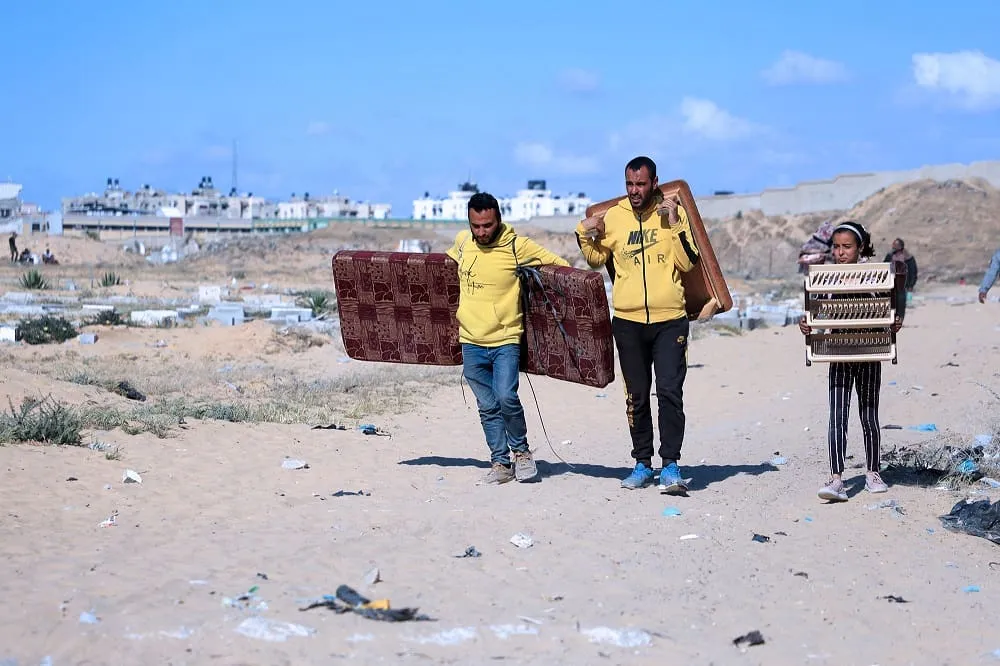
Since the ceasefire was announced, over 332,000 people are thought to have moved to other parts of the Gaza Strip. Many return to find their homes reduced to rubble. While some are recovering what belongings they can and returning to shelters, others are setting up tents on the sites of their former homes. Some family members have been able to reunite after months of sheltering separately.

Is more humanitarian aid entering Gaza?

The ceasefire commits to a target of 600 trucks a day. This is similar to the number reaching Gaza before the current crisis. However, in recent months, the influx of aid has been practically non-existent, meaning 600 trucks a day will be a small drop in an ocean of need.

So far, we are seeing a small but significant increase in the amount of aid getting in. But it is still just a fraction of what has been agreed.

Restrictions on the types of goods that can enter Gaza remain in place and are likely to impact the delivery of some desperately needed items. Gaza has been under Israeli blockade since 2007, which restricts the movement of goods and people in and out of the Strip.

This has huge implications for humanitarian efforts. For example, thousands of essential items are restricted from entering Gaza because Israel considers them to have a ‘dual use’. This means it can be used for both civilian and military purposes. Things like fuel, water filters, solar pumps and surgical scissors have been refused entry on these grounds.

The United Nations Secretary-General has committed to scaling up humanitarian relief in Gaza. They urge the unimpeded entry of aid and essential commercial materials.

Will Islamic Relief deliver more aid to Gaza?

Islamic Relief is ready to massively scale up our current lifesaving aid and help reconstruction efforts as soon as restrictions on humanitarian access are lifted. We hope the ceasefire agreement will enable us and other aid agencies to get aid to Palestinian families in dire need.

We note that previous promises to allow more aid into Gaza have been immediately broken and urge that all restrictions on humanitarian access be lifted. The international community must hold Israel to account if aid continues to be blocked.

As of October 2025, all of Islamic Relief’s programming in Gaza has been made up of emergency projects.

Throughout the crisis, we have supported Palestinians in Gaza by delivering hot meals, food parcels, water, and hygiene kits. We also expanded our Orphan Sponsorship Program, and are addressing mental and physical healthcare needs wherever possible. This work will expand in the coming days and weeks.

What was the situation like before the ceasefire?

Prior to the ceasefire, Palestinian families trapped in Gaza suffered over 2 years of relentless bombardment. Pleas for a ceasefire went largely ignored. The Gaza Strip has been left in ruins. Around 68,000 people in Gaza have been killed, including around 20,000 children, and many more left with life-changing injuries.

Israeli bombs destroyed hospitals, schools and shelters, while families were forced to flee their homes time and time again. Famine has been declared in Gaza City, while starvation and malnutrition are rife throughout the Strip.

Amid so much suffering, the entry of aid and other essential items was severely restricted, hampering efforts to preserve life.

The ceasefire is not an immediate resolution to the humanitarian crisis in Gaza. Rather, it is the first step towards enabling Palestinians to recover and, eventually, rebuild.

What else is needed to support vulnerable people in Gaza?

It is vital that this ceasefire agreement is fully and immediately implemented. 

This agreement must lead to a lasting peace, with justice and accountability for the horrors perpetrated against civilians. All people must be able to live in safety and dignity, and have their fundamental human rights upheld.

Islamic Relief believes this will not be possible until the root causes of the crisis are addressed. Not until there is an end to the illegal Israeli occupation of Palestine.

In the endless terror, Gaza needs your help

Help us provide urgent medical aid and other crucial, life-saving support now to families in need by giving with Islamic Relief.
10.09.25

Gaza Ceasefire Announcement Must Not Be Another False Dawn

  Press Releases

Today’s news that Israel and Hamas have agreed to the first phase of a ceasefire deal is a significant but long-overdue step, after two years of relentless atrocities. In what a UN expert panel determined amounts to genocide against Palestinians in Gaza.  

But the big test will be what happens next.

There must be no more false dawns and broken promises. World leaders must now ensure there is a permanent end to Israel’s systematic attacks, displacement, and starvation of civilians. All restrictions on humanitarian access must be immediately lifted so that desperately needed aid can reach people in Gaza. Any agreement must not further entrench Israeli control over Gaza.  

There can be no sustainable peace without justice and accountability, an end to impunity, and respect for international law. We need security, rights, and dignity for all people, and this will only be possible when there is an end to Israel’s illegal occupation of Palestine.  

The most urgent need right now is to get aid into Gaza. There is no time to waste, as children are starving to death every day in a man-made famine and homes, hospitals, schools, and other essential services are now rubble. Today’s announcement alone does not stop the famine. Islamic Relief is ready to massively scale up our current lifesaving aid and help reconstruction efforts as soon as restrictions on humanitarian access are lifted. 

The international community must ensure that new commitments are adhered to and hold parties accountable for any violations. A repeat of the last ceasefire – when Israel resumed its bombing and cut off all humanitarian aid after only a few weeks of respite – must not be tolerated. Israel must also not be allowed to use this opportunity to escalate its attacks and violations of the rights of Palestinians in the West Bank. The world must act now to safeguard this moment and pursue a credible pathway to lasting peace.

10.08.25

‘Insha’Allah, I will find a sponsor so I can work on myself and my dreams’

  Publications

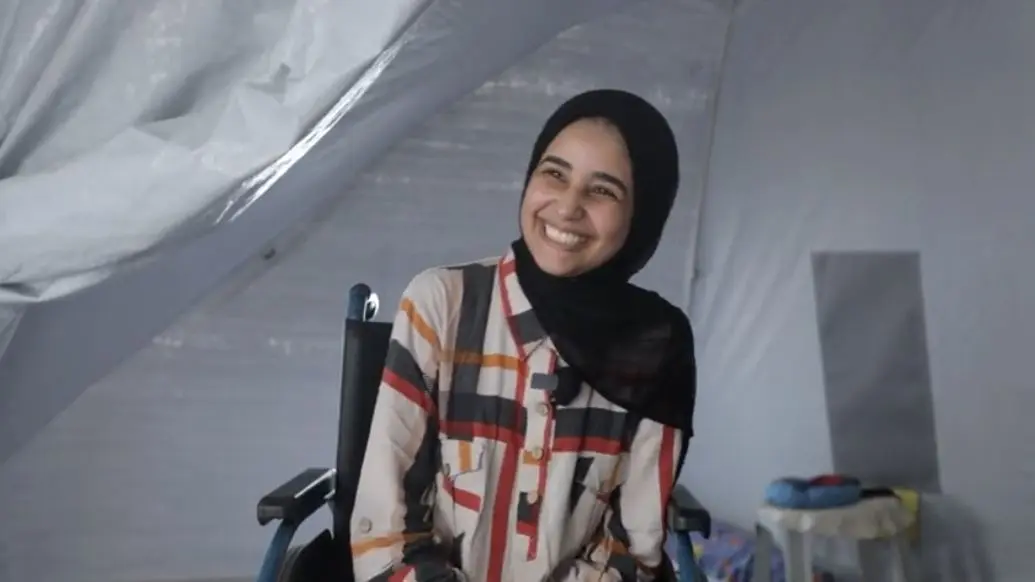
Rama, 16, is an orphaned child waiting to be matched with a sponsor. Like so many children in Gaza, her world has completely changed since October 2023.

In September last year, Rama’s father and 4 of her siblings were killed when their home in Gaza City was bombed. Rama lost one of her legs and suffered third-degree burns in the attack.

“Tala was 17 years old, Ahmed was 15 years old, Abdul Kareem was 9 years old, and the youngest, Maraam, was two-and-a-half years old,” the children’s mother, Fadia, who also lost a leg in the blast, recalls.

The family is now just Fadia, Rama, 2 other daughters and 3 sons. The survivors have suffered psychological trauma and life-altering injuries.

“I was injured and came out from under the rubble,” Rama says, adding that the family had to stay in hospital for almost 2 weeks. “There was a lack of medication… it was very hard for us to get treatments, so our wounds took longer to heal. We had no food or drink, so we suffered a lot.”

Fadia, mother of Rama, is waiting for a sponsor to be matched to her children

For Fadia, who is struggling to get by with an ill-fitting prosthetic, meeting her children’s needs is extremely challenging. Rama’s burns require intensive dermatological treatment.

“My daughter needs to see a doctor almost weekly,” Fadia says. “Honestly, her condition is taking its toll. I go to bed crying for her and wake up crying for her.”

Fouad, Rama’s 12-year-old brother, was thrown onto the roof of a neighbour’s home by the force of the blast. Emergency surgery saved his leg from amputation, but he has problems with his spine and knee that require physiotherapy. Fouad helps his mother out by fetching water, but he can’t walk far or carry heavy loads. Like Rama, Fouad is waiting to be matched with a sponsor.

Now living in a tent without any source of income, the family are struggling to make ends meet, while grieving their loved ones and coping with their own injuries. The children miss school, and Fadia feels hopeless at times.

“The situation is very difficult, and I don’t know how to sort it out,” she says. “There are days when we can’t find food. Sometimes, we have only a cup of bitter tea to keep going. If good people give us food, we have something to eat, if no one gives us anything, we don’t eat. The situation is very difficult.”

Sponsorship won’t heal the family’s physical and emotional scars, but we can help ease their burden, providing money that they can use to buy food and seek much-needed medical care. As they struggle to keep surviving and piece their lives back together, Rama still dreams of her future. With your support, we can help her get there.

“Now I am struggling a lot with education. All my friends are carrying on with their studies, but in my current condition, I cannot go to the temporary education tents – the roads in Gaza are not suitable for my wheelchair.

“I don’t have a mobile and we have no internet. My academic level has dropped from before, I’m not able to maintain it. I used to memorise the Qur’an, and I learned many chapters. Now I’m unable to keep up with learning. I’m sad when I think about how I used to be and how I am now.

“My ambition was to become a translator and learn a lot of languages. Insha’Allah, we find a sponsor for me so I can work on myself and achieve my dreams.”

Islamic Relief is already a lifeline for more than 21,000 orphaned children in Gaza, but more than 7,000 children like Rama are in our system waiting to be matched with a sponsor.

Be a lifeline for Gaza’s orphans. Palestinian children need your help now.

Help support an orphan and change their lives

For just $100 a month, you can give the children of Gaza a chance to rebuild and see a brighter tomorrow.

10.07.25

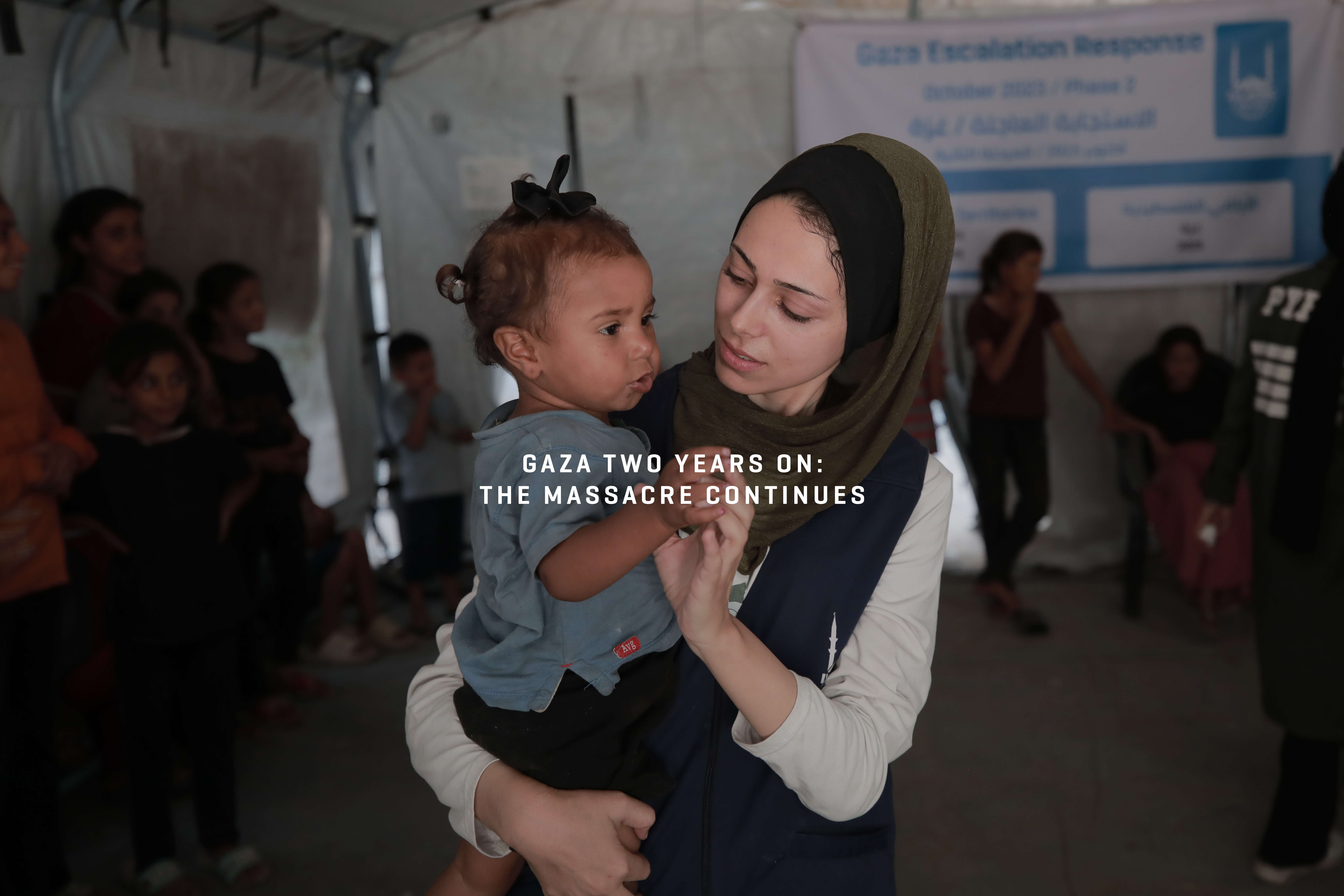
Gaza 2 Years On: The Massacre Continues

  Publications

October marks 2 years of Israel’s relentless assault on Gaza. That we’ve reached this grim milestone is testimony to the complicity of world leaders who have failed to stop the daily war crimes being carried out on Gaza.

More than 66,200 people have been killed – including some 20,000 children – and over 168,900 injured since the onslaught began.

Life in Gaza today is clouded by danger and uncertainty. Children are starving to death in a man-made famine and, each day, more civilians are massacred. The Israeli blockade traps families in a daily struggle to get food, medicine, shelter, water – everything they need to survive.

Uprooted repeatedly

Almost everyone in Gaza has been forced from their homes, often multiple times. 90% of families have been displaced an average of 6 times, while others have been forced to flee many more times – including Islamic Relief’s own staff.

The situation is getting even worse, with Israel intensifying its attack on Gaza City and ordering people to leave.

For some, leaving Gaza City is just not an option. Relocating is extremely expensive, and many say they have nowhere else to go. Others fear that if they leave, they’ll never be able to return. With famine declared in Gaza City and the surrounding areas, others are too sick or weak to survive another journey. Those who have left are being forced into increasingly overcrowded camps, where diseases and starvation are rife.

Hundreds of thousands of people are squeezed into tents along the beach, in the wreckage of bombed buildings and along the streets.

Perhaps no one is suffering more than Gaza’s children. Struggling to survive, they are also seeing their hopes for the future being snuffed out. Famine threatens the lives of over 132,000 children, and all children under 5 are at risk of severe malnourishment, which can lead to long-term health issues, even for those who manage to get treatment. An entire generation of children is now in their third year out of school, and we are seeing rising mental health issues due to the extreme suffering and grief.

Your impact, their resilience 

Israel’s illegal blockade continues to restrict humanitarian aid, but amid so much hardship, Islamic Relief continues to be a lifeline to people in desperate need in Gaza.

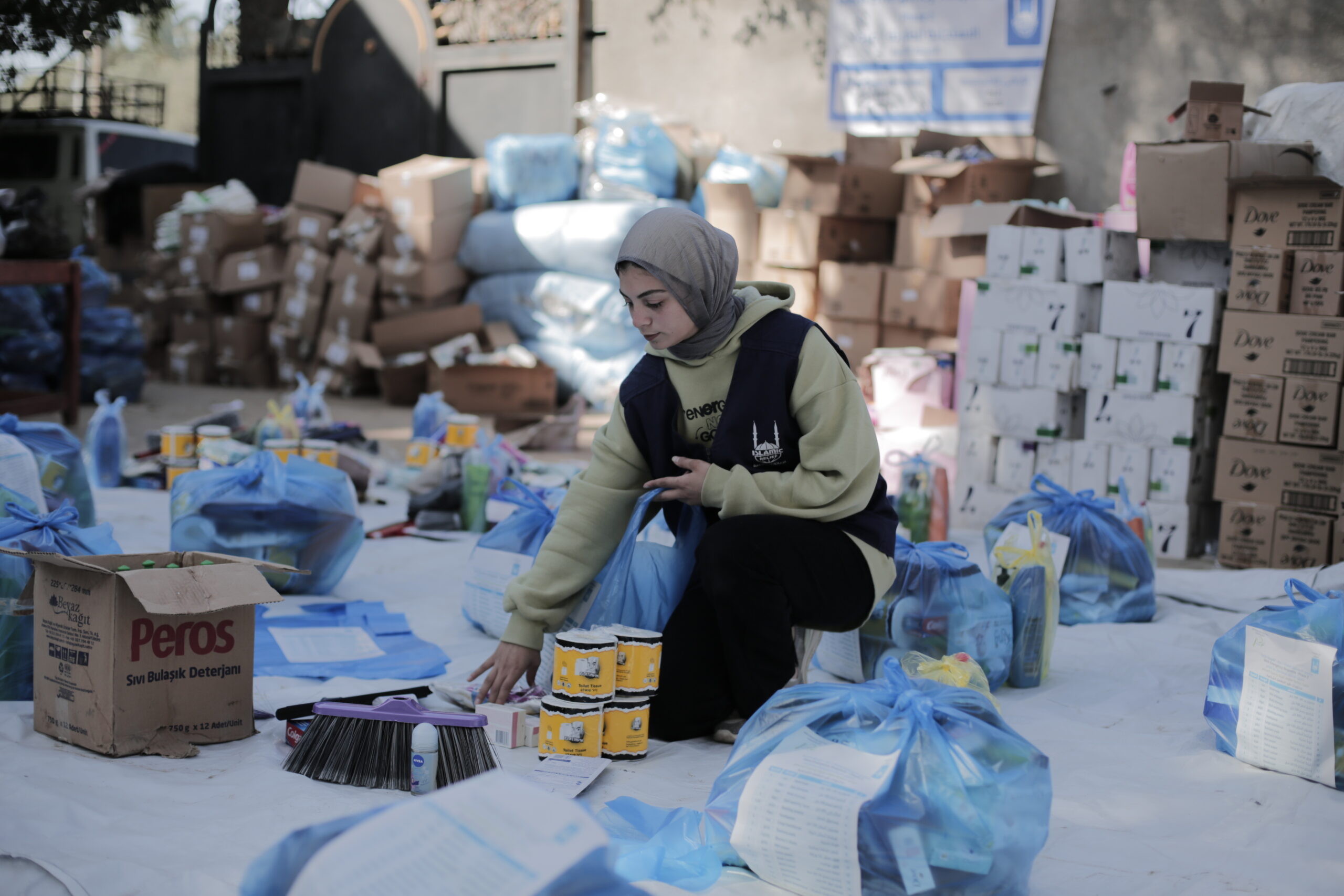
Thanks to your support, our staff and partners have been delivering life-saving aid. Most recently, we have delivered clean drinking water to more than 37,500 displaced people in shelters.

In addition, we have expanded our programs supporting new and expectant mothers and babies. We have carried out almost 400 medical check-ups for pregnant women and supported deliveries, including C-sections.

Over the last 2 years, we have constantly adapted our response in light of the highly fluid situation on the ground, striving to ensure that our staff, partners, and the communities we serve are not endangered. Our response has included:

  • Distributing fresh fruit and vegetables to families living in temporary shelters
  • Providing hot meals and hygiene kits to displaced people
  • Distributing ready-to-eat meals, food packs and qurbani meat
  • Providing psychosocial care to children experiencing trauma
  • Trucking in clean drinking water
  • Delivering medical supplies to hospitals and healthcare centres
  • Setting up medical points and supporting these with medications and supplies
  • Providing lipid-based nutritional supplements in partnership with the World Food Programme
  • Cleaning shelters
  • Providing multi-purpose cash assistance so families can buy what they need most
  • Expanding our Orphan Sponsorship Programme to reach more than 21,000 children

Speaking up for Gaza

These efforts are helping to ease suffering, but the people of Gaza need more than aid.

Palestinians have shown incredible resilience, but there is a limit to what humans can endure. World leaders must finally act to demand a ceasefire and pressure Israel to fully reopen all land crossings so that sufficient supplies can arrive before it’s too late for those struggling for survival.

More paltry words of condemnation will not make any difference now. To save lives, governments must apply meaningful economic and diplomatic pressure, such as ending all arms sales, suspending trade agreements, and banning trade and investment with illegal Israeli settlements.

We continue to call for action. Help Islamic Relief to continue supporting people in desperate need in Gaza.

In the endless terror, Gaza needs your help

Help us provide urgent medical aid and other crucial, life-saving support now to families in need by giving with Islamic Relief.
10.01.25

“I wanted my scream to reach the world” – Be a lifeline for Gaza’s orphans

  Publications

The ongoing crisis has deeply affected children in Gaza. For almost 2 years, they have faced displacement, loss, starvation and been forced to live through horrific violence.

For tens of thousands of children, these dire conditions are made even worse by the loss of their parents.

Noor is 17 years old and is one of the many children who have been robbed of a childhood, of an education and of her loved ones.

A good life in Gaza ruined by Israeli bombs

Noor lived with her family in Al-Shejaiea, one of the largest neighbourhoods in Gaza. The family lived a simple life, surrounded by farmland and trees, Noor’s two older sisters attended university, while she and her other siblings all attended school.

Every day at noon, the family would return home from their schools, universities and work, to gather around the table for lunch. 

Summaya, Noor’s mother, describes their life together:

“We were a close family before the war. We lived in a very nice house.

“We had a land, a farm, we used to grow vegetables. My husband used to grow tomatoes. Me and the kids used to help him every day. It provided for the children and the house expenses.”

Sumayya, Noor's mother, who's been widowed and her children made orphans after the bombs killed Noor's father
Photo: Sumayya and her children have been displaced multiple times over the past year

When the bombs began to fall, Noor and her family fled while her father stayed behind to protect the house and his crops. He was killed by Israeli bombs a week later.

“He called me 3 days before his death,” Sumayya says.

“He checked on the children, his mother and me. SubhanAllah, coincidentally, it was like he was giving me his final words.

“‘Forgive me and look after the children.’”

After the death of her father, Noor and her family began an exhausting journey, moving from shelter to shelter as the bombs continued to fall around them. They fled south, moving from Rafah to Khan Younis, and then to the Middle governorate, all the while carrying a simple tent with them for shelter.

Children turned to orphans, forced to face nightmare conditions in Gaza Strip

The total death toll in Gaza has now surpassed 65,000. Tens of thousands of Palestinian children have been robbed of their parents.

Children like Noor have been forced to live through horrifying conditions, confronted with trauma no one should experience.

Noor and her siblings have been forced to live through famine, queuing at charity kitchens just to get a small portion of lentils or pasta, barely enough to prevent starvation.

The children are also missing out on education. There is a single mobile phone in the family, meaning they must take it in turns to complete their online lessons and exams. Poor internet connection and electricity outages only make the situation worse.

Noor and siblings are now orphans and her family have been forced to live through horrific conditions

After months of displacement, moving from town to town, Noor experienced more trauma when her siblings, Nada and Mohamed, along with their cousins, went to collect wood and experienced a direct missile strike.

“Nada saw the rocket coming down on top of them,” Sumayya said.

“May Allah have mercy on their souls; they bought the 3 of them to me. We carried him [Mohamed] with our hands to the hospital.

Mohamed and some of his cousins were killed. Nada was left traumatised.

“I wanted my scream to reach the whole world.” Sumayya said.

Noor was once a child who loved to play and dreamed of the future, she was looking forward to attending university, but displacement, fear, and the loss of loved ones have completely changed her life.

“I would like to study and continue forward with my life,” Noor tells us.

“I would like to finish my secondary education so I can get to higher education. I would like for a lot of things to be available to me so I can carry on with my education and become a medical secretary.

“I would like for my life to be better than this.”

You can help orphans in Gaza like Noor

Their situation may feel hopeless, but, with your help, Islamic Relief can do more to help children like Noor.

For almost 3 decades, Islamic Relief has been supporting orphaned children in Gaza through one-to-one sponsorship. The Israeli blockade means that much aid is restricted, but our Orphan Sponsorship Program is now one of the few remaining ways to get real support into the hands of suffering Palestinian families.

Noor’s younger sister, Nada, is enrolled in our Orphan Sponsorship Program. The regular stipend gives their mother the means to buy food and other essentials for the family, when goods are available.

“I would like to thank Islamic Relief.” Noor says, “because they support our needs a lot. They provide us with everything. Thank you, Islamic Relief.”

Support orphaned Palestinian children

With many children in dire need as conditions in Gaza continue to deteriorate, generous sponsors are eager to help more than one child in a family. Therefore, we now offer the option to sponsor multiple children within a family.

Gaza’s rising death tolls mean more children than ever are becoming orphans. Heartbreakingly, more than 7,300 orphaned children are now in our system, waiting to be matched with sponsors.

Find out more about how you can be a lifeline for Gaza’s orphans and act today. Palestinian children need your help now.

Help support an orphan and change their lives

For just $100 a month, you can give the children of Gaza a chance to rebuild and see a brighter tomorrow.

09.29.25

Sources for Struggle & Sumud Infographics

  Publications

Timeline of Struggle & Sumud Brochure

Deliberate Targeting of Hospitals by Israel Infographic


STAY INFORMED

  • This field is for validation purposes and should be left unchanged.

Quick Donate