In Ramadan 2023, Islamic Relief distributed food packs to the most needy communities worldwide, including those most vulnerable in Indonesia.
Around 2,580 food packs were distributed, benefiting around 10,320 individuals in need across Aceh, Cianjur and Jakarta. The content of the food pack provided covers a month’s worth of food.
The program prioritised the most vulnerable people – those affected by disasters and the impact of poverty. Among these groups included female-headed households, pregnant and lactating mothers, orphans, elderly and individuals with disability.
One of the recipients of the program includes Ibrahim (66), a Quran teacher, and his wife Khasdiana (63), who is a housewife.
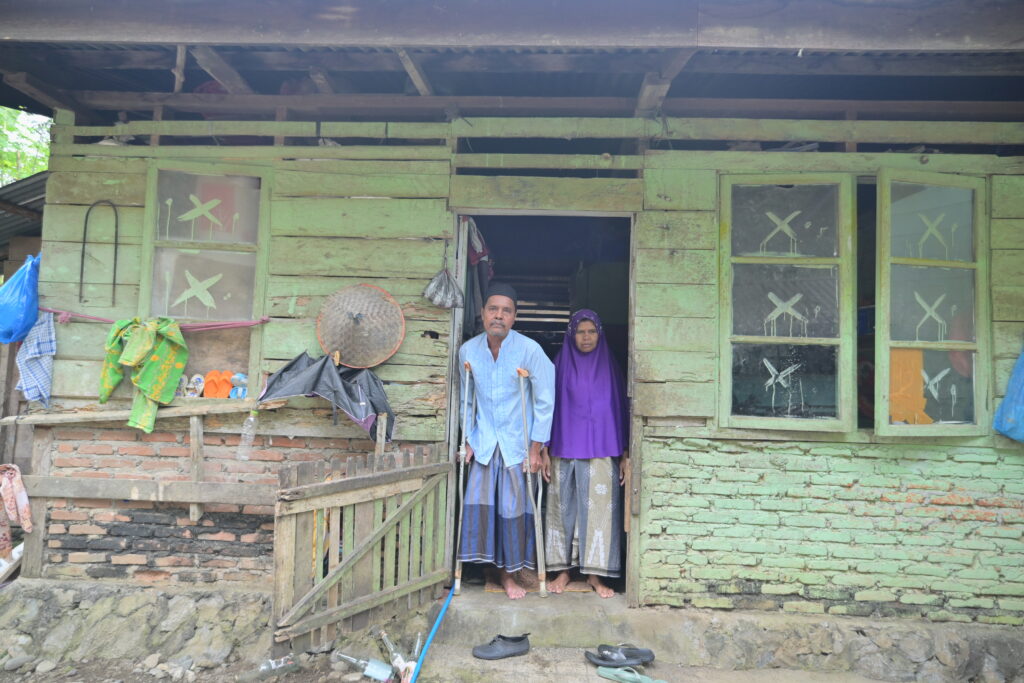
Image: Ibrahim and Khasdiana from Aceh, Indonesia, one of the recipients of the food pack.
Unable to Earn a Livable Wage
Ibrahim was born and raised in Lam Asan Village, Indra Jaya District, Aceh Jaya in Indonesia. He has a physical disability that makes it hard for him to move around without mobility support, such as the crutches he uses now. To help him with these struggles, his wife regularly helps during his Quran classes as he’s teaching the children.
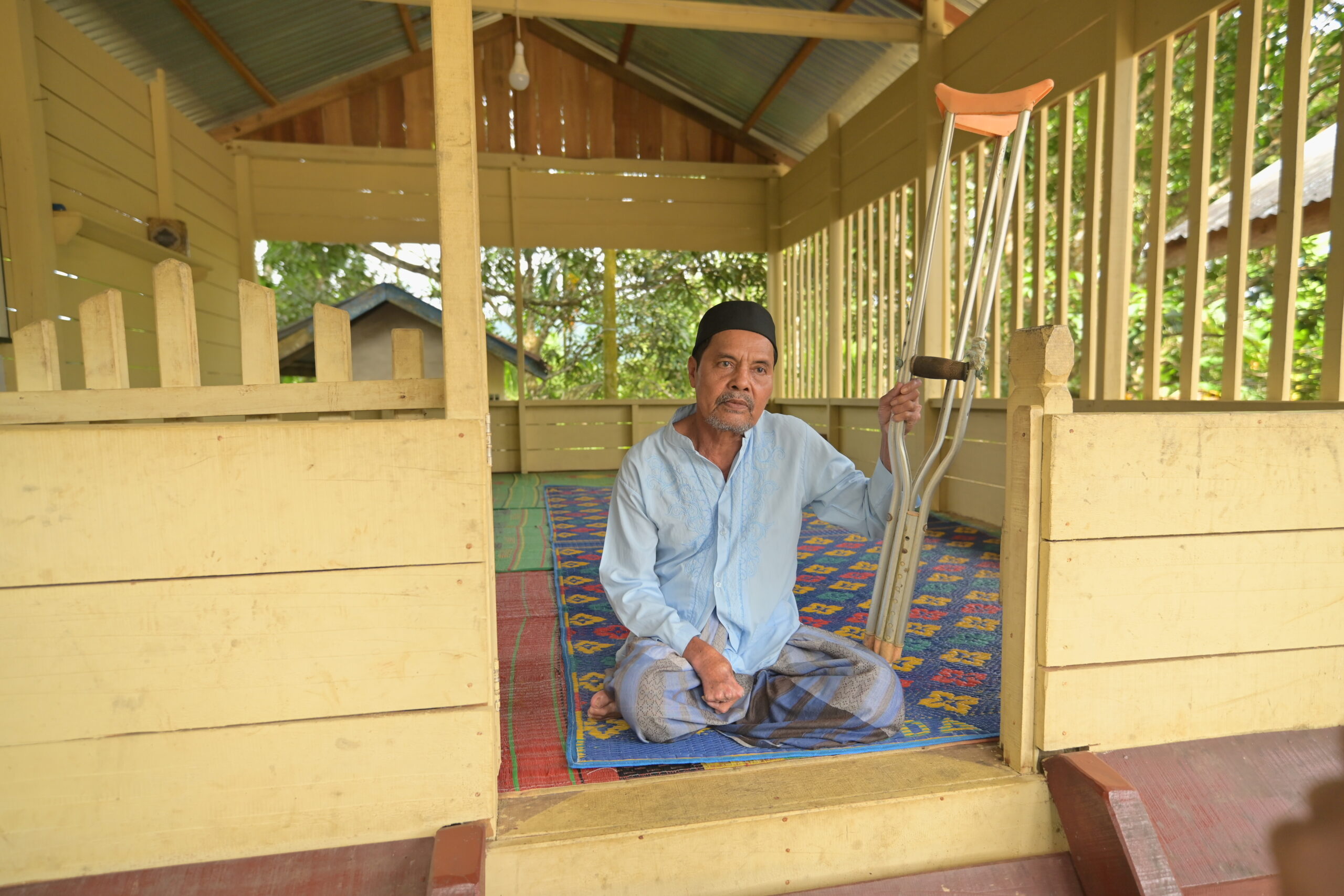
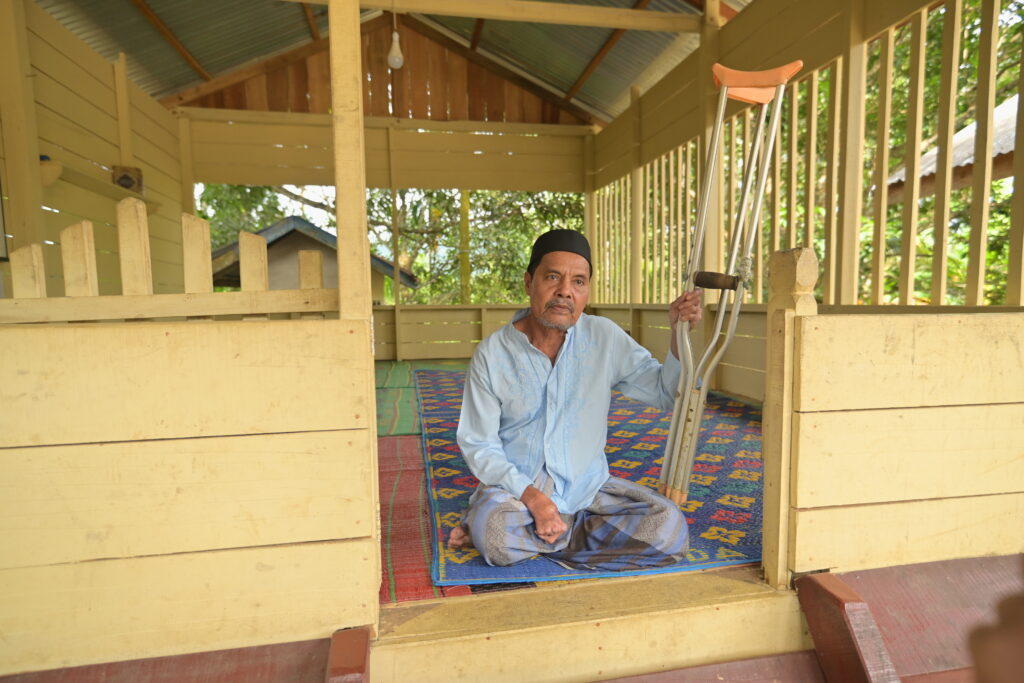
Image: Ibrahim from Aceh, Indonesia, one of the recipients of the food pack, with his crutches.
For food, Ibrahim solely relies on what he earns from the teaching Qur’an and charitable donations. Due to his disability, he is unable to find another job to improve his family’s financial situation.
He feels fortunate to live near flowing mountain water. Thus far, the resource continues to fulfil his family’s needs. He also is not charged any money for using it.
How Islamic Relief Helps
Islamic Relief’s Ramadan food support aims to help fulfil family needs for food during Ramadan.
Ibrahim considered the Ramadan food package extremely helpful and helped him and his family survive the month. He is very grateful for the help in making it easier for him to fulfil his needs considering the increasing costs of food due to inflation.
Give Families Hope and Relief
Keep the blessings of Ramadan going. Give families in need the opportunity to enjoy nutritious food, rebuild their livelihoods and more.
Last Ramadan, in 2023, one of the ways Islamic Relief has tried to support vulnerable communities around the world is through food distribution projects. One of the countries these food packs were delivered to was Ethiopia.
Ethiopia experiences a wide range of major socio-economic effects. Internal ethnic conflicts, drought, continued political unrest and war, as well as the steadily rising cost of living, have all taken a massive toll on the population.
To combat issues such as food insecurity that come about as a result, Islamic Relief food distribution projects aim to support those most in need. These include orphans, through their fasting guardians, elders, lactating and destitute mothers, IDPs (internally displaced persons), people in poverty and other vulnerable groups.
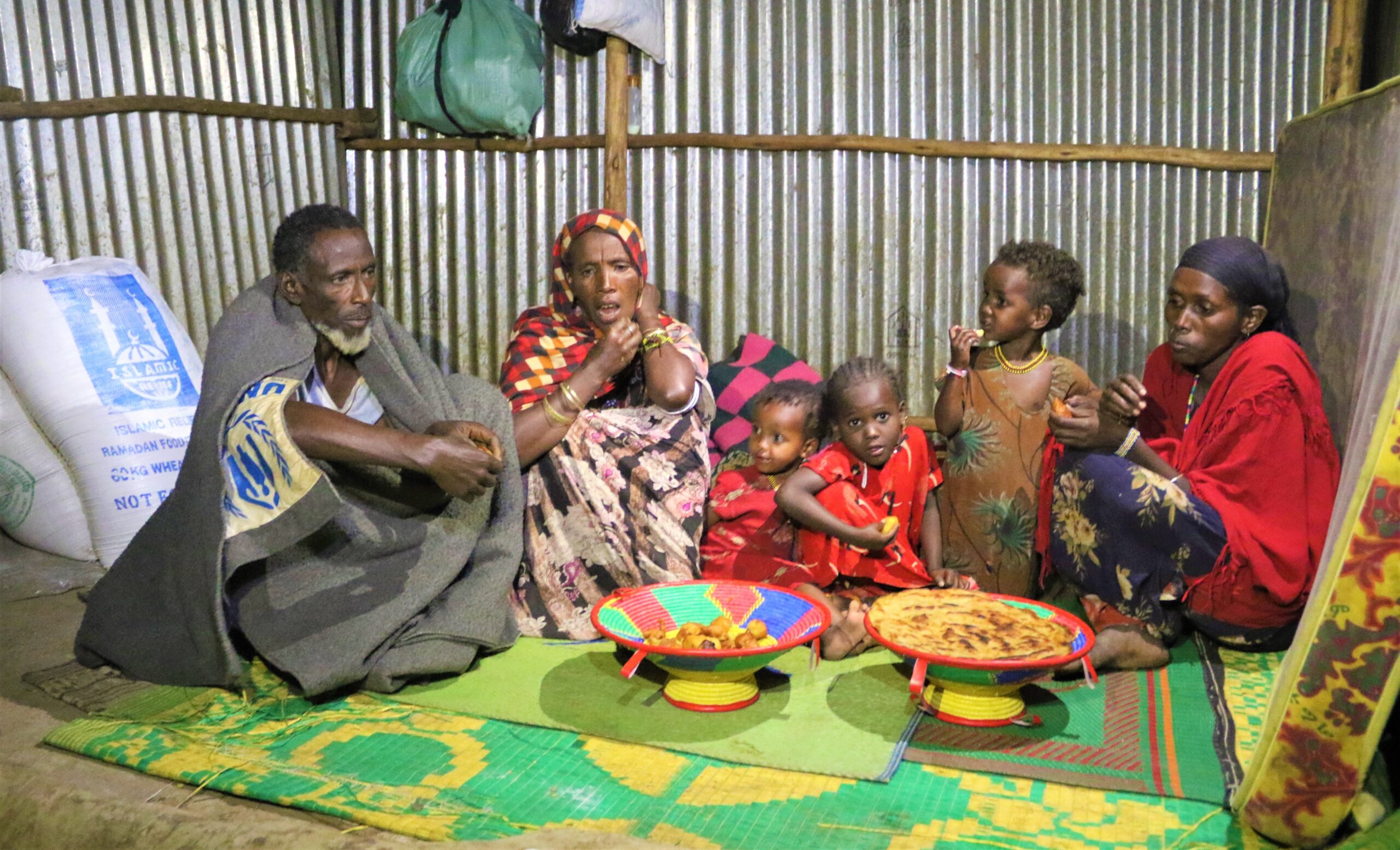
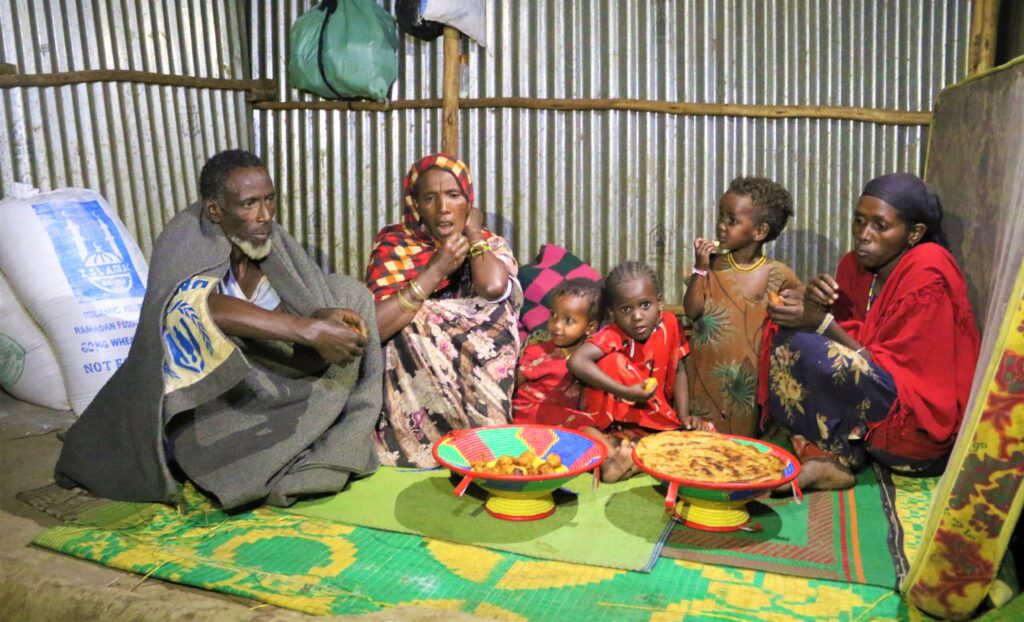
One of the recipients includes Momina Warrio and her family of 6, who live in Weltane IDP camp in Meiso, Oromia in Ethiopia.
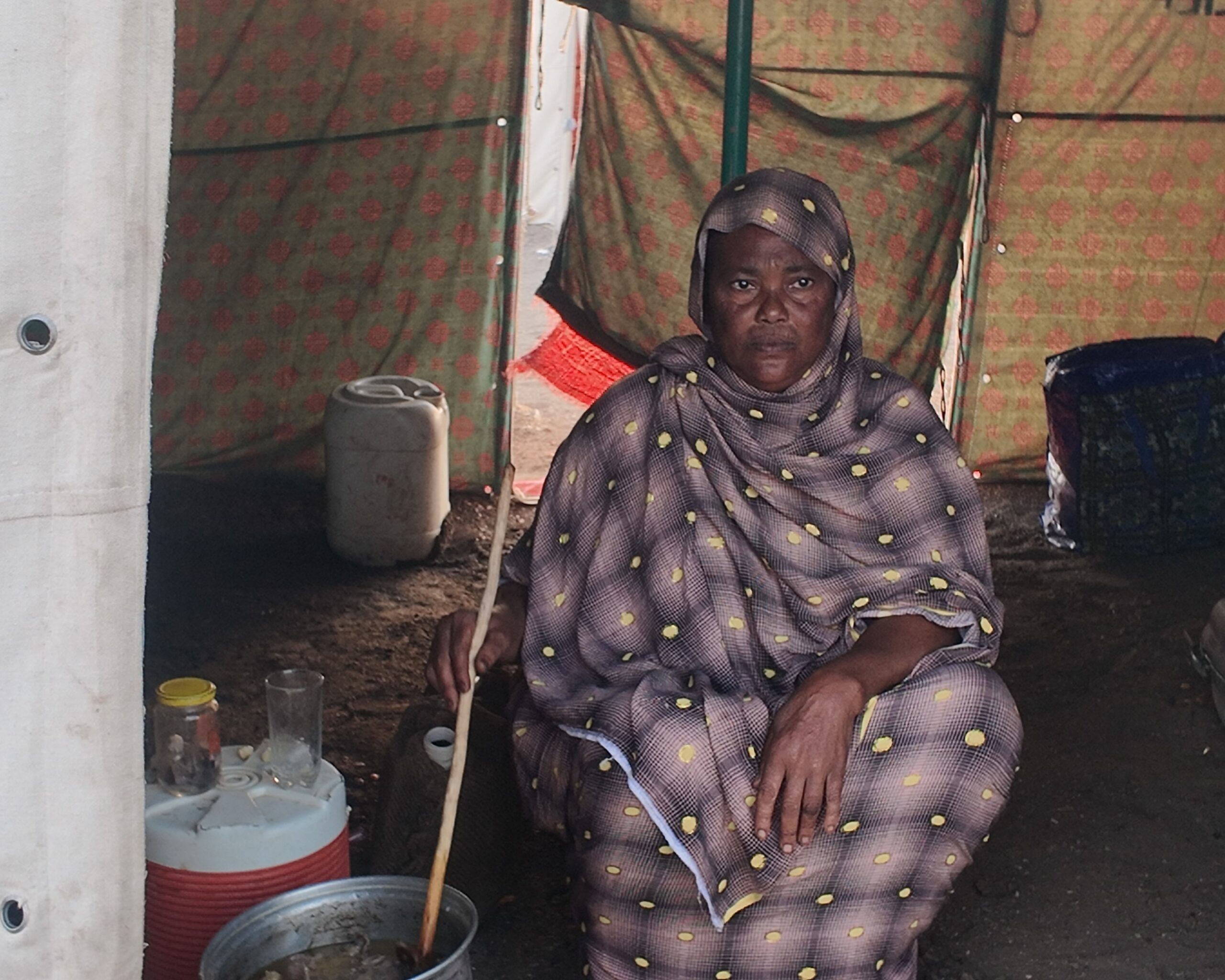
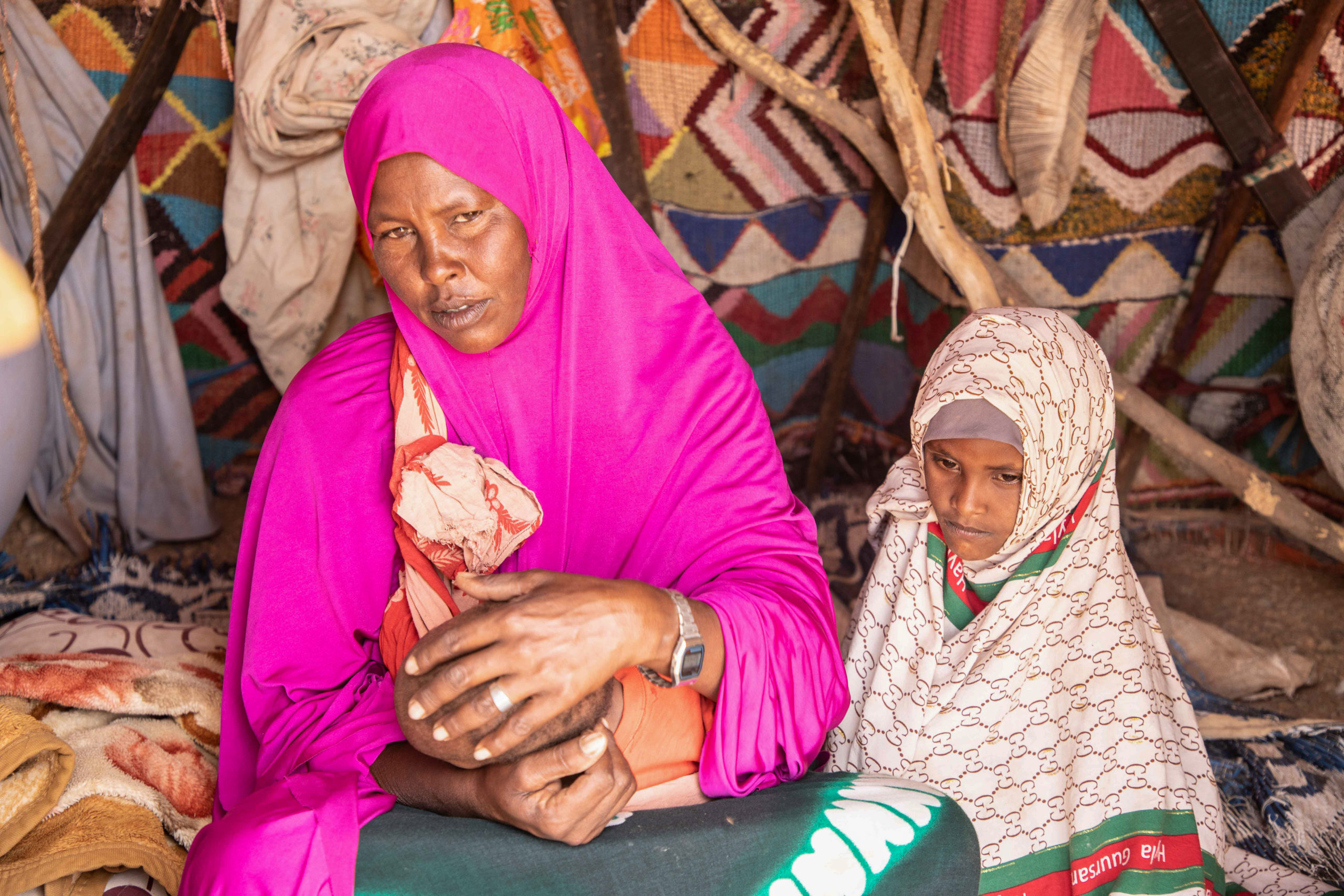
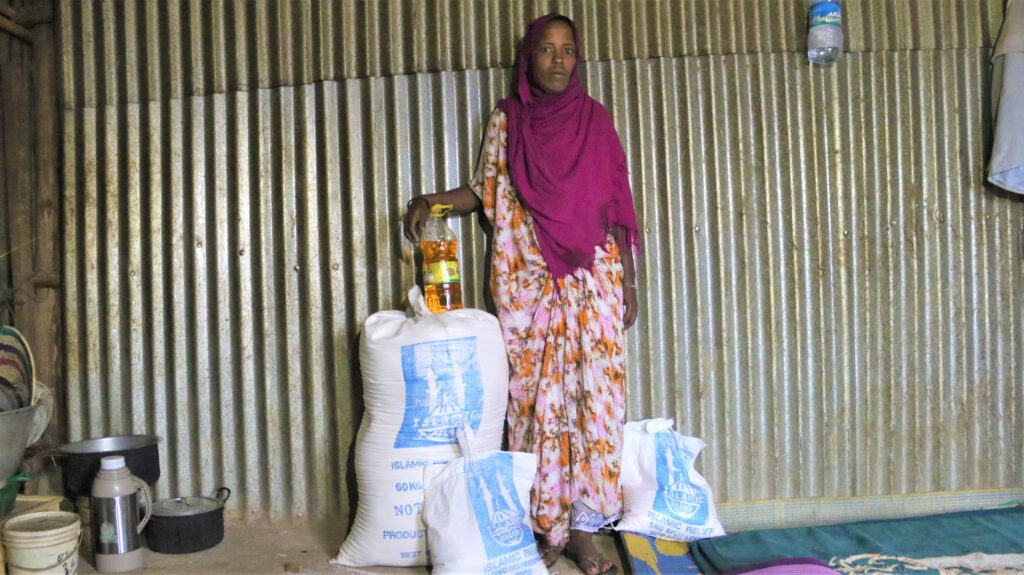
Image: Momina from Meiso district, Oromia, Ethiopia, one of the recipients of the food pack.
Struggling to feed their family
“Getting enough food is quite difficult for us because we don’t have a regular and dependable source of income.
“My husband and I do not have a steady source of income to buy enough food for ourselves and our kids. My husband is a labourer, and we are very reliant on his meagre wages to cover our daily expenses.
“I occasionally gather wood in the jungle and sell it for a few pennies in town to supplement our income. As my husband and I get older, it becomes more difficult to maintain a labour force, generate income, and feed our kids on a regular basis.”
“Our children will go hungry if I and my husband become ill and are unable to work at our labour jobs.”
Life as an Internally Displaced Family in Ethiopia
“For us, experiencing the effects of food shortages is not new. We have lived with this ever since we left our home and became IDPs. We frequently suffer greatly from a lack of nourishment.
“My husband and I will be forced to stay home during the rainy season because we are unable to travel to our regular workplaces. The entire family encountered hunger at that time due to a lack of food to eat, especially our kids.
“Likewise, we experience challenges during fasting occasions like Ramadan due to an extreme absence of food for fitur (iftar) and suhur (suhoor).”
Ramadan While Internally Displaced in Ethiopia
“In the past, before we became IDPs, we used to fast Ramadan with no challenges…as we were able to gather crops and cereals using our fertile farming lands.
“We were physically and psychologically strong and economically better off to fast the whole month of Ramadan and benefit from its numerous spiritual benefits.
“We used to eat a well-balanced diet during Ramadan or out of Ramadan. For instance, we could prepare and eat meat and meat-related meals, too many biscuits and cookies, barley and oat soup, kitfo, etc. But now the experience is totally different.
“Food is extremely scarce in the Weltane IDP Centre. Due to the severe impoverishment in the neighbourhood, purchasing food is out of reach for all of us.
“The majority of Muslims who practise fasting throughout Ramadan lack sufficient food and other basics. There have been occasions when we were fasting in Ramadan with no food and only drinking water.
“This breaks our hearts as we are unable to fast throughout the holy month of Ramadan.”
How Islamic Relief Helps
In 2023, more than 6595 households and 32,975 individual rightsholders benefited from the food pack project. Both In-kind and cash voucher assistance modalities were utilised to deliver the Ramadan food support.
“This Ramadan food package is a huge benefit to my family and my IDP neighbours because it alleviates the hardships, we are experiencing due to the food crisis,” Momina says.
“We are pleased that the pack includes the food items we frequently consume. Food costs increase during Ramadan, and we are unable to buy those expensive food items. We will be able to meet our food needs during and beyond Ramadan thanks to the food pack support.
“We are grateful to Islamic Relief and its donors for their kind support of underprivileged families like ours. I thank IR and the givers for the kind assistance I received. I pray to Allah (SW) to accept the fasting and good deeds of all IR families, especially those who donated these Ramadan food packs.”
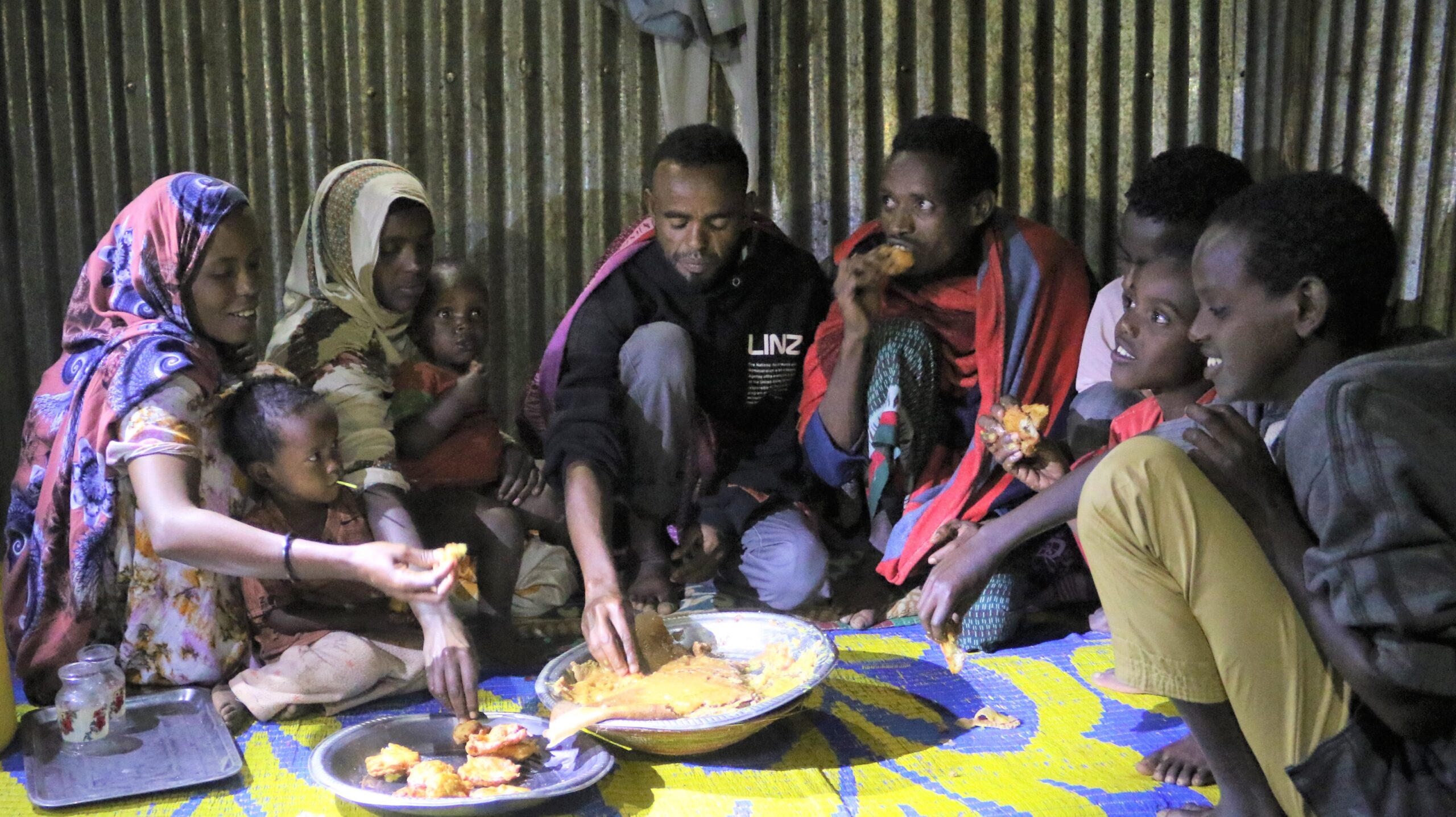
Image: Momina and family from Meiso district, Oromia, Ethiopia, one of the recipients of the food pack.
Give Families Hope and Relief
Keep the blessings of Ramadan going. Give families in need the opportunity to enjoy nutritious food, rebuild their livelihoods and more.
After one year of escalating conflict, Sudan has descended into one of the world’s worst humanitarian crises. It is on the verge of mass famine. Its food supply is decimated and young children are now starving to death in its cities, villages, and displacement camps.
Sudan is at imminent risk of collapsing. Yet, the world has largely forgotten or ignored the crisis.
A country in desperate need of aid
During the ministerial conference on Sudan held in Paris on 15 April – co-hosted by the EU, France and Germany – Islamic Relief called on world leaders to take action. To step up efforts to secure an immediate ceasefire, pressure parties to the conflict to protect civilians, ensure humanitarian access and increase aid to prevent a catastrophic famine. As, a quarter of the way through the year, the 2024 humanitarian response plan for Sudan is only 5% funded.
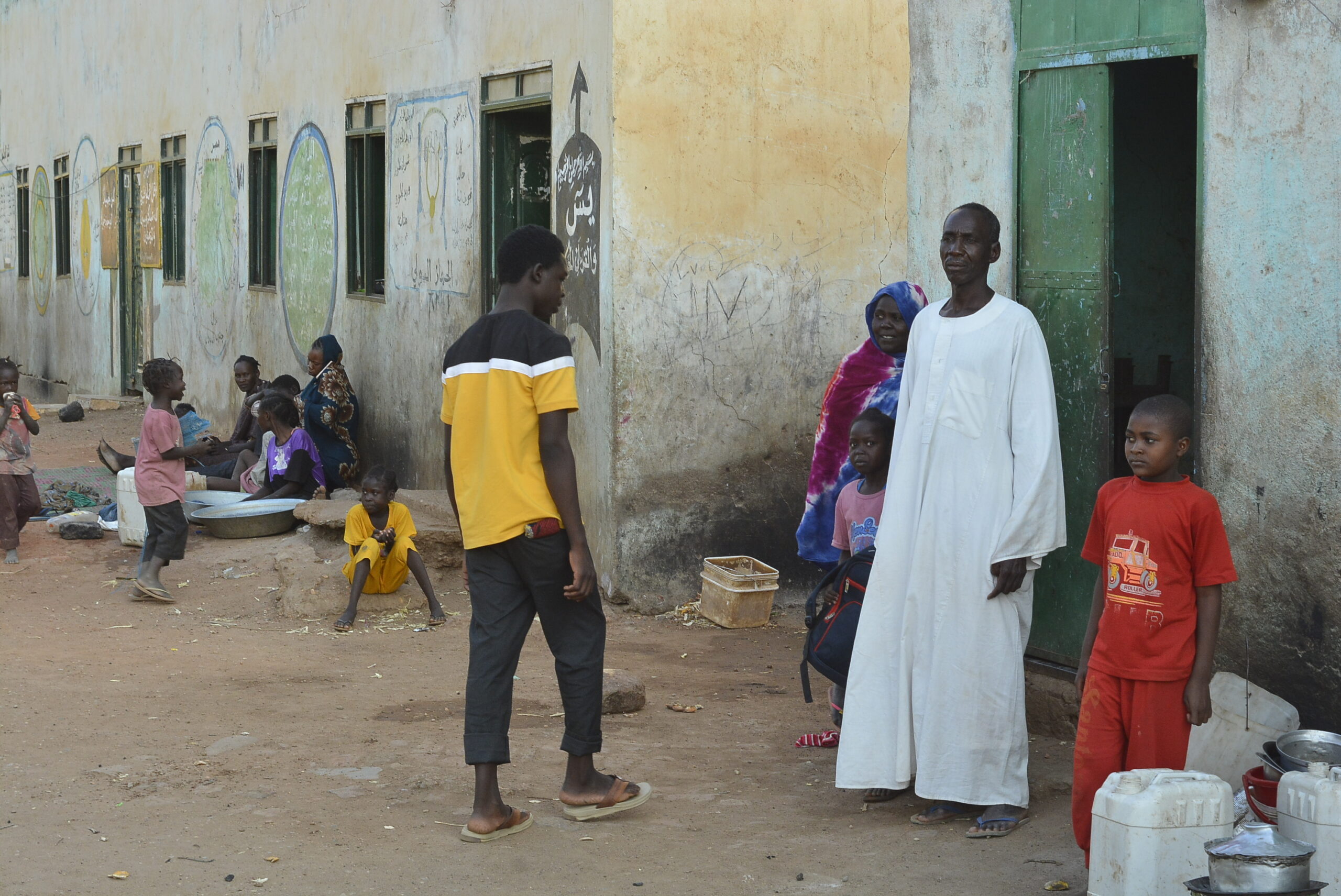
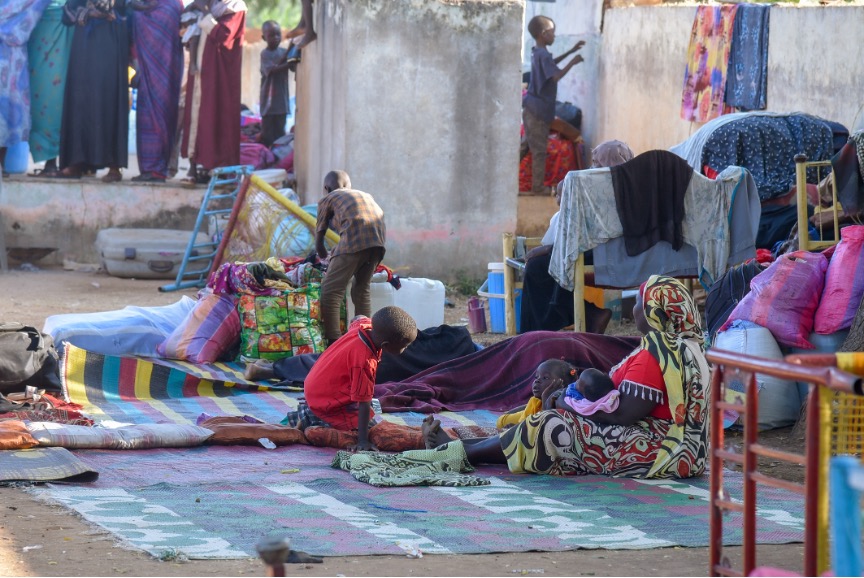
Over the past year, the war has spread across the country, creating what is now the world’s largest displacement crisis. 8.4 million people – 2 million of them children under 5 years old – have been forced to flee their homes.
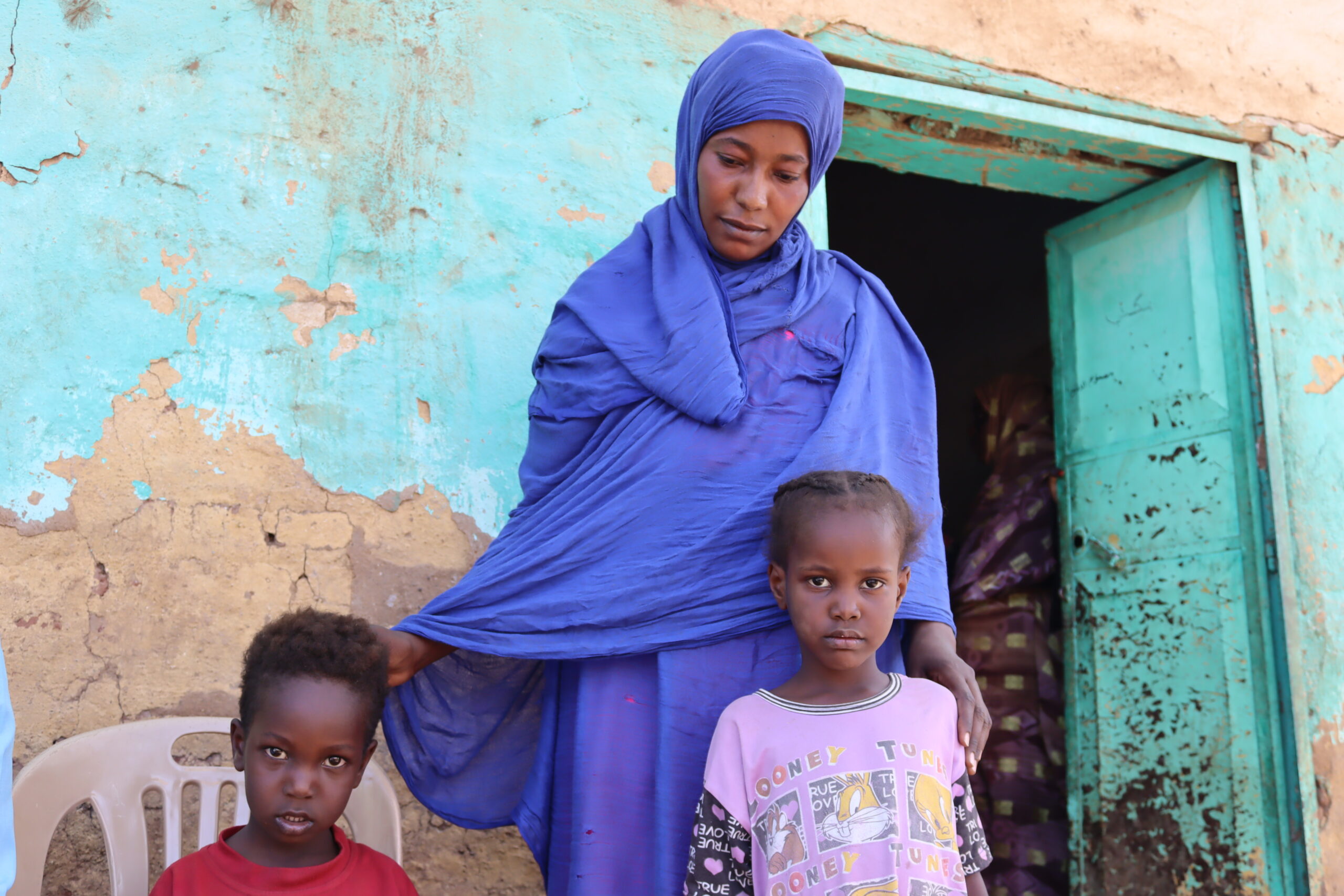
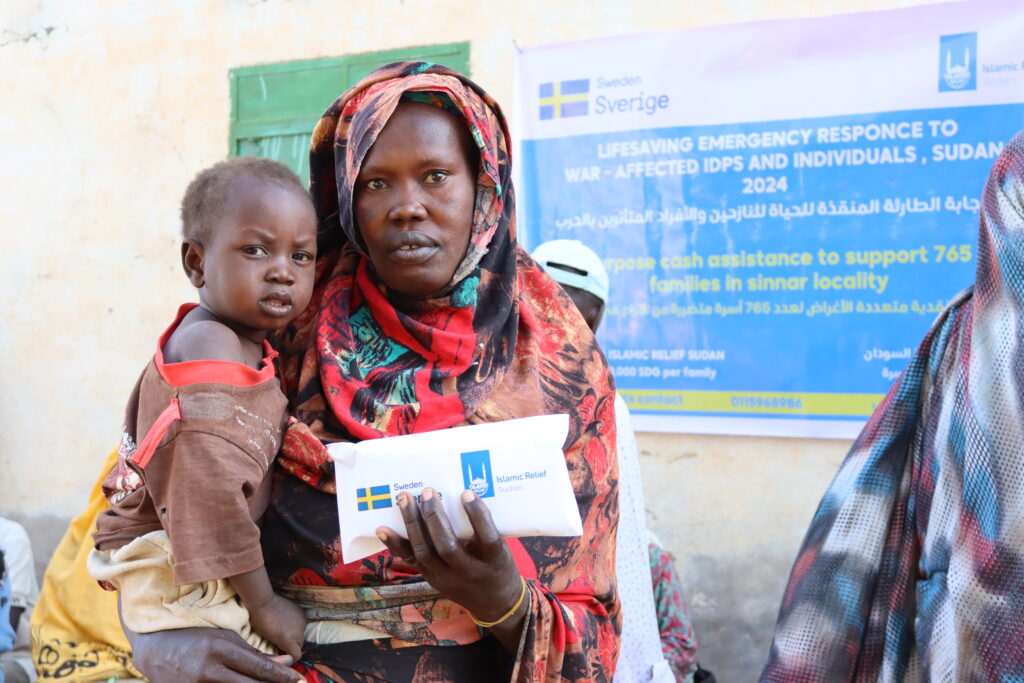
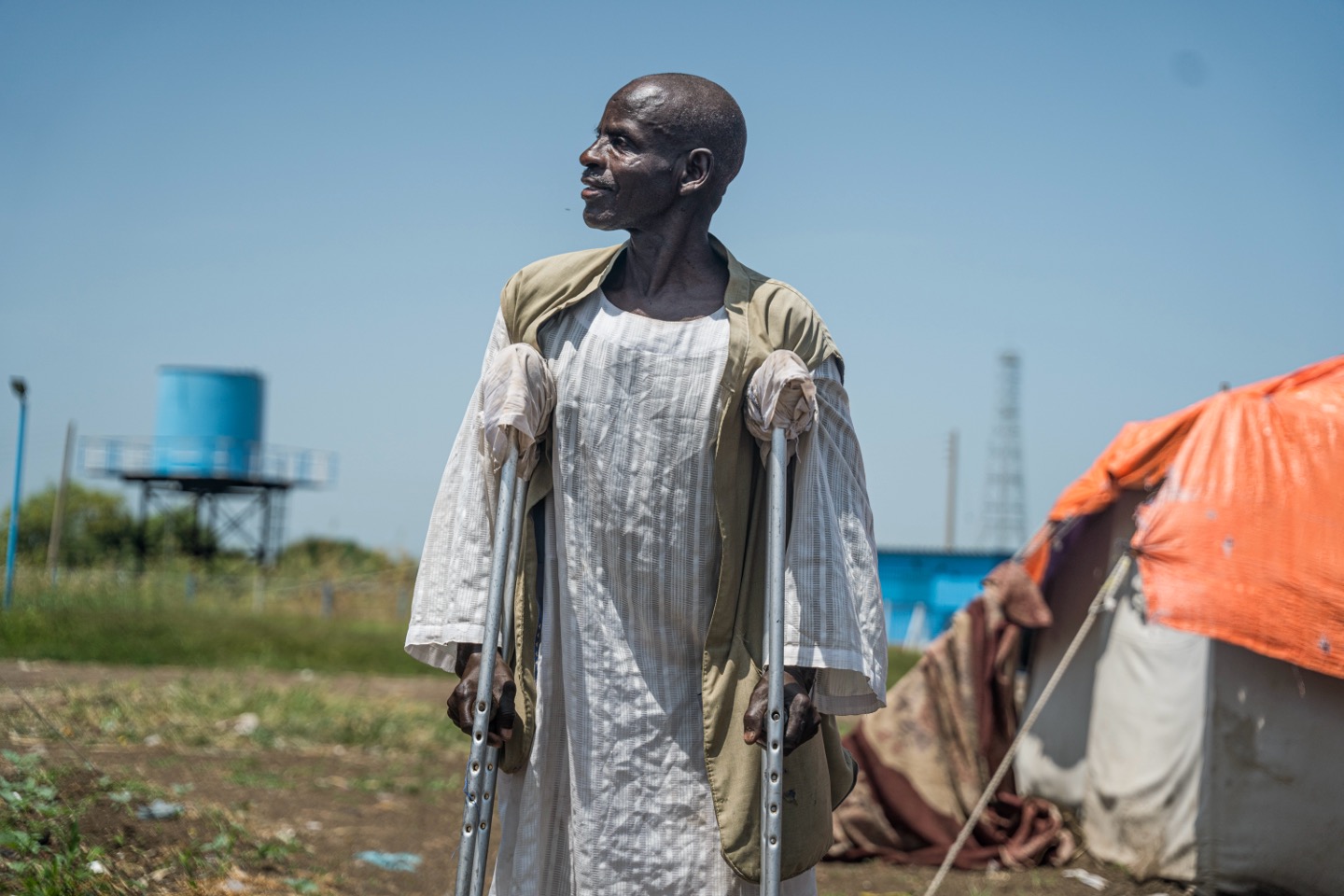
Image: Gesma (23), a mother of four, displaced by the ongoing conflict in Sudan.
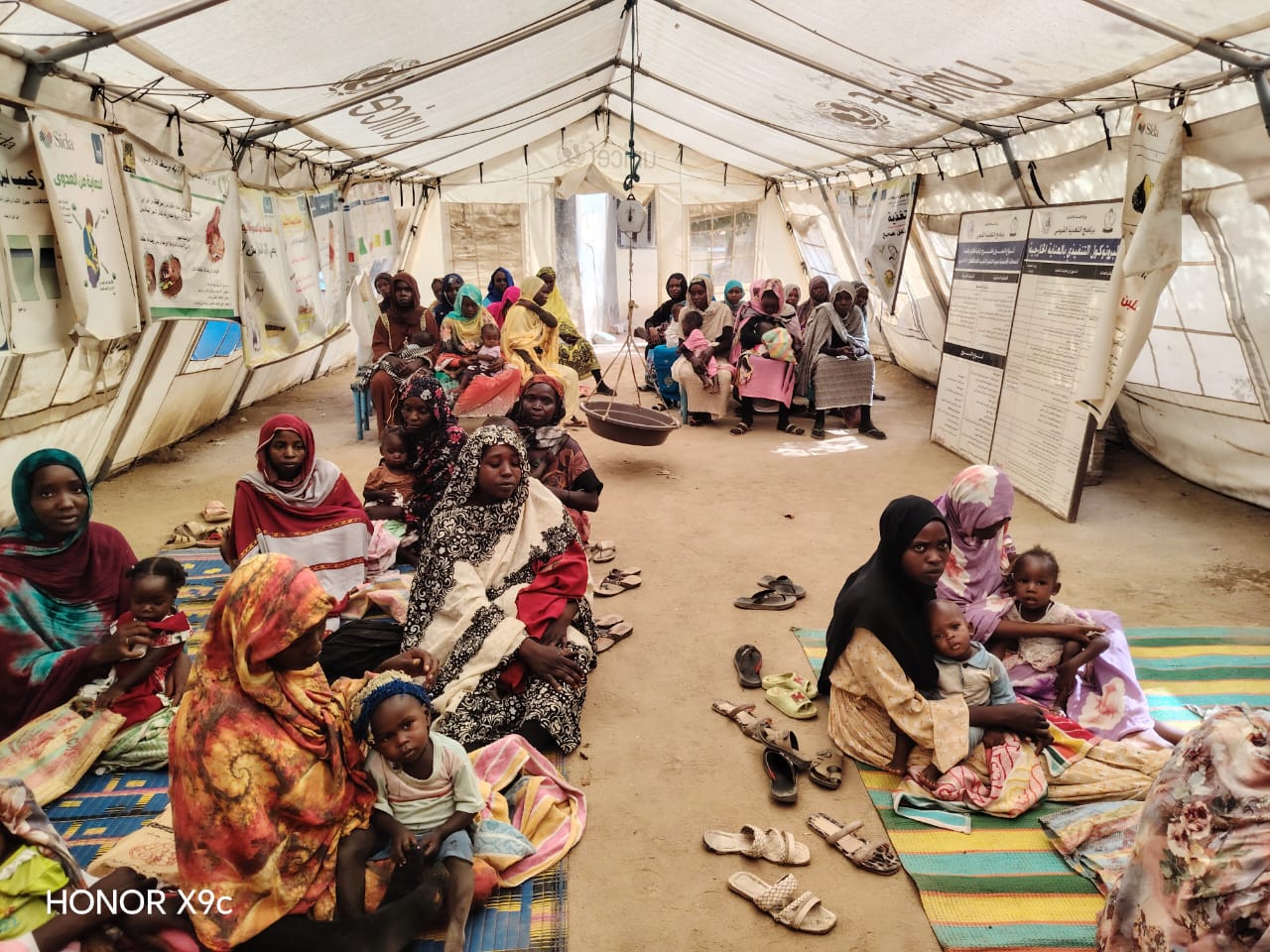
Children are now dying of hunger. Islamic Relief staff on the ground report a rapid increase in the number of malnourished children in the health and nutrition centres it supports. This includes some children so emaciated they can barely breathe. Many families also only eat a few mouthfuls of sorghum a day.
In recent months the fighting has spread to many of Sudan’s main agricultural regions, devastating food production. Many farmers find it too dangerous to access their fields to plant or harvest crops. When they do harvest them, trucks carrying food to markets are regularly looted.
Around 30,000 more people a day are falling into crisis levels of food insecurity. Overall, 17.7 million people (almost 40% of the population) now face hunger. Among them, 5 million are just a step away from famine. In parts of Khartoum and Darfur, famine conditions will likely awithin weeks.
The economy is collapsing at a staggering rate. Poverty is rising and food prices are almost doubling – leaving most families unable to afford even basic staple food.
Increasing Violence in Sudan
Islamic Relief teams in Sudan report an increase in extreme violence and threats to civilians over the past year. Villages burned to the ground. Women attacked. Children recruited into armed groups. Hospitals and markets bombed and looted. Key infrastructure and services destroyed.
Elsadig Elnour, Islamic Relief’s Country Director in Sudan, says: “Over the past year I’ve seen my country descend into violence, madness and destruction, neglected by the rest of the world.
“Everyone has lost everything. Everyone is traumatised. That’s how it feels to be Sudanese at this moment. We have lost loved ones, property, jobs, and the futures that we planned. Even the rich have become poor. Unless there’s a ceasefire and peace very soon, the country may collapse.
Over the past year, Islamic Relief has had to move its main office in Sudan several times due to the increasing spread of violence. Sudan is now one of the most dangerous and difficult places to deliver humanitarian aid, with dozens of aid workers killed, offices regularly looted and regular bureaucratic obstruction.
Islamic Relief on the Ground in Sudan
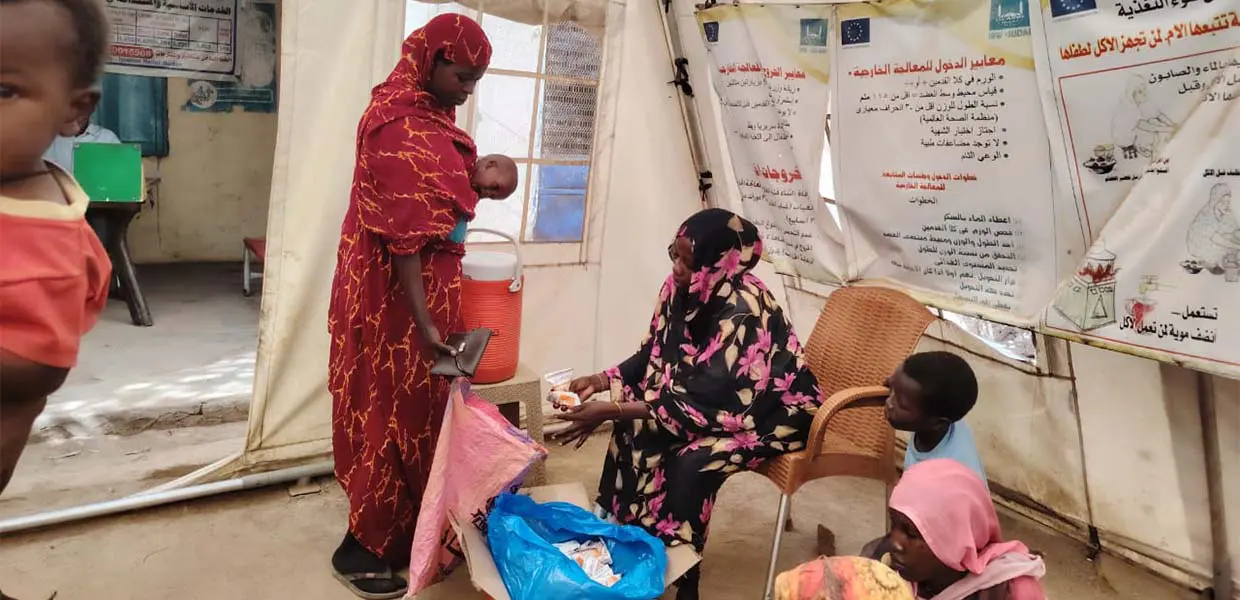
Despite the challenges, Islamic Relief has delivered vital aid to more than 600,000 people all over the country, including distributing food and cash, supporting health facilities and providing hygiene and dignity kits.
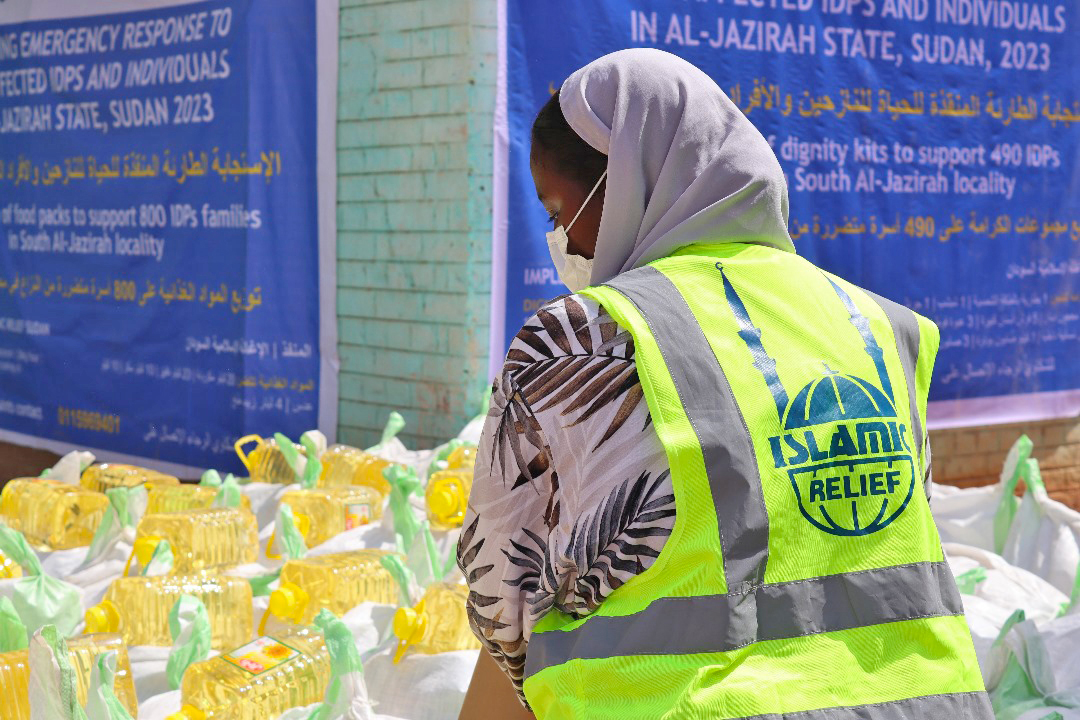
Image: Islamic Relief, combating famine and collapse in Sudan by providing ongoing support.
With the crisis neglected internationally, Islamic Relief’s new report highlights how Sudanese communities are playing a leading role in the response – with community kitchens providing food and impoverished families taking displaced families into their own homes and sharing what little they have. It calls on international donors at the Paris conference and beyond to increase funding and technical assistance for grassroots community networks, particularly women-led groups and civic committees.
Islamic Relief’s report calls on warring parties to commit to an immediate and unconditional ceasefire, kickstart dialogue for a sustainable resolution to the conflict, and adhere to commitments they have made to protect civilians and facilitate safe and unimpeded humanitarian access to all people in need.
It calls on the international community to step up aid, especially to improve food security and support livelihoods, and to play a greater diplomatic role and reinvigorate efforts to reach a ceasefire and unimpeded humanitarian access.
Give relief to the people of Sudan
Help us provide urgent relief to our brothers and sisters suffering in Sudan due to the ongoing and devastating conflict. Be their lifeline today.
Ethiopia faces a wide range of major socio-economic issues. Internal ethnic conflicts, drought, continued political unrest and war, as well as the steadily rising cost of living have taken a toll on its population. And the situation is only worsening.
In the escalating humanitarian crisis, Islamic Relief is providing relief to the people of Ethiopia, including through our Ramadan project.
Implemented every year during the holy month, the Ramadan project aims to help the most vulnerable communities. These include orphans and their guardians, elders, new mothers, IDPs (internally displaced persons) and impoverished families.
Last year, in 2023, more than 6595 households and 32,975 rightsholders benefited from the project.
One of the recipients was Misra Ali Ahmed and her family, who live in an IDP camp in Meiso, Oromia in Ethiopia.
Image: Rightsholder Misra Ali Ahmed, 30-year-old mother of 4, from Meiso, Ethiopia.
Unable to Afford Basic Necessities
As parents of 4, Misra and her husband struggle to provide for their and their children’s needs.
“I have no income; my husband works as a daily labourer, and we fulfil our daily necessities with his hard-earned money.
To be really honest, we cannot afford to feed our kids with the wages that my husband earns on a daily basis because his daily work will not always be there.”
To help with the bills, Misra would sometimes go to the forest during the summertime to collect wood to sell in the town nearby and make some money. However, it was still not enough to cover the food, clothing and other essentials the family needed daily.
“Feeding our five children at least once a day has been a burden for us as parents.”
Life as an Internally Displaced Family in Ethiopia
Misra and her family are IDPs. They had to flee their home because of the conflict between the Somali and Oromo tribes, leaving behind their livelihood.
“We experienced the most difficult time when we first became IDPs. Since the first day we left our home, my family, especially my children, has been severely suffering from food shortages.
“We had to settle in a remote area where there are no opportunities for work, generating money, or supporting our family. We don’t have any land to use for cultivating crops.
“My husband will go to work with an empty stomach during times like Ramadan and the rainy season, when our food shortage becomes more and more challenging to handle. On these occasions, we will experience starvation, which is so tough to cope with.”
Ramadan While Internally Displaced in Ethiopia
“We have enthusiastically welcomed the holy month of Ramadan since it is a special and wonderful experience for us, despite the fact that we are dealing with serious socioeconomic challenges.
“In the past, we used to have special occasions and distinctive everyday routines during the month of Ramadan. We used to prepare special meals like biscuits, soup, and cookies and share them with our relatives and neighbours.
“We have no special diet either during Ramadan, (it’s) usually injera with shiro stew. There are some bad times (when) we miss Injera and Shiro, so we spend the whole day and night with an empty stomach.
Likewise, without enough food supplies to go around in the camp, getting together with the family’s other IDP neighbours is a rare occurrence.
“Unfortunately, for the past three years, we have fasted throughout Ramadan without having enough food or other essentials like electricity. These days, without proper food or electricity, we are fasting and experiencing a different Ramadan.
“We used to spend a lot of time praying, visiting family, preparing unique traditional foods, and sharing Fitur with our loved ones.
“(But now) there is no mosque nearby where anyone can perform tarawih prayers, and there is no electricity access to recite the glorious Qur’an in this blessed and holy month.”
How Islamic Relief Helps
“Indeed, Allah is always there to look after us, even though we lack access to better healthcare or a decent standard of living.
“I consider myself to be a member of the Islamic Relief family, (as) this is not the first time that Islamic Relief has helped me.
“In the organisation’s last two years of the Qurbani project, I obtained Qurbani meat packs. Additionally, I am included in the durable solution livelihood project that the organisation is implementing in the Weltane IDP centre.
With this project, I and my IDP neighbours are deployed in the camel fattening initiative. I, along with the other nine families from the Weltane IDP community, have gotten 180,000 ETB from Islamic Relief and bought two baby camels that we are currently fattening. I’m hopeful that we’ll generate income and improve our standard of living.
Your Impact of Giving Food Packs
“This Ramadan food pack support will be particularly beneficial for my family and also the Weltane IDP fasting families, who have been struggling with an extreme shortage of food.
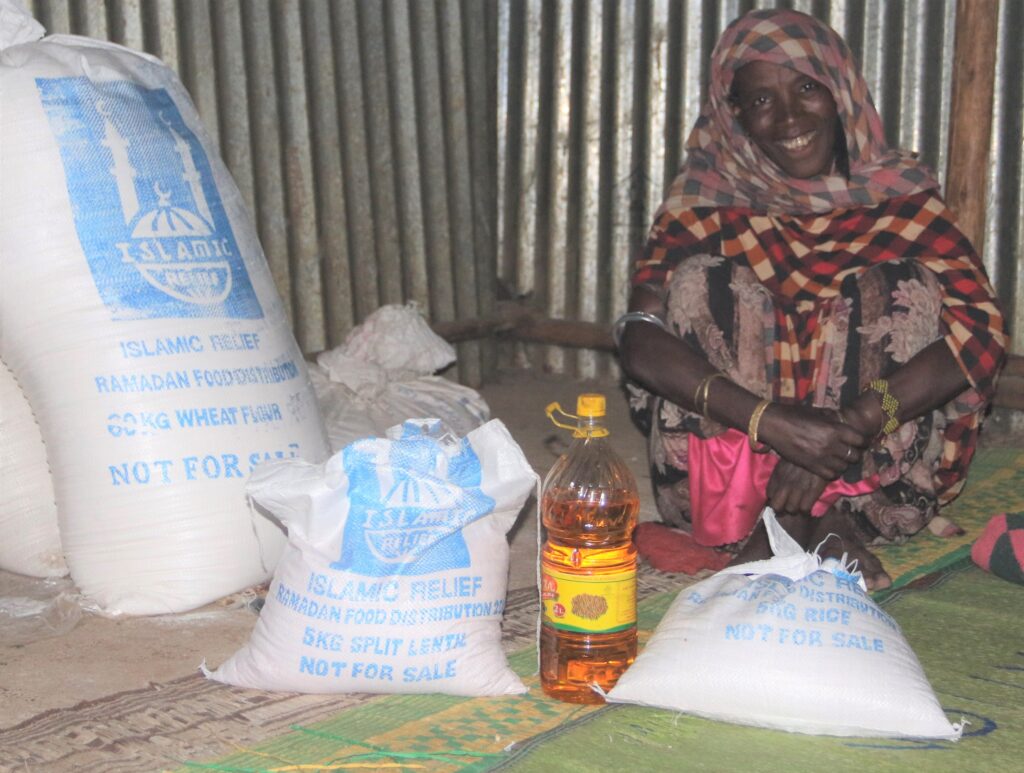
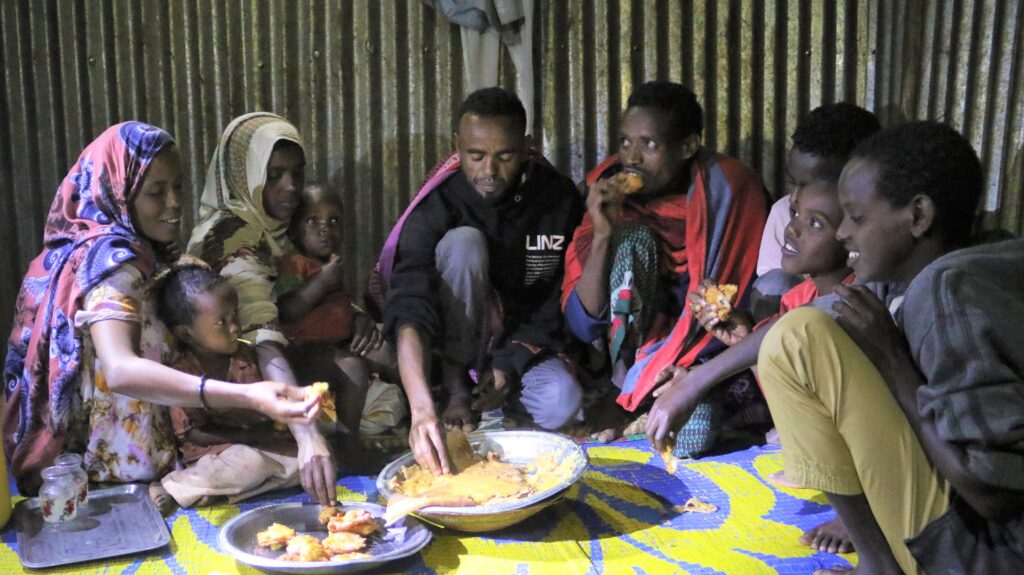
“The food package includes 60 kg of wheat flour, 5 kg of split lentils, 5 kg of rice, and 2 litres of oil. (It) would greatly assist us in meeting our food provision needs for the upcoming two and three months.
Image: Misra and family from Meiso district, Oromia, Ethiopia, one of the recipients of the food pack.
“As we have an extreme shortage of foods, these package contents will add some nutritional value to our diet. We can prepare lentil stew, rice porridge, soup, cookies, biscuit pancakes, and other kinds of meals for my children, and they will enjoy eating them.
“Throughout Ramadan, we can fast without being concerned about getting Fitur meals. Our kids will like eating the cookies, biscuits, porridge, and pancakes we make for them.
“I am sure every IDP family is truly happy as a result of this distribution of Ramadan food packs because it brings them joy and happiness. It significantly helps us to cut our higher food expenses and saves the time and effort we spend searching for food for our children.
“I thank Islamic Relief and the Ramadan food pack donors for the generous support I have obtained today. And I ask Allah (SWT) to bless all IR families and these specific Ramadan food pack donors and accept their fasting and their good deeds during this holy month.”
Give Families Hope and Relief
Keep the blessings of Ramadan going. Give families in need the opportunity to enjoy nutritious food, rebuild their livelihoods and more.
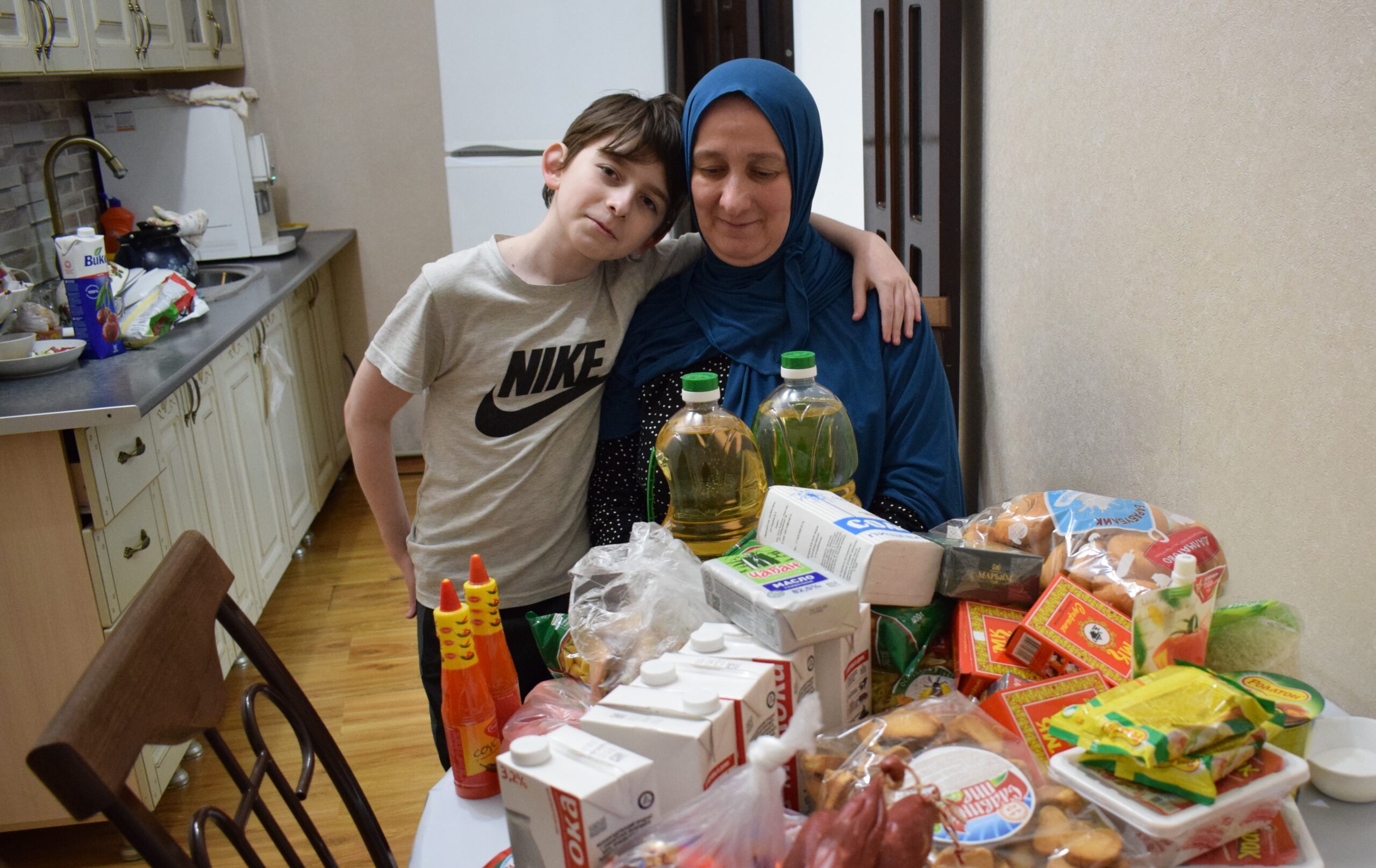
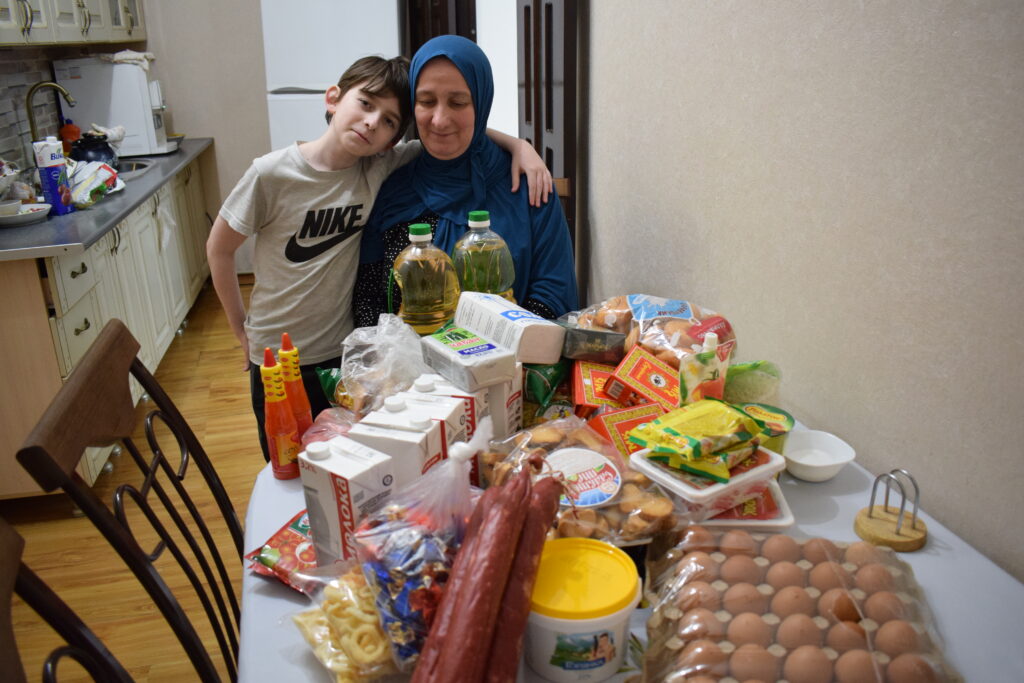
In Ramadan 2023, Islamic Relief provided food packs to 1,402 households in Grozny, Chechnya. Our teams also distributed food vouchers that allowed rightsholders to buy the food items they needed at the store.
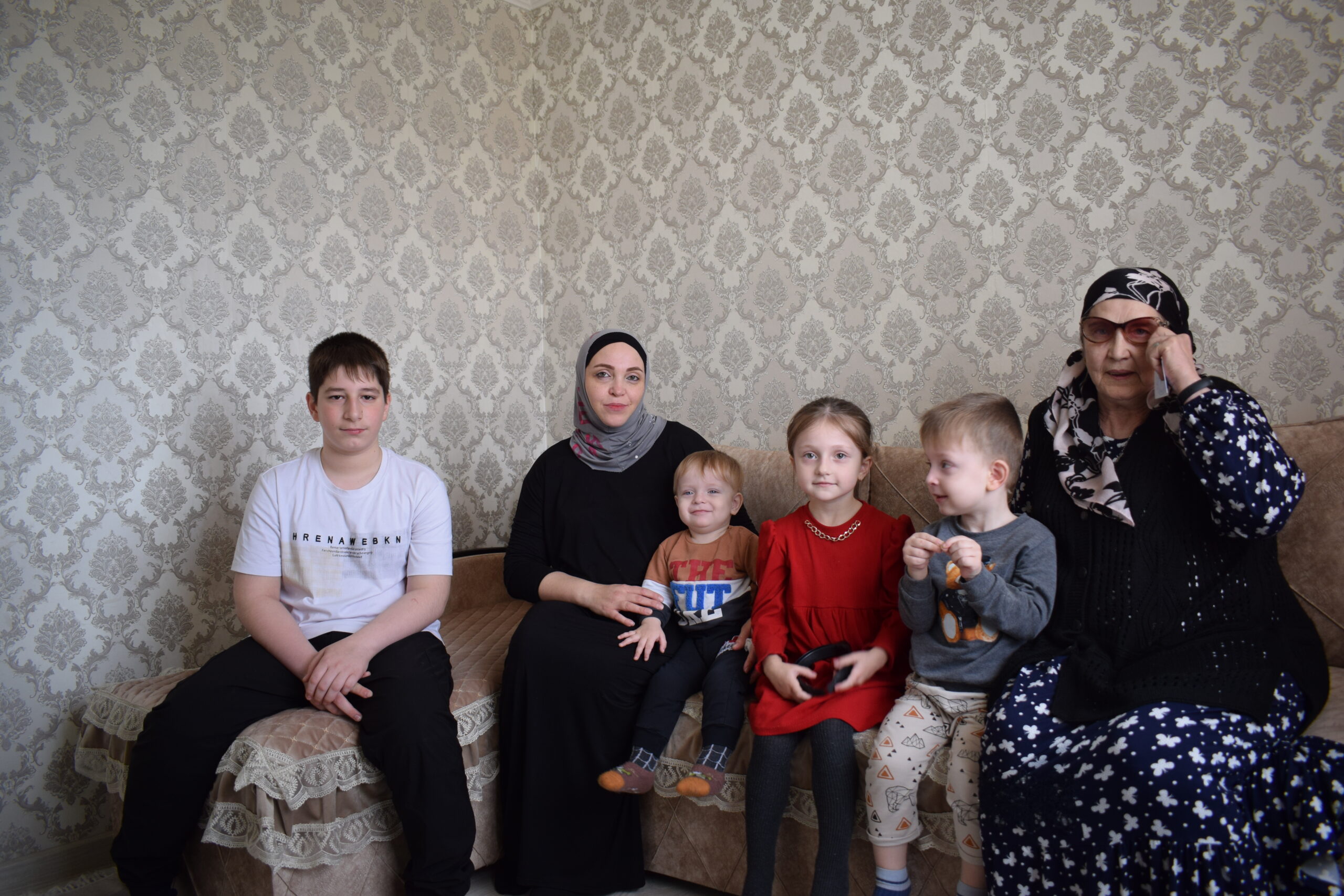
One of the beneficiaries was Luiza Djabaeva, a 31-year-old mother of four. She works as a housewife, taking care of the children and the small flat her family lives in while her husband works.
“These days, life is really becoming very hard. The prices grow very quickly, there is no stability.
“Timur works as a taxi driver and his daily earnings (around $12) are spent on our everyday needs.
“We also have children’s allowances (around $480) which we have started to get recently, and with the rise in prices almost all of it too is spent on food and clothes, medicine when children get ill and communal services ($60 per month).
“My attempts to save up some money for improving our living conditions often fail.
“During tough times, we have to depend on our relatives who share with us what they have.”
Making Do With Little Space
“Alhamdulillah, we have all the needed communal supplies here, the only problem is that we live in a former accommodation centre and our flat is 20 square meters.
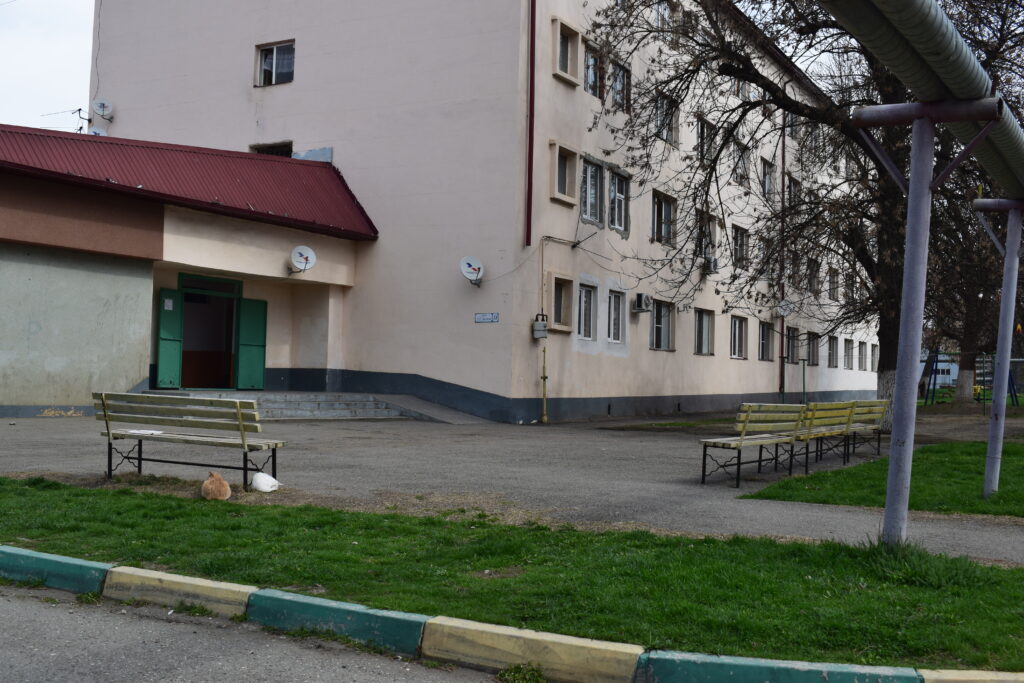
Image: Luiza’s family, from Chechnya, lives in dormitories transformed into apartment houses.
“There is no place to put a desk or an additional bed for children. Muhammad goes to school and he does his homework at his grandmother’s place which is on the same floor as ours.
“Soon Safiya will go to school, in shaa Allah, and Khaleem and Khussein too and we are unable to arrange a place for them to do their home tasks and keep their textbooks. This is so frustrating!
Hope for Ramadan during tough times
“Ramadan is the time of hope and peace for all Muslims. It’s also the time of mercy and forgiveness, strengthening of our Iman, increasing our good deeds and improving our characters. So, we too are trying to do good deeds – fast and improve ourselves with Allah’s help!
“During Ramadan, we wake up earlier to have suhoor. My children also are starting to fast little by little. For suhoor, we eat rice with milk, buckwheat or some fried eggs. Then we do our prayers. Every evening Timur does tarawih prayer at the nearby mosque. He sometimes has iftar with his friends.
During Ramadan, we eat less because there is less time for meals. We eat dates for Iftar when we can afford them. During the rest of the year, I cook all possible dishes out of flour, e.g. some buns, chepalgash, khingalsh, galnash.
“Children like them and this food also helps to save up some means for other needs, because children need clothes to wear and toys too. And when you buy a sack of flour the price for a kilo is less and you can save up a little.”
How Islamic Relief Helps
“The support we and the families like ours receive from Islamic Relief during Ramadan is very valuable. The food pack lasts for days during which we don’t have to bother ourselves about where to get the food from. It is a great relief, especially now, when the situation is so unstable.
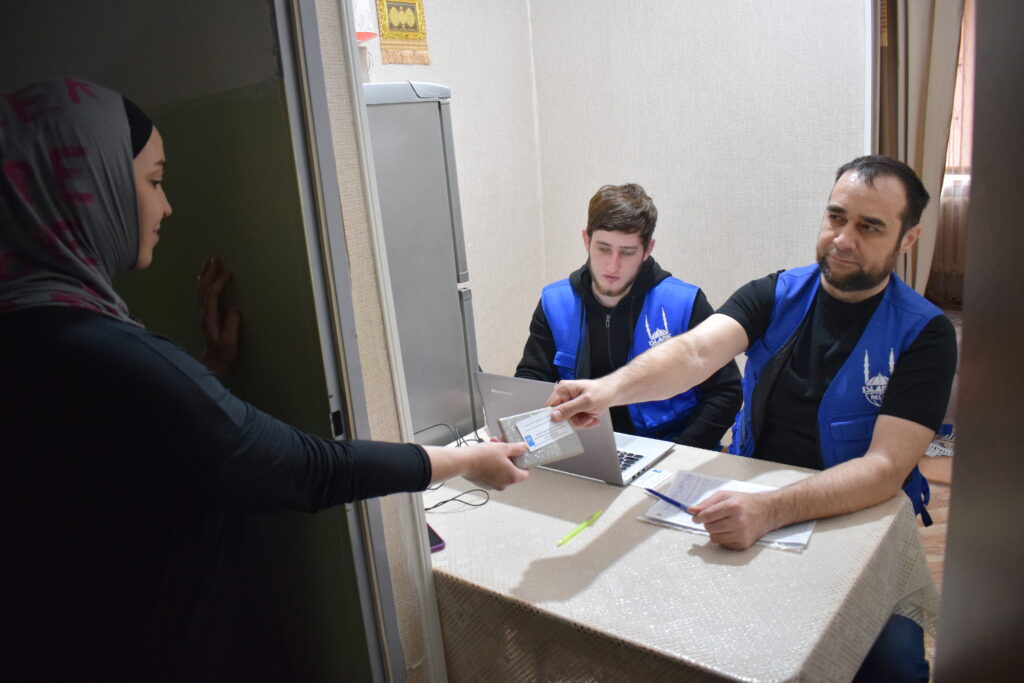
Image: Luiza from Chechnya taking her voucher at a distribution point in the dormitory and at home.
“With us, the Ramadan food pack will in sha Allah last for about a week or more, and it will help save money we would have to pay for communal services during the whole month. So, it is great support!
“We have become part of the Islamic Relief Ramadan project thanks to our community leader Layla. She was our head when the dormitory was still an accommodation centre for IDPs (internally displaced persons) and continued her mission into the day. She knows the needs of people and does the best she can to help others.
“We received a voucher from the IRR with which we could choose goods at a food store, and this was great because we chose what we wanted and bought more sweets for the month of Ramadan, which children appreciated most. I cannot tell you what can be improved because this aid was ideal! We couldn’t ask for more!
“I have so many words of gratitude for all the people who made this project possible! May Allah grant you with His mercy multiple times! And may He treat you as those He is pleased with!”
Save Families From Hunger
Multiply your rewards from Allah (SWT) this Ramadan. Give families in need the opportunity to enjoy nutritious food for Suhoor and Iftar during this blessed month.
Last Ramadan, Islamic Relief provided food packs to 1,402 households in Grozny, Chechnya. Our teams also distributed food vouchers that allowed rightsholders to buy the food items they needed at the store.
One of the beneficiaries is Larisa Mukaeva, a 44-year-old widow. A mother of 3, she is the current breadwinner of the house, after her eldest son lost his job and struggles to find work.
“When Saidi was alive our poverty didn’t seem to be a great deal, and now after his death, I feel at such a loss.
“My elder son finished law school last year and has a diploma. It is several months already since he has been trying to find a job but in vain.
“He tried selling phones at a private shop with his friend, but soon had to leave because the shop owner decided to scale down the number of staff, so now Bek is looking for a job again.”
“Alhamdulillah, not so long ago we have started to receive a bread-winner-loss allowance for Saifullah ($142) and I have recently found a part-time job in a food store nearby.
Struggling to Provide for Her Children’s Needs
“I cannot work the full day because Saifullah has digestion problems and needs care. We are trying to diagnose his disease, but no doctor has given the exact statement yet.
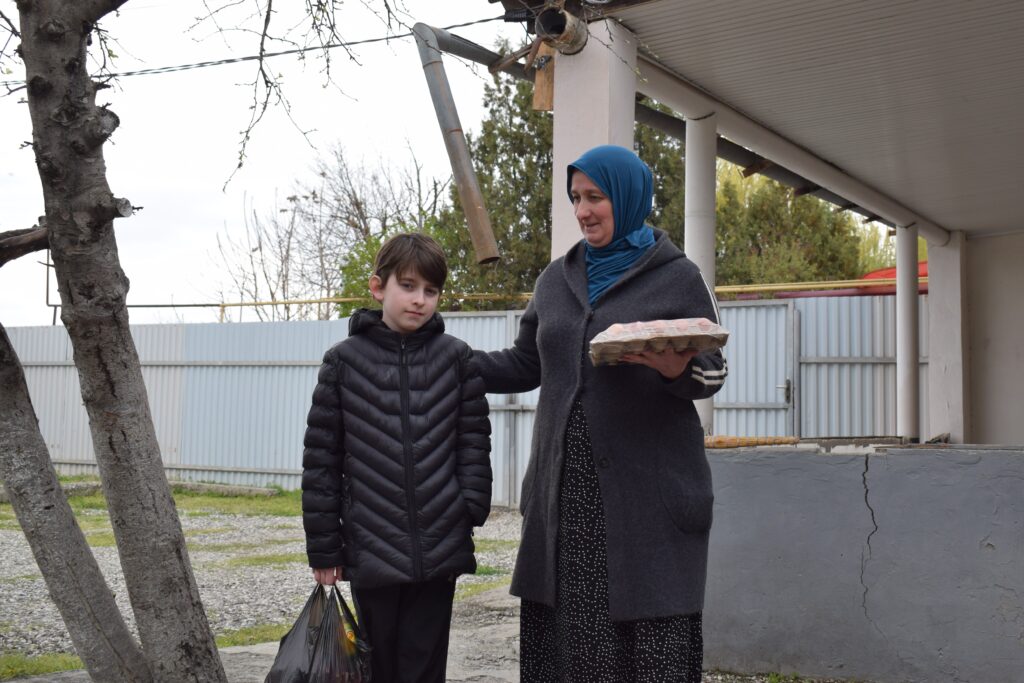
Image: Larisa Mukaeva, a widowed mother of three children, and her youngest son, from Chechnya.
“Medical tests and consultations are quite expensive and sometimes we have to go outside Chechnya to have more of them, and we also have to pay communal services (around $65 per month) that’s why food often becomes an issue.
“My brother-in-law often helps us with food and clothes during tough times, but he has a wife and three children and they are expecting one more child, so I don’t feel at ease when he spends money on us.
“I pray so much that Bek-Muhammad would find a job and our situation improves, in sha Allah.”
A Ramadan of Hardship
“Ramadan is surely a special month that brings more joy and hope to all Muslims. It seems to me, however, that after Saidi is no longer with us, Ramadan is no longer the same too. As well as the whole of my life in general. I know that everything is in Allah’s hands, so I don’t lose hope and rely upon Him!
“During Ramadan, I wake up earlier to prepare something to eat for my sons, like some porridge or fried eggs. We have our suhoor and then do our prayers. Every evening Bek goes to the nearest Mosque for tarawih and Saifullah stays with me.
We usually have various dishes that I can cook with the available ingredients. I cook well and sometimes even in darkness, when we have electricity failures, I cook better. As my children say, the food I make is more delicious when prepared without light”
How Islamic Relief Helps
“Islamic Relief is doing a great job for all those who receive this support during Ramadan.
“I have learnt about Islamic Relief from my friend, who knew about Saidi’s death and our hardships and helped me apply. We didn’t participate in any other projects. But this help came right in time! When we needed it so much!
Image: Ramadan 2023 programme encompasses 1,402 families in Chechnya, including Larisa’s.
“These days when the life of people here seems to grow harder and harder, Islamic Relief gives hope for improvement.
“People can feed their families and for all of them, this is a great support.
“For our family, this is a great relief, and this food will help us save up some money we need for other expenses, like medical needs, communal services and studies.
“When I was shopping with the Ramadan voucher, I felt the barakah of it. I think I bought with it more than I could buy with an equal sum of money at any other store.
“I thank all those who helped us, all who work in Islamic Relief and those who donate money to it. May Allah be pleased with them all!”
Save Families From Hunger
Multiply your rewards from Allah (SWT) this Ramadan. Give families in need the opportunity to enjoy nutritious food for Suhoor and Iftar during this blessed month.
The conflict in Sudan, which has raged on for almost a year now, is pushing the country to breaking point. The ongoing hostilities have ripped the country apart. Now, huge swathes of the population are dangerously close to famine, with millions of lives at risk.
This month, the United Nations stated that the country is “on course to become the world’s worst hunger crisis.”
Across Sudan, 17.7 million people are facing high levels of acute food insecurity. 5 million people are just one step away from famine and more than 3.4 million children suffering from malnutrition.
A Country on the Brink
Approximately 8 million people across Sudan have been displaced since the crisis began in April. Many reside in camps for internally displaced persons (IDPs) camps. But 2 million people have left the country, seeking refuge in neighbouring Chad, Egypt and South Sudan.
The conflict has spread across the country, resulting in thousands of deaths.
Almost 15,000 people have been killed so far. However, the real death toll is thought to be far higher as some areas remain extremely challenging to access.
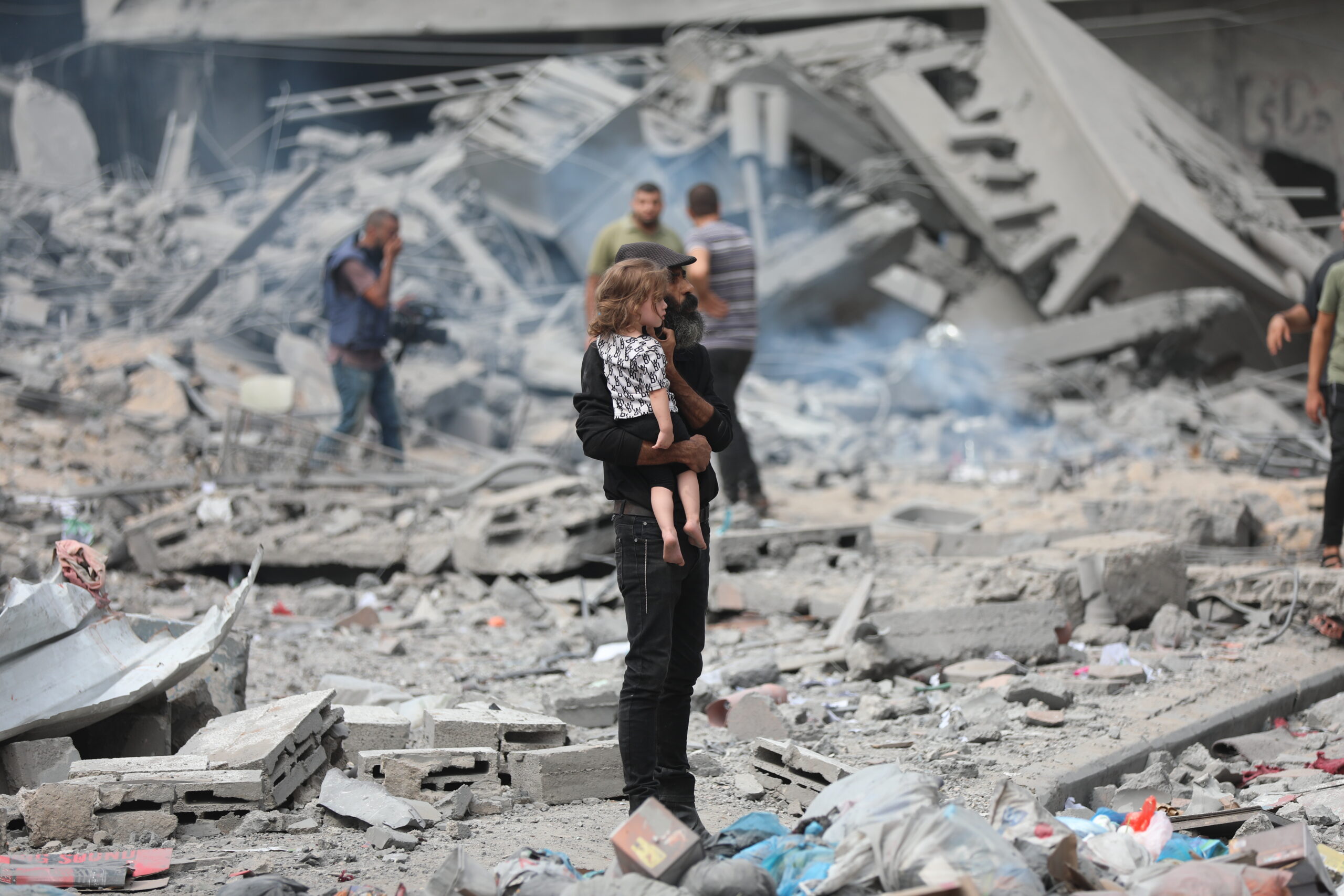
Looting has become common, while increasingly violent conflict has led to the widespread destruction of critical infrastructure. The health sector has all but collapsed. More than 70% of healthcare facilities in Sudan have shut down since the fighting began.
All the while, the economy crumbles. Prices of essential items have skyrocketed by 83%, meaning essential foods and commodities remain out of reach for many.
A Lifeline During the Sudan Crisis
Islamic Relief has provided aid to more than 600,000 people since the crisis began, and we will continue to distribute food and cash assistance where we are able to reach civilians.
Image: Islamic Relief has helped those affected by the crisis by delivering food and cash assistance.
As the crisis reaches a critical juncture, Islamic Relief continues to join the United Nations and other groups in calling for an end to hostilities before more lives are ruined, and a generation is wiped out.
The people of Sudan urgently need more international attention and support. There must be renewed efforts to secure an immediate ceasefire and a negotiated political settlement. Civilians must be protected. As famine looms, more must be done to help those most at risk.
We will continue to provide life-saving aid to the people of Sudan and your donations can help us to make a huge difference.
Give relief to the people of Sudan
Help us provide urgent relief to our brothers and sisters suffering in Sudan due to the ongoing and devastating conflict. Be their lifeline today.
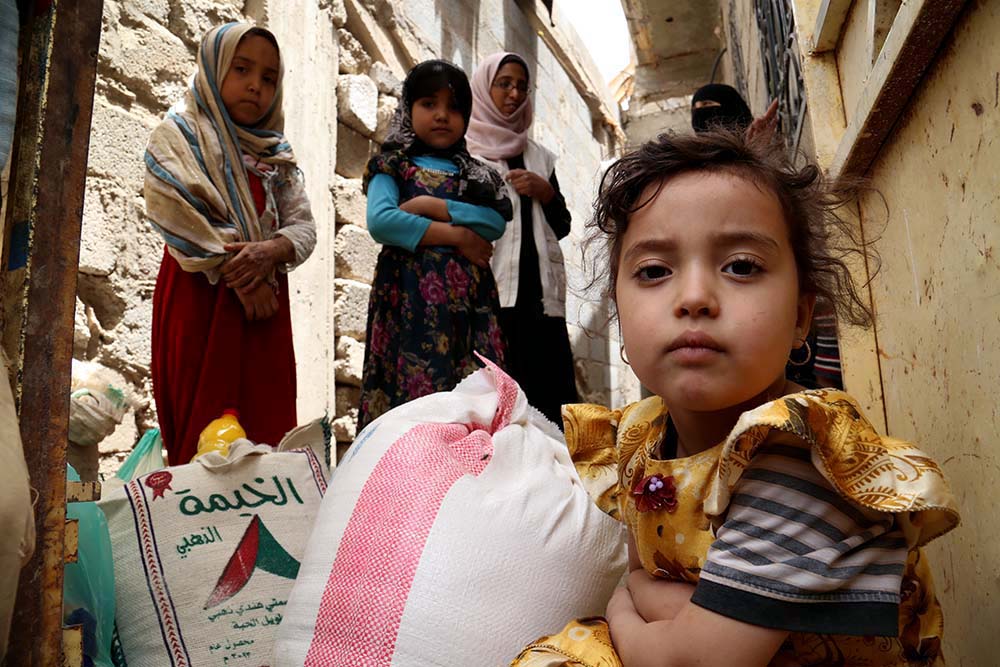
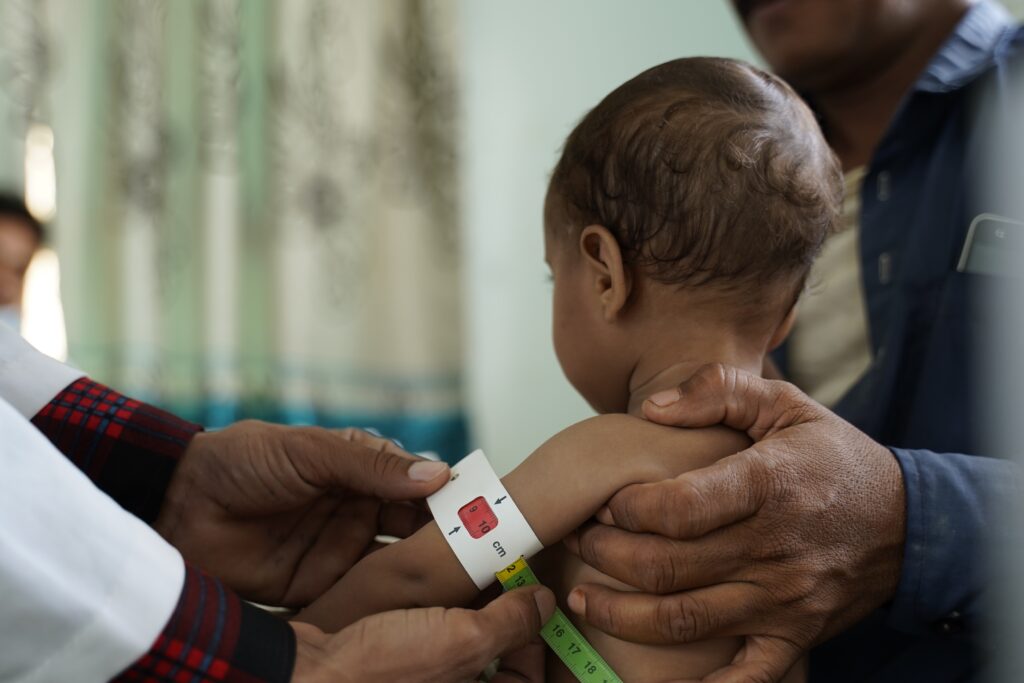
As Yemen marks 9 years of war, one of the world’s worst humanitarian crises has only worsened. Malnutrition, especially, is spiralling in the country. A critical issue not helped by the recent cuts to humanitarian aid, affecting millions of lives.
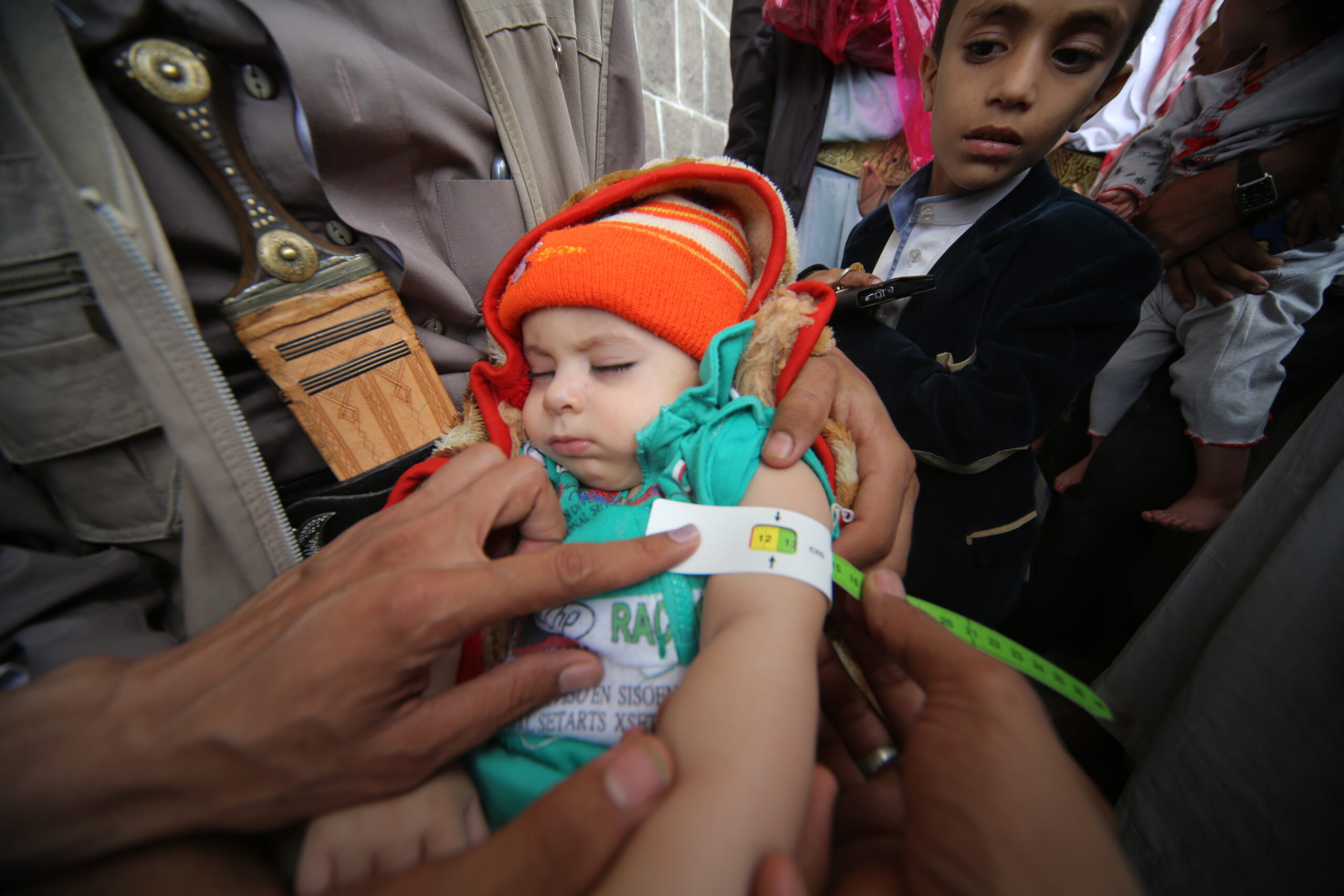
Islamic Relief is on the ground, working in 159 nutrition centres across Yemen. Over the past few months, our teams observed a surge in malnourished children. The price of essential food in the market is also rapidly rising, leaving many families unable to afford it.
The Impact of Aid Cuts
Since December, the UN World Food Programme (WFP) has paused its general food distributions in northern Yemen, which has been a lifeline for 9.5 million people. In addition, the WFP malnutrition prevention programme is facing a significant shortage of supplies which is affecting critical services.
In January 2024, more than half of UN-surveyed households in Yemen were unable to access adequate food. This represented an increase of 11% from November 2023.
After 9 years of war, malnutrition rates in Yemen are some of the highest ever recorded and are expected to worsen. 17.6 million people in the country are facing food insecurity. Nearly half of all its children are currently estimated to be experiencing moderate to severe stunting. Almost 80% of the population lives below the poverty line. Around 2.7 million women and 5 million children under 5 years old are estimated to require treatment for acute malnutrition in 2024.
Ammar Al-Dumini, Senior media and communications officer with Islamic Relief in Yemen, said:
“The impact of aid cuts to Yemen over the last few months are now clearly being felt and we see this impact in the appalling levels of hunger and malnutrition. These are some of the highest levels the country has ever seen. After 9 years of civil war, the economy is in crisis and inflation is out of control. People have lost their livelihoods and can’t afford to buy enough food. Yemen is one of the largest humanitarian crises in the world but it has been largely forgotten.”
“Aid has been vital in preventing Yemen falling into famine in recent years, and it saved countless lives. But if the international community continues to overlook the humanitarian situation in Yemen then we will see conditions badly deteriorate again.”
Islamic Relief advocating for Yemen
Islamic Relief are supporting the people of Yemen, providing relief to hunger and more. We urgently appeal to the international community to ensure the humanitarian response for the people of Yemen continues.
In addition to providing food, cash, vocational training, and income support, Islamic Relief is ensuring that vulnerable Yemenis have access to clean water, sanitation facilities, and hygiene kits. We also work in 159 health and nutrition centres across the country, supporting 77,719 children under five and 91,879 pregnant and lactating women who are admitted for treatment to regain a healthy weight.
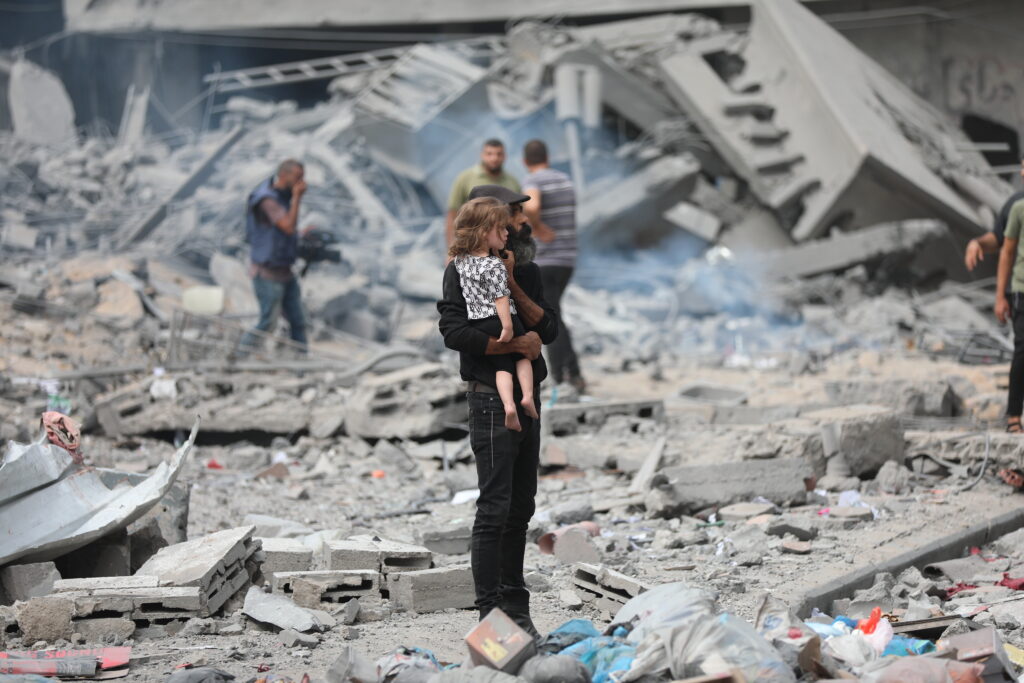
Living through a Ramadan like no other, an Islamic Relief aid worker* in Gaza reflects on Ramadans gone by and shares his hope of seeing a ceasefire before Eid.
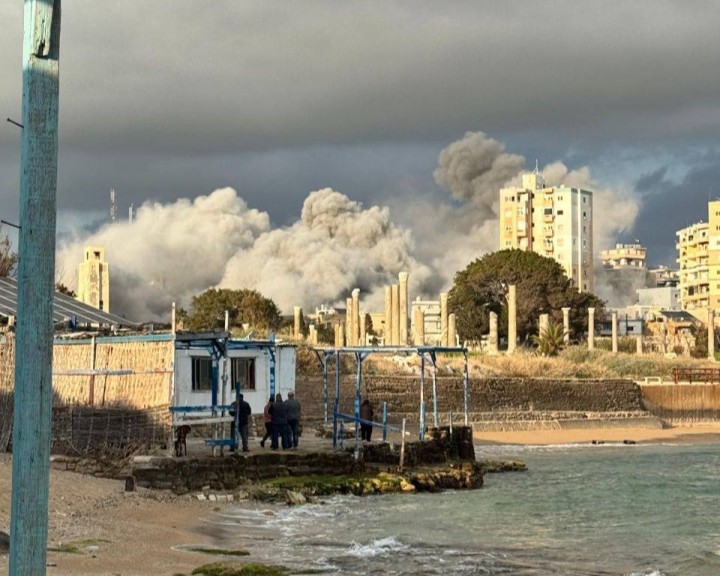
It has been 160 days since this brutal war on Gaza began. This is the fourth day of the holy month of Ramadan.
We hoped there would be a ceasefire before the start of Ramadan, but none materialised so we are still living through the hardest times of our lives. It may even be the cruellest time humanity has witnessed in the modern day.
In fact, things have become even harder during Ramadan.
Remembering Ramadan in Gaza
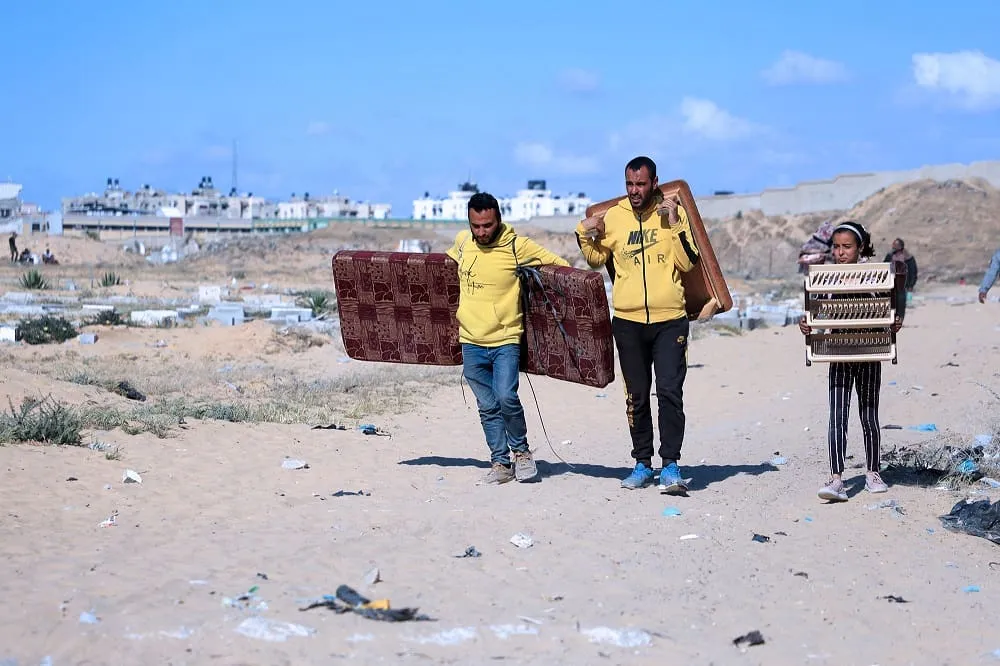
This month is supposed to be a time for doing good, for charity, compassion and solidarity. But Palestinians are starting their Ramadan displaced, living in tents and prevented from meeting their basic needs.
I miss everything we used to do in Ramadan. This year we are barely surviving. This year we face famine, not only fasting.
For the past few years, everyone would start preparing early for Ramadan, hanging decorations, and lighting lanterns. Some neighbourhoods would even paint walls with vibrant colours. The mosques clean their carpets and fix their lighting to be ready to receive everyone coming to pray.
Last year, in my building, all the neighbours gathered and fixed some lights around the entrance, it looked magnificent.
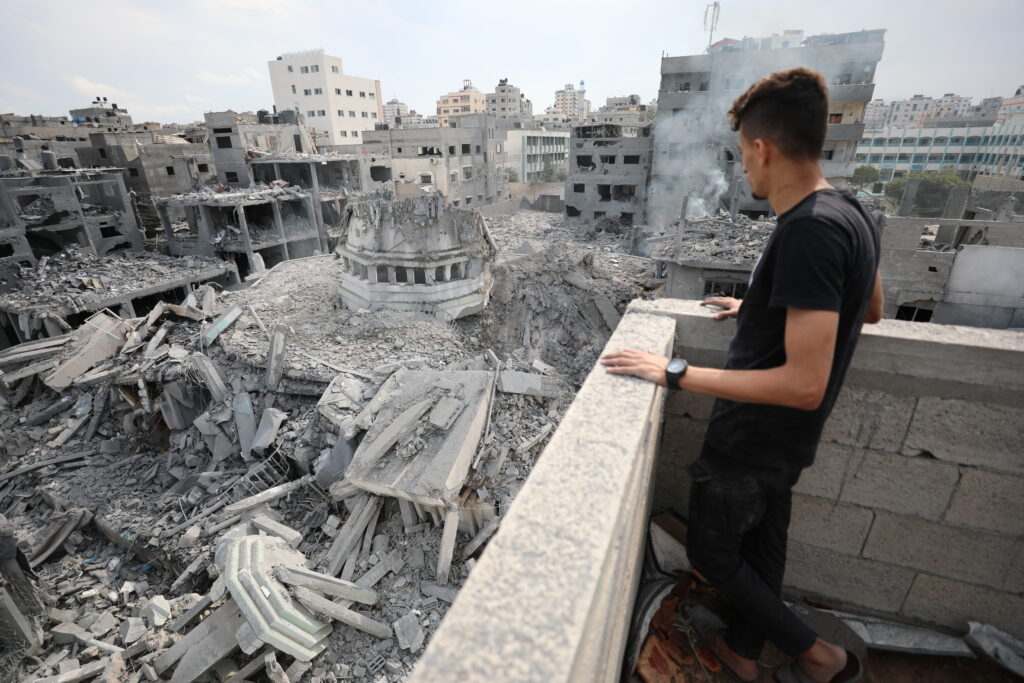
This year, most of these neighbourhoods are gone. Some buildings still stand, but their residents are not there.
Recently some of our neighbours from the building shared a video of last year’s decoration. It brought tears into my eyes being able to see my house before it was destroyed. I know it is uninhabitable now, but I hope I might be able to salvage some of my books, some of my personal items, my kids’ school bags and some toys if we ever make it back there.
My kids blame us for not allowing them to bring their toys when we left. We thought we would be back in a couple of days.
Bombing and airstrikes replace the call to prayer
Last Ramadan, I would get back from work and help my wife in the kitchen before it was time to break our fast. The kids would finish their homework and watch some TV. They enjoyed some of the shows that aired during Ramadan.
My son has been asking me about the show this year, asking why we’re not watching it on TV. I told him that we can’t run the TV at night because we’re saving batteries.
I remember promising my children last year that I would take them with me to the mosque to perform night prayers this year. Even though they were young, they wanted to join me in going to the mosque every night after we broke our fast.
In the mosques, it usually seems as if everyone in Gaza is attending the night prayers. For that one hour, the streets empty, and once the prayer is over, life flows back into the shops, the markets and family homes.
This year there are no night prayers at the mosque. We pray at home. It is too dangerous to go out after the sun sets.
Last year, the streets and shops were filled with recitals of the Qur’an, broadcast over speakers; and of course, we heard the call to prayer coming from the mosques.
Now, we hear bombing and airstrikes. We have drones buzzing over our heads all day long – a disturbing sound that only gives us the feeling of being monitored and tracked and marked as a target.
Separated families
In Gaza, the generosity of the people is unmatched, and it doubles in Ramadan. There is a tradition where men visit their female relatives including sisters, aunts, mothers-in-law and others to bring them gifts for Ramadan.
Generosity is also seen when families invite each other to have breakfast together. For example, I used to invite my sisters, their husbands and children to have an iftar at my parents’ house. There would be around 30-40 people gathered to enjoy Ramadan together. We’d break our fast and go to the mosque together to pray. Later at night, we’d gather for coffee and some Katayef (Qatayef, Ramadan sweets).
This year, I could not visit any of my relatives. Travelling is very dangerous, and I cannot get gifts for them because there are no goods in the markets.
This year, most families are spread all around the Gaza Strip and can’t travel to meet, and staying out after dark is a risky business. On top of this, we are not emotionally prepared to enjoy good times while all our loved ones are gone and all our belongings are destroyed, along with our memories, our livelihoods, and our city.
Spending Ramadan in mourning, loss, fear and frustration
Ramadan is a month for worship and compassion. It’s the norm that people prepare the most delicious food in this month and every family has their own recipes. Everyone also races to prepare food to distribute among people in need.
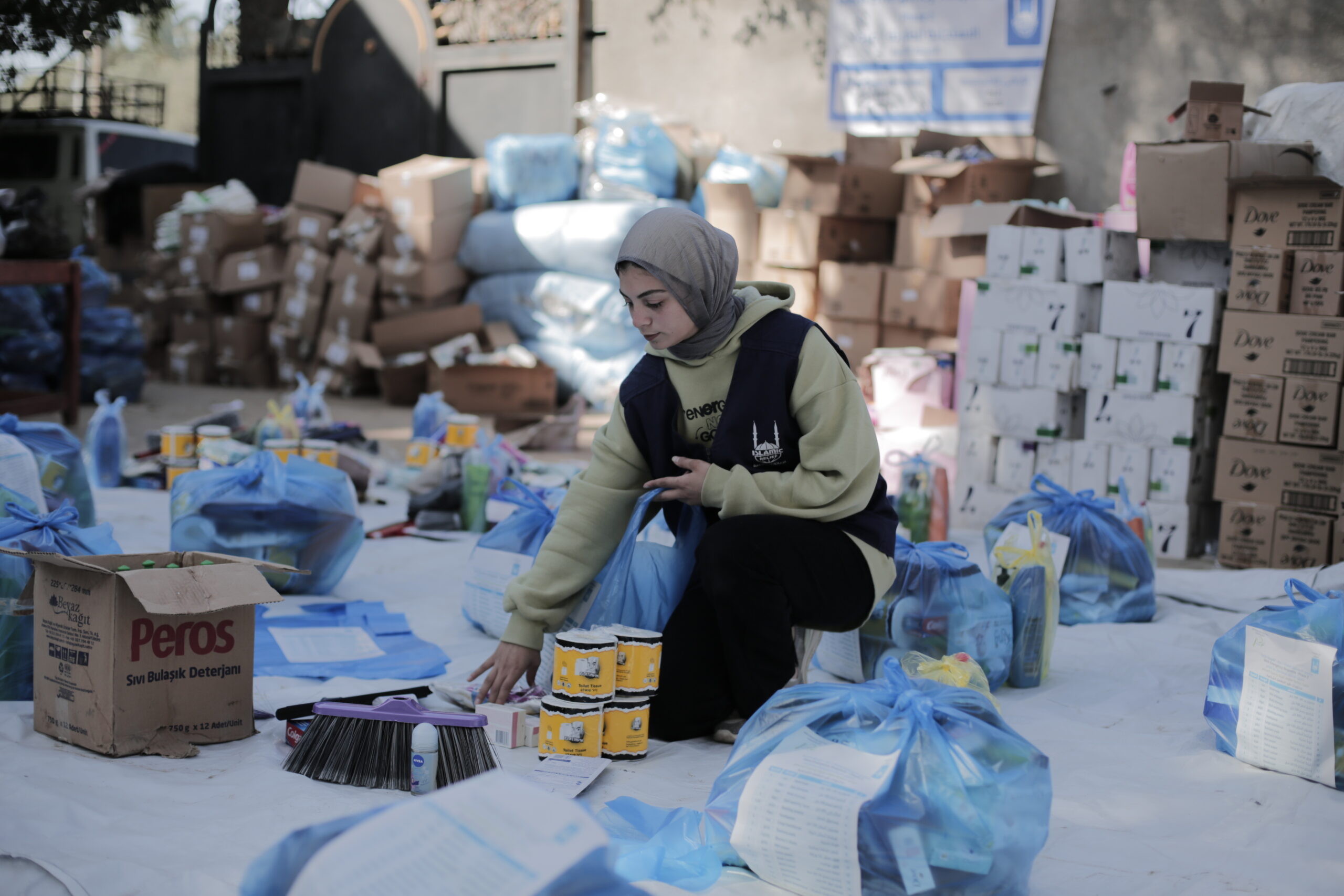
At Islamic Relief, we would distribute food packages to thousands of families every year. We also organised iftars for some of our communities where all our staff volunteered to assist with receiving guests and serving food to their tables. After that, all the staff would gather to clean and spend some good time together.
This year, we are living Ramadan in mourning, in loss, in fear and frustration. The happiest time of the year is now so sad. We are not able to attend the mosques. Not able to do charity and help each other.
We are not even able to be in our own homes or walk our streets. We do not have Ramadan crescents or lanterns. It is dark.
Yearning for a Brighter Tomorrow
I can’t compare this year’s Ramadan with anything we have lived through before as we are living the hardest times of our lives. I talk to everyone around me, and they are looking to leave the country in search of a better life.
This Ramadan is so hard and full of desperation. Without a ceasefire, my people are still being killed by bullets, airstrikes, bombing and starvation. Now, we only hope that we will have a ceasefire before the month ends. At least then we could enjoy Eid in some respite. Please, my readers, keep pushing for a ceasefire and an end to this madness.
*This blog is anonymised to protect the safety and security of our colleague and others mentioned.
Editor’s note: This blog was submitted amid a fast-changing and deepening crisis. The information was correct as of Sunday 17 March 2024.
In the ongoing crisis, Gaza needs your help
Help us provide urgent medical supplies, food and other crucial, life-saving aid now to families in need by giving with Islamic Relief.
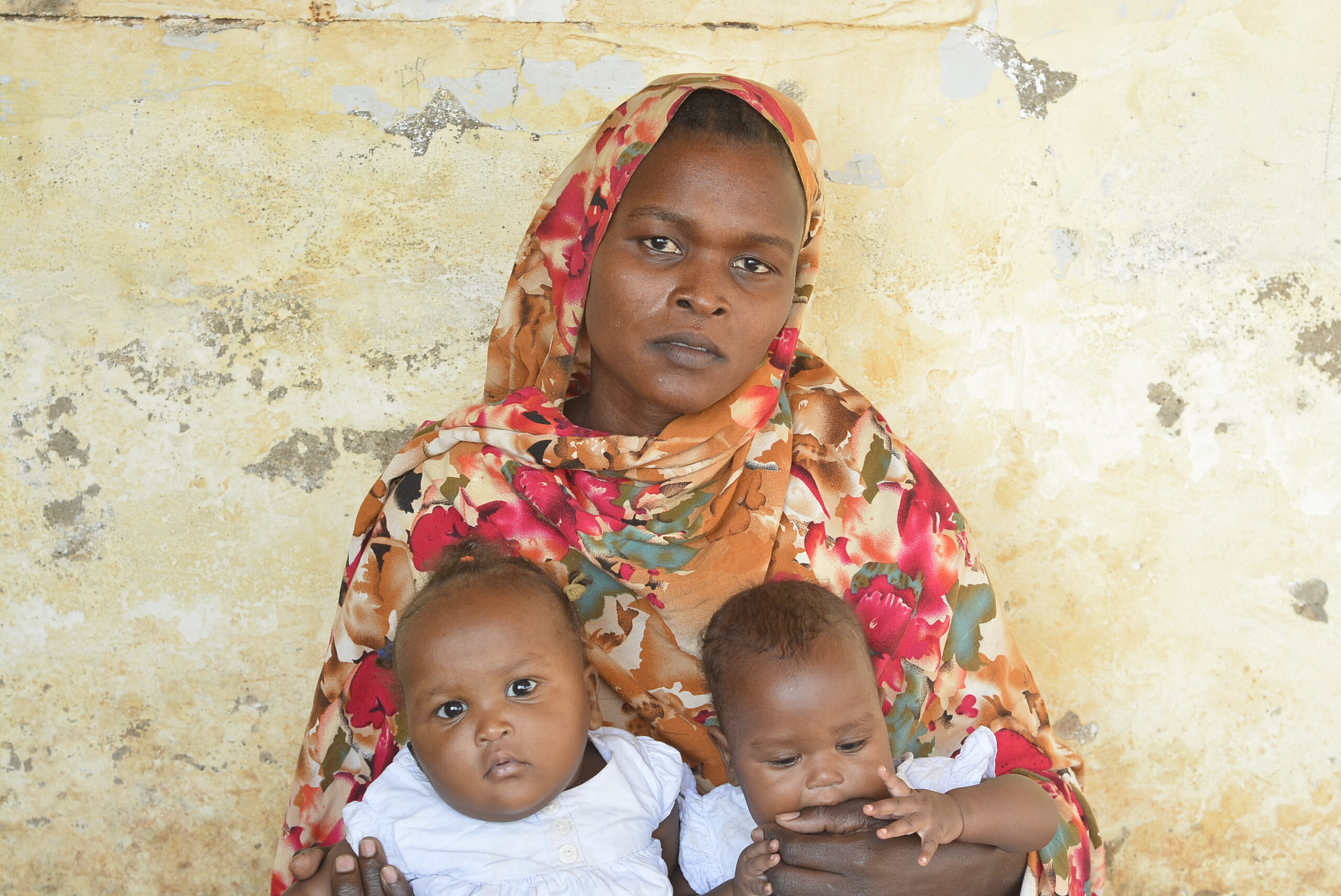
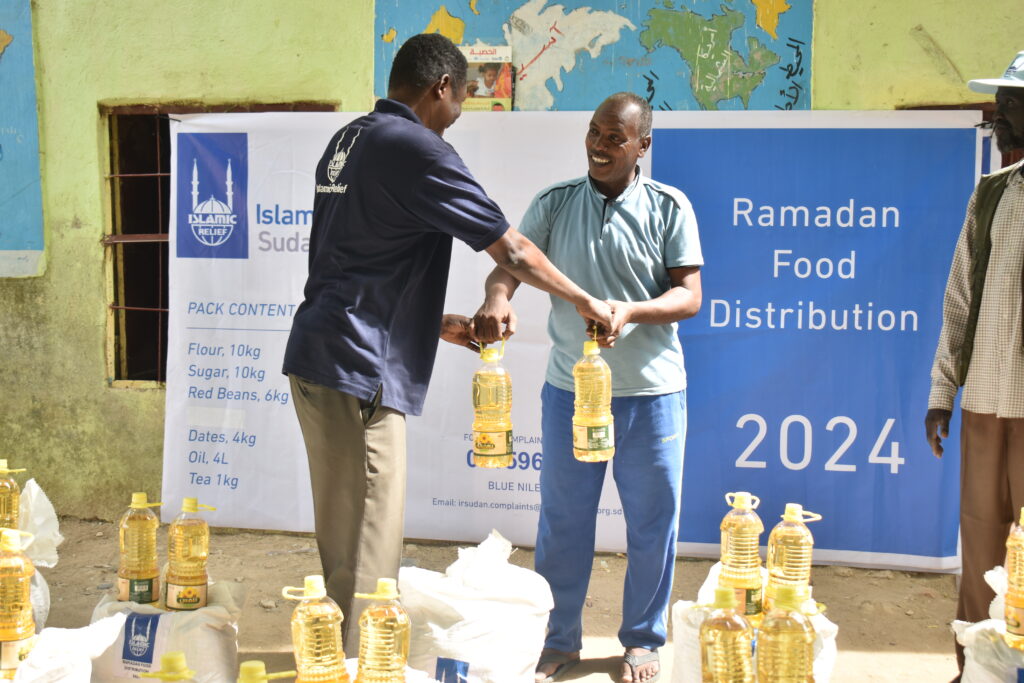
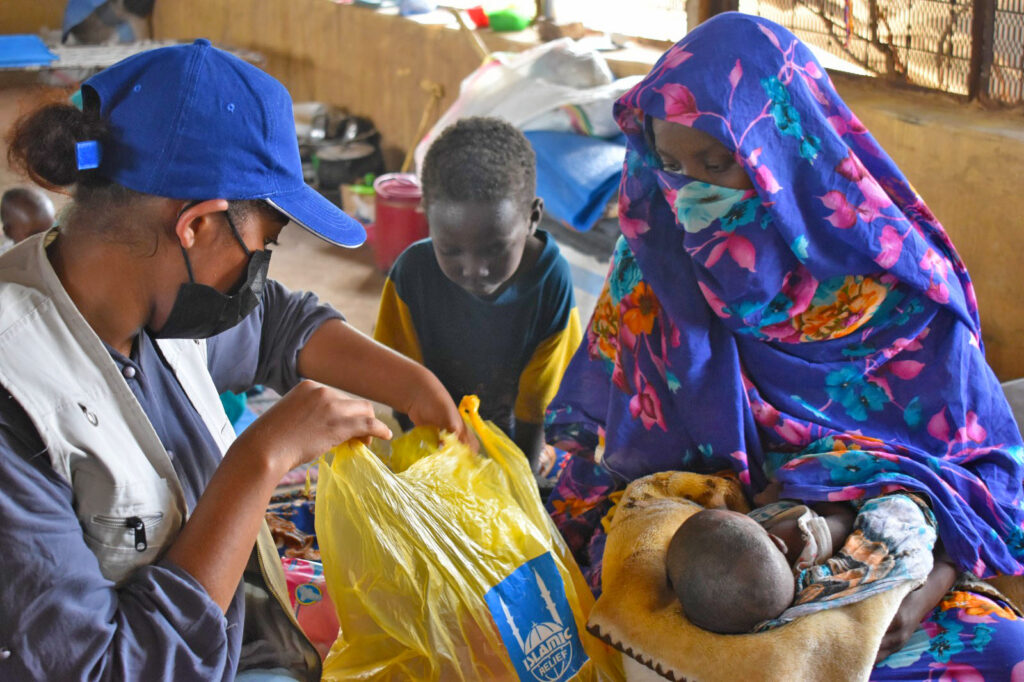
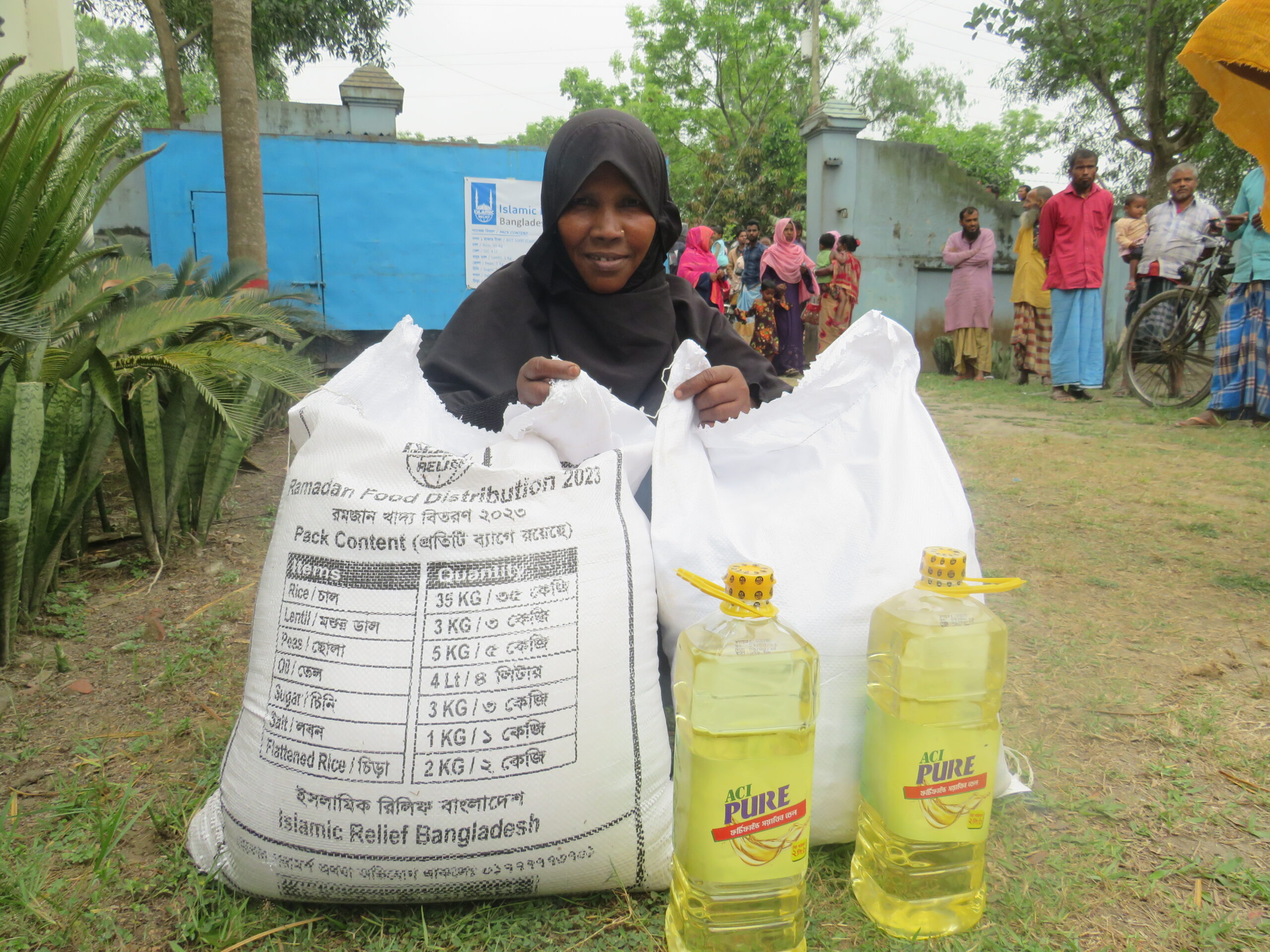
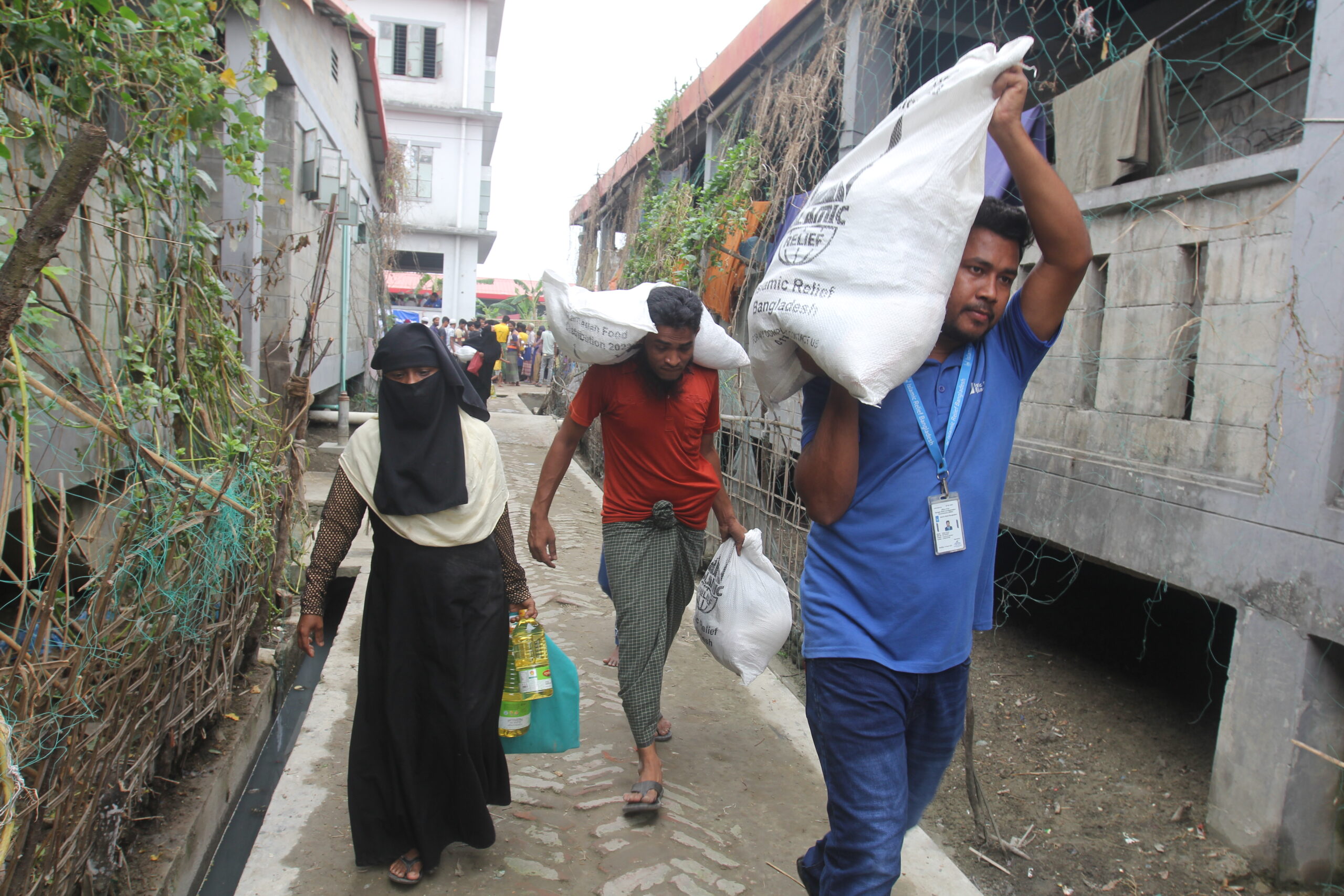
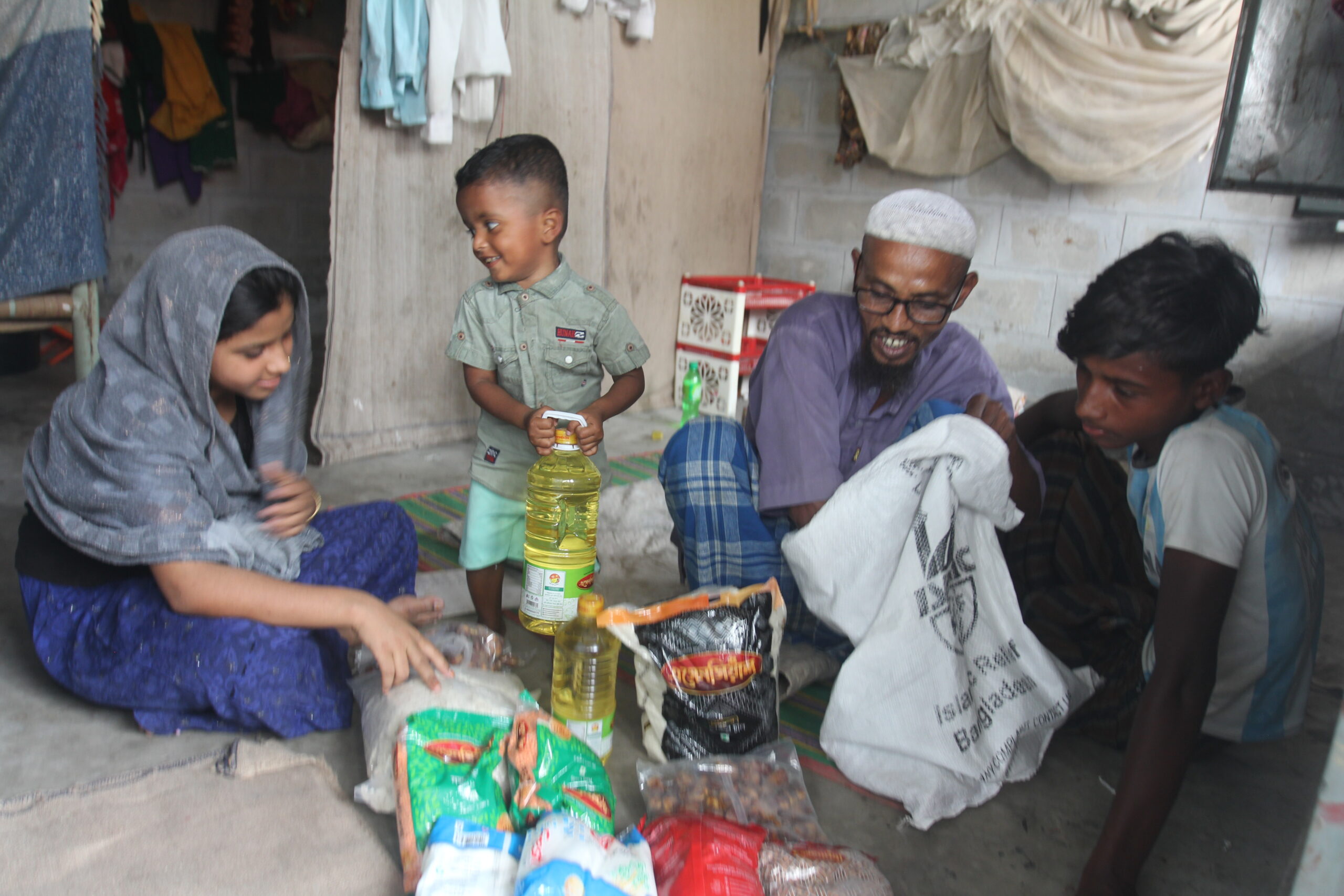
Ramadan food distribution is a signature program of Islamic Relief. In 2023, Islamic Relief distributed 400 food packs to vulnerable communities in Mithapukur, a sub-district of Rangpur in Bangladesh.
Rangpur is one of the poverty-prone districts in Bangladesh. Within the area, families cannot afford to buy food the whole year round. During Ramadan, this makes fasting difficult, as they often go days without a proper meal is difficult.
To combat this issue, Islamic Relief has ensured that families in Rangpur get enough food throughout Ramadan.
Struggling to Feed Their Family
One of the recipients is Sultana Razia, a 45-year-old mother of 3. Her husband is the family’s breadwinner, but she tries to earn some income to help him out wherever she can.
“I work as a seasonal day labourer, picking potatoes from the land, harvesting rice from the paddy field. Being a Iabourer, I only earn BDT 200 a day. I do sewing at home from which I earn BDT 250 in a week. I give all my earnings to my husband to spend for family purposes. Thus, I contribute to my family.
“I do not have any steady income. I feel bad when I cannot share family expenses. My husband does not earn much, and it is difficult for him to run the whole family with his little income.
“During this difficult period, we cannot provide food to our daughters. Sometimes they starve and go to sleep without food. We eat one or a maximum of two meals a day instead of three meals. My daughters suffer from malnutrition due to lack of food and become physically weak.”
How Islamic Relief Has Helped
Sultana and her family are regular recipients of aid from Islamic Relief. In 2022, she received a Ramadan food pack and Qurban during Eid al-Adha. Her family also received winter clothes in December 2021 from Islamic Relief’s winterisation program.
In early 2021, she participated in the “Preventing Early Marriage in Bangladesh” project In Mithapukur Upazila, as her second daughter, Rubaya Akhter, was selected as a direct beneficiary of the project. The program gave them BDT 5000 as a grant to increase family income.
The Impact of Ramadan Food Packs
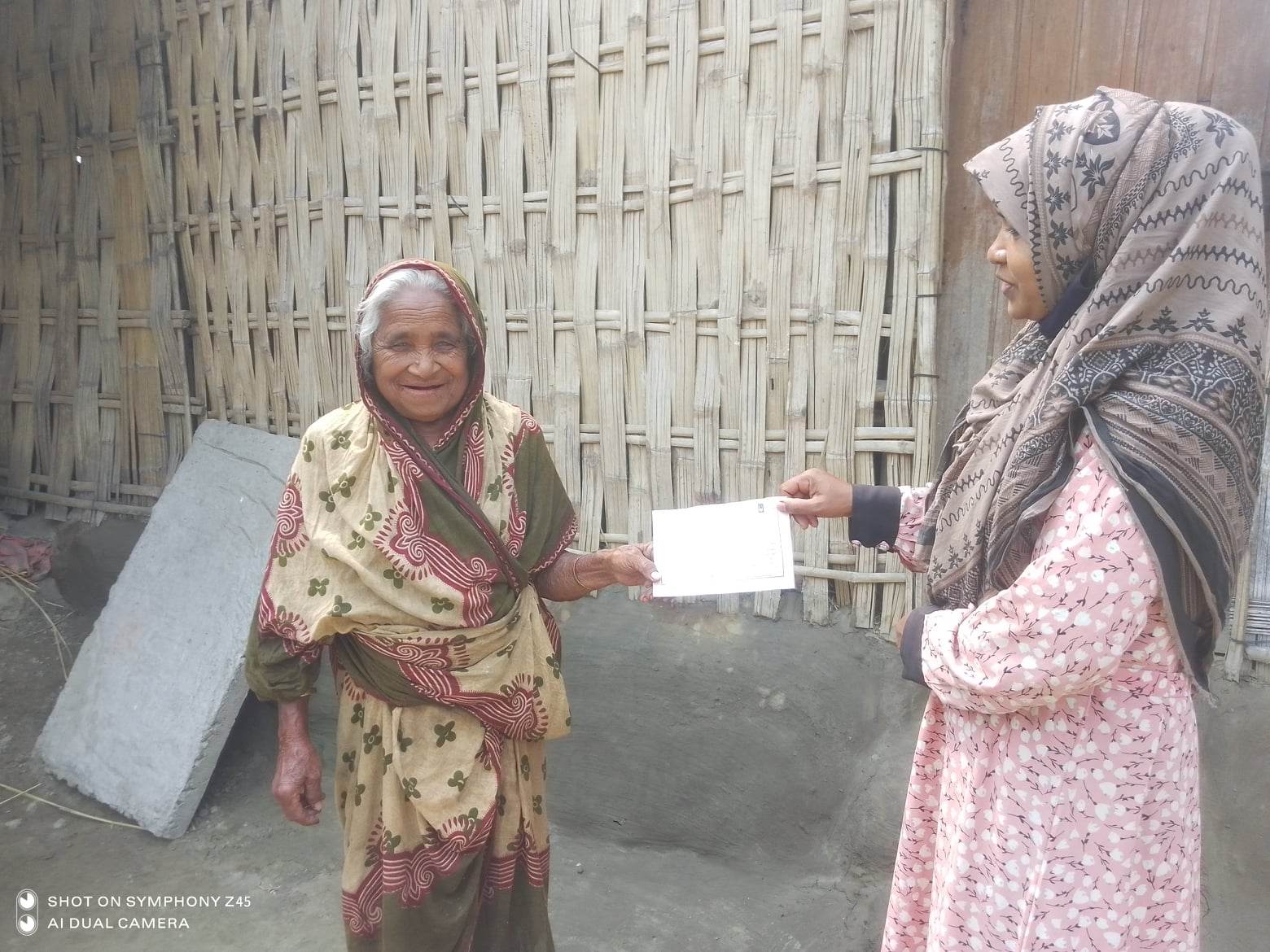
Likewise, in 2023, like many other needy families in her village, Sultana and her family, received a Ramadan food pack from Islamic Relief.
“People in my neighbourhood are poor and the Ramadan pack is a blessing to everyone. The pack gives them comfort and ensures their food security. As such, they sincerely concentrate on their prayers with more devotion.
“This Ramadan food pack is a great help to me. We are a family of 5 members. Before, we hardly managed 3 meals. Now Islamic Relief has ensured our meals in Ramadan. We would be able to break our fast together. We are so much relieved now.
Image: Sultana Razia received her Ramadan 2023 food pack.
“I would like to extend my sincere thanks and gratitude to Islamic Relief from the bottom of my heart. By distributing the Ramadan food pack, Islamic Relief has supported many vulnerable people like us. We are extremely happy to receive these Ramadan food packages.
“I would also like to convey my gratitude to donors, and I will always pray for donors so they continue distributing Ramadan food package in future.”
Save Families From Hunger
Multiply your rewards from Allah (SWT) this Ramadan. Give families in need the opportunity to enjoy nutritious food for Suhoor and Iftar during this blessed month.