By donating to Islamic Relief Australia, you are helping us create a world that is free from poverty and injustice – one where communities are empowered and people are able to fulfil their God-given purpose. With you on board, we believe we can end suffering.
How much would you like to give per month? Allah (SWT) loves deeds that are done consistently, even if they are small. Beyond Ramadan, continue to empower our Ummah. Help us provide those in need with critical support and relief.
On World Water Day, we are reminded of a simple yet powerful truth:
Water is life.
Yet today, millions of people around the world still wake up without access to something many of us in Australia take for granted — safe, clean water.
Across the world, 2.2 billion people — 1 in 4 — lack access to safe drinking water.
For many communities, this is not just an inconvenience, it is a daily struggle for survival.
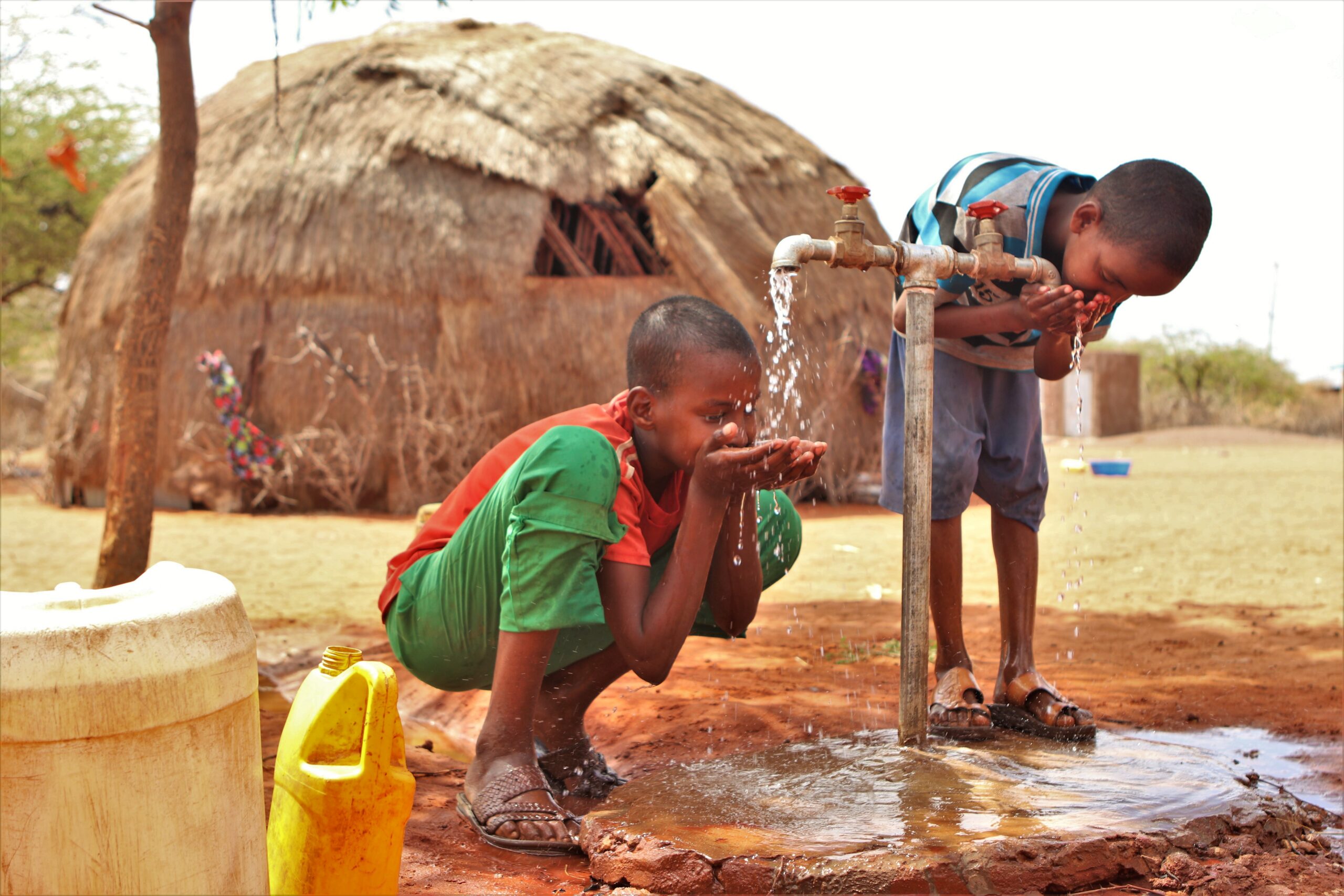
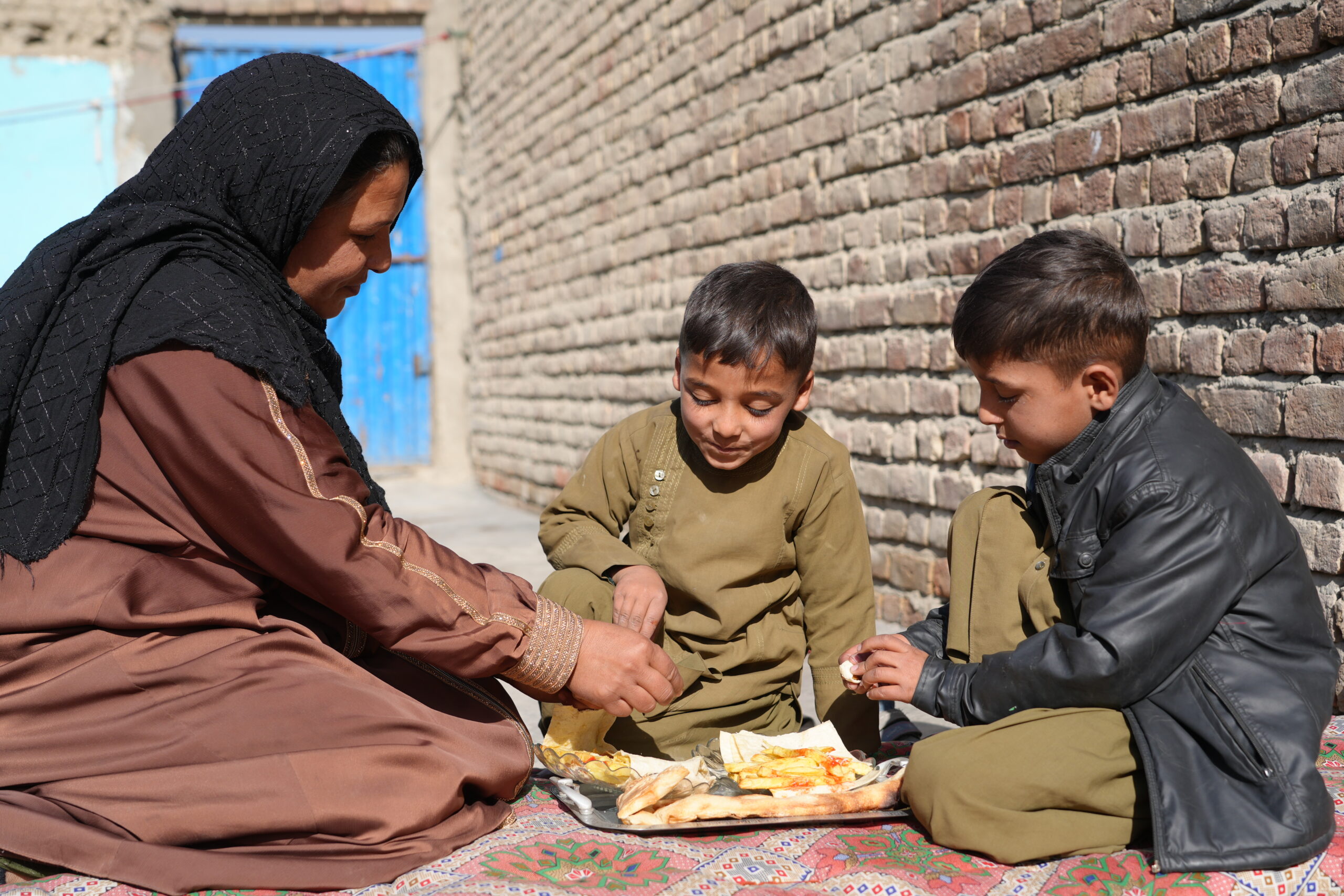
In countries such as Ethiopia, Kenya, and Somalia, families often rely on unsafe water sources. Women and children walk kilometres every day just to collect water — time that could otherwise be spent in school, work, or with family.
In fact, it is estimated that women and girls collectively spend over 200 million hours every day collecting water.
As Muslims, we are reminded that water is not just a resource — it is a divine blessing from Allah (SWT).
“And We send down blessed rain from the sky, bringing forth gardens and grains for harvest, and towering palm trees loaded with clustered fruit, as a provision for Our servants. And with this We revive a lifeless land. Such is the resurrection.”
Qur’an | Surah Qaf | 50:9–11
“Do the disbelievers not realize that the heavens and the earth were once one mass then We split them apart? And We created from water every living thing. Will they not then believe?”
Qur’an | Surah Al-Anbya | 21:30
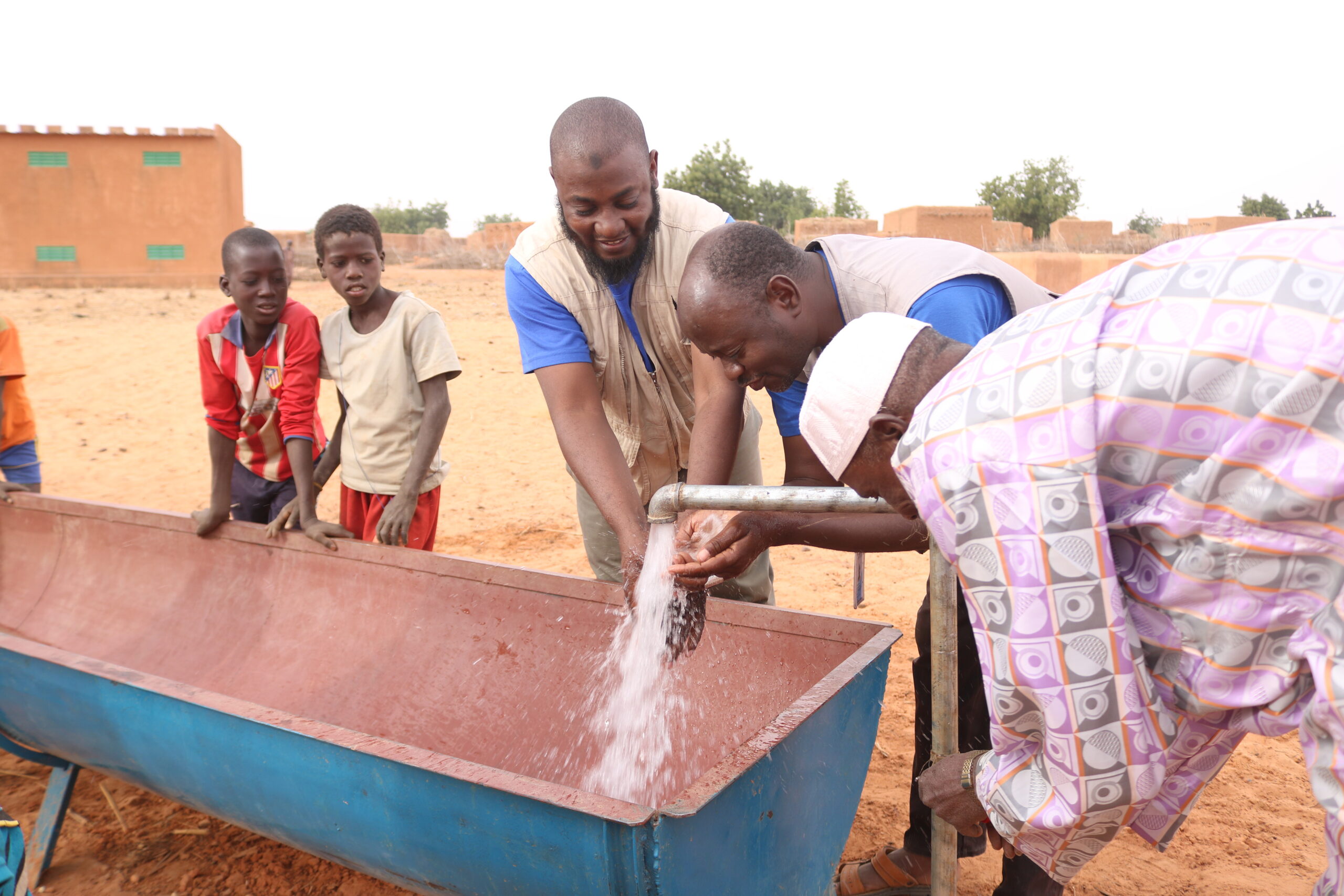
Photo: An Image of an Islamic Relief Water project
The disproportionate impact on women and girls
The global water crisis is closely linked to gender inequality. Women and girls bear the greatest burden due to existing social and economic disparities. In countries such as Ethiopia and Kenya, girls frequently travel several kilometres to fetch water. This responsibility often prevents them from attending school, limiting their access to education and future opportunities. In addition, the journey to collect water can expose women and girls to significant safety risks, including harassment and violence. These challenges highlight how access to clean water is not only a matter of health, but also of dignity, safety, and equality.
Climate change is intensifying water scarcity across many regions of the world. Prolonged droughts are affecting millions of people, particularly those who depend on agriculture for their livelihoods. Without reliable access to water, crops fail, incomes are lost, and food insecurity increases.
At the same time, extreme weather events such as flooding are becoming more frequent and severe, damaging infrastructure and contaminating water sources. Communities already facing poverty are often the most vulnerable to these impacts.
Islamic Relief has been working for over three decades to support vulnerable communities with access to safe and sustainable water solutions.
Our work goes beyond short-term interventions. We focus on long-term impact by:
Developing sustainable water supply systems
Installing solar-powered boreholes
Supporting irrigation for agriculture
Improving sanitation and hygiene facilities
Training communities to manage and maintain water resources
Across countries such as Somalia, Afghanistan, Pakistan, and Nepal, Islamic Relief continues to deliver solutions that strengthen resilience and support communities for the future.
On World Water Day, we are reminded of the importance of collective action in addressing the global water crisis.
Islamic Relief Australia continues to work with communities around the world to deliver sustainable water solutions that improve health, livelihoods, and long-term resilience.
Through continued support, it is possible to help ensure that more communities gain access to safe and reliable water sources for generations to come.
By donating to Islamic Relief Australia, you are helping us create a world that is free from poverty and injustice – one where communities are empowered and people are able to fulfil their God-given purpose. With you on board, we believe we can end suffering.
How much would you like to give per month? Allah (SWT) loves deeds that are done consistently, even if they are small. Beyond Ramadan, continue to empower our Ummah. Help us provide those in need with critical support and relief.
By donating to Islamic Relief Australia, you are helping us create a world that is free from poverty and injustice – one where communities are empowered and people are able to fulfil their God-given purpose. With you on board, we believe we can end suffering.
How much would you like to give per month? Allah (SWT) loves deeds that are done consistently, even if they are small. Beyond Ramadan, continue to empower our Ummah. Help us provide those in need with critical support and relief.
Al Isra wal Miraj is believed to be the night in which the beloved Prophet (peace be upon him) embarked on the famous night journey and ascension, also known as Shab-e-Miraj. The night is commemorated on the 27th of Rajab.
The night journey and ascension of Prophet Muhammad (PBUH) was a miraculous occurrence during which he travelled from Makkah to Masjid Al-Aqsa in Jerusalem before ascending to heaven, all in one night. Isra’ is the night journey from Makkah to Masjid Al-Aqsa. Mi’raj is the journey from Masjid Al-Aqsa to the heavens.
While in Arabic, this is known as Al Isra’ Wal Mi’raj, in Bangla, Persian, Iranian, Pakistani and Indian dialects, this famous journey is sometimes referred to as Shab-e-Miraj, or, the Night of Miraj.
It was when the Prophet (PBUH) was first given the five prescribed daily prayers. He also led the other Prophets in prayer and met some of them. Many extraordinary sights were witnessed by the Prophet (PBUH) on this journey.
It was also a test of faith for the believers at the time and an opportunity for the true believers to shine.
The historical period when the night journey and ascension took place, was a period in which Prophet Muhammad (PBUH) was facing intense hardship and grief after the consecutive deaths of some of his dearest family members and supporters, whilst also facing the cruel rejection of the people of Ta’if. It is thought to have taken place one year before the Hijrah (migration) from Makkah to Madinah.
Allah (SWT) blessed the Prophet (PBUH) with this miracle that significantly impacted the Prophet’s (PBUH) life and Islam as we know it.
“Exalted is He who took His Servant (Prophet Muhammad (PBUH)) by night from al-Masjid al-Haram to al-Masjid al-Aqsa, whose surroundings We have blessed, to show him of Our signs. Indeed, He is the Hearing, the Seeing.”
Qur’an | Surah Al-Isra | 17:1
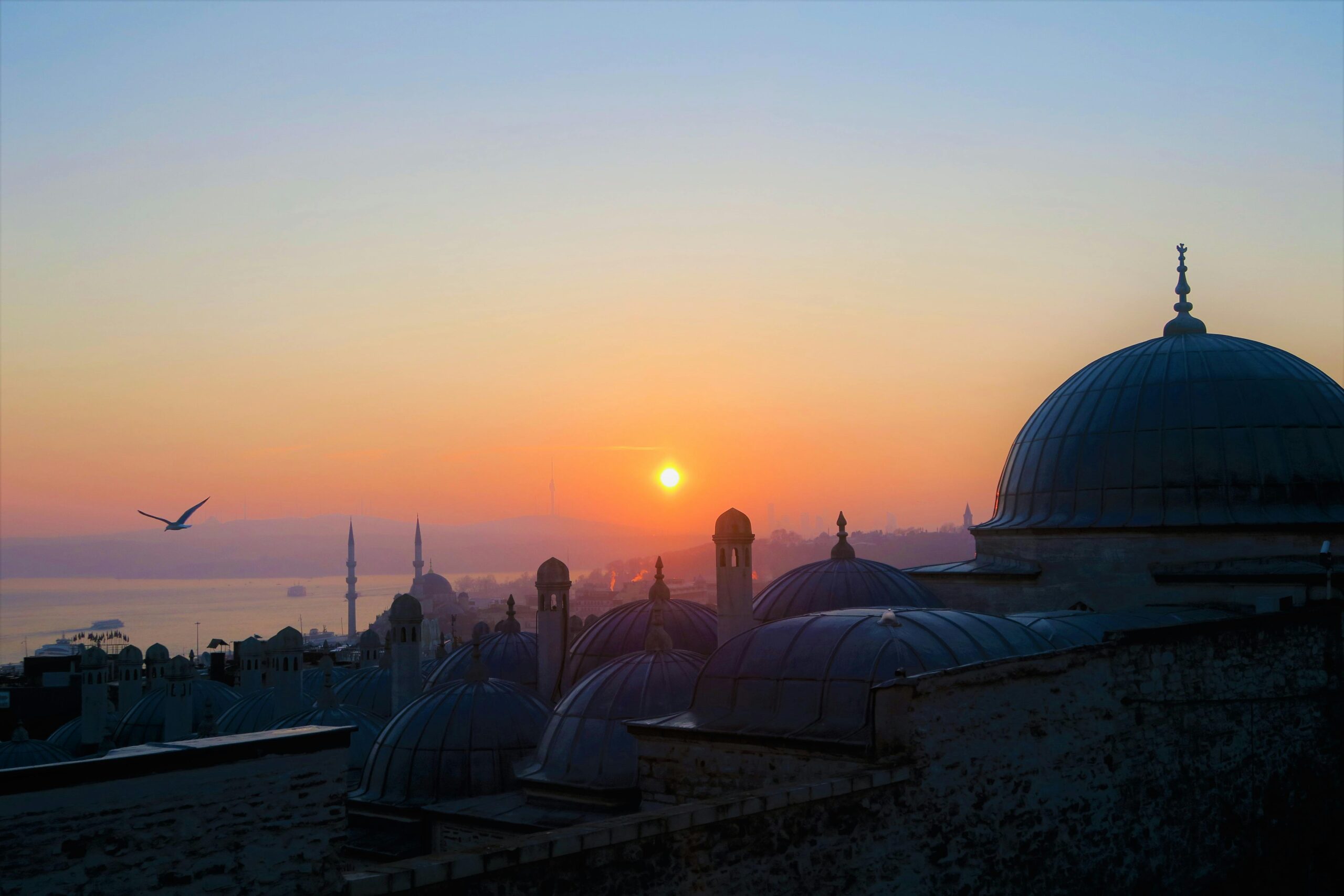
Photo: An Image of masid Al-Aqsa with a an amazing sunset.
When is Al Isra’ wal Mi’raj (27th Rajab) 2026?
The night of Al Isra’ wal Mi’raj is expected to fall on the evening of Thursday 15th January 2026, depending on the sighting of the moon. The Gregorian date that coincides with the 27th of Rajab in 2026 is 16th January 2026.
What is the significance of Al Isra’ wal Mi’raj (27th Rajab)?
The night journey (Al Isra’ wal Mi’raj) has many lessons and virtues for us to reflect on, especially in the lead up to the holy month of Ramadan.
The context in which it took place is crucial, as the Prophet (PBUH) was experiencing a period of great hardship and suffering.
His (PBUH) beloved wife and the first Muslim, Khadijah (RA), passed away.
His (PBUH) uncle Abu Talib, who was one of his greatest supporters against the Quraysh also passed away during that period in what became known as the Year of Sorrow. This was 10 years after the Prophet (PBUH) began to preach his message. He was also, cruelly rejected by the people of Ta’if around this time, who he had hoped to spread the message of Islam to.
“After the Prophet (PBUH) was miraculously taken by night to the furthest mosque in Jerusalem, the people began to talk about it. Some of them renounced their faith and belief in him. They looked for Abu Bakr and they said, ‘Have you heard that your friend imagined he was taken by night to the sacred house?’ Abu Bakr said, ‘Did he say that?’ They said, ‘Yes.’ Abu Bakr said, ‘If he said it, then it is the truth.’ They said, ‘Do you believe he went by night to the sacred house and returned before morning?’ Abu Bakr said, ‘Yes. Verily, I believe something even more astonishing than that. I believe he has received revelations from heaven for everything he does.’ For this reason, Abu Bakr was named the Truthful, al-Siddiq.”
On any virtuous night like Al Isra wal Mi’raj, it’s important to increase our supplications to Allah, and to ask Allah to fulfil our needs and the needs of our Muslim brothers and sisters across the world.
It’s also important to pray nafl (optional) prayers, send salutations (Salawat) upon the Prophet (PBUH), and increase recitation of the holy Qur’an.
Virtues of the night of Al Isra wal Miraj (27th Rajab*)
The night of Al Isra wal Mi’raj holds great spiritual significance for Muslims and is an extremely important event. It has a direct impact on our daily lives, as this was the night that the Prophet (PBUH) was commanded to establish Salah (prayer).
The miracle of Al Isra’ wal Mi’raj also shows us a glimpse of the infinite power and glory of Allah, what is beyond the unseen eye, and the dearness of the Prophet (PBUH) to Allah.
On the night of Al Isra wal Miraj (27th Rajab*), as well as offering nafl prayers, giving Sadaqah and increasing other forms of worship. It’s important to reflect on Al Isra wal Mi’raj and draw lessons from the blessed event which may help us greatly.
For example, the blessed journey reminds us of the spiritual heavenly world which we cannot see, but exists for righteous believers.
For those who may be experiencing a difficult period of time in their lives, Al Isra’ wal Mi’raj is a reminder of what Allah tells us in the Qur’an:
“For indeed, with hardship [will be] ease. Indeed, with hardship [will be] ease.”
By donating to Islamic Relief Australia, you are helping us create a world that is free from poverty and injustice – one where communities are empowered and people are able to fulfil their God-given purpose. With you on board, we believe we can end suffering.
How much would you like to give per month? Allah (SWT) loves deeds that are done consistently, even if they are small. Beyond Ramadan, continue to empower our Ummah. Help us provide those in need with critical support and relief.
Shaban (or Sha’ban, Shaaban), is the eighth month in the Islamic calendar. Coming before the ninth month, Ramadan, it is a bridge to the blessings the holy month brings.
Thus, we explore Shaban as a time to prepare for the important month ahead, and one we must not neglect.
When is Shaban 2026?
Shaban, this year, begins on January 20, 2026, according to the new moon’s sighting. This Islamic month may end on February 18, 2026, depending on the moon’s sighting for the start of Ramadan.
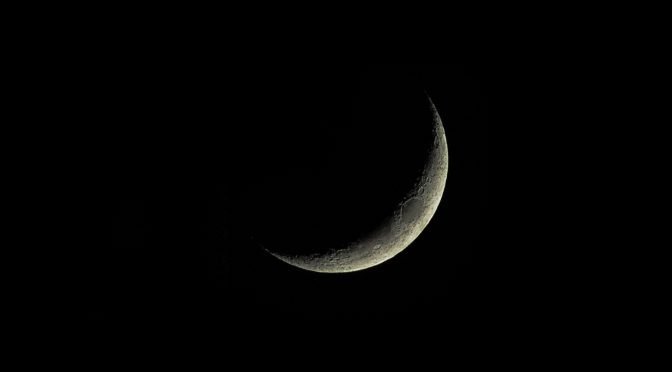
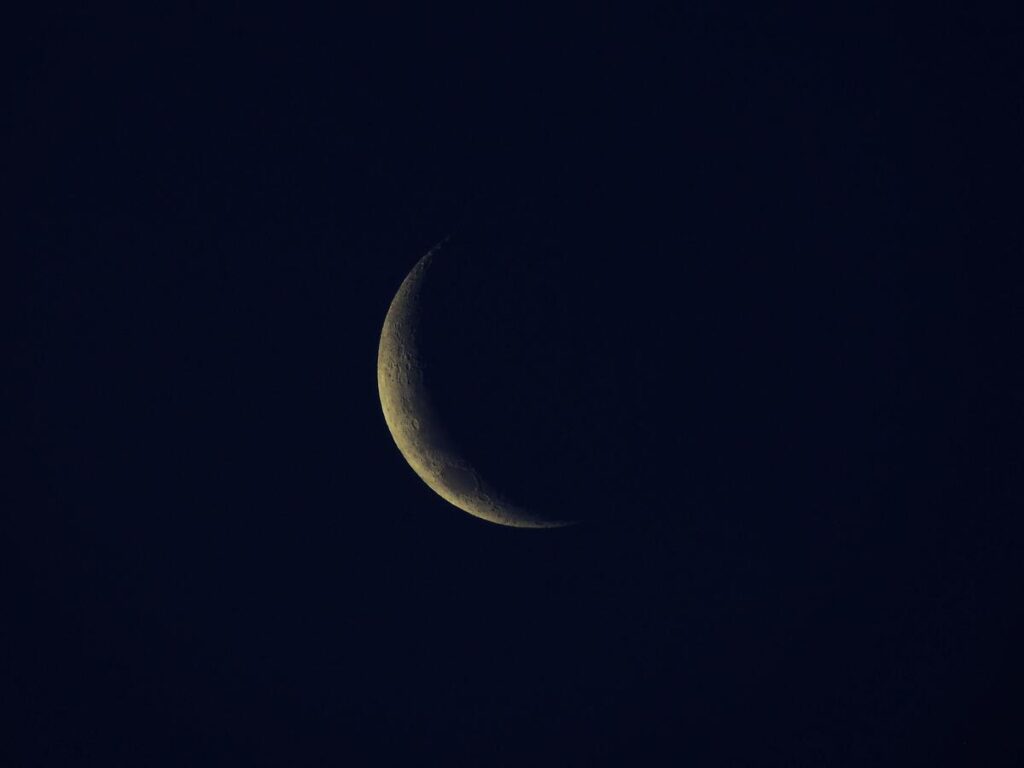
Photo: The sighting of the moon is used to determine the dates of the Islamic months of the lunar calendar.
What is the Significance of Shaban?
Imam Abu Bakr al-Warraq al-Balkhi (RA), the uncle of Imam Tirmidhi (RA), said: “The month of Rajab is the month of planting (your seeds), Sha‘ban is the month of irrigating / watering (them), and Ramadan is the month of harvesting the crop.”
Lataiful Ma’arif
Shaban, being the month just before Ramadan, is a perfect time to prepare for the blessed month. But it too, holds great importance on its own. Here are key reasons why:
More Fasting Than Any Other Month (Except Ramadan)
The Prophet Muhammad (ﷺ) would fast in Shaban more than any other month except Ramadan. Aisha (RA) said:
“I never saw the Messenger of Allah ﷺ fasting for an entire month except in Ramadan, and I never saw him fasting more than he did in Sha’ban.”
Sahih Al-Bukhari
He (ﷺ) also loved to fast in this month. So much so, that it was recorded in hadith. In Sunan Abu Dawud, it states, “The most beloved of months for the Messenger of Allah ﷺ to fast in was Sha’ban, and his fasting in Sha’ban was continuous with his fasting in Ramadan.”
More Opportunity for Rewards
Many scholars of the past (Salaf) also believed that fasting in Shaban was better than fasting in other months, even the sacred ones.
Ibn Rajab (RA) said, “Fasting in Sha’ban is better than fasting in the Sacred Months, and the best of voluntary fasts are those that are (observed in the months) closest to Ramadan, before or after.”
A hadith in Silsilat ul-Ahadith-as Sahiha also states, “Allah forgives all the believers in general; except the polytheists and the jealous people on the middle night of Sha’ban.” Some Muslims refer to this night as a Shab-e-Barat, however no Quranic verses specifically mention it.
Good Deeds to Do on Sha’ban
There are a lot of good deeds you can perform in the month of Shaban to make the most of it. Here are some simple acts of worship (ibadah) to add to your daily routine to earn good deeds AND prepare for Ramadan.
1. Do Voluntary Fasts
Prophet Muhammad (ﷺ) used to fast most of the days of Shaban. Thus, we should follow his Sunnah (actions and way of living) and keep as many voluntary fasts as we can in Shaban too. If it is hard to fast most of the month, try to fast on the 13th, 14th, and 15th as they are the White Days (Al-Ayyam al-Bid) of the Islamic month.
However, there are also exceptions to fasting in Shaban. Abu Hurayrah (RA) mentioned that the Messenger of Allah (ﷺ) said, “Do not anticipate Ramadan by fasting one or two days before it begins, but if a man habitually fasts, then let him fast.” (Sahih Muslim) He also reported that the Prophet (ﷺ) said not to fast if Sha’ban is half over. (Tirmidhi)
The exception to this would be someone who fasted regularly, such as the Prophet (ﷺ) and many of his companions. Thus, if you are someone who regularly observes the sunnah fast, then you may still observe them in the second half of Sha’ban. It is also permissible to make up a Ramadan fast at this time, if necessary, as Aisha (RA), one of the wives of the Prophet (ﷺ), herself said she would make up fasts in Shaban.
2. Recite the Quran
Ramadan is the month of the revelation of the Quran. Naturally, it is the month when we recite it the most. Thus, to help us get ready and see the best results in Ramadan, we should start the habit of reciting it more, starting from Shaban.
Salamah ibn Kuhayl (RA) said, “It was said that Sha’ban was the month of the Quran readers.” (Lataiful Ma’arif)
3. Make Lots of Duas
Apart from obligatory prayers and observing fasting in Shaban, reciting different duas, tasbeeh, and staying engaged in remembrance of Allah (SWT) is also a good way of making the most of this month.
Here are some duas you can say to seek forgiveness and blessings from Allah (SWT).
“O Allah (SWT), I seek refuge in Your pleasure from Your anger and in Your forgiveness from Your punishment. I seek refuge in You from You. I cannot praise You enough. You are as You have praised Yourself.”
“Our Lord! Take us not to task if we forget or fall into error”
Qur’an 2:286
4. Perform Voluntary Prayers
To make it easier to do more voluntary prayers in Ramadan, start the practice of praying Tahajjud from Shaban. It will help you get used to the Ramadan schedule quicker and also bring you many rewards.
5. Start Preparing Money for Ramadan
The Prophet Muhammad (ﷺ) was the most generous in giving charity (Zakat and Sadaqah) during Ramadan. To prepare for giving in Ramadan, we should start getting ready in Shaban, including finding Zakat calculations.
Like other forms of Ibadah, charity in Shaban is also an act of worship as you show kindness to others. For every good deed, specifically charity during Shaban, you can gain blessings in abundance.
Shaban: A Pathway to Blessings and Rewards
The Prophet Muhammad (ﷺ) said, “(Shaban) is a month to which people do not pay much attention, between Rajab and Ramadan. It is a month in which the deeds are taken up to the Lord of the worlds, and I like that my deeds be taken up when I am fasting.” (An-Nasa’i).
With this in mind, it is important not to neglect this blessed time. To make the most of it by increasing worshipping, observing fasting, reciting Quran and duas, and engaging in charitable activities.
Thus, it will be a month that not only strengthens your bond with Allah (SWT), but also helps you prepare for the sacred month of Ramadan.
Your Zakat Heals Our Ummah
Make the most of Shaban by preparing for Ramadan. Give the gift of happiness and hope to our brothers and sisters in need with Islamic Relief.
With Ramadan fast approaching, many of us are thinking about how to make the most of it. How to truly ready our hearts, homes, and routines for the most blessed month of the year.
In Islamic tradition, this preparation doesn’t begin with the first sighting of the crescent moon. It actually starts much earlier. In fact, the Sahabah, the companions of the Prophet (ﷺ), even prepared for it six months in advance!
Photo: The new moon signals the coming of the next Islamic month, including Ramadan.
In our busy, unpredictable lives, half a year ahead might be hard to plan around. But even with two months to Ramadan, there’s still a lot we can do to prepare well.
The two months before Ramadan, Rajab and Sha’ban, provide us with many opportunities to cleanse our hearts with worship and discipline, and build habits that flourish in the Holiest month.
“Rajab is the month of planting the seeds, Sha’ban is the month of irrigating them, and Ramadan is the month of harvesting the crop.”
The Importance of Rajab: Planting the Seeds of Ramadan
Rajab holds a special position in the Islamic calendar. As one of the four sacred months, it carries extra weight in both worship and conduct. Allah (SWT) says:
“Verily, the number of months with Allah is twelve… four of them are sacred.”
A hadith in Sahih al-Bukhari further identifies these months: Dhul-Qa’dah, Dhul-Hijjah, Muharram, and Rajab.
In these sacred months, good deeds are elevated while sinful actions are more serious. Fighting was traditionally prohibited during this time, a reminder of the sanctity and peace associated with these periods.
Key Events in Rajab
Rajab is also remembered for significant historical and spiritual moments:
Birth of Ali (RA) – Born on the 13th of Rajab, he was both a cousin and close companion of the Prophet Muhammad (ﷺ).
Al Isra’ wal Mi’raj – The miraculous night journey and ascension of the Prophet (ﷺ), commonly believed to have occurred on the 27th of Rajab.
Battle of Tabuk (9 AH) – A major campaign where the Prophet (ﷺ) led 30,000 Muslims against the Roman forces, resulting in the Romans retreating and a peaceful resolution.
Liberation of Jerusalem (1187 CE) – Salahuddin al-Ayyubi reclaimed Jerusalem in Rajab after 88 years under Crusader occupation.
Fasting and Worship in Rajab
Rajab offers a precious chance to build momentum for Ramadan by nurturing one’s character, repentance, and devotion.
While no specific obligatory worship is prescribed for Rajab, many Muslims increase their voluntary acts during this sacred period. Recommended practices include:
Fasting on Mondays and Thursdays
Fasting on the White Days (13th, 14th, 15th of each lunar month)
Increasing du’a, Sadaqah Jariyah, and voluntary prayers
Understanding the Significance of Sha’ban, the Month Before Ramadan
If Rajab is for planting, Sha’ban is the month when those seeds are tenderly cared for. It is a month often overlooked, yet the Prophet (ﷺ) paid it great attention. Aisha (RA) said:
“I never saw the Messenger of Allah ﷺ fasting more in any month than in Sha’ban.”
In fact, he loved fasting in Sha’ban so much that his fasting would almost join with Ramadan.
Why Sha’ban Matters
It contains the Prophet (ﷺ)’s most frequent voluntary fasting after Ramadan
Scholars considered fasting in Sha’ban more virtuous than in the sacred months
It is a time when, as mentioned in hadith, deeds are presented to Allah (SWT), and the Prophet (ﷺ) preferred to be fasting when this occurred
Some Muslims also recognise the middle night of Sha’ban, although no Qur’anic verses specify it.
Good Deeds to Prioritise in Sha’ban
1. Increase Voluntary Fasting
Following the Sunnah, try to fast as much as is manageable, especially on Mondays and Thursdays and the White Days (13th, 14th, 15th).
However, the Prophet (ﷺ) instructed not to fast one or two days before Ramadan begins, unless it is part of one’s regular routine. Those who habitually fast may continue even in the second half of Sha’ban, and it is also permissible to complete missed fasts from the previous Ramadan.
2. Recite More Qur’an
Sha’ban was known as “the month of Qur’an reciters.” Increasing your recitation now helps you enter Ramadan with spiritual focus and stamina.
3. Make Abundant Du’a and Dhikr
Use this time to refresh your relationship with Allah (SWT). Simple daily du’as and tasbeeh can gradually expand your worship habits before Ramadan starts.
4. Perform Voluntary Prayers
Night prayer (Tahajjud) is especially powerful. Beginning this practice in Sha’ban makes it easier to maintain during Ramadan.
5. Prepare Your Charity
Charity given in Sha’ban can be a meaningful source of blessing. As the Prophet (ﷺ) was most generous in Ramadan, Sha’ban is an ideal time to:
Calculate your Zakat
Organise your Sadaqah plan
Set aside funds for Ramadan giving
A Pathway to Ramadan
Sha’ban sits between Rajab and Ramadan — a time when many people become distracted. But the Prophet (ﷺ) reminded us:
“It is a month to which people do not pay much attention, between Rajab and Ramadan…” (An-Nasa’i)
By honouring this time, you strengthen your spiritual foundation, boost your ibadah, and prepare your heart for the mercy, forgiveness, and salvation that Ramadan brings.
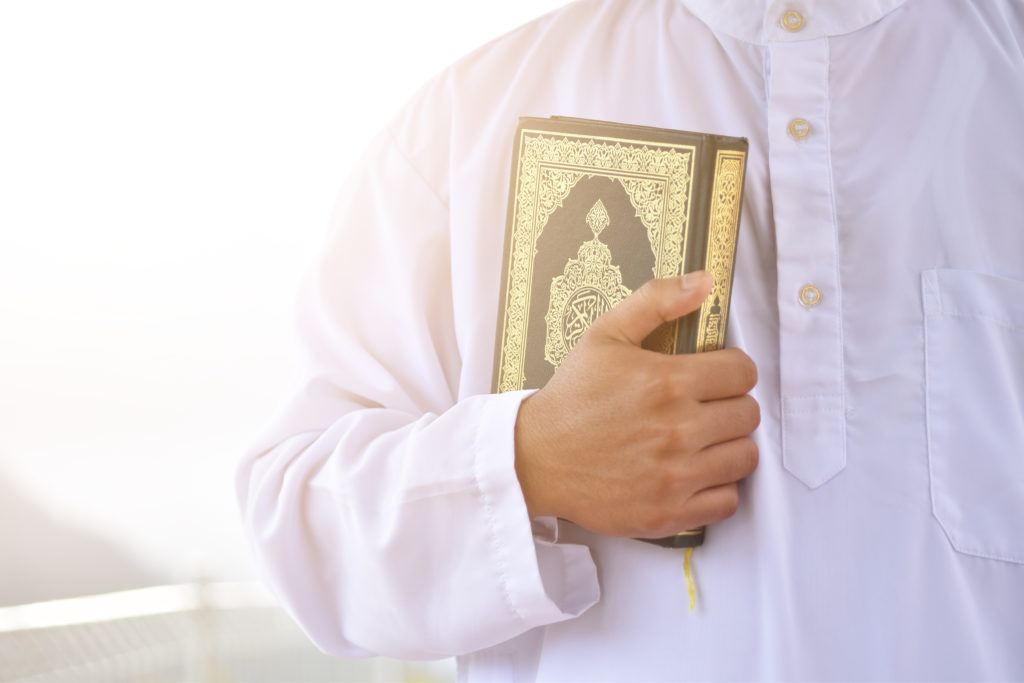
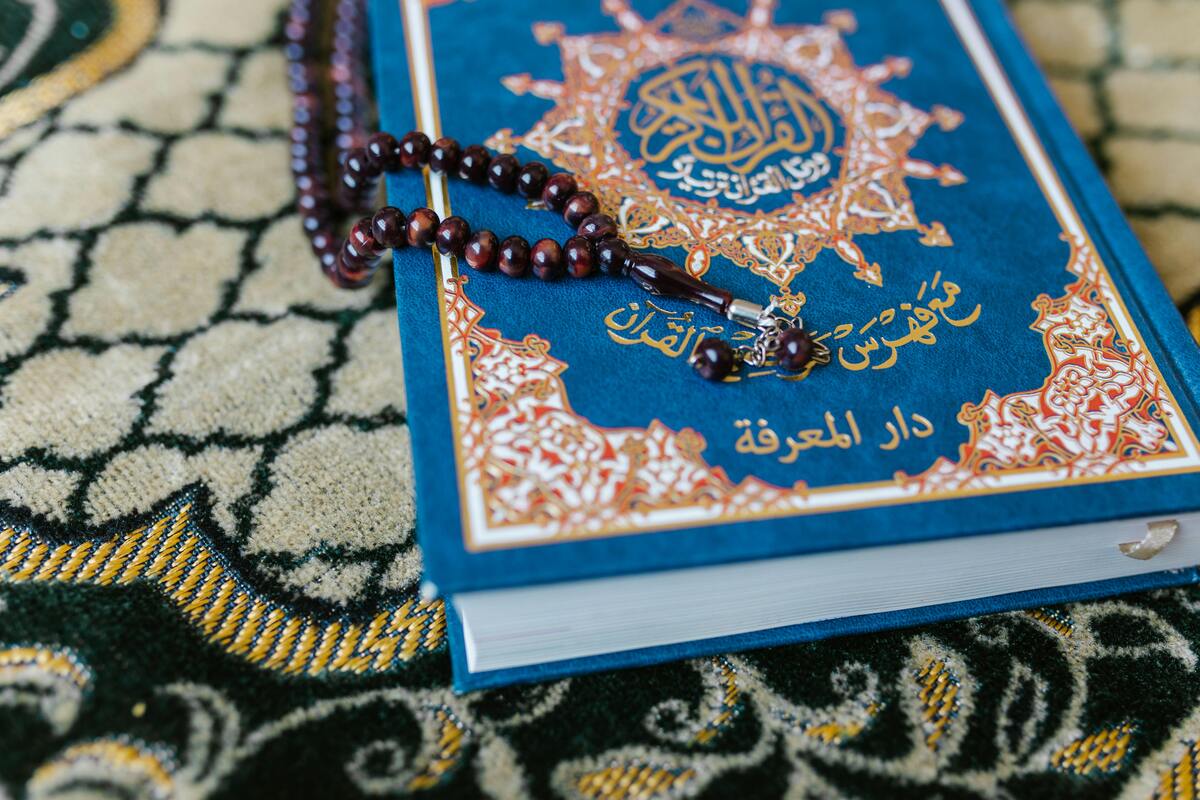
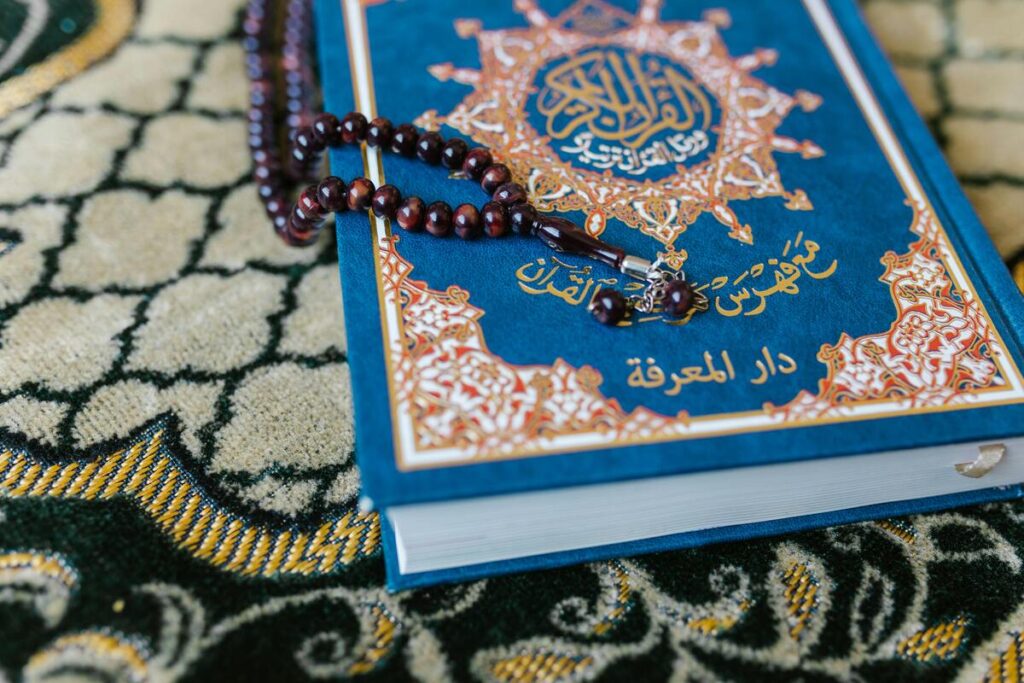
Photo: Reading more Qur’an is one of the many ways to prepare for Ramadan.
Final Reflection Before Ramadan
Rajab and Sha’ban are precious months to strengthen our spirituality for the most blessed month of the year.
By engaging in worship, fasting, charity, Qur’an recitation, and sincere repentance, we prepare ourselves not only for Ramadan but for deeper connection with Allah (SWT) throughout the year.
May Allah bless our Rajab and Sha’ban, allow us to reach Ramadan, and help us reap its rewards, ameen!
Rajab is the seventh month of the Islamic (Hijri) calendar and is one of the four sacred months.
It precedes the month of Sha’ban and Holy month of Ramadan. It also contains many benefits and virtues, as some of the most precious days of the Islamic calendar occur within this month.
When is Rajab 2026?
This sacred month is expected to begin on December 21, 2025, depending on the sighting of the moon.
There is also Isra’ and Mi’raj on 27th Rajab. This is expected to occur on January 16, 2026.
Photo: The sighting of the moon is used to determine the dates of the Islamic months of the lunar calendar.
Why is Rajab Important in Islam?
Rajab is one of the four sacred months of the year. In Surah At-Tawbah, it states:
Verily, the number of months with Allah is twelve in the book of Allah, since the day He created the Heavens and the Earth. Four of them, they are sacred.
Qur’an 9:36
Likewise, the names of these four sacred months are listed in this hadith.
Time has come back to its original state which it had when Allah created the Heavens and the Earth; the year is twelve months, four of which are sacred. Three of them are in succession: Dhul-Qa‘dah, Dhul-Hijjah, Al-Muharram and Rajab of Mudar, which stands between Jumada (ath-Thani) and Sha‘ban.
Sahih al-Bukhari
These months are sacred as there are many virtues attached to them. Fighting is prohibited during these four months. In turn, all transgressions during these months weigh heavier as wrong deeds, while all sincere acts of worship become elevated in their good deeds.
Significant Events Taking Place in Rajab
The birth of Ali (RA)
On the 13th Rajab, Ali (RA), the cousin and companion of the Prophet Muhammad (ﷺ), was born.
Al Isra’ wal Miraj
The Prophet’s (SAW) night journey Al Isra’ wal Miraj is thought to have taken place on the 27th Rajab.
Battle of Tabuk
In 9AH, the Battle of Tabuk took place during Rajab. During this battle, the Prophet (ﷺ) took 30,000 men to face the Roman army. As a result, the Romans retreated. Then, afterwards, a peace agreement was made.
Salahuddin al-Ayyubi liberated Jerusalem
In Rajab of 583 AH (1187 CE), Salahuddin al-Ayyubi liberated Jerusalem after 88 years of Crusader occupation.
Fasting in Rajab
The sacred months are an excellent time to do sunnah (supererogatory) acts of worship, fasting included. Voluntary (nafl) prayers, du’a and Sadaqah Jariyah, are also other virtuous acts that weigh more on the scale as good deeds due to the sacredness of this month.
Whcih days should I fast in Rajab?
There are many days on which it is Sunnah to fast. The Prophet Muhammad (ﷺ) used to fast on Mondays and Thursdays. It is also recommended to fast on the white days (13th, 14th and 15th of the Islamic lunar month).
Make the most of this sacred month
Rajab is one of the four sacred months of the year. It is also the month when Al Isra’ wal-Mi’raj took place. This makes it a month of many opportunities for blessings.
This month is a time, when we, as Muslims, should increase worship and devotion to Allah (SWT). By working on improving our character and becoming more motivated to earn good deeds, we can earn immense rewards and better prepare for Ramadan (which is coming soon at the end of February!) in these coming months.
As Imam Abu Bakr al-Warraq al-Balkhi (RA), the uncle of Imam Tirmidhi (RA), said, ‘The month of Rajab is the month of planting (your seeds), Sha‘ban is the month of irrigating/watering (them), and Ramadan is the month of harvesting the crop’.
Rajab is the time to prepare for Ramadan – spiritually, mentally and physically. Remember to make the most of this sacred time by performing as many good deeds as you can and seeking forgiveness from Allah (SWT). May He accept and reward your efforts, ameen!
Your Zakat Heals Our Ummah
Make the most of Rajab by preparing for Ramadan. Give the gift of happiness and hope to our brothers and sisters in need with Islamic Relief.
By donating to Islamic Relief Australia, you are helping us create a world that is free from poverty and injustice – one where communities are empowered and people are able to fulfil their God-given purpose. With you on board, we believe we can end suffering.
How much would you like to give per month? Allah (SWT) loves deeds that are done consistently, even if they are small. Beyond Ramadan, continue to empower our Ummah. Help us provide those in need with critical support and relief.
Shaban (or Sha’ban, Shaaban), is the eighth month in the Islamic calendar. Coming before the ninth month, Ramadan, it is a bridge to the blessings the holy month brings.
Thus, we explore, “What is Shaban?”, as a time to prepare for the important month ahead, and one we must not neglect.
When is Shaban 2026?
Shaban, this year, begins on the evening of Monday, January 19, 2026, according to the new moon’s sighting. This makes the first day of Shaban, Tuseday, January 20, 2026.
This Islamic month may end on the evening of Friday, February 17, 2026, depending on the moon’s sighting for the start of Ramadan.
Photo: The sighting of the moon is used to determine the dates of the Islamic months of the lunar calendar.
What is the Significance of Shaban?
Imam Abu Bakr al-Warraq al-Balkhi (RA), the uncle of Imam Tirmidhi (RA), said: “The month of Rajab is the month of planting (your seeds), Sha‘ban is the month of irrigating / watering (them), and Ramadan is the month of harvesting the crop.”
Lataiful Ma’arif
Shaban, being the month just before Ramadan, is a perfect time to prepare for the blessed month. But it too, holds great importance on its own. Here are key reasons why:
More Fasting Than Any Other Month (Except Ramadan)
The Prophet Muhammad (ﷺ) would fast in Shaban more than any other month except Ramadan. Aisha (RA) said:
“I never saw the Messenger of Allah ﷺ fasting for an entire month except in Ramadan, and I never saw him fasting more than he did in Sha’ban.”
Sahih Al-Bukhari
He (ﷺ) also loved to fast in this month. So much so, that it was recorded in hadith. In Sunan Abu Dawud, it states, “The most beloved of months for the Messenger of Allah ﷺ to fast in was Sha’ban, and his fasting in Sha’ban was continuous with his fasting in Ramadan.”
More Opportunity for Rewards
Many scholars of the past (Salaf) also believed that fasting in Shaban was better than fasting in other months, even the sacred ones.
Ibn Rajab (RA) said, “Fasting in Sha’ban is better than fasting in the Sacred Months, and the best of voluntary fasts are those that are (observed in the months) closest to Ramadan, before or after.”
A hadith in Silsilat ul-Ahadith-as Sahiha also states, “Allah forgives all the believers in general; except the polytheists and the jealous people on the middle night of Sha’ban.” Some Muslims refer to this night as a Shab-e-Barat, however no Quranic verses specifically mention it.
Good Deeds to Do on Sha’ban
There are a lot of good deeds you can perform in the month of Shaban to make the most of it. Here are some simple acts of worship (ibadah) to add to your daily routine to earn good deeds AND prepare for Ramadan.
1. Do Voluntary Fasts
Prophet Muhammad (ﷺ) used to fast most of the days of Shaban. Thus, we should follow his Sunnah (actions and way of living) and keep as many voluntary fasts as we can in Shaban too. If it is hard to fast most of the month, try to fast on the 13th, 14th, and 15th as they are the White Days (Al-Ayyam al-Bid) of the Islamic month.
However, there are also exceptions to fasting in Shaban. Abu Hurayrah (RA) mentioned that the Messenger of Allah (ﷺ) said, “Do not anticipate Ramadan by fasting one or two days before it begins, but if a man habitually fasts, then let him fast.” (Sahih Muslim) He also reported that the Prophet (ﷺ) said to not fast if Sha’ban is half over. (Tirmidhi)
The exception to this would be someone who fasted regularly, such as the Prophet (ﷺ) and many of his companions. Thus, if you are someone who regularly observes the sunnah fast, then you may still observe them in the second half of Sha’ban. It is also permissible to make up a Ramadan fast at this time, if necessary, as Aisha (RA), one of the wives of the Prophet (ﷺ), herself said she would make up fasts in Shaban.
2. Recite the Quran
Ramadan is the month of revelation of the Quran. Naturally, it is the month when we recite it the most. Thus, to help us get ready and see the best results in Ramadan, we should start the habit of reciting it more, starting from Shaban.
Salamah ibn Kuhayl (RA) said, “It was said that Sha’ban was the month of the Quran readers.” (Lataiful Ma’arif)
3. Make Lots of Duas
Apart from obligatory prayers and observing fasting in Shaban, reciting different duas, tasbeeh, and staying engaged in remembrance of Allah (SWT) is also a good way of making the most of this month.
Here are some duas you can say to seek forgiveness and blessings from Allah (SWT).
“O Allah (SWT), I seek refuge in Your pleasure from Your anger and in Your forgiveness from Your punishment. I seek refuge in You from You. I cannot praise You enough. You are as You have praised Yourself.”
“Our Lord! Take us not to task if we forget or fall into error”
Qur’an 2:286
4. Perform Voluntary Prayers
To make it easier to do more voluntary prayers in Ramadan, start the practice of praying Tahajjud from Shaban. It will help you get used to the Ramadan schedule quicker and also bring you many rewards.
5. Start Preparing Money for Ramadan
The Prophet Muhammad (ﷺ) was the most generous in giving charity (Zakat and Sadaqah) during Ramadan. To prepare for giving in Ramadan, we should start getting ready in Shaban, including finding Zakat calculations.
Like other forms of Ibadah, charity in Shaban is also an act of worship as you show kindness to others. For every good deed, specifically charity during Shaban, you can gain blessings in abundance.
Shaban: A Pathway to Blessings and Rewards
The Prophet Muhammad (ﷺ) said, “(Shaban) is a month to which people do not pay much attention, between Rajab and Ramadan. It is a month in which the deeds are taken up to the Lord of the worlds, and I like that my deeds be taken up when I am fasting.” (An-Nasa’i).
With this in mind, it is important not to neglect this blessed time. To make the most of it by increasing worshipping, observing fasting, reciting Quran and duas, and engaging in charitable activities.
Thus, it will be a month that not only strengthens your bond with Allah (SWT), but also help you prepare for the sacred month of Ramadan.
Your Zakat Heals Our Ummah
Make the most of Shaban by preparing for Ramadan. Give the gift of happiness and hope to our brothers and sisters in need with Islamic Relief.
Isra’ and Mi’raj is an important night occurring on the 27th of Rajab. One that we should not slip by without reflecting on its lessons and its significance.
This year, Al Isra’ wal-Mi’raj 2025 is predicted to take place on the evening of January 26th 2025, depending on the sighting of the moon.
What is Isra’ and Mi’raj (Al-Isra’ wal-Mi’raj)?
Isra’ and Mi’raj, known as Al-Isra’ wal-Mi’raj in Arabic, is a miracle second only to the revelation of the Qur’an.
Translated, it means the Night Journey and Ascension. It refers to the event when that transported Prophet Muhammad (ﷺ) from al-Masjid al-Haram to al-Masjid al-Aqsa, from where he (ﷺ) ascended to heaven. It was an incredible journey, filled with many wonders and miracles.
Photo: Night, when the Prophet (ﷺ) embarked on the incredible night journey and ascension.
When did the Night Journey and Ascension (Al-Isra’ wal-Mi’raj) Happen?
Isra’ and Mi’raj took place during a time when Prophet Muhammad (ﷺ) was facing intense hardship and pain.
The Quraysh constantly ridiculed, humiliated and oppressed the Prophet (ﷺ) and his followers. Moreover, he (ﷺ) had just faced the Year of Sorrow (’Aam al-Huzn), during which he (ﷺ) lost his beloved wife Khadijah (RA) and his uncle Abu Talib, his protector and ally.
In addition to all these struggles, when the Prophet (ﷺ) travelled to Ta’if to spread the message of Islam, the people of Ta’if rejected him, sending their children after him to stone him until he left the city.
Having gone through so much grief and suffering, Al-Isra’ wal-Mi’raj came to the Prophet (ﷺ) as a beautiful and comforting gift.
He was transported not only through the skies but ultimately into the presence of Allah (SWT), the source of all comfort and hope.
Al-Isra’: From the Ka’bah to Al-Aqsa
When the Prophet (ﷺ) was sleeping in the house of Umm Hani (ra) in Makkah when the roof of his house opened and the Angel Jibril (AS) descended (Bukhari).
He (ﷺ) was then taken to the Hijr, the semi-circular wall of the Ka‘bah. It was there that Jibril (AS) opened the Prophet (ﷺ)’s chest and washed it with Zamzam water. Jibril then brought a golden tray full of wisdom and faith, and having poured its contents into the Prophet (ﷺ)’s chest, he closed it. (Bukhari)
Jibril then brought to the Prophet (ﷺ) a white beast called al-Buraq (from the Arabic word barq, meaning lightning). It was bigger than a donkey and smaller than a mule. Its stride was as long as the eye could reach. (Muslim)
Buraq first shied from the Prophet (ﷺ) before they set off. So Jibril (AS) said to a saddled and reined Buraq, “Is it from Muhammad (ﷺ) that you do this? For nobody has ridden you who is more honourable to Allah than him! Then Buraq started sweating profusely. (Tirmidhi)
At several points along the journey, Jibril (AS) stopped Buraq and told the Prophet (ﷺ), “Dismount and pray”. The first stop was at “the place of emigration”, Madinah. Soon, after this night, the Prophet (ﷺ) would meet the Ansar and migrate to Madinah.
The second stop was on Mount Sinai, where Allah (SWT) revealed the Torah to Musa (AS). The third stop was at Bethlehem, where ’Isa (AS) was born.
The fourth stop was the grave of Musa (AS), located “a stone’s throw” away from the holy land of the Blessed Masjid Al-Aqsa (Bukhari).
The Prophet (ﷺ) said: “On the night on which I was taken on the Night Journey, I passed by Musa and he was praying in his grave.”
Sunan an-Nasai
Arriving at Al-Aqsa
When Messenger of Allah (ﷺ) arrived in the holy city of Al-Quds (Jerusalem), they approached Masjid Al-Aqsa. There, Jibril (AS) pointed to the Masjid with his finger, causing a crack in the rock, and tied Buraq to the western wall of the noble sanctuary. (Tirmidhi).
Waiting inside were all 124,000 Prophets (AS), and among them included Musa (AS), Isa (AS) and Ibrahim. Jibril (AS) led the Prophet (ﷺ) to the front, and he (ﷺ) led them all in prayer in this blessed space.
When the Prophet (ﷺ) completed the prayer, someone said, “Here is Malik (AS), the keeper of Hellfire, so convey Salams to him”. So, he (ﷺ) turned to him, but the angel Malik preceded him in Salams’ (Muslim).
The Prophets (AS) also discussed, after praising Allah (SWT), about “the Hour”. Both Ibrahim (AS) and Musa (AS) stated that they “did not have any knowledge of it”. Whilst ’Isa (AS) ’mentioned the Dajjal (anti-Christ). (Ibn Majah)
Following the discussion, the Prophet (ﷺ) came out and Jibril (AS) brought him (ﷺ) a vessel of wine and a vessel of milk. When the Prophet (ﷺ) chose the milk Jibril (AS) said, “You have chosen the natural state (Fitrah)” (Muslim).
The Prophet (ﷺ), with Jibril (AS), then proceeded to the Noble Rock (as-Sakhrah al-Musharrafah), currently housed by the holy Dome of the Rock Masjid, at the centre of the noble sanctuary (al-Haram ash-Sharif) of the Blessed Masjid Al-Aqsa.
He (ﷺ) then ascended into the heavens for the next part of this incredible journey – the Mi‘raj, the Ascension!
What is the Mi’raj?
He (ﷺ) certainly saw some of his Lord’s greatest signs.
Qur’an 53:18
The word Al-Mi’raj is a noun of instrument in Arabic morphology, which literally means ‘an instrument you use to ascend’. But how does this relate to the Prophet (ﷺ)’s night journey?
In the Prophet’s Night Journey and Heavenly Ascent by Sayyid Muhammad ibn Alawi al-Maliki, it states that:
The Prophet (ﷺ), “saw the wide-eyed maidens of Paradise at the left of the Rock (at the Dome of the Rock Masjid). He greeted them and they returned his greeting.
“Then he asked them something and they replied with an answer that cools the eyes. Then the Prophet (ﷺ) was brought the ladder by which the spirits of the children of Adam (AS) ascend.
“It had alternate stairs of silver and gold and came down from the Highest Garden of Paradise, Jannat al-Firdaus. It was encrusted with pearls and surrounded (by) angels on its right and left”
As recorded in The Life of Muhammad (ﷺ) Ibn Ishaq, the Prophet (ﷺ) also said the ladder was finer than any he had ever seen, and that this was the ladder which “the dying man looks when death approaches”.
Then the Prophet (ﷺ), accompanied by Jibril (AS), ascended into the layers of sky.
The First Sky
Allah ascended the Prophet (ﷺ) from the Dome of the Rock through the skies, where he saw many miraculous sights reaching heaven, the first layer of the sky and the end of the known universe.
Jibril (AS) then asked the (gate of heaven) to be opened (by knocking on one of its doors). (Bukhari)
The dwellers of Paradise asked, ‘Who is it?’ He said, ” Jibril.” They said, “Who is accompanying you?” He said, “Muhammad (ﷺ).” They said, “Has he (ﷺ ) been called?” He said, “Yes,” They said, “He (ﷺ) is welcomed.” (Bukhari)
The Prophet (ﷺ) also reported that when (the door of heaven) was opened for them “…suddenly I was with (the Prophet) Adam (AS). Then he welcomed me and supplicated for good for me”. (Muslim)
The Second to Seventh Sky
The Prophet (ﷺ) continued to ascend the layers of the skies with Jibril (AS). Each time, they again sought permission to enter, and the angelic guards were delighted and welcomed the Messenger of Allah (ﷺ).
It was also through passing these skies that the Prophet (ﷺ) met many of the prophets (AS) who came before him. At the second sky, he met prophets Isa (AS) and Yahya (AS). In the third sky, the Prophet (ﷺ) met the Prophet Yusuf (AS).
At the fourth sky, the Prophet (ﷺ) met the Prophet Idris (AS). In the fifth sky, he met the Prophet Harun (AS), before meeting Prophet Musa (AS) in the next sky – the sixth.
At each one of these levels, these Prophets (AS) welcomed the Prophet (ﷺ) and supplicated good for him saying, “Welcome O pious Prophet and pious brother!” (Bukhari)
At the seventh sky, the Prophet (ﷺ) met his greatest ancestor, the Prophet Ibrahim (AS) who was “reclining his back against al-Bayt al-Ma‘mur. And there enter into it seventy thousand angels every day ever to return to it (again)”. [Muslim]
(Bayt al-Ma’mur, in Arabic, means “the much-visited House”. It is the heavenly Ka‘bah directly above the one on earth). Like Adam (AS), Ibrahim (AS) also greeted the Prophet (ﷺ).
The Lote Tree
As the Prophet (ﷺ) carried on his journey, he reached the Furthest Lote Tree, known, in Arabic, as “Sidrah al-Muntaha” (Qur’an 53:14).
In several ahadith, the Prophet (ﷺ) described the tree in great detail.
“(Its) leaves were like elephant ears and its fruit like big earthenware vessels”. (Muslim)
“Then when it was covered by the Command of Allah, it underwent such a change that none amongst the creation has the power to praise its beauty” (Muslim)
“A rider will travel in the shade of one of its branches for a hundred years,” or “a hundred riders will seek to shade themselves with its shade”. (Tirmidhi)
The tree is surrounded (by) “golden butterflies”. (Tirmidhi)
He (ﷺ) further said: “many a colour had covered it which I do not know (i.e. the colours of this tree were indescribable)”. (Muslim)
He also stated that, “There terminates everything that ascends from the earth, and everything that descends from above”. (Tirmidhi)
The Divine Meeting
Then Allah revealed to His servant (ﷺ) what He revealed
Qur’an 53:10
At the end of this journey, the Prophet (ﷺ) was brought to Allah (SWT), the ultimate source of strength and relief.
Regarding this important meeting, the Prophet (ﷺ) said, ‘Then Allah revealed to me what he revealed to me and then He made obligatory for me fifty prayers every day and night’. [Muslim]
It was here that Allah gave this Ummah the gift of compulsory Salah. A daily source of strength to Muslims, giving them the opportunity to communicate with Allah (SWT) directly and draw closer to Him.
We also know, that through the Prophet Musa (AS)’s intervention and advice that fifty prayers were eventually reduced to five, but still rewarded as fifty, subhanAllah!
Returning Home
Finally, the Prophet (ﷺ) was taken back down to the Blessed Masjid Al-Aqsa and returned to Makkah on the Buraq.
As he was transported home, he saw various caravans heading towards Makkah, which he would later describe to the Quraysh as proof that he really had made this miraculous journey.
Allah (SWT) even displayed Bayt al-Maqdis to the Prophet (ﷺ), while the Quraish were cross-examining him in the Hijr of the Ka‘bah [Bukhari].
The entire journey had taken place in a small portion of a night, and there were many who would mock the Prophet (ﷺ) for making such a claim.
For the Muslims, however, the story was a source of wonder and hope, as it continues to be for us today.
On this night, the Prophet (ﷺ) was given the honour of travelling to various blessed places on earth, then ascending the levels of sky and being finally welcomed by Allah (SWT)! All this to honour the beloved Prophet (saw) and “to show him some of Our signs!” (Qur’an 17:1)
Your Zakat Heals Our Ummah
Make the most of Rajab by preparing for Ramadan. Give the gift of happiness and hope to our brothers and sisters in need with Islamic Relief.
Rajab is the seventh month of the Islamic (Hijri) calendar and is one of the four sacred months.
It precedes the month of Sha’ban and Holy month of Ramadan. It also contains many benefits and virtues, as some of the most precious days of the Islamic calendar occur within this month.
When is Rajab 2025?
This sacred month is expected to begin on January 1, 2025, depending on the sighting of the moon.
There is also Isra’ and Mi’raj on 27th Rajab. This is expected to occur on the January 27, 2025.
Photo: The sighting of the moon is used to determine the dates of the Islamic months of the lunar calendar.
Why is Rajab Important in Islam?
Rajab is one of the four sacred months of the year. In Surah At-Tawbah, it states:
Verily, the number of months with Allah is twelve in the book of Allah, since the day He created the Heavens and the Earth. Four of them, they are sacred.
Qur’an 9:36
Likewise, the names of these four sacred months are listed in this hadith.
Time has come back to its original state which it had when Allah created the Heavens and the Earth; the year is twelve months, four of which are sacred. Three of them are in succession: Dhul-Qa‘dah, Dhul-Hijjah, Al-Muharram and Rajab of Mudar, which stands between Jumada (ath-Thani) and Sha‘ban.
Sahih al-Bukhari
These months are sacred as there are many virtues attached to them. Fighting is prohibited during these four months. In turn, all transgressions during these months weigh heavier as wrong deeds, while all sincere acts of worship become elevated in their good deeds.
Significant Events Taking Place in Rajab
The birth of Ali (RA)
On the 13th Rajab, Ali (RA), the cousin and companion of the Prophet Muhammad (ﷺ), was born.
Al Isra’ wal Miraj
The Prophet’s (SAW) night journey Al Isra’ wal Miraj is thought to have taken place on the 27th Rajab.
Battle of Tabuk
In 9AH, the Battle of Tabuk took place during Rajab. During this battle, the Prophet (ﷺ) took 30,000 men to face the Roman army. As a result, the Romans retreated. Then, afterwards, a peace agreement was made.
Salahuddin al-Ayyubi liberated Jerusalem
In Rajab of 583 AH (1187 CE), Salahuddin al-Ayyubi liberated Jerusalem after 88 years of Crusader occupation.
Fasting in Rajab
The sacred months are an excellent time to do sunnah (supererogatory) acts of worship, fasting included. Voluntary (nafl) prayers, du’a and Sadaqah Jariyah, are also other virtuous acts that weigh more on the scale as good deeds due to the sacredness of this month.
Whcih days should I fast in Rajab?
There are many days on which it is Sunnah to fast. The Prophet Muhammad (ﷺ) used to fast on Mondays and Thursdays. It is also recommended to fast on the white days (13th, 14th and 15th of the Islamic lunar month).
Make the most of this sacred month
Rajab is one of the four sacred months of the year. It is also the month when Al Isra’ wal-Mi’raj took place. This makes it a month of many opportunities for blessings.
This month is a time, when we, as Muslims, should increase worship and devotion to Allah (SWT). By working on improving our character and becoming more motivated to earn good deeds, we can earn immense rewards and better prepare for Ramadan (which is coming soon at the end of February!) in these coming months.
As Imam Abu Bakr al-Warraq al-Balkhi (RA), the uncle of Imam Tirmidhi (RA), said, ‘The month of Rajab is the month of planting (your seeds), Sha‘ban is the month of irrigating/watering (them), and Ramadan is the month of harvesting the crop’.
Rajab is the time to prepare for Ramadan – spiritually, mentally and physically. Remember to make the most of this sacred time by performing as many good deeds as you can and seeking forgiveness from Allah (SWT). May He accept and reward your efforts, ameen!
Your Zakat Heals Our Ummah
Make the most of Rajab by preparing for Ramadan. Give the gift of happiness and hope to our brothers and sisters in need with Islamic Relief.