07.10.25
Ismet’s story: A Chain of Support for Bosnian Villagers
For many people living in and around Srebrenica, the horrifying events of 30 years ago remain with them. But Ismet has made the conscious choice to engage with this painful moment.
The 31-year-old works as a technician and driver at the Srebrenica Memorial Centre – a memorial and cemetery set up to honour victims of the 1995 genocide.
Among the men and boys killed was Ismet’s father.
“When we fled our home, my mother went down to a nearby village and my father went through the forest. He was captured and shot.
“In 2009, he was found in a mass grave, and then we buried him at the Memorial Centre.”
Ismet was just months old at the time of the shooting, leaving him with no memories of his father. But, today, their bond endures.
“I go to his grave every day.”
“When you visit every day and you look at those grave markers, you learn more about what happened. Everyone talks about it, you know? New stories come out every day, so you understand more about what happened, even if you didn’t experience it yourself.
“Yes, it’s hard, but I feel deeply that what happened shouldn’t be forgotten. That’s what keeps me connected to this place more than anything.
“Because if we’re not here, [those memories] would die away.”
During the war, Ismet and his family became displaced. He grew up and went to school far from home, only returning after graduating and getting married.
He now lives in a village near Srebrenica where he was born, with his wife and 2 daughters. Like many in Bosnia and Herzegovina, Ismet has struggled to find long-term work, but Islamic Relief’s support has helped to ease his burden.
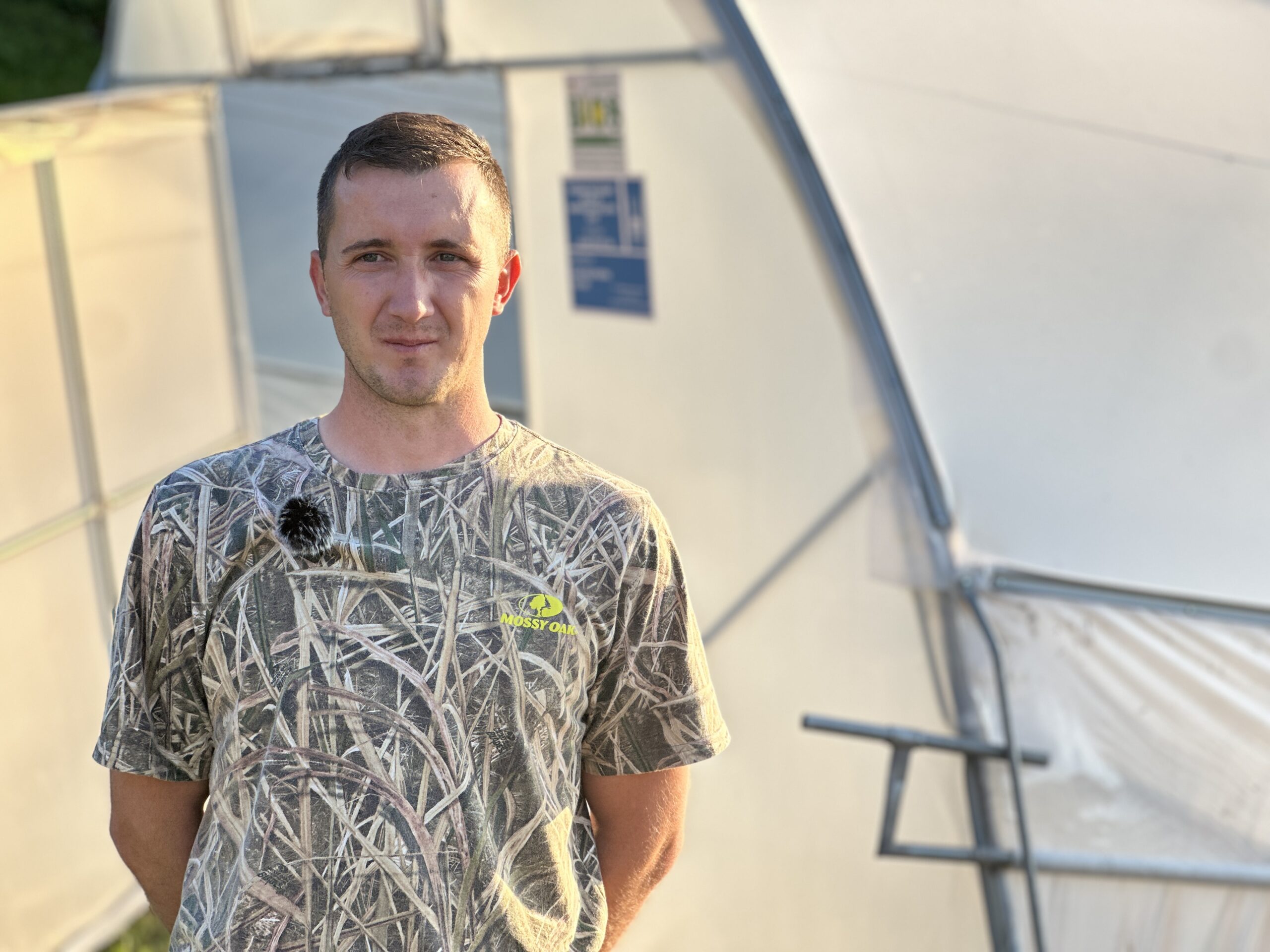
After hearing a public call out, Ismet applied for support and received a greenhouse, which has helped him earn a living from farming in his mountain village.
“It meant a lot.”
“Financially, I couldn’t purchase a greenhouse on my own, so this helped me a lot. It was my wish to have a greenhouse, because whenever we plant seeds outside – tomatoes, peppers – they hardly grow here because of the high altitude.”
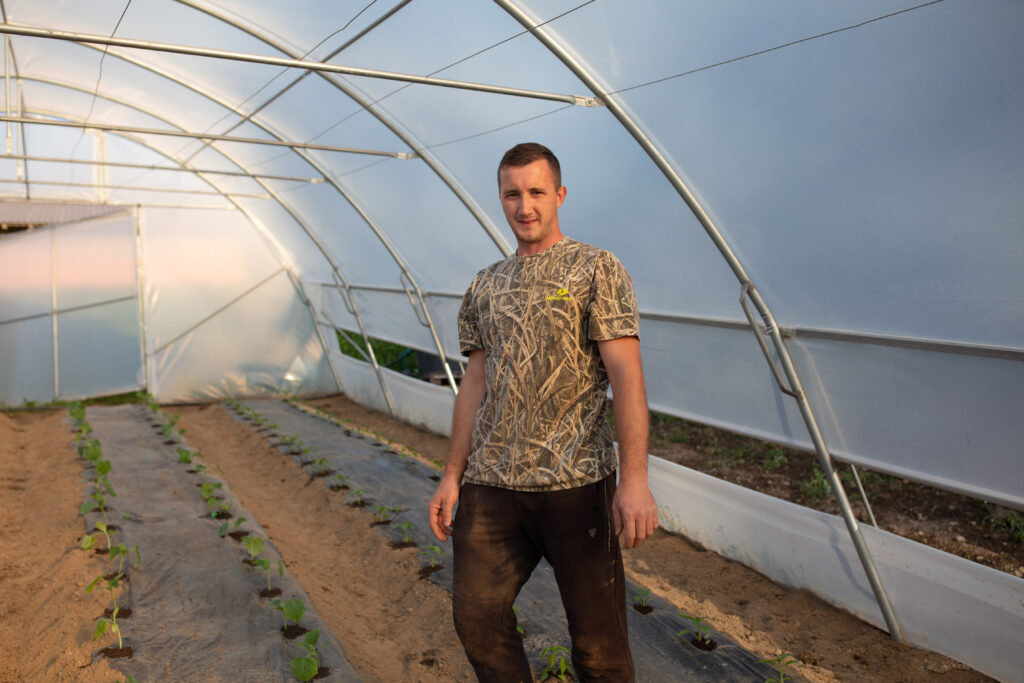
The family now saves money by growing their own fruit and vegetables, occasionally selling their produce for a bit of extra income.
“Until winter, I’m busy every day,” Ismet says. “There’s raspberries, blackberries and aronia berries to harvest. My wife and I can’t really manage it all, so I sometimes pay someone to help out. I also have red peppers, tomatoes, cucumbers and yellow peppers.”
“I thank Islamic Relief because they truly help our people here.”
“There are neighbours here [who have also received support] – some have livestock, cows, others have dryers [to dehydrate fruit and vegetables] and greenhouses. It’s not just one family that’s benefitted; there’s a whole chain of support.”
Ismet hopes to make his position at the Memorial Centre permanent, so he and his family can live comfortably in the village.
A lack of employment opportunities means many young people have already left in search of work.
“God willing, things will get better. A lot of young people are leaving and only the elderly stay behind. Unfortunately, I’m the youngest in this village, along with my family.
“There aren’t really any new people coming in because, as new generations grow up, people move on. When they finish school, they leave, no one stays here.”