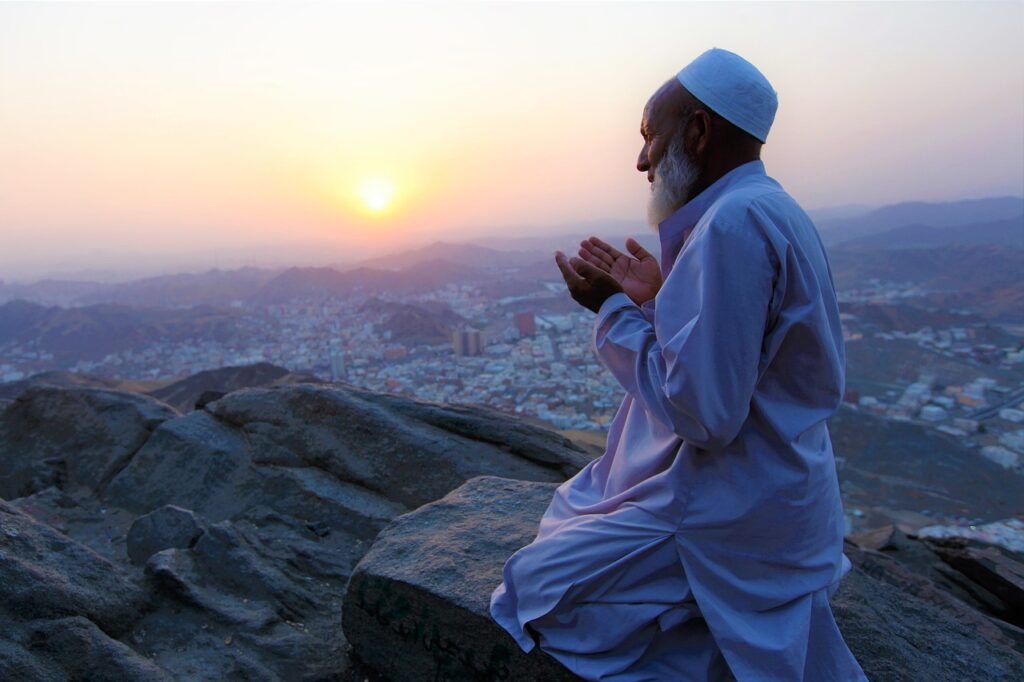
The holy month of Ramadan is here! For many of us, it is a time for increased mindfulness – a month of reflection, spirituality, worship and gratitude.
Each Ramadan, we push ourselves to do better, be better and expect better. It’s a time filled with hope and renewal, after all.
It’s a time when many of us try to leave behind bad habits and replace them with good ones. When we seek to be more in tune not only with our faith and Allah (SWT), but our surroundings too. It’s an opportunity to get closer to family, friends, community and the environment around us.
One of the best ways to reap the most benefits during Ramadan is through practising this mindfulness, through an increased awareness of our thoughts, actions and words. But how do we practice this? Here are some tips to consider.
Mindfulness while fasting
While many people assume that fasting is simply about abstaining from food and drink, it is so much more than that. It’s about practising self-control across all aspects of life, including managing your emotions and reactions to difficult or unpleasant situations.
In fact, losing your temper, yelling, arguing with someone etc. can all compromise your fast. This is where being mindful of your emotional triggers and how you respond to them becomes particularly important. So, when you feel angry take a few deep breaths and give yourself a few moments to respond logically rather than emotionally.
As the Prophet Muhammad (PBUH) advised the best way to manage your anger is to change your posture (sit down if you’re standing up), stay silent or perform ablution to calm yourself down.
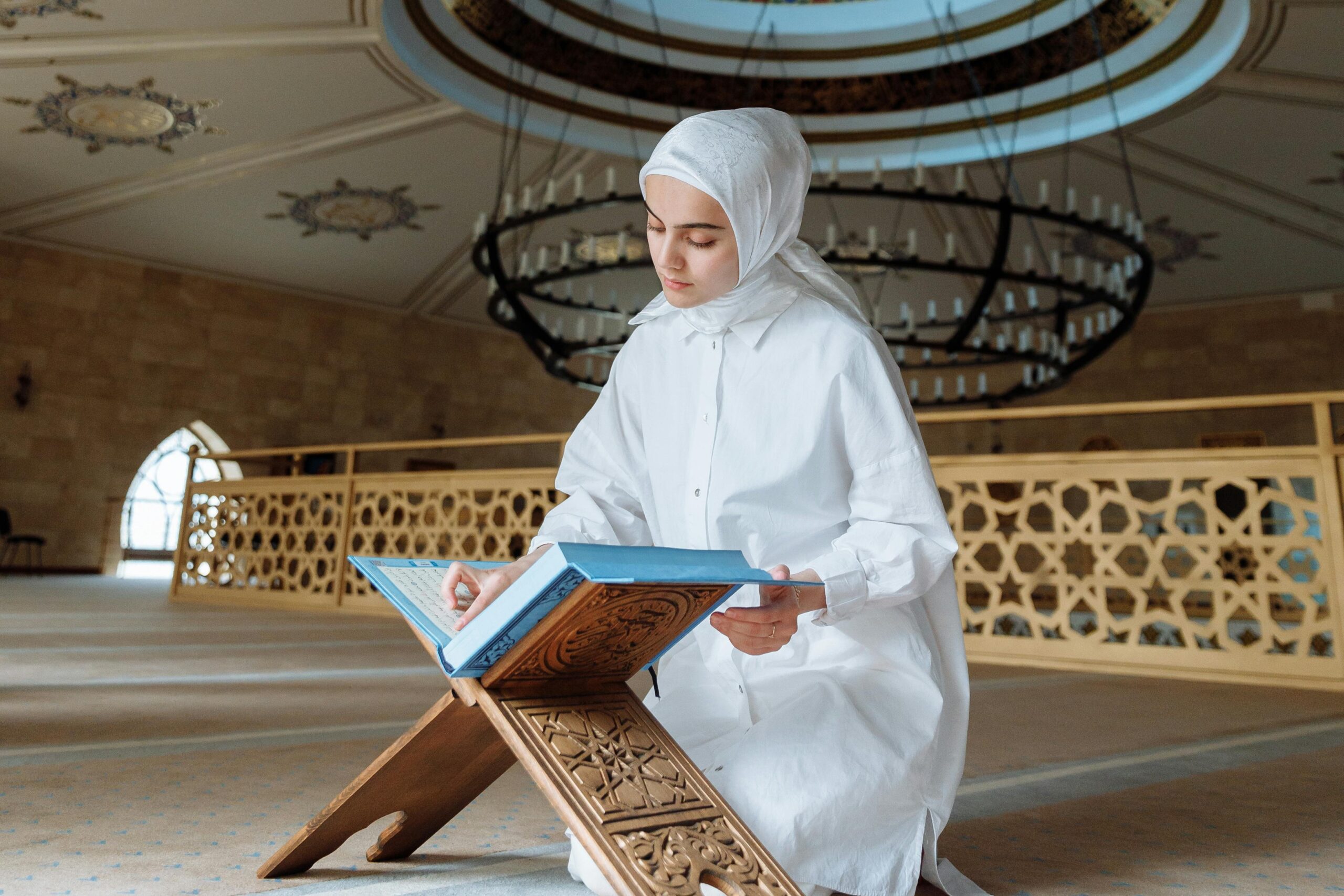
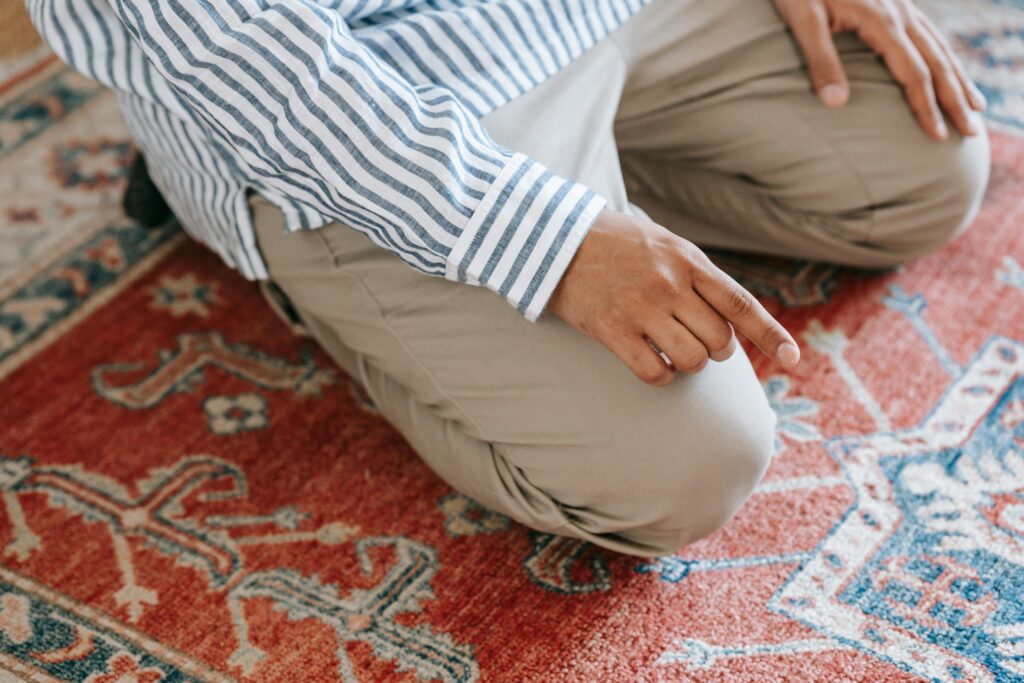
Mindfulness while praying (salah)
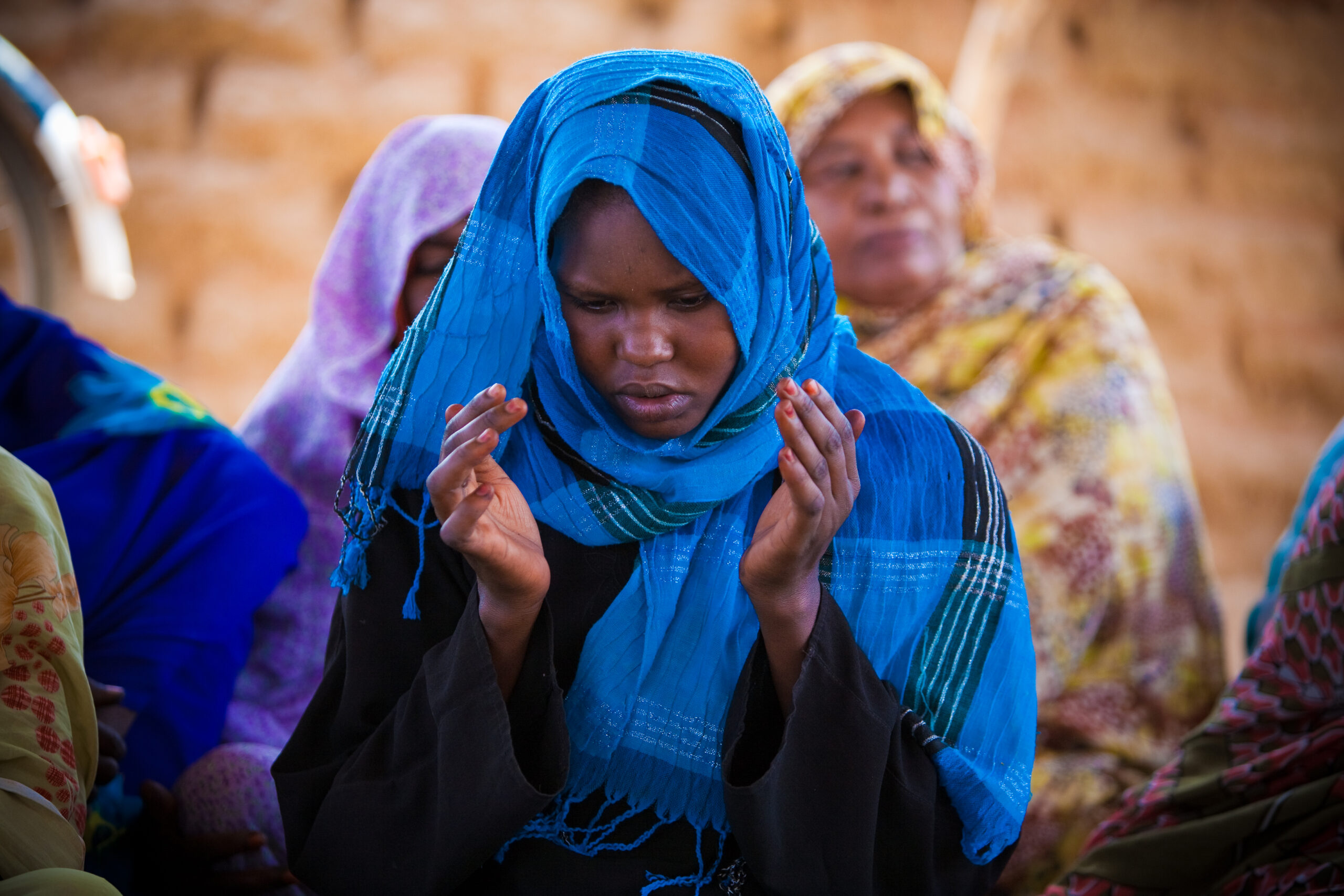
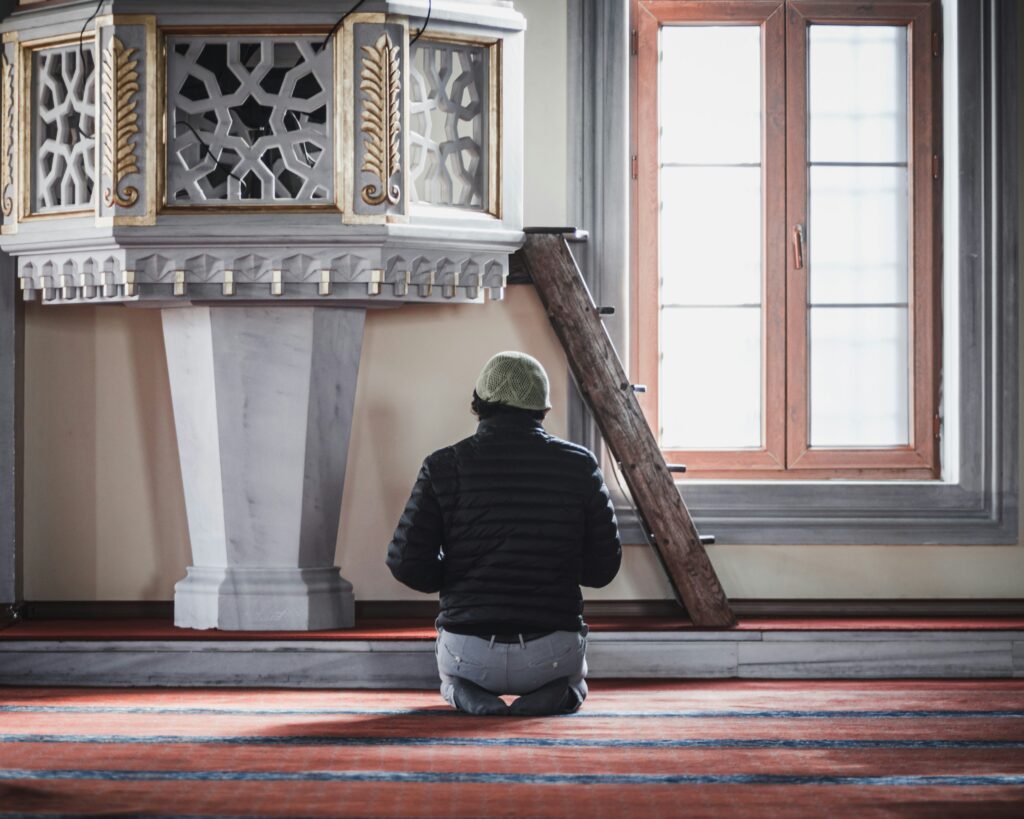
Often many of us pray without being completely present, whether we like to admit it or not. Daily distractions such as family, work and life can all get in the way of achieving complete and utter devotion during prayer.
While praying, it is important to try and leave all your worldly matters behind and focus on your faith and your relationship with Allah (SWT).
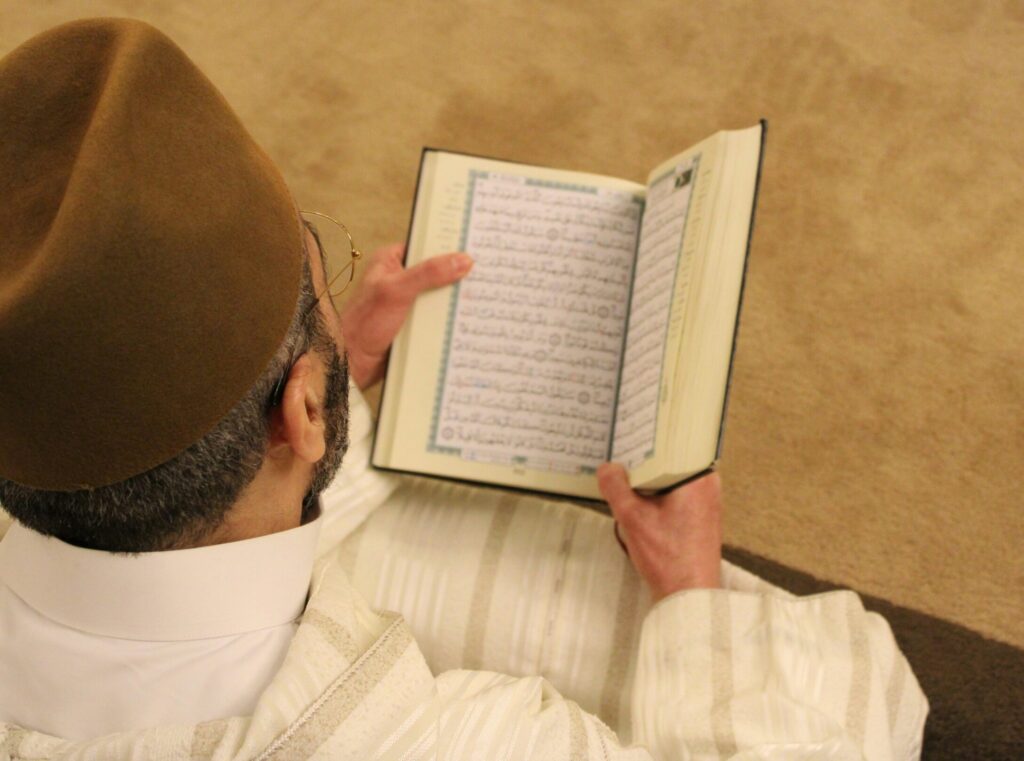
Mindfulness in prayer means being completely focused on your prayer, being conscious of Allah’s presence and aware that He is watching you pray – how could you not want to perfect each prayer?!
Mindfulness while breaking your fast
When you’re fasting for almost 12 hours a day, the hunger pangs can really get the better of you. We’ve all heard the saying “Your eyes are bigger than your stomach” and this is definitely the case when you sit down for iftar after a long day of fasting.
While it’s completely normal to feel famished, thirsty and excited upon breaking your fast, remember stuffing yourself not only defeats the purpose of fasting, but it leaves you feeling bloated, lazy and tired.
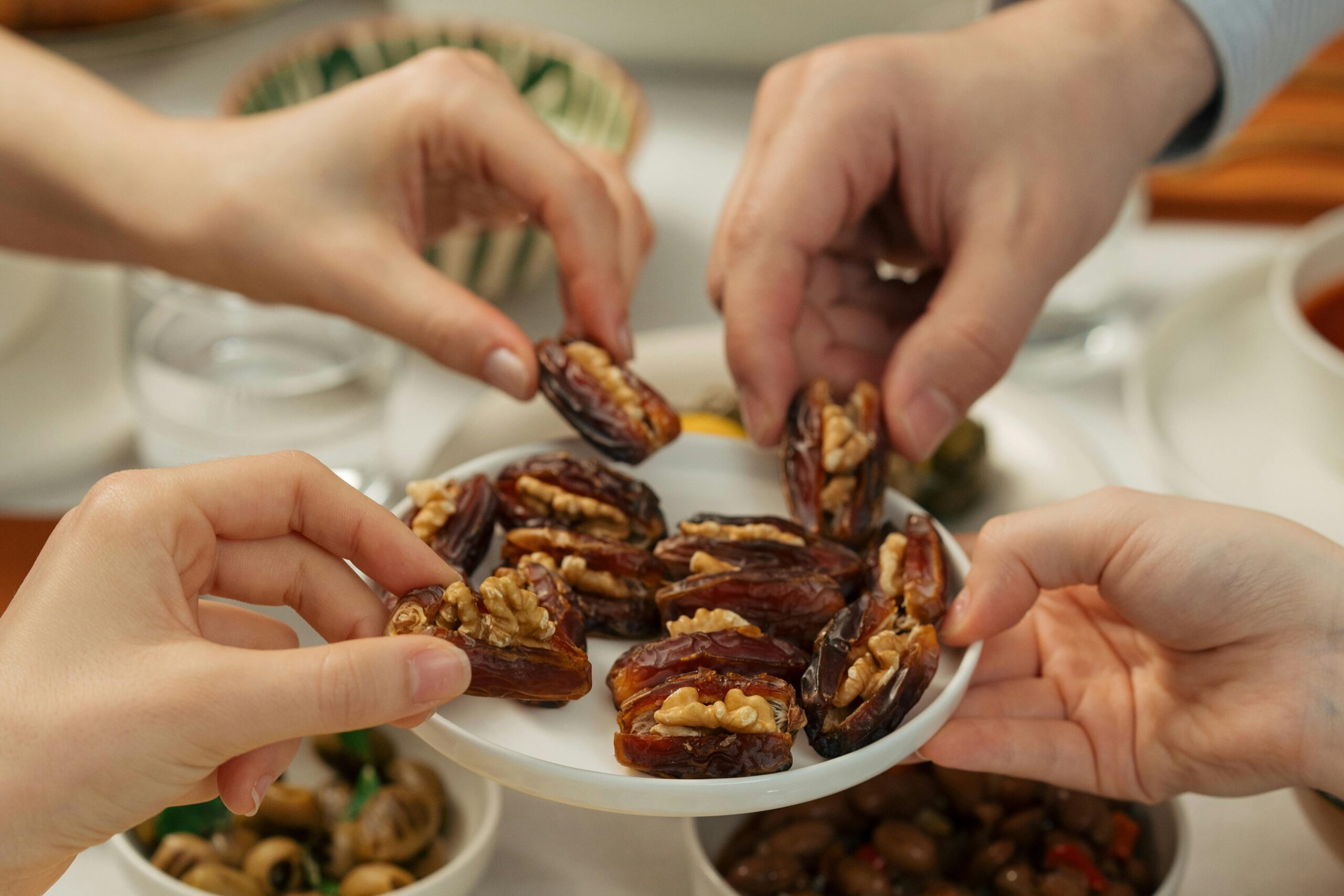
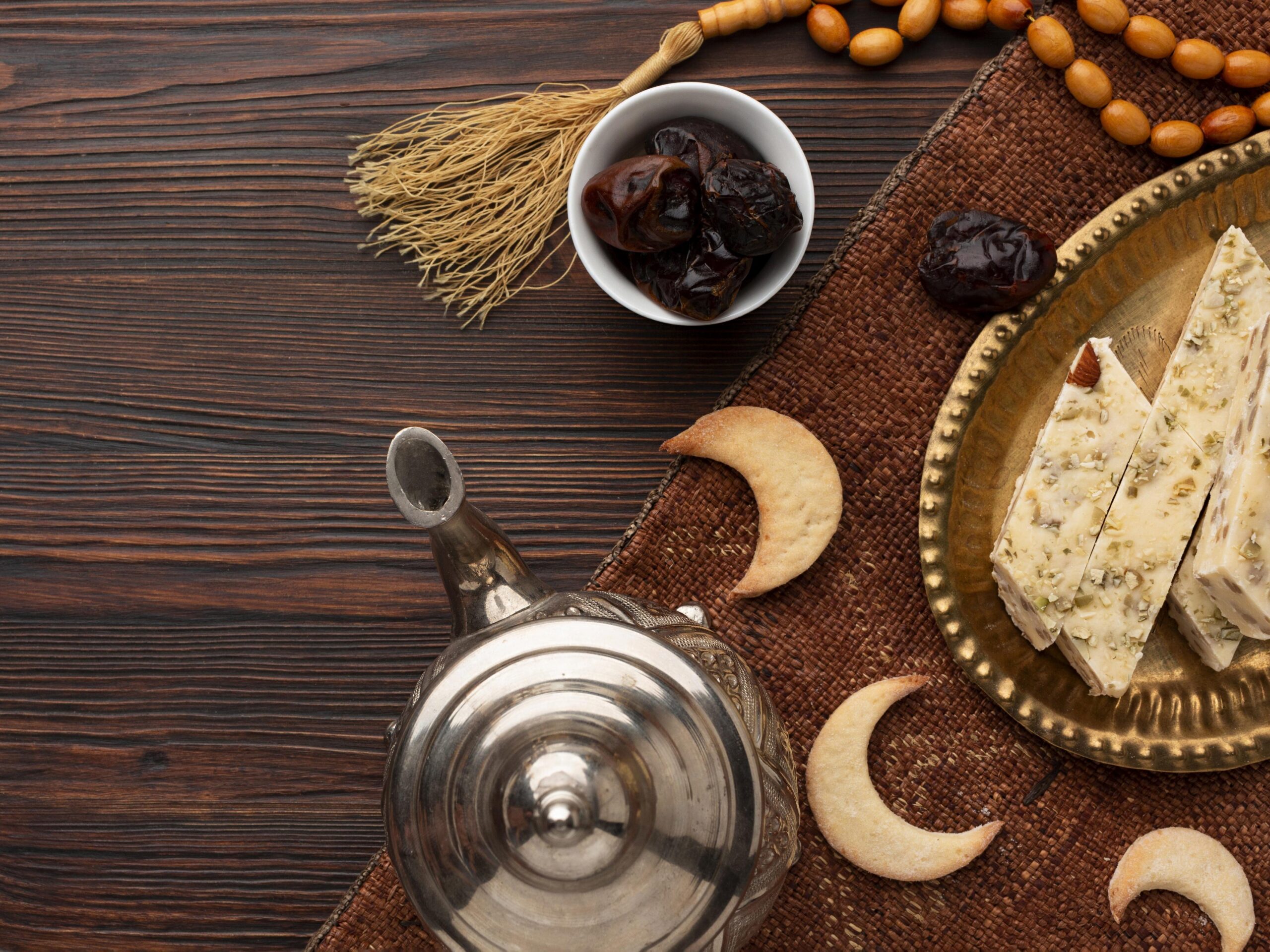
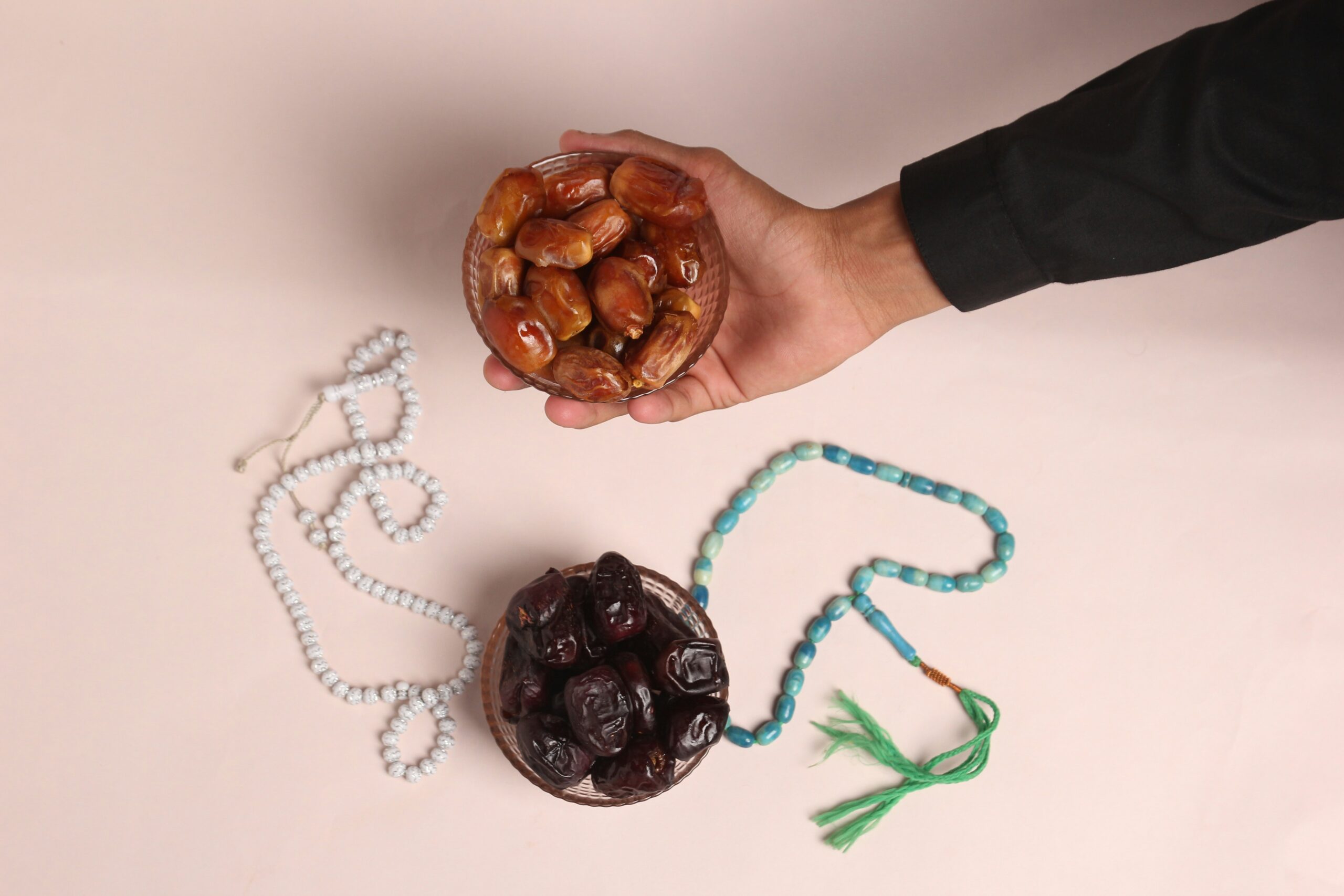
This is where mindful eating comes in. When it’s time to break your fast, it’s incredibly important to stay present, be grateful, eat slowly, and last but not least, savour the taste. It might be a good idea to pace out your meals by breaking your fast with a date or two and a glass of water, praying and giving thanks, and then continuing on to the main meal, giving your body time to adjust and prepare for the meal ahead.
May Allah SWT accept all our good deeds and acts of worship during this holy month.
Our Ummah, Your Zakat
Multiply your rewards from Allah (SWT) this Ramadan. Give the gift of happiness and hope to our brothers and sisters in need with Islamic Relief.
Every year, in Ramadan and beyond, your Zakat has a huge role in helping us reach more of our Ummah in need.
Together, we’ve faced another year of worsening crisis and ongoing instability and poverty around the world. However, thanks to your generous donations, we were empowered to help over 11.1 million people around the world last year.
Across Palestine, Türkiye, Sudan, East Africa, Afghanistan, Pakistan, Morocco, Libya, and more, we swiftly responded to crises, thanks to your support. This is the power of your Zakat.
The Power of Zakat: It could end global poverty
Zakat (Zakaat, Zakah) is an important Pillar of Islam. It could also have the power to end global poverty.
According to the UN, the amount needed to achieve the first two Sustainable Development Goals – to end extreme poverty and hunger globally – is approximately $300 billion.
Prophet Muhammad (ﷺ) was sent to bring Islam to the entire world. So if we imagine that everyone around the globe gave 2.5% of their wealth to those in need, the annual amount would be trillions of dollars. Imagine what could be done with that!
Yes – Zakat could have the power to end poverty. If everyone around the world gave 2.5% of their wealth as Zakat we could end poverty together, SubhanAllah!
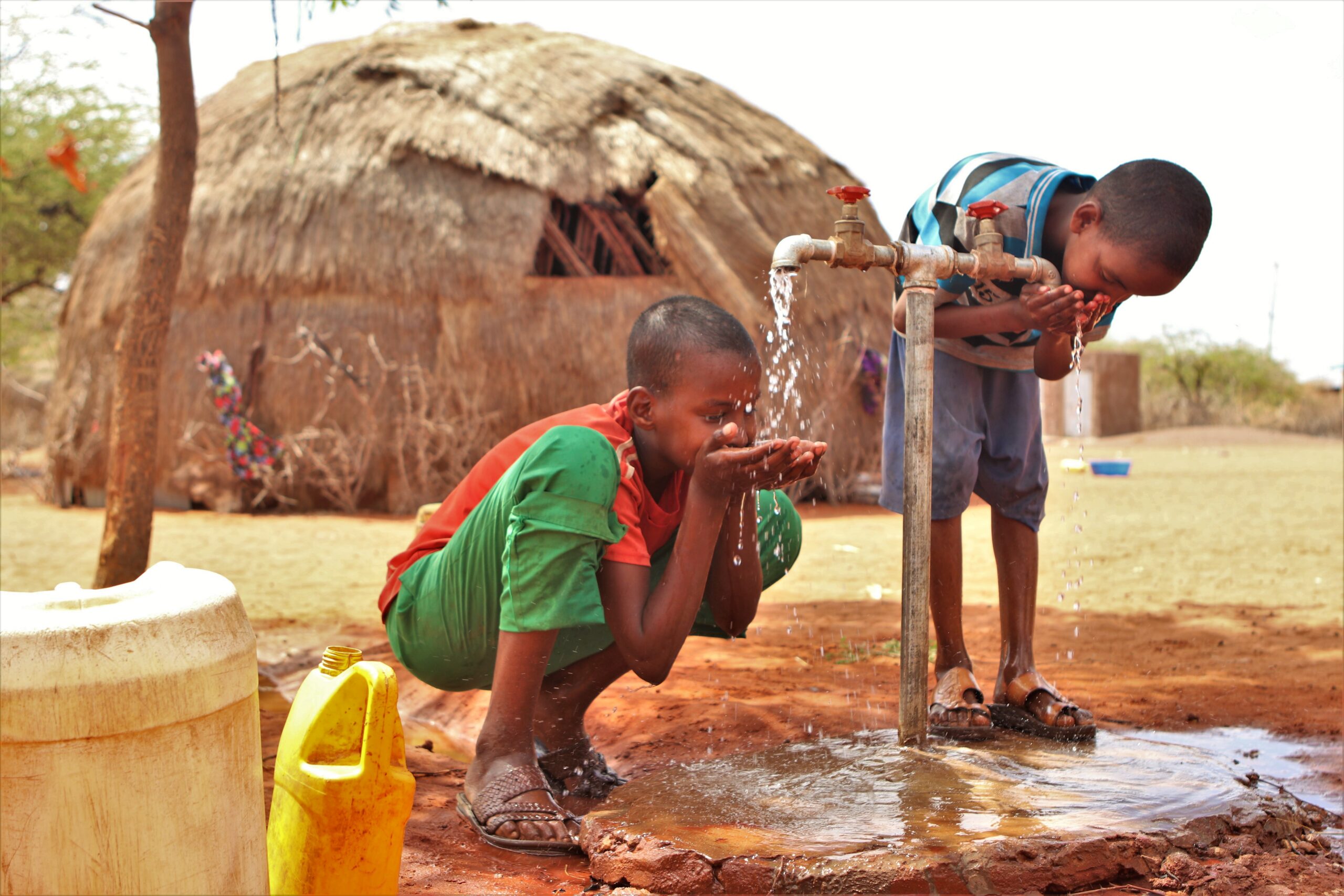
Of course, ending poverty isn’t simple. Conflict, inequality, water shortages, climate change, lack of education, poor public infrastructure and basic human greed all create and shape poverty.
Allah (SWT) has shown us the way – all we need to do is follow. That is the power of Zakat.
Islam has ended poverty before!
There are few leaders who have left a mark on society the way that ‘Umar ibn ‘Abd al-‘Aziz did. He is considered one of the finest leaders in Muslim history, an authority in Islamic law (mujtahid) who had memorised the Qur’an (hafiz), and who used his leadership to serve people.
“O people, obey me as long as I obey Allah; and if I disobey Allah, you are not duty-bound to obey me.”
Umar ibn ‘Abd al-‘Aziz said on becoming the khalifa in 717 AD
He organised the collection of Zakat and distributed it to the needy. He was so successful that, when the treasury later sought those who were poor and eligible to receive Zakat, they simply couldn’t find anyone in any of the lands he ruled over!
After less than two and a half years in power, the great khalifa was poisoned by one of his servants, who had been hired by his opponents. Learning what had happened, ‘Umar asked the servant how much he was paid for the assassination, ordered him to return the fee to the treasury as ill-gotten money, forgave him and allowed him to leave freely.
Even the Emperor of Rome, when hearing of his death, remarked: “A virtuous person has passed away. I would hardly be surprised if I saw an ascetic who renounced the world and gave himself to praying to God. But I am certainly surprised to see a person who had all the pleasures of the world at his feet, but still shut his eyes against them and lived a life of piety and renunciation.”
Islam has given us the answers to all our struggles, from the smallest to the greatest, including global poverty – Alhamdulillah.
Your Zakat is in safe hands
Fulfilling an Amanah (trust)
Islamic Relief’s global Zakat activities are in accordance with the teachings of Islam, enabling Islamic Relief to fulfil its Amanah in the best way possible.
The Power of Zakat. Fulfilling an Amanah (trust).
Maximum Impact
Our teams across the globe take extra care to ensure that any Zakat received has maximum impact and is used in the most efficient way possible to reduce suffering and poverty.
The Power of Zakat. Maximum Impact.
Clear Guidance
We work with scholars to ensure clear guidance on how Zakat should be fundraised, allocated, distributed, and monitored.
The Power of Zakat. Clear Guidance.
Transparency
To ensure our Zakat activities are conducted in the most transparent and Islamically compliant manner possible, we ensure internal and external reporting on Zakat projects. We also publish information on how Zakat has been spent in our Annual Report.
The Power of Zakat. Transparency.
We are serious about Zakat, because we are accountable to you, all those who have a right to receive it, and – most importantly – to Allah.
Our Zakat fund is shari’ah compliant. As with everything we do, we strive to be both purposeful and true. We are working closely with qualified scholars to ensure that our Zakat policy is in strict accordance with what Allah has ruled. Your obligatory Zakat is an Amanah (trust), and when you entrust us to distribute it carefully and correctly, we take that trust seriously.
Our distributions around the world are carefully designed to harness the power of Zakat: we want to not only help vulnerable people today, but also to help them escape poverty for good. Our rigorous governance makes sure that, from the moment you donate to the moment it is handed over to those who have a right to receive it, your Zakat is in safe hands, distributed only to those who are eligible under the eight categories stipulated in the Qur’an.
With your Zakat, we can bring relief and hope to people in desperate need.
Don’t forget to use our Zakat Calculator today to calculate Zakat.
Ramadan is the perfect time to give zakat
The holy month of Ramadan is the perfect opportunity to use the Power of Zakat. It is a time for us increase our acts of worship and good deeds – all for the sake of Allah SWT.
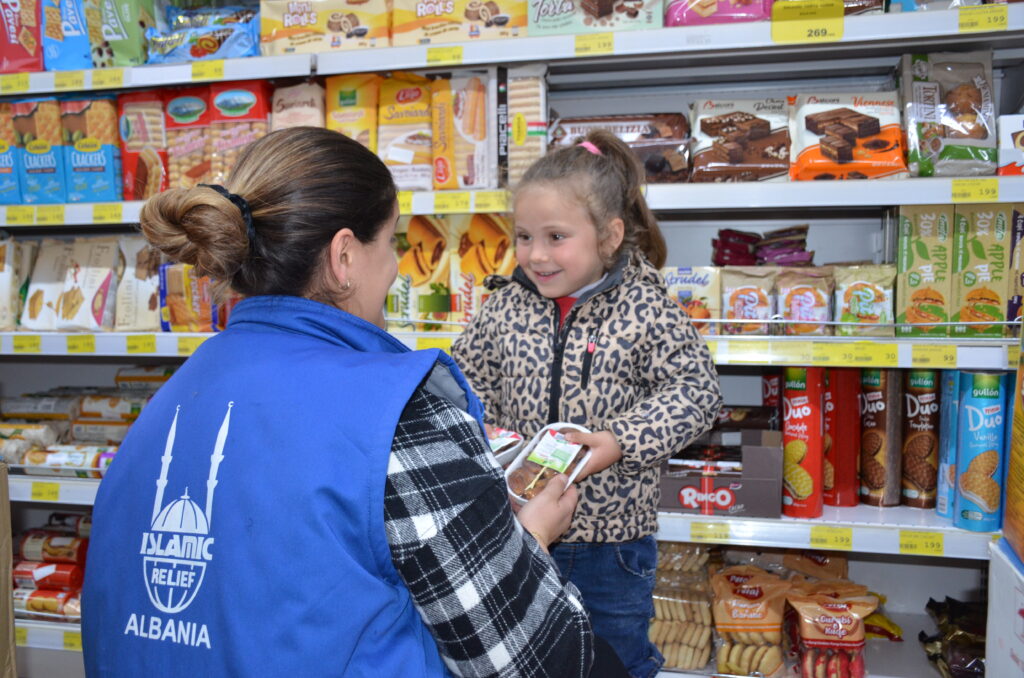
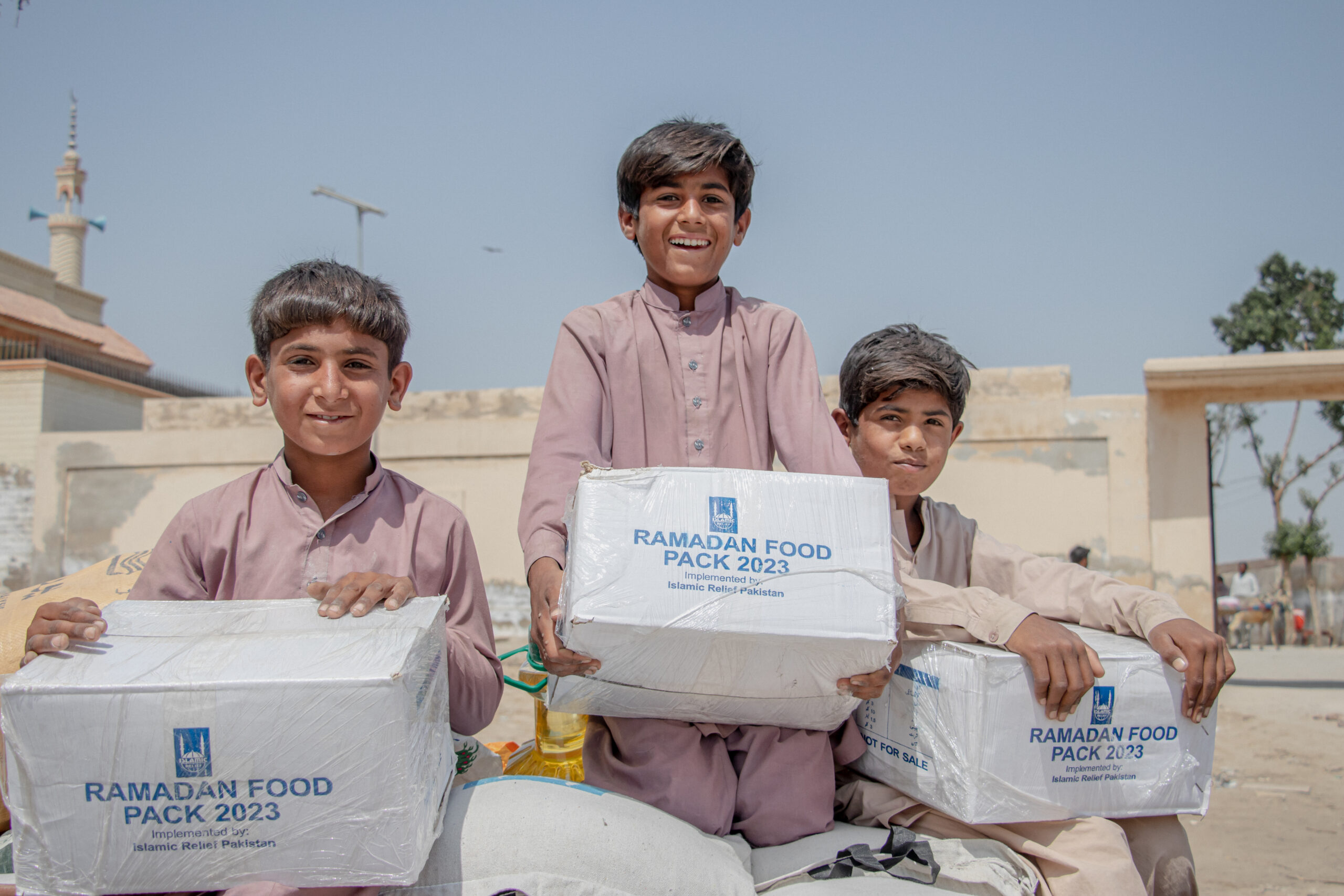
Every year, Islamic Relief implements the Ramadan project for its main rightsholders, orphan children and their families. In Ramadan 2023, this project was implemented in Albania in two forms: food packages and cash.
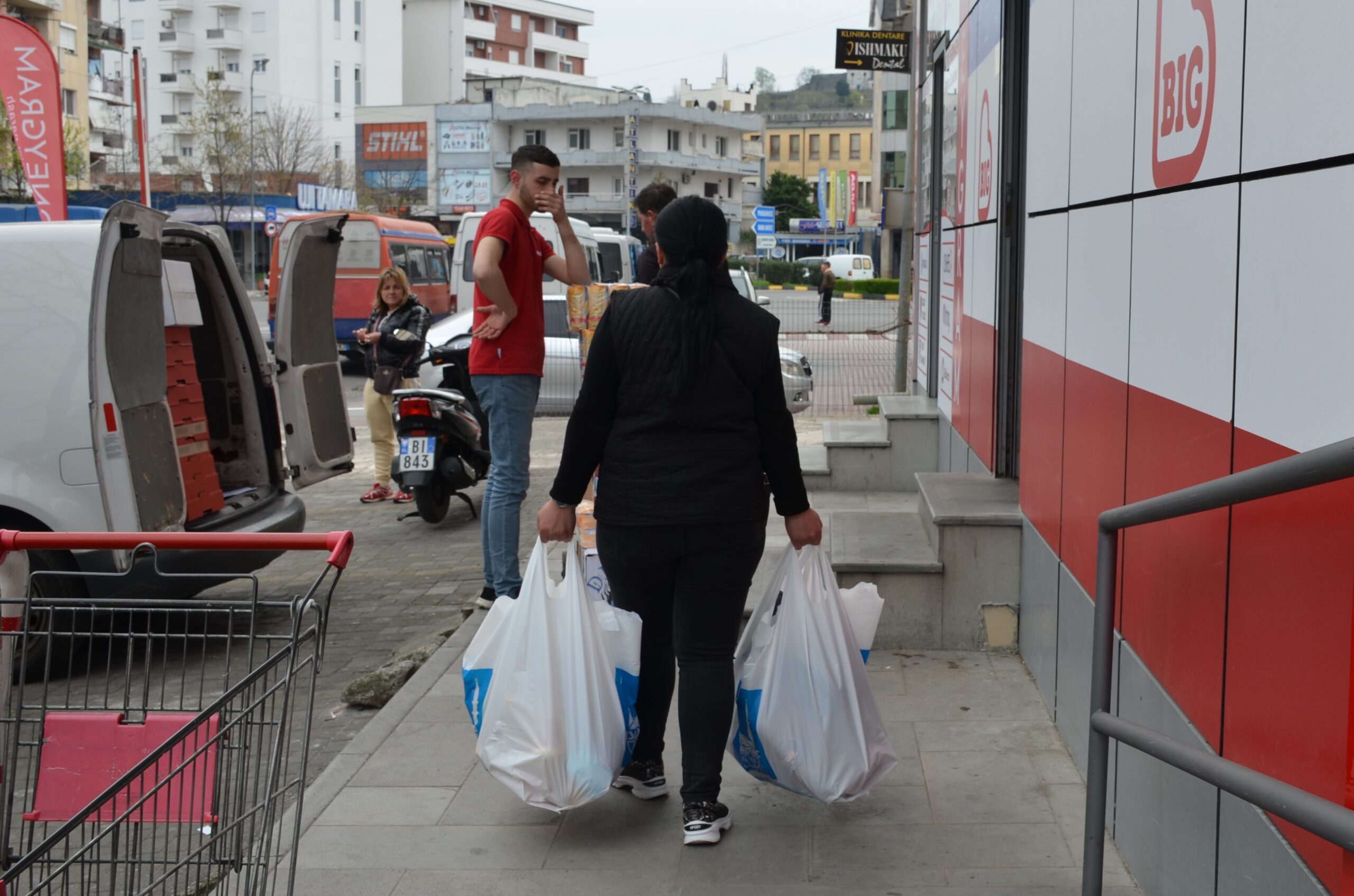
The implementation of cash grants for rightsholders allowed them to choose the basket products themselves. It was a form of donation that aimed to boost their self-esteem and treat them with dignity.
Nexhmije Shpellzaj and her family from Shkoder, Albania, in the Malësi e Madhe district, were one of the recipients.
A widowed mother struggling to make ends meet
Nexhmije is a 39-year-old widow and mother of 4. She occasionally works as a sanitary worker but does not have a fixed job.
Nexhmije got married at a young age. She could not finish her studies. After marriage, she was blessed with 4 children, all primary school age, who are currently in her care. Over five years ago, her husband passed away in a road accident. Her youngest, Jetmira, who is now six, was not yet a year old when he passed.
“It’s difficult being a mother and a father at the same time; it’s such a big responsibility.”
Nexhmije looks after her 4 orphaned children on her own. Her family is in need of support.
A family going through hardships
Nexhmije’s family lives in a private house with modest conditions. They were able to secure this house thanks to charities. However, the house has serious moisture problems and insects.
Last year, a Muslim sister helped Nexhmije and her family immigrate to Germany as an asylum seeker. However, after staying for 6 months there, they returned her to Albania.
Currently, Nexhmije is unemployed. Whenever she can, she tries to work occasionally as a sanitary worker or in agriculture. However, the income she earns is insufficient for the family’s needs and expenses. The state offers them economic assistance as a family in need, but it cannot even cover the cost of basic daily food.
“Allah knows what a mother feels when there is no bread to give to her children. I don’t even wish it on the enemy. The last time I remember buying clothes for the children was when Islamic Relief gave us money for (an) Eid gift. I pray to the Almighty for the good health of my children.”
The Impact of Your Ramadan Donations
“I swear to Allah SWT, that He is one and there is no other. I don’t know how many times my neighbours bring me food for the children for charity.
“Ramadan is the month of mercy, the month of forgiveness, the month of sacrifice, the month where we understand the importance and value of what we have. We pray to Allah SWT to forgive us for how many times we ask for things that we don’t have because we are never thankful enough for all the blessings that He has given us.
“Before (Islamic Relief) called me, I worked in a house and bought a package of flour with the money I received. When I bought the flour, I was in doubt, I was saying to myself: flour or sausage for children?
“Then, when you informed me about cash in the bank to buy food for Ramadan, I said, (a) mother’s prayers are never rejected, Alhamdulillah.
In Ramadan 2023, Islamic Relief staff provided the family with cash to collect the food items that they need the most for the blessed month.
“I’m so happy and lucky to be part of Islamic Relief. Thank you so much for your kindness. We are extremely appreciative of all that you are doing for us.
“I am infinitely grateful to you. Allah SWT and you are the ones who are raising my children. I don’t want to imagine what my life and my children’s lives would be like without your help.
“You came into my life in those days when I only saw black days, I saw only sadness, you came like the light you see at the end of the tunnel. Islamic Relief is a blessing, it is hope, it is strength to move forward.”
Save Families From Hunger
Multiply your rewards from Allah (SWT) this Ramadan. Give families in need the opportunity to enjoy nutritious food for Suhoor and Iftar during this blessed month.
Marilda Gusmari is a 39-year-old widow living in Durres, Albania. As the head of the household, she struggles to provide for two daughters, Nidia and Joris, due to the worsening economic situation.
During Ramadan, Marilda wants to let her family experience the harmony and pleasure of the blessed month. But for families like hers struggling with poverty or food insecurity, it’s not easy to fulfil.
Living Under Unstable Conditions
“We live in such a tough condition. Our income is very low. I’m the only breadwinner in the family. Maintaining good health and consuming a nutritious diet is a challenge for us.
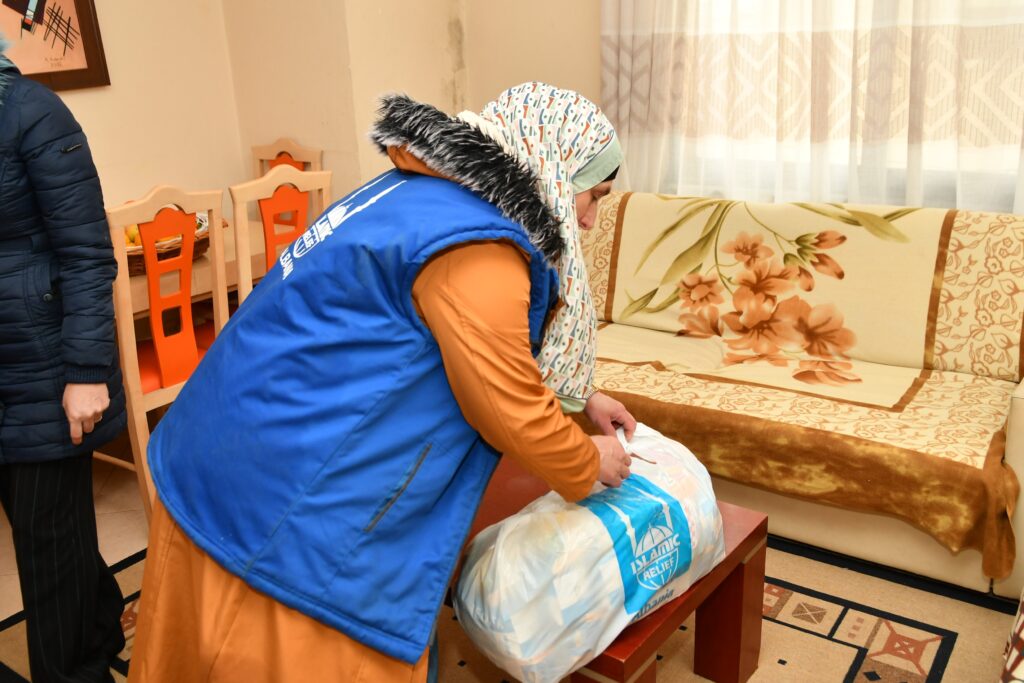
Image: IR Staff delivering Ramadan food pack to the Gusmari Family in Durres, Albania
“With our economic problems, my sister Erisa has helped us as much as she can. She sometimes brings us meals and dishes she cooks for her family. Often, we are invited to Iftars by her family. She always tries to think about us. But even her economic conditions are not too good either.”
Recovering from Disaster
“Our house was affected by the earthquake of 2019. The building was structurally damaged and was declared uninhabitable by the government. This building had about 150 families once. Today, only two families live (here).
“Our lives are in danger, we live on the 10th floor. We fear that next time it will fall again. This would be fatal for my two daughters.
“I tried to live in a rented house a year ago, but the money was not enough for our basic needs. My salary is minimal, and it does not meet our needs for food and education of the girls.
“When I am not able to provide food for my daughters, I feel very emotional. I don’t want to fail in meeting basic nutritional needs for these two. The food doesn’t last very long, but when I have it it is a very welcome relief from my daily worries. It’s painful to realise you are not able to give your children a festive Ramadan. However, I will always find a way to provide for my little family, insha’Allah.”
How Your Donations Have Helped
Islamic Relief’s Ramadan project has been implemented in Albania since 1994 and remains ongoing. Our teams on the ground work hard to make Ramadan, the Holiest Month of the Year, enjoyable. Even for the poor families and frustrated social families through food package distribution.
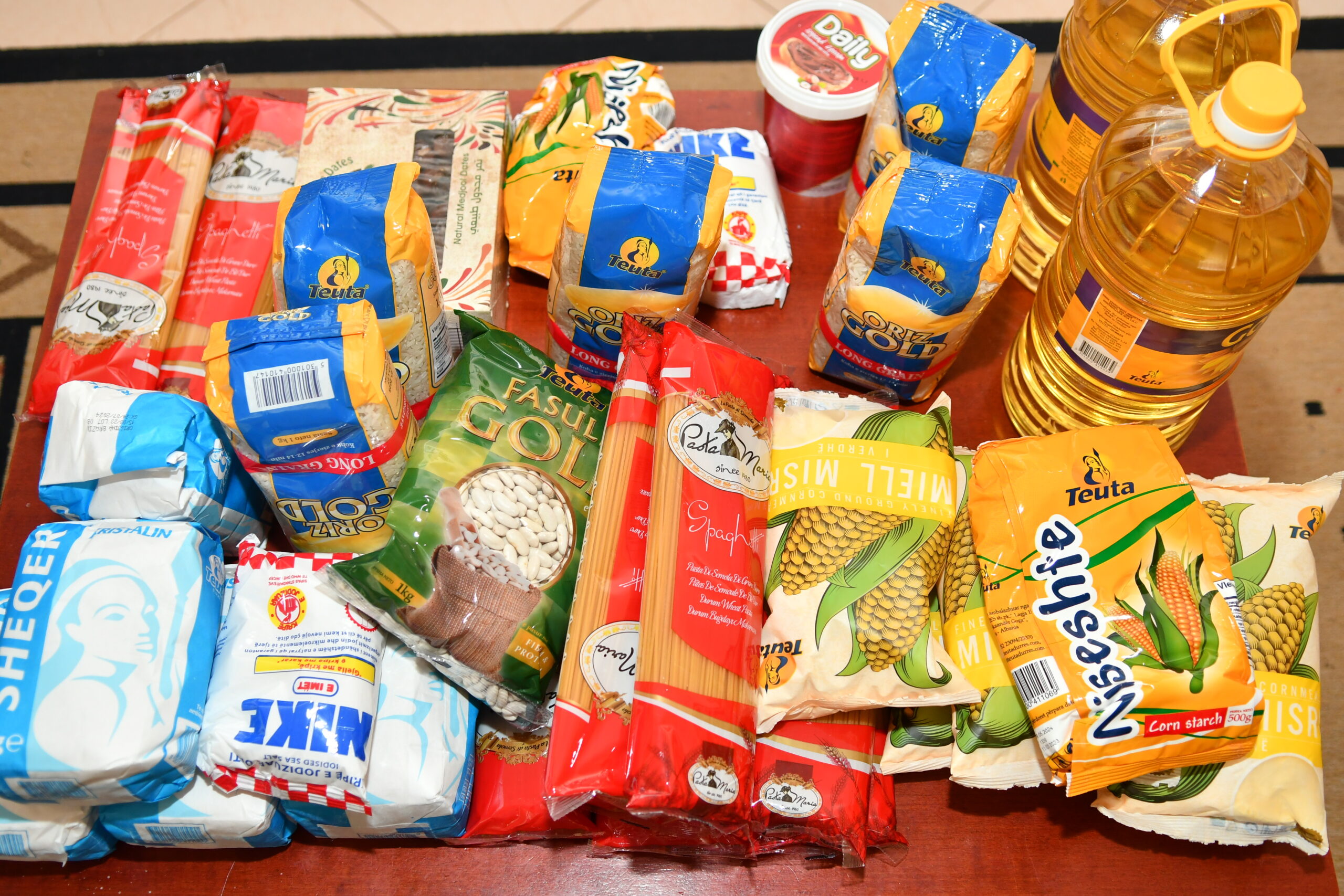
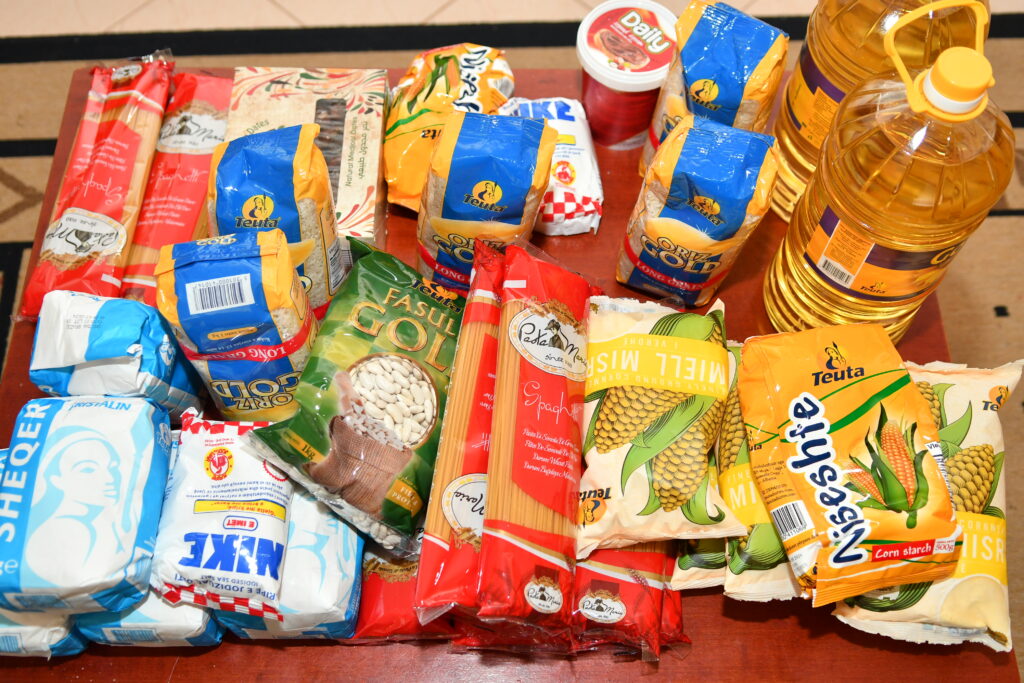
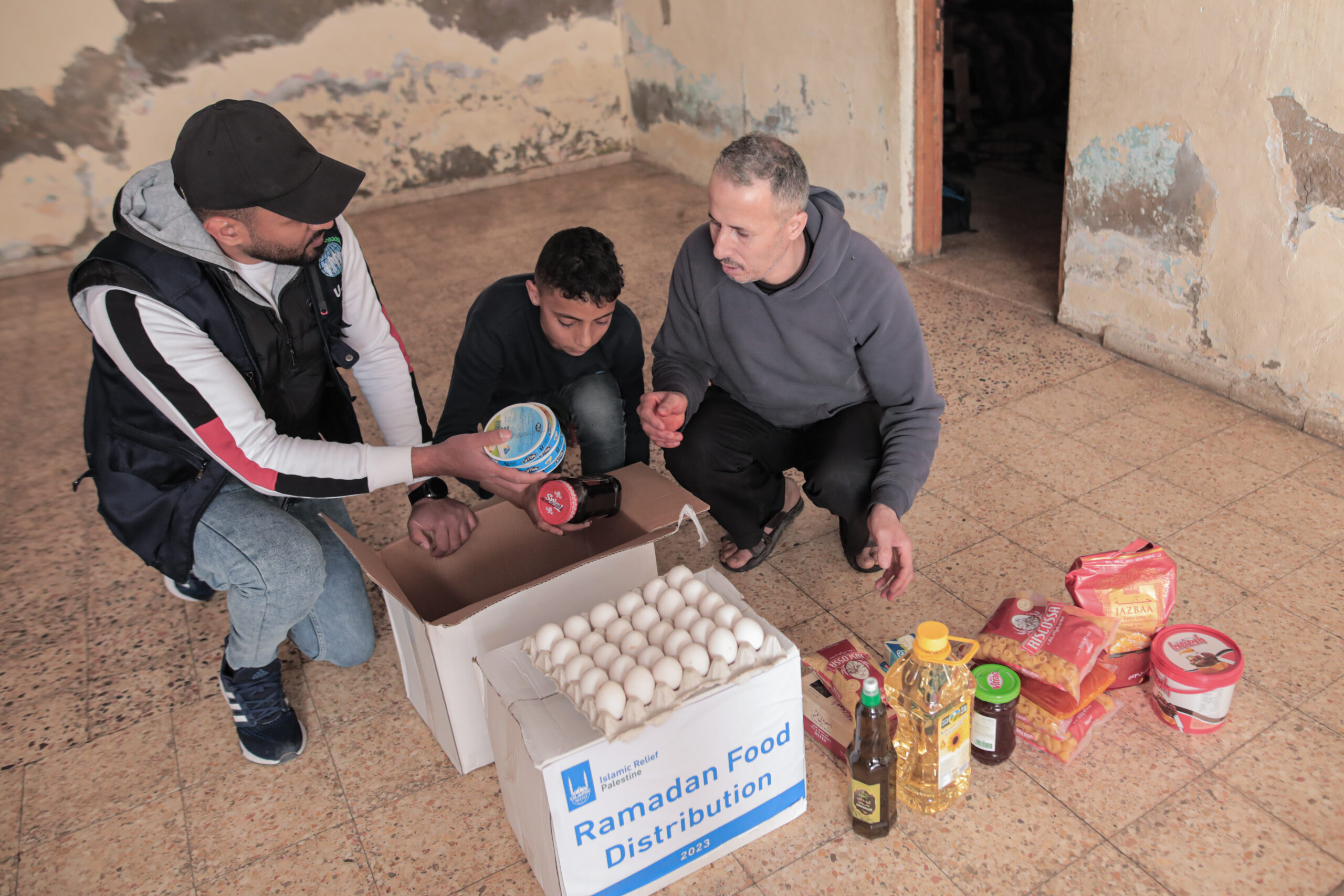
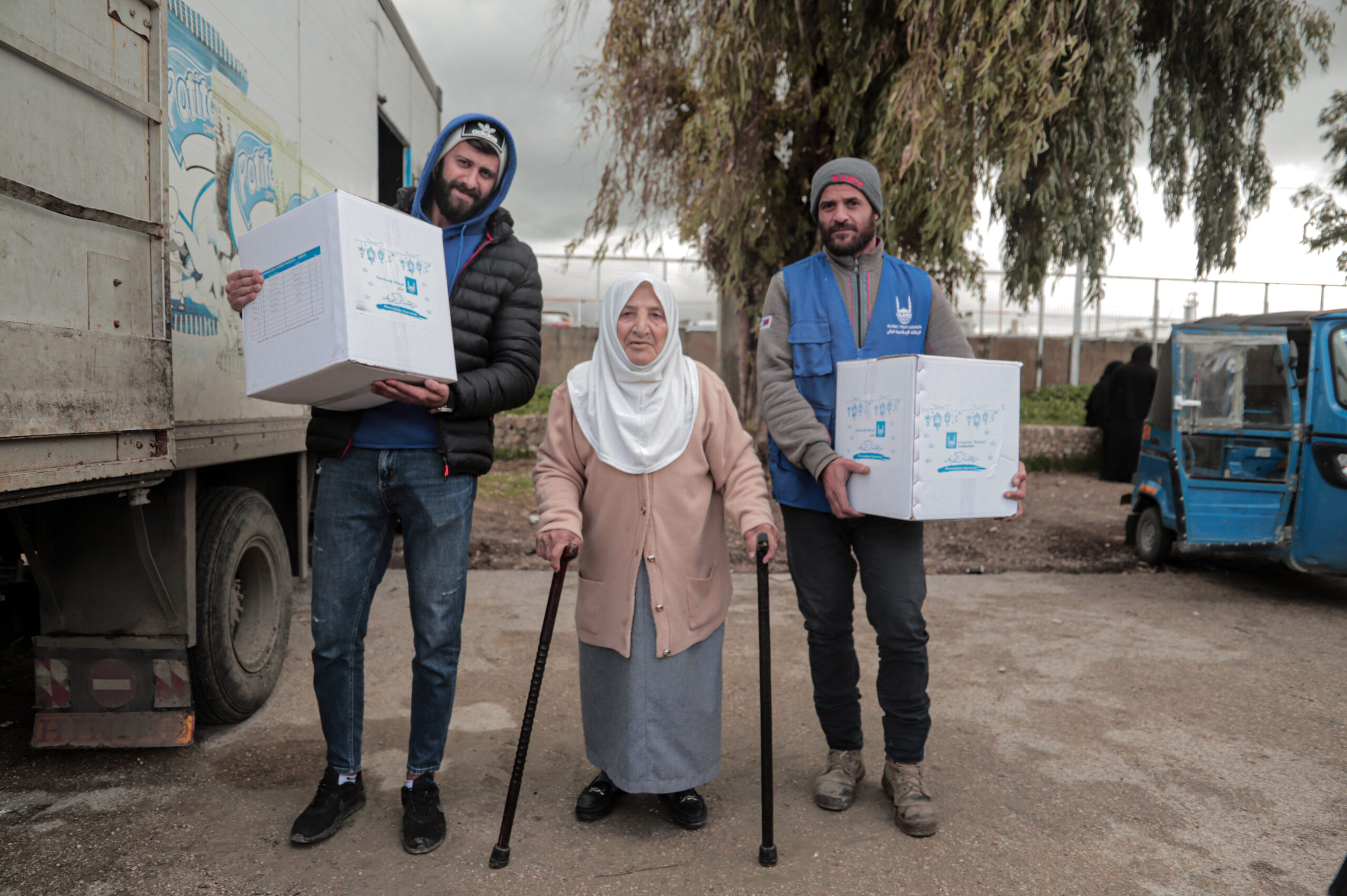
Each food package contains staples such as flour, rice, sugar, oil, beans, dates and pasta. This distribution method allows families that benefit to get the food and prepare it in the way they like. These food packs also provide families with enough food for a month, enabling them to celebrate Ramadan like other Muslim families.
During Ramadan 2023, Islamic Relief staff provided the family with food items.
“I am struggling for my family not to deal with hunger, but with your help we are able to keep up. I was blessed with the support of your organisation.”
Marilda’s Family and Islamic Relief
“My children have been rightsholders in some projects that have been implemented by Islamic Relief in our area. We have benefited from the Eid project, the school project, Qurban, winterisation and Ramadan.“
“This year the package of Ramadan was bigger – we have more flour and more items. With the food package that Islamic Relief gave to me, I am now able to save some money. I don’t need to buy food which is expensive.
“Bread, rice, pasta and some vegetables are the main foods I use to prepare meals for my children. We are grateful for the food pack that you have donated as now my daughters can eat something sweet and taste the dates that they like so much.”
“Thank you for the support you give us in any difficulty we have. All the time my children and I, pray that Allah (SWT) help those who helped us.”
Save Families From Hunger
Multiply your rewards from Allah (SWT) this Ramadan. Give families in need the opportunity to enjoy nutritious food for Suhoor and Iftar during this blessed month.
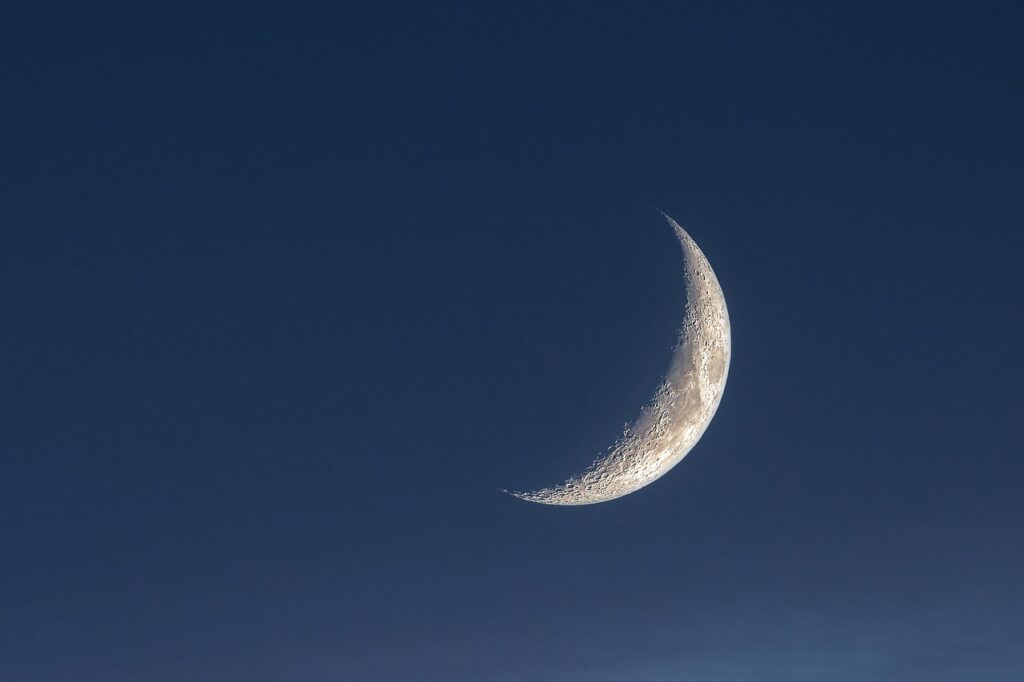
In Ramadan, Muslims observe fasting, one of the five Pillars of Islam, from sunrise to sunset for 29 or 30 days, depending on the sighting of the new moon. The main times to eat are at the pre-dawn meal, known as Suhoor (or Sehri), and Iftar, the time to break the fast.
Ramadan is a blessed month filled with reflection, devotion and the love and mercy of Allah SWT. Many of us come into it eager to make the most of its benefits – physically, mentally and spiritually – including having a nutritious and filling Suhoor and Iftar.
However, adjusting to our new routines for the Holy month is not always easy. The tiredness, the unusual times we have our meals, the many gatherings we attend – all these factors can make it hard for us to remember to look after our health during Ramadan, especially when it comes to eating healthy.
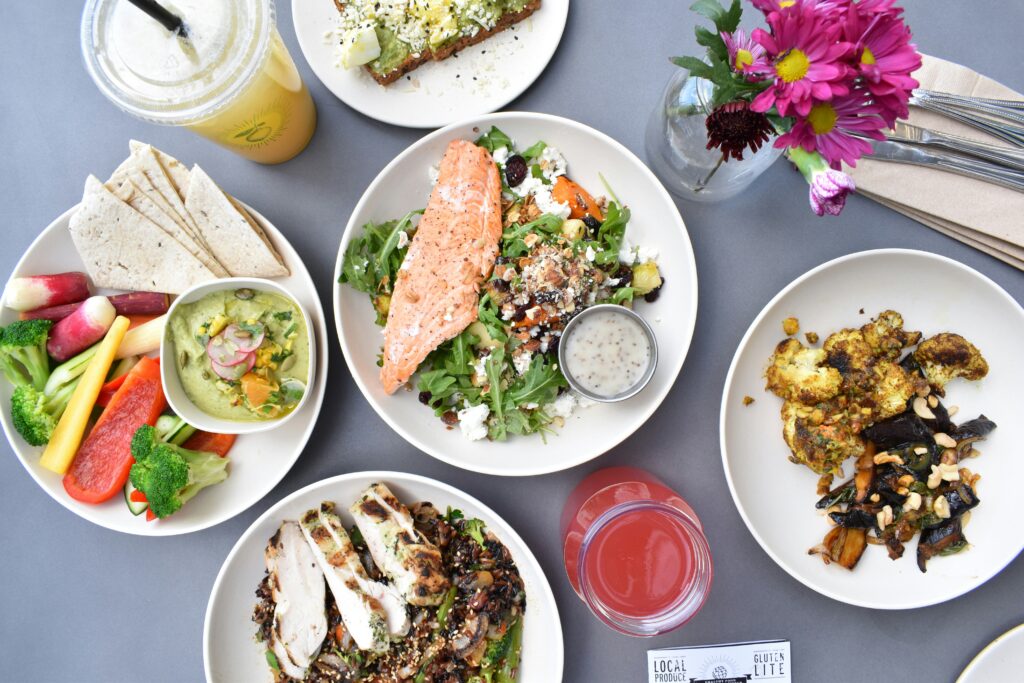
But healthy eating during Ramadan doesn’t have to be difficult. Here is a guide on how to plan your meals for Suhoor and Iftar without burning yourself out.
Creating Your Meal Plans for Ramadan
During Ramadan, deciding what to eat for Suhoor and Iftar can get overwhelming. But when you have a meal plan, it can help ensure you avoid overspending and are eating nutritious and delicious food, leaving you less stress and more time to worship Allah (SWT).
Try to start planning a week or at least a few days before. Give yourself long enough to search for healthy recipes you might like and check what ingredients you’ll need to put on the shopping list.
If you get easily overwhelmed by cooking, stock your kitchen with staple foods that don’t need much preparation, but still provide you with nutrition (e.g. rice, bread, oats, fruits, frozen vegetables, etc.).
Going long hours without food and drink takes a lot of energy. Once the blood glucose and fat stores for energy are gone, your body might start to use protein which can cause muscle breakdown. This leaves you more likely to experience tiredness, headaches, difficulty concentrating and dizziness while fasting.
Eating well for Suhoor and Iftar helps us reduce these symptoms we can get while fasting. That’s why we should try our best to eat a balanced diet throughout Ramadan.
Guide to a Healthy Suhoor
Suhoor sets you up for the day, so it’s important to eat foods that keep you going until Iftar. These include foods high in protein, complex carbohydrates, fibre and healthy fats, which help you feel full longer after a meal.
Protein from meat and legumes (e.g. beans, lentils) helps you build and maintain muscle, which helps you feel more energised while fasting.
Many grains (e.g. oats) and high-fibre and wholegrain breads contain complex carbohydrates that take longer to digest, allowing your body to keep feeling full for longer.
Vegetables and fruits also have these healthy carbs. They’re also high in fibre and contain various vitamins and minerals. Some fruits and vegetables have a high water content, which can help you keep hydrated while fasting. It’s also good to make sure you drink a lot of water during suhoor as well.
5 Simple Healthy Meal Ideas for Suhoor
Here are some suggestions for an easy, healthier Suhoor to help you reduce hunger during the day, allowing you to focus on connecting with Allah (SWT). Feel free to switch out any ingredients for foods more suited to your specific conditions, allergies, intolerances or health goals. You can also have these for Iftar if you prefer eating these meals at night.
Breakfast Muesli Bowl
Choose a high-fibre cereal (e.g. Weetabix, rolled oats) to fill a bowl with and add in some milk or low-fat yogurt. Top it with chopped fruits and/or nuts. If you need a sweeter, add a drizzle of honey.
Breakfast Wrap
Put a source of protein, such as cheese, chicken or beans, in a multigrain pita. Add in sliced vegetables like lettuce, cucumbers and tomatoes. Close wrap and toast.
Omelette
Whisk eggs in a bowl, with a splash of milk, salt and pepper (plus any spice you wish). Spray a frying pan with olive oil. Once a bottom layer has formed, add vegetables such as spinach, mushrooms and tomatoes. Fold the omelette, flip and then serve.
Breakfast Toast
Toast multigrain or wholegrain bread. Top with sliced avocado, tomato slices, and tuna, smoked salmon or fried egg.
Rice Bowl
Fill a bowl with a small cup of rice (high-fibre, if possible). Add in proteins (meat, tofu, etc.) and vegetables.
Guide to a Healthy Iftar
Iftar is the time to refuel after a day of fasting. However, it’s important not to go overboard. Overindulging in food can leave you feeling bloated and uncomfortable. It also goes against the idea of fasting, which we do for the sake of Allah (SWT), first and foremost.
Help ease your stomach back into eating with small portions. The Prophet (PBUH) used to break his fast with dates – a good source of fibre and complex carbohydrates. If you don’t have dates, other dried fruits, like apricots and figs, also help you get back the nutrients you need.
Soups also make for a light but filling Iftar meal. It hydrates you and helps prepare your stomach for the other dishes to come.
For the main course, remember to include plenty of complex carbohydrates, proteins and healthy fats. Take the time to enjoy your meal and try not to load too much on your plate. If you’re hungry for seconds, take small portions so you don’t eat more than you can handle.
5 Simple Healthy Meal Ideas for Iftar
These are some suggestions for an easy, healthier Iftar that’s filling without making you feel overly full, allowing you to focus on connecting with Allah (SWT). Feel free to swap out any ingredients for foods more suited to your specific conditions, allergies, intolerances or health goals. You can also eat these for Suhoor if you have leftovers.
Roasted Skewers / Kebabs
Cut up vegetables and/or slice meat into chunks. Load them up on skewers. Mix spices and sauces. Brush them on the skewers. Cook them on the grill until browned and slightly charred.
Clear Soup
Chop a medium onion and some vegetables (e.g. mushrooms, carrots, celery, leek, etc.) and put them in a pot to boil for 15-20 minutes. Feel free to put in some leftover chicken roast if you have it.
Thin Pizza
Use a wholegrain or high-fibre tortilla as your base. Cover in pizza sauce. Add cheese and nutritious toppings like spinach, capsicum, mushrooms, olives and cherry tomatoes. You can also put on other toppings like meat or pineapple, but don’t go too overboard as the pizza base will get soggy.
Pasta Salad
Cook pasta (high-fibre, if possible) as per packet instructions. Prepare dressing and desired vegetables while waiting. Once cooked and cooled, put pasta in a large bowl and put on top all chopped vegetables. Pour dressing. Give the salad a light toss.
Rice Paper Rolls
Cook rice vermicelli as per packet instructions. Pick and prepare your choice of protein. Chop vegetables into long thin pieces. Prepare a wide bowl of water for rice paper sheets. Dip whole rice paper sheet lightly into water (just once is enough) and set it on a plate. Put a handful of vermicelli, your protein and vegetables onto the rice paper. Fold side edges and roll upwards.
Eating Snacks During Ramadan
Nutritious snacks are a good way to stay full if you’re not hungry for a full meal or need something quick to eat. Having these on you or easy to reach in your kitchen is useful when you need to break your fast on the go or if there’s only a couple of minutes to Fajr.
To help you stay energised and full for longer, try to reduce the sugary treats like chocolates or sweets you eat as they aren’t very nutritious. Instead, look for foods filled with protein, healthy fats and vitamins.
Some easy, healthy snack alternatives are nuts, seeds, low-fat yoghurts, plain popcorn, carrot and/or celery sticks and berries. If you’re in the mood to make something, try looking up recipes for protein bars, energy bites or protein cookies.
Staying Hydrated During Ramadan
While fasting, it’s natural to feel dehydrated as you’re going long hours without water. Combined with the unusual sleeping hours, you may also be more tired than usual.
To help with this, drink more fluids, especially water, during Suhoor and Iftar. Avoid drinks with a high caffeine content (e.g. coffee, energy drinks etc.) as it’ll make you feel more dehydrated. Also try reducing the number of sugary drinks like soft drinks, as they can lead to bloating and cause digestion problems.
If you get tired of drinking plain water, try infusing it with lemon slices or fresh mint. You can also try light teas without milk or sugar.
Fluids also aren’t the only way to increase your water intake. You can also eat hydrating foods. Soups for Suhoor or Iftar are filling just as they are hydrating.
If you’re not in the mood for a meal, watermelon makes for a sweet and hydrating treat. You can also cut up some cucumber and tomato slices if you prefer something savoury.
Meal planning and eating healthy for Ramadan don’t have to be stressful. Try your best with the food and recipes you have and have fun making balanced meals and snacks with them. Also, make sure to stay hydrated by drinking plenty of fluids during Suhoor and Iftar.
Remember, Ramadan is about building our connection with Allah (SWT). By looking after our bodies, preparing in advance and reducing our food waste, we can spend the month focusing on growing closer to our Creator more than ever before.
Ramadan, a month of blessings and reflection, is one of the best times to increase in making dua.
With the Holy month upon us once again, we have an incredible opportunity. To earn more rewards by expanding on the duas we already know and reciting them as much as we can throughout this blessed time.
As Allah (SWT) says in the Quran:
“Now, if My servants ask you [O Prophet] about Me — then, indeed, I am near. I answer the call of the caller when he calls upon Me. Then let them all respond to Me, so that they may be rightly guided.”
Al-Baqarah, 2:186
It is also in the month of fasting that we should be encouraged to make more dua. As the Prophet (ﷺ) said, “Indeed the prayer of the fasting person during his break is not rejected.” (Sunan Ibn Majah). He also reminded us that, “Dua is the essence of worship.” (Tirmidhi)
In this time when the gates of heaven are wide open and rewards are multiplied, let’s make the most of it. Here’s a list of ten simple and beautiful dua to help you prepare for Ramadan and accompany you throughout this blessed month!
Dua for Sighting the Moon
The sighting of the new moon marks the start of Ramadan. Hence, making dua for it holds a high significance. The Prophet (ﷺ) used to recite this dua when looking for the new moon:
Allahumma ahillahu ‘alaina bil-amni wal-iman, was-salamati wal-Islam, Rabbi wa Rabbuk-Allah, Hilalu rushdin wa khairin
“O Allah, let this moon appear on us with security and Iman; with safety and Islam. (O moon!) Your Lord and mine is Allah. May this moon be bringing guidance and good.”
Tirmidhi
Also say it when looking for the new moon of Shawwal, which marks the day of Eid Al-Fitr, the end of Ramadan.
Dua for Beginning the Fast
All good deeds start with a sincere intention. Use this dua to renew your intention to keep your fast throughout the month of Ramadan. Make sure to recite it before or at Suhoor/Sehri.
Wa bisawmi ghadinn nawaiytu min shahri ramadan
وَبِصَوْمِ غَدٍ نَّوَيْتُ مِنْ شَهْرِ رَمَضَانَ
“I intend to keep the fast for tomorrow in the month of Ramadan.”
Sunan Abi Dawud
Dua for breaking your fast
Even after a long day of fasting, we should still remember Allah (SWT) at Iftar time. At this moment you end your fast, recite this dua to make your first bite of food or sip of drink even sweeter and richer.
Dhahaba al-zama’u, wa’btallat al-‘urooqu, wa thabata al-ajru insha’Allah.
“The thirst has gone, the veins are moistened and the reward is assured, if Allah wills.”
Sunan Abi Dawud
Dua for the one who invites you for iftar
The reward of feeding a person who fasts is with Allah (SWT). But one of the best gifts you can give to someone who has invited you for iftar during Ramadan is a sincere dua.
This was the dua the Prophet (ﷺ) made when Sa’ad, may Allah be pleased with him, hosted him for Iftar, covering everything from food to companionship to angels.
“May those who have fasted break their fast with you, may the pious eat your food, and may the angels pray for you.”
Sunan Ibn Majah
Dua for Laylatul Qadr
There was one dua that the Prophet (ﷺ) singled out for Ramadan. More specifically, for Laylatul Qadr, the Night of Power or Night of Degree.
Laylatul Qadr is one of the most sacred nights in the Islamic calendar. It is a commonly held belief that it occurs on the 27th of Ramadan. However, scholars of Hadith recommend focusing on the last 10 nights of Ramadan, especially the odd nights, as it is most likely to have occurred on one of these nights.
When asked by Aisha, may Allah (SWT) be pleased with her, on what to say on Laylatul Qadr, the Prophet (ﷺ) said:
“O Allah, You are Most Forgiving, and You love forgiveness; so forgive me.”
Tirmidhi
This dua reminds us that Allah (SWT) loves nothing more than His servants turning to Him and asking for help. As such, we should make this dua, as well as others, often on Laylatul Qadr and include it in our regular supplications throughout the year.
Dua for success
Ramadan is the month when we should try to build as many good habits as possible and increase our remembrance of God.
This dua asks Allah (SWT) to guide us on the straight path. It is also a dua of gratitude; one that asks and thanks Him for His mercy.
Rabbana la tuzigh quloobana ba’da idh hadaytana wa hab lana min ladunka rahmah innaka antal-Wahhab
“Our Lord! Let not our hearts deviate after You have guided us, and grant us mercy from You. Truly, You are the Bestower.”
Al-Imran, 3:8
Dua for the good of this world and the next
Within the Quran, Allah (SWT) praises those who ask Him for good for this life and the afterlife. For He loves those who remember Him, as He is Al-Wahhab, the All-Giving.
This dua of asking Allah (SWT) for goodness in both lives was often recited by Prophet Muhammad (ﷺ) , as reported by Anas, may Allah be pleased with him.
“Our Lord! Give us in this world that which is good and in the Hereafter that which is good, and save us from the torment of the Fire!”
Al-Baqarah, 2:201
Dua for Good Health and Character
As Muslims, having good health and practising good conduct are important in Islam. We are also encouraged to regularly seek Allah (SWT)’s protection and shelter from disease and misconduct.
This dua allows us to ask Allah (SWT) for good health, conduct and success. It’s a good supplication to recite often, in Ramadan and beyond.
Allahumma innee asa’luka sihhatan fi eeman, wa eeman fi husni khuluq, wa najahee yatba’ahu falah, wa rahmaatan minka wa ridwaana
“O Allah, I ask You for the health of my faith, such faith in good character, and salvation leading to success, Your mercy, Your wellness, Your forgiveness, and Your pleasure.”
Musnad Ahmad
Dua for Rizq (provision)
In Islam, Muslims are encouraged to seek beneficial knowledge, and there is no better place to ask than Allah (SWT).
The dua for Rizq seeks Allah (SWT)’s blessing for abundant, halal sustenance, reflecting trust in His provision and care for our worldly and spiritual needs. The Prophet Muhammad (ﷺ) used to recite this dua during Fajr (the morning prayer).
Allahumma inni as’aluka ‘Ilman naafi’an, wa rizqan tayyiban, wa ‘amalan mutaqabbalan
“O Allah! Improve (help) the state of the Ummah of Muhammad. O Allah! Grant ease to the Ummah of Muhammad. O Allah! Have mercy on the Ummah of Muhammad.“
Hilyat al-Awliya
As we navigate the days and nights of Ramadan, let these duas be your companions, beautifying your prayers and drawing you closer to the Almighty.
Remember, Ramadan is not just a test of physical endurance. It is also a time to nourish, heal and elevate the heart and soul.
As we aim to seek as many rewards as possible in this blessed month, we pray that Allah SWT helps us to clean our hearts and make us sincere in our worship.
May Allah (SWT) allow us to be better Muslims and accept our acts of worship in this blessed month of Ramadan, ameen!
So, why do Muslims give more during this month? Ramadan is filled with many opportunities to earn rewards through good deeds and providing charity is one of them.
In fact, the Prophet Muhammad (ﷺ) himself gave more charity during this blessed month than at any other time. In one hadith, Ibn Abbas reported,
“The Prophet (ﷺ) was the most generous of people in charity, but he was generous to the utmost in the month of Ramadan…giving charity like the blowing wind.”
Sahih Muslim
The Importance of Charity in Islam
Caring for and showing kindness towards fellow human beings is central to Islam. Several ahadith refer to this deep affection and brotherhood. This includes one where the Prophet Muhammad (ﷺ) encouraged his people to “love for your brother what you love for yourself.” (Bukhari and Muslim)
In another hadith, he (ﷺ) also said, “The believers are like one body in their mutual love and affection: if one limb is injured, the rest responds with sleeplessness and fever.” (Muslim)
Giving charity is also one of the best ways to aid someone in need. In the Qur’an, many verses emphasise the importance of this good deed. Such as the verse stating how the poor and needy have recognised right, over our wealth (Al-Ma’arij, 70:24-5).
In addition to how charitable acts benefit those who receive it, Islam also highlights the blessings that come to those who give. Especially one who gives their wealth away selflessly for Allah (SWT)’s sake.
Thus, by giving for the sake of others, a Muslim fulfils a duty. To provide for their brothers and sisters in need. Thereby increasing their rewards for this life and the Hereafter.
Ways to Give During Ramadan
Zakat (al Mal)
Zakat al Mal, or almsgiving, is one of the five pillars of Islam. It is a compulsory donation every sane, adult Muslim must make every lunar (Islamic) year if they meet a certain threshold (Nisab).
The amount one pays for Zakat, if they are eligible, is equal to 2.5% of one’s total wealth. The Nisab amount for Zakat in 2025 has yet to be decided.
In 2024, the value of silver was $1.11 (AUD) per gram. If using the opinion of 609 grams of silver for Nisab, the Nisab threshold is approximately $675.99. For 595 grams of silver, it is $660.45 (AUD). This is the amount set by ANIC for 2024.
Many Muslims give Zakat in Ramadan due to the numerous rewards offered in this blessed month. Most Islamic schools of thought also allow individuals to pay their Zakat in advance if there is an urgent need, such as in the case of an emergency or humanitarian crisis.
Due to the situation in many countries like Palestine (Gaza) and Sudan, some Muslims choose to pay their Zakat ahead of time to answer the pressing needs of their brothers and sisters and do so in Ramadan to earn more rewards.
If you’ve already paid your Zakat for this Islamic Year, you do not have to pay it again during Ramadan. However, that doesn’t mean any charity you give during the month won’t count – it’ll be written down and Sadaqah and you’ll receive rewards for it.
Sadaqah
Sadaqah (or Sadaqa) is any voluntary act of charity that is wide-reaching and beneficial. It can be given as monetary charity or as an act of kindness.
Unlike Zakat, which is compulsory and typically given only once every Islamic year, there is no limit to how much Sadaqah you can give and how many times you can give it.
Some examples of Sadaqah include donating money to someone in need, feeding others or looking after someone who is sick or injured. Giving Fidya (Fidya), Kaffarah or Aqiqah can also be counted as Sadaqah.
Fidya (Fidyah) and Kaffarah
During Ramadan, fasting is compulsory on every Muslim who is healthy and of age.
Therefore, if one were to miss their fasts during Ramadan, valid or not, they would have to make up for it later or pay compensation.
Muslims pay Fidya (Fidyah) if they miss a fast out of necessity and are unable to make it up after Ramadan. The payment for each missed fast is equivalent to feeding one person.
If one deliberately breaks a fast without a valid reason and they are unable to make up for it later, Kaffarah is paid. The amount paid for each missed fast is the equivalent of feeding 60 people.
In Australia, the rate for both Fidya and Kaffarah in 2025 is $18 (AUD) per needy person. For example, if a person had missed one day of fasting, then they would need to pay $18 for Fidya or $1080 for Kaffarah.
Zakat al Fitr (Fitrana)
Zakat al Fitr (also known as Fitrana) is a charitable donation of food that must be given before Eid prayer, before the end of the month of Ramadan. If it is paid after Eid prayer on Eid Al Fitr then the donation will count as Sadaqah, making the reward lesser.
Fitrana is obligatory for all Muslims (including babies and children) living in any household with more food than they need. However, the payment itself should be carried out by the head of the household, on behalf of themselves and their dependents.
The amount of food due on each person is described by the Prophet (ﷺ) as one saa’. This is equivalent to four madd. A madd is the amount that can be scooped up when one puts their hands together.
If we translate this amount into a monetary value, based on a food staple such as flour or rice, it is approximately $18 (AUD). Therefore, the amount due for each person, in Australia, is $18. This is the amount set by ANIC for 2025.
Giving with Islamic Relief
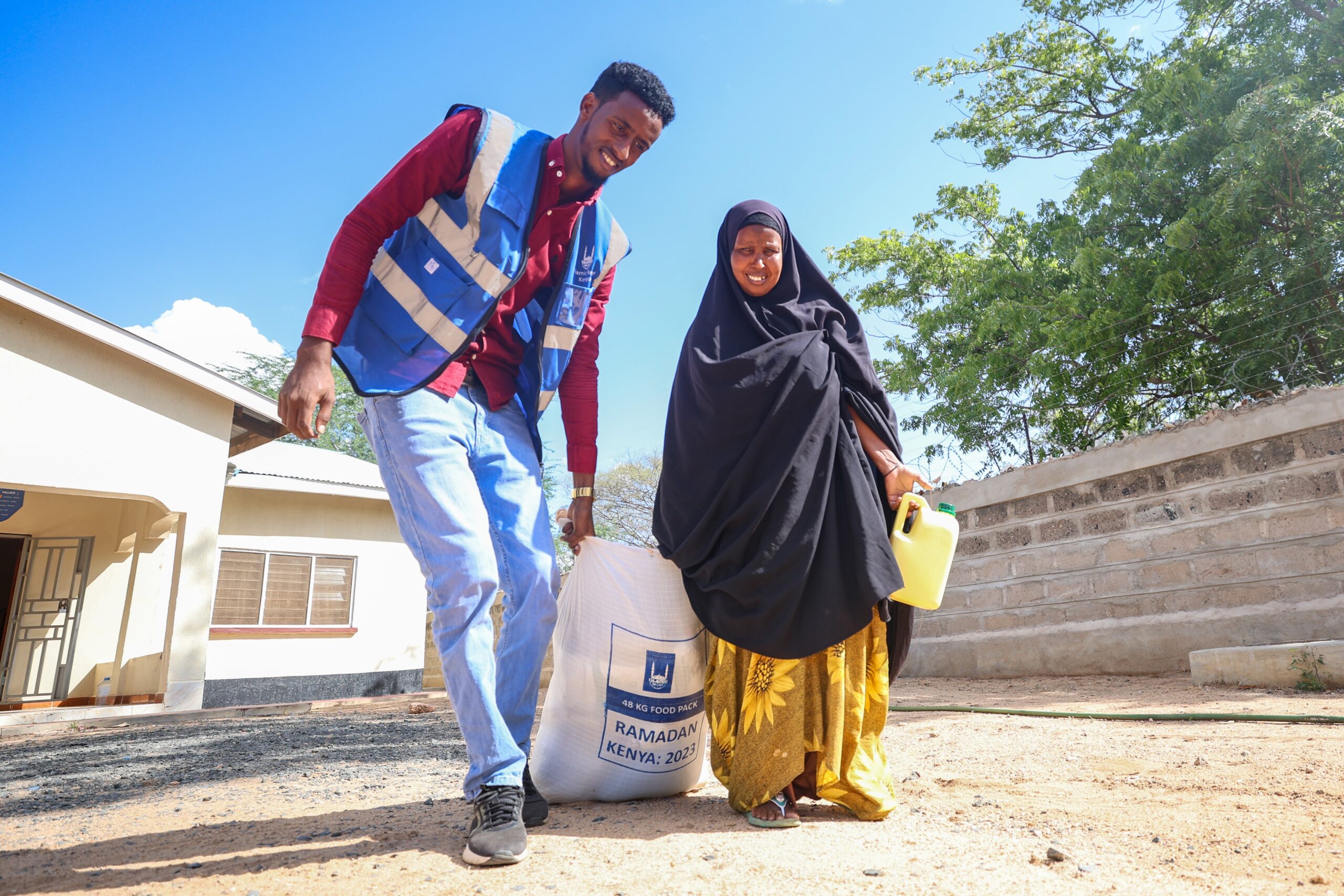
This Ramadan, Islamic Relief is continuing its life-saving work. We make sure your donations get to those who need them most. around the world, even in the hardest-to-reach places.
Over the last 40 years, together, with your support, we have saved and transformed the lives of over 120 million people. Alhamdulillah!
We are supporting rightsholders in over 40 countries worldwide. Just like we have been with every major disaster since 1984. And, through all, we deliver food, water and emergency relief to those in desperate need.
None of our work would be possible without the permission, mercy, and generosity of Allah (SWT) and your unwavering support. Together, the Islamic Relief legacy continues on. And you have all been chosen to help us save or change someone’s life for the better.
This Ramadan, help us save even more lives by giving your Zakat and Sadaqah with Islamic Relief.
Our Ummah, Your Zakat
Multiply your rewards from Allah (SWT) this Ramadan. Give the gift of happiness and hope to our brothers and sisters in need with Islamic Relief.
Fasting (Arabic: Sawm) during Ramadan, the ninth month of the Islamic calendar, is one of the five pillars of Islam.
It is an important staple of the faith, alongside the other four pillars. These are Shahada (belief in Allah SWT and His Messenger, Prophet Muhammad (ﷺ)), Salah (prayer),Zakat (obligatory charity), and Hajj (pilgrimage to Makkah).
As such, during the sacred month of Ramadan, Muslims across the globe, who are healthy and of age, abstain from eating, drinking, and other physical needs from dawn to dusk for the sake of Allah (SWT).
The Importance of Fasting During Ramadan
Allah (SWT) has made it obligatory for Muslims to fast during the month of Ramadan. In the Quran, He says:
“O believers! Fasting is prescribed for you—as it was for those before you—so perhaps you will become mindful (of Allah). (Fast a) prescribed number of days…Ramadan is the month in which the Quran was revealed as a guide for humanity with clear proofs of guidance and the decisive authority. So whoever is present this month, let them fast.”
Al-Baqarah, 2:183-185
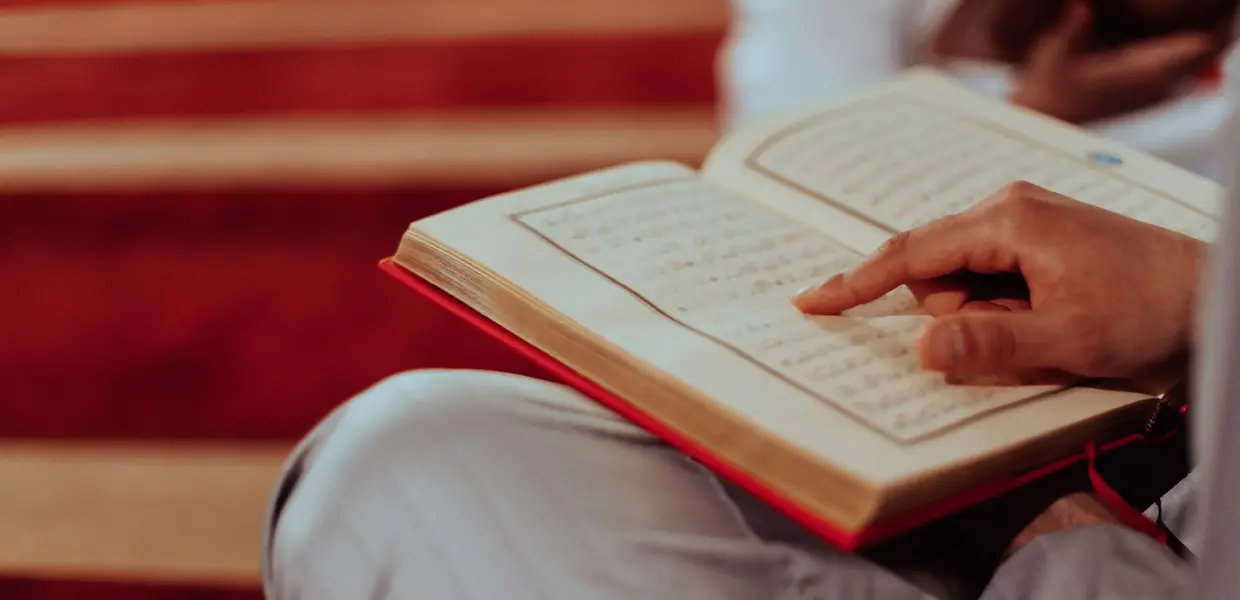
In these verses, Allah (SWT) establishes fasting, especially during the blessed month of Ramadan, as an important act of worship. It reminded us to stay away from harmful activities and behaviours. Likewise, it encourages us to engage in more beneficial acts, such as Salah (prayer), reading Quran and giving charity, for His sake.
He also emphasises the sacredness of Ramadan, mentioning it as the month the Quran, the ultimate guide to life, was revealed to humanity.
Benefits of Fasting During Ramadan
Fasting during Ramadan has many benefits, physically, mentally and spiritually.
Physically, it can help to cleanse the body and promote weight loss. It can also improve insulin sensitivity and lower the risk of chronic diseases such as diabetes and heart disease.
Fasting also helps with mental health in several ways. It allows one to be more focused, as discipline and self-control are both required to fast properly. Ramadan is also a time of community, as Muslims from all walks of life come together to break their fasts.
However, the spiritual benefits of fasting during Ramadan are the most significant. First and foremost, Allah (SWT) prescribed fasting as a means to purify oneself spiritually. It allows time for self-reflection, helping one keep away from harm by being more conscious of God.
Fasting also allows one to develop a deeper sense of empathy for those who are less fortunate. It helps one appreciate the many blessings, big and small, in their own lives, bringing them closer to Allah (SWT).
In one hadith, the Prophet (ﷺ) also said,
“(Allah said), ‘Every good deed of Adam’s son is for him except fasting; it is for Me. and I shall reward (the fasting person) for it.’ Verily, the smell of the mouth of a fasting person is better to Allah than the smell of musk.”
Sahih Bukhari
This is what makes fasting during Ramadan such a valuable experience. For fasting in Ramadan for Allah (SWT)’s sake is one of the ways to honour and celebrate His love and mercy and earn His many blessings.
Who is Exempt from Fasting in Ramadan?
Fasting is mandatory for any healthy, adult (which includes children who have reached puberty) Muslims, but there are some exceptions.
In the Quran, Allah (SWT) says,
“(Fast a) prescribed number of days. But whoever of you is ill or on a journey, then (let them fast) an equal number of days (after Ramadan). For those who can only fast with extreme difficulty, compensation can be made by feeding a needy person (for every day not fasted). But whoever volunteers to give more, it is better for them. And to fast is better for you, if only you knew.”
Al-Baqarah, 2:184
Within this verse, the main groups of people who may be exempt from fasting include:
Elderly people who are too weak or ill to fast
Elderly Muslims who have chronic medical conditions such as diabetes, heart disease and kidney disease may find it very difficult to fast. While it’s urged to still fast if they are capable of doing so, they’re also allowed to break their fast to help manage their health conditions.
Pregnant women and nursing mothers (if fasting will hurt their or their baby’s health)
In some cases, fasting can be harmful to the health of both the mother and the baby. If fasting prevents the expectant or new mother from consuming enough nutrients to support their own health and the health of their child, they’re allowed to break their fast.
Women who are menstruating or experiencing postpartum bleeding
Women who are on their period or are experiencing bleeding after childbirth are exempt from prayer and fasting. For women on menses, they must resume fasting after finishing their period. However, a new mother who’s finished their postpartum bleeding can remain exempt from fasting if she is nursing and it is better for her and her baby’s health to not fast.
People with certain medical conditions (where fasting is dangerous for them)
Chronic health conditions such as severe anaemia, cancer and mental illness can make it hard to fast. While someone with these types of medical conditions can and is urged to fast if they’re able, they’re also allowed to break their fast to manage their health conditions.
Travellers who are on a journey (exceeding a certain distance and duration)
Within the Quran, it is mentioned that travellers (journeying for lawful reasons and not to avoid their duty of fasting during Ramadan, for an extended period of time and exceeding a certain distance) are allowed not to fast if it is difficult for them.
This specific time and distance can vary. However, many scholars agree that the minimum distance should be the same as the one that permits a traveller to shorten their prayers. This is four burud (approximately 88.7 km in distance) from one’s home city’s borders.
For all these exempt categories, Muslims are still expected to make up the missed days of fasting after Ramadan as soon as they can. However, if they are still unable to fast, they must provide food to those in need. This compensation is called Fidya (Fidyah). It requires one to pay one meal’s worth to the needy for each fasting day they missed during Ramadan.
What Breaks Your Fast During Ramadan?
Just as it’s important to know who is exempt from Ramadan fasting, one should also know what breaks a fast. Intentionally eating or drinking anything, engaging in sexual relations, smoking and intentionally vomiting all break the fast.
However, it’s also important to remember that accidentally eating or drinking something does not break the fast. If one breaks their fast without meaning to, they can simply resume fasting for the remainder of the day without having to make it up.
“Whoever forgets that he is fasting and eats or drinks, let him complete his fast, for it was Allah who fed him and gave him to drink.”
Bukhari and Muslim
However, if one breaks their fast without a valid reason, they must compensate for their actions by giving Kaffarah. Kaffarah is a charitable compensation equal to feeding 60 people in need. 60 people times each day one purposely missed their fast in Ramadan, if one is unable to fast for two consecutive lunar months without a break.
What Else Affects One’s Fast?
Fasting, especially during Ramadan, is more than a physical act. As mentioned previously, fasting helps increase mindfulness and spirituality. By urging believers to abstain from bad deeds and do more good, it makes them stronger in faith. This, in turn, brings them closer to Allah (SWT).
In one hadith, the Prophet (ﷺ) also said,
“Whoever does not give up false statements (i.e. telling lies), and evil deeds, and speaking bad words to others, Allah is not in need of his (fasting) leaving his food and drink.”
Sahih Bukhari
As such, engaging in behaviour that violates the spirit of fasting, such as lying, backbiting or engaging in harmful behaviour towards others, is discouraged. This is especially true during the Holy month of Ramadan. As this is the month when Allah (SWT) has given many opportunities for believers to receive more rewards for their efforts.
So why do Muslims fast in Ramadan? All in all, fasting in this blessed month is important. As Allah (SWT) ordered believers to do so for their benefit. By observing this pillar of Islam, it allows one to strengthen their mind, body and soul. As well as see even more blessings from Allah (SWT) in this life and the Akhirah (Hereafter).
In this month when the rewards for good deeds are multiplied more than any other month, let’s put our best efforts into performing our Ramadan fasts. May Allah (SWT) bless us all and accept our fasting and good deeds during this Holy month, ameen!
Alhamdulillah! The blessed month of Ramadan is almost here! For Muslims across the globe, the holy month of Ramadan is a sacred time for worshipping Allah (SWT).
It is an opportunity for new beginnings. An opportunity for spiritual renewal and reflection, increased devotion, and celebration of the mercy and love of Allah (SWT).
What is Ramadan?
Ramadan is the ninth month of the Islamic lunar calendar.
During this sacred period, healthy adult Muslims are required to fast each day from dawn until dusk. This includes abstaining from drinking, eating, sexual relations, displeasing behaviours and anger. Other acts of worship such as prayer, reading the Quran and giving charity are also encouraged during the Holy Month.
Ramadan lasts 29 or 30 days, depending on the sighting of the moon, as the Islamic calendar follows the lunar cycle.
As such, the time the month takes place each year varies. Generally, it roughly moves back 10 or 11 days from its previous date in the more commonly used Gregorian calendar.
This year, Ramadan is expected to begin on the evening of Monday, March 11, 2024, and end on the evening of Tuesday, April 9, 2024, depending on the sighting of the moon.
Why is Fasting Important During Ramadan?
As revealed in the Quran, Allah (SWT) has made it obligatory for Muslims to fast during the month of Ramadan.
“O believers! Fasting is prescribed for you—as it was for those before you—so perhaps you will become mindful (of Allah). (Fast a) prescribed number of days…Ramadan is the month in which the Quran was revealed as a guide for humanity with clear proofs of guidance and the decisive authority. So whoever is present this month, let them fast.”
Al-Baqarah, 2:183-185
In these verses, Allah (SWT) establishes fasting during Ramadan as an important act of worship. He also emphasises the sacredness of Ramadan as the month the Quran was revealed and gifted to humanity.
The first day of fasting is expected to start on Tuesday, March 12, 2024.
More Ramadan Acts: Giving Zakat and Other Donations
Ramadan is filled with many opportunities to earn rewards through good deeds and providing charity is one of them. From fulfilling Zakat to giving more Sadaqah, paying Fitrana (Zakat al-Fitr) or repaying missed fasts through Fidya (Fidyah) or Kaffarah, there are many ways to give during this month.
The Prophet Muhammad (ﷺ) himself also gave more charity during this blessed month than at any other time. As narrated by Ibn Abbas:
“The Prophet (ﷺ) was the most generous of people in charity, but he was generous to the utmost in the month of Ramadan…giving charity like the blowing wind.”
Sahih Muslim
Important Dates in Ramadan
The Night of Power – Laylatul Qadr
In Ramadan, Allah (SWT)’s great love and mercy towards us have made it so that every good deed we do in this blessed month is multiplied by many.
This is especially true in the last 10 nights of the blessed month, which are full of even greater rewards and blessings. This is because it contains the most blessed of nights: Laylatul Qadr.
In the Qur’an, Allah (SWT) says this about Laylatul Qadr:
“What will make you realise what the Night of Power is like? The Night of Power is better than a thousand months. Angels and the Spirit descend upon it with their Lord´s permission with every command; There is peace that night until the coming of dawn.”
Qur’an (97:1-5)
As narrated by A’isha (ra), Prophet Muhammad (ﷺ) said, “Do good deeds properly, sincerely and moderately and know that your deeds will not make you enter Paradise, and that the most beloved deed to Allah is the most regular and constant even if it were little.
Eid al-Fitr
Eid al-fitr marks the end of the blessed month of Ramadan. The end of the Holy month is expected on the evening of Tuesday, April 9, 2024.
This year Eid al-Fitr is expected to be celebrated on Wednesday, April 10, 2024. However, the exact date depends on the sighting of the moon for Shawwal, the 10th month of the Islamic Calendar.
Our Ummah, Your Zakat
Multiply your rewards from Allah (SWT) this Ramadan. Give the gift of happiness and hope to our brothers and sisters in need with Islamic Relief.
Fasting during Ramadan is one of the Five Pillars of Islam. During this month of the Islamic Calendar, Muslims worldwide abstain from eating, drinking and other physical needs from dawn to dusk.
When we fast during Ramadan, we purify our souls through self-reflection and gratitude. It’s what makes fasting a beautiful way for us to strengthen our connection to Allah (SWT), bringing us numerous benefits.
The Benefits of Fasting During Ramadan
Fasting during Ramadan has many benefits, physically, mentally and spiritually.
Physically, fasting can help to cleanse the body and promote weight loss. It can improve insulin sensitivity and lower the risk of chronic diseases such as diabetes and heart disease.
Fasting also helps with our mental health. Through it, we can improve mental clarity and focus, and promote a sense of discipline and self-control. Fasting during Ramadan is also a time of community. Muslims from all walks of life come together to break their fasts and share meals.
However, the spiritual benefits of fasting are the most significant, especially during Ramadan. Fasting during Ramadan allows us to develop a deeper sense of empathy for those who are less fortunate and to appreciate the blessings in their own lives. It also is an extremely beloved act of worship.
In one hadith, the Prophet (ﷺ) said,
“(Allah said), ‘Every good deed of Adam’s son is for him except fasting; it is for Me. and I shall reward (the fasting person) for it.’ Verily, the smell of the mouth of a fasting person is better to Allah than the smell of musk.”
Sahih Bukhari
This is what makes fasting during Ramadan such a valuable experience. As it brings us closer to Allah (SWT) and earns us numerous blessings in this life and the hereafter.
Who is Exempt from Ramadan Fasting?
Fasting is mandatory for most healthy adults (which includes children who have reached puberty), but there are certain situations in which one may be exempt from fasting.
In the Quran, Allah (SWT) says,
“[Fasting for] a limited number of days. So whoever among you is ill or on a journey [during them] – then an equal number of days [are to be made up]. And upon those who are able [to fast, but with hardship] – a ransom [as substitute] of feeding a poor person [each day]. And whoever volunteers excess – it is better for him. But to fast is best for you, if you only knew.”
Al-Baqarah, 2:184
Within this verse, the main groups of people exempt from fasting include:
Elderly people who are too weak or ill to fast
A number of elderly people have chronic medical conditions such as diabetes, heart disease and kidney disease. While elderly Muslims can still fast if they’re able, they’re also allowed to break their fast and consume food or drink to manage their health conditions.
Pregnant women and nursing mothers (if fasting will hurt their or their baby’s health)
In some cases, fasting can be harmful to the health of both the mother and the baby. If it prevents the expectant or new mother from consuming enough nutrients to support their own health and the health of their child, they are allowed to break their fast.
Women who are menstruating or experiencing postpartum bleeding.
Women who are on their period or are experiencing bleeding after childbirth are exempt from prayer and fasting. However, women on their menses must resume fasting after they finish their period. Whereas a new mother who’s just finished with postpartum bleeding may not fast if they are breastfeeding and it is better for her and her baby’s health.
People with certain medical conditions (where fasting is dangerous for them)
Conditions such as severe anemia, cancer and mental illness can make it hard for one to fast. While someone with these types of medical conditions can still fast if they’re able, they may also break their fast and consume food or drink to manage their health conditions.
Travellers who are on a journey (exceeding a certain distance and duration)
While the distance and duration requirements vary depending on the Islamic school of thought, most scholars agree that travellers who are on a journey more than 80 kilometres from the border of the city they live in for three days or more are exempt from fasting.
For all these exempt categories, Muslims are still expected to make up the missed days of fasting at a later time once they are able. However, if they are unable to fast, they must provide food to those in need for each fasting day missed in Ramadan as compensation, which is also known as Fidya (Fidyah).
What Breaks Your Fast During Ramadan?
In addition to knowing who is exempt from Ramadan fasting, it is also important to understand what breaks your fast. Intentionally eating or drinking anything, engaging in sexual activity, smoking and intentionally vomiting all break the fast.
However, it is important to note that forgetting that one is fasting and eating or drinking something does not break the fast. If an individual unintentionally breaks their fast, they can simply resume fasting for the remainder of the day without having to make up for it at a later time.
As the Prophet (ﷺ) said,
“Whoever forgets that he is fasting and eats or drinks, let him complete his fast, for it was Allah who fed him and gave him to drink.”
Bukhari and Muslim
However, if an individual intentionally breaks their fast without a valid reason, they must perform an act of repentance known as Kaffarah. Kaffarah requires an individual to feed 60 people in need or fast for two consecutive lunar months without a break for each fasting day intentionally missed.
What Else Affects One’s Fast?
While fasting is a physical act, it is also important to focus on the spiritual aspects of Ramadan. The purpose of fasting is to increase mindfulness and spirituality and to bring Muslims closer to Allah (SWT).
As such, engaging in behaviour that violates the spirit of fasting, such as lying, backbiting or engaging in harmful behaviour towards others, is discouraged during this holy month.
As the Prophet (ﷺ) said,
“Whoever does not give up false statements (i.e. telling lies), and evil deeds, and speaking bad words to others, Allah is not in need of his (fasting) leaving his food and drink.”
Sahih Bukhari
In conclusion, observing the rules and regulations of Ramadan fasting is important for Muslims as it encourages us to make the most of the blessed month for spiritual reflection and growth.
As rewards in Ramadan are multiplied more than any other time of the year, the benefits of properly observing fasting during Ramadan are numerous. May Allah (SWT) bless us all and accept our fasting and good deeds during this holy month, ameen!