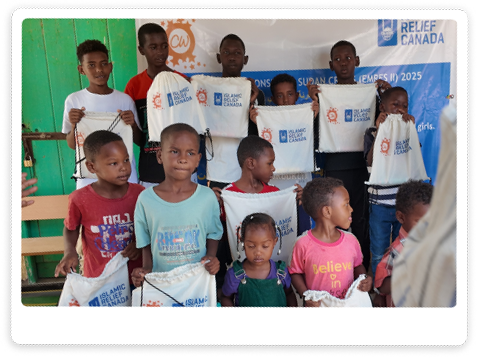
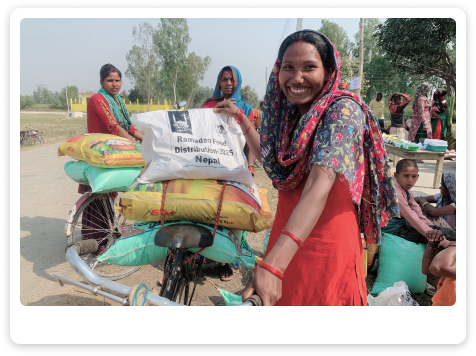
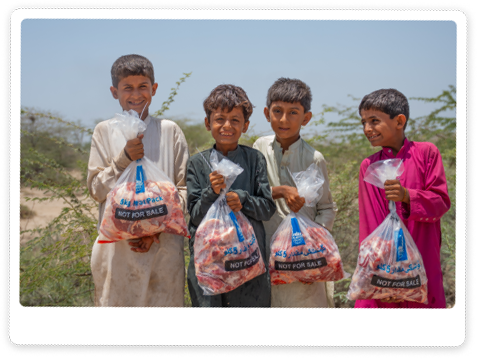
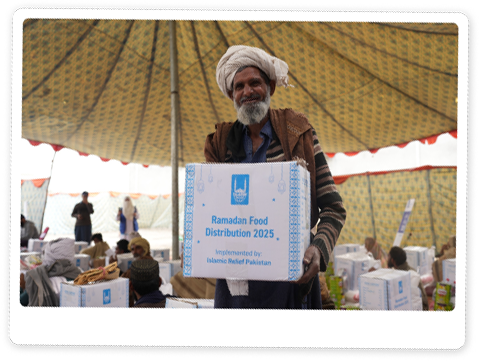
Zakat is more than a ritual, it’s a means to support those in need, strengthen communities, and purify our wealth. By giving, we create a cycle of compassion and social balance that touches lives far and wide.

Fulfill your obligations this Ramadan

How much Zakat do I pay?

Our calculator helps you work out your zakat accurately, so you can give with peace of mind.

Give Sadaqah to help those in need

Iftar Meals

Orphan Care

Ramadan Food Packs

Eid Gifts

DAILY GIVING

Give daily to make the most of every day of Ramadan

Narrated by Ibn ‘Abbas

“The Prophet (ﷺ) was the most generous of people in charity, but he was generous to the utmost in the month of Ramadan...giving charity like the blowing wind.”

Sahih Muslim

OUR PROMISE TO YOU

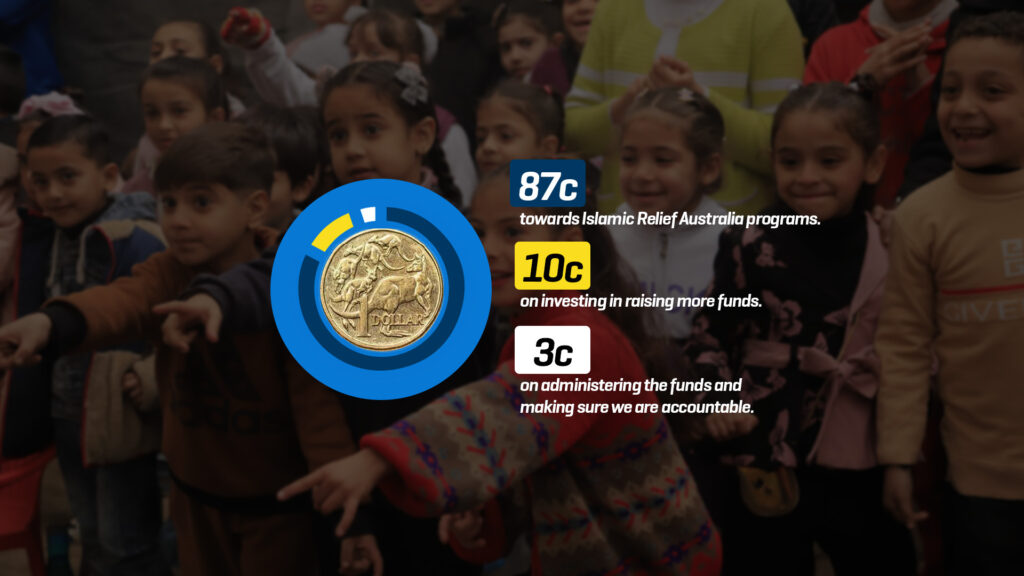
We are committed to transparency and accountability, and we regularly report on how donations are used. Of every $1 we spend: 

This all ensures we can continue the lifesaving work we do and reach even more people in need, sustainably and with quality care.

islamic relief australia admin cost infographic

Ramadan Impact 2025

saving lives since 1984 icon-01

35

Countries Reached

Humanitarian and development assistance worldwide

saving lives since 1984 icon-02

26,700,000

Lives Impacted

People supported across Gaza, Sudan, Ethiopia & Lebanon

saving lives since 1984 icon-03

85,000

Orphans Supported

Including 22,500 children in Gaza across 26 countries

Your Zakat in Trusted Hands

Lorem ipsum dolor sit amet consectetur. Ultricies tortor nibh volutpat nec quis leo id aliquet. Amet venenatis neque cras magna lobortis. Sollicitudin pulvinar tristique ipsum quam.

Are you ready for Ramadan 2026?

Prepare for Ramadan with clarity and intention.

Explore free resources and Ramadan timetables to help you plan your days throughout the month.

Ramadan Appeal FAQs

Ramadan is the ninth month in the Islamic calendar. During the month of Ramadan, healthy adult Muslims fast from dawn until dusk, abstaining from drinking, eating, immoral acts and anger.


Acts of worship such as prayer, reading the Qur’an and giving charity are also encouraged during Ramadan as blessings and rewards from Allah (SWT) are also multiplied during this holy month.

As the Islamic Calendar follows a lunar cycle (based on the moon phases), the exact dates of Ramadan change. As such, it rotates back by approximately ten days each year.

In 2026, Ramadan is expected to begin on the evening of Tuesday February 17, 2026. It will end on the evening of Thursday, March 19, 2026, depending on the sighting of the moon. 


Last year, Ramadan started on Friday, February 28, 2025. In turn, it ended on Sunday, March 30, 2025. Eid al-Fitr then fell on the Monday, March 31, 2025, depending on the sighting of the moon. 

Ramadan officially begins when the Islamic month of Shaban ends, and the new moon of Ramadan is sighted.


For 2026, the first fasting day of Ramadan is expected to be on Wednesday, February 18, 2026, pending the sighting of the moon. The first Taraweeh Prayer will be held on Tuesday, February 17, 2026. 

Eid al-Fitr, the Muslim celebration, officially marks the end of Ramadan. The exact timing is based on the sighting of the moon.


Eid al-Fitr officially begins at the start of the Islamic month of Shawwal. This year, it is expected to begin on the evening of Thursday, March 19, 2026. 


Last year, in 2025, Eid al-Fitr was celebrated on Monday, March 31, 2025. As Ramadan 2024 ended on the evening of Sunday, March 30, 2025

Zakat is a compulsory donation every sane, adult Muslim must make every lunar (Islamic) year if they meet a certain threshold (Nisab). Zakat is equal to 2.5% of one’s total wealth. 


Many Muslims choose to give Zakat in Ramadan due to the numerous rewards offered in this blessed month. However it is not necessary. If you’ve already paid your Zakat for this Islamic Year then you do not have to pay it again during Ramadan. 

Sadaqah is a voluntary charity that comes in many forms, including monetary donations. 


Charity-giving is encouraged during the month of Ramadan.The Prophet (ﷺ) would give charity throughout the year but would increase his Sadaqah the most during Ramadan.


Ibn Abbas (may Allah be pleased with him) said, “The Prophet (peace be upon him) was the most generous of people, and he was most generous during Ramadan.” (Bukhari) 

Zakat al-Fitr, which is separate from Zakat al-Maal, is a compulsory charity paid by the head of the household for each member of the family (including children and babies), before Eid al-Fitr prayer.


Each person owes the amount needed to feed a needy person 1 saad of food, which equals 4 madd. 1 madd is the amount someone can hold when they scoop their hands together. 

Zakat al-Mal is a compulsory charity every sane, adult Muslim must make once every lunar year if they have wealth over a certain amount (Nisab). The amount they owe for this Zakat is 2.5% of their wealth. 


Zakat al-Fitr is a compulsory payment paid by the head of the household on behalf of themselves and their dependents. Each person owes the price of a meal to a needy person. It must be paid before Eid prayer on Eid al-Fitr.  

Islamic Relief delivers Ramadan food packs to the most poor and needy around the world. They are distributed in countries in the Middle East, East Europe, Asia and Africa.


These countries include: Albania, Afghanistan, Bangladesh, Chad, Chechnya, Bosnia, Ethiopia, Iraq, Jordan, Kenya, Kosovo, Lebanon, Malawi, Mali, Myanmar, Niger, Pakistan, Palestine (Gaza and West Bank), Philippines, Somalia, South Africa, South Sudan, Sri Lanka, Sudan, Tunisia, Yemen and Zimbabwe.

STAY INFORMED

  • This field is for validation purposes and should be left unchanged.

Quick Donate