
07.03.25

When is Ashura 2025?

  News

In the Islamic (Hijri) Calendar, certain days are more virtuous than others. One such day is the 10th of Muharram, the Day of Ashura, which falls in the first month of the Hijri year.

Last year, the Day of Ashura fell on July 16, 2024. This year, Ashura 2025 is projected to occur on July 5, 2025. This is subject to change depending on the sighting of the moon.

What is the Day of Ashura? 

“Ashura” comes from the word “Asharah”, which means ten in Arabic. Fittingly, it falls on the 10th of Muharram.  

The Day of Ashura commemorates various significant historical events. This includes the day when Allah (SWT) saved Prophet Musa (AS) and his people from the tyranny of Pharaoh (Fir’aun) in Egypt. 

Ashura is also a solemn occasion. It marks the martyrdom of Imam Husayn (AS) (also referred to as Imam Hussein ibn Ali), the grandson of Prophet Muhammad (ﷺ), along with his family members and companions, in the Battle of Karbala in 680 CE. 

The Historical Significance of the Day of Ashura 

The Battle of Karbala 

The Battle of Karbala took place in Iraq in Muharram, 61 AH. It was fought between a small army consisting of the family and companions of Imam Husayn (AS). As well as a much larger army sent by Yazid ibn Muawiyah, the Umayyad Caliph at that time. 

The battle took place because Imam Husayn (AS) refused to pledge allegiance to Yazid ibn Muawiyah. Yazid was tyrannical and had taken it upon himself to assume the Muslim leadership after the death of his father.  

On the 10th of Muharram, Imam Husayn (AS) and 72 of his companions were brutally martyred by the enemy camp. Imam Husayn (AS) was brutally decapitated, and many of the others lost were male relatives of the Prophet (ﷺ). They nobly sacrificed their lives as a stand against oppression and to preserve Islam.  

As one of his beloved grandsons, Imam Husayn (AS) was very close to the Prophet (ﷺ). He would climb on his back during prayer as a child. His significant position in Islam is highlighted in the following Hadith: 

“Husayn is from me, and I am from Husayn. Allah loves whoever loves Husayn.”

Tirmidhi 

The Story of Musa 

On the Day of Ashura in the time of Prophet Musa (AS), Allah saved the Prophet and his people (Bani Isra’il) from the tyrannical Pharaoh (Fir’aun) and his army.  

The Pharaoh was extremely violent and corrupt in his rule. He spread blasphemy as he declared himself as God. The Prophet Musa (AS) refused to follow the Pharaoh and tried to encourage him to worship Allah (SWT). However, the Pharaoh would not accept that there was a power higher than himself. Fuelled by rage and arrogance, he sent a large army to destroy the Prophet and his followers.  

As the army chased Prophet Musa (AS) and his followers, he made the following famous Dua, as mentioned in Surah Ash-Shu’ara:

“Truly my Lord is with me, He will guide me through.” 

Quran 26:62

As a result of his patience and firm faith, Allah (SWT) parted the Red Sea so that Prophet Musa (AS) and his followers could reach safety. He then sent a punishment to the Pharaoh and his army. This allowed the waves to crash upon them and submerge them into the sea. 

As Allah (SWT) says in the Qur’an:

Then We inspired to Moses, “Strike with your staff the sea,” and it parted, and each portion was like a great towering mountain. And We drew forward the others [i.e., the pursuers]. And We saved Moses and those with him, all together. Then We drowned the others. Indeed in that is a sign, but most of them were not to be believers. And indeed, your Lord – He is the Exalted in Might, the Merciful. 

Quran 26:63-68

The Story of Ashura and Other Prophets (AS) 

The Day of Ashura was also significant in the time of other prophets. For example, in the time of Prophet Nuh (AS), some narrations say that on the day of Ashura, Allah (SWT) returned his ark to dry land after the flooding stopped. It was a day of relief and celebration for the Prophet and his devoted companions.  

Some narrations also say that Ashura was the day that Prophet Adam (AS) repented and was forgiven by Allah (SWT) after eating the forbidden fruit. Others say it was the day Prophet Yunus (AS) was released from the belly of the whale and Allah (SWT) forgave his people.  

Virtues of Ashura 

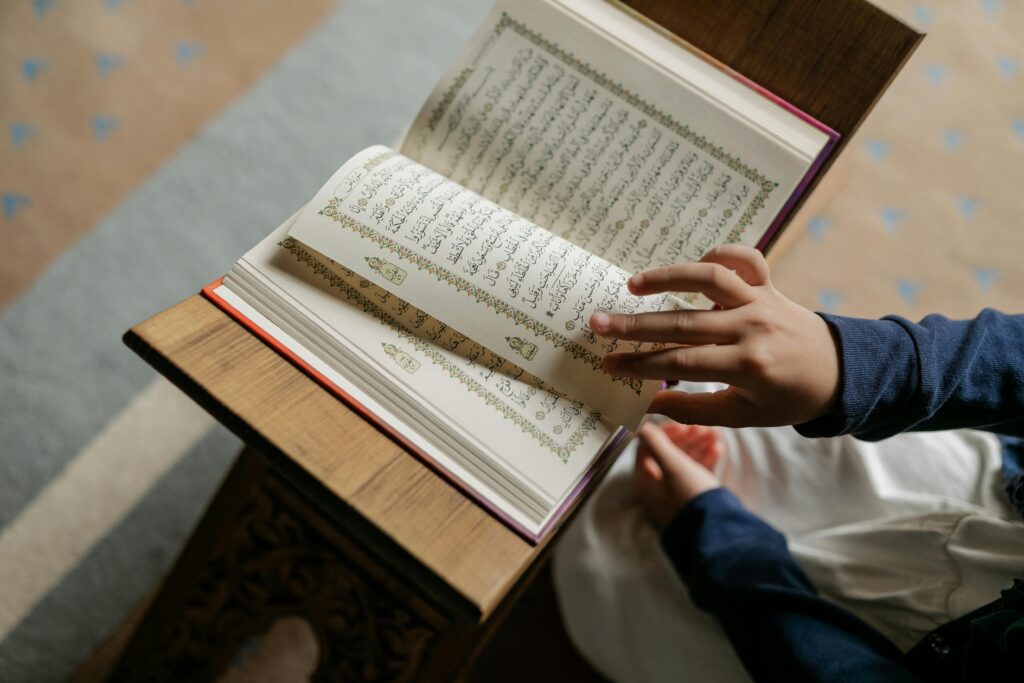
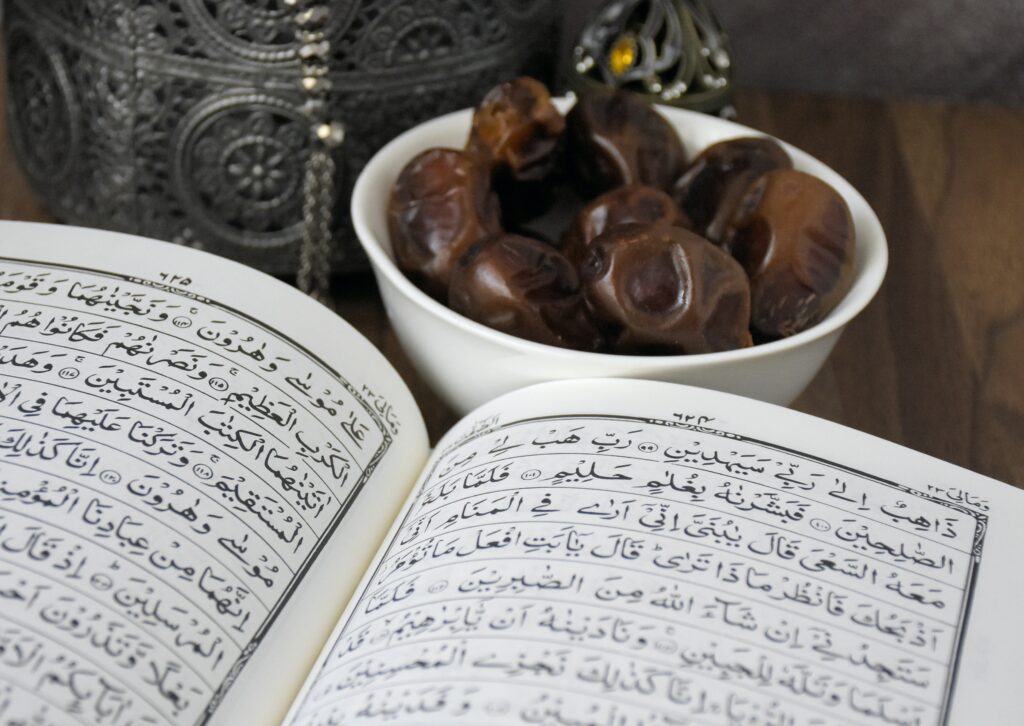
Ashura is a virtuous day when the rewards of good deeds are multiplied. Some recommended actions include reading the Qur’an, doing nafl (voluntary) prayers, and making Dhikr.  

Two deeds, in particular, are mentioned in ahadith to especially perform on Ashura. These are fasting and giving charity. 

Fasting on the Day of Ashura  

The tradition of fasting on the Day of Ashura began when Prophet Muhammad (ﷺ) observed the Jewish people fasting on this day to commemorate their deliverance.  

He (ﷺ) said: “We are closer to Musa than you are,” referring to the Jewish people, and advised Muslims to fast on ‘Ashura’. (Sahih Al-Bukhari) 

The Prophet (ﷺ) also made fasting on Ashura a priority. As mentioned in this Hadith, where one of his companions, Ibn ‘Abbas, said, 

I never saw the Messenger of Allah (ﷺ) so keen to fast any day and give it priority over any other than this day, the day of ‘Ashura’, and this month, meaning Ramadan. 

Sahih al-Bukhari 

Fasting also on Ashura is also an opportunity to earn more rewards from Allah (SWT). When asked about fasting on this day, the Prophet (ﷺ) said, “It expiates [wipes out the minor sins of] the past year.” (Sahih Muslim)  

Fasting is an important aspect of Ashura

Prophet (ﷺ) on fasting the day before Ashura 

Scholars recommended to fast on the 9th of Muharram along with the 10th of Muharram (‘Ashura). This is due to the Hadith: 

When the Messenger of Allah (ﷺ) fasted on the day of ‘Ashura and told the people to fast, they said, “O Messenger of Allah, this is a day that is venerated by the Jews and Christians.” The Messenger of Allah (ﷺ) said, “Next year, if Allah wills, we will fast on the ninth day.” But by the time the following year came, the Messenger of Allah (ﷺ) had passed away.

Sahih Muslim

The Prophet (ﷺ) wanted to fast on the 9th, to differ from the People of the Book. If one misses the 9th, some scholars also recommend fasting on the 11th of Muharram. Fasting on the day after Ashura could also be done to ensure one catches the 10th of Muharram, as it depends on the moon sighting.  

Therefore, it is virtuous to fast:  

  • Just the Day of Ashura 
  • or to fast the 9th and 10th, 
  • or to fast the 10th and 11th. 
  • Some scholars would even fast the 9th, 10th and 11th of Muharram. 
 

Any one of these options is recommended. 

Giving Charity on the Day of Ashura 

As well as fasting on the Day of Ashura, giving charity is another beneficial deed you can do to earn great rewards on the blessed day.  Prophet Muhammed (ﷺ) said,

‘One who generously spends on his family on the Day of Ashura, Allah (SWT) will be generous on him for the entire year.

Baihaqi

They are many ways to give charity, including paying Zakat if you haven’t done so this (hawl) year. You can give Sadaqah to help those in need across the world, as well as spend money on your family.  

You can also give Zakat or Sadaqah through organisations such as Islamic Relief. These funds then gets distributed to our Muslim brothers and sisters suffering across the world, helping them work towards a brighter future.

All in all, it’s important to make the most the Day of Ashura. As a blessed time with great opportunities for rewards from Allah (SWT), take this day to engage in more acts of worship and reflect on the significant events that took place on the day.

Make the most of the Day of Ashura

Give and change the lives of the most needy and vulnerable of our Ummah on one of the most blessed of days.
06.26.25

Muharram 2025: The Month of Allah (SWT)

  News

Muharram is the first month of the Islamic calendar. It marks the start of the Islamic New Year.  

Beyond being the start of another Hijri year, Muharram is also a sacred month. One with great opportunities to increase our rewards. So how do we make the most of it?  

What is Muharram? 

In Arabic, “Muharram” means “forbidden”. This refers to it being one of the four sacred months in which warfare is forbidden. In Surah At-Tawbah, it says:  

“Indeed, the number of months with Allah is twelve [lunar] months in the register of Allah [from] the day He created the heavens and the earth; of these, four are sacred. That is the correct religion, so do not wrong yourselves during them. And fight against the disbelievers collectively as they fight against you collectively. And know that Allah is with the righteous [who fear Him].”

Quran 9:36

The four months are mentioned by name in this hadith, where the Prophet (ﷺ) said:  

 “…The year is of twelve months, out of which four months are sacred: Three are in subsequent Dhul Qadah, Dhul Hijjah and Muharram, and (the fourth is) Rajab of (the tribe of) Mudar which comes between Jumada Al-Thani and Sha’ban.”  

Sahih Al-Bukhari 

As such, in these months, Muslims are encouraged to engage in increased worship, for the rewards for good deeds are multiplied.

In the sacred month of Muharram, Muslims are encouraged to do acts such as dhikr, reading qur'an and voluntary salah

When is Muharram 2025? 

Muharram is the first month of the Islamic (Hijri) calendar. Based on a lunar cycle, the sighting of a new moon determines the start of a new Islamic month. 

Last year, Muharram 2024 began on Sunday, 7th July 2024. In 2025, the first Islamic month begins on the evening of Thursday, 26th June 2025, depending on the sighting of the moon.  

Key dates in Muharram 

There are 12 months in the Islamic calendar, but we tend to know more about some months than we do about others.  

While everybody knows that we fast in Ramadan and about the sacrifice of Dhul Hijjah, Muharram is a bit less well-known.  

However, its religious and historical significance is extensive, as many important events have occurred in this month.  

1st Muharram 

The 1st Muharram marks the beginning of the new Islamic Year. This lunar calendar (also called the Hijri calendar) starts from the hijrah (emigration) of the Muslims to Medina and the establishment of the first Islamic state in 622CE. 

There are no prescribed acts of worship for Muslims to observe on the 1st of Muharram. However, as the beginning of a sacred month, Muslims may use it as a time to renew their intentions to do good for the year ahead.  

It can also be a day to reflect on the journey and struggle of our beloved Prophet Muhammad (ﷺ) and his Sahabah (companions), and other Prophets throughout history as several significant historical events occurred during this month.  

The Day of Ashura 

The Day of Ashura falls on the 10th of Muharram. It is one of the most virtuous days of the Islamic year.  

One of the reasons for its significance is the many events in Islamic history that take place on this day.  

The Battle of Karbala 

The battle of Karbala (680CE/61 AH) that occurred on Ashura marks a conflict of many great tragedies.  

It was fought between a small army of the supporters and family of the Prophet (ﷺ) and the army of Yazid, the Umayyad Caliph who had a significantly larger army. There, the martyrdom of Husayn (AS) (also referred to as Imam Hussain ibn Ali), one of the Prophet (ﷺ)’s grandsons, took place.  

In a hadith, the Prophet (ﷺ) once said:   

“Husayn is from me, and I am from Husayn. Allah loves anyone who loves al-Hasan and al-Husayn. They are two of my distinguished descendants.” 

Al-Albani

Many of Prophet (ﷺ)’s family members and companions were also martyred during the battle. In their martyrdom, we reflect on these tragedies and their struggles in striving for the cause of God.

The Prophets (AS) and Ashura 

The Day of Ashura also commemorates when Allah (SWT) freed the Prophet Musa (AS) and his people (Bani Isra’il) from the Pharaoh (Fir’aun) and his army.  

Some narrations also mention significant events from other Prophets (may peace be upon them all).  

On this day, Allah (SWT) returned Prophet Nuh (AS)’s arc to dry land after the flooding stopped.  

For Prophet Adam (AS), it was the day he repented and was forgiven by Allah (SWT) after eating the forbidden fruit.  

While, for Prophet Yunus (AS), it was the day Allah (SWT) released him from the belly of the whale and forgave his people. 

As such, the Day of Ashura is a great day for reflection and increasing in good deeds – and one we should not miss out on! 

What should we do in Muharram? 

Muslims commemorate Muharram as one of the four sacred months. It also holds the title of ‘the month of Allah’, (shahr Allah al-Muharram شَهْرُ اللَّهِ الْمُحَرَّمُ) making it one of the most blessed months in the Islamic calendar. (Muslim

Muharram is mentioned in hadith as the month of Allah (SWT).

Therefore, it is a good time for Muslims to engage in acts of worship. This includes reflecting, giving Sadaqah, increasing nafl (voluntary) prayers, reciting Qur’an, and fasting.

Fasting during Muharram 

Muharram is one of the best Islamic months to fast in. Many ahadith report about the importance of fasting in Muharram, especially on the Day of Ashura.  

The Messenger of Allah (ﷺ) said, “…The best fast after the month of Ramadan is fasting in the month of Allah, al-Muharram.”  

Muslim 

Ibn Abbas, may Allah be pleased with him, said, “I did not see the Prophet, peace and blessings be upon him, as eager to fast a day and preferring it over others except for this Day of Ashura and this month of Ramadan.” 

Bukhari and Muslim 

The Prophet was asked about fasting on the Day of Ashura, and he said, “It will expiate the sins of the past year.” 

Muslim  

Fasting on 9th Muharram 

The Prophet also recommended his people to fast on the day before Ashura (9th Muharram). This is due to the Hadith: 

When the Messenger of Allah (ﷺ) fasted on the day of ‘Ashura and told the people to fast, they said, “O Messenger of Allah, this is a day that is venerated by the Jews and Christians.” The Messenger of Allah (ﷺ) said, “Next year, if Allah wills, we will fast on the ninth day.” But by the time the following year came, the Messenger of Allah (ﷺ) had passed away.

Muslim

Thus, the Prophet (ﷺ) wanted Muslims to also fast on the 9th to differ from the People of the Book. If one misses the 9th, one can fast on the 10th and 11th of Muharram. However, it is also okay to only fast on the 10th, if one is unable to also fast the day after or before it.  

Build a Muharram Action Plan

The sacred months offer us the opportunity to seek the mercy and favour of Allah (SWT). Thus, there is an opportunity to gain more rewards every day.  

There are many simple virtues we can do to take advantage of the benefits of Muharram. This month, try to…

  • Fast: Keep a fast on the 9th and 10th Muharram (the Day of Ashura), or on the 10th and 11th Muharram. Fasting expiates sins. 
  • Reflect: If you are unable to fast, reading the Qur’an or doing Dhikr can help you to feel the blessings of Muharram. Remember, any gathering for the sake of Allah SWT will also be filled with barakah and the Angels will join you.
  • Give: Muharram marks the beginning of the Islamic New Year, so it’s the perfect time to make resolutions and establish good habits like giving regular Sadaqah (charity), so that you can gain blessings all year round.

Make the most of Muharram

Give and change the lives of the most needy and vulnerable of our Ummah on one of the most blessed of months.

07.15.24

Fasting: Islamic Dates to Look Out for Beyond Ramadan

  Publications

Fasting (Sawm) is an important pillar of Islam. It’s a beloved act of worship, as it shows our gratitude towards Allah (SWT) for the provisions he’s given us.  

Most of us know fasting is mandatory during Ramadan. But did you know there are other times when it’s highly recommended?  

There are additional days in the year when it’s encouraged to fast. An opportunity to gain extra reward for following the Sunnah, the actions and words of our Prophet (ﷺ).  

sunnah for fasting is to break it dates, you are also encouraged to increase in good deeds, such as reading qur'an

There are also days when we cannot fast, as it is haram (forbidden) or makruh (extremely disliked) to do so. 

Hence, it’s important to know which days we can fast to prepare for them in advance. 

Days of Fasting Outside of Ramadan 

There are several days in the Islamic Calendar when it’s sunnah (highly recommended) to fast. As the Hijri year follows the moon’s cycle, the dates of these days on the conventional Western calendar change every year.  

Mondays and Thursdays  

The Prophet Muhammad (ﷺ) would fast on Mondays and Thursdays. The reasons for why can be found in several ahadith.  

There are also several health benefits that come with fasting two times a week. These include, but are not limited to, reduced levels of total cholesterol and lowered risk factors for heart disease.  

Six Days in Shawwal  

Shawwal is the 10th Islamic month. It is the month that follows Ramadan, as the first of Shawwal is Eid al-Fitr.

The rewards for fasting six days in Shawwal alongside Ramadan are great – as if one has fasted for the entire year!

These six days can be spread out throughout the month. It also does not have to be consecutive days.  

The only day of Shawwal you are not allowed to fast is Eid al-Fitr. This is because it is forbidden to fast on the days of Eid.  

First 9 Days of Dhul Hijjah, Especially Arafah

Dhul Hijjah is the twelfth and final month of the Islamic Calendar. The first ten days of the month are extremely blessed, for “there are no days during which righteous deeds are more beloved to Allah than these days.” (Sunan Ibn Majah)

One of the best deeds to do is to fast. Hence, on the first 9 days (as one cannot fast on Eid Al-Adha) it is recommended for us to fast, alongside doing other good deeds, such as reading Qur’an, making dhikr, giving charity and performing nafl (voluntary) prayers.

Fasting in Dhul Hijjah is also sunnah, as the Messenger of Allah (ﷺ) used to fast the month’s first nine days. (Sunan Abi Dawud

He (ﷺ) especially encouraged it on the Day of Arafah, the 9th of Dhul Hijjah. It is also the most blessed day of the year. This is because fasting on the day of Arafah “will expiate the sins of the previous and upcoming years.” (Sahih Muslim)

However, for those going on Hajj, it is fine for them to leave the sunnah fast of Arafah.

One of the companions of the Prophet (ﷺ), Ibn Umar, noted that, while performing the pilgrimage, the Prophet (ﷺ) did not fast during Arafat.

In turn, some of the closest companions of the Prophet (ﷺ) – Abu Bakr, Umar and Uthman (may peace be upon them all) – also did not fast on Arafat while on Hajj. (Tirmidhi)  

Hajj in Makkah, during the first 10 days of Dhul Hijjah. Those going on Hajj are exempt from fasting on the day of Afarah

Hence, fasting on the first 9 days of Dhul Hijjah, especially on Arafah, is a highly recommended act for those not on Hajj.

Ashura (and the Day Before or After it)  

Ashura occurs on the 10th of Muharram, the first Islamic month. It is a blessed day that commemorates several significant events in Islamic history.  

The origins of fasting on Ashura have been documented in this hadith collected by Al-Bukhari and Muslim and reported by Ibn ‘Abbas (RA). The narration goes as follows:  

The Prophet (ﷺ) observed the Jewish people fasting on this day and asked why they did so. The Jews replied that this was the day Allah (SWT) granted victory to Musa (AS) and Bani Isra’il over Fir’aun (Pharaoh). Thus, they fasted on this day out of respect.  

The Prophet (ﷺ) then said, “We are closer to Musa (AS) than you,” and enjoined in fasting on that day.  

There are also great blessings for fasting on Ashura. When asked about fasting on the 10th of Muharram, the Prophet (ﷺ) said, “It will expiate the sins of the past year.” (Sahih Muslim)

It is also recommended to fast the day before Ashura (9th Muharram). Ibn ‘Abbas (RA) reported:

Thus, to differentiate Muslims from other religions (who also celebrated this day), the Prophet (ﷺ) instructed us to fast on the 9th and 10th of Muharram.   

If one fears they may miss Ashura because of the difference in moon sighting, then scholars also permit fasting on the 10th and 11th of Muharram.   

Most of Sha’ban  

As the 8th Islamic month, Sha’ban is the month before Ramadan. The Prophet fasted for the majority of this month, with accounts of it recorded in several ahadith. This includes a hadith where ‘Aisha (RA) said:

In another hadith, ‘Aisha (RA) also said, “The most beloved month to the Messenger of Allah (ﷺ) for fasting was Sha’ban, then he would connect it with Ramadan.” (Sunan Abi Dawud)

Exceptions to Fasting in Sha’ban 

In a hadith collected by Al-Bukhari and Muslim, ‘Aisha (RA) also reported that the Prophet (ﷺ) observed fasting during the whole month of Sha’ban except for a few days. 

Abu Hurayrah (RA) similarly mentioned that the Messenger of Allah (ﷺ) said:

Abu Hurayrah (RA) also reported that the Prophet (ﷺ) said to not fast if Sha’ban is half over. (Tirmidhi)  

The exception to this would be someone who fasted regularly, such as the Prophet (ﷺ) and many of his companions. Thus, if you are someone who regularly observes the sunnah fast, then you may still observe them in the second half of Sha’ban.  

It is also permissible to make up a Ramadan fast at this time, if necessary. ‘Aisha (RA), one of the wives of the Prophet (ﷺ), herself would make up her fast in Sha’ban. Regarding this, she said, “I had to make up some fasts I missed during the month of Ramadan, but I was unable to do so until the month of Sha’ban as I was busy with the Messenger of Allah (ﷺ).” (Bukhari and Muslim)

The White Days  

The white days are the 13th, 14th and 15th of each Islamic month. They are called White Days (Ayam al Beedh) as the moon is most lit on these nights.  

Qatadah Ibn Malhan al-Qaysi said that the Prophet (ﷺ) used to command them to fast the days of the White (nights). He (ﷺ) said that to fast these days “is like keeping perpetual fast.” (Sunan Abi Dawud)

In another hadith, Jarir bin ‘Abdullah recalled that the Prophet (ﷺ) said:

Are There Days Muslims Cannot Fast? 

Generally, most days of the year should be okay for you to fast. The exceptions are the two days of Eid and the days of Tashreeq. It is also severely disliked for one to fast on Fridays, Saturdays and towards the end of Sha’ban unless it falls on a day they regularly fast.  

Days of Celebration 

As mentioned before, it is forbidden to fast on Eid al-Fitr and Eid al-Adha. These Islamic celebrations have been designated for us to enjoy and feast with loved ones. 

Eid days are a time of joy and celebrating with family. Therefore, fasting on this day is forbidden.

Similarly, it is also forbidden to fast on the days of Tashreeq, three days after Eid al-Adha. This is because these are “days of eating, drinking and remembering Allah.” (Sahih Muslim

However, there is an exception. In one hadith, ‘Aisha (RA) and Ibn ‘Umar (RA) reported:

“No concession was granted allowing anyone to fast on the days of al-Tashreeq, except for the (pilgrim) who could not find a sacrificial animal.” 

Al-Bukhari

Hence, those on Hajj who are unable to perform the sacrifice for Eid Al-Adha are permitted to fast on the days of Tashreeq.  

Fridays and Saturdays 

It is severely disliked to fast on Friday alone. The Prophet (ﷺ) said, “No one of you should fast on Friday, unless he fasts (a day) before it or after it.” (Sahih Al Bukhari)  

This is because Friday (called Jumuah or Jummah in Arabic) is a dedicated day of worship. As fasting can make one easily tired, it may prevent them from making the most of Jumuah.  

Similarly, it is also discouraged to fast on a Saturday. The Prophet (ﷺ) said:

“Do not fast on Saturday except for what has been made obligatory upon you (by Allah). If one of you does not find but a grape peal or a tree’s twig, then let him chew it.” 

Sunan Abi Dawud

Fasting on Saturday may also cause one to resemble the practice of the Jewish people, as they observe Saturday as a day of rest.  Another reason why the Prophet (ﷺ) advised against it unless fasting was necessary.

Exceptions to Avoiding Fasting on Friday or Saturday 

Obviously, one must fast on Friday and Saturday if it falls in the month of Ramadan. It is also permissible to fast on these days if it happens to fall on a day when it is sunnah to fast, such as Arafah, Ashura or one of the White Days. 

You may also make up a fast from Ramadan on Friday or Saturday if this is the only time you can fast. But it is better to combine it with another day if you can.  

Differences between Voluntary Fasting and Fasting in Ramadan

The rulings on what breaks a fast outside of Ramadan and during Ramadan are the same. However, there are two key differences. 

When to Make the Intention  

The Prophet (ﷺ) said, “Whoever does not have the intention to fast before dawn, there is no fasting for him.” 

According to At-Tirmidhi, the hadith specifically refers to fasting in Ramadan. The fast is invalid if the intention is not made before sunrise in Ramadan. This also extends to when one is making up a Ramadan fast or fasting for a vow.  

However, for voluntary fasting, it is permissible to make an intention after morning, in the opinion of Al-Shafi’i, Ahmad, and Ishaq. 

Leaving the Fast 

During Ramadan, you must remain fasting from dawn to dusk. Even if you have a valid excuse to break it, you must make up the full day you missed outside of Ramadan. Or, if you are unable to fast, pay compensation (fidyah) for it.  

However, for a voluntary fast, you can break the fast if you wish without sin. As it is voluntary, you don’t need to make up the fast later or pay compensation if you miss it.  

There was a time when the Prophet (ﷺ) received an invitation to a feast (outside of Ramadan) but one of the companions was fasting. The Prophet (ﷺ) then requested,

“Your brother has invited you and incurred expenses on your behalf, break your fast and fast another day in its place if you wish.”

Ahmad


May Your Sunnah Fasting Be Accepted by Allah (SWT) 

All in all, there are several specific voluntary fasts recommended for Muslims to do outside of Ramadan. These are:  

  • Mondays and Thursdays 
  • Six days in Shawwal (except Eid Al-Fitr) 
  • First 9 days of Dhul Hijjah (especially the 9th, Arafah) 
  • Ashura (10th Muharram) – if possible, combined with either the 9th or 11th Muharram 
  • Most of Shaban 
  • The White Days (13th, 14th and 15th of each Islamic month)
 

If we can fast continually during Ramadan, then we already have the mental mindset to fast some or even all these voluntary days.  

In this new Hijri year, let us make the intention to perform as many of these fast as possible! May Allah (SWT) grant us the strength to observe these days and accept our fasts, ameen! 

07.26.23

Ashura

  News

In the Islamic calendar, there are certain days in the year that are more virtuous than others. One such day is the 10th of Muharram (the first month of the Islamic calendar), the Day of Ashura.

When is the Day of Ashura 2023?

The Day of Ashura is the 10th day of Muharram. In 2023, the Day of Ashura will be on the 28th July, depending on the sighting of the moon.

What is the Significance of the Day of Ashura?

On the Day of Ashura in the time of Prophet Musa (AS), Allah (SWT) saved the Prophet and Bani Israel from the tyrannical Pharaoh (Firaun) and his army. 

The Pharaoh was an extremely violent and corrupt ruler and spread blasphemy as he declared himself as God. Despite Prophet Musa (AS)’s attempts to encourage the Pharaoh to worship Allah (SWT), the Pharaoh would not accept that there was a power higher than himself.

Enranged by Prophet Musa (AS)’s and his followers’ refusal to bend to his will, the Pharaoh sent a large army to destroy Bani Israel when they fled Egypt. This was on the Day of Ashura. But Prophet Musa (AS) didn’t despair and made the following famous Dua which was later revealed in the Holy Quran:

“Truly my Lord is with me, He will guide me through.”

Ash-Shu’ara, 26:62

As a result of his patience and firm faith in Allah (SWT), Allah (SWT) parted the Red Sea so that Prophet Musa (AS) and his followers could pass to safety. As punishment, the Pharaoh and his army were then submerged in the sea.

How to Commemorate the Day of Ashura

When Prophet Muhammad (peace and blessings be upon him) spoke about the Day of Ashura, he said:

‘This is a great day when Allah saved Musa and his people and drowned Pharaoh and his people.’

Sahih Muslim

The Prophet (PBUH) also fasted on the Day of Ashura (as well as the day before and after it). While this fasting is not compulsory, it is encouraged for the immense blessings and benefits it brings:

“I seek from Allah that fasting on the day of Arafah may atone for the sins of the preceding and the coming years, and I seek from Allah that fasting on the day of Ashura may atone for the sins of the preceding year.”

Narrated by Abu Qatadah (Sahih Muslim)

Likewise, the Sahabah, his (PBUH) companions also noted that:

I never saw the Messenger of Allah (peace and blessings of Allah be upon him) so keen to fast any day and give it priority over any other than this day, the day of ‘Ashura’, and this month, meaning Ramadhan.

Sahih Bukhari

Other Good Deeds to Do on the Day of Ashura

As well as fasting on the day of Ashura, there are many other beneficial deeds you can do which can earn immense rewards on the blessed day. 

These include giving Sadaqah and Zakat to help those in need across the world, as well as spending money on one’s family. 

As Prophet Muhammed (PBUH) said:

‘’…one who generously spends on his family on the day of Ashura, Allah (SWT) will be generous on him for the entire year”

Baihaqi

It’s also important to increase worship on the Day of Ashura, such as reading more Qur’an, sending salutations to the Prophet (PBUH) and offering nafl (optional) prayers. It’s also a good time to reflect on the significant events which took place on the Day of Ashura. To draw important lessons from them which can help us in our lives, including remembering to rely on the power of Allah (SWT) to help us in our time of need. 

As Muharram marks the beginning of the Islamic New Year, let us make the most of the opportunity to establish good habits like fulfilling the Sunnah of our Prophet (PBUH) and giving regular charity, especially on blessed occasions like the Day of Ashura.

May we continue to strive to please Allah (SWT) and seek His forgiveness and blessings in this new year and the next!


STAY INFORMED

  • This field is for validation purposes and should be left unchanged.

Quick Donate